Your ShelfYour Projects

Signs of the Times, Vol. 42, No. 20.

THE NECESSITY OF CHRIST'S COMING

Signs of the Times

May 18, 1915

Pacific Press Publishing Association · Mountain View, California · May 18, 1915

THE NECESSITY OF CHRIST'S COMING

*This Earth Again to Be as Beautiful as Eden—The Curse to Be Removed God's Original Purpose to Succeed—Coming of Christ the Climax That Brings It*
By Eva Bowen Nelson
WHEN God had completed the work of creating this earth, “the morning stars sang together, and all the sons of God shouted for joy.” The beauties of the earth, the perfection of its inhabitants, and the happy prospects before them, caused rejoicing throughout the universe. A new world had been brought into existence,—a world that was to be peopled with a sinless race, who should join with the angels in ascribing everlasting glory to God.

HIS PURPOSE FOR THE EARTH

But God's purpose for the earth was thwarted for the time being when our first parents yielded to the artful temptation of Satan, and disobeyed God. The rejoicing of the heavenly beings was turned to sorrow; for Adam and Eve had closed the door to the supreme happiness that was in store for the race, and opened it to lifelong trouble and unhappiness.
But God in His love did not leave them in despair. The promise was made that sometime the power of evil which now had gained control should be broken, and the earth restored to its original condition.
God cannot lie. Therefore this promise is yet to be fulfilled. The conditions prevailing in the world to-day are not in God's plan for the earth. He purposed only the highest good for every dweller upon it. There must, then, be some event yet future that will bring about the realization of this divine purpose.
That which was lost to man through Adam's sin, can be restored to him only through Christ; so man must look to the Master for the realization of God's purpose for mankind. “For this purpose the Son of God was manifest,” says the apostle John, “that He might destroy the works of the devil.” 1 John 3:8.

ALL SATAN'S WORKS TO BE DESTROYED

Chapel and Recitation Building, Washington Missionary College
The realization of God's plan was accomplished in part at Christ's first advent. By the life and death of the Son of God, Satan's power was forever broken. He was made a conquered foe. But a complete destruction of his works was not then made. He still continues to rule among wicked men in the world, and his works are everywhere manifest. But this condition is not always to continue. It will finally terminate. By the revelation of Christ the works of Satan are to be destroyed. Since this was not wholly accomplished at His first advent, He must come again, to finish the work of destruction. And that is just what He will do. Says the prophet: “Behold, the day of the Lord cometh, . . . to lay the land desolate: and He shall destroy the sinners thereof out of it.” Isa. 13:9. Then the very root and branches of sin will be destroyed; for its originator will be blotted out of existence, with all who have become subject to him. The earth itself will dissolve with fervent heat, and will be made over into the new heavens and the new earth.

THE EARTH TO BE THEN RESTORED

Then God's purpose for the earth will be realized. It will be restored to its first loveliness. The whole earth will be at rest, and will be quiet. The universe again will rejoice, and the ransomed ones will “break forth into singing.” Isa. 14:7. “The voice of a great multitude,” “as the voice of many waters, and as the voice of mighty thunderings,” will be heard, saying, “Alleluia: for the Lord God omnipotent reigneth.” Rev. 19:6.

THE CONTROVERSY ENDED

Then it will be said: “The great controversy is ended. Sin and sinners are no more. The entire universe is clean. One pulse of harmony and gladness beats through the vast creation. From Him who created all, flow life and light and gladness, throughout the realms of illimitable space. From the minutest atom to the greatest world, all things, animate and inanimate, in their unshadowed beauty and perfect joy, declare that God is love.”
VIEW OF A CORNER OF THE COLLEGE CAMPUS

Center of the Christian’s Hope

The Theme of Christ as Well as the Apostles — The Early Church Held to It — The Reformers and Renowned Christian Men of Modern Times Have Taught and Sung It
By Irving A. Steinel
The personal return of Christ to the earth is a fundamental doctrine of the Christian faith. It has been the Christian’s hope throughout the ages. This hope has been the inspiration of many of our best hymns, and has spurred on many thousands of noble men and women to devote their lives to the promulgation of the gospel.

“COME, LORD JESUS,” THE CHURCH’S UNIVERSAL PRAYER

The sentiment of the waiting church is summed up in the prayer uttered by John at the close of the Revelation. In his vision he has seen the New Jerusalem, “having the glory of God,” and whose light is “like unto a stone most precious.” He has seen the river of life, and the never fading trees and flowers. But more than all of these glorious things, the aged seer longs for the presence of the Son of God, who sits upon the throne; and he breathes this simple prayer: “Come, Lord Jesus.”
Throughout the succeeding centuries, during the terrible affliction of the dark period of persecution and martyrdom, and during the ensuing time of prosperity and light, this has been the prayer of God’s people.

A SPUR FOR FLAGGING ZEAL

Surely the hope which inspires this universal prayer must have some foundation. We do not have to search long for the source, for the Bible is full of references to the return of Christ to the earth.
In the New Testament, the doctrine concerning this event receives more attention than any other. Paul’s references to it are frequent and definite. He sums up the true Christian attitude in his letter to Titus: “The grace of God that bringeth salvation hath appeared unto all men, teaching us that, denying ungodliness and worldly lusts, we should live soberly, righteously, and godly, in this present world; looking for that blessed hope, and the glorious appearing of the great God and our Saviour Jesus Christ.”
The word “hope” is used by the apostle many times in connection with the coming of the Lord. Whenever the zeal of the Christians seemed to be flagging, this bright hope was set before them to revive their spirits and to serve as an incentive to holy living.
Another source of our knowledge of this matter is the sayings of the Lord Himself. His return appears to have been His favorite theme. During His last days on earth, He seems to have been largely occupied with thoughts of His second coming. This is doubtless what He had in mind when, during His last journey to Jerusalem, He told the parable of the nobleman going into a far country, and leaving his servants behind, with the command, “Occupy till I come.”
In Christ’s beautiful discourse recorded in the fourteenth chapter of John, we find one of the many definite promises of His return: “And if I go and prepare a place for you, I will come again, and receive you unto Myself.”
One evening of the last week before His crucifixion, as He sat on the Mount of Olives, with His disciples gathered about Him, He gave a panoramic view of the world previous to the time of His return.

JOHN’S GREAT HOPE

John, the disciple whom Jesus specially loved, the one who seems to have enjoyed the closest fellowship with our Lord, was present on these numerous occasions when the return of the Master was predicted. As he gazed on the disappearing form of his beloved Master at the time of Christ’s ascension, he heard the comforting promise that this same Jesus would come again. These experiences probably account for the fact that John so often refers to the coming of the Lord. We can readily appreciate his great longing expressed at the close of his life’s work.
Historians tell us that the writings of John, and especially the Apocalypse, were accepted by the early church fathers. Thus the faith of John became their faith.
Guinness says: “It cannot be denied that for three centuries the church held the doctrine of the premillennial coming of Christ. I think I have gone through all the writings of the fathers for three centuries pretty carefully, and I do not know an exception, unless it be Origen.”
Justin Martyr, Irenæus, Tertullian, Methodius, Victorinus, Clement, Polycarp, and many others held this belief. It flourished at Antioch as well as at Jerusalem, at Rome as at Ephesus. In all history, we find no more perfect agreement on any doctrine than we do among the apostolic fathers on the doctrine of the second advent of Christ.
The great historian Gibbon speaks of the contempt with which the early Christians regarded their present existence. He attributes this attitude to their strong belief in the second coming of Christ. “The near approach of this event,” he says, “had been predicted by the apostles.”

A DIM LIGHT IN THE DARK AGES

One almost shrinks from peering into that epoch so full of horror,—the medieval period,—when the great dragon, the mystery of iniquity, almost crushed out the life from the church. But even here we see the light shining clearly at intervals. Toward the end of that long period of oppression, we find a marked revival of teaching concerning the advent of Christ.

THE REFORMERS EXPECT CHRIST’S RETURN

Among the great Reformers, Luther, Wycliffe, Tyndale, and Melanchthon taught this doctrine. John Wesley especially emphasized it. His brother Charles was known as “the millennial poet.” He wrote over seven thousand hymns, and it is said that more than five thousand of these refer to the coming of Christ. Milton, Cowper, Heber, and Watts breathed this same hope into their songs. Bunyan was buoyed up by it.
Thus we see that this doctrine of the second coming of Christ is not new. It is truly the “faith of our fathers.” It is not the peculiar possession of any limited body of believers. It has been the hope of the church ever since Jesus planted the mustard seed that is developing into the kingdom of heaven.

THIS FUNDAMENTAL DOCTRINE MUST NOT BE ABANDONED

Let us return to the simple faith of the founders of the church of Christ. With our faces uplifted to heaven, whence soon will appear the Sun of righteousness, and with hearts aglow with love for Him and with the joy of serving Him, let us breathe the prayer of the beloved apostle, “Come, Lord Jesus.”

Hope of All the Prophets

The Central Theme from Enoch to Malachi
By Florence M. Chrisman
FOR nearly six thousand years, the inhabitants of this world have been witnessing the results of sin. The curse which God pronounced upon the earth, has been realized; thorns and thistles have come forth in abundance, and all nature has been robbed of its Edenic beauty.
Man, who was once “of lofty stature and perfect symmetry,” whose countenance once “bore the ruddy tint of health, and glowed with the light of life and joy,” has lost the beauty and perfection which were his at creation. He no longer represents the Creator, in whose image he was made; for sin has stamped itself upon him. It has marred all of God’s handiwork, and caused “the whole creation” to groan and travail together in pain. Rom. 8: 22.

The Theme from Enoch to Malachi

But during this long reign of sin, there has been one abiding hope, which has brightened the pathway of those who love the Lord—the hope of His second coming. This glorious event has been the great theme of all the prophets, and the inspiration of all ages.
Enoch, the seventh from Adam, looked forward to it, and prophesied of the time when the Lord would come “with ten thousand of His saints, to execute judgment upon all.” Jude 14, 15.
By faith Abraham “looked for a city whichhath foundations, whose builder and maker is God.” Heb. 11: 10.
Job longed for the time when he would behold his Redeemer; and in his earnestness he cried out: “O that my words were now written! O that they were printed in a book! that they were graven with an iron pen and lead in the rock forever! For I know that my Redeemer liveth, and that He shall stand at the latter day upon the earth: and though after my skin worms destroy this body, yet in my flesh shall I see God: whom I shall see for myself, and mine eyes shall behold, and not another.” Job 19: 23-27.
The hope of the psalmist was anchored in the coming of the King of glory, at which time all sin and wickedness should cease; therefore he could sing: “Rest in the Lord, and wait patiently for Him: fret not thyself because of him who prospereth in his way, because of the man who bringeth wicked devices to pass. . . . For evildoers shall be cut off: but those that wait upon the Lord, they shall inherit the earth.” Ps. 37: 7, 9. “Our God shall come, and shall not keep silence: a fire shall devour before Him, and it shall be very tempestuous round about Him. He shall call to the heavens from above, and to the earth, that He may judge His people. . . . And the heavens shall declare His righteousness.” Ps. 50: 3, 4, 6.
Isaiah prophesies of Christ’s coming kingdom, and warns the wicked to enter into the rock, and hide thee in the dust, for fear of the Lord, and for the glory of His majesty. The lofty looks of man shall be humbled, and the haughtiness of men shall be bowed down, and the Lord alone shall be exalted in that day.” Isa. 2: 10, 11. But to the righteous he says: God “will swallow up death in victory; and the Lord God will wipe away tears from off all faces; and the rebuke of His people shall He take away from off all the earth: for the Lord hath spoken it.” Isa. 25: 8.
Jeremiah and Ezekiel both prophesied of this great event; and all the prophecies of Daniel point forward to the time when “the God of heaven” shall “set up a kingdom, which shall never be destroyed.” Dan. 2: 44.

Not the Time for the Kingdom

From the days of Enoch down to the time of Malachi, this event was the absorbing theme of the prophets. From the entrance of sin in the Garden of Eden to the first advent of Christ, the hope of all God’s people was centered in the setting up of this kingdom, which many of them mistakenly thought would take place at Christ’s first coming. But Christ did not come at that time to set up an earthly kingdom. He came to pay the penalty for sin, in order that fallen men might become citizens of this everlasting kingdom; but He is coming the second time, as King of that kingdom which shall never be destroyed.

WHEN WILL CHRIST COME?

Teaching in Past Ages Concerning the Event—Notions Unwarranted by Scripture—May the Church Expect to Know?
By Henry F. Brown
At the birth of the first child into the world, its mother exclaimed, “I have acquired a man of the Lord,” thinking the promised Redeemer had come to deliver the erring pair from sin. In one form or another this has been the universal hope of the inhabitants of the world. The Hindu Vedas promised the “Wise One”; and the Hebrew prophets proclaimed an “Anointed One.” Traces of the promise of the “Coming One” are found in the legends of the North American Indians, and in the tales of the natives of Africa. It is natural for the Christian to desire the advent of the “Sinless One.” Patriarchs and prophets looked for the day of the Lord. “Abraham . . . saw it, and was glad.” He saw it in its proper setting of prophecy; but misconceptions of the advent of Christ have also existed throughout the ages.

Unenlightened Expectations

The Jews thought Jesus would come as a king to deliver them from the hated Roman dominion. They exulted over those prophecies which foretold that out of Zion a King should come, but overlooked the ones that said He should be led as a lamb to the slaughter. The Jewish expectations of the Messiah were disappointed, as their conception was selfish. On the arrival of Jesus, He was rejected, because He came not as king.
In Paul’s time, some of the Christian converts expected the return of their Lord in their day; and when some of the believers fell asleep, those left were tempted with discouragement. This state of affairs called forth the second letter to the Thessalonians. In it Paul assured the saints that the advent of Christ was not then imminent, but that before He came, certain developments must take place in the church.
At various times, the Christians who were so vigorously persecuted during the Dark Ages, expected Christ would come, or no flesh should be saved, so bitter were the trials. Some historians say that in the year 1000 there was a strong feeling that the end of time was at hand. Later, John Wesley looked for the return of the Lord; and his brother Charles has put some of the Christian’s hopes into song. Luther, in his time, said the day of Judgment was not far distant.

A World-Wide Stir

During the first half of the nineteenth century, the message of the return of the Saviour was heralded to every continent. Bengal announced it in Germany; Edward Irving was its advocate in England; Wolff, a converted Jew, preached it in Syria and Arabia; and in South America, Lacunza published it. The advent movement in America is familiar. Our grandfathers still tell of William Miller, who, aided by Josiah Litch, Joshua V. Himes, and others, stirred the whole continent. They announced that Christ would come in 1844 to cleanse the earth with fire. Thousands expected to be translated to heaven at that time, and sold their possessions so as to be held back by nothing. Bitter was the disappointment when the sun sank at the close of the day of expectancy, and they were still on earth.
Since then the time-setting sects have been numerous. The Millennial Dawn, of Pastor Russell, is perhaps the most self-assertive of these. The Dowietes, or Zionists, of Zion City, also expected the appearance of Christ on a certain day. But the advent of the Lord has been misconceived, as to both the time and the manner.

A Millennium of Reform

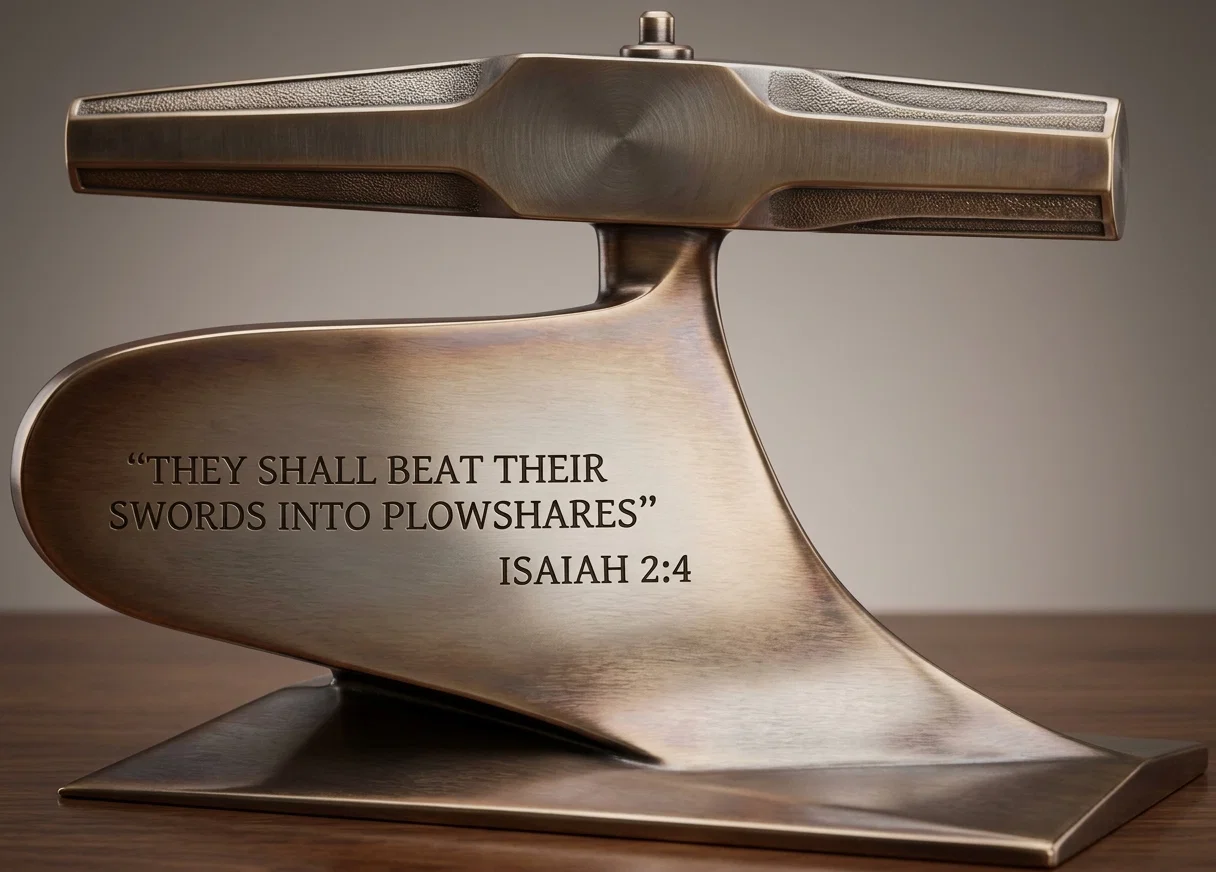
By far the greatest and most deceptive misconception, and the one which has the most far-reaching results, is that held by the evangelical churches of to-day. Almost without exception, they are preaching a thousand years of peace anterior to the advent of Christ. Then when Jesus comes, He will be the political as well as the religious head of the world. To substantiate this theory, its advocates refer to the statement, “They shall beat their swords into plowshares.” Secretary Bryan recently typified this belief by casting a number of old swords into the form of miniature plowshares. After he had inscribed upon them the verse above quoted, he presented one to the ambassador of each nation that has recently signed a treaty of peace with the United States.
“Secretary Bryan recently typified this belief by casting a number of old swords into the form of miniature plowshares.”

Evolution or Revolution

Jesus will come before the millennium. The Bible does not leave us in doubt as to that point. But the social reforms that are being carried on in the large cities, will never bring the advent of Christ. The world will never evolve from its present sinful state into being the kingdom of heaven. The world will never be legislated into perfection. The change will be revolutionary. “In the days of these kings shall the God of heaven set up a kingdom,” said Daniel, “which shall never be destroyed: and the kingdom shall not be left to other people, but it shall break in pieces and consume all these kingdoms, and it shall stand forever.” Dan. 2:44.
In preceding verses of the same chapter of Daniel, the kingdom of Christ is symbolized by a stone cut out of the mountain, and cast at the kingdoms of this world. They become as chaff, and are carried away by the wind. The kingdom of the Lord is not composed of the same sinful material that composes the nations of the earth. The prime qualification of citizenship is conversion, John 3:3. We are born into the kingdom of God, not socially reformed into it.

May We Know of His Coming?

The church of Christ must know when its Lord is about to come. Before leaving this world, Jesus told the church of the events that would precede His return. His instruction in part is in the twenty-fourth chapter of Matthew. The sun was to be darkened, and the stars were to fall from heaven.
By referring to any detailed history of the past century, we find these events took place in the years 1780 and 1833 respectively. “When these things begin to come to pass,” He said, “then look up, and lift up your heads; for your redemption draweth nigh.” Luke 21:28.

Jesus Expected It

Jesus expected the church to know the signs of the times and be prepared to tell the world of the impending Judgment. He said it should preach the gospel to every creature preparatory to the advent. The instruction He gave, He considered sufficient; for He said, “Watch therefore.” The day and the hour are known only to the Father; but by the conditions that were to prevail before the advent, the church was to be aware of its proximity. Why would the Lord have required the preaching of the gospel of the kingdom, if that kingdom were not at hand? The church of the Middle Ages had no such commission, nor did Paul preach such a gospel. John the Baptist and Jesus alone preached the gospel of the nearing kingdom; and it is given to the church in the end of the world. To be able to preach it at the right time, that the cause suffer no loss, the church must know when it is near.

Explicit Prophecies

Other prophecies are even more explicit in the prediction when time shall end. The angel of Revelation (chapter 10) announces when time shall be no longer and the Judgment of God is due. Rev. 14:6. Daniel tells that the Judgment of God (the cleansing of the sanctuary, Dan. 8:14), takes place at the end of the 2,300 years, or in 1844. When this Investigative Judgment is completed, Jesus will come, “to give every man according as his work shall be.” Rev. 22:12.
At the close of the millennium, the wicked will suffer eternal death, the wages of sin. This earth will then be re-created, and God’s plan will proceed as though there had not been an interruption of six thousand years of sin.

True Character in Christ

TRUE idealism sought without the divine Christ is unobtainable—a diamond in the bottomless pit; but we in Christ and He in us is true character—a diamond cut, polished, and set. H. W. COTTRELL.

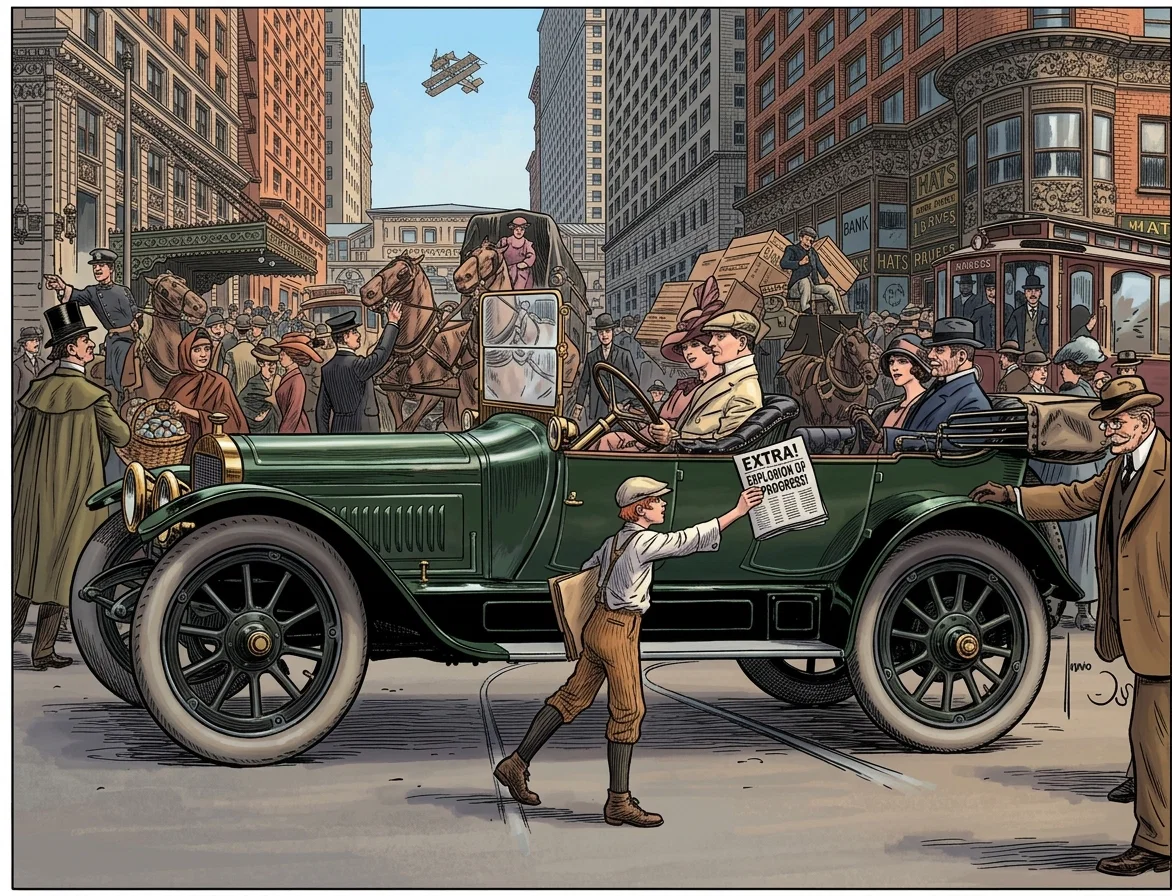
Explosion of Progress and Invention

It Was Foreseen and Foretold—A Prediction That Is Twenty-Five Hundred Years Old—But It Accurately Describes Us To-Day
By E. B. Nelson
“BUT thou, O Daniel, shut up the words, and seal the book, even to the time of the end: many shall run to and fro, and knowledge shall be increased.” Dan. 12:4.
There are in this verse three tokens of the time of the end: first, certain words that had been spoken to Daniel should be closed, or not understood, until the time of the end; second, at that time, many should run to and fro; and third, knowledge should be increased. A period of time in which these conditions prevail must indisputably be the time of the end.

CLOSED AND SEALED TILL A GIVEN TIME

Has such a time been known? Have the words which so greatly perplexed Daniel, and which he said he understood not, been made plain to the men of any time since then? To Daniel’s inquiry, “O my Lord, what shall be the end of these things?” the angel replied, “Go thy way, Daniel: for the words are closed up and sealed till the time of the end.” Dan. 12:8, 9.
“Many shall run to and fro, and knowledge shall be increased”
Daniel’s day was not this time. His other visions had been explained to him; but this one, which pertained solely to the end of time, was left a mystery to him. God does not reveal the knowledge of a particular epoch to men living a long time before that epoch. Such knowledge would be useless. Forty years before Israel was delivered from Egypt, they knew nothing of their deliverance. Moses “supposed his brethren would have understood how that God by his hand would deliver them: but they understood not.” Acts 7:25.
But when the time is at hand, then God gives to men the knowledge essential for that time. So we may expect that as the time of the end draws near, men’s minds will be turned to the prophecies of the end, and understanding be given concerning them.

THE PROPHECY UNSEALED

Has such ever been the case? In answer, I quote from a book entitled “The Time of the End,” which was published in 1856, and which is the testimony of over a hundred eminent men concerning the nearness of Christ’s second advent. The following words are by the compiler, a Congregationalist:
“It is not to be truthfully disputed that during the last half century the attention of the church has been called to the study of the prophetic Scriptures, in a manner never before witnessed, and with an intensity and earnestness of investigation that is irreconcilable with any theory that denies that God is thus moving upon the people, and preparing His chosen ones for some manifestation of His dealings with them, the nature of which can only be known by a careful and prayerful study of His word.”
And attention was especially turned to this prophecy in Daniel that was to be sealed till the time of the end. During the early years of the nineteenth century, men in every quarter of the globe began to study the prophecy, and entirely independent of one another, gave to it the same interpretation. Among these men were William Miller in America, Edward Irving and William Cuninghame in England, Hans Wood in Ireland, Archibald Mason in Scotland, and Joseph Wolff in Asia. By the authority of God’s word, this particular portion of Daniel was to be sealed till the time of the end; and this movement in the first half of the nineteenth century can mean nothing else than that this time had been reached.

“SHALL RUN TO AND FRO”

To strengthen this conclusion is the fulfillment of the second and third tokens of the end revealed to Daniel by the angel,—“Many shall run to and fro, and knowledge shall be increased.” If a person wished to deny that the prophecies of Daniel have been unsealed and can be understood, he could not gainsay the fact that since the beginning of the nineteenth century there has been an increase in all lines of knowledge, Biblical and secular alike, such as no previous century ever witnessed.

THE MARCH OF INTELLECT ITS NAME

In his lecture on “The Signs of the Second Advent,” delivered at Exeter Hall, London, in 1848, Dr. John Cumming said:
“The march of intellect is the name with which the present age has christened itself. Let that chemist work in his laboratory; encourage that astronomer, who spends the night in cataloguing groups of stars; let that mathematician pore over books, and waste the midnight oil; let that schoolmaster prosecute his work; let all men work hard, and work constantly. They are unconsciously under an impulse of which they see not the end. That impulse is a divine one; they are opening channels for the gospel.”
Dr. Arthur T. Pierson says: “This is the world’s golden age so far as invention and discovery, intelligence and material progress, can bring it. Measured by achievement, each year is a century.”
“One decade of years from 1875 to 1885 witnessed a forward stride of the race more gigantic than all the previous ages of history,” are the words of Gladstone.

“OUTBREAK OF INVENTIVENESS”

Robert Mackenzie, in his history of the “Nineteenth Century,” says, “The great outbreak of inventiveness by which our century is distinguished has left no province of human affairs unvisited.”
James P. Boyd speaks of the age as follows: “The nineteenth century has achieved triumphs and accomplished wonders equal if not superior to all other centuries combined.”
Previous to this century, each succeeding generation accepted the manner in which its fathers had lived as the most perfected one. No attempt was made to improve methods of labor or to better the conditions of living in any way. But with the dawn of the nineteenth century came a new order of things. The old methods were made obsolete by the improvements that were made in every industry and in all phases of life.

COMMON THINGS NOT KNOWN BEFORE

Nor did the work stop with one round of improvements. There has been one series after another, until to-day there could be given a list of over one hundred things which are commonplaces to us that were not known thirty-five years ago.
To enumerate a few of the nineteenth-century discoveries and inventions: The large number of ways in which electricity is used to-day has come from discoveries made by Volta, which were first publicly described in 1800. It was in 1814 that the first successful use of the steam engine was made, when George Stephenson’s “Puffing Billy” was put to work on a mine railroad in England. In 1819 the first ocean steamer plowed its way across the Atlantic. In 1844 a telegraph message was sent for the first time, and its words were the fitting ones, “What hath God wrought?” In 1846 Elias Howe perfected his experiments that gave us the sewing machine. In 1866 was completed the laying of the Atlantic cable, “that whispers in a minute from continent to continent.”

Material Progress Precedes the Coming Kingdom

Especially noticeable in these improvements are the ones affecting means of travel and communication. This is most significant. We have seen how the sealed prophecies of Daniel were opened to men’s minds during the first half of this century. This was evidence that the time of the end had come, which meant that the world must be warned. This would have been practically impossible with the methods then existing; so the minds of men were worked upon by God until there have been given to the world the most highly perfected systems for travel and communication that have ever existed.
What striking evidences that our day is the time of the end! The great increase of scientific knowledge which was to mark that time is the leading characteristic of our day. Those prophecies of Daniel which were to be closed up and sealed until the last days of time, have been opened within the last century. The great clock of time is about to strike the closing hour of earth’s history. Wherever one turns, one may see written in glowing letters, by the finger of God, “Behold, I come quickly;”
Continue reading: Wake Up the Mighty Men