A FURTHER REPORT OF THE MAMMOTH MEETINGS DEALING WITH THE GREATEST RELIGIOUS QUESTIONS OF THE DAY, AND PRESENTED IN THE LIGHT OF THE SOON-COMING WORLD'S CRISIS
By BENJAMIN G. WILKINSON
Sunday, April 16
TO-NIGHT is the fifth of our big meetings in the theater. After so splendid an audience last week, what shall we have to-night? We are glad to know that Dr. Morgan has again come from Philadelphia to play the organ, and I am sure that everything conspires to make a favorable evening.
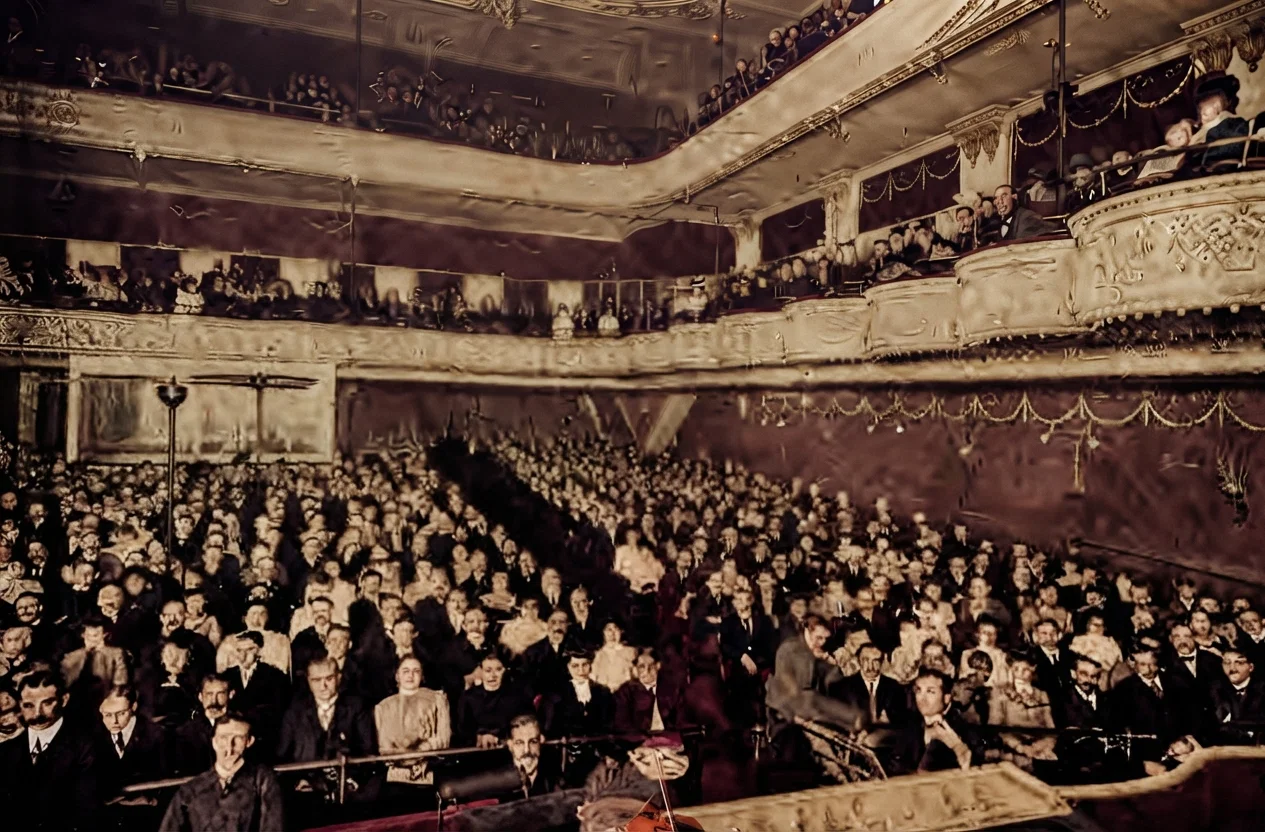
This is true. We have to-night the largest audience we have yet had. Every available seat and all standing space in the building are occupied. The ushers are even obliged to clear the aisles, in order that the fire laws may be observed. About three thousand people are present, while hundreds have been turned away. The building was fairly well filled by 6:45, and many of those who came at the 7:30 hour, which is the opening time, find themselves either without a good seat, or without any seat at all.
The subject of this lecture is "The Saints' Inheritance." The people listen to the exposition of the majesty of God in the creation of His universe, and to the thrilling Scriptural evidence that there are unfallen worlds which are inhabited. The Saviour's promise that "the meek shall inherit the earth," presents not the only legacy which is in reserve for those who love Him. The matchless universe, with its hundred million worlds that the telescope has already revealed, to say nothing of what stands yet unrevealed, constitutes the Saviour's domain; and every evidence goes to show that this little earth, the one sheep that has strayed away from the fold, is soon to be back safe with the other ninety and nine. On this earth the great conflict between good and evil is being fought out to a finish. The signs of the speedy return of our Lord make us believe that we are privileged to live in the greatest time in which it was ever given any mortal to live.
Again to-night a large number of names are passed in for reading matter, and the offering of the evening is $112.
Sunday, April 23
THIS is Easter night; and in all the churches, cantatas, oratorios, special orchestras, and musical programs are the order of the day. Many of our friends have told us that they cannot be with us this evening. Therefore we do not look for any such large audience as we had a week ago to-night; but when the hour for opening comes, we are pleased to note that the main body of the auditorium and the boxes are filled, also the second gallery, and part of the third gallery. It is estimated that some fifteen hundred at least are present.
The subject of the evening is "The Millennium." No effort is made to combat false theories on this subject. The speaker plunges at once into a consideration of "The Millennium: When and How It Begins; What Occurs During the Thousand Years; When and How It Ends." With manifest interest, the audience sit throughout the evening, no one leaving the auditorium. They want to know what is the true light of the Bible upon this important question; and as the speaker pictures to them from the Scriptures the coming of the Lord to this earth, the beautiful journey past unfallen worlds to the throne of God, and the great changes that are yet to come and are evidently soon to come, the audience manifest every sign of indorsement.
After the benediction is given, the crowd still linger, as if unwilling to go. They seem to say that contemplation of the things of God gives greater joy than anything else. In fact, one man in the audience, as he went out, spoke to one of the associate workers, saying that he had made up his mind that by the grace of God, he would stand at last on the sea of glass. He made an appointment for two of the workers to call at his house the next day, and give him a Bible study.
It was pleasing to stand at the doorway, and see the great streams of people coming down the stairs, and pouring out of the doors; and as they passed one by one, some gave their cards to the ushers, asking for reading matter upon the subject of the evening. We are pleased to learn of one man, a bond broker in the city of Pittsburgh, who publicly disclosed his intention to quit his tobacco, which he has used for many years, and to begin the observance of the Sabbath of the Lord.
Sunday, April 30
THIS is a great day in the history of Pittsburgh. This afternoon, there has been a big debate in the Pitt Theater, on the subject of preparedness. The speakers, unable to terminate the debate, and the judges, unable to decide it, have begged the crowd to adjourn to another theater, in order to make way for our coming meeting. But that is not all. The street car men are threatening to strike. At midnight, every car line in the city of Pittsburgh will be tied up. In the other theaters, there are assemblies of strikers addressed by fervent labor union chiefs; and we wonder if providence will be propitious to us, and has left us any vestige of a chance to have an audience.
However, yesterday — Saturday — we held our first public Sabbath meeting in the Moose Auditorium in the city. Nearly three hundred people assembled to worship with us on this Sabbath afternoon. So although to-night three thousand five hundred street car men will "walk out," and to-morrow or Monday the street car company will lose one thousand two hundred dollars in nickels, yet we hope for a hearing.
We are not disappointed. About twelve hundred people are present to listen to the subject of the evening, which is "The Second Coming of Christ." Of course, it is impossible for the speaker to avoid saying anything on the sign of capital and labor as seen in the epistle of James, chapter 5. We are told that one Sunday school teacher is out with all his class. A Jewish lawyer who has attended every meeting, expressed himself as believing that these meetings will be of great interest to the Jews, because emphasis is laid upon the true Sabbath of the Lord.
Sunday, May 7
WE have an excellent audience again to-night, fifteen hundred people filling the main auditorium and the boxes, and also nearly filling the second gallery. The electrician of the theater expressed his astonishment in the vernacular of the day when he said, "You certainly are getting the people." And this is now the eighth Sunday night meeting we have held in this theater. The subject of the evening is "Spiritualism, or Preparation Against Unseen Aggressors."
Emphasis is laid on the fact that all classes of society are dabbling in these mysteries, or as Dr. J. Raupert, a great scientist, says, "The tendency to occultism has been encouraged by men of science, by exalted personages at various courts, and by disinterested inquirers." "Among the intellectuals, we read further, are thousands of men and women who, after abandoning Christianity, have, in the search for some kind of spiritual life, plunged into 'occult science.' Society women and shop girls, clergymen in large numbers, city clerks and young men with a smattering of self-taught culture, are rushing to séances, crystal gazing, and the invocation of spirits to an extent incredible to one who has not kept track of this cause of emotional disturbance." (Current Opinion, April, 1914, page 283.)
After the speaker leaves the stand, he is5challenged by the leading spiritualist minister in the city to debate this question. As he goes to the door to shake hands with some of the stream of people coursing down the stairways and out of the aisles, the editor of one of the leading papers in the city steps up to him to ask him a question. He is interrupted about thirty times by those who pause a moment to address the speaker and say a few words on the subject of the evening, until the editor remarks, "You certainly have the people stirred."
That these meetings are not without influence upon people's lives may be seen by the fact that since these public meetings began, something like nineteen persons have decided to begin the observance of God's true Sabbath. Yet not a word has yet been said in public on the Sabbath question.
The Battering-Ram of the Reformation
By A. Earl Hall
THE Printing Press "Thundered Night and Day"—Providential Freedom for the Development of the Reformation—One Lone Man Defeats the Emperor's Sword
WE left Luther at the Diet of Worms, as he closed his reply to the emperor. Soon after the meeting was over, he started for his home. When he was on this journey, masked horsemen took him from the carriage in which he was riding, and took him to the castle of Wartburg. "The pope had launched his bolt, the emperor had raised his mailed hand to strike, on every side destruction seemed to await the Reformer; at that moment, Luther becomes invisible. The papal thunder rolls harmlessly along the sky — the emperor's sword cleaves only the yielding air." (Wylie, book 6, chapter 7.) "In 1523, another diet came to a precisely contrary resolution than Worms; and after nine years, the emperor, on his return, found the disturbance, instead of being quelled, had attained gigantic proportions." (Hausser, pages 46, 47.)
A Providential Imprisonment
WHAT a working of Providence! But of what value is the Reformer shut up in a castle? Let us see. During the few months of his forced sojourn, he began a work which, if he had done nothing else, would make his name immortal to Germany and the world. This was the translation of the Bible, the New Testament of which was completed in 1523. "A considerable number of German translations of the Bible might be mentioned; but they have all become bibliographical curiosities, and nothing is known of their influence upon the nation.
Luther's translation, on the contrary, is a historical event, both for those who regard the book as their rule of faith, and for those whom it prevented from longer withholding it from the world. . . . What a great and difficult work it is to make the Hebrew writers speak German! . . . The high German style had to be created, and it was created by Luther's labor." (Hausser, pages 60-63.)
The possessions and consequent influence of Charles V have been rehearsed in a previous article, also the signs of unrest in Germany. "His difficulty was complicated by the growth of Lutheranism, in addition to which was the quarrel with France, which was intensified because Francis desired the position of emperor. Then, too, the Turk must not be forgotten; troubles in Spain and expeditions to Africa occupy his attention during this period. Thus the cause of truth has nine years of almost unlimited freedom." (See "Encyclopædia Britannica," ninth edition, article "Charles V.")
The political situation is complex. The war on Luther is a farce. Francis is looking toward Italy. Charles is in doubt about the plans of the pope. In the battle of Pavia, during February, 1525, the emperor wins a decisive victory over Francis, and imposes a severe treaty upon him. This frightened the pope, who in May joined the vanquished in an alliance against Charles. Francis was of course absolved from the oath to keep the treaty he had just signed with the emperor. Before Charles knew of this, a letter was sent to the German princes, in which he speaks definitely of suppressing heresy, and was then counting on the pope and Francis.
Saved the Protestant Cause
THIS move of the pope against Charles was the one thing that saved the Protestant cause. Think of it — two Catholic rulers and the pope himself in an alliance to forward what they called heresy!
Yet another item: In 1526, at a Diet in Speyer (or Spires), it was decreed that "every state shall live, rule, and believe so that it shall be ready to answer for itself before God and his imperial majesty." (Hausser, page 107.) This sudden turn in affairs was a hard blow for the emperor. In a letter to the cardinals in October, he said that he could not understand it, as he had been very devoted to the church. He could not, on those grounds. The pope was of the house of Medici, which has furnished more than one infamous ruler for Europe.
The pope was in difficulty from another quarter. This takes us to England for a short time. Henry VIII had married his brother's widow. As this was contrary to the canon law, a special dispensation from the pope was necessary to make the marriage valid. In a few years, he became tired of her, and applied for a divorce, which the pope would not give. Catherine, the wife of Henry VIII, was an aunt of Charles V, the emperor. The embassy from England came just after the victory of Pavia, mentioned in a previous paragraph. Instead of granting the request, the pope sent a legate to England to investigate the matter further. He was in no hurry, and in 1529 was recalled to Rome. This greatly angered Henry, who organized a court, and the divorce was given him.
Charles was furious at the alliance of the pope and Francis. Just as the emperor was offering his aid to France and the pope to put down the heretics, he received for answer a declaration of war from both. (See Hausser, page 111.) A large army of Germans and Spaniards appeared before Rome on the sixth of May, 1527. It was a wild scene, as plunder was one object of the attack. "The Germans mocked the sacred relics of Rome, and proclaimed Luther as pope." (Id.) Other complications arose; but we notice that in 1529, after a prolonged visit of Charles with the pope, a reconciliation took place, and the emperor was again ready to strike at the Reformation. But an event of utmost importance in Germany in the same year now claims our attention.358
Planning a Blow at Luther
As Charles could not attend in person the Diet of Speyer of 1529, he delegated his brother Ferdinand to preside. This was another large assembly of princes, with their retinues of knights and servants, and on the other hand, Philip of Hesse and Melanchthon. The diet was called, and informed about the business to be done. In a word, it was this: The edict of 1526 (the Diet of Speyer) was to be repealed. A motion could be made to this effect, the diet would be dismissed, and all could return home. An easy task this. But what did it mean? — "Religious freedom then, so far as enjoyed in Germany, was to be abolished."
The edict of 1526 suspended the edict of Worms regarding Luther and the cause for which he stood. By the repeal of that, the sentence passed upon Luther would come into operation, which meant that he would be put to death, and the Reformation be rooted out of the land. Persecution would of necessity follow. "The message, if passed into law, would have laid the rights of conscience, the independence of the diet, and the liberties of Germany, all three, in the dust." (Wylie, book 9, chapter 15.)
On the eighteenth, Ferdinand presided, as usual, and told the diet he was grateful for the work it had accomplished. He then turned to the elector of Saxony, Luther's protector, and told him the matter was decided, and they must submit to the majority. This was a rather abrupt answer, and the Protestant members retired to draw up a statement of their position. On the morning of the nineteenth, they appeared to present it; but Ferdinand had gone. He knew but one word, "Submit." Nevertheless, the "protest" was read. A few sentences are given, to illustrate the general character of this famous document:
A Memorable Protest
"WE are resolved, with the grace of God, to maintain the pure and exclusive preaching of His holy word. This Word is the only truth, . . . and can never fail or deceive us. . . . He who builds on this foundation shall stand. . . . For these reasons, most dear lords, uncles, cousins, and friends, we earnestly entreat you to weigh carefully our grievances and our motives. If you do not yield to our request, WE PROTEST, by these presents before God, our only Creator, Preserver, Redeemer, and Saviour, who will one day be our judge." — Wylie, book 9, chapter 15, "Historical Leaflets," No. I, full report.
"This protest, when we consider the long domineering and formidable character of the tyranny to which it was opposed, and the lofty nature and vast range of rights and liberties which it claimed, is one of the grandest documents in all history, and marks an epoch in the progress of the human race second only to that of Christianity itself." — Id.
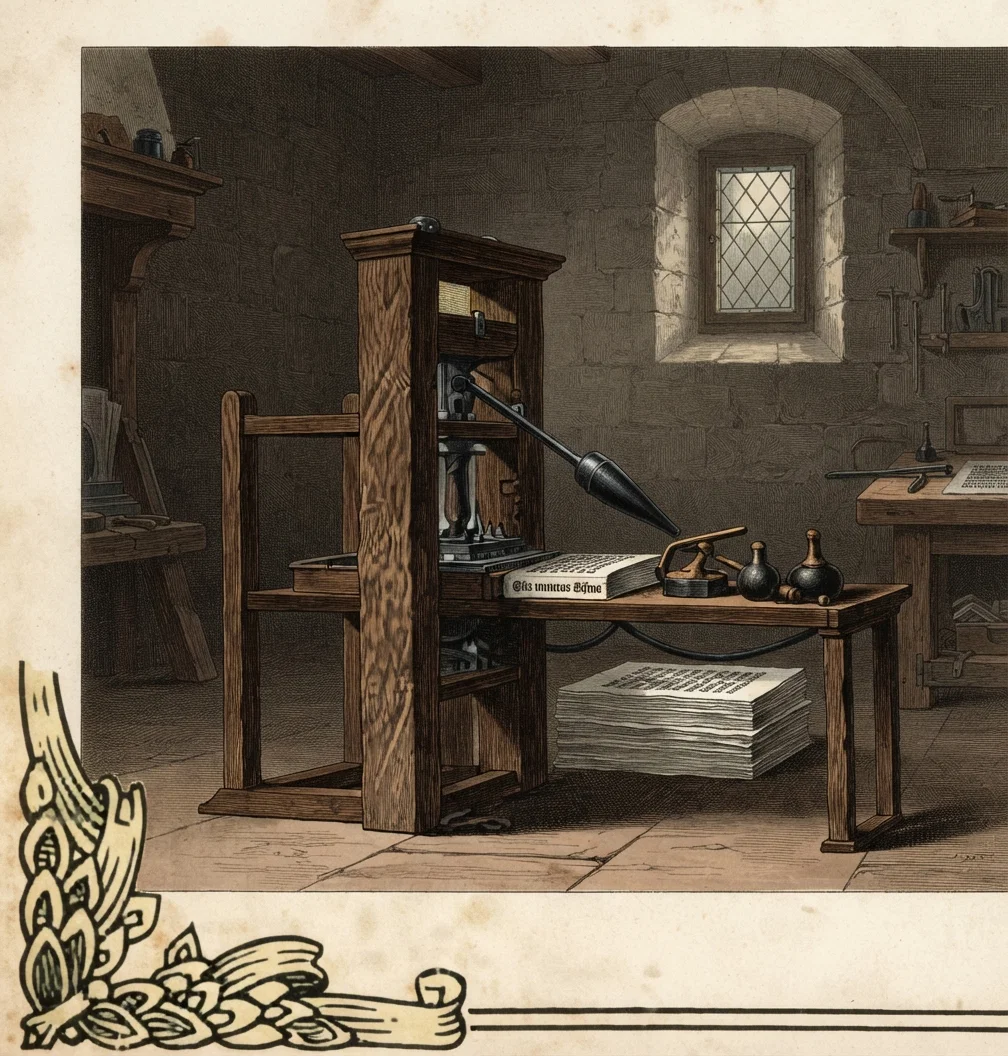
Think of it! Secular princes understanding so much of the gospel and the principles of Christianity within eight years after Luther's first public appearance! What greatly helped to make this possible? One sentence will answer this question: "The printing press, like a battering-ram of tremendous force, thundered night and day against the walls of the old fortress." (Id., book 9, chapter 3.) "In 1523, four hundred and ninety-eight publications, most of which were Protestant, were issued from Wittenberg." (D'Aubigné, book 9, chapter 11.) In this connection, it is interesting to remember that Luther spoke of the printing press as the "latest and greatest gift by which God enables us to advance the things of the gospel."
At the Diet of Augsburg, in 1530, Charles was present — the first time he had been in Germany since 1521. The whole situation was gone over, as he was very anxious for the uniting of the opposing parties. It cannot be too fully understood that Charles never comprehended the real principles at issue. As it would be too much of an insult to those concerned, Luther did not come to the meeting, but was in a castle not far away. A creed or confession was drawn up by Melanchthon at the request of the emperor. It was a rather mild paper that he presented, as he was inclined to give every possible point to his opponents. It should also be remembered that Luther would have made it much stronger, and emphasized the points of difference. This document forms the creed of the Lutheran bodies of to-day.
Resulted in Complete Religious Freedom
THE Statement of Charles, at the close of the Diet of Augsburg, that pending a council, the Protestants should submit to the pope, was to go into effect in six months. But spring came, and there was no execution of the threat. Charles was very anxious that his brother Ferdinand should be elected king of Germany; but even the Catholics opposed this. At this juncture, the Turks were coming up the Danube, and Charles was forced to sign a truce with the Protestants, to secure their much needed help in the campaign against the Turks. A large force was mustered, and started after the "on-coming infidel." For some reason, they did not offer battle, but retreated, as they had in 1529. This truce gave the Protestants complete religious freedom.
An Empire Powerless Before One Man
IN 1535, Charles conducted an expedition to Tunis; and in 1541, to Algiers. In 1540, a rebellion in Ghent was suppressed; but in 1542, he was again at variance with Francis, and continued thus until 1544. This gave another free period for the Reformation.
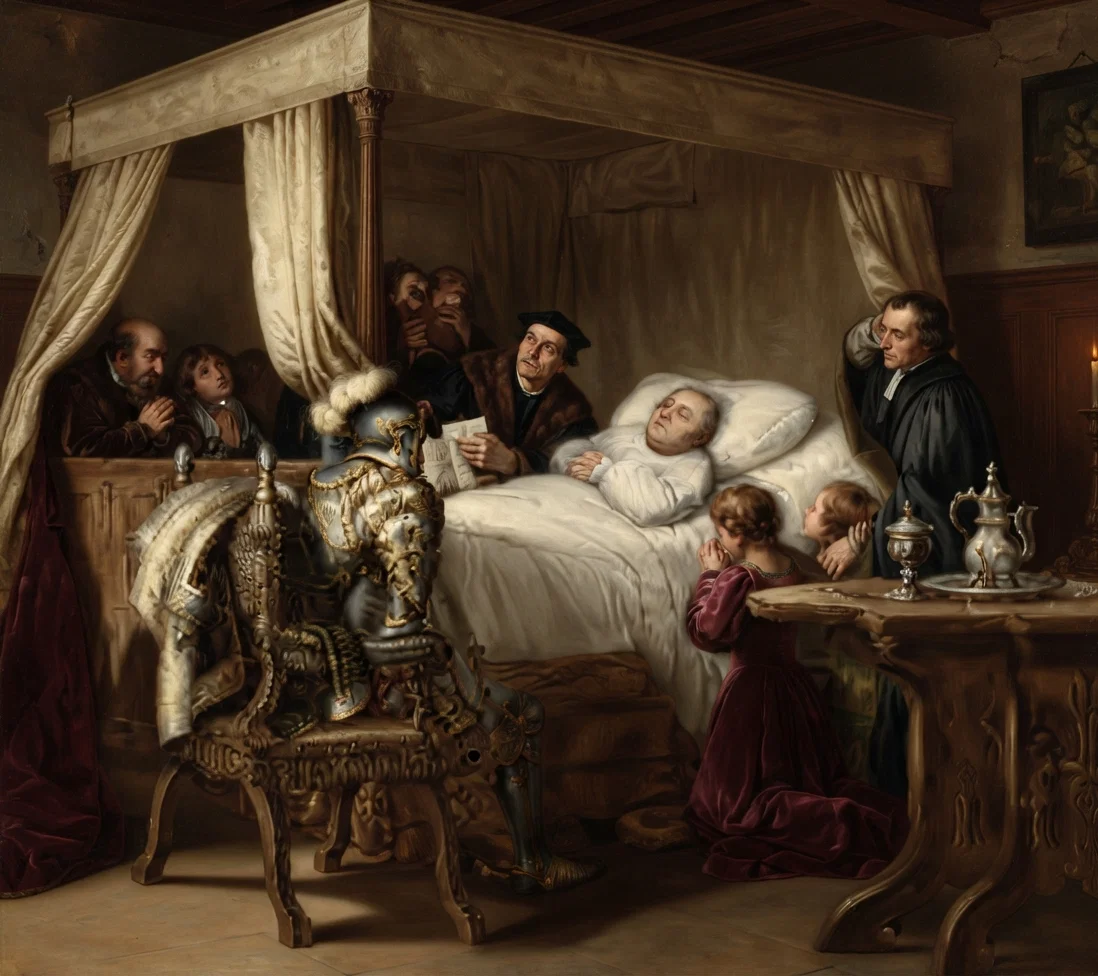
Luther was becoming very weary, and suffered much. On the seventeenth of February, he quietly passed away. A part of his last prayer is here given, as we believe the reader will be interested to read it.
"O God, my heavenly Father, and Father of our Lord Jesus Christ, God of all consolation, I give Thee thanks that Thou hast revealed unto me Thy Son, Jesus Christ, in whom I have believed, whom I have confessed, whom I have loved, whom I have declared and preached. . . . I beseech Thee, my Lord Jesus Christ, receive my soul." Three times he repeated these words, "Into Thy hands I commit my spirit; Thou hast redeemed me, O God of truth, and then gently passed away." — Wylie, book 12, chapter 4.
Luther died on his own bed. He had often said it would be a disgrace to the pope if he should so die. Ever since 1521, the law of the empire and the pope's anathema had hung over him, yet no harm came to him from either source. The emperor's sword could defeat France, the Turks, win victories in Africa, and even curb the papal policy, but was powerless against one lone man, the embodiment of the Reformation and of the principles of Protestantism.
The Treaty of Augsburg, 1555
REVERSES brought Charles to his knees in 1552. In fact, he was nearly taken prisoner by a German prince. His abdications followed, and he retired to a monastery in Spain. The peace gave full recognition to Lutheranism. But it was not satisfactory to either party, and was to a large extent the cause of wars that followed. This period of religious wars will be the subject of the next article in this series.
LUTHER'S DYING PRAYER
The Christ Touch
By M. A. H.
CHRIST touched the leper, and healed him. He Himself was not contaminated. In this world of sin, we may touch and heal the afflicted, yet not become infected, if it be the Christ touch. Without that, we would be contaminated. Phil. 2: 15. M. A. H.
The Redemption of the Body
By E. Hilliard
MANY believe that the saints of God will have no material bodies in the future world. But why not? Was not Adam, before he sinned, in possession of a corporeal body? Is not redemption full restoration to the Edenic condition? Under the decree of the Creator, “Dust thou art, and unto dust shalt thou return,” the body returns to its original element. Notwithstanding it crumbles to dust, the Scriptures teach that the saints will come forth from the tomb bodily. Job says, “After my skin worms destroy this body, yet in my flesh shall I see God.” Job 19: 26. The prophet Isaiah plainly declares that “thy dead men shall live, together with my dead body shall they arise.” Isa. 26: 19.
Is not the resurrected body of Christ proof that all the redeemed saints will have bodies fashioned like His glorious body? Christ, after His resurrection, proved to His disciples His identity by revealing Himself bodily. He said: “Behold My hands and My feet, that it is I, Myself: handle Me, and see; for a spirit hath not flesh and bones, as ye see Me have.” And “we know that, when He shall appear, we shall be like Him.” Luke 24: 39; 1 John 3: 2. Now Christ arose bodily from the tomb, in bodily form ascended, in the presence of men, and will return in like manner. Acts 1: 9-11.
In speaking of redemption, the apostle Paul says, “We ourselves groan within ourselves, waiting for the adoption, to wit, the redemption of our body.” Rom. 8: 23. Father Adam will be resurrected soul and body, and placed again in Eden, to dress and keep the garden. This is redemption — full restoration; and it is not for Adam only, but for all who are loyal to the mandates of heaven. Let us thank the Lord that in the resurrection morning, our loved ones will have hands for us to grasp. We will talk face to face with them and with our glorified Redeemer.
E. HILLIARD.
The Patrons of Divorce Courts
By T. E. Bowen
Divorce courts these days have plenty to do. For one cause and another, the marriage vow is severed. This is because of the hardness of men's and women's hearts. God joined the first pair in Eden. He provided for no separation. This came later, but Jesus said that in the beginning it was not so.
This is what our Lord says about divorces: "It was said also, Whosoever shall put away his wife, let him give her a writing of divorcement: but I say unto you, that every one that putteth away his wife, saving for the cause of fornication, maketh her an adulteress: and whosoever shall marry her when she is put away committeth adultery." Matt. 5: 31, 32, A. R. V.
This language is authoritative and explicit, and is the rule laid down by Him who has been appointed by the Father to judge the world. This will be the rule, therefore, by which persons patronizing divorce courts shall be judged when their cases come in final review before the bar of God.
T. E. BOWEN.
Let Down Your Net
By Eliza H. Morton
EVERY one of us has a net. The Lord of the sea commands us to let it down. It may be a small net, and out of repair; but Jesus says, “Let down your net.” To let down our net is to do what God commands us to do, and to do it without question and without excuse: When God says, “Remember the Sabbath day, to keep it holy,” let down your net, and you will find it filled with blessings.
ELIZA H. MORTON.
Contentment in Every State
By Paul
I HAVE learned, in whatsoever state I am, therewith to be content.—Paul.