Your ShelfYour Projects

Signs of the Times, Vol. 22, No. 32.

A Lesson from Daniel

Signs of the Times

Aug 13, 1896

Pacific Press Publishing Company · Oakland, California · Aug 13, 1896

A Lesson from Daniel
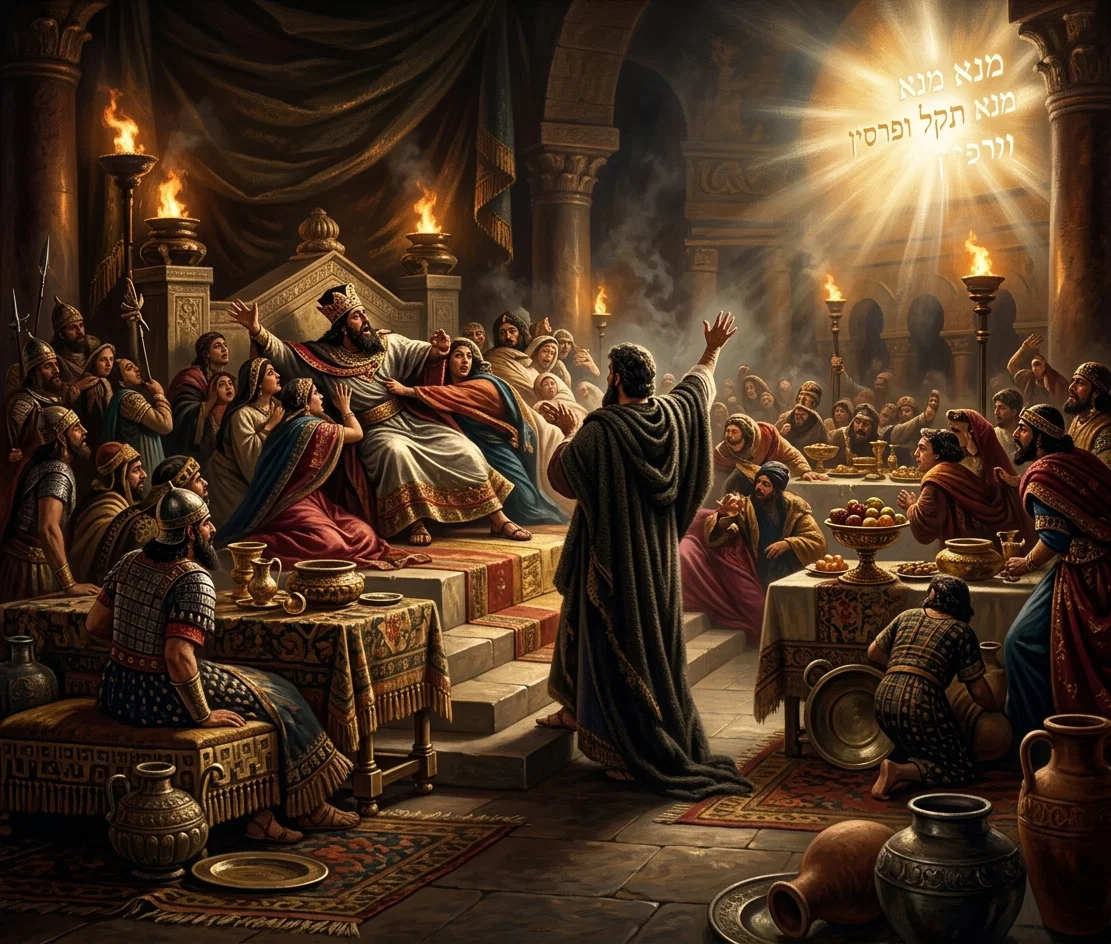
A Lesson from Daniel.—One of the most interesting things of the book of Daniel is the feast of Belshazzar, with its handwriting on the wall.
Who Was Belshazzar?—He was the last king of proud Babylon, reigning conjointly with his father, Evil Merodach, who was, at the time of Babylon’s fall, absent from the city. Belshazzar was grandson of Babylon’s mightiest king, Nebuchadnezzar.
His Lessons.—He had had the privilege of learning some of the useful lessons of life. He must have known of the dream of Nebuchadnezzar, interpreted by Daniel, the prophet of the God of Israel; and that God in that interpretation had declared that it was He, the God of heaven, that had given to Nebuchadnezzar his kingdom. He had learned of Nebuchadnezzar’s attempt to force the loyal servants of God to worship the great golden image on the plains of Dura. He had learned the utter failure of that attempt, the death of the king’s warriors who attempted to execute his sentence, and the miraculous preservation of the servants of God in the furnace of fire. He had learned of the proud monarch’s humiliation when he exalted himself against God, of his seven years of insanity and exile, of his subsequent restoration to his kingdom, and his acknowledgment that the God of Israel “doeth according to his will in the army of heaven, and among the inhabitants of earth,” and that “those who walk in pride he is able to abase.” Belshazzar doubtless knew, or had the opportunity to know, all of these things, for they must have been matters of public record. Yet did he not take them to heart.
His Sin.—Instead of learning that “the Most High ruleth in the kingdom of men,” he seemed to think that he ruled, and his kingdom, Babylon, would stand forever; that even then, while the victorious Medes and Persians were without, the city’s mighty walls would resist all attack; and in nightly revel he boasted of his puny power and cheap glory. On the last night of his inglorious revel, drunken with wine and vanity, he called to his lackeys to bring forth, from the place where Nebuchadnezzar had deposited them, the golden vessels taken from the holy temple of Jerusalem, “that the king, and his princes, his wives, and his concubines, might drink therein.” In the graphic words of the poet—
“Bring forth, cried the monarch, those vessels of gold Which my father tore down from the temple of old. They are brought, and before him the vessels all shine; And he bows unto Baal, and he drinks the dark wine.”
The Scripture declares, “They drank wine and praised the gods of gold, and of silver, and of wood, and of stone.” He debased the holy of the Lord to honor the heathen sun-god Baal and his images.
The Sequel.—Belshazzar had taken his last step, and had crossed the “hidden boundary,” beyond which there is no returning. “In the same hour” the hand sent from God traced in letters of fire on the plaster of the wall of the palace before the king, “MENE, MENE, TEKEL, UPHARSIN.” The king’s guilty heart told him that it portended evil, but he could not read it. His wise men and astrologers and soothsayers and Chaldeans are blind to its meaning. The fiery, heart-piercing letters strike deeper terror to the guilty soul of the king as they remain unread. Finally, through Nebuchadnezzar’s widow, Daniel, the aged, is called. He comes in; boldly he tells the king to give his rewards to others, and keep his gifts to himself. It is not the mission of God’s prophets to labor for such baubles. He pointed out the lessons which God had taught the kings of Babylon through Nebuchadnezzar, how God humbled his pride, and yet Belshazzar had not humbled his heart, tho he knew it all; but he had lifted up himself against God, had profaned God’s holy things by praising the gods that were no gods, while “the God in whose hand thy breath is, and whose are all thy ways, hast thou not glorified.” Therefore the writing, the sentence, the doom: “MENE: God hath numbered thy kingdom and finished it. TEKEL: Thou art weighed in the balances, and art found wanting. PERES: Thy kingdom is divided, and given to the Medes and Persians.” That very night was slain Belshazzar the king, and Babylon passed to her conquerors.
“For Our Learning.”—“Whatsoever things were written aforetime were written for our learning.” Rom. 15:4. God gave these lessons in the beginning to teach those who lived at the time the lesson was given. He had them written, that after ages might profit by the same lessons. May we not learn a lesson here? There are no divers weights and measures in God’s balances. His weights and measures and rules are of eternal righteousness, weighing, measuring, estimating us at just what we are.
He Has Given Us Lessons, many precious lessons, and often repeated. By numerous scriptures and simple laws, repeated “o’er and o’er again,” has he told us his will. He has declared the reward of obedience, and the fearful results of disobedience. He has illustrated this by numerous examples, from Cain to Ananias. He has shown, and is constantly showing, us that righteousness is life, and sin is death. He has shown that righteousness enlightens, while sin blinds and deceives. He has revealed by precept and example how holy are his precepts and institutions, and that he accepts no substitutes for either. His glory will he not give to another.The common fire will not become sacred, tho kindled by a consecrated priest, whose mitre bears the inscription, “Holiness to the Lord.” The holy ark can not be wantonly handled by the “holy nation,” or even by the consecrated Levites. Not even the king may serve at the priestly altar; in the holy work, with unholy heart and hands, health turns to leprosy. The man and woman who loved a lie could not live in the presence of the Spirit of God, while the sinner who longed for righteousness is cleansed and made whole. These are among the lessons that God has given this generation, lessons that should lead to consecrated carefulness and faithfulness in his service. More than this, he has revealed to us his great love and his mighty helpful power and sympathy in Christ Jesus,—a love longing to save, stooping to save, mighty to save from sin to righteousness. And God has revealed all this that responsive love and gratitude may lead us to the greatest faithfulness in his service.
Weighed.—But we shall be weighed, all and each. The kings and rulers of earth will be weighed. A great, proud, worldly church will be weighed in the balances of God’s sanctuary. Six thousand years of light and object lesson have been flooding her pathway; how has she received it? Has she turned toward it? or has she placed herself between it and the clearly revealed duty, blinding self and obscuring duty? God’s law of ten words, interpreted by prophet and apostle, worked out in the life of Christ, has been demanding obedience—obedience to the one God, the Creator of heaven and earth, regard for his holy Name, reverence and observance of his holy Sabbath; how has she regarded these things?—She has turned from the law to tradition, has offered her Sunday substitute for the holy Sabbath of the Lord. “Her priests have violated my law, and have profaned mine holy things; they have put no difference between the holy and profane, neither have they showed difference between the unclean and the clean, and have hid their eyes from my Sabbaths, and I am profane among them.” Eze. 22:26. God is weighing these things. He is weighing each one, you, reader, among the rest. He is measuring your character by the law; he will weigh us all by the unerring scales of truth and justice.
“Found Wanting.”—Shall the verdict be, “Found wanting”? Man’s tradition, however hoary, will not profit then. Great names, however honored of men, will not furnish introduction to Eden’s home. Church, priest, or pope can not grant absolution then of sins unconfessed to God. The counterfeit Sabbath or creed or character will not pass current there. The all-scrutinizing eye of God will detect every sham and every flaw. The letters of living light of his holy law will strike through and through with fearful dread every guilty soul, and TEKEL will be inscribed on every brow, “Thou art weighed in the balances, and found wanting.” But it need not be so to a single soul. God has given us this lesson of Belshazzar to warn us. He has given us his word to guide us. He has given us his Spirit to enlighten us. He has given us his Son to save us. Will you not yield all to him, that the verdict may be, “Well done”?

Christians and the State

We come now to the second of the purely hortatory chapters of Romans, the thirteenth. This chapter contains matter that is of the greatest importance, and which is perhaps the least regarded of any chapter in the book. Without any review we will proceed to read:—
“Let every soul be subject unto the higher powers. For there is no power but of God; the powers that be are ordained of God. Whosoever therefore resisteth the power, resisteth the ordinance of God; and they that resist shall receive to themselves damnation. For rulers are not a terror to good works, but to the evil. Wilt thou then not be afraid of the power? do that which is good, and thou shalt have praise of the same; for he is the minister of God to thee for good. But if thou do that which is evil, be afraid; for he beareth not the sword in vain; for he is the minister of God, a revenger to execute wrath upon him that doeth evil. Wherefore ye must needs be subject, not only for wrath, but also for conscience’ sake. For, for this cause pay ye tribute also; for they are God’s ministers, attending continually upon this very thing. Render therefore to all their dues: tribute to whom tribute is due; custom to whom custom; fear to whom fear; honor to whom honor. Owe no man anything, but to love one another; for he that loveth another hath fulfilled the law. For this, Thou shalt not commit adultery, Thou shalt not kill, Thou shalt not steal, Thou shalt not bear false witness, Thou shalt not covet; and if there be any other commandment, it is briefly comprehended in this saying, namely, Thou shalt love thy neighbor as thyself. Love worketh no ill to his neighbor; therefore love is the fulfilling of the law. And that, knowing the time, that now it is high time to awake out of sleep; for now is our salvation nearer than when we believed. The night is far spent, the day is at hand; let us therefore cast off the works of darkness, and let us put on the armor of light. Let us walk honestly, as in the day; not in rioting and drunkenness, not in chambering and wantonness, not in strife and envying. But put ye on the Lord Jesus Christ, and make not provision for the flesh, to fulfil the lusts thereof.” Romans 13.
In studying this chapter it is necessary to remember that the Epistle is addressed to professed followers of the Lord. “Behold, thou art called a Jew, and restest in the law, and makest thy boast of God, and knowest his will,” etc. Rom. 2:17, 18. And again, “Know ye not, brethren (for I speak to them that know the law),” etc. Rom. 7:1. The last part of the chapter also shows the same thing. It is a mistake, therefore, to suppose that this chapter was designed to set forth the duties of earthly rulers, or as a treatise on civil government, or on the relation that the state should occupy to the church. Since it is addressed to professed Christians, it is evident that its object is simply to tell them how they ought to behave towards the governments under which they live.
All Power from God.—“God hath spoken once; twice have I heard this; that power belongeth unto God.” Ps. 62:11. “There is no power but of God.” This is absolutely true, without any exception. The Roman power, even in the days of the infamous and brutal Nero, was as much derived from God as was the Jewish power in the days of David. When Pilate told Christ that he had power to crucify him or to let him go, Christ replied, “Thou couldest have no power at all against me, except it were given thee from above.” John 19:11. This fact does not, however, prove that the acts of that power were right, or that God sanctioned them.
This will be the more apparent if we take the cases of individual men. All human power comes from God. It is as true of the heathen as of Christians, that “in Him we live, and move, and have our being;” “for we are also His offspring.” Acts 17:28. It can as truly be said of every individual as of governments, that they are ordained, or appointed, of God. He has a plan for every man’s life. But that does not make him responsible for all their actions, because they are free to do as they choose, and they rebel against God’s plan, and pervert his gifts. The power with which the scoffer blasphemes God, is as much from God as is the power with which the Christian serves him. Yet no one can suppose that God approves of blasphemy. Even so we are not to suppose that he necessarily approves the acts of governments, simply because the powers that be are ordained of him.
“Ordained.”—Let no one entertain the idea that this word necessarily implies the imparting of some spiritual power. It means nothing more than appointed or ordered, which we find in the margin. The Greek word from which it is rendered is found in Acts 28:23, where we read that the Jews in Rome appointed a day for Paul to tell them about the Gospel. It could as well be said that they ordained a day for him.
God over All.—“The higher powers” are not above the Most High. “Wisdom and might are his; and he changeth the times and the seasons; he removeth kings, and setteth up kings.” Dan. 2:20, 21. He set Nebuchadnezzar, king of Babylon, over all the kingdoms of earth (see Jer. 27:5–8; Dan. 2:37, 38); but when Nebuchadnezzar arrogated to himself divine power, he was driven out among the beasts, that he might know that “the Most High ruleth in the kingdom of men, and giveth it to whomsoever he will” (Dan. 4:32).
Resisting God.—Since there is no power but of God, “he that resisteth the power withstandeth the ordinance of God; and they that withstand shall receive to themselves judgment.” This is a warning against rebellion and insurrection. It is God who removes kings as well as sets them up. Therefore whoever presumes to remove a king is assuming God’s prerogative. It is as tho he knew better than God when the government should be altered. Unless the man or men who rise up against any earthly government can show a direct revelation to them from heaven, appointing them to that work, they are setting themselves against God, by seeking to overthrow his order. They are putting themselves ahead of God.
Resisting or Overthrowing.—To resist the civil authority is in the same line as seeking to overthrow it. He who opposes a power with force would overthrow it if the contest were continued and he had the power. This the followers of Christ are strictly forbidden to do.
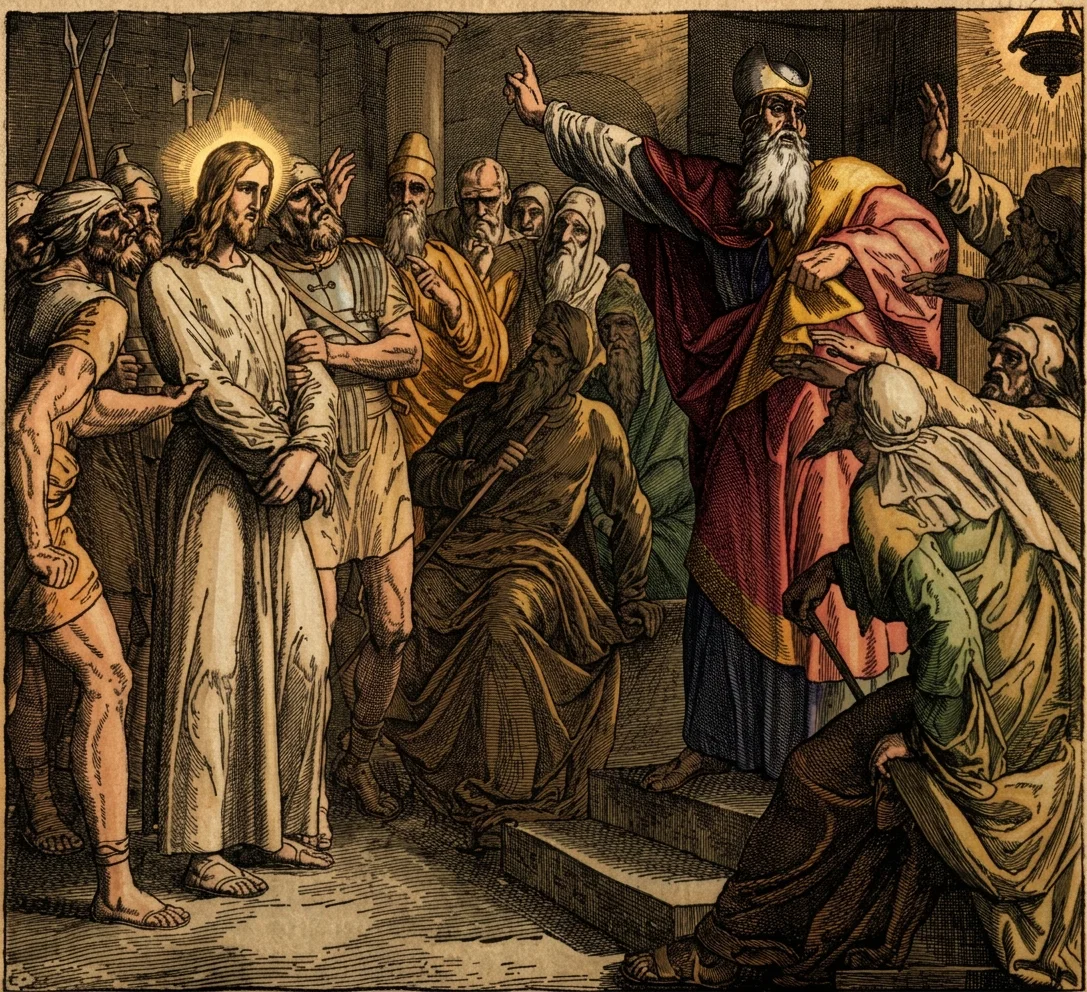
Christ’s Example.—Christ suffered, “leaving us an example, that ye should follow his steps; who did no sin, neither was guile found in his mouth; who, when he was reviled, reviled not again; when he suffered, he threatened not; but committed himself to Him that judgeth righteously.” 1 Peter 2:21–23. It is worth while to remember that Christ was condemned on a political charge, and for political reasons, yet he made no resistance, altho he showed that he had power to do so. See John 18:5–11; Matt. 26:51–53. It may be said that Christ knew that his hour had come. True; but he did not resist at previous times. He continually committed himself into the hands of the Father. That is an example for his followers. If they are submissive in God’s hands, they can suffer no indignity nor oppression that God does not appoint or allow; no injury can be done them before their hour comes. It is easier to profess faith in Christ than to show real faith by following his example.
Another Striking Example.—Saul had been anointed king of Israel by command of God; but had afterwards been rejected because of his reckless course. Then David was anointed king in his stead. Saul was jealous of David’s preferment, and sought his life. David did not resist, but fled. More than once Saul was within David’s power, but David would not lift up a hand against him. If there is any excuse for resisting a ruler, David had it. In the first place, if he had done so, it would have been only in self-defense; and, in the second place, he had already been anointed king in Saul’s stead. Yet when urged even to consent to allow another to kill Saul, David said: “Destroy him not; for who can stretch forth his hand against the Lord’s anointed, and be guiltless? . . . As the Lord liveth, the Lord shall smite him; or his day shall come to die; or he shall descend into battle, and perish. The Lord forbid that I should stretch forth mine hand against the Lord’s anointed.” 1 Sam. 26:9–11. And yet Saul was a wicked man, who had cast off allegiance to God, and was not fit to rule.
Subject to God.—God’s word admonishes us to be subject to the powers that be, but it never countenances disobedience to God. God has never ordained any power to be above himself. It is the height of folly for men to argue from this chapter that it is the duty of Christians to obey human laws when they conflict with the law of God. God does not grant indulgence to sin; much less does he command us to sin. We are not to be subject to the powers that be instead of to God, but because we are subject to God. “Whatsoever ye do in word or deed, do all in the name of the Lord Jesus.” Col. 3:17.
Subjection and Obedience.—Ordinarily subjection implies obedience. When we read that Jesus was subject to his parents, we are sure that he was obedient to them. So when we are exhorted to be subject to the powers that be, the natural conclusion is that we are to be obedient to the laws. But it must never be forgotten that God is above all; that both individual and national power comes from him; and that he has a right to the undivided service of every soul. We are to obey God all the time, and to be subject to human power as well, but always so that it does not involve disobedience to God.
Can Not Serve Two Masters.—“No man can serve two masters. . . . Ye can not serve God and mammon.” The reason is that God and mammon are opposite in their demands. Now everybody knows that there have often been human laws that conflicted with God’s commandments. There was once a law in America, in the days of slavery, requiring every man to do all in his power to return fugitive slaves to their masters. But God’s word said, “Thou shalt not deliver unto his master the servant which is escaped from his master unto thee.” Deut. 23:15. In that case it was impossible to obey the law of the land without disobeying God; and obedience to God made disobedience to the human law absolutely necessary. Men had to make their choice as to whom they would obey. The Christian can not hesitate a moment in his choice. The law that contradicts God’s law is nothing. “There is no wisdom nor understanding nor counsel against the Lord.” Prov. 21:30.
“Every Ordinance of Man.”—Some reader may quote 1 Peter 2:13 as opposed to this. It says, “Submit yourselves to every ordinance of man for the Lord’s sake.” Others may say that we are to submit to every ordinance except when it is opposed to God’s law. No exception, however, is implied, nor is any necessary. Neither does the text teach obedience to human laws that contradict God’s law. The error arises from a misapprehension of the word “ordinance.” It is supposed that this word means “law,” but a careful reading will show anybody that this supposition is a mistake. Let us read the thirteenth and fourteenth verses carefully: “Submit yourselves to every ordinance [Greek, creation] of man for the Lord’s sake.” Well, what are these ordinances or creations to which we are to be subject?—It makes no difference; to all, “whether it be to the king, as supreme; or unto governors, as unto them that are sent by him.” It is very clear that the text says nothing whatever about laws, but only about rulers. The exhortation is precisely the same as that in the thirteenth of Romans.
Submissive yet Disobedient.—Let the reader follow on in the chapter last quoted from, and he will see that the submission enjoined does not involve obedience to wicked laws. We are exhorted: “Honor all men. Love the brotherhood. Fear God. Honor the king.” We are to be subject to rightful authority, whether the exerciser of that authority be good and gentle, or froward. Then come the words, “For this is thankworthy, if a man for conscience toward God endure grief, suffering wrongfully.” 1 Peter 2:17–19. Now a man could not for conscience toward God endure grief, suffering wrongfully, unless conscience toward God had compelled him to disobey some command laid upon him. This statement, immediately following the exhortation to be submissive, plainly shows that disobedience is contemplated as a probability when those in authority are “froward.” This is emphasized by the reference to Christ, who suffered wrongfully, yet made no resistance. “He was oppressed, and he was afflicted, yet he opened not his mouth; he is brought as a lamb to the slaughter, and as a sheep before her shearers is dumb, so he opened not his mouth.” Isa. 53:7. He was condemned for his loyalty to the truth, which he would not compromise in the least, and yet he was submissive to the authority of the rulers. The apostle says that in this he left us an example, that we should follow in his steps.
Christians and Civil Government.—“For our citizenship is in heaven; from whence also we wait for a Saviour, the Lord Jesus.” Phil. 3:20, R. V. Those who through Christ have access by one Spirit unto the Father, “are no more strangers and foreigners, but fellow-citizens with the saints, and of the household of God.” Eph. 2:19. Let every man concern himself with the affairs of his own country, and not with those of another. For an American to come to England and presume to lecture Parliament for the way in which it conducts the business of government, or for an Englishman to go to America and distinguish himself by his advice to the authorities, would be the height of impertinence. But if they should begin actively to interfere in the conduct of public affairsor should stand for office, they would speedily be shown that they had no business there. Let them become naturalized, and then they may speak and act as much as they please; but then they must hold their peace if they return to the country to which they once owned allegiance. No man can be active in the affairs of two governments at the same time. This applies to the government of heaven as related to earthly governments, as well as to different countries on earth. The man who is a citizen of the heavenly country has no business to meddle with the affairs of earthly governments. He must leave that business to those who acknowledge this earth to be their home. If earthly rulers think to regulate the affairs pertaining to the kingdom of God, they are guilty of gross presumption, to say the least. But if they may not of right presume to regulate the affairs of the kingdom of heaven, much less may the citizens of heaven interfere in the affairs of earthly kingdoms.
Making Earth Heaven.—Many Christians and ministers of the Gospel seek to justify their dealing in politics by saying that it is their duty to make this earth the kingdom of heaven. In a recent campaign we have heard much about “the regeneration of London,” and “making London the city of God.” Such language shows a grave misapprehension of what the Gospel is. “It is the power of God unto salvation to every one that believeth.” Rom. 1:16. Regeneration is accomplished only by the Holy Spirit working upon individual hearts, and can not be controlled by men. The kingdoms of this world shall become the kingdoms of Christ, but only “the zeal of the Lord of hosts will perform this.” Isa. 9:7. There will be a new earth, in which only righteousness will dwell, but it will be only after the coming of the day of the Lord, in which the elements shall melt, and ungodly men shall be burned up. 2 Peter 3:10–13. It will not be brought about by political action, even though ministers of the Gospel be the politicians. The minister of the Gospel has but one commission, namely, “Preach the word.” In no other way in the world can men be made better. Therefore the minister who turns his attention to politics is denying his calling.
Keeping the Peace.—We must needs be subject to earthly governments, for conscience’ sake; and for this cause also we must pay tribute and perform every duty of that nature that is laid upon us. Taxes may be heavy, and even unjust, but that does not warrant us in rebelling. The apostle James speaks to rich men who oppress the poor, and his language applies as well when they are in public office as when in private life. He says: “Ye have lived in pleasure on the earth, and been wanton; ye have nourished your hearts, as in a day of slaughter. Ye have condemned and killed the just; and he doth not resist you.” James 5:5, 6. Mark this, the just do not resist. Why not?—Because of the injunction: “If it be possible, as much as lieth in you, live peaceably with all men. Dearly beloved, avenge not yourselves, but rather give place unto wrath; for it is written, Vengeance is mine; I will repay, saith the Lord.” Rom. 12:18, 19. As subjects of the King of peace, and citizens of his kingdom, they are bound to live peaceably with all men. Hence they can not fight even in self-defense. In this Christ, the Prince of peace, is their example.
To Whom a Terror.—Only the evil workers are afraid of rulers. Well-doers have no fear. This is not because all rulers are good; for we know that many are not. “The broad empire of Rome filled the world,” and the one who ruled it when Paul wrote to the Romans was the most vile and cruel of all the monsters who governed it. Nero put men to death for the mere pleasure of killing them. Well might he strike terror to the hearts of men; yet the Christians could be calm, because their trust was in God. “Behold, God is my salvation; I will trust, and not be afraid.” Isa. 12:2.
The Whole Duty of Man.—“Owe no man anything, but to love one another; for he that loveth another hath fulfilled the law.” “Love worketh no ill to his neighbor; therefore love is the fulfilling of the law.” “Love is of God; and every one that loveth is born of God, and knoweth God.” 1 John 4:7. “This is the love of God, that we keep his commandments.” 1 John 5:3. To fear God and keep his commandments is the whole duty of man. Eccl. 12:13. Therefore, since he who loves his neighbor from the heart must also love God, and love is the keeping of his commandments, it is evident that the apostle has set forth in this exhortation the whole duty of man. He who heeds this exhortation can never do anything for which earthly governments can justly condemn him, even tho he be ignorant of their laws. He who fulfils the law of love will never come in conflict with the powers that be. If they oppress him, they are fighting not against him but against the King whom he serves.
For Christians, Not for the Powers.—Some have supposed that verses 8–10 define the limits of civil authority, and show that men may legislate concerning “the second table of the law,” but concerning no other portion of the law of God. Two things kept in mind will show the fallacy of this. (1) The epistle is not addressed to rulers, but to individual Christians, as a guide for their private conduct. If the duty of rulers were here laid down, they, and not the brethren, would have been addressed. (2) “The law is spiritual,” and consequently none of it is within the power of human legislation. Take the commandment, “Thou shalt not covet;” no human power could enforce that, or tell if it was violated. But that commandment is no more spiritual than the other nine. The language is addressed to the brethren, and the sum of it is this: Live in love, and you will wrong no man, and need have no fear of any rulers.
The End Approaches.—The remainder of the chapter is devoted to exhortations that need no comment. Their special force is derived from the fact that “the end of all things is at hand.” Therefore we should “be sober, and watch unto prayer.” Altho living in the night, when darkness covers the earth (Isa. 60:2), Christians are children of the light and of the day, leaving off works of darkness.
Clothed with Christ.—Those who put on the Lord Jesus Christ, will not themselves be seen. Christ alone will appear. To make provision for the lusts of the flesh is most unnecessary, since the flesh ever seeks to have its lusts gratified. The Christian has need rather to take heed that it does not assert its own power, and assume control. Only in Christ can the flesh be subdued. He who is crucified with Christ, can say, “I live; yet not I, but Christ liveth in me; and the life which I now live in the flesh I live by the faith of the Son of God, who loved me, and gave himself for me.” Gal. 2:20. And in that case he will conduct himself towards rulers and private persons just as Christ did; “because as he is, so are we in this world.” E. J. W.
Continue reading: Answers to Questions