Signs of the Times, Vol. 41, No. 35.

SPIRITS OF DEMONS
Earlier text: A WORD TO OUR READERS

Saloons Must Go!

The untiring efforts of temperance workers is having its effect. The temperance number of the SIGNS OF THE TIMES is educating voters to the economic and moral good to follow the elimination of the saloon. A little more patience, a little more work on the part of all friends of the temperance cause, and victory will follow. Let us put our shoulders to the wheel again for a last supreme effort, and do it now, with the temperance SIGNS OF THE TIMES. 5 to 30 copies, 3¢ each; 40 or more, 2½¢ each. Order through our depository in your state. See list on page 15.

?? WHAT NEXT ??

Man's confidence in man suffered a shock when the dogs of war were unleashed a few weeks ago. It will suffer further shocks before long, when men will be unable to stay the pestilences, storms, and time of trouble which are so graphically described in the Bible. The editor of the Signs of the Times Magazine announces a series of articles on these very signs of the end, to begin next month. Christians and unbelievers too should follow these studies. Start subscription with the October number, just off the press. $1.00 a year. Five subscriptions from one person will be accepted at 60c each. Order through our depository in your state. See list on page 15.
SIGNS OF THE TIMES MAGAZINE

THE THREE BEST WAYS

BETWEEN California and the East

The CENTRAL ROUTE

Less than three days to Chicago

The SOUTHERN ROUTE

All rail or via the palatial Southern Pacific steamers between New Orleans and New York

The SHASTA ROUTE

Via Portland or the North
The best of equipment and service Protected throughout by automatic block signals
INQUIRE OF ANY AGENT, OR MR. C. S. FEE General Passenger Agent San Francisco, California

SOUTHERN PACIFIC

DRINKING MEN FOR PROHIBITION

Millionaire Drinking Men Pledging Themselves to Vote for Prohibition — Drunken Restaurant Man Will Vote "Dry" in Self-Defense—Other Drinkers Banding Themselves Together to Help Close the Saloons
By EARLE ALBERT ROWELL State Publicity Manager for Oregon Prohibition
THE most remarkable development in the prohibition movement in the last five years is the change of attitude on the part of drinking men themselves toward prohibition. A few years ago, every drinker was so sure of his ability to "take it or leave it alone" that he resented prohibition as an insult to his boasted will-power and an invasion of his "personal liberty." It was next to impossible to get the tippler to view prohibition as an economic measure, on a par with laws prohibiting the general use of opium, cocaine, etc. How could a personal insult enacted into law be an economic measure?

FOUR MILLIONAIRES PLEDGE TO VOTE "DRY"

But to-day all this is changed. This altered view can not be better illustrated than by the actions and words of four of Portland's millionaires a few weeks ago. They were standing at the bar of the Hotel Portland, discussing various subjects while they drank their wine or champagne. The question of voting on prohibition this fall came up; and one of them, whose name I could give,—a man known all over the West as a rich club man,—said:
"I don't know what you boys are going to do; but for the sake of the poor devil who can not keep out of the saloon, and for the sake of my own children, who are never safe while the saloon exists, and because I believe it will help business, I am going to help vote old Oregon 'dry' November third."
The other three men, equally well known in the inner business and club circles, said they were going to vote for prohibition. Then the first speaker raised his glass, filled with an expensive liquor, and proposed that they drink a toast to Oregon "dry" 1914, and pledge themselves to vote for it. This was done silently and earnestly. Those men will continue to drink until November, and then they will cast their votes for prohibition.

THE RESTAURANT MAN AND PROHIBITION

But the rich drinkers are not the only ones who will vote for a "dry" state. One day I was eating in a small restaurant when a man beside me spoke to the proprietor: "Say, Bill, but you were gloriously drunk in Vancouver last night."
Bill grinned rather sheepishly. "I guess I did paint the town red," he admitted, but without the accent of pride in being notoriously drunk which one often notices in heavy drinkers. Instead, I detected a tone of sadness. That tone impelled me to speak. "Why don't you vote for prohibition this year?" I asked. I thought to surprise him, but his answer came as a prompt surprise to me. "I am going to," he said. The snap of his jaws as he said it, told me that if no one else did, he would. "Why?" I asked. "You are apparently fond of your glass, and to vote for prohibition will deprive you of your personal liberty."

"I AM THE SLAVE OF WHISKY"

"Personal liberty!" he said in irony. "Personal liberty is the last thing on earth I have. I am the slave of whisky. All the money I have earned in this restaurant for the last twenty years, I have spent in saloons. I spend my money to help a rival business run a free lunch counter. I spend my money to help put myself out of business. I am a Simon-pure fool. And the only thing I can do now that smacks of sense is to do what I can to put the state 'dry,' and you can just count that I mean business." He brought his fist down on the table with an earnestness that boded no good for the liquor traffic. "Of course," he went on, "I shall continue to get drunk until election; but the more I drink, the more certain I am to vote 'dry.' Look here," he said, as he opened a drawer and showed a list of names opposite which were various amounts. "These men all owe me for meals. It totals nearly $200, and I need the money. But they are all drinking men. They spend their money first in the saloon. Then if they have any left, they pay me. Usually they spend it all for drinks; and then when they get hungry, they come to me for food, because I have been a 'good fellow' with them. I was fool enough twenty years ago, to think that I had to patronize the saloon to get business. That is how I began to drink.

NOT A TEMPERANCE MAN OWED HIM

"But look at these names. Every one of those men is a heavy drinker. Not a temperance man owes me a cent. Then in order to get my $200, I want to see the state go 'dry'; for then these men, who are well-meaning and honest, only slaves to the habit, the same as I am, will be able to save money and pay me." "Why not speak to them about it," I ventured, "and get them to vote 'dry'?" "I have already done so," said he, "and they are to a man pledged to vote 'dry.'" Before leaving, I got his written pledge to vote "dry," and left similar pledges for his friends to sign. He got them filled all right; and as I visited him from time to time, he introduced me to a number of his drinking friends, some of them half drunk at the time, but they were pitifully in earnest in their determination to vote their liquid enemy out of existence.

MUST DESTROY IT IN SELF-PROTECTION

The drinking men are realizing that in self-protection they must help destroy the liquor traffic. They are becoming fiercely in earnest. Many of them have reached the very last stage of desperation in the losing fight against the liquor habit, and are ready to turn and rend the liquor octopus limb from limb. In the dark cloud that shadows their future, they see in their own voting power a silver lining.

SIXTEEN SALOONS QUIT

That many habitual drinkers are preparing for the day when they will have helped to vote the state "dry" is indicated by the fact that in the month of June alone, in Portland, Oregon, sixteen saloons quit business because they could not make expenses. Thus Portland has fewer saloons today than at any time for twenty years. Yet twenty years ago, she had less than half the population she has now. Why this recent sudden decrease in the number of saloons? The reason is not to be found in anything but the attitude of the drinking men themselves. A large number of them have declared deathless vengeance against the whole liquor institution. Whether they quit drinking now or not, they will strike the death blow in November. My labors among this class convince me that time and effort could not be more profitably spent than in seeking the support of the frequenter of the saloon against the saloon.

Guarding the Outposts

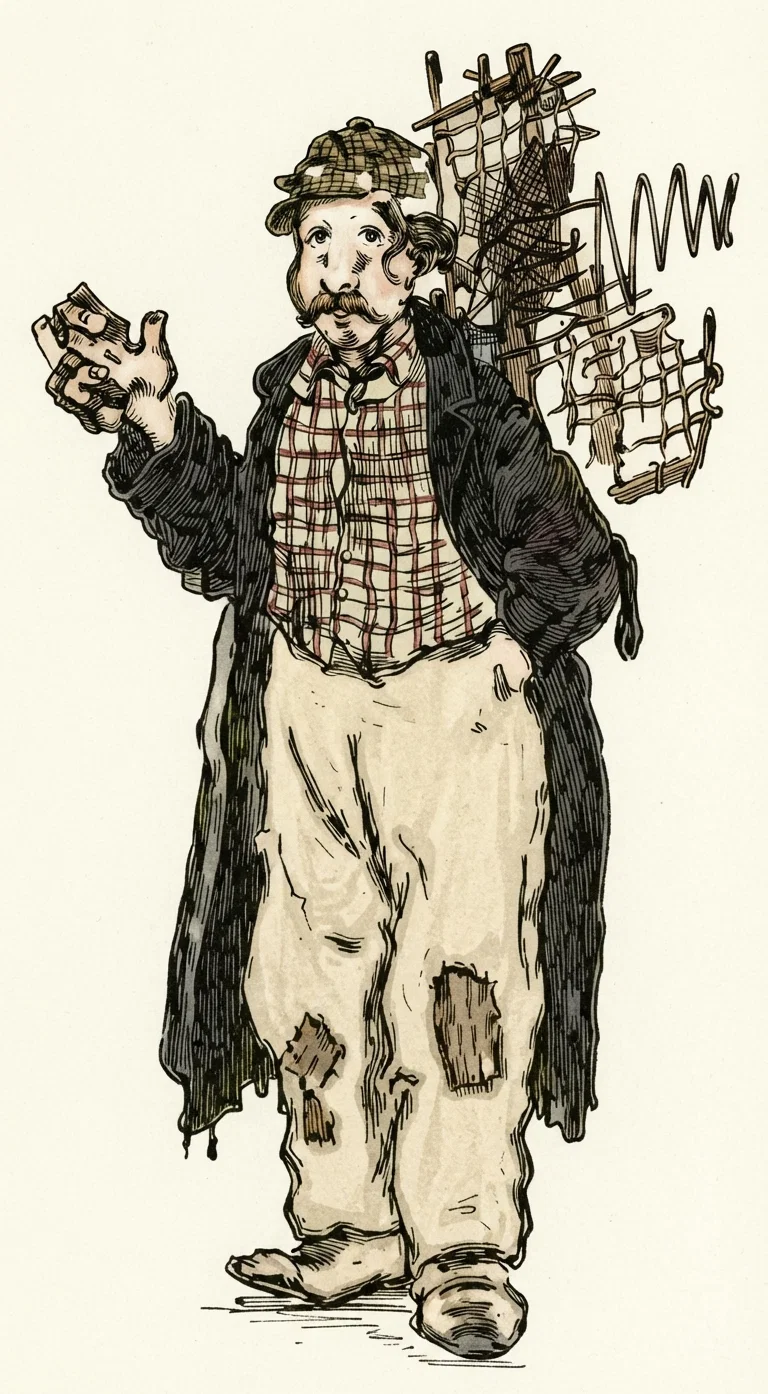
IN behalf of fruit venders who suffer loss through the handling of their stock by prospective purchasers, a recent newspaper prints a cartoon in which the Italian proprietor of a fruit stall is represented as saying, "If you mus' pincha da fruit, pincha da coconut."
A possession that I value more highly than fruit dealers value their stock in trade, is a group of young people — not really my own, but I am privileged to be brought into close association with them.
I think them all very likable young people; and evidently some other persons think similarly of them, though not, apparently, with the same impartiality. Occasionally I observe manifestation of a preference for some one of the group. This preference sometimes finds expression in the tendency to drop a hand easily on the shoulder of such a one, or in other greater or less acts of familiarity.
Happily, these young people of mine are all well-bred; and while none of the girls is ever heard protesting loudly that a man must keep "hands off" her, yet their bearing is such that any man, young or old, who may venture to treat them otherwise than with unquestioned decorum, is very sure not to repeat the experiment.
Of course some of those men would fain defend their attempted familiarity as being wholly fraternal or paternal, and we need not presume to judge their motives; but there is no consideration that obligates a girl to tolerate such familiarity, or justifies her in doing so, whatever the impulse that prompts it. Incidentally, it is remarkable that these pseudo-relatives manifest little disposition to lavish demonstrations of affection on persons of their own sex. In other words, they are not inclined to "pincha da coconut."A tiny child, proposing to conduct me through the beautiful grounds of her grandparents' home, cautioned me that I might look at the magnolia blossoms, but I must keep my hands behind me — a precaution that had been found advisable for her.
As handling destroys the delicate bloom that covers the grape, and as even the lightest touch darkens the pure white magnolia blossom, so likewise — but surely you have already finished the comparison, without further words of mine.
It is well to guard the approaches to danger. The argument is often heard, that "there is nothing wrong" in some course which has been condemned. But the fact is significant that evil seldom comes except by way of acts that are declared by inexperienced or insincere persons to be wholly harmless.
HUGH FITZHUGH.

Our Depositories

Alabama Tract Society, 333 Hood Bldg., Birmingham, Ala. Alberta Tract Society, Drawer U, Lacombe, Alberta, Canada. Arizona Tract Society, 417 West Fifth St., Los Angeles, Cal. Arkansas Tract Society, 37 E. South St., Fayetteville, Ark. British Columbia Tract Society, 1708 Maple St., Vancouver, B. C., Canada. California Bible House, 537 Twenty-fifth St., Oakland, Cal. California-Nevada Tract Society, 341 E. Lodi Ave., Lodi, Cal. California Tract Society, Southern, 417 W. Fifth St., Los Angeles, Cal. Canadian Publishing Association (Eastern Canada), Box 308, Oshawa, Ont., Canada. Central California Bible House, Box 1304, Fresno, Cal. Chesapeake Tract Society, 1611 Ellamont St., Baltimore, Md. Colorado Tract Society, Eastern, 1112 Kalamath St., Denver, Colo. Colorado Tract Society, Western, 122 S. Eighth St., Grand Junction, Colo. Cumberland Tract Society (Eastern Tennessee), Graysville, Tenn. District of Columbia Tract Society, 708 McLachlen Bldg., Washington, D. C. Florida Tract Society, 19 W. Church St., Orlando, Fla. Georgia Tract Society, 169 Bryan St., Atlanta, Ga. Hawaiian Tract Society, 767 Kinau St., Honolulu, H. T. Idaho Tract Society, Southern, Box 643, Nampa, Idaho. Illinois Tract Society, Northern, 3645 Ogden Ave., Hawthorne, Chicago, Ill. Illinois Tract Society, Southern, 304 W. Allen St., Springfield, Ill. Indiana Tract Society, 521 E. 23d St., Indianapolis, Ind. Iowa Tract Society, Nevada, Iowa. Kansas Tract Society, East, 821 W. Fifth St., Topeka, Kan. Kansas Tract Society, West, 508 Fifth Ave. E., Hutchinson, Kan. Kentucky Tract Society, Nicholasville, Ky. Louisiana Tract Society, 810 Jackson Ave., New Orleans, La. Maine Tract Society, 75 Grant St., Portland, Maine. Manitoba Tract Society, 290 Bannerman Ave., Winnipeg, Manitoba, Canada. Massachusetts Tract Society, South Lancaster, Mass. Michigan Tract Society, East, 426 Trumbull Ave., Detroit, Mich. Michigan Tract Society, North, 510 Petoskey St., Petoskey, Mich. Michigan Tract Society, West, 1214 Madison Ave., Grand Rapids, Mich. Minnesota Tract Society, 336 East Lake St., Minneapolis, Minn. Mississippi Tract Society, 932 Union St., Jackson, Miss. Missouri Tract Society, Northern, Hamilton, Mo. Missouri Tract Society, Southern, 520 W. Lynn St., Springfield, Mo. Montana Tract Society, 411 S. Black Ave., Bozeman, Mont. Nebraska Bible Supply House, 905 N. California Ave., Hastings, Neb. Nevada (See California-Nevada Missionary Society). New England Tract Society, Northern, 136 N. Main St., Concord, N. H. New England Tract Society, Southern (Rhode Island and Connecticut), 51 Whitmore St., Hartford, Conn. New Hampshire (See Northern New England). New Jersey Tract Society, 200 Columbus Ave., Trenton, N. J. New Mexico Tract Society, Box 286, Albuquerque, New Mexico. New York Tract Society (Greater), Room 904, 32 Union Square, New York, N. Y. New York Tract Society, 317 W. Bloomfield St., Rome, N. Y. New York Tract Society, Western, 8 E. Jefferson St., Salamanca, N. Y. North Carolina Tract Society, 711 W. Lee St., Greensboro, N. C. North Dakota Tract Society, Drawer N, Jamestown, N. Dak. Ohio Tract Society, Box 187, Mount Vernon, Ohio. Oklahoma Tract Society, P. O. Box 644, Oklahoma City, Okla. Oregon Missionary Society, Western, 508 E. Everett St., Portland, Ore. Oregon Tract Society, Southern, 1164 Military St., Roseburg, Ore. Pennsylvania Tract Society, Eastern, 4910 Arch St., Philadelphia, Pa. Pennsylvania Tract Society, Western, 7155 Mt. Vernon St., Pittsburg, Pa. Saskatchewan Tract Society, Box 244, Regina, Sask., Canada. South Carolina Tract Society, 821 Fourth St., Columbia, S. C. South Dakota Tract Society, Drawer R, Redfield, S. Dak. Tennessee River Tract Society (Western Tennessee), 509 Cole Bldg., Nashville, Tenn. Texas Tract Society, North, Box 15, Keene, Texas. Texas Tract Society, South, Box 392, Austin, Texas. Texas Tract Society, West, Box 16, Abilene, Texas. Upper Columbia Tract Society, College Place, Wash. Utah Tract and Bible Society, 776 E. Sixth St., Salt Lake City, Utah. Vermont (See Northern New England). Virginia Tract Society, 2705 W. Main St., Richmond, Va. Washington Missionary Society, Western, Box Q, Auburn, Wash. West Virginia Tract Society, 124 Marion St., Fairmont, W. Va. Wiseonsin Tract Society, Box 57, Grand Rapids, Wis. Wyoming Tract Society, Crawford, Neb.
Above is a list of our authorized agencies and depositories, and we invite you to communicate with them if you wish to secure any books or periodicals advertised in this journal.

The Underwood Typewriter

Shortens the Day by Lessening the Work
International Records for Speed Accuracy Stability Prove This
All are held by the

UNDERWOOD

"The Machine You Will Eventually Buy"
531 MARKET STREET SAN FRANCISCO, CAL.

The Golden Age Approaching

FOR long millenniums, men have been disposed to talk about a golden age. Some look backward, thinking to find it in a former period. Others are looking forward, expecting that in some glad day it will come.
But following the history of this world, they see that it is in the main a record of brutal and barbarous wars, with but very brief intervals of absolute peace. So we have nothing in all history, from the study of the past, to warrant our expecting a golden age. Neither our civilization nor our ideals at the present time, so far as the world goes, are essentially different from or materially better than what were seen during the noontime of the highest civilization of Rome. She had her principles of freedom, and her ideas of justice, that were very much in harmony with what the foremost nations of the world hold at the present time. Rome had her decline and her fall, but the golden age was not reached.
But when we turn away from history to the word of God, we find disclosed, through very many prophetic utterances, a great and glorious golden age that will bring us eternal joy, in the embraces of eternal rest and peace.
These prophecies make it clear that that great age is almost here. The generation in which we are living will see its beginning; and no generation will ever see its close, for it is to last eternally. Its beginning is marked by the second coming of Christ.
Have you considered the evidence which shows that this great event is near? And having considered this evidence, have you learned to know the Christ as your personal friend? Have you experienced the indescribable joy of a heart that is thrilling with every conceivable delight as you look forward to that great and glorious day?
We may be perplexed and saddened by the difficulties and the portents of danger that thicken around us; but this gloom is all dissipated by the supreme joy that continually pervades the soul of him who knows Jesus Christ, and who knows, through His unmistakably clear prophetic word, that His coming is near at hand. Human language is powerless to describe the soul-pervading joys that are in the heart of the individual who knows the definite truth in the Sacred Book upon this great subject.
It must be a personal experience for the individual man, in order for him to know what it means. The great day is at hand, and it is laden with joys for those who are ready for it.

The Church Peace Conference

THE first conference of the recently organized Church Peace Union was called to convene in Constance, Germany, on August 2. The financing of this Church Peace Union was provided for by the gift of two million dollars from Mr. Andrew Carnegie. But just as they were convening in Germany, this great war broke out, and the delegates had to hasten as fast as they could, to get out of the country. A few subsequent meetings were held in London, in the midst of the war troubles that were tearing England.
The Federal Council of Churches in America sends out a report, one of the first paragraphs of which reads:
"It is significant that this first international conference of the churches for the promotion of friendship and peace between the nations of the world, occurred at a moment when we were all obliged to witness an amazing development of the war fever, and the wide-spread misery caused on all sides by the mere preparations for battle; and we have had a unique opportunity to witness the sincere and profound reluctance with which the sober and serious element in every nation concerned has found itself involved in the imminent cataclysm. Whatever the immediate outcome may be, we are more than ever confident and convinced that this sober and serious element of every Christian nation is now, as always, moving under the guidance and blessing of Almighty God our Father. Our dismay is not despair. No note of pessimism has been heard at any of the four sessions of our conference. There is a general consciousness that now more than ever, we are called to cooperate in the spirit of Jesus Christ, so that no self-will or bitterness or impatience on our part shall cloud our vision, or hinder us from seeing the opportunity which God is giving us to do His will in the world — waiting upon the Lord."
It is certainly significant that this "first international conference of the churches for the promotion of friendship and peace" should have been broken up by the greatest and most destructive war that has ever cursed the earth. The members of the council desired that this consideration should not cloud their vision. The vision of ministers is already clouded when they think that they will be able to establish universal peace on this earth in its present condition. Men who claim to believe the Bible, should read what it says; and reading what it says, they will know that Christ plainly states that "wide is the gate, and broad is the way, that leadeth to destruction, and many there be which go in thereat: because strait is the gate, and narrow is the way, which leadeth unto life, and few there be that find it." Matt. 7: 13, 14. In other words, few are finding the way of life, while many are going the ways of death. There can be no mistaking the import of these words.
Again the Master says: "Many will say to Me in that day, Lord, Lord, have we not prophesied in Thy name? and in Thy name have cast out devils? and in Thy name done many wonderful works? And then will I profess unto them, I never knew you: depart from Me, ye that work iniquity." Verses 22, 23.
There is no promise nor intimation in the Bible that the world at large will become converted. The Master says, "Fear not, little flock; for it is your Father's good pleasure to give you the kingdom." Luke 12: 32. It is the few who stand in the ways of righteousness. And the minister of the gospel has no right to promise universal peace on this earth. He has no warrant for it whatever. We may seek to promote peace, we may talk in favor of peace. This is our duty, for our Master is the Prince of peace; but we have no right to promise universal peace until the time of His coming. He has said that then He will "destroy them which destroy the earth" (Rev. 11: 18), and thus will wars and all their attendant sufferings be brought to an end. But we have no promise of it on any other plan or any other basis.

Signs of the Times

MOUNTAIN VIEW, CALIFORNIA, SEPTEMBER 8, 1914

God's Providences in War

ONE conspicuous thing in this great war of Europe is the fact that the various rulers are calling upon God to bless their armies.
The Lord Jesus Christ is the Prince of peace. He is not the god of war. And how utterly do so-called Christian peoples belittle the great work of the gospel of Christ, by trying to bring its Author as a partizan into all their selfish and wicked strife!
Without question, God, by His mighty providences, overrules and works in connection with the wars, but not in the way that many people would have us believe. He says in His word, "Surely the wrath of man shall praise Thee: the remainder of wrath shalt Thou restrain." Ps. 76: 10.
In this war that is now raging, God may overrule to change the despotisms of Russia and Austria, so that more freedom will be given for the proclamation of His gospel, and so that the yoke that is resting upon humanity there may not be so intolerably oppressive.
God has a gospel message of peace and salvation to every man, and is seeking avenues through which it may be carried to every part of the world; and when conditions become unbearable, or when the way is absolutely blocked so that His work can not go, He may permit wars, and overrule in them so that His own will may be worked out in the saving and uplifting of men. But the Captain of our salvation, and the Father of our Lord Jesus Christ, will never be placed, by any who know Them, upon the low plane of the gods of war whom heathen nations from the remotest times have carried with them into battle, and implored to give success to their arms.
Our heavenly Father is the One who "so loved the world, that He gave His only-begotten Son, that whosoever believeth in Him should not perish." Hence He is not interested in destroying men, but His work is a work of salvation. And if we study the Bible with the thought in view of finding the actual part that God has ever taken in any battles, we will learn that He has never destroyed nations until they had become so unbearably corrupt that it was the only merciful thing to do.
So, then, we may conclude that while God's providences may overrule in this war, in the interests of greater freedom in the promulgation of His gospel, yet it is futile for the various armies to pray to Him for success.
This war is one that has been brought about by the demons of greed and ambition and by the gods of commercialism. And it is wicked to make the Jehovah of the Bible in any way responsible for it.

Fines Remitted if They Will Go to Church

The Chicago Examiner of August 11 is authority for the statement that four pedlers were arrested in that city for "breaking the sabbath," but they were discharged by the municipal judge in the Chicago Avenue court on their promise to go to church thereafter on Sunday and cease crying their wares in the city on that day.
On the presumption that the report is reasonably accurate, we may see in this incident the spirit that is back of all Sunday legislation. Sunday laws, no matter what guise they are under, are religious legislation, pure and simple. Sunday is a religious day, and the rival of the Sabbath of the Bible, which was commanded by the great Father in heaven Himself. And when Sunday laws become general, and are generally enforced, as we know they will be before the controversy in this world is ended, we will see more of this thing of remitting fines and penalties on the condition that people will promise to go to church on Sunday.
One of the greatest curses under which this earth has ever suffered is that of religious tyrannies and intolerance; and why is it that men will continue to repeat history by making experiments, over and over again, that have always manifested themselves in the past through persecutions and inquisitorial tortures?

Grasshoppers and Army-Worms

GRASSHOPPERS appeared in the state of New York in the second week of July, and quickly became a serious menace to the crops. Governor Glynn disposed that $50,000 should be furnished the agricultural department for fighting the pest.
Soon after came reports of a visitation of army-worms in Michigan, New York, New England, and running south into Maryland. The losses from this invasion totaled several million dollars, in spite of the efforts of thousands of farmers and employees of the state to check it.
The army-worm gets its name from its habit of moving in close formation, in columns from a foot to a few feet in width. It will cover and obliterate a field of growing grain, or a lawn, overnight, and many incidents of the kind occurred during the last incursion. Poison and other means are effective for combating them; but the worms quickly mature, and thus the plague subsides naturally. W. H. S.

Aeroplane Altitude Record

The altitude record for aeroplanes is 26,246 feet, and was set this summer by the German aviator Heinrich Oelrich. This far surpasses the mountaineering record of 24,015 feet; but it can hardly be hoped that the balloon record of 37,000 feet will be equaled in this way, until means are devised for maintaining vitality at normal in such altitudes. Man's conquest of that most unruly of elements, the air, seems to be fairly begun when such feats are performed, and when the aeroplane has firmly established itself as a machine of everyday utility in military operations.

Helping the Red Cross

In these times of war stress in Europe, the Red Cross Society is taxed to the utmost, in helping the wounded and destitute. This is one of the most worthy organizations. Any one who can render assistance, or who would care to learn regarding the working of this organization, should address the American Red Cross, Washington, D. C.

You have reached the end of this edition.

Signs of the Times · Sep 8, 1914