13 "And the Passover of the Jews was at hand, and Jesus went up to Jerusalem. 14 And He found in the temple those that sold oxen and sheep and doves, and the changers of money sitting; 15 and He made a scourge of cords, and cast all out of the temple, both the sheep and the oxen; and He poured out the changers' money, and overthrew their tables; 16 and to them that sold the doves He said, Take these things hence; make not My Father's house a house of merchandise. 17 His disciples remembered that it was written, The zeal of thine house shall eat me up. 18 The Jews therefore answered and said unto Him, What sign showest Thou unto us, seeing that Thou doest these 19 things? Jesus answered and said unto them, Destroy this 20 temple, and in three days I will raise it up. The Jews therefore said, Forty and six years was this temple in building, 21 and wilt Thou raise it up in three days? But He spake of the 22 temple of His body. When therefore He was raised from the dead, His disciples remembered that He spake this; and they believed the scripture, and the word which Jesus had said. 23 "Now when He was in Jerusalem at the Passover, during the feast, many believed on His name, beholding His signs 24 which He did. But Jesus did not trust Himself unto them, 25 for that He knew all men, and because He needed not that any one should bear witness concerning man; for He Himself knew what was in man."
1 "Now there was a man of the Pharisees, named Nicodemus, 2 a ruler of the Jews; the same came unto Him by night, and said to Him, Rabbi, we know that Thou art a teacher come from God; for no man can do these signs that Thou doest, 3 except God be with Him. Jesus answered and said unto him, Verily, verily, I say unto thee, Except a man be born anew, 4 he can not see the kingdom of God. Nicodemus saith unto Him, How can a man be born when he is old? can he enter a second time into his mother's womb, and be born? 5 Jesus answered, Verily, verily, I say unto thee, Except a man be born of water and the Spirit, he can not enter into the kingdom 6 of God. That which is born of the flesh is flesh; and that 7 which is born of the Spirit is spirit. Marvel not that I said 8 unto thee, Ye must be born anew. The wind bloweth where it listeth, and thou hearest the voice thereof, but canst not tell whence it cometh, and whither it goeth; so is every one that is born of the Spirit."
NOTE.—The texts inclosed in marks of parentheses, while not essential to the lesson study, will be found to throw much light upon the lesson, and are suggested for those who wish to study further.
SUGGESTIVE QUESTIONS.
After leaving Capernaum, where does the record show the Saviour to have next gone? and why? John 2: 13. Note 1. (Ex. 12: 2-14; Deut. 16: 1-6.)
Arriving at the temple, what did the Saviour find there? Verse 14.
What did He immediately do? Verse 15. Note 2. (Matt. 21: 12.)
With what words did He accompany His threatening demonstration? Verse 16. (Isa. 56: 7.)
Upon seeing the Saviour's effort, what scripture came to the disciples' minds? Verse 17. Note 3. (Ps. 69: 8, 9.)
Seeing the Saviour's display of authority, what did the Jews demand of Him as evidence of His right to do as He had done? Verse 18.
What answer did the Saviour give? Verse 19.
How did the Jews reply to this? Verse 20.
But to what did the Lord have reference? Verses 21, 22.
Upon seeing the many miracles of Jesus, how were many of the people at the Passover affected? Verse 23.
But did Jesus trust these men? and if not, why not? Verses 23-25. Note 4. (1 Sam. 16: 7.)
Side Lights.—"Desire of Ages," pp. 154-166; "Spirit of Prophecy," vol. 2, pp. 113-124.
NOTES.
1. The Passover.—The Jews recognized two forms of the Passover. The first was observed in the wilderness, on the journey from Egypt to Palestine, and for some time later. After the building of the temple, however, the form of celebration was materially changed. By comparing Deut. 16: 1-6 and Num. 28: 16-25 with Exodus, chapters 12, 13, it will be seen that injunctions regarding it were added in the later scriptures which were not in the former, and which were hardly possible to be carried out in the wilderness. In the later observances of the ordinances wine was used, but it was not enjoined in the Pentateuch. It is, however, mentioned in the New Testament. Luke 22: 17-20; 1 Cor. 10: 16. The song with which the Saviour closed the last Passover service was not required by original instructions. The song, called the Hallel, was comprised of Psalms 113-118, the first two being sung at the beginning of the meal, and the others at the close.
2. Cast all out of the temple.—This was the first cleansing of the temple, in the early part of Christ's ministry. The cleansing of the temple was repeated at the last Passover which He attended, three years later.
3. The zeal of Thine house, etc.—At each Passover every male, whether rich or poor, must bring his half sheckel to the sanctuary, as a sacred tribute to be applied to the expenses of the tabernacle service. Ex. 30: 11-16. But the money of the various countries, of brass or copper, bearing heathen symbols and inscriptions, was not available at the temple. The worshipers coming from these countries were obliged to exchange their heathen coin for the usual silver piece of the sanctuary, and these money-changers did this service for them, charging a heavy rate per cent. for the favor. This caused much haggling over money values, and with the bleating of sheep and the lowing of cattle, the babel of voices made the temple court a scene of much confusion. The disciples had before witnessed this profanation of the house of prayer, but probably had not before stopped to think it wrong, since this arrangement had been the custom for many years. But seeing in Christ's act a fulfilment of prophecy, their faith in Him was greatly strengthened. See "Desire of Ages," p. 155.
4. Trust Himself unto them.—That is to say, Jesus received none of these into the circle of His personal followers. No one from about Jerusalem, in fact, was to be thus privileged. He chose no scribes, no rabbis, no men of high standing from that region. On the other hand, His disciples, to whom He committed Himself to the end of His life, with the single exception of Judas, were Galileans. Knowing what was in all men, He knew whom to choose for the successful issue of His earthly work.
1. "And as He passed by, He saw a man blind from his birth. 2 And His disciples asked Him, saying, Rabbi, who did sin, 3 this man, or his parents, that he should be born blind? Jesus answered, Neither did this man sin, nor his parents; but that 4 the works of God should be made manifest in him. We must work the works of Him that sent Me, while it is day: the 5 night cometh, when no man can work. When I am in the 6 world, I am the light of the world." When He had thus spoken, He spat on the ground, and made clay of the spittle, 7 and anointed his eyes with the clay, and said unto him, Go, wash in the pool of Siloam (which is by interpretation, Sent). 8 He went away therefore, and washed, and came seeing. The neighbors therefore, and they which saw him aforetime, that he was a beggar, said, Is not this he that sat and begged? 9 Others said, It is he: others said, No, but he is like him. 10 He said, I am he. They said therefore unto him, How then 11 were thine eyes opened? He answered, The man that is called Jesus made clay, and anointed mine eyes, and said unto me, Go to Siloam, and wash; so I went away and washed, and I received sight."
Golden Text.—"One thing I know, that, whereas I was blind, now I see."
SUGGESTIVE QUESTIONS.
(1) What feast was in progress at the time of the incident mentioned in this lesson? and where was Jesus at this time? Note 1. (2) As Jesus was passing along, who attracted His special attention? V. 1. (3) What question did the disciples ask? V. 2. Note 2. (4) How did Jesus reply to their query? V. 3. Note 3. (5) What did He say in regard to His work? V. 4. Note 4. (6) What was Jesus to the world? V. 5. (7) What then did He do to the blind man? V. 6. Note 5. (8) After anointing the eyes of the blind beggar, what did Jesus say to him? How did the blind man regard this command? What was the result? V. 7. Note 6. (9) What did the neighbors of the blind man say when they saw that he had received sight? V. 8. Note 7. (10) What different opinions were expressed? What did the beggar himself say? V. 9. (11) What question did some of the people ask him? V. 10. (12) What was his reply? V. 11.
NOTES.
1. The feast of tabernacles was still in progress, and Jesus was yet in Jerusalem. Of the six miracles connected with blindness, recorded in the New Testament, this is the only case described as blindness from birth. This species of blindness, excepting that of congenital cataract, is still deemed to be beyond the reach of human skill; and in oriental countries, blindness is far more frequent than in the West. Yet blindness from birth is said to be as rare in the East as in the West; so that circumstance was all the more notable.
2. "Who did sin?"—All calamities, especially poverty and physical maladies of a supposed incurable nature, were generally attributed by the Jews to the direct judgment of God. Hence this question by the disciples. It is pertinent, also, to note that Job's friends looked upon his property loss and bodily affliction in the same light. And of Christ the prophet says, "Surely He hath borne our griefs, and carried our sorrows; yet we did esteem Him stricken, smitten of God, and afflicted." Isa. 53:4.
3. Neither the blind man nor his parents had sinned in a way to be the special cause of his unfortunate condition, altho in a general way suffering is the result of sin. This case was in the providence of God permitted that the power of God might be shown in Christ. The man was in the end more than repaid; for the opening of his physical eyes resulted in the awakening of his spirit to behold the riches of salvation within his reach. So did Job's affliction turn out for his good, and in both cases the name of the Lord was magnified.
4. "While it is day."—While there is opportunity. This is a lesson that needs to be impressed at this very time. The days of human probation, while the Word of God is amongst men, and His Spirit is drawing them, are fast passing away. The close of these days will indeed be a night of unprecedented darkness, "when no man can work" longer for the salvation of souls. Let us follow the example of the Master, and "work while it is day."
5. How appropriate that He who is the "Light of the world" should give sight to the blind! Here was indubitable proof of Creatorship, to any who had not wilfully closed their eyes to all evidence. See Matt. 13:15.
6. "Go, wash."—Here was the test of faith. Neither the clay nor the washing applied in the ordinary way as a remedy would have had any effect. But the power of God in His Word, in answer to faith in that Word, brought the healing. "He went his way therefore," and the obedience proved his faith. "If ye abide in Me, and My words abide in you, ye shall ask what ye will, and it shall be done unto you." John 15:7.
7. A beggar.—"All the roads leading to Jerusalem, like the temple itself, were much frequented, at times of the feasts, by beggars, who reaped a special harvest from the charity of the pilgrims."—Geikie. Travelers tell us that in Italy and Spain, beggars gather about church doors in great numbers.
NUTS
EASILY and cheaply made in any household by the use of our complete equipment for grinding and emulsifying nuts. The production of our mills is unsurpassed.
Full directions and a booklet containing many valuable nut food recipes, free with each mill.
NUTS
Shelled and unshelled, of all kinds at reasonable prices
For further information, catalog, price-list, etc., write to
JOSEPH LAMBERT
Healthful Delicious Nut Foods
Battle Creek Michigan
When you write, please mention the SIGNS OF THE TIMES.
The Winning of Margaret
How Margaret and her skeptical friend Ralph were converted. A well-told story.
Price, $1.00 per 100.
PACIFIC PRESS PUBLISHING CO.
New York City Oakland, Cal. Kansas City, Mo.
WONDERS OF THE 19TH CENTURY
Is a 32-page tract. Its object is to recount and describe some of the principal inventions of this closing century, and to show their significance.
It contains fifteen illustrations. Is an easy seller. Price, 5c each or $2.00 per 100.
PACIFIC PRESS PUBLISHING CO., Oakland, Cal.
New York City Kansas City
HOW TO LIVE A CENTURY. No. 4.
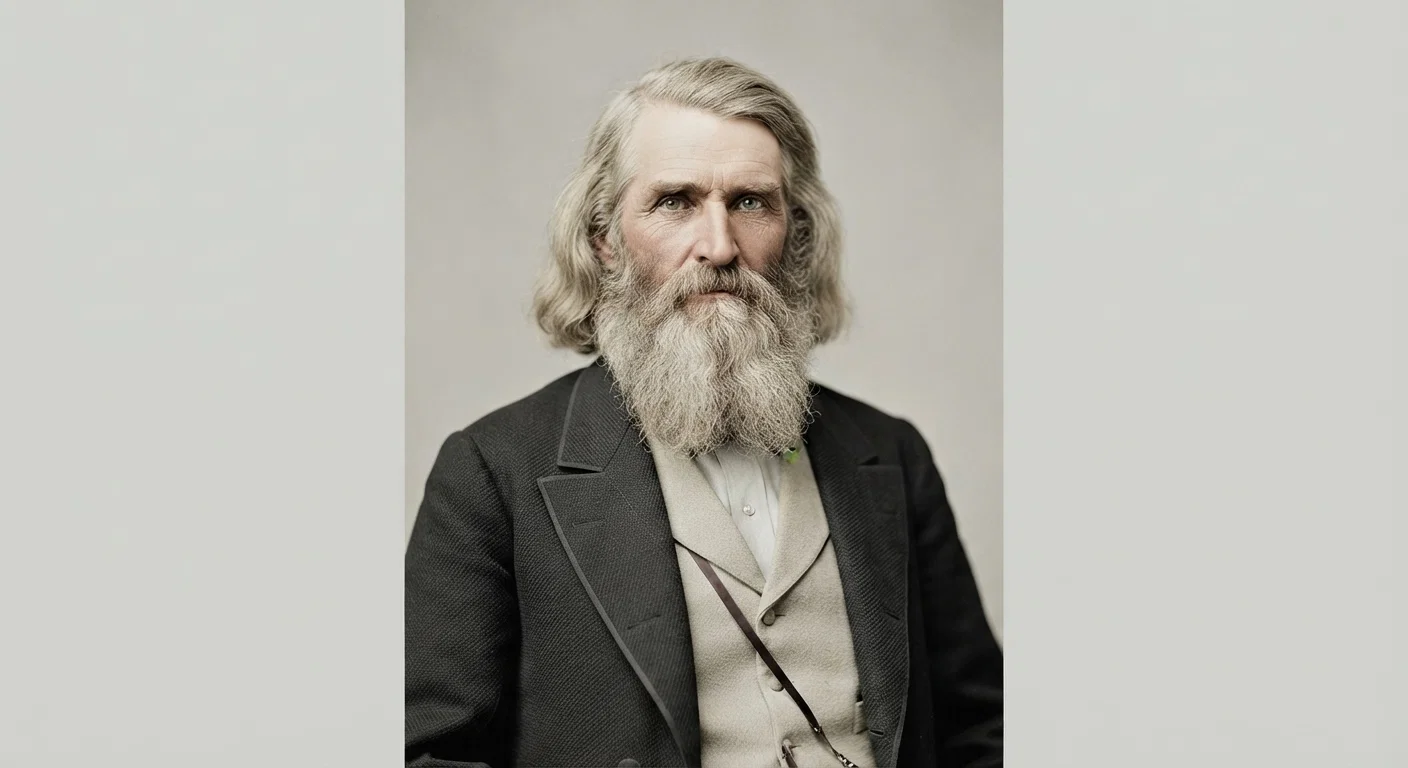
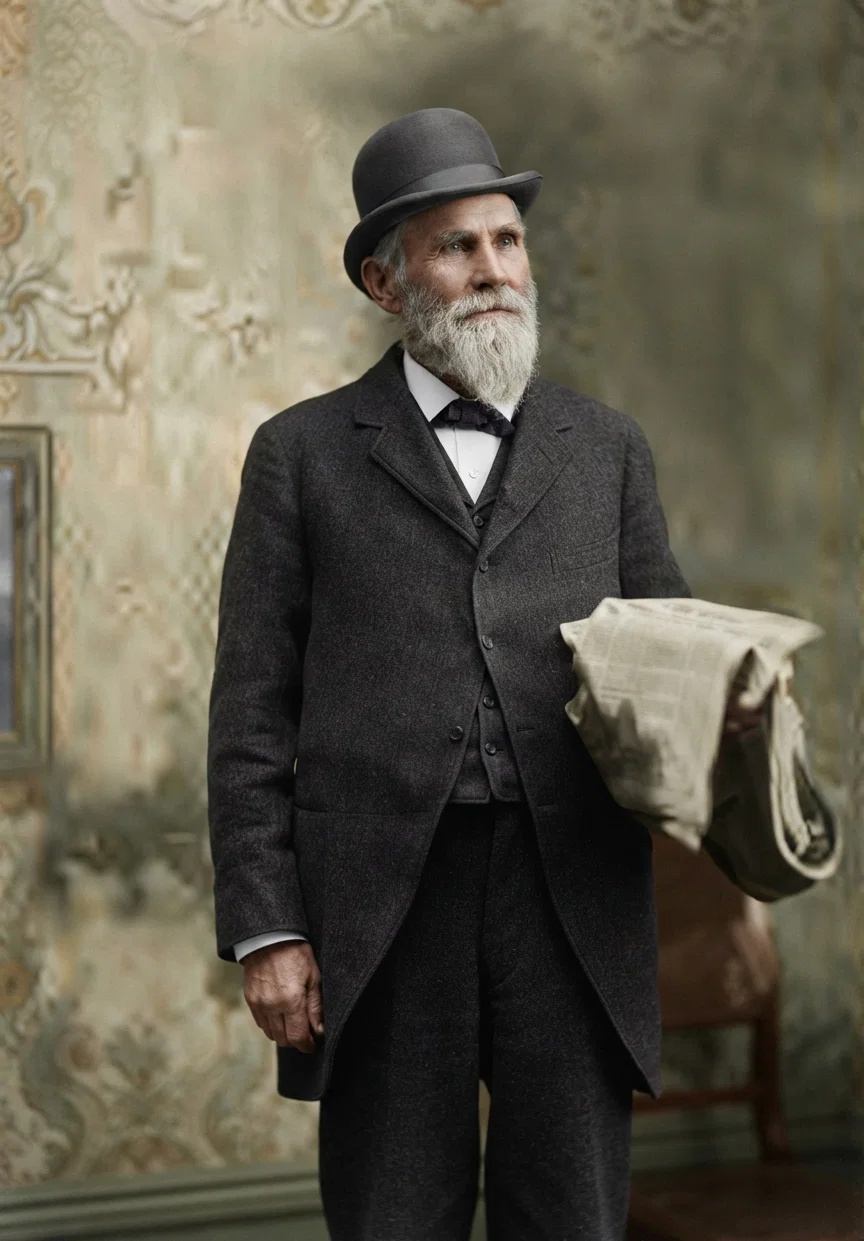
THERE is a man living in San Francisco who is a fair sample of what the body will do when we keep it clean, feed it properly, and give it pure water to drink. I have the pleasure of meeting and conversing with this aged gentleman daily while he is eating his meals at the Helping Hand and Medical Mission in San Francisco. And I do not see how I can bestow a greater favor on the readers of this article than by giving in his own words his method of keeping his body in perfect health, even at the remarkable age of nearly 103 years, and by also giving his picture, taken when 65 and 102 years of age respectively.
GODDARD E. D. DIAMOND AT 65. (Tintype Taken in 1861.)
He says: "My name is Goddard Ezekiel Dodge Diamond. My father's family record showed that I was born in Plymouth, Massachusetts, the first day of May, 1796. My parents were Joseph and Mahala Diamond. The Diamonds were of Scottish ancestry, and my father was of the first American generation, and lived to the ripe old age of 106 years, and died at Huntsville, Alabama, about 1865.
"My mother's maiden name was Allen, and she was a niece of General Ethan Allen, of Ticonderoga fame. Her ancestry on her mother's side was the Cotton's, who came over on the Mayflower. So it appears that in my veins runs the blood of the Scotch, Irish, Dutch, and English, about as desirable mixture as one can wish for ancestry.
"In the first year of my life my father removed from Plymouth to the province of Massachusetts, now known as Oxford County, State of Maine. In that heavily-timbered country I grew up to young manhood, unseen and not seeing much aside from our own home. I assisted my father to fell the trees, pile up and burn the brush, clear off and till the land for a living, until he returned from the war of 1812, which I believe was in the year of 1814, at which time he gave me my liberty and sent me out empty-handed. These early years of my life were so concealed from the public, and the world was so unknown to me, that scarcely an event occurred outside of the routine of farm life to impress my mind until the war of 1812, which made the first indelible impression upon my understanding.
"I do not despise the lowly life through which I passed my early years on the farm. It is quite probable that I owe much of my lifelong good health to the simple, industrious habits of swinging the ax, digging with the hoe, and breathing the pure air.
"My loss of early education met with some compensation in escaping the poisonous air of our modern-day school-rooms, and the retaining of my nervous system intact, instead of being wrecked by an excited pressure of educational stuffing to meet the demands of the text-books, to the exclusion of the application of common sense. Blessed is the youth who enjoys the privilege of country life, runs barefoot, and wades every creek and pond in the community.
"From the paternal roof I went to a small community called Yarmouth. Here I spent six months, gathering sufficient courage to go to Boston. Then and there I began a migratory life, spending my summers in Massachusetts and New York and my winters in Florida, Mississippi, and New Orleans, with the exception of an occasional trip to the West Indies and the continent of Europe.
"While in the South I was employed in the commission business or superintending plantations, and when in the North, I was engaged in building the first railroads in the United States, among them being the railroad from Worcester to Boston, the old colony road from Boston to Plymouth, and the road from Albany, New York, to old Durripp, now Schenectady. I took part in the construction of the New York and Erie Canal, from New York to Buffalo, which I twice assisted to enlarge. When the war began in 1861 I was in St. Louis, engaged in building the Lexington and Farmer City Railroad. As I look back over that long period of long ago—aggregating sixty-five years of my life, and then look at men alongside of me who say they are now sixty-five years old, it seems an incredible thing that my age was then more than threescore years.
"The most memorable campaign in which I ever engaged was in 1840, when General Harrison was the candidate. At Albany, New York, of that year, I rode in the 'Log Cabin,' drawn by four hundred yoke of oxen, there being four lines of teams of one hundred yoke to the line. Fifty years later I marched in the line of Republicans in San Francisco, who were 'whooping it up' for the grandson of General Benjamin Harrison."
GODDARD E. D. DIAMOND,
"WHAT I EAT AND DRINK.—That which enters within the man tells the story of building up or tearing down. Breathing, eating, and drinking are the three processes of taking into the body the vital forces of nature.
"Three things I have faithfully practised in the last half century, jointly. The first is that of breathing the freshest air possible, long, deep draughts. The second is the selection and eating of the best bone and blood-making food at my command. The third is the use of pure water at proper time and temperature. When I began to prepare the body for long and healthy life, I left out of my diet slaughtered meats entirely. I saw enough in the flesh of butchered animals while it was hanging in the slaughtering-pens throughout the country to satisfy me that there was more disease and cause for suffering in it than there was food. I eat grains, fruits, nuts, and vegetables; I drink boiled or distilled water. I take a sponge bath every night, after which I rub a little olive oil in each of my joints, thus keeping the machinery in good working order.
"I have never used a pipe, cigar, or cigaret; never indulged in wine, nor any intoxicating liquor, omitting entirely the use of tea and coffee. None of these things contain food, and nature rebels at their use. There are better uses for our cash. Food is to build up what is daily being torn down, but there is no food in stimulants, and the person who indulges in them cuts short his life, sins against his own body, against his neighbor, and against his Maker.
"For more than half a century I have lived the life of a vegetarian, and I can see no reason why I should not live a long time yet, for I am perfectly well, with not an organic disease. I eat well, also sleep well, and I look much younger than when I was fifty years old, and I am sure I feel younger, for I was then an old man, with round shoulders and bent form. If I live till the first day of May, 1899, I will be13one hundred and three years of age. Next April I will take a bath in the Pacific Ocean at Seal Rock, San Francisco, Cal., and will then start on my long walk to New York City, and will take my next ocean bath in the Atlantic Ocean, at Coney Island, New York. I walk now about twenty miles each day, so you see I believe in bodily exercise."
Captain Diamond has written a book entitled "The Secret of Long Life," which he sells for twenty-five cents, in which he gives a brief history of his life. His address is 315 1/2 Ellis Street, San Francisco, Cal. He is a strong advocate of temperance in all things, for it has done wonderful things for him.
B. F. RICHARDS.
THE HOME
THORN BLOSSOMS.
By Julia H. Duffie
BEAUTIFUL emblems of innocence sweet,
Snow of the spring-time molded in bloom,
Forming a mantle of whiteness complete,
Can it be your pure lives know aught of earth's gloom?
Ah, silently there under each snowy spray
Clusters of thorns all defiantly stand,
Holding their stern and merciless sway,
Piercing and wounding each venturesome hand!
Again do we learn the sad story of old
In conning the lesson you teach us once more,
That for each whitened soul brought back to the fold,
A crown of sharp thorns the Master once bore.
"Tho your sins be as scarlet, I'll make them like snow."
The promise is certain to all who comply;
Yet forget not the thorns which wounded Him so,
While now the fair blossoms are gladd'ning the eye.
And thus in each life which the Master would use
Some thorns are there scattered which oftentimes sting.
Then let us not fret if our hands they abuse.
But nurture the flow'rs they were planted to bring.
MOCK OYSTER SOUP.—Scrape one bunch of vegetable oysters; throw them in cold water as they are scraped, to prevent discoloring; cut them up and put them on to cook in one pint and a half of boiling water. Heat one and a half quarts of milk, and add to it the contents of one and a half cans of sugar corn, and a small onion if liked. Move to the side of the stove and simmer for twenty minutes; then strain the soup into your soup kettle. Pour the water from the cooked oyster plant into the soup. Press the oyster plant through a soup strainer, add to it the yolk of one egg and four tablespoonfuls of 1/2 per cent. gluten meal, a half teaspoonful of salt, and mix thoroughly. Bring the soup to a boil, and with a tablespoon drop pieces of this mixture the size of an egg into the milk as it comes to a boil. Simmer for a few minutes until all the mock oysters are cooked. They will float to the surface when cooked.
Serve hot. Time, 40 minutes. Cost, 22½ to 25 cents. Sufficient for six persons.
BAKED MACARONI.—Break into a large saucepan one pound of macaroni into one-inch lengths; add six quarts of boiling water and one half tablespoonful of salt. Cook for thirty or thirty-five minutes. Then strain away the water and turn the macaroni in an eight-inch agate pan. Whip four eggs light; add to them three pints of milk and a half teaspoonful of salt. Pour this custard on the macaroni; sprinkle a little granola on the top, and bake in a moderate oven thirty minutes.
Time, thirty minutes. Cost, twenty cents. Sufficient for six to eight persons.
LEGUME ROAST.—One cup each of cooked beans, lentils, and peas, rubbed through a colander; one cup of chopped nuts; one cup of browned bread crumbs, or granola; one cup of cream; or as a substitute, one cup of hot water; into which dissolve one dessert-spoonful of nut butter. Add salt, sage, parsley, or any desired flavoring to suit the taste. Mix well and mould into a roll ten inches long; bake one hour in a moderate oven.
When baked three-fourths of an hour, baste the roll with two tablespoonfuls of cream, then sprinkle it with crushed crackers or granola; return it to the oven for fifteen minutes, slice, and serve while hot, with a gravy made by cooking two cups of lentils (measured after being rubbed through a colander) with one cup of strained stewed tomatoes; salt to season; one tablespoonful of nut butter.
POTATO SALAD.—Mince (not chop) four large cold boiled potatoes, one green onion, if liked, also a little parsley. Mix all together and add a teaspoonful of salt and put in a salad bowl.
Mix four tablespoonfuls of nut butter as for table use; add to it one pint of unskimmed milk; whip with an egg whip for a few minutes, add a little salt, and pour over the potatoes.
Garnish with lettuce and a hard-boiled egg.
PLAIN RICE.—Wash three-quarters of a pound of rice through two or three waters and throw it into three quarts of boiling water; boil until three parts done; drain off in a sieve; grease the bottom of a saucepan with a little thick cream, put in the rice, place a tight-fitting lid on, and set it at the back of the stove until the rice is perfectly tender, shaking the pan occasionally to prevent sticking. Cooked this way with care, you should be able to count every grain of rice.
ADAM PUDDING.—Peel and mince six apples very fine; add a cup of sugar, the grated rind of one lemon, one-half cup each of seedless raisins and currants, well washed and picked, eight ounces of bread crumbs (four cups pressed), half a teaspoonful of salt. Beat six eggs, add to them two glasses of unfermented wine or grape juice, one tablespoonful of vanilla. Pour over the dry ingredients and mix well. Boil in a well-buttered mold for three hours.
Serve with unfermented wine sauce and whipped cream.
Cost, fifty cents. Sufficient for eight persons.
TEMPERANCE EGG-NOG.—Three heaping tablespoonfuls of nut butter, four tablespoonfuls of sugar, five glasses of water, the yolk of two eggs and one whole egg, one teaspoonful of vanilla or lemon extract.
Mode.—Mix the butter as for table use; add the sugar; add the boiling water gradually. The mixture must be free from lumps. Break three eggs, add the yolks of two, and one whole egg; whip well. Put the mixture on the stove and bring it almost to a boil; whip well to make a good foam; add the vanilla, and serve in glasses with half mixture and half foam.
Sufficient for seven. Cost, fifteen cents.
J. E. PATTERSON.
THE WIDOW'S COW.
By A. E. C. Maskell
"I HAVE been over to Widow Dilman's this afternoon and brought home that cow," said Farmer Merrion as he sat down to supper.
"Why, papa!" exclaimed Daisy, "what will the poor widow do now?"
"I had never thought of that," laughed the farmer.
"Well, I call that real mean," spoke up Joe. "We've got a whole barn-yard full of cows, while that poor woman has but just one."
"The widow has been buying provisions of me all along. The bargain was that as soon as it amounted to thirty dollars, if she had not the money to pay me, I was to have the cow. So, you see, the cow is bought and paid for."
"O papa, it's a shame, because she's half their living! Poor Mrs. Dilman has been sick so long, you know, and now that she is getting about again, I know she must feel almost lost without poor old Whitey." And there were tears in Eva's eyes.
At last, pushing back her food untasted, she sprang up and went around to her father and pleaded with him to take back the cow.
"I would, father," said his wife. "You know what the Bible says about being good to the poor."
"Tut, tut!" said the farmer. "You can all be very free with other people's money. How many of you, I wonder, would give anything out of your own pockets."
"Papa, dear, you shall have my bank and every dollar in it," said Eva.
"And you needn't buy me a new overcoat this winter, father. I'll wear my old one," said Joe.
"Please, papa, can't I sell my pet pig to help pay for the cow?" asked Daisy.
"Well, I declare," laughed the farmer. "Tell me where you all learn so much generosity."
"I have tried to instil it into them, my dear," said Mrs. Merrion, "as Jesus has taught it to us through His Word. 'He that hath pity on the poor,' you know, 'lendeth to the Lord; and that which he hath given will He pay him again.' God's Word is sure."
The result was that the next morning the farmer sold the cow to his children; and what fun they had driving her home!
As they drew near the cottage, they became so boisterous that the widow and one of her sons came out to the gate, and there stood old Whitey patiently by the fence with the children around her.
"Good-morning, Mrs. Dilman; we've brought your cow back," cried Joe.
"For the land's sake!" cried she, holding up both hands. "Don't you want her?"
"You want her worse," said Joe; "and so papa sold her to us children, and we've brought her back a present to you."
"You blessed children! God be praised!" exclaimed the widow, bursting into tears; and little Mark threw both arms around the cow's neck.
Farmer Merrion's children declared, as they were returning home, "that they never felt so happy in their lives." They had learned that it is indeed "more blessed to give than to receive."—A. E. C. Maskell, in Our Young Folks.
Lessons by Mail on Medical Electricity or How to Use the Battery
By G. L. Abell
By Prof. G. L. Abell
Member of the Board of Directors of the Electro-Medical Society of San Francisco.
Learn how to use the battery and treat yourself. Many diseases are quickly cured by the proper application of electricity. The course embraces the treatment of every organ and part of the body. The lessons are written in plain language and are illustrated. Course, five dollars. Send for circular. Address,
PROF. G. L. ABELL, School of Chemistry and Electro-Therapeutics. 22 1/2 Geary St., San Francisco, Cal.
EVERY SICK AND DESPAIRING MAN OR WOMAN CAN GET RELIEF BY USING
KODAKS
Half the charm of a photographic outing is lost if one carries along several pounds of glass plates and holders and has every moment filled with anxiety for their safety.
KODAKS
use non-breakable film cartridges which weigh ounces where plates weigh pounds.
KODAKS $5.00 to $35.00.
EASTMAN KODAK CO.
Catalogues free
at agencies or by mail. Rochester, N. Y.
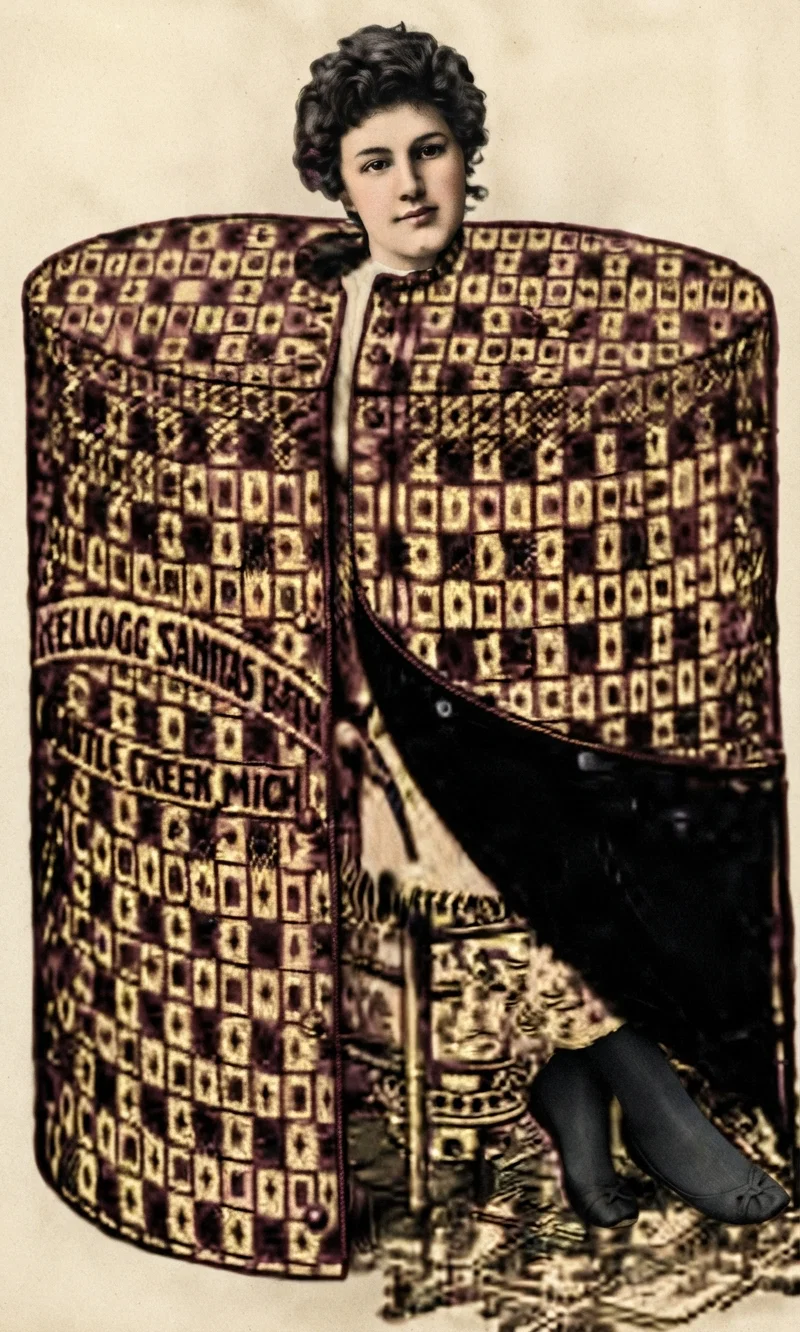
The Kellogg Sanitas Bath
BE GOOD TO YOURSELF, quit taking poisonous drugs and use Nature's remedy. Booklet treating on Health and Hygiene mailed to you free. There are any number of men and women who are sick from some disease. They have struggled for years, perhaps, to find some remedy that will release them from the pain and torture of Rheumatism, Liver and Kidney Troubles, Sciatica, Neuralgia, Eczema, Obesity, Night Sweats, and Indigestion.
The use of the Sanitas Cabinet Bath makes a healthy skin and beautifies the complexion. Recommended by leading physicians; managers of agencies and bath parlors wanted. Enclose 2c stamp for booklet and full information. Address,
The Kellogg Sanitas Co.
Battle Creek, Mich. U. S. A.