Your ShelfYour Projects

Review and Herald, Vol. 81, No. 37.

Publishers’ Page
Earlier text: MRS. E. G. WHITE

The Helpfulness of Helping

“OH, dear!” said an impatient mother, “do get out from under foot.” “But I want to help!” answered a cheery little voice.
“Help? Great help you’d be; run away and don’t bother me,” replied the mother. And in a sorry tone the child said again, “But I wanted to help!” adding, pleadingly, “Please let me!”
“No, no, I tell you; you only bother me. Go right away.” And a little push added emphasis to the mother’s words.
Years later that mother said to a friend: “I don’t know why it is my children don’t seem to care how hard I work. They seldom try to either help or save work.”
And yet cause and effect were closely allied. If she had gladly taken the offered help of the little one, and with loving patience trained the willing feet and fingers in helpfulness, she would have had a double harvest in the after years in the saving of work to herself, and, more important still, in the habit formed in her child.
Another mother heard the same childish offer, and, looking beyond the present into the future character, replied, “So you shall, dear.” And every day the little fingers grew more skilful. At first the dishes to be carried from dining-room to kitchen by the eager helper must be carefully selected from those least likely to break, and the carrying of the very best was a reward for a whole day without an accident.
To be sure, it was an added care to an already overbusy life, but it well repaid the labor; for, as the years passed, the mother and her children grew into a real partnership in both work and pleasure. The greatest reward of this mother was that her children acquired a habit of helping others, and by it were themselves made unselfish and courteous.
“Let us see how many helps we can give to-day,” was a frequent morning remark of this mother’s, and she was very watchful for an opportunity herself to help the children. “Let me help you, dear,” as a little lad struggled into his overcoat; or, “I’ll help look,” if a book or ball had wandered away.
Talking things over together, the first mother said: “O, I haven’t time to wait on the children; let them look out for themselves, and not expect to be waited on.” To which the second mother made answer: “Don’t you think they learn to be selfish that way? I do things for my children, and expect them to do for me and others.”
“But it’s too much trouble,” said the first mother.
“Better take your trouble now than by and by,” replied the other. And the years proved her wisdom.
“Your children seem so glad to help you,” said a friend. “I have to drive mine, to get any help at all.”
The other side of the story came through the window where the mothers were sitting. Their children were at play outside. Evidently some plans were under discussion, and one mother’s boy said:—
“You ask my mother, and I’ll ask yours, and maybe they’ll let us go.”
The other mother’s boy replied, “Why don’t we each ask our own?”
“My mother’ll say ‘Yes’ to you quicker’n she will to me,” replied the first voice.
“My mother wouldn’t,” half indignantly replied the other. “She says she would do more for her own boy than for any other boy on earth.”
And the mothers looked at each other. —Emma Graves Dietrick, in Christian Work.

Think of What Money Will not Do!

If ever there was a time when we needed to think of what we can have without money, it is now. We think so much about money. We talk so much about money. We say we can do nothing without money. That is not so. We can be saints without money; we can have peace of conscience, peace with God, joy in God, we can have heaven without money!
But, you say, we can not do good without money. That, too, is not so. We have become so thoroughly fascinated with money that we can not see anything but money, and what money can do. Begin to think on another line. Think of what money will not do, what it can not do. It might be well, for some of us who are orthodox in our faith (and alas! that means, in so many cases, in our opinions) to think that we were not redeemed with money. You were not redeemed with silver and gold. There is something more precious than gold, and I fear we are doing harm to those who have much money by giving it an undue importance.
If we need for Christ’s cause the money that can so easily be spared, why not go to the One who says the silver and gold are his, and ask the Spirit to influence others to soften their hearts toward the cause that needs assistance, and then, perhaps, merely a few words calling their attention to this or that will bring just what is needed.—Selected.

When Mother Went Away

O, VERY many weeks ago, There was a dreadful day; The very worst I ever knew, For mother went away.
And we all promised to be good, And mind Aunt Jane as children should.
But baby chewed the Noah's ark, Which made him very ill; And Kenneth opened father's ink— The kind that's sure to spill; And Ted fell down and bumped his head So very hard, he went to bed.
Then nobody at all was left To play, but only me. And so I thought I'd live a while Up in the apple-tree. But then I tore my sailor dress In fourteen places, more or less.
And all of us just cried a peck Of tears, or maybe more, Until the silk of mother's skirts Came swishing in the door. I think she'll never go again— At least she said she wouldn't—then.
—Carolyn S. Bailey.

An Entertaining Evening

THERE is usually a period in every young man’s life when his idea of having a good time means being away from home. He forgets what the father of the young man in this story from the New York Times took pains to have his son remember.
The young man had to work till six o’clock, and had got in the habit of staying down-town to dinner and spending his evenings at the theater or in calling on friends. One afternoon his father came to him and asked him if he had any engagement for the evening. The young man had not.
“Well, I’d like to have you go somewhere with me.”
The young man himself tells what happened:—
“‘All right,’ I said. ‘Where shall I meet you?’”
“He suggested the Columbia Hotel, at half-past seven; and I was there prepared for the theater and a lecture on late hours. He had combined the two on several occasions; but when he appeared, he said he wanted me to call with him on a lady. ‘One I knew quite well when I was a young man,’ he explained.
“We went out straight for home.
“‘She is staying at our house,’ he said.
“I thought it strange that he should have made the appointment for the Columbia under those circumstances, but I said nothing.
“Well, I went in, and was introduced with all due formality to my mother and sister.

Not So Funny After All

“The situation struck me as funny, and I started to laugh, but the laugh died away. None of the three even smiled. My mother and sister shook hands with me, and my mother said she remembered me as a boy, but hadn’t seen much of me lately. Then she invited me to be seated.
“It wasn’t a bit funny then, although I can laugh over it now. I sat down, and she told me one or two anecdotes of my boyhood, at which we all laughed a little. Then we four played games for awhile. When I finally retired, I was invited to call again. I went up stairs feeling pretty small, and doing a good deal of thinking.”
“And then?” asked his companion.
“Then I made up my mind that my mother was an entertaining woman, and my sister a bright girl.
“I’m going to call again. I enjoy their company, and intend to cultivate their acquaintance.”—Brotherhood Star.

Scandinavian Union Meeting

GUY DAIL
In the city of Jonkoping, Sweden, with its red-tiled frame houses, and its large, almost clear-as-crystal lake, stretching off in the distance toward the north, the delegates of the Scandinavian Union, in connection with the Swedish Conference, met in council, June 21-26. The city lies nestling on the water’s edge, tucked in between surrounding hills that are covered with purest green of field and forest, and has lake and canal connection with the Swedish capital.
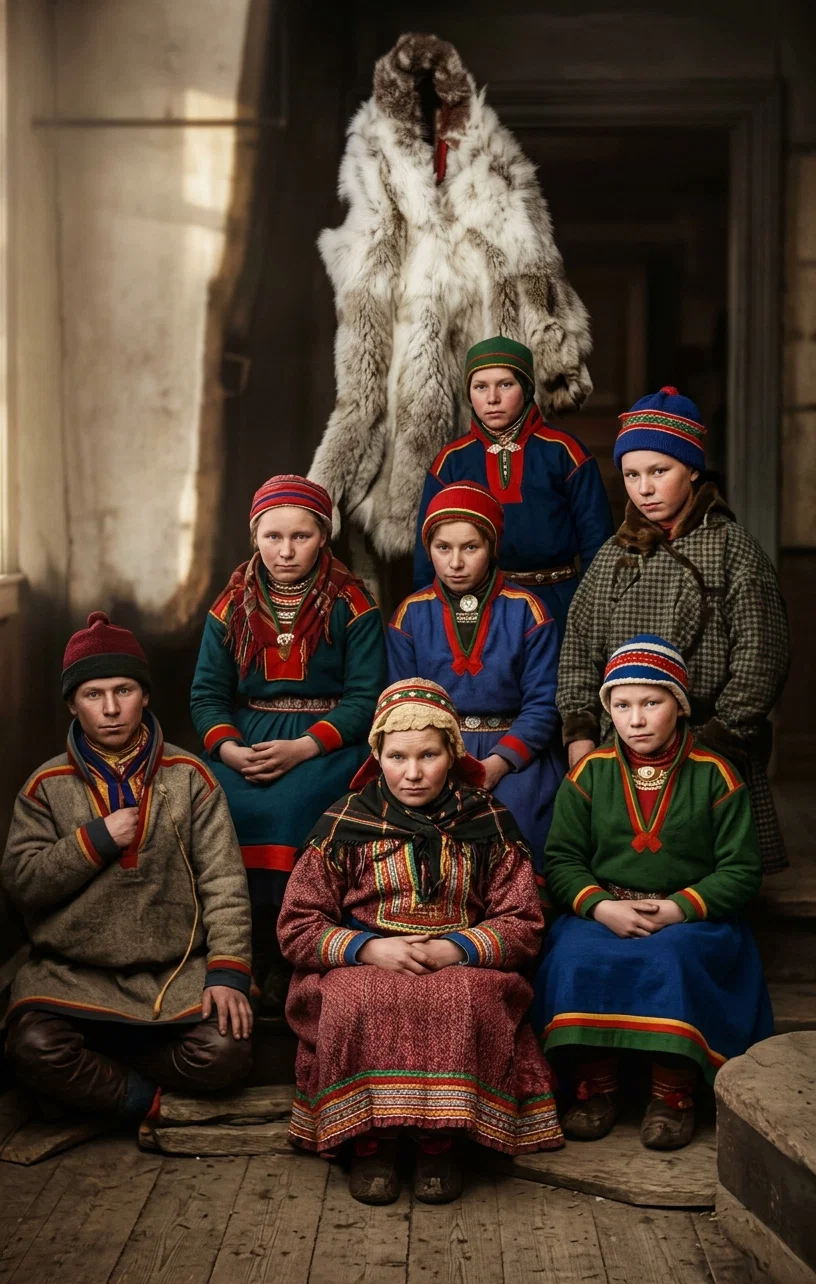
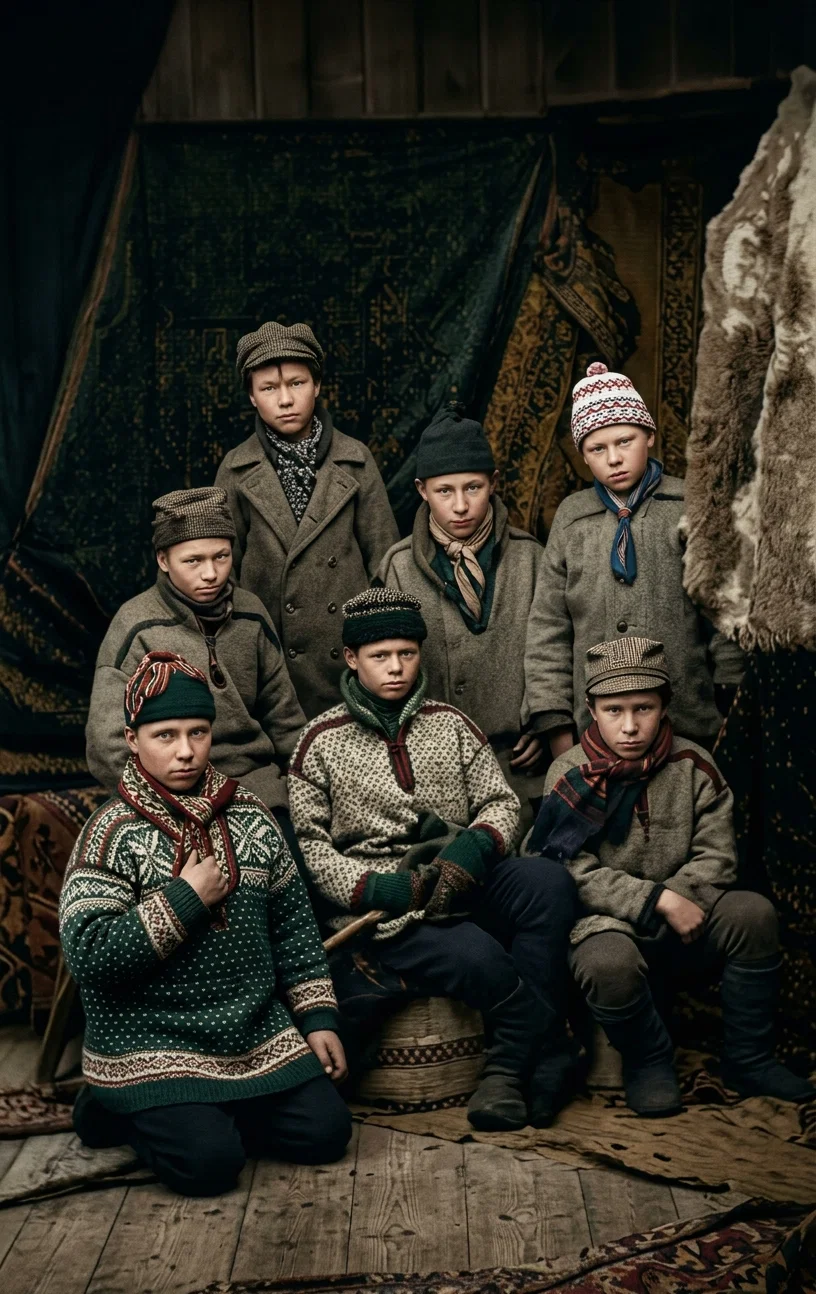
LAP GIRLS AND BOYS OF NORWAY
The union delegates were P. A. Hansen, N. Clausen, C. L. Henrickson, of Denmark; O. A. Johnson, O. J. Olsen, A. C. Christensen, of Norway; John Hoffman, Fred Andersen, A. Boettcher, of Finland; D. Ostlund, of Iceland; L. R. Conradi and O. A. Olsen; and from Sweden there were O. Johnson, J. M. Erickson, J. R. Lindkvist, E. Lind, E. Ahren, C. Kahlstrom and B. J. Karlsson.
When the Scandinavian Union was organized in 1902, it was not a full-fledged conference—it was rather a union council, and had a union council constitution. At the meetings held in Scandinavia in 1903, each local field voted to send delegates to a union conference to be held in Sweden in 1904, to more perfectly effect a union conference organization.
At the very first meeting, a committee on resolutions was asked to consider the revision of the constitution, that the union might be perfected, and the officers be appointed in the manner they are usually chosen in all the union conferences. This work was successfully done, the recommendations of the committee being accepted at the second meeting.
Necessarily, one of the live questions of the conference was that of its finances. Every union conference ought to be very largely missionary in the disposition of its funds. It ought to send missionary money into its missionary fields. In the Scandinavian Union there are three mission fields—Finland, Iceland, and Greenland. Two of these have already been entered (Finland and Iceland). Up to this time, the European General Conference has been carrying the burden of directing and supplying the finances for these two missions; but it was felt that erelong they should be placed under the direction of the Scandinavian Union Committee, and that the offerings of the union should be as systematically and thoroughly developed as possible. In view of the fact that missions must be supported from the free-will donations of the people, and that in other fields the First-day offerings have proved a very important means of mission support, it was recommended that the union encourage its conferences and mission fields to accept this plan, and urge our churches to work in harmony with it.
There are quite a large number of Laps in the northern part of Norway, Sweden, and Finland, and as yet we have taken no steps to publish the truth in their language. It was therefore decided that one hundred kroner of the union First-day offerings for 1904 be dedicated to the work of getting out literature in the Laplandish tongue while the remainder of the fund for the year be devoted to the Icelandic Mission.
One question which received much consideration ought to be of general interest to every mission field and to the home churches. We refer to the importance of developing the native evangelizing corps. While it is very necessary for missionaries to go to other lands, yet it must be admitted that the work of proclaiming the last message can not be carried on entirely or to a very great degree by foreigners. We must get hold of the native-born youth. We must train these young people. They must learn how to endure hardness and master difficulties, and how to present the truth in their mother tongue. One great lack Scandinavia to-day finds in her present force, is the very small percentage of young men and women who are being prepared, through education and experience, to enter the work. Young men are not developed and put into the field as they should be, for there is a lack of the money necessary to the attainment of that end. Therefore, this resolution was heartily sustained by the sentiment and vote of the delegates:—
“Resolved, That our interests be enlisted in educating and putting into the work more of the young talent there is among us.”
For a number of years the Finnish Mission has been carrying on business through the Book Mission (Forlagsexpeditionen), and yet we do not have the proper legal recognition in Helsingfors, and the only way in which this can be secured, under the existing laws of Finland, is by the formation of a stock company. The following resolution expresses what was felt to be the most fitting action under the circumstances:—
“We recommend, That the Forlagsexpeditionen (in Helsingfors) organize itself into a stock company, with a capital of ten thousand Finnish marks, in harmony with the existing laws of Finland, it being understood that the shares shall consist of two hundred and fifty Finnish marks each, and shall be held by the International Tract Society in Hamburg and in London.”
Brother D. Ostlund presented at some length the situation of the work in Iceland, and some of its needs. He referred to the help which a small chapel and one or two additional workers would be to them, and favorable action was taken in this case, but the matter will be more fully discussed and decided at the conference to be held in Friedensau next week.
It was further recommended that A. Boettcher and D. Ostlund represent their respective mission fields as delegates at the European General Conference in Friedensau; that the accounts of the Scandinavian Union workers be audited by the Scandinavian Union delegates and the European General Conference Committee; and that the publishing housein Sweden be recommended to get out, as soon as possible, a selection from the Testimonies in the Swedish language, similar to the selection recently printed in the German.
The officers chosen for the coming year are as follows: President, P. A. Hansen; Secretary, B. J. Karlsson; Treasurer, Jens Olsen; Auditors, E. Lind, and A. C. Christensen. The Union Conference Committee is composed of the presidents of Norway, Denmark, and Sweden; the director of the Finnish Mission; Dr. J. C. Ottosen, E. Lind, and O. J. Olsen.
During the twelve months ending Dec. 31, 1903, there had been 151 baptized in the union, bringing its membership up to 2,271; its annual tithe was $12,820; offerings $1,920; book sales, $31,000.
We believe that there are encouraging omens in this field, and trust that the future will see a still greater development and a stronger force of young men and women giving themselves to the work. Let its needs be remembered in our prayers.
Hamburg, Germany.

A Week in Simla

W. O. JAMES
Simla is the largest hill station in India, where are gathered all the highest government officials during the hot summer season. Situated seven thousand feet above sea-level, it will be seen at once that a cool atmosphere awaits the dusty and heat-wearied traveler. Although the summer home of the viceroy, Simla also contains many common people, who are here in government employ.
The Lord went before us, and, as a result, we have a good location. Sunday, July 10, was spent in writing letters and studying. In the evening we walked around the hillside to view the great snow-clad Himalayas looming up in the distance. Worship hour arrived, and we read Ezekiel 20, at the close of which Mrs. James said: “Never before was my faith so established in the truth as it has been since we began reading the account of God's dealings with Israel.” In worship we have been studying from Genesis to Ezekiel, and find much to strengthen us.
Monday morning my first call was upon a physician. He was not at home, so the lady asked me to call again, as she was interested in the subjects. I then met a native man, who took the Oriental Watchman for six months.
The building occupied by the viceroy's band next occupied my attention. Here three subscriptions were taken for the paper and for Good Health, thus placing the truth before twenty-eight men. Just before noon I entered an office and inquired for the head clerk. He took no interest in what was said, but a side door being open, the canvass was wafted to the ears of an unseen listener. An intelligent Parsee gentleman came out, and said: “I would like to see the paper.” He ordered the Oriental Watchman, and the Good Health also.
Calling at the physician's home again, a cool reception awaited me, but the message must be given.
“Is the Lord Jesus coming soon?” asked a native man who overheard what was said concerning the paper. I referred him to the promises, and he said: “I shall be glad to study the paper.” It brings joy to know that souls are interested and have with gladness heard the truth.
Tuesday morning the first lady I met gave up another paper that she might learn more concerning the Lord's coming by reading the Oriental Watchman. I asked if any one lived in the rooms below. She said: “No use going there, they are Catholics.” I went, however, and an order was the result. The Lord will cause a witness to be left.
Just beyond this place I came to an entrance rightly named “The Hermitage.” Drunken and alone, a poor man had been given up by the people as beyond redemption. It was said, “He is never sober.” I entered and found a man with shaky hand and steps none too steady, but no liquor was present. After telling something of what the Lord had done for me, he gave testimony of his knowledge concerning the Lord's power. He said: “I had been going down and down until disease and delirium tremens fastened upon me. I saw my condition, but could not resist. Mornings I had to take a drink before being able to rise, and it only lasted a short time. I began to pray for deliverance, and one night felt especially drawn to make this request: ‘Lord, help me to rise in the morning without the aid of this filthy cup.’ The next morning I stood up to see what the Lord had done, and found the great weakness had disappeared. My hands are yet shaky, but the Lord is holding me up.” I have visited him since, and found him growing stronger. He also took an interest in the paper.
The following morning I met a Christian Science lady. After speaking of health being the result of right living, she replied: “I don't believe in disease, but will take the Oriental Watchman, as it is nicely composed and looks interesting.”
The next call was at the home of a rajah, who took both papers. Heavy rains cut my work short, and as a result of getting wet I was in bed all the afternoon with chills and fever.
The next morning almost the first question I had to meet expressed the condition of our times. “Why is the world getting so brutal?” asked a lady. She was requested to read the third chapter of second Timothy for an answer.
Leaving this place, I called upon a man who has been unable to walk for six months as a result of rheumatism. He took both papers, and seemed anxious to learn the better way, as strong drink had robbed him of health. In the afternoon these forcible words were spoken to me: “The church has lost its anchor in losing sight of our Lord's return.” The speaker gave the paper a warm welcome.
Friday morning the viceroy's place was visited, but this class of people take but little interest in the fulfilment of prophecy which we see all about us.
A small Sabbath-school has been in progress here for some time, and we spent an hour studying the sealing message. Let us work and pray that many in these dark lands may accept the message which seals “the servants of our God.”

Pockets for the Mission Envelopes

W. A. COLCORD
The little mission envelopes, furnished free by the Mission Board to all our churches which desire them, for making weekly offerings to missions, are valuable. Wherever they have been used, the result has been seen in a marked increase in donations to missions. If they were generally used by all our people throughout the world, a large, steady stream of funds would flow into the Lord’s treasury in weekly free-will offerings. There is nothing like united, regular, and systematic effort in accomplishing great results. The continual dropping of so soft and frictionless a substance as water will wear away a stone.
But the envelopes are valueless unless used, and they will not be used unless the people receive them. To distribute these each week, and then collect them again each week, is quite a task in our larger churches. If, where we have church buildings, the envelopes could be placed in little pockets or receptacles on the backs of the seats where every one could simply reach in front of him and get one, the distribution part of the program could be dispensed with. The admirable system devised for systematic weekly offerings through the use of the little envelopes, is hardly complete, it seems, without some such arrangement as the one here suggested, especially for our larger churches.
A reduced picture of a suitable inexpensive little pocket for the envelopes is here given, with directions for making it.

How to Make the Pockets

Cut sheets of medium weight tin into squares 4 7-8 x 3 7-8 inches. From the top or lengthwise of the squares, turndown flat 3-16 of an inch. Out of each of the two lower corners, cut a square piece 1 1-8 x 1 1-8 inches. Then on the right, left, and bottom portions, turn upward at right angles a flange 5-16 of an inch in width. Inward from this angle 13-16 of an inch, but in opposite direction, turn a right angle on each of the three portions mentioned. Carefully square up all angles, to make joints fit perfectly and give neat appearance. With an awl, over a piece of lead or hard wood, punch two small holes in each side flange, and one in center of bottom flange, for tacking the pockets onto the seats, wall, door-posts, or elsewhere, and the pockets are made. They may however be painted, if desired, with one or two coats of paint of the same color as that of the seats or other woodwork to which they are to be attached. When ready, nail them up with small tacks or brads.
This makes a very neat and handy receptacle for the envelopes, and if kept filled by the janitor, librarian, or some other officer of the church, dispenses with the necessity of distributing the envelopes each week and is in harmony with better order and decorum in the house of God. Each pocket will hold about twenty-five or thirty envelopes, and so, if there are a good number of the pockets in the church, they will need to be filled only occasionally.
A sufficient number of the pockets should be placed on the back of each seat in the church to enable every one to obtain an envelope by reaching but a short distance for it. They should not be more than four or five feet apart. In the College View church, where the writer was an elder for the past year and a half, we put up over one hundred and fifty of these little pockets a year ago. This, of course, is a large church. Smaller churches would not need so many.
With the foregoing directions, any tinsmith can make the pockets; and they should cost not more than from three to five cents each (exclusive of painting), the price, varying, of course, somewhat with the number of pockets ordered. They will generally more than pay for themselves in increased donations the first Sabbath they are used.
But neither the pockets nor the envelopes will amount to much unless the officers of the church, the elders or the pastors especially, frequently call attention to the little envelopes, and where they may be found, report occasionally at least the amount the church is contributing by this means, and see that a collection of the envelopes containing the weekly gifts of the people is taken up each Sabbath. This is essential.
For the seven months previous to August, 1903, the College View church had contributed in weekly offerings to missions but $18.67. During just one year from that time, under the ten-cent-a-week envelope and envelope-pocket plan, it gave, as was reported in the last number of the REVIEW, $670.67. The first two Sabbaths’ collections amounted to more than seven times the amount the pockets cost. We found that the church was ready and willing to adopt the system as soon as the church officers had the courage to introduce it.
We are glad that so many of our churches and conferences are already practising this system, and we hope that it may very soon become general through the denomination. It is a good system.
If any are scrupulous about making offerings of this kind on the Sabbath, let them read the ninety-sixth Psalm, noting especially the eighth verse: “Give unto the Lord the glory due unto his name: bring an offering, and come into his courts.”
If any say they are not able to give ten cents a week, let them be informed that the system does not contemplate or require that every one shall give just ten cents each week, but that as a whole, the church shall endeavor to give an amount equal to an average of ten cents for its entire membership. Some can give more, some less. The idea is that all give something, and the full amount given by the church averages ten cents a week per member.
Any church officer who would like a marked and creased paper pattern of the little pockets will receive one by writing for the same to the Mission Board, 222 North Capitol St., Washington, D. C.

Mission Notes

“FOREIGN missions are the embodied courage of the church, the touchstone of her faith and hope.”
A CHRISTIAN heard a heathen woman praying passionately in a heathen temple. She had in her arms a pitifully misshapen baby, and she was praying that it might grow beautiful like other babies. As she turned to go away, the Christian asked her: “Friend, to whom have you prayed?” “I do not know,” she answered; “but surely there must be some one somewhere to keep a mother’s heart from breaking!” The message of missions is that there is this Some One.—Selected.
THE fear that Chinese opium-smoking fathers have that their sons may follow in their steps is strikingly shown in the fact that they will put their sons in charge of the missionaries, on purpose that they may be shielded from opium-smoking and other vices. Mr. T. James, of the China Inland Mission, gives us two instances of this. In one case, the two sons of a wealthy man named Yang came, the one by conviction, and the other by his father’s express wish. The father told Mr. James that, having read some of the books, he knew that his sons would receive only good from the missionaries, and that if it had not been for his opium, he himself would have become a Christian. In the other case, the son was sent by the father to Mr. James, for the express purpose of keeping him from secret societies and opium. One result of the young man’s association with the missionaries was that he refused to burn incense to the idols or paper money to his ancestors. Whether such a result had been foreseen by the father or not, we do not know, but apparently he was willing to run the risk of his son’s becoming a Christian rather than let him become an opium-smoker.—Britain’s Opium Harvest.

A Providential Meeting in Africa

BEING forbidden to preach the gospel in Cape Town, Barnabas Shaw bought a yoke of oxen and a cart, and putting his goods into the wagon, he and his wife seated themselves therein, and headed the lowing oxen toward the interior of the country, not knowing whither they went. Thus they journeyed on day after day, till they had traveled three hundred miles. On the twenty-seventh day of their journey they encamped for the night. They discovered a company of Hottentots halting near them. On entering into communication with them, they learned to their astonishment that this band of heathen, headed by their chief, were journeying to Cape Town in search of a missionary to teach them “the great Word,” as they expressed it. Had either party started a half day earlier or later, they would not have met; but as it was, they met just in the nick of time, and that nick of time proved such a juncture of providence as has rarely occurred in the history of God’s church.—The Holy Spirit of Missions.

The Stingy Christian

A STINGY Christian was listening to a charity sermon. He was nearly deaf, and was accustomed to sit facing the congregation, right under the pulpit, with his ear-trumpet directed upward, toward the preacher. The sermon moved him considerably. At one time he said to himself, “I’ll give ten dollars;” again he said, “I’ll give fifteen.” At the close of the appeal he was very much moved, and thought he would give fifty dollars. Now the boxes were passed. As they moved along, his charity began to ooze out. He came down from fifty to twenty, to ten, to five, to zero. He concluded that he would not give anything. “Yet,” said he, “this won’t do—I am in a bad fix. This covetousness will be my ruin.” The boxes were getting nearer. The crisis was upon him. What should he do? The box was now under his chin—all the congregation were looking. He had been holding his pocketbook in his hand during this soliloquy, which was half audible, though in his deafness he did not know that he was heard. In the agony of the final moment he took his pocketbook and laid it in the box, saying to himself, as he did it: “Now, squirm, old natur’!” “Here is the key to the problem of covetousness,” says an exchange. “Old natur’” must go under. A few experiments of putting in the whole pocketbook may cure.—Selected.

FRANK BOND

Spain

SABADELL.—“As cold water to a thirsty soul, so is good news from a far country.” Only a few days ago our hearts were made glad by a letter from one of Iowa’s experienced workers—Brother Rentfro—who, with his wife, is planning to come to Spain. As we read the report of the late general meeting held in Iowa, and the decisions made there, our minds went back almost two years, to the Fresno camp-meeting, when a similar move was made. We believe the time has come when many such consecration meetings will be held. We can quite fully appreciate the need of them. We have prayed to the Father often that he would send other laborers to this land of darkness, whose millions of souls are steeped in Catholicism, superstition, and intemperance of all kinds. We had faith that the Lord heard and would answer our cries. We knew not how this would be accomplished; but the Lord of the harvest knows all about the needs of his vineyard.
The prospect of one or two additional laborers within the near future causes us to praise God from the depths of our hearts. But we do not feel satisfied yet to leave off praying for more workers for Spain.
With about one fourth as great a population as the United States, and almost twenty million souls with no knowledge of a soon-coming Saviour, it seems to us that Spain should appeal loudly and forcibly to the hearts of many strong, consecrated young people in the home land. There are those who have some knowledge of the language, who would be anxious to come if God made manifest by opening the way, that it was his will that they should come.
The work is moving slowly forward here. We are meeting much opposition from missionaries of the popular churches. But if God be for us, who can be against us?
On June 29 we had our first baptism in Spain. Professor Wilkinson was here to perform the ordinance. Three precious souls followed their Lord into the watery grave.
We are watching with intense interest the advancement of the message, and our prayer is that it may be quickly carried to all nations.

FRANK BOND

Scotland

PERTH.— We left our home State, Nebraska, Sept. 27, 1902, for Scotland. After spending the fall and winter in London, where we received some excellent instruction in preparation for our work, we went to Edinburgh, Scotland. At that place we spent several months, which were filled with good experiences in the canvassing work. In March we, in company with our co-workers, Brother and Sister D. P. Miller, came to Perth to prepare the way for a tent effort; and right here we wish to express our sincere thanks to the brethren and sisters who at the Central Union Conference so kindly donated the tent for Scotland. The tent came just a few days before the time to pitch it, and we could not help thanking the Lord for his leading, and for so graciously answering our prayers. We are all doing what we can to hold up the light of truth in this place, although we have some hard battles to fight with the enemy. At first the children in the community were a great annoyance, as they tried to destroy the tent. We had to put up a barb-wire fence around it in order to keep them out until time for children's meetings each day. This so disturbed some of the parents who would not come out to the meetings that they tried to advertise our work in the paper, calling it “barb-wire Christianity.” Nevertheless we are of good courage, and have only praise to offer; for, “If the Lord be for us, who can be against us?” There are a few earnest souls here who we feel sure will walk in the light of the truth when it is fully presented. The tent is always well filled Sunday evenings, and although the attendance is not large through the week, yet we believe those who do come are seeking for truth.
After the tent effort is over in the fall, we expect, if the Lord is willing, to return to America to spend the winter in helping our brother dispose of his and our property, so that he with us may enter the work in the spring, to be self-supporting a few more years, as we have been since coming to Great Britain. We shall either return to Scotland or go to some other needy field, just as the Lord leads. Our hearts are in this message, and we do want to do all in our power to proclaim it.
Since coming to Scotland our paper and book sales have amounted to over eleven hundred dollars, but that is small in comparison with what some of the workers who have devoted most of their time to canvassing have done.
Brethren and sisters, pray for the work here. We thank the Lord that he sent us to Scotland.
JAY NETHERY, ELLA NETHERY.
Continue reading: Fiji