Your ShelfYour Projects

Signs of the Times, Vol. 32, No. 18.

THE EVERLASTING AND SURE REFUGE
Earlier text: VESUVIUS IN ACTION AGAIN

Mountain View's Experience

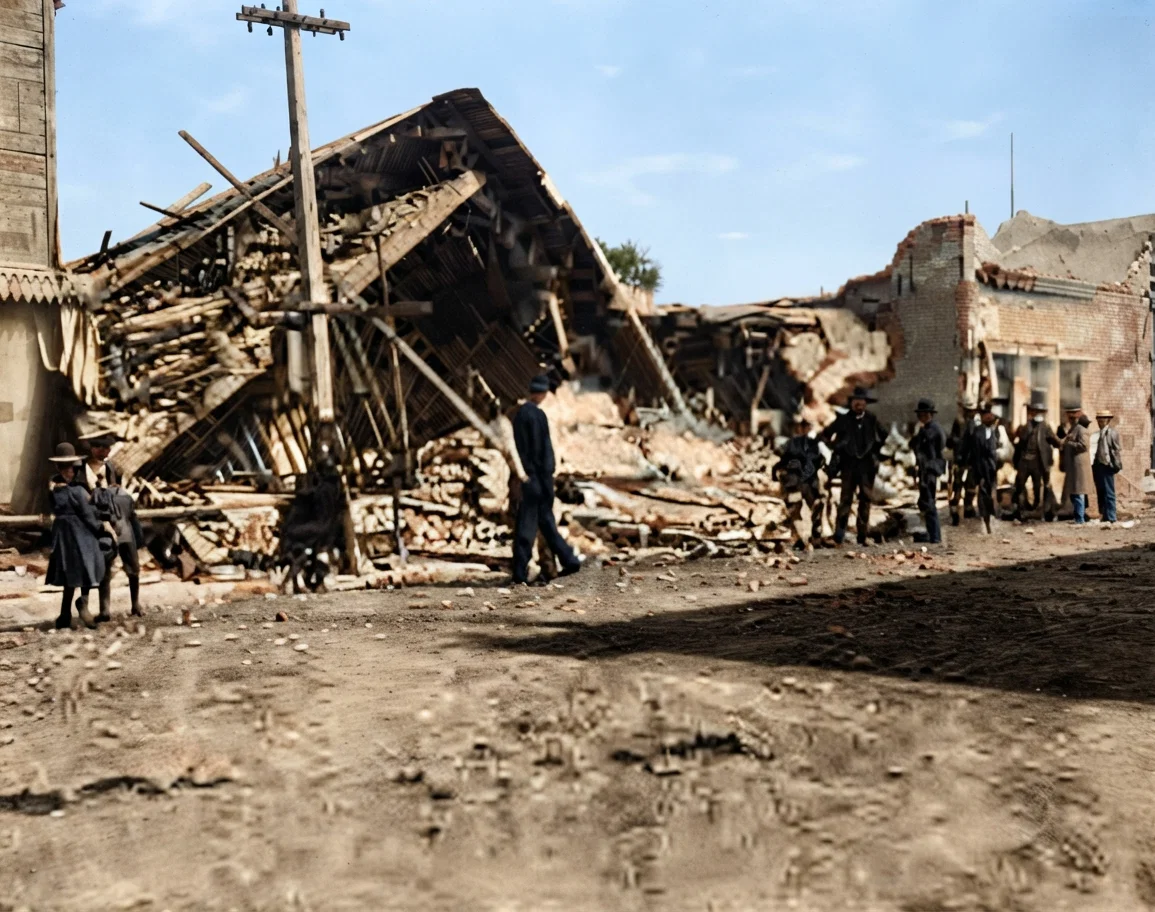
Our home town is fortunate in having but few brick houses. Of these few, four are in heaps of ruins, and the others are seriously damaged. One two-story structure, tho not demolished, was so damaged as to be immediately abandoned. An adjacent building was also abandoned.
One building with a general merchandise store and the post-office on the first floor, and a lodging-house upstairs, was thrown into a miscellaneous heap. Some of the lodgers were injured, but none fatally.
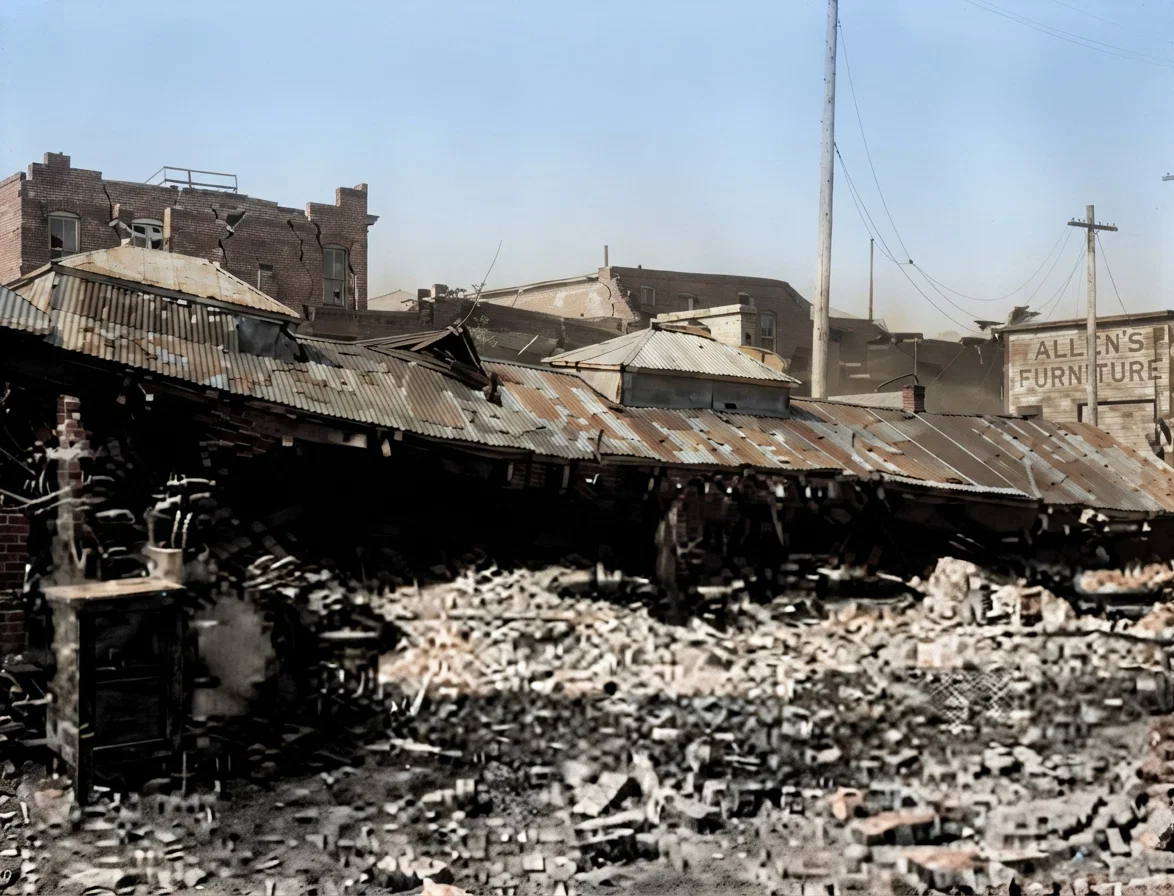
Another building, containing two stores below and a large hall above, was mostly tumbled into the street. A large two-story furniture establishment fell flat to the earth. A large fruit-drying and packing house was also totally wrecked.
Two two-story frame buildings were ruined, and many others more or less damaged. Broken windows, dishes, or furniture were the order common to all houses. Many windmills and water tanks were thrown down, and fallen chimneys are to be seen anywhere, as also broken plaster in plastered houses.
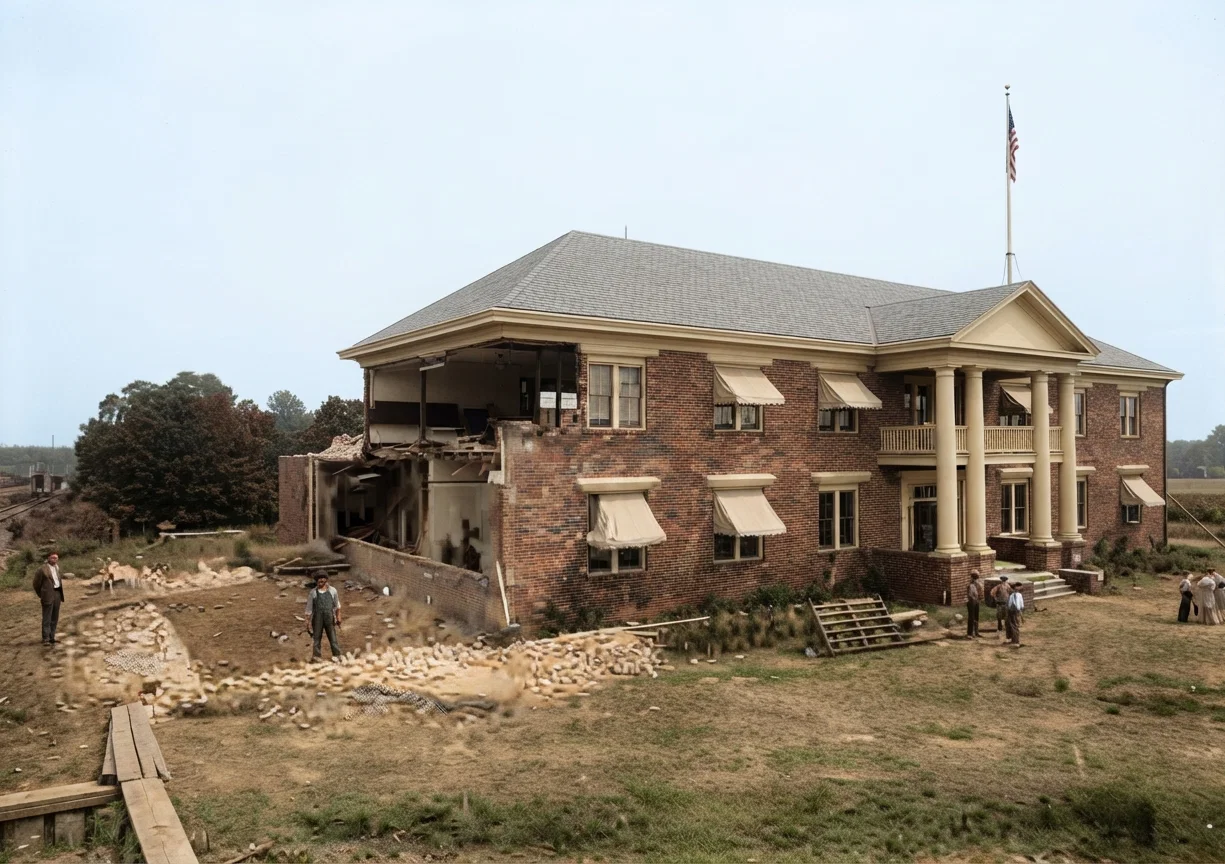
West End of Office, Looking into Chapel.
The two large tanks of the town water-works—100 feet high, and containing 70,000 gallons—fell to the ground. However, the pumping apparatus was not injured, and water for the town is pumped directly into the mains.
The financial damage, estimating all losses, will reach approximately $175,000, to say nothing of loss of business for a time. There was no loss of life, altho a dozen persons were more or less injured.
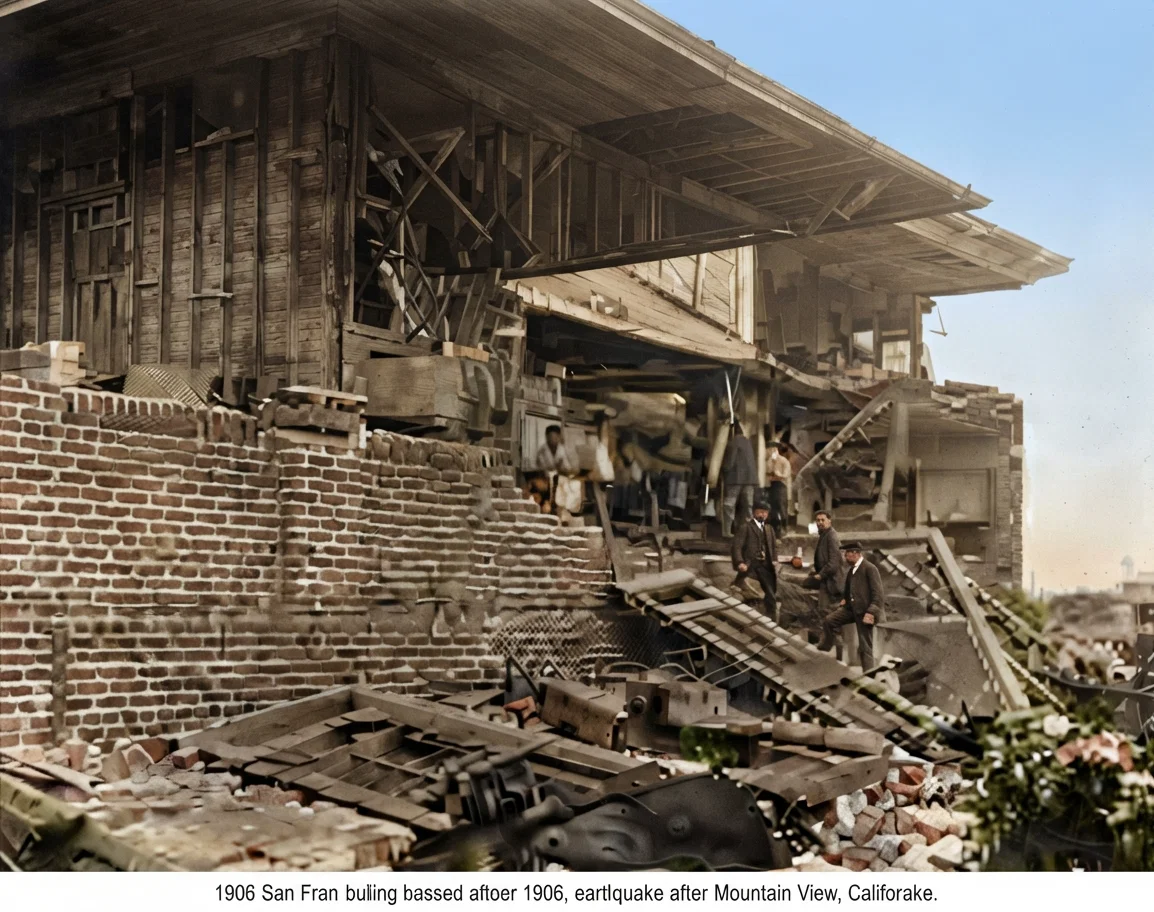
Our own building, the Pacific Press Publishing Company's plant, was terribly shaken. The east and west end walls were, in the main, thrown to the ground; and so badly wrenched were the remaining portions of these two ends that they had to be torn down and replaced with wood frame. The back wall on the side next to the railroad is also being replaced with wood. This is a one-story wall, 175 feet in length. The front two-story wall will be saved by reinforcing it on the inside with independent frame floor support.
Fortunately the roof was not injured, and enough sound wall was left to support it until the frame could be built under it. The foundation was also uninjured, so the frame was rapidly adjusted by a large force of carpenters.
With the exception of our two linotype machines and a small quantity of type, our working material is practically uninjured. These machines will be out of use for sometime, as there is no place on the Coast where they can be repaired at present. They were broken by a portion of the brick wall falling in upon them, and they are damaged to the extent of several hundred dollars. Operators had been working all night, and had left their posts but half an hour before the crash came. Aside from these machines, work could proceed in all departments after clearing away the débris. Of course this was aside from the possible danger of succeeding shocks, which might complete the wreck; and this led to some timidity as to continuing work.
Had we been in some incorporated city, the authorities would not have allowed us to go to work on the inside at all; but as it was, working or not working was voluntary only as individuals felt impressed to service because of the urgent need. The response was quite general, and the clearing out was done in short order. As light temblors were felt during Thursday, the workers would lose little time in getting outside, but most of them would return as soon as it appeared that the shocks were past. Quite naturally, tho, some preferred to sit at a supposedly safe distance and watch for further results, and perhaps they were the wiser ones. Some had work that could be done at a little distance from the shattered structure.
As the editors sought their offices they were confronted by a distressing sight. In one room large book-cases and their contents were piled in the middle of the floor. The books were mingled with broken plaster, broken glass, and splintered wood. In another room a glass-front book-case lay face downward across the desk and chairs of the proof-readers. The result can be imagined. In the hall, in front of our doors, lay an immense pile of miscellaneous engravings. The cabinets of drawers containing hundreds of these had fallen forward from the wall, and lay in a miscellaneous heap.
In the reading-room and in an adjoining room, that had been occupied by a children's division of the Sabbath-school, the "baby organ" and other furniture, including a steam radiator lay on the floor. The chapel-room, also used by the Mountain View church, which is in the second story, was entirely open at one end, the wall being upon the ground.
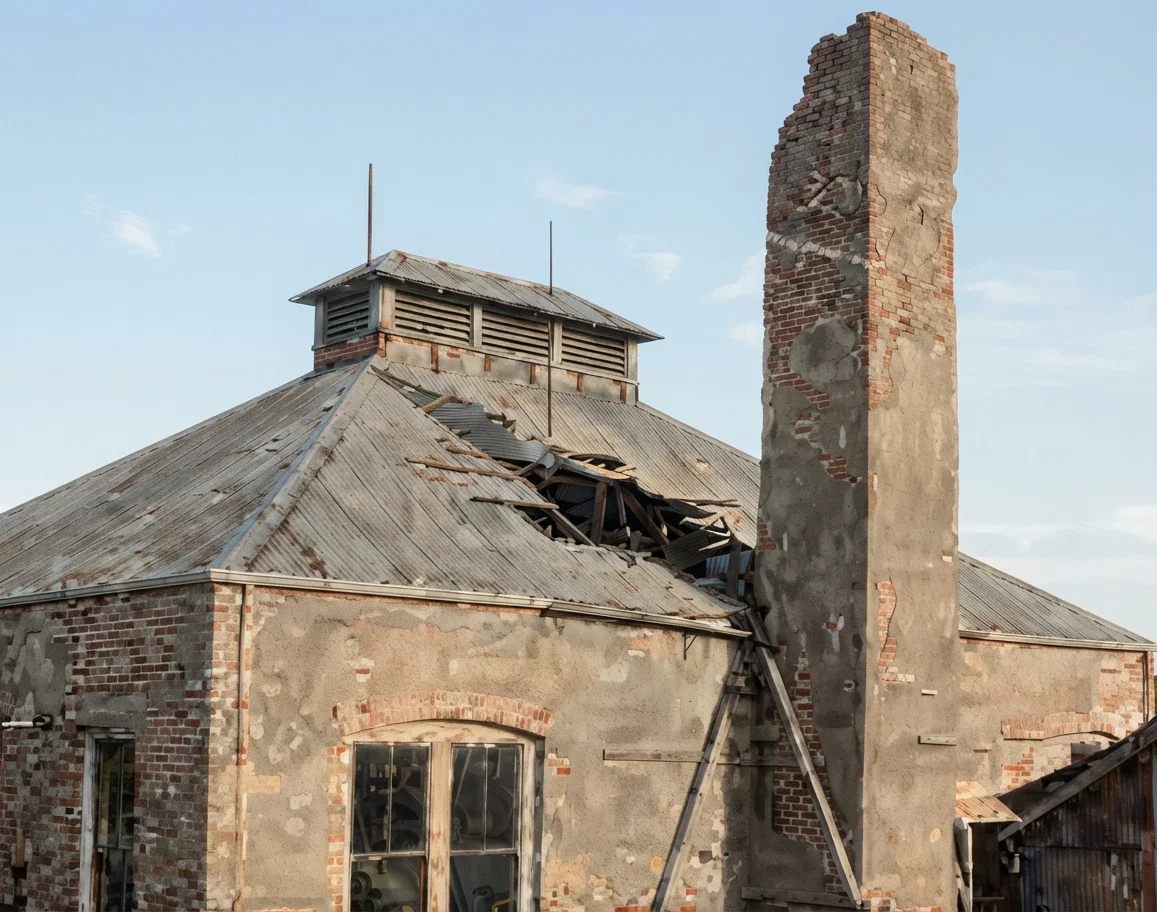
In the manager's room, counting-room, and job proof-reading room, there was extensive fall of plaster, and some overturning of furniture. In the Book Department one entire side was laid open, besides the falling of plaster. The same was the experience of the bindery, the composing room, and the foundry. The power house was left in running order, altho the brick walls were cracked and otherwise injured. About half of the brick smokestack came down in two pieces, one piece upon the roof, breaking it in, and the other breaking in the frame carpenter shop close by.
The main tank house, which is of frame, is uninjured. Another high tank tower, about sixty rods distant, also the property of the Press, is thrown out of plumb, and will have to be strongly anchored, or perhaps taken down. It cost over $2,000. Had it been as thoroughly braced as the other tank tower by the office, it would have stood as well.
Our new two-story boarding-house, frame and plaster, suffered no damage to speak of. It stands within a hundred feet of the brick publishing house. This emphasizes the impracticability of brick buildings where there is liability to earthquakes,—and that is everywhere in these last days. The wise will note this fact, and act accordingly.
As to loss, that is to some extent a matter of conjecture. It is variously estimated according to the standpoint of the estimator. We hope to make all repairs come within $15,000; but the loss of business is another item to be considered. Our commercial work comes largely from San Francisco, and all manner of business is at a standstill there—for how long no one knows. Old customers are ruined for the present, if not permanently. Accounts for work done, and pay for jobs partially done, are matters of uncertainty. Losses in the way of business in the near future will equal, if not double, the property loss. These losses time alone will determine.
But, praise the Lord, "we are all here," and all alive, and, we hope, have profited by the experience. The church held Sabbath service in a nearby grove, and Brother J. O. Corliss preached a ringing discourse on the general theme of what these things mean. It was a real "message" sermon, and it surely did the believers good in the way of encouragement and reassurance in the way. "O that men would praise the Lord for His goodness, and for His wonderful works to the children of men!" Ps. 107:8, 15, 21, 31. G.

CHINATOWN REVEALED.

[By W. W. Overton, in despatch from Los Angeles. Mr. Overton was one of those who were in the city at the time of the earthquake and fire.]
STRANGE is the scene where San Francisco's Chinatown stood. A heap of smoking ruins marks the site of the wooden warrens where the slant-eyed men of the Orient dwelt in thousands. The place is pitted with deep holes and seared with dark passageways from whose depths come smoke wreaths. All the wood is gone and the wind is strewing the ashes.
Men, white men, never knew the depth of Chinatown's underground city. They often talked of these subterranean runways. And many of them had gone beneath the street levels two and three stories. But now that Chinatown has been unmasked, for the destroyed buildings were only a mask, men from the hillside have looked on where the inner secrets lay. In places they can see passages one hundred feet deep.
The fire swept this Mongolian section clean. It left no shred of the painted wooden fabric. It ate it down to the bare ground, and this lies stark, for the breezes have taken away the light ashes. Joss houses and mission schools, grocery stores and opium dens, gambling-hells and theaters—all of them went.

SOME DISASTERS OF THE PRESENT YEAR
An appalling array of facts and figures is the result of but little study and search into the records for the short period from Jan. 1, 1906, to the present time. Disasters and catastrophes of every nature have visited every continent and nearly every country. The following is a partial list, enough to set any one thinking:
Mr. Allen's two-story brick furniture store in Mountain View, after the earthquake.
January 7. Earthquake shocks were felt in eastern Kansas and north-eastern Missouri.
January. During the early part of the month, earthquakes were frequent in Mexico. Floods followed, which ruined crops and did much other serious damage.
January 22. The steamship "Valencia" was wrecked near Cape Beale, British Columbia. 120 perished.
January. Twenty-three deaths reported in Havana, resulting from yellow fever.
January 25. A sharp earthquake, which did considerable damage, was felt in New Mexico and Arizona.
January 28. The naval training station at Newport was damaged to the extent of $100,000 by fire.
January 31. Long and severe earthquake shock in Buena Ventura, Colombia, 2,000 killed. Shock lasted seven minutes. Many villages destroyed.
January 31. Tidal wave followed earthquake, destroying many more villages, killing many people.
Pacific Press engine room, and broken smoke-stack which fell through the roof of the building.
January 31. Earthquake in Ecuador. At least 300 killed.
February and onward. Great famine in Japan.
February 1. A fire in Panama caused loss of $500,000.
February 3. An East St. Louis elevator burned. Loss $1,000,000.
February 3 and onward. Mount Vesuvius in eruption. Four towns destroyed. Naples covered from two to four feet deep with ashes. Hundreds killed, the property loss very large.
February 7, 8. Cyclone and tidal wave in Society Islands of the Pacific. Many islands swept of inhabitants. Property loss $2,000,000.
February 8. Earthquake in West Indies. Many ships lost, with many on board. Also many inhabitants killed.
February 15. Great tidal wave destroyed coast towns of Colombia.
February 16. Severe shocks at Kingston, St. Vincent, British West Indies.
February 17. Shocks in other islands of the West Indies.
March 2. Tornado at Meridian, Miss. Nineteen killed, twenty-four injured. Loss of property $1,000,000.
March 5. Car barns burned in New York. Loss, $200,000.
March 5. About 800 fishermen and their families perished on floating ice cakes in the Gulf of Finland in a severe storm.
March 10. More than 1,200 miners killed by an explosion of gas in a coal mine at Courrieres, near Bethune, in the French coal region.
Corner of the Pacific Press after the earthquake.
March 11. In the foundering of the steamer "British King," off the Massachusetts coast, twenty-seven men were lost.
March 14. Over 1,000 killed, many more wounded, in earthquake in Formosa. 1,200 homes destroyed; loss, $45,000,000.
March 16. More than forty people killed in a railroad collision near Adobe, Colo.
March 19. Six thousand reported killed in earthquake in Formosa.
March. Volcanic eruption on island of Savaii, of the Samoan group. Three villages destroyed by streams of lava.
March 24. Explosion in a coal mine at Century, W. Va., entombs 150 miners.
April 5. Vesuvius still in state of eruption. Five streams of lava. Many towns destroyed. Land covered with ashes and mud. Ruined for agricultural purposes for ten years at least. Naples suffering.
April 14. Another earthquake in Formosa. 1,000 killed. More than 1,000 injured.
April 18. Earthquake shock extending along Pacific Coast. San Francisco, San Jose, Stanford University, Santa Rosa, and
many cities and towns destroyed. Property loss very great. Thousands of lives lost.
April 21. Mariquina, Rizal Province, Philippines, burned. Thousands homeless and starving. Town of Pasil, near Cebu, also destroyed.
Post Office, Rogers' Store, and a large building under construction, Castro Street, Mountain View.
It is utterly impossible to estimate the loss of lives or property in these disasters. Roughly the following figures may be given, not attempting to include the late earthquake on the Pacific Coast, for as yet the figures can not be secured.
Loss of life Loss of property
Earthquakes 15,000 $100,000,000
Fires 600,000,000
Accidents 5,000 100,000
Tornado 19 1,000,000
Volcano No estimate No estimate
Disease, Famine " " " "

Earthquakes, Fires, and the Cities

Earthquakes and fires do their greatest damage in the cities. There was a lesson in the confusion of tongues at Babel which the world would have done well, and would yet do well, to heed. Untold suffering by fire and contagious disease as well as by earthquake and storm, would have been avoided, and might yet be avoided, if men would not defy the elements and the plagues by huddling together to prey off one another instead of leading the more independent rural lives designed by the Creator. The so-called "enterprise" of man, the "wisdom" that is "foolishness with God," is illustrated in the great cities where thousands of people exist in a block of buildings. Many of these have little idea of the probability of the next meal, yet they could hardly be induced to leave the congested conditions. Through such conditions—the result of human "business" acumen—three per cent. of New York's population own all the houses, where the people are huddled together like rats, while there are yet seventeen hundred million acres of unoccupied land in the United States.
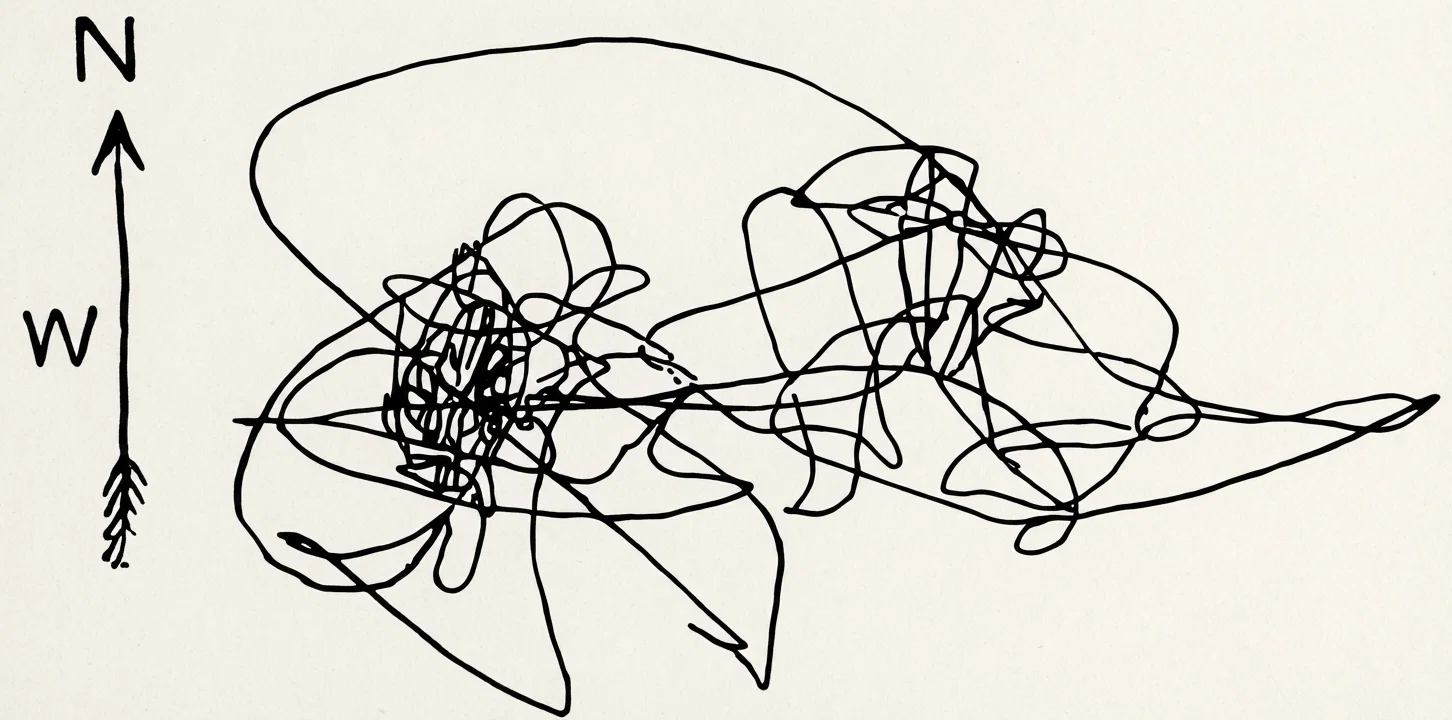
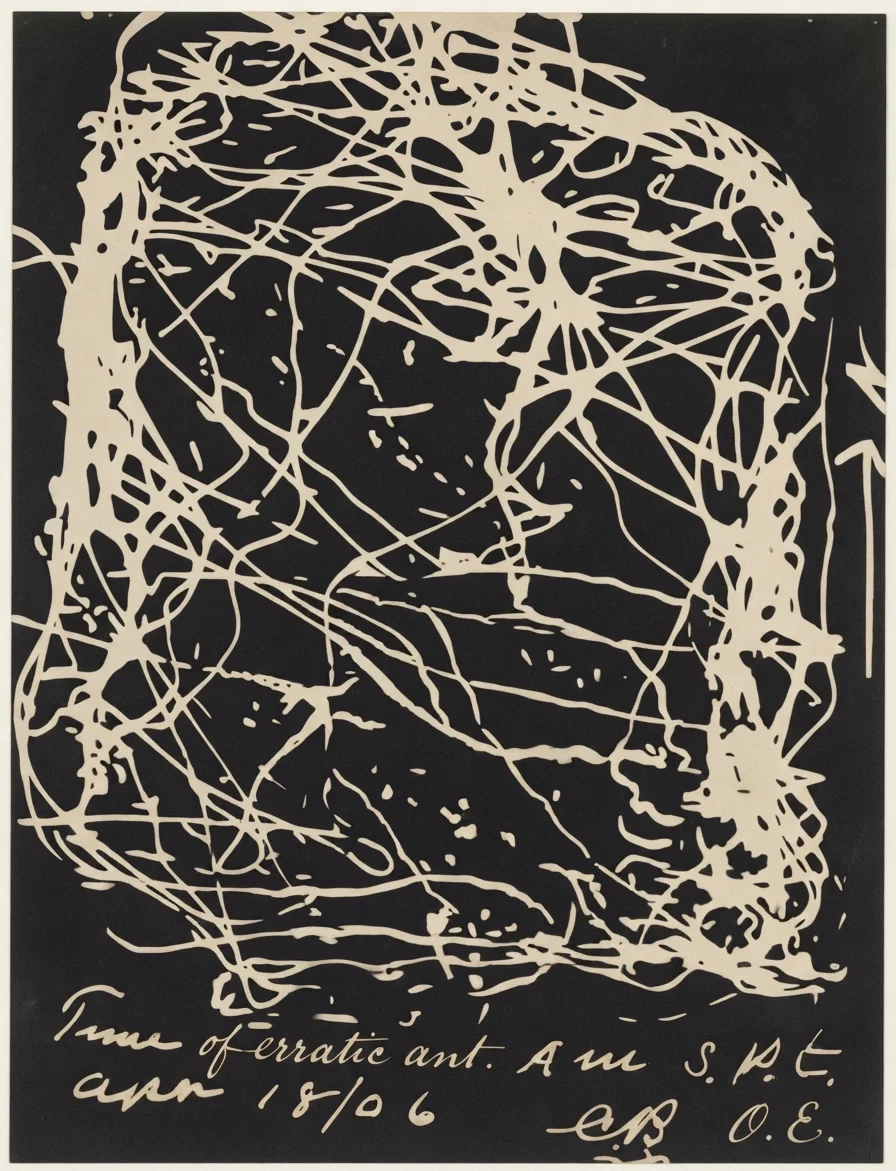
The Siesmographic Record of the earthquake of April 19, 1892, at 2:49.2 A.M. Its duration was long, fifty-eight seconds. This record and also the others, we presume, as they are all from the same observatory, are on a scale of one to seven; that is, these records are seven times larger than the originals; or to put it another way, the pen of the seismograph moved over seven times more space than the earth did.

The San Francisco Earthquake of 1898

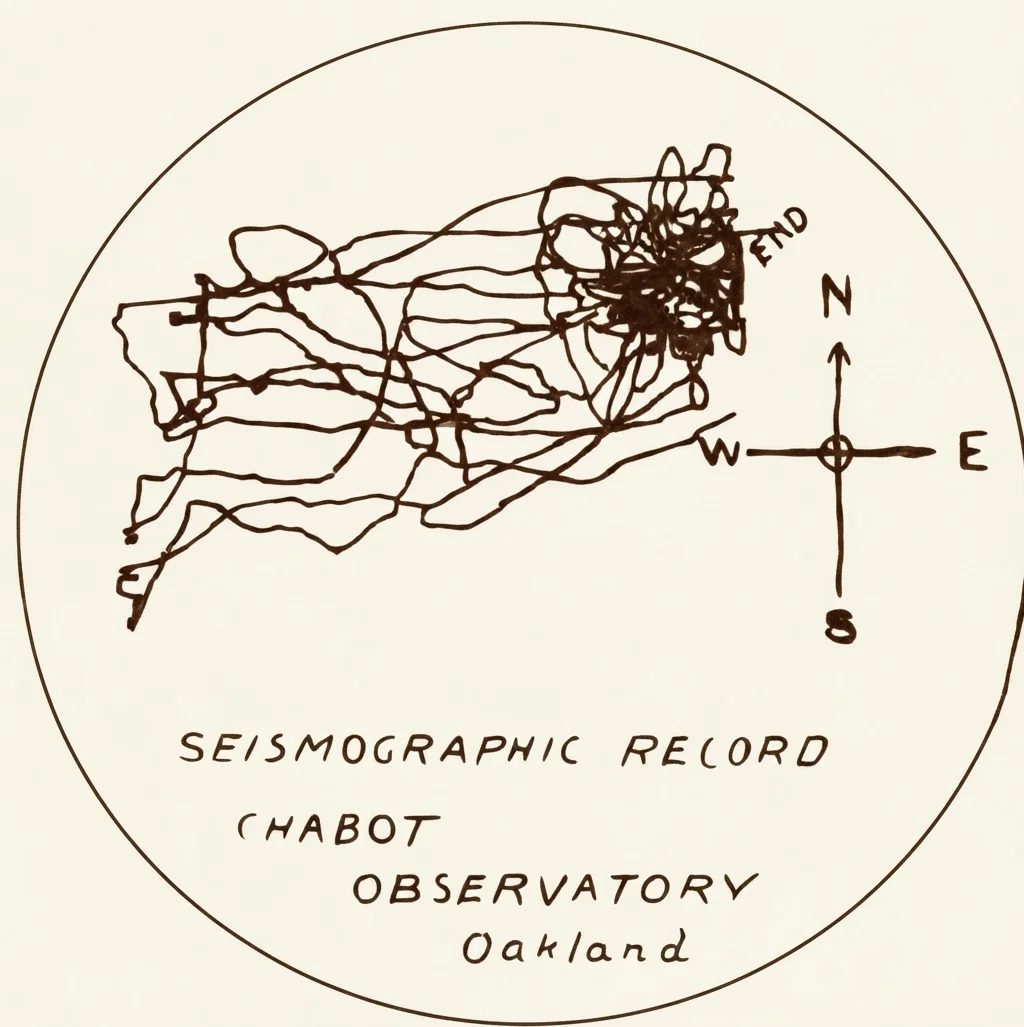
The signature of the earthquake of March 30, 1898, 11:45 P.M., in San Francisco and vicinity. It was notable because of its duration, lasting forty-five seconds, the hardest since 1868 till the recent temblor. The damage to buildings all told was estimated at $342,000. No lives were lost, but many people were greatly frightened.
SEISMOGRAPHIC RECORD CHABOT OBSERVATORY Oakland

Record of the San Francisco Earthquake

The record of the present earthquake is a horrible thing to read by one who experienced the shaking. No direction but what was taken. Over six centers the stylus, or pen, hung as tho loath to leave. In two places it went beyond the plate, so that we do not have the full measure of the quake. We regret that we did not receive a better photograph than the rough proof from the negative. It has been sent us through the courtesy of Prof. Burckhalter, but the slow mails have not brought it to hand at the eleventh hour. We will endeavor to give it in our next. The date was April 18, 1906, at 5:14:48 A.M. Duration 28 seconds. Note the date of all these earthquakes.

Splendid Revelations of Character.

We wish we had space in this issue to note some of the splendid revelations of kindness and generosity developed by this calamity. But this we shall have to leave for our next. Also the strange things caused by the earthquake. These are of interest.

A GENEROUS LAND.

THERE have been most noble, generous, and hearty responses from all over the country to the appeals for food and clothing for those who suffered in the great California earthquake. State lines have vanished, and even the Canadian boundary line has been unable to obstruct the flow of sympathy and succor for the afflicted. This calamity has opened purse strings in a wonderful manner, and has brought the East and West, the North and South, into a new and more closely-knit union.
The sympathy of Congress grew as the details of the disaster showed the continuous increase of the terrible calamity. An appropriation of $500,000 was made at first. The committee to which it was referred increased it to $1,000,000, and this was passed with no opposition. Later another appropriation of $1,500,000 was made, making in all $2,500,000.
Many of the larger cities were quick to follow the example of the national government. Portland, Oregon, came forward promptly with contributions to the amount of $100,000. Seattle contributed $90,000. Sacramento raised $20,000 in fifteen minutes on April 19, and increased it later to $100,000. Philadelphia placed $75,000 at the disposal of California's governor. St. Louis contributed $100,000; Victoria, B. C., $25,000; Los Angeles $23,000; Goldfield, Nevada, $11,000; Reno, Nevada, $10,000; New York Stock Exchange, $85,000; New York City, about $350,000.
There have been very many contributions of smaller amounts. One report stated that the Canadian Parliament had appropriated $10,000, but at this writing we are unable to place our hands on the information or to verify.
California thanks the country at large for its sympathy and its help—and she has good reason for so doing. S.

More Earthquake News Next Week

Much more news and other illustrations of the earthquake will appear next week. There are many, many good things left over.

Thanks for Friends’ Sympathy

Grateful are we for the sympathetic messages and inquiries of our friends. We tried to let them know, but we could send neither telegram nor letter for days.

Aid for the Publishing House

We are of good courage. Our publishing house has lost from $20,000 to $25,000 or more. It is serious, and if any wish to help this institution of the Lord's work it will be gratefully received and economically expended.

Price of This Number

Price of This Number.—In less than thousand lots to single names and addresses at same rate, 3 cents a copy; in lots of one thousand or more to one name and address, the price is 2 1/2 cents each. Address SIGNS OF THE TIMES, Mountain View, Cal.

Our Departments.

The SIGNS OF THE TIMES has each week excellent Home, Outlook, and Missions departments. These we have sacrificed ad libitum to tell our readers of the most absorbing topic of interest now before the people of this country.

Views of the Earthquake

Views of the Earthquake.—If any among the readers of this paper wish to procure views of the earthquake, with description of each illustration, printed on heavy coated paper, let them send twenty-five cents to the SIGNS OF THE TIMES, Mountain View, Cal. The book is now in preparation.

The Earthquake: Its Lessons

The Earthquake: Its Lessons.—A sixteen-page, fully-illustrated tract on the significance of the recent earthquake is being published by the Pacific Press Publishing Co. Its title will be "The Earthquake: Its Lessons." It will be issued as "Bible Student's Library, No. 196." It should be circulated by the hundreds of thousands just now. Price 1 cent each, 80 cents per 100; $7.50 per 1,000, express prepaid. Address your tract society, or Pacific Press Publishing Co., Mountain View, Cal.

Our Institutions in San Francisco.

The Vegetarian Café, the Health Food Store, and the Branch Sanitarium were all burned, and the loss is several thousand dollars. The first two had some insurance; the Branch Sanitarium was not insured. If the companies can pay, the loss will not be so heavy by several thousand. The loss of a good business is much. The Vegetarian stood the shock well, and served meals for two or three hours after the earthquake until driven out by the fire.

Insurance Losses from the Earthquake

The insurance commissioners of San Francisco have made a thorough inspection of the district destroyed by fire following the earthquake of April 18. The policies held by those whose buildings were burned will reach $175,000,000 and the commissioners estimate that the total loss will reach $300,000,000. As this is divided among about eighty companies, they assert that only a few of the smaller companies will go down; that in the main the companies will be able to pay dollar for dollar on their policies.

Our People on the Coast

Our People on the Coast.—So far as we have heard, we learn of none of our brethren or sisters who received serious physical injury in the earthquake or the fires which followed. For this we are grateful to God. Elder E. J. Hibbard, Doctor Buchanan, and Doctor Lamb and wife lost their all. Any one who desires to help them may send it to the editor of the SIGNS OF THE TIMES and it will be forwarded to them. We can not, at this writing, give the address of any of them.

Sympathy for Stricken California

Sympathetic messages have come to stricken California from President Roosevelt and other Federal and State officials, as well as many material tokens; and California appreciates and is grateful.

Reading by San Francisco’s Firelight

By the light of the great conflagration in San Francisco those across the Bay in Oakland (7 miles away) could easily see to read a newspaper at night.

Extent of the Fire Devastation

Seven square miles is the figures given by the city engineer of the fire devastated district. The earthquake did great damage outside the fire limits.
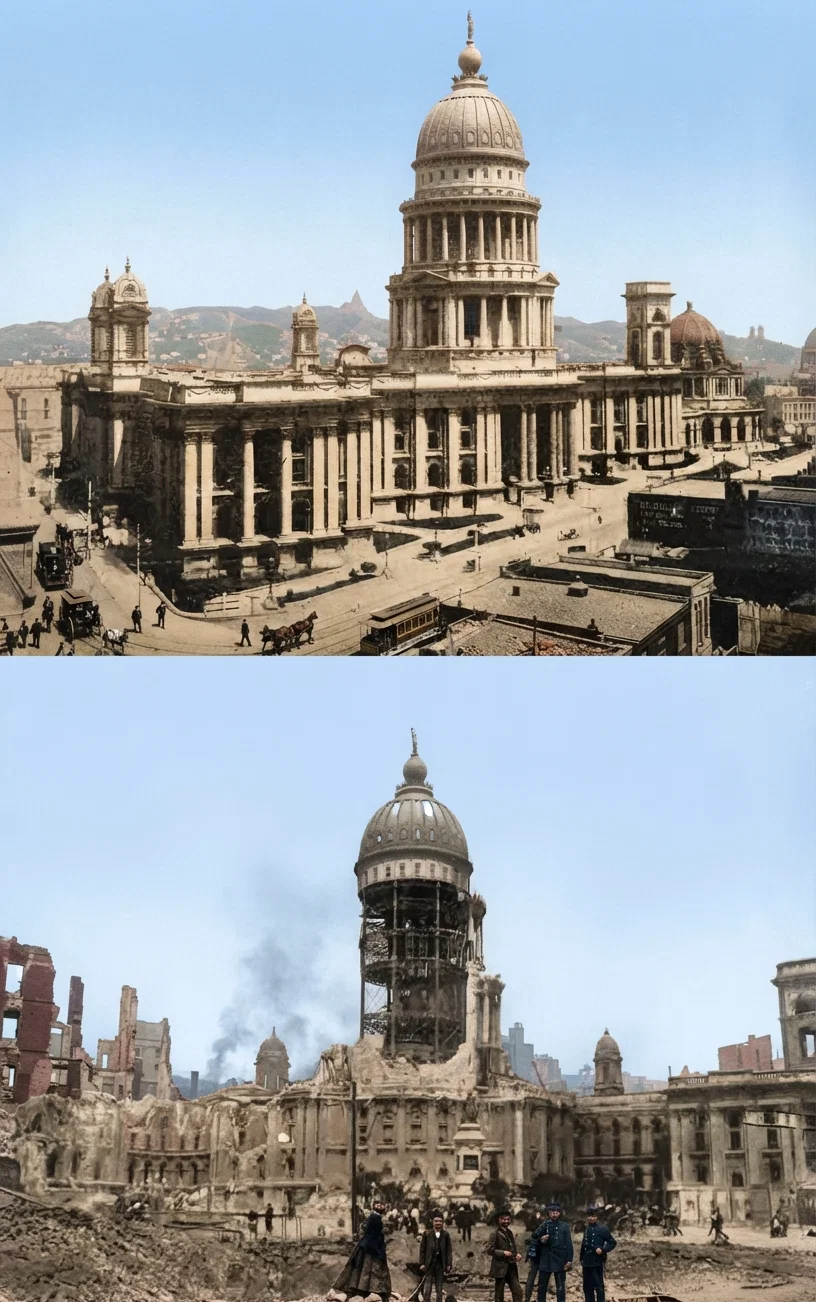
San Francisco's magnificent City Hall, which cost six million dollars, as it appeared before the Earthquake. The lower picture shows it in ruins.
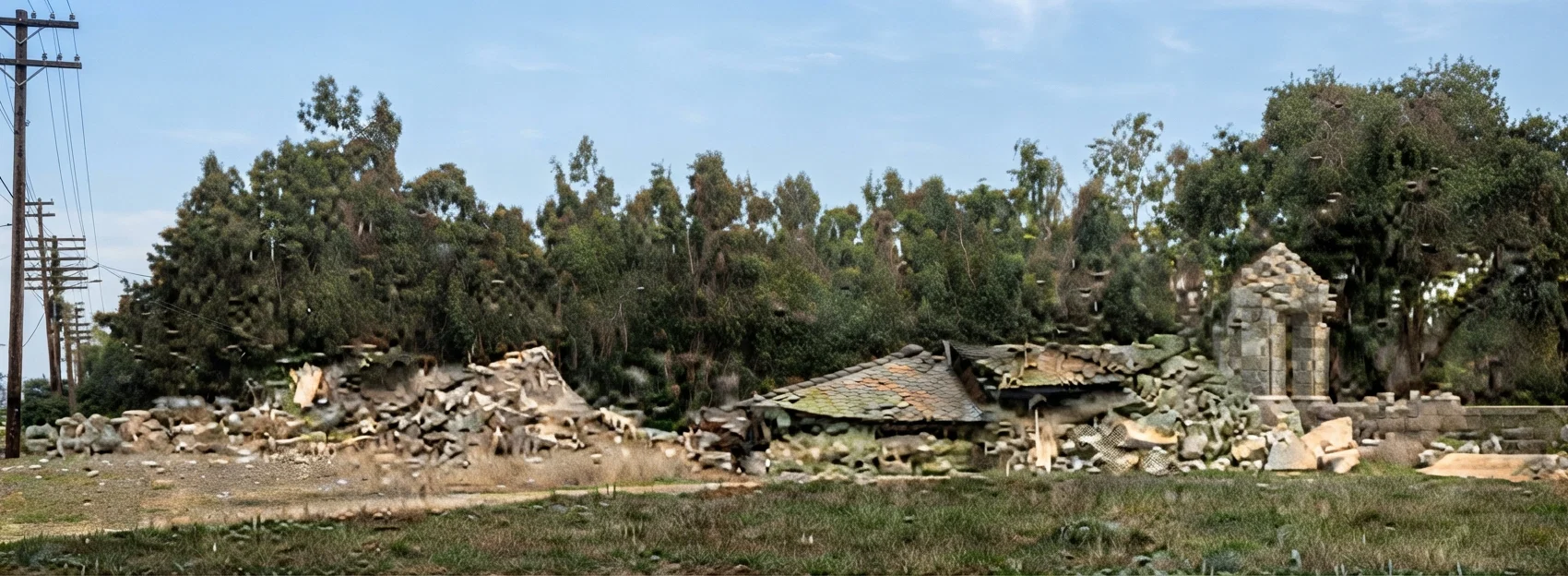
Arches of the entrance to the university grounds after the earthquake.
A view in the business office of the Pacific Press.

You have reached the end of this edition.

Signs of the Times · May 2, 1906