Your ShelfYour Projects

Signs of the Times, Vol. 42, No. 22.

A DEEPENING CONVICTION

Signs of the Times

Jun 1, 1915

Pacific Press Publishing Association · Mountain View, California · Jun 1, 1915

A DEEPENING CONVICTION
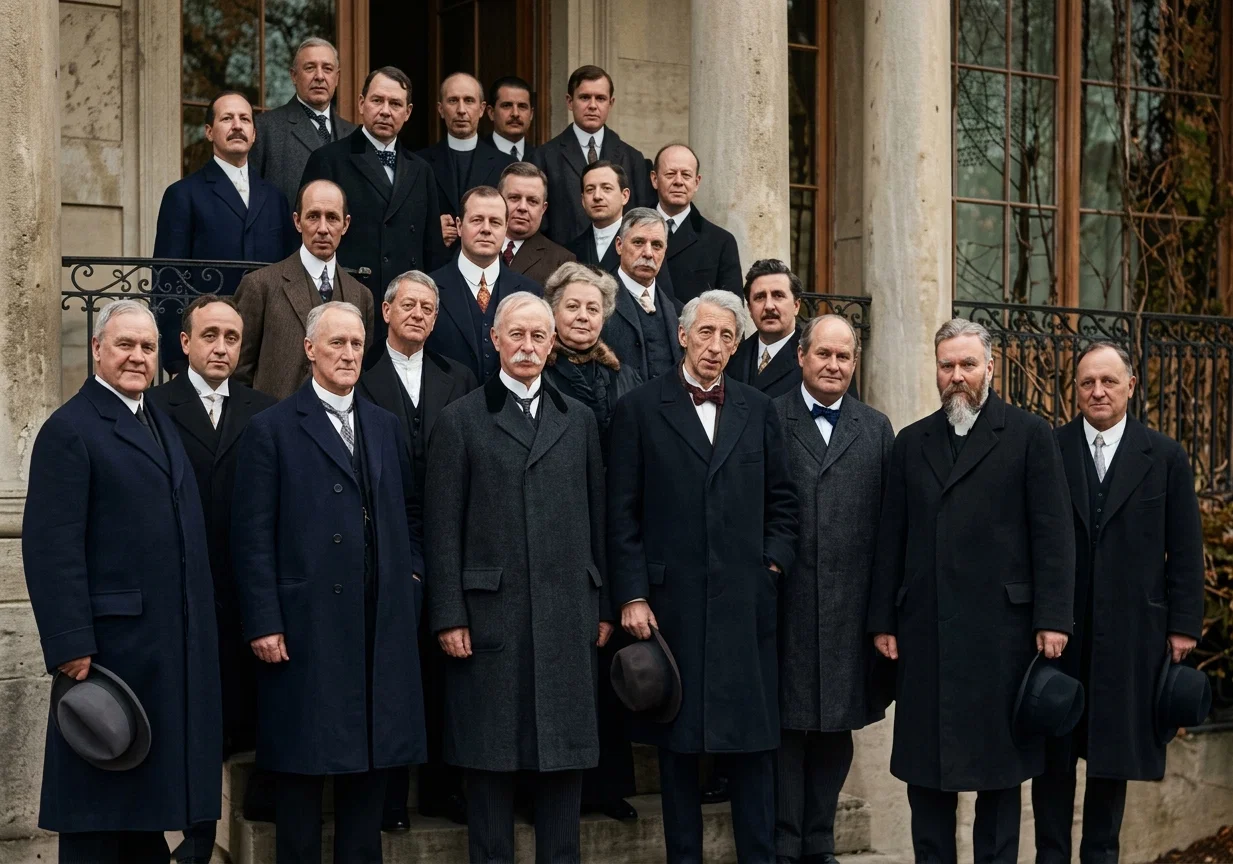
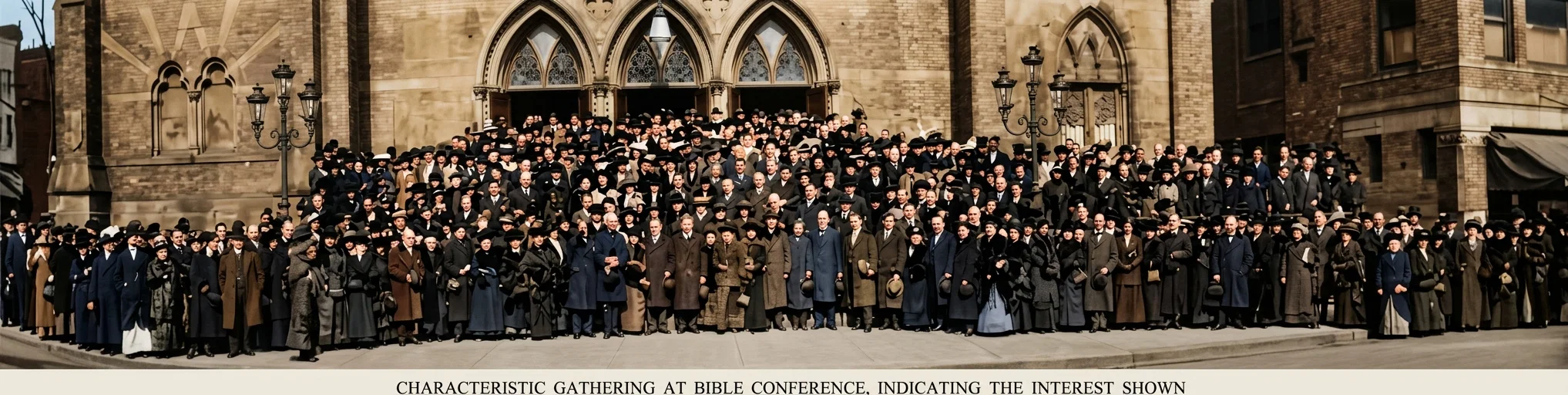
Prominent Men of Many Persuasions Earnestly Proclaim the Doctrine—The Events of the Time Compel Serious Reflection
By Lee S. Wheeler
Prominent in One of the Bible Conferences
That there is a new and mighty awakening over all the earth upon the subject of Christ’s second coming, is everywhere in evidence. A wave of religious influence, carrying with it a spirit of revival and missionary evangelism, which has been rising for years, is moving over the nations. Sermons which show that ministers and people are agitated by the signs of the times, are becoming more frequent. The leading papers in all parts of the land are disposed to publish the views of Christian people upon these subjects, especially since the world has passed under the dark cloud of the present European war.

“What This Fearful Portent?”

As said the editor of the Springfield Republican: “Writers who can tell a stupefied world what this fearful portent means, who can throw light on the great fundamental problems of the race, and give some hint as to its destiny, will have an attentive and even anxious hearing.”
Prominent editorials upon “Armageddon” and similar subjects, often giving prominence to the words of the Scriptures, frequently appear in the world’s most popular journals. All this is most significant.

Nearing a “World’s Crisis”

On March 21, the Atlanta papers published a sermon by Dr. J. Wilbur Chapman, then conducting a great revival in that city, quoting him as follows upon the subject of Christ’s second coming : “We must be nearing a world’s crisis. I would suggest that all Christian people give themselves most diligently to the study of prophecy. I have not the slightest question but that we are approaching the last days. Great events, the like of which the world has never known, ought to make us very cautious, and ought to impel us to turn away from frivolity and sin, and seek in every way to please Him, lest we be ashamed at His coming.”
In Philadelphia, the North American, the Inquirer, and other great dailies, devoted whole pages to the sermon of the evangelist William A. Sunday, preached to scores of thousands of people who crowded the big Tabernacle. The great auditorium is said to have been surcharged, on that occasion, with unusual power; and the vivid description of the coming of Christ in the clouds, brought a multitude of more than six hundred “sobbing, fainting, staggering humanity down the aisles” to acknowledge the coming King.
We are not advocating Mr. Sunday’s methods. Neither do we condemn him for casting out devils in his own way. But we do say that there is a great shaking in the world. “Can ye not discern the signs of the times?” Matt. 16:3.

The Moody Advent Movement

As the moving of events brings the coming of Christ more within the range of human vision, we think we discern that the great spiritual awakening begun among the churches nearly a generation ago by the evangelist D. L. Moody, is shaping itselfto the advent, and assuming the character of a distinguished proclamation. And though we question some of the theology that has attached itself to the movement, we are willing to recognize in it “the voice of the day of the Lord,” which “hasteth greatly.” Zeph. 1:14.
From the beginning of his work, Mr. Moody had a clear pre-millennial conception of the gospel; and as he preached the love of God to a world of sinners, he pointed to Christ’s second coming as the “blessed hope” of the church.

The Devil Opposed to It

“To my mind,” said the evangelist, “this precious doctrine—for such I must call it—of the return of the Lord to this earth, is taught in the New Testament, as clearly as any other doctrine in it; yet I was in the church fifteen or sixteen years before I ever heard a sermon on it. . . . The devil does not want us to see this truth; for nothing would wake up the church so much. The moment a man takes hold of the truth that Jesus Christ is coming back again to receive His followers to Himself, this world loses its hold on him. Gas stocks, and water stocks, and stocks in banks and railroads, are of much less consequence to him then. His heart is free, and he looks for the blessed appearing of his Lord, who, at His coming, will take him into His blessed kingdom.”—“The Second Coming of Christ,” by D. L. Moody, pages 6, 7.
Had the churches that were swept by the revivals of Mr. Moody received the Spirit which rested upon him, there is little doubt but that a great spiritual falling away might have been arrested. But though the great religious bodies as such never appropriated the ministration of the Holy Spirit, or accepted the light of the second coming, it nevertheless found a response in the hearts of thousands of persons in the churches, and many earnest and gifted leaders arose to aid the movement. Evangelists like Major Whittle, Henry Varley, and John MacNeil, and some of the popular ministers, like Spurgeon, Talmage, Dr. Bonar, Dr. Pentecost, and Dr. A. J. Gordon, who shared Mr. Moody’s views of the pre-millennial advent of our Lord, lent their influence to the work of the revivalist, both in England and in America.

Prophetic Aspect Appears

As early as 1878, the Moody movement began to develop a distinctively prophetic phase, when a “prophetic conference” was called, which met in Dr. Tyng’s church, New York City. The addresses were published in full by the New York Tribune, which issued an extra of 50,000 copies to supply the demand.
The effect of this conference was very great in awakening anew the interest in themes of prophecy, and promoting their discussion in religious papers and other publications among the church circles of the English-speaking world.
In 1886, another such conference was called in connection with Mr. Moody’s work, which met in Farwell Hall, Chicago. The Inter-Ocean on this occasion published the addresses verbatim. After this, “prophetic conferences” became a recognized feature of the movement.
In 1901, Boston was visited, and the conference was held in the Baptist church of which the esteemed Dr. Gordon was pastor. Northfield, the home of Mr. Moody, has long been notable for its Bible school, and its annual gatherings of celebrated evangelists and religious teachers; and this, with various other Bible schools for the free training of Christian workers, has been a powerful means of not only unifying the work, but also expanding its development as a great inter-denominational movement. Therefore the churches, while not occupying such advanced spiritual ground, nevertheless favor its teachings, as they are benefited by its influence.

Significant Advancement

The past year was remarkable for the number of “prophetic conferences” held by this organization. The first and largest was in connection with the Moody Bible Institute, Chicago. The other principal ones were at Washington, D. C., Minneapolis, St. Louis, Los Angeles, and Montrose. These were attended by many leading ministers of the Presbyterian, Congregational, Baptist, Methodist, and Lutheran churches, and the principal theme of discussion was the second coming of Christ.
This no doubt accounts in part for the pronounced expression given upon this subject throughout the evangelistic field during the campaigns of this year.

Natural Man Transformed

Created Perfect, but Degenerated—Perfection to Be Restored
By Eliza H. Morton
MAN was made a little lower than the angels, and it was natural for him to be spiritually minded. Heb. 2:7. He was surrounded by a spiritual atmosphere. He was permitted to talk with God face to face, and the angels were his teachers. When he yielded to the tempter, he lost his spirituality, and sin became natural for him.

His Perfect Body

When first created, his body was perfect physically; and as long as he ate of the tree of life, his life was perpetuated. Because of sin, he was barred from the tree of life; and consequently his body degenerated, and at length returned to the dust from which it was taken.
The natural body, with all its tendencies to evil, is our inheritance. Though marred by sin, it will be raised by Christ from the grave. 1 Cor. 15:22. Those who in this life refuse to separate themselves from sin, will be raised in the image of the corruptible, and be despised of God. Ps. 73:20. They would not enjoy the society of heavenly beings; and God will do the best for them He can, and that will be to destroy them from the face of the earth. They will be as though they had never been. Obadiah 16.

The Natural Mind

The natural mind is carnal. “It is not subject to the law of God, neither indeed can be.” Rom. 8:7. The spirit of the devil works in the minds of the children of disobedience. Eph. 2:2. The natural heart “is deceitful above all things, and desperately wicked: who can know it?” Jer. 17:9.
Its awful condition is graphically described in Isa. 1:4-6 by the loathsome picture of a body covered with sores. “From the sole of the foot even unto the head there is no soundness in it; but wounds, and bruises, and putrefying sores: they have not been closed, neither bound up, neither mollified with ointment The carnal mind is defiled (Titus 1:15), puffed up with fleshly lusts (Col. 2:18), and an enemy to God (Col. 1:21). The end of those who mind earthly things is destruction. Phil. 3:19.

The Transformed Mind

The word of God is a seed which begins in man a spiritual mind. 1 Peter 1:23. It transforms and renews the mind of him who submits to its workings. The power of the Spirit of God is in His word. It writes the moral law upon the heart, and takes away the desire to sin. Jer. 31:33. Temptations will come; but he who yields his will to Christ, and thinks His thoughts, will have power to resist evil. “Let this mind be in you, which was also in Christ Jesus.” Phil. 2:5. To be spiritually minded is life and peace. Rom. 8:6.

The Renewed and Perfect Body

The spiritual body is beautifully illustrated in 1 Cor. 15:35-38. The farmer plants the bare seed—it may be wheat, rye, oats, barley, or some other grain. When the seed comes up, every kind has its own body. The bare seed is glorified, or manifest in fields of rich, green, waving grain. But the seed produced is the same—wheat is wheat, and oats are oats. So also in the resurrection of the just the natural body will be changed as it springs from the ground, but the identity will remain. We shall know our friends by their old familiar characteristics. The new body will not have corruptible blood in its veins, but it will be spiritual and incorruptible. Those who have spiritual bodies “shall mount up with wings as eagles; they shall run, and not be weary; and they shall walk, and not faint.” Isa. 40:31.
“O, blessed change that's soon to come! No sickness and no pain! We'll be with Jesus evermore, And meet our own again.”

Without the Camp

CALVARY was in no inclosure. City walls, national lines, local surroundings, were here unknown. With man that signified, Rejected by all; with God it meant, Belongs to all. On the cross of Christ they wrote in three forms of speech, representing the divisions and the aggregation of our race, “This is the king of the Jews.” It was done in derision, but in truth declared the promise fulfilled, that in Abraham’s seed all the nations of the earth are blessed. He was slain as a victim of hate, but His death was an offering of love, breaking the seals of despair, opening the book of life to all.
Without the camp! No sentinel, then, can forbid the stranger as he comes; no gates can be closed to sinners, aliens, or enemies who penitently seek to plunge in the purple flood; no hindering rules can force the leprous, the castaways, the chief of sinners, the most wretched of the miserable, from touching the sacred cross, and drawing virtue to heal their souls. It gives us unspeakable joy to read that He is the Saviour of all men, tasted death for all, loves all, seeks all, is able to save all, invites all, offers life to all, rejects none. The rejecting is all done by man. Jesus receives all sinners who will receive Him.— James White.

The Strongest Drink

“WATER is the strongest drink. It is the drink of lions and horses; and Samson never drank anything else.”

THE IMPASSABLE GULF

The Beggar and the Rich Man—The Wise and the Unwise Choice—At Death Destiny Is Eternally Fixed
By Mrs. E. G. White
“He was selfishly indifferent to the needs of his suffering brother.”
In the parable of the rich man and Lazarus, Christ shows that in this life men decide their eternal destiny. During probationary time the grace of God is offered to every soul. But if men waste their opportunities in self-pleasing, they cut themselves off from everlasting life. No other probation will be granted them. By their own choice they have fixed an impassable gulf between them and their God. This parable draws a contrast between the rich who have not made God their dependence, and the poor who have made God their dependence. Christ shows that the time is coming when the position of the two classes will be reversed. Those who are poor in this world's goods, yet who trust in God and are patient in suffering, will one day be exalted above those who now hold the highest positions the world can give, but who have not surrendered their life to God.

Rich Man and the Beggar

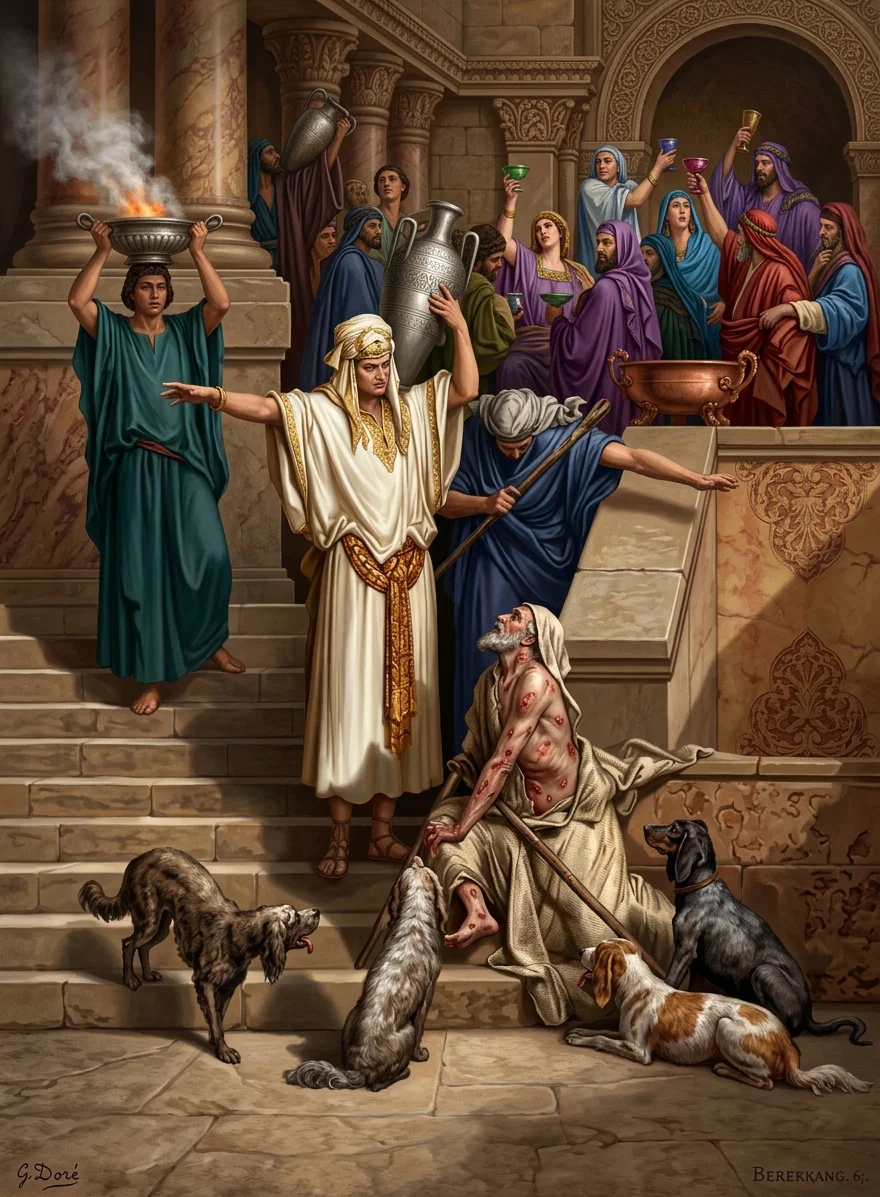
“There was a certain rich man,” Christ said, “which was clothed in purple and fine linen, and fared sumptuously every day: and there was a certain beggar named Lazarus, which was laid at his gate, full of sores, and desiring to be fed with the crumbs which fell from the rich man's table.” Luke 16: 19-21.
The rich man did not belong to the class represented by the unjust judge, who openly declared his disregard for God and man. He claimed to be a son of Abraham. He did not treat the beggar with violence, or require him to go away because the sight of him was disagreeable. If the poor, loathsome specimen of humanity could be comforted by beholding him as he entered his gates, the rich man was willing that he should remain. But he was selfishly indifferent to the needs of his suffering brother, who was allowed to remain in this condition day after day, while the wealthy nobleman had every want supplied. The one who was abundantly able to relieve the sufferings of his fellow creature, lived to himself, as many live to-day.

Should Have Cared for Him

God had made the rich man a steward of His means, and it was his duty to attend to just such cases as that of the beggar. In proportion to his abundance was his obligation to use his gifts for the uplifting of humanity. This was the Lord's command, but the rich man had no thought of his obligation to God. He lent money, and took interest for what he loaned; but he returned no interest for what God had lent him. He had knowledge and talents, but did not improve them. Forgetful of his accountability to God, he devoted all his powers to pleasure. The time came when a change took place in the condition of the two men. The poor man had suffered day by day, but he had patiently and quietly endured. In the course of time he died and was buried. There was no one to mourn for him; but by his patience in suffering he had witnessed for Christ, he had endured the test of his faith, and at his death he is represented as being carried by the angels into Abraham's bosom.
“The rich man also died, and was buried; and in hell he lift up his eyes, being in torments, and seeth Abraham afar off, and Lazarus in his bosom. And he cried and said, Father Abraham, have mercy on me, and send Lazarus, that he may dip the tip of his finger in water, and cool my tongue; for I am tormented in this flame.” Verses 23-24.

Held the Mirror Before Them

In this parable, Christ was meeting the people on their own ground. The doctrine of a conscious state of existence between death and the resurrection was held by many of those who were listening to Christ's words. The Saviour knew of their ideas, and He framed His parable so as to inculcate important truths through these preconceived opinions. He held up before His hearers a mirror wherein they might see themselves in their true relation to God. He used the prevailing opinion to convey the idea He wished to make prominent to all,—that no man is valued for his possessions; for all he has belongs to him only as lent by the Lord. A misuse of these gifts will place him below the poorest and most afflicted man who loves God and trusts in Him.

No Salvation After Death

Christ desired His hearers to understand that it is impossible for men to secure the salvation of the soul after death. “Son,” Abraham is represented as answering, “remember that thou in thy lifetime receivest thy good things, and likewise Lazarus evil things: but now he is comforted, and thou art tormented. And beside all this, between us and you there is a great gulf fixed: so that they which would pass from hence to you cannot; neither can they pass to us, that would come from thence.” Verses 25, 26. Thus Christ represented the hopelessness of looking for a second probation. This life is the only time given to man in which to prepare for eternity.

Reflecting Upon God

When the rich man solicited additional evidence for his brothers, he was plainly told that should this evidence be given, they would not be persuaded. His request cast a reflection on God. It was as if the rich man had said, If You had more thoroughly warned me, I should not now be here. Abraham, in his answer to this request, is represented as saying: Your brothers have been sufficiently warned. Light has been given them, but they would not see. Truth has been presented to them, but they would not hear. “If they hear not Moses and the prophets, neither will theybe persuaded, though one rose from the dead.” Verse 31. These words were proved true in the history of the Jewish nation. Christ's last and crowning miracle was the raising of Lazarus of Bethany, after he had been dead four days. The Jews were given this wonderful evidence of the Saviour's divinity, but they rejected it. Lazarus rose from the dead, and bore his testimony before them; but they hardened their hearts against all evidence, and even sought to take his life. John 12: 10, 11.
The conversation between Abraham and the once rich man is figurative. The lesson to be gathered from it is that every man is given sufficient light for the discharge of the duties required of him. Man's responsibilities are proportionate to his opportunities and privileges. God gives to every one sufficient light and grace to do the work He has given him to do. If man fails to do that which a little light shows to be his duty, greater light would only reveal unfaithfulness, neglect to improve the blessings given.

Miracles Would Not Reach Them

“He that is faithful in that which is least is faithful also in much; and he that is unjust in the least is unjust also in much.” Luke 16: 10. Those who refuse to be enlightened by Moses and the prophets, and ask for some wonderful miracle to be performed, would not be convinced if their wish were granted.
The parable of the rich man and Lazarus shows how the two classes represented by these men are estimated in the unseen world. There is no sin in being rich, if riches are not acquired by injustice. A rich man is not condemned for having riches; but condemnation rests upon him if the means intrusted to him is spent in selfishness.

Not the Right Kind of Wealth

The rich man had all that money could procure, but he did not possess the riches that would have kept his account right with God. He had lived as if all that he possessed were his own. He had neglected the call of God and the claims of the suffering poor. But at length there comes a call which he cannot neglect. By a power which he cannot question or resist he is commanded to quit the premises of which he is no longer steward. The once rich man is reduced to hopeless poverty. The robe of Christ's righteousness, woven in the loom of heaven, can never cover him. He who once wore the richest purple, the finest linen, is reduced to nakedness. His probation is ended. He brought nothing into the world, and he can take nothing out of it.
Christ lifted the curtain, and presented this picture before priests and rulers, scribes and Pharisees. Look at it, you who are rich in this world's goods, and are not rich toward God. Will you not contemplate this scene? That which is highly esteemed among men is abhorrent in the sight of God. Christ asks, “What shall it profit a man, if he shall gain the whole world, and lose his own soul? or what shall a man give in exchange for his soul?” Mark 8: 36, 37.

“They Shall See God”

Promise to the Pure in Heart—May the Vile and Impure Be Cleaned?
By Rufus A. Underwood
This is the sixth independent article by Elder Underwood on the fundamentals of the gospel as set forth in Christ’s Sermon on the Mount. Each number is complete in itself, and what has gone before is not essential in order to understand and enjoy this one. EDITOR.
“BLESSED are the pure in heart: for they shall see God.” Matt. 5: 8. Surely “never man spake like this Man.” John 7: 46. There is no uncertainty in this utterance, for “He taught them as one having authority, and not as the scribes.” Matt. 7: 29.
Purity of heart is essential to admittance into the kingdom and companionship of Christ. No foul, unclean mind can be admitted into the presence of God. David prayed: “Create in me a clean heart, O God. . . . Cast me not away from Thy presence.” Ps. 51: 10, 11. The wise man said, “Keep thy heart with all diligence [margin, above all keeping]; for out of it are the issues of life.” Prov. 4: 23.

VEXED WITH THE CONVERSATION

There is nothing more disgusting than to fall into the company of a low, sensual, evil-minded person, whose utterances breathe forth the foul revelings of an unclean soul. Of Noah and Lot it is said: “And spared not the old world, but saved Noah the eighth person, a preacher of righteousness, bringing in the Flood upon the world of the ungodly; and turning the cities of Sodom and Gomorrah into ashes condemned them with an overthrow, making them an ensample unto those that after should live ungodly; and delivered just Lot, vexed with the filthy conversation of the wicked: (for that righteous man dwelling among them, in seeing and hearing, vexed his righteous soul from day to day with their unlawful deeds.)” 2 Peter 2: 5-8.
How grateful should all be that the unclean are forever barred against entering into the kingdom and city of God! “And there shall in no wise enter into it anything that defileth, neither whatsoever worketh abomination, or maketh a lie: but they which are written in the Lamb’s book of life.” Rev. 21: 27.

SEE HIM AS HE IS, AND BE LIKE HIM

In words of thrilling eloquence, the beloved disciple invites us to behold the wondrous love of God: “Behold, what manner of love the Father hath bestowed upon us, that we should be called the sons of God: therefore the world knoweth us not, because it knew Him not. Beloved, now are we the sons of God, and it doth not yet appear what we shall be: but we know that, when He shall appear, we shall be like Him; for we shall see Him as He is. And every man that hath this hope in him purifieth himself, even as He is pure.” 1 John 3: 1-3.
Every one who has the hope of seeing Christ as He is, and being transformed into His image of glory, must be pure and honest in the sight of God. Can a poor, depraved soul become changed and made a suitable companion of the pure and holy?—Yes. If this were not so, I would not pen these lines.

WASHED AND JUSTIFIED

The apostle Paul, after enumerating various classes of criminals among the impure, says: “And such were some of you: but ye are washed, but ye are sanctified, but ye are justified in the name of the Lord Jesus, and by the Spirit of our God.” 1 Cor. 6: 11.
The beloved John on the Isle of Patmos had a view of those who had been cleansed with the blood of Christ and washed from their sins. He breaks forth in these words of astonishment: “What are these which are arrayed in white robes? and whence came they ? And I said unto him, Sir, thou knowest. And he said to me, These are they which came out of great tribulation, and have washed their robes, and made them white in the blood of the Lamb. Therefore are they before the throne of God, and serve Him day and night in His temple: and He that sitteth on the throne shall dwell among them. They shall hunger no more, neither thirst any more; neither shall the sun light on them, nor any heat. For the Lamb which is in the midst of the throne shall feed them, and shall lead them unto living fountains of waters, and God shall wipe away all tears from their eyes.” Rev. 7: 13-17. Also Rev. 1: 5, 6. “Unto Him that loved us, and washed us from our sins in His own blood, and hath made us kings and priests unto God and His Father; to Him be glory and dominion forever and ever.” It is then that “the rebuke of His people shall He take away from off all the earth; for the Lord hath spoken it.” Isa. 25: 8.
Here is cleansing and kingly exaltation,even to those who were defiled by sin. The praise called forth by our greatest gratitude for the redeeming love of Christ can be but a feeble expression of what God has pledged to accomplish for all who will accept the cleansing, purifying, and renewing work of Christ, wrought through the redeeming grace of the Son of God.

He Comes to Bestow the Right

By Worthie Harris Holden
O, where are the halcyon days of earth? For the war winds strive, and their blight has birth, And the dastard deeds of each deadly foe The flower of the neighbor land lay low, And moans take the place of mirth.
Pray thou that the whirlwind’s fierce rage may cease, That a lull may come, with its truce of peace, That forth from the havoc may swift uprear A banner upheld by each volunteer Who heralds the Prince of peace.
He comes, for the world is full drenched with woe, He comes, and His might will to right bestow Eternity’s seal and eternal gain, And banish the horror of death and pain, And His joy shall the faithful know.

Where Are the Dead?

Are They Still Alive?—Are They Conscious or Unconscious?
By Albert M. Dart
In our last article, it was seen that man by nature does not possess immortality, but that it is a gift to the faithful in Christ at His coming.
The opinion largely prevails in the religious world, that man receives his reward at death, and is therefore living and conscious between that point and the resurrection. This opinion has given rise to much speculation with reference to the nature of man.

Is He Now in That Fire?

With this view, many difficulties confront one. If one is rightly related to God at death, he is supposed to enter eternal bliss; but if he is not rightly related, where is he? Taken for granted that he still lives and is conscious, his whereabouts has caused no small concern among the human family. Some—yes, many—have taken the ground that inasmuch as the Bible teaches a lake of fire for the ungodly, they are suffering excruciating agonies in this undesirable location.
Thinking this idea too horrible to connect with a God of love, others have taken the position that they are eternally separated from the home of the saved, in mental agony. But just where, no one has made quite plain. Yet if they are immortal, they must be somewhere in conscious existence.

Scientists and Immortality

While it is not the purpose to deal with this subject from the standpoint of science, a few quotations may be given from the sources of authority; for, as declared by Joseph Cook, an eminent lecturer on science as related to the Bible, “everything fundamentally Biblical is scientific, and everything fundamentally scientific is Biblical.”
Charles A. Young, LL. D., professor of astronomy at Princeton College, New Jersey, says: “I think it must be frankly admitted that what is known about the functions of the brain and nervous system, does, to a certain extent, tend to make it difficult to believe in the immortality of the personal consciousness.”—“Science and Immortality,” page 15.
Thomas Hill, D. D., ex-president of Harvard College, thus speaks: “Many facts in possession of modern science make it difficult to believe in immortality.”
The famous scientist F. L. Buchner is thus emphatic in his statement on the subject: “Unprejudiced philosophy is compelled to reject the idea of an individual immortality and of a personal continuance after death.”
Said Lester F. Ward, A. M., of the Smithsonian Institution, Washington, D. C.: “The destruction of brain results in the destruction of consciousness. No exception to this law has ever been observed.”
That the statements of these scientists are supported by the word of God is susceptible of the clearest proof.

Creation of Man and the Decree of Death

“And the Lord God formed man of the dust of the ground, and breathed into his nostrils the breath of life; and man became a living soul.” Gen. 2:7.
Of the tree of the knowledge of good and evil, God said, “In the day that thou eatest thereof thou shalt surely die.” Verse 17.
There is no question about man’s disobeying God. He ate of the forbidden fruit. How could there be any question about the result? But he who claims that man exists in a conscious state after he dies, does question the result, for it is making no difference between life and death. God did not say, “In the day that thou eatest thereof thou shalt surely live in another state.”

His Thoughts Perish

Of man in death the Bible says: “His breath goeth forth, he returneth to his earth; in that very day his thoughts perish.” Ps. 146:4. He lived and could think because of the breath God breathed into his nostrils. When that breath goes forth, he no longer lives nor thinks. It is begging the whole question to say that some part of man still lives; for surely no part could live but the thinking, responsible part, and the plain statement is that that part has perished.
We are in a still worse predicament if we hold that the “his” in the text last quoted does not refer to the man at all, but to the house he lives in—his body. This would be making “a cumbersome clog of clay,” as the body is claimed to be, responsible for the building of character; for confessedly “his breath went forth” because he had disobeyed God.

They Know Not Anything

Further proof that man is unconscious in death is found in Eccl. 9:5, 6: “The living know that they shall die; but the dead know not anything. . . . Also their love, and their hatred, and their envy [Really, are these qualities of the body only?], is now perished.”
Few, I suppose, think that when a horse dies, he still lives. Every experience of man tells him that the living organism known as “horse” ceases to exist, turns to dust. Why should we think differently of man? Every experience teaches the same thing of him. It would require a tremendous stretch of the imagination, unaided by preconceived ideas, to look upon man in death and conclude that he lives. Touch the man. Speak to him. Every sense of our being responds to the truthfulness of the statements of inspiration concerning his condition.
The condition of the horse and that of the man in death, so far as man’s experience teaches, are identical. What does the Bible teach? “For that which befalleth the sons of man befalleth beasts; even one thing befalleth them: as the one dieth, so dieth the other; yea, they have all one breath; so that a man [in death] hath no preeminence above a beast. . . . All go unto one place; all are of the dust, and all turn to dust again.” Eccl. 3:19, 20.
To this agree the words of God to Adam in Gen. 3:19: “In the sweat of thy face shalt thou eat bread, till thou return unto the ground; for out of it wast thou [not thy body] taken: for dust thou art, and unto dust shalt thou return.”
If this view seems gloomy and forbidding to you, do not consult your feelings for proof of its verity. Ask in all sincerity and surrender to God, “Is it God’s view?” And if it is, then know that, seen aright, it is not gloomy and forbidding.

They Are to Live Again

“Thy dead men shall live, together with my dead body shall they arise. Awake and sing, ye that dwell in dust: for thy dew is as the dew of herbs, and the earth shall cast out the dead.” Isa. 26:19.
“Together with my dead body.” This is the key to the situation. Turn it, dear reader, and look again, if the view has been gloomy. The bright rays of gospel light have pierced the tomb. A look at Christ, and the gloom is gone, and the songs of the redeemed greet our ears.
“Walk in the light, and e’en the tomb No fearful shade shall wear. Glory shall chase away its gloom, For Christ hath conquered there.”
But this is when the dead live again, at the resurrection; and it suggests profitable thoughts for further study of this great theme. Some one may ask: “Does the soul go to the grave? Does not the spirit return to God at death?” That is an interesting study for the next article in this series.
Continue reading: The Kingdom Soon to Come