Your ShelfYour Projects

Review and Herald, Vol. 82, No. 26.

How Many Have You Read?

Review and Herald

Jun 29, 1905

Review and Herald Publishing Association · Washington, D. C. · Jun 29, 1905

How Many Have You Read?

“He lived to bless others”
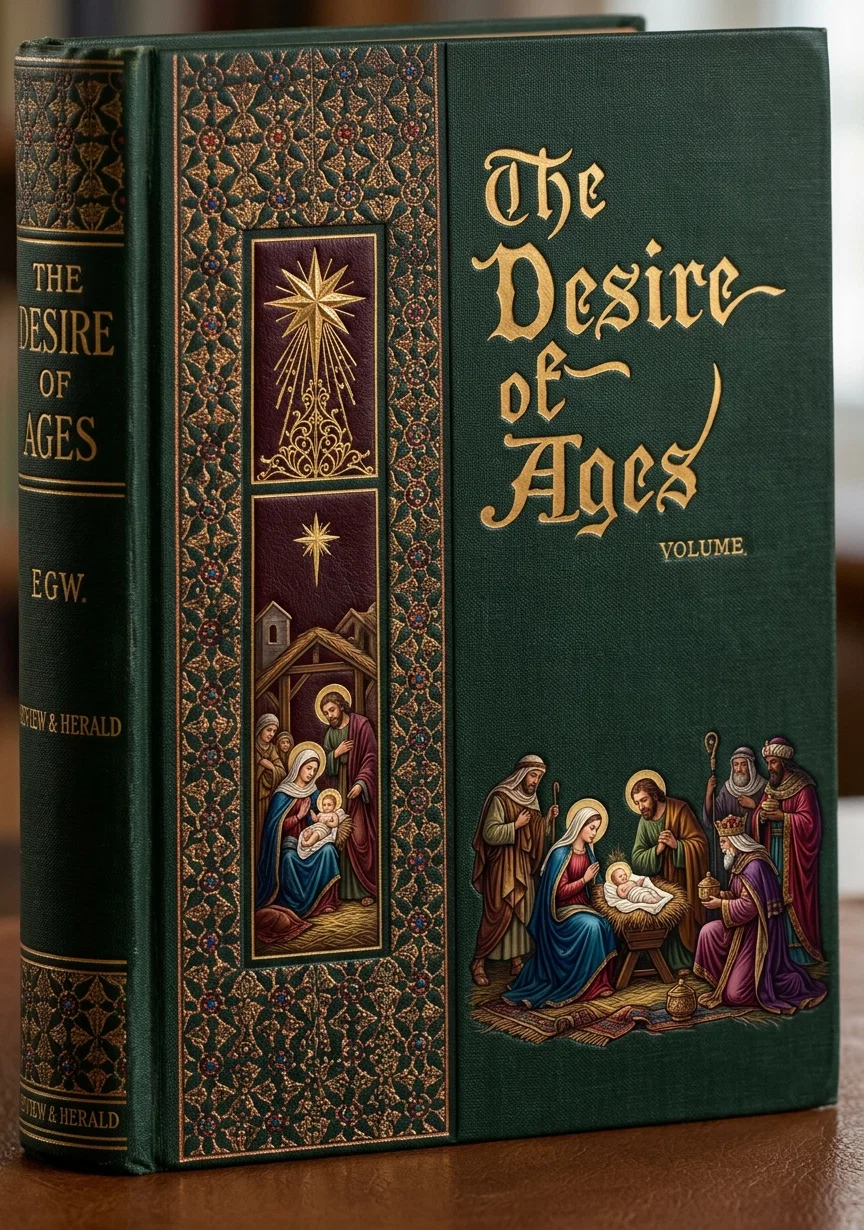
“Desire of Ages” is handsomely
In these words the author of “Desire of Ages” has summed up the whole life of the Master.
This book is not simply a life of Christ, it is a reverent, heart-to-heart study and elaboration of that life which was and is “the light of men.”
A perusal of this book can hardly fail to bring to every reader, not only an inspiration to a better life, but practical suggestions how to attain it.
“Desire of Ages” is handsomely bound in such a large variety of styles that you are sure to find one to suit you.
Prices - $1.50 to $7

“Greater love hath no man”

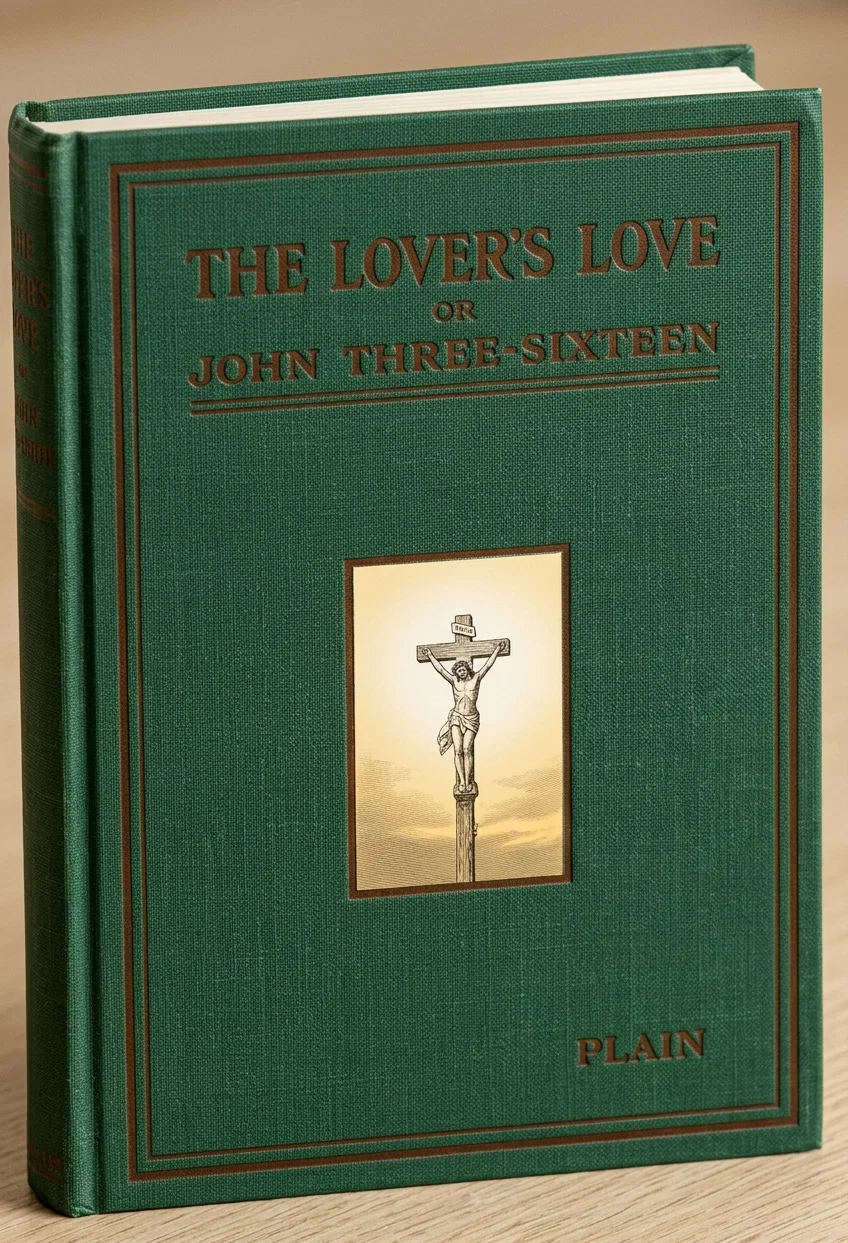
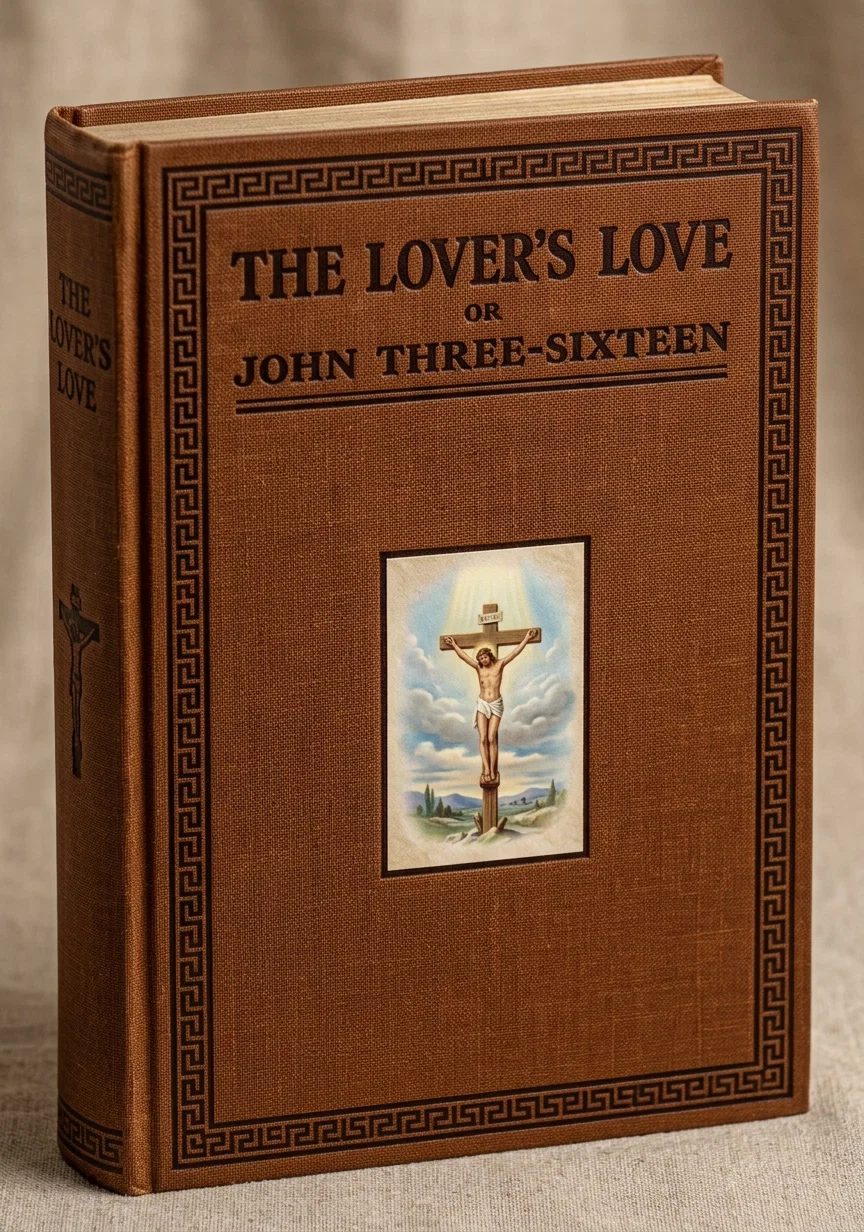
“What others have not dared attempt, you have done, and done well,” is the testimony of a Baptist minister regarding “The Lover’s Love.”
You will be surprised, too, at the depth of meaning given that familiar text, John 3:16.
By the use of apt illustrations, the author impresses more forcibly the “pouring out of all heaven” in the “unspeakable gift.”
This book contains many practical suggestions for every-day life, and is equally interesting to old and young.
Substantially bound in cloth and appropriately stamped in brown ink.
Price - - $ .75

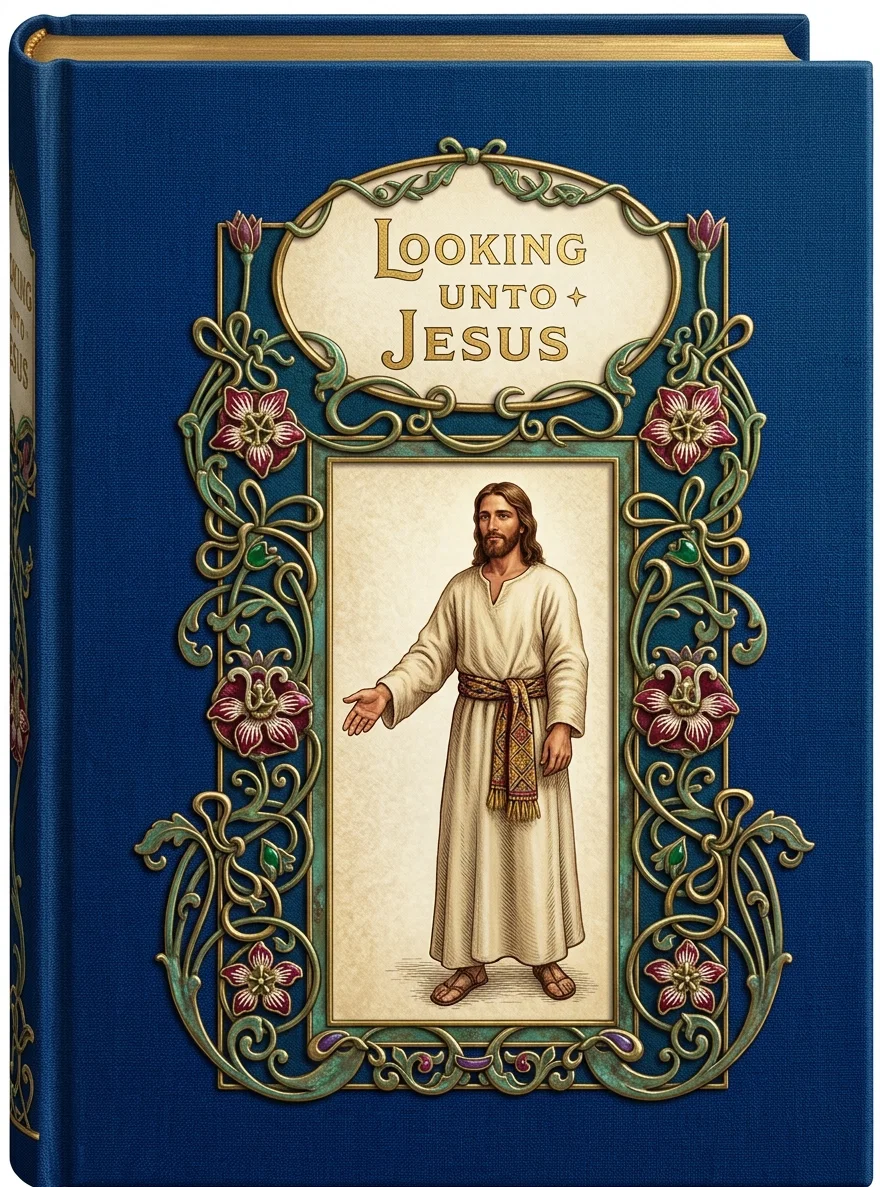
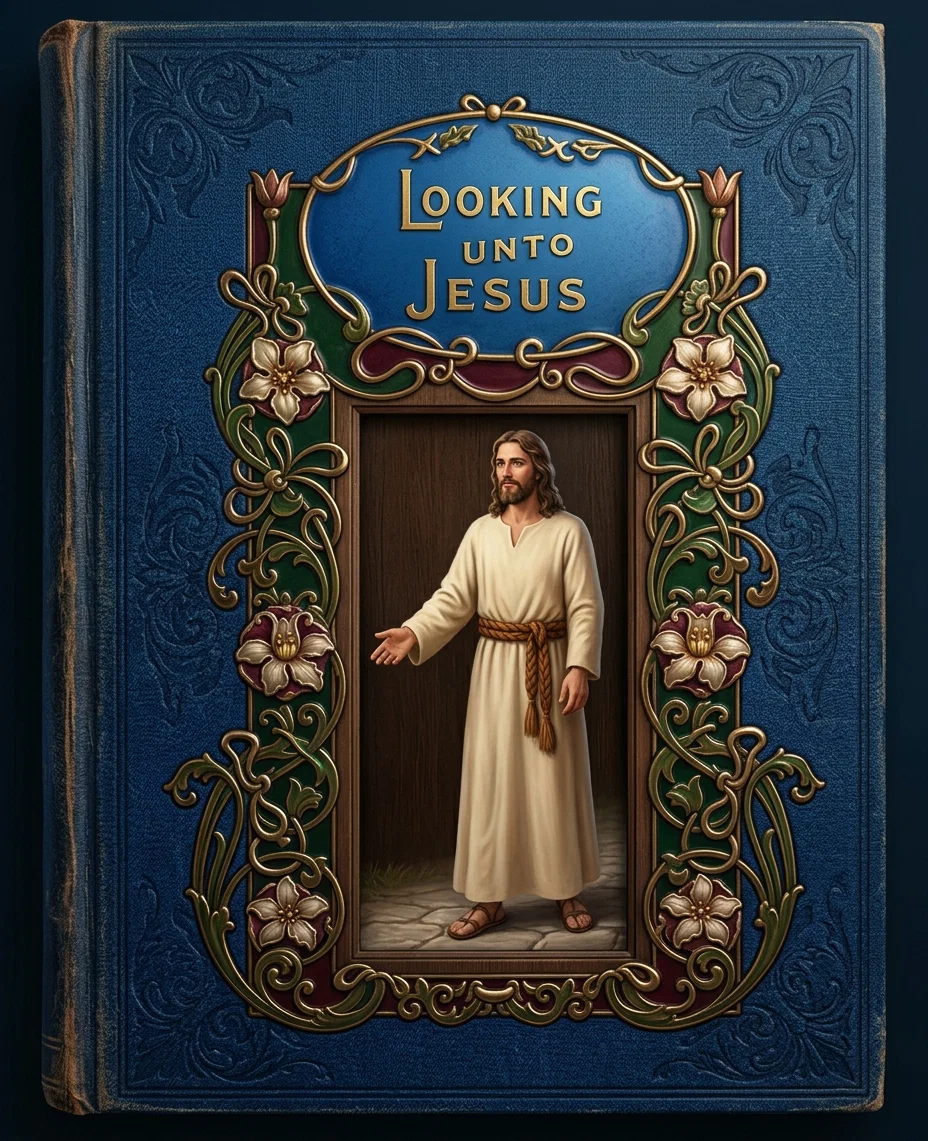
“A building not made with hands”

In taking up the subject of the sanctuary, the author points us to our great High Priest, outlines his work in our behalf, and shows that the earthly tabernacle was simply “a shadow of things in the heavens.” Further, that the same work is now being done for us by Christ our great high priest, in the heavenly sanctuary, as that which was done by Israel’s high priest when he went in before the mercy-seat to make atonement for the sins of the people.
“Looking unto Jesus” contains 300 pages, superbly illustrated, and durably bound in cloth.
Price - - $1.00

“A man greatly beloved”

The story of one of the most successful men in history, a man whom God honored.
Daniel’s life was a striking example of the results of an early Christian training. He had truly hid the word of God in his heart.
The “Story of Daniel the Prophet,” besides explaining in a most interesting way the great prophecies of the book of Daniel, tells the secret of Daniel’s success as a man, and how he became, what the angel called him, “A man greatly beloved.”
Handsomely bound in three-quarter cloth, and stamped in silver. Illustrated with full-page half-tones made especially for this book.
Price - - $1.00

Review and Herald Publishing Association

Battle Creek, Mich.
Washington, D. C.

Editorial

Small, but Growing

To show that a movement has a comparatively small following does not necessarily condemn it as a lost cause. Nearly all the great reform movements of the world had their day of small things. It is true, however, that a work begun and carried forward under the inspiration of the Spirit of God ought to be always growing, constantly extending its sphere of influence. There have been several efforts to improve upon the work of this advent message by discarding some so-called objectionable features, or by adjusting the teaching in harmony with some new light, but the history of such efforts has not been encouraging. They have either soon run their course and have ceased to exist, or they are still halting between life and death, without vitality enough to be a telling factor in solving the great problem of the coming of the kingdom. There is a warning in such history. The providential circumstances which have attended the development of this advent movement are just as surely evidence in favor of its genuineness as are the various portions of the Scriptures which are brought forward in its support. The arguments adduced against it must be sufficiently strong to overthrow not only the Scripture argument, but the providential argument as well, or they are not worthy of credence. It has been characteristic of this cause that it has always been growing. In its weakest days there was no stagnation. When it was young, it was healthy, and as it has grown older, it has grown stronger, and to-day it is more vigorous than ever before. It is still small, but it is growing, and this is a most hopeful indication.

Our Message

(Continued)
AT the time of the first advent, the Jewish people had largely lost the right conception of God. So perverted had the gospel become, especially as revealed in the typical system which God gave to them to be a clear and distinct revelation of himself, his character; his plan of salvation had become perverted until it misrepresented God, misrepresented his character of love, and became a hindrance to them in their knowledge of God, rather than a help as it was intended to be. This was a complete perversion of the gospel according to God.
The direct result of this perversion was this: inasmuch as the gospel according to God is the one and the only provision for sin, and the one and only provision to save from sinning, when they lost this understanding of the gospel of God, they lost with it the power that saves from sin and from sinning; that in itself brings to a people a condition of hopelessness, a condition of despair, and that was exactly the condition at that time.
The message that John the Baptist brought at that time was designed to meet just that situation, to restore to them the true gospel, and in restoring the true gospel, to restore to their lives the power of righteousness, and to bring hope and joy in the place of utter despair, and to build up barriers against sin, and to save them from sinning.
All that is included in that idea, Behold your God. That is turning away from humanity and the flesh to God and his power and his provision for sin.
But notice that when John the Baptist came to interpret that message to the people to meet the needs of their time, he gave to it a specific interpretation, under the guidance of God's Spirit, that made it apply exactly to the need of the time; because, with all the rest there was this thought: "The time is fulfilled; the kingdom of God is at hand." The prophecies of Daniel were fulfilled; it was time for the manifestation of the Messiah. When, therefore, the Messiah stood in their midst, and the time had come for him to make that direct and specific application of his message which would meet the exact need of the hour in indicating the fulfilment of prophecy in the person of Jesus of Nazareth, he took up the words of Isaiah, which were the keynote and the interpretation, as it were, of his whole work, and he said, "Behold your God;" but he did not use the exact words, "Behold your God;" but in his interpretation, under the guidance of the Spirit, when he said in his time, "Behold your God," to say it correctly, he said, "Behold, the Lamb of God, that taketh away the sin of the world." That was distinctively and specifically Isaiah's message for that time; but up to that time, no other messenger, and no other voice, could have pointed out one, and said, "Behold, the Lamb of God, that taketh away the sin of the world!" But when the fulness of time had come, and the messenger had come, and the Spirit of God had given to the messenger his message, then the message fitted the facts exactly; and in speaking the message, he did not quote Isaiah, but, under the guidance of the Spirit, he interpretedIsaiah, and applied specifically and directly the message, "Behold your God," to this particular revelation of God in the flesh in the person of Jesus Christ.
It was an essential thing that that message should be given at that time, that it should be received at that time. That that message did not have any broader application, and that he could not see God anywhere else than in the person of Jesus Christ, I am not saying; but this is the thing I am saying: While others might be saying, Behold your God, and pointing to any and every evidence of the revelation of God, when the message for the time came, and the messenger took up the message for the time, instead of scattering his fire, and saying of other things as other people did, 'Behold your God,' he had a distinct and special application of that message that no other one had at that time; and when he said, Behold your God, he said, 'Behold, the Lamb of God, that taketh away the sin of the world!' Those who did not hear that message in its specific and special application in the presentation of that man, did not hear the message of the hour, even though hundreds of voices may have said, 'Behold your God.'
That principle is just as applicable to every specific phase of this message. There is now a special application of some scriptures that have been familiar to people for centuries. Under the guidance of God's Spirit, when the hour comes for the message, and the times demand the message, the voice is heard; and when the voice is heard, it will have a specific application of Scripture such as no other voice can give. And that is what will constitute a special message out of old and familiar scriptures.
Further than that: there will also be a new interpretation, a new application of scriptures and prophecies that will deal exactly with that time. As, for instance, in John's day, when he, and Christ himself, said, 'The time is fulfilled; the kingdom of God is at hand,' it meant something altogether different, and had a meaning in it which was not found in what the priests said, when they, every Sabbath day, in the synagogue, encouraged the people to believe that the time was fulfilled, and the Messiah was just at hand. They were preaching the very same thing; they were referring to the very same scriptures; they were proving the fulfilment of the same prophecies; but they interpreted the application of the prophecy according to their own ideas, rather than according to the distinct teaching of the Word.
When the Spirit gave to John the Baptist the correct interpretation of those same scriptures, he came with a message just as new to the people as if they had not heard a word from the priests in regard to the Messiah and his coming.
The same is true now. There are specific scriptures, the fulfilment of specific prophecies, that must be interpreted to the people, in view of the time and the work for the time, and when the true voice is heard, and the true message is heard, it will gather up all the old scriptures, and give to them a newness of interpretation, not a fanciful interpretation, but a Spirit-given interpretation; it will give the interpretation of specific scriptures that have never been fulfilled, and that must apply to the time and the hour; but it will give such an interpretation of those scriptures as is different from that usually given outside of this message; and, taken altogether, both in the interpretation of the old and the application of the new, it will constitute a distinct, special preaching of the gospel according to God; and it will have a very specific and special application to the time when it is given.
I can not take the time to read the scriptures that will be involved in these statements. These principles cover the whole Bible. It is not a new gospel. There is only one gospel. It is not presenting a new way of salvation, but it is gathering up all truths that have been taught, it is taking all the general truths of the gospel, which are as true at one time of the world as at another, and giving to them a new and special setting for the time in which the message is given, together with an application of scripture and prophecy that could not be given until that time arrived. When you get that combination, you have very clear evidence that that is the true message for the time; because, if it is not, what would be the fulfilment of the Word, and what could be the giving of the message? If the time and the needs of the time, the message and the messenger, meet together, and the message meets the need of the people and the need of the hour, what can it be but the fulfilment of God's word that at that time there should be a message that would meet the needs of the hour?
Now let us make a further, and perhaps more specific, application of these principles, which may be stated in this way: The gospel according to God will give right conceptions concerning the being and the character of God. To maintain and dwell upon a wrong conception of God, a wrong idea of God, that is, to put reason and what reason brings out concerning God, in the place of revelation and what is revealed concerning God, has the same effect upon the human mind, and leads to the same result in character, as outward and gross idolatry: in the one case, it is simply the idea put in words; in the other case, it is an idea retained in the mind, expressed in a tangible form; and the effect upon the character, the results, are the same. Wrong conceptions of God, wrong ideas of his being, his attributes, his character, will lead in the same direction and to the same results as outward and gross idolatry; that is, it is simply heathenism in another form, and heathenism is manifested in a variety of ways. But all these manifestations possess one characteristic: the one who believes in the heathen doctrine always depends upon himself or something that he does, for salvation, rather than upon the gift of salvation as revealed in the Scriptures.
Now that will take many forms, and reveal itself under many guises: with the ignorant it will take one form, with the educated it will take another form; it will be expressed in one way by a certain class of persons, and in another way by another class of persons; but there will always be found one element in it; that is to say, the barrier against sin is broken down, because God's revelation of himself, his character and his plan of salvation, brings a power for righteousness from without, which erects a barrier against sin, and saves from sin, revealing the character of God in the person.
An inadequate idea or conception of God is that which brings him down upon the plane of the human, which is revealed in the making of graven images in the lowest forms, revealed in mental images in the higher forms, and leads to the same results, inasmuch as the actual connection between the human and the divine is cut off, and sin rules in the human heart.
Therefore the message now which says to the world, 'Behold your God,' and all that belongs with it according to the message of John the Baptist, will reveal the true idea of God, the true conception of God as opposed to all false ideas and false conceptions of God. It will also reveal the true way of salvation as opposed to all false ways of salvation. It will reveal God's plan as wrought out and brought to light in his Word, rather than man's plan as reasoned out and being the product of the human mind.
Now, to make the distinction between these two, as to whether it is the revelation according to the Word, or whether it is simply the product of human reasoning, requires a discernment that does not reside merely in the intellect. They are not separated so that you can turn this way, and find the gospel according to God clearly distinguished by itself. To find the gospel according to man, you must turn that way, and you have a revelation of another gospel entirely distinctand separate from it. It would be perfectly easy, then, to distinguish between the two; but Satan does not present his substitute for the gospel in that way. He does not come to us and say, Now, there is the gospel according to God, and here is the gospel according to man; take your choice. He will probably come to you and say, This is the gospel according to God just the same as that, and these are the same. Now, in the windings, in the subtle presentations of his gospel—for he is back of it all—there is that which confuses, and in many of the ramifications, not in the bare, broad, simple statement whether you will be saved by faith or by works, but in the ramifications of this teaching of the gospel according to man, there are windings and deceivings and subtle presentations that are not to be distinguished from the teaching of the gospel according to God, and avoided, simply by that discernment which resides in the intellect.
The keenest intellects of the world are to-day advocating the gospel according to man, and when we come with the gospel according to God, it will be utterly impossible for us to attempt to match intellect with intellect, logic with logic, reasoning with reasoning. We must come with the Word of God which he has given to us, confident that it is the Word of God, dependent upon it as the Word of God, and let the Word of God itself answer false reasoning and false logic, even though we ourselves can not do it.
Any other method would simply lead us off into the by-paths of sophistical reasoning. And the moment we come onto that ground, we have left the gospel. That is not where you find the word of the living God, but we want to become acquainted with the living word of God, so that we can give the message of the living God with clearness. There is in the Word of God itself that which will accomplish more than we can accomplish by our human reasoning; and often it will happen, and it does happen, that we ourselves may be unable to reason out the matter, and to label this and that, yet when we take the Word of God, and apply it with confidence, it will bring light to our own minds, and confusion to other minds who reject its teaching on these very principles.
(To be continued)

Like Christ

THERE is only one standard for the Christian. He is to be like Christ. Here is the test of true religion. Our Lord’s own words settle this question: “If any man would come after me, let him deny himself, and take up his cross daily, and follow me.” He has traveled the road before us, and we are to “follow his steps.” There is only one way in which this experience is possible, and this is clearly set before us by one who had sought perfection through his own works and had failed. He writes: “It is no longer I that live, but Christ liveth in me: and that life which I now live in the flesh I live in faith, the faith which is in the Son of God, who loved me, and gave himself up for me.” Our Example gives himself to us as the fulfilment of the standard of perfection. The demand for his life in us is met by the gift of his life to us. He asks us to be like him, and makes it possible for us to meet the requirement, by promising to take up his abode in the heart of those who will open the door to him. Such is the outworking of divine love.

Prophecy Fulfilled

About threescore years ago, there began, following the close of the work of William Miller and his associates in this country, a movement having as its object the proclamation of a reform message to the world in fulfilment of the prophecy of Rev. 14:9-12. It was a movement growing out of the message of William Miller, and based upon a belief in the genuineness of that message as a fulfilment of the prophecy of Rev. 14:6-9.
To-day this movement, with its great reform message calling men back to true Sabbath observance, proclaiming the coming of the end in this generation, and warning against the spiritual delusions of the times, has gone to all the world, so that the sound of it has been heard in almost every country under the heavens. It has set before men the nature and work of the “beast” power described in the Revelation, and the “image to the beast.” If this great work is not in fulfilment of the prophecy of Rev. 14:9-12, then no work can ever be in fulfilment of it, and that prophecy can never be fulfilled. But it must be fulfilled as surely as the Bible is true.
And if, on the other hand, this work is in fulfilment of that prophecy, then the work of William Miller and those joined with him was of God, the explanation given of their disappointment is correct, and the end of the world is surely to come in this generation. All that part of the message which has not already become history will surely be fulfilled. Reason will admit of no other conclusion.
History records no instance of a great world-wide movement based upon Scripture prophecy, which proved to be a delusion. Nothing which answers to a true fulfilment of prophecy has been permitted to take place before the fulfilment of the prophecy was due. And the great world-wide work which has been done in this generation, in proclaiming “the gospel of the kingdom” and the reformation needed to prepare the way of that kingdom, has been possible only because the time of the fulfilment of the prophecy has been reached, and the power of God has been behind the work of the human agencies that have carried it forward. When this gospel of the kingdom shall have been proclaimed for a witness unto all nations, then “the end” will assuredly come.
L. A. S.

A Dangerous Political Movement

THE membership of the American Federation of Catholic Societies now numbers, according to the Catholic Mirror, “close to two millions.” At the recent launching in Baltimore of a Maryland branch of the federation, reference was made by several speakers to the work and object of the federation, from which it is evident that the tremendous power of this organization is to be exerted in harmony with the late Pope Leo’s admonition to Catholics everywhere, to “do all in their power to cause the constitutions of states, and legislation, to be modeled in the principles of the true church.” While one speaker, Bishop McFaul, asserted that “federation is a union of Catholic societies for the promotion of the interests of Catholics as American citizens,” another speaker, Mr. Pallen, declared that “the federation is simply the organized effort of Catholic laymen to promote the welfare of the Catholic Church.” Speaking of thework and prospects of the federation, Bishop McFaul said:—
Federation, up to the present, has exercised its influence in the Philippine concessions, in the amicable relations existing in Porto Rico, in the settlement of the Indian school question, and in the clear light thrown by public opinion on the parochial and public-school systems.
All this has been strictly in the interests of the Catholic Church, and not in the interests “of Catholics as American citizens.” There can indeed be no interests of Catholics as citizens which are not identical with the interests of people of any other church as citizens, for “as citizens” under this government, people are considered wholly without reference to their religious beliefs or affiliations. As citizens, people of all denominations stand upon common ground.
The program for the future, as defined by the bishop, is also strictly for the benefit of the Catholic Church. It is as follows:—
Federation expects (1) to create public opinion by a great Catholic congress, to conduct an educational campaign on all the modern problems, and their Catholic solution, among all American citizens, irrespective of creed or race; (2) it proposes the unification of the different Catholic nationalities of the United States, by being in touch with their societies, and the training of them to participation in our religious and national life, . . . thus preserving them from social heresies, and protecting them from the insidious endeavors of proselytizers, who seek to rob them of their faith, the dearest heritage coming down to them and their children from Catholic forefathers; (3) to banish divorce and socialism, to protect the American home, to perpetuate our free institutions, as founded and cemented by the Fathers; (4) to form public opinion on the school question.
The leading exponents of this federation movement have taken frequent pains to declare that it is not political in its aims, and this assertion is true enough in the sense of an affiliation with any one political party. If the federation were political in that sense, it would be of but little danger to American institutions, because it would necessarily have the opposition of other political parties. But in the sense of occupying a position where it can dictate to all the parties, and receive the opposition of none, the federation is wholly political, and it is therefore a political movement of the worst and most dangerous kind.
Two million or more Catholics working together in organized capacity to advance the interests of the Catholic Church, will certainly make themselves heard and felt in this country, and will not be slighted by any of the political parties. It will be strange if the civil power does not soon begin to bend under this ecclesiastical influence. L. A. S.

Burying the Wrongs You Have Suffered

IN the very depths of yourself dig a grave. Let it be like some forgotten spot to which no path leads; and there, in the eternal silence, bury the wrongs that you have suffered. Your heart will feel as if a weight had fallen from it, and a divine peace will come to abide with you.—Charles Wagner.

Breaking the Gates of Brass

The Lord is visibly working in the world to cut short his work in righteousness. We see changes going on before our eyes that should call for praise and thanksgiving, and most earnest effort. Just now the cable brings a forecast of the proposed constitution for Russia, in which are the following religious liberty clauses:—
Every subject is allowed to express his opinion without fear of punishment in the press or in speech, in all matters political or otherwise.
Every citizen is free to choose his own religion; and all sects, Christian or others, are to have equal rights.
This is not all mere talk we may well believe; for already the growth of the religious liberty sentiment in Russia has brought about changes of great interest to us. By a postal card from the Caucasus, Elder Loebsack sends the greetings of believers there, with the word:—
Our hearts are full of joy that the Lord gives us grace to love him and to love one another in this one cause. The time has come when the Lord is opening our land. Eight hundred and forty-four different sects are let out of the prison-house, and may return from their wandering and exile. The government has issued circulars to arrest no one on account of his religion. The Lord speaks now, saying, Enter in, and let none hinder. God help us to enter the open door. Now we can say to the daughter of Zion, “Behold, your God shall come.” In the last twelve months six hundred and fifty-six souls in our land have accepted the last message. To God be all the praise.
These events from day to day mean much to us. There is delay no longer. Nothing shall halt the onward march of this message. “Oh that men would praise the Lord for his goodness, and for his wonderful works to the children of men! For he hath broken the gates of brass, and cut the bars of iron in sunder.” Ps. 107:15, 16. W. A. S.
Continue reading: Note and Comment