Your ShelfYour Projects

Signs of the Times, Vol. 31, No. 52.

Christ Living in the Believer

Signs of the Times

Dec 27, 1905

Pacific Press Publishing Company · Mountain View, California · Dec 27, 1905

Christ Living in the Believer
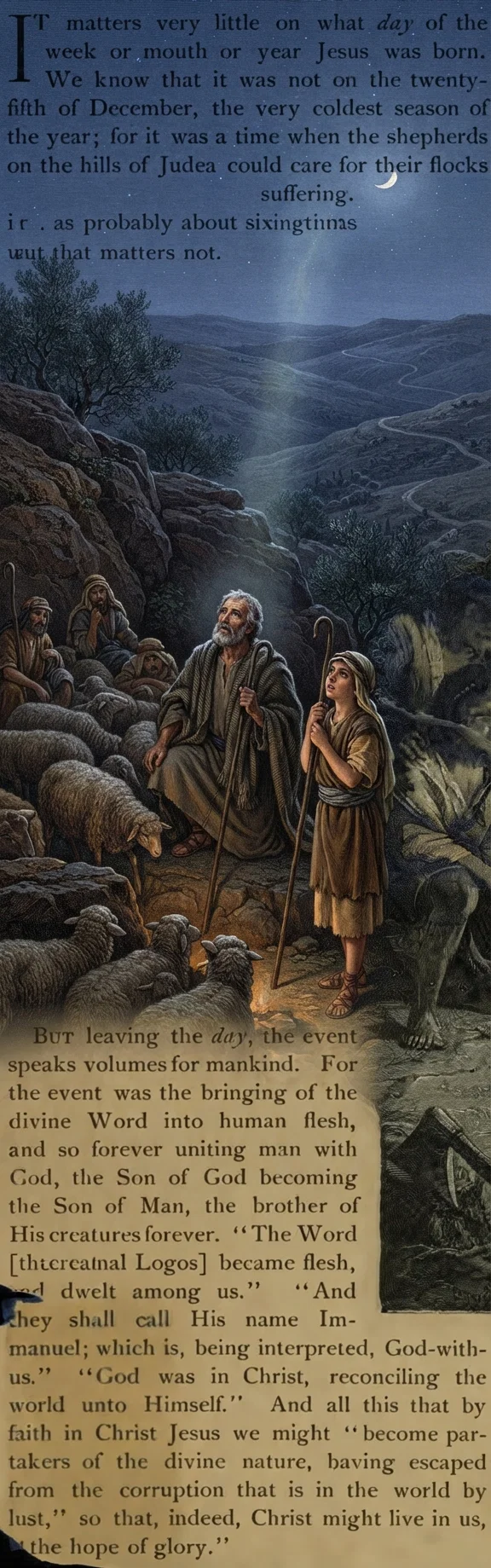
Only so is salvation. "Thou shalt call His name JESUS," said the angel; "for He shall save His people from their sins." And He saves us from our sins by taking away our renounced and confessed sins and dwelling within us by His Spirit—Jesus, Immanuel. Simply believing this,—taking Him for our Saviour, His righteousness for our sins, His death for our penalty, His life for our death, by faith bringing the power of His resurrection into our every-day life, we can say with His devoted servant of old: "I have been crucified with Christ; and it is no longer I that live, but Christ liveth in me; and that life which I now live in the flesh I live in faith, the faith which is in the Son of God, who loved me, and gave Himself up for me."
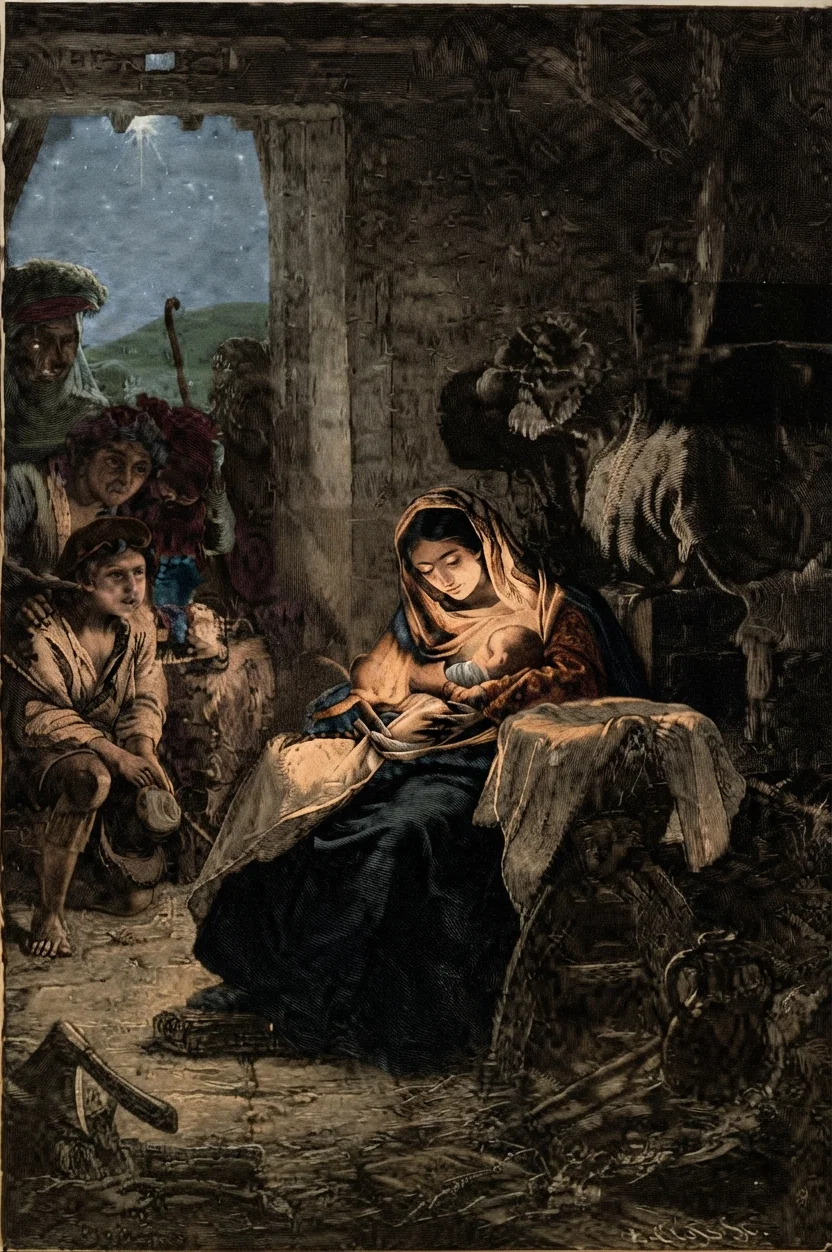
THERE is mighty power in this life of faith. It brings the Christ-child home to the little ones, and His loving tenderness entwines about their heart-strings and saves them from sin. His strong, holy manhood strengthens, penetrated the darkest places of earth, lighted the children of darkness to the peace and rest.
BUT apart from Him, there is no peace.
"Peace on earth; good-will to men," said the angels at His birth. But the peace is for God. It is not in the natural hearts of men.
"The wicked are like the troubled sea, when it can not rest, and its waters cast up mire and dirt. There is no peace, saith my God, to the wicked."
And the great world has demonstrated it. For nearly two thousand years the angels' song has been floating down the centuries, penetrating the walled lands and charming the ear of the world; but never were the nations under the control of the war god as to-day.
They cry, Peace; but there is no peace. They echo the birth song of Christ; but they know not His Spirit. He is not to them Immanuel. They desire His peace, but they will not surrender to His love. Hence war and war preparations occupy the minds of men and nations.
Among those who have not seen the battles fought with sword and gun and the fields incarnadine, there is hatred, variance, and strife. It is manifest in so many forms we can not name them. Truly, as declared the apostle, those without Christ, "The way of peace they know not;" but they know not Christ. "He is our peace, who made both one."
He declares, "Peace I leave with you; My peace I give unto you: not as the world giveth, give I unto you." And His peace awaits every soul which will lay down its arms of rebellion to God, and receive His righteousness through Jesus Christ.
Then "the work of righteousness shall be peace; and the effect of righteousness, quietness and confidence forever." This is the message of peace which the birth of Jesus Christ into humanity ought to bring us, not only one day, but every day. And this blessing we invoke for all our readers.

POOR, AND DON'T KNOW IT.

Of the Laodicean church—the church in the last stage of its earthly history—the Spirit says that it is "wretched, and miserable, and poor, and blind, and naked," and doesn't know it. Rev. 3:17. The reason she knows it not is that she is filledwith the delusion that she is "increased with goods," and is not in need of anything. Certainly no one knows he is poor as long as he thinks he is rich. As long as the church depends upon her material possessions, her great men, her political influence, her growing numbers, she may imagine herself rich, not realizing her real want of the true riches. She may indeed lack all the spiritual gifts, without which she is utterly poverty-stricken, and yet be deceived by the idea that she is making wonderful progress.
It is while she is unwittingly in this sad condition that the Lord appeals to her: "I counsel thee to buy of Me gold tried in the fire, that thou mayest be rich; and white raiment, that thou mayest be clothed, and that the shame of thy nakedness do not appear; and anoint thine eyes with eyesalve, that thou mayest see."
"Gold tried in the fire" is the faith of Christ, that rests in "every word that proceedeth out of the mouth of God."
The "white raiment" is the righteousness of Christ, who never for an instant swerved from the law of God. He was "obedient even unto death." He "knew no sin, neither was guile found in His mouth." The law of God was in His heart. The righteousness of Christ consisted in His perfect obedience of the commandments of God, in contradistinction to the failure of the first Adam through disobedience.
The "eyesalve" is the Spirit of God, by which we may be guided into all truth. It is the rejection of the Spirit's leading, for that of the wisdom of men, that produces the terrible blindness of the nominal church to-day, leaving her in ignorance of her spiritual destitution.
As with the church, so with the individual backslider; he does not know how poor he is. What a mistake he has made! He actually thinks he is in the way of wisdom. If he knew, he would not follow such a course. But he can not know as long as the only source of wisdom is neglected, as long as the only guide to wisdom is rejected.
It is a time for every one to calmly, solemnly consider his position. "Examine yourselves, whether ye be in the faith; prove your ownselves." The Lord is standing at the door, knocking, and He says, "As many as I love, I rebuke and chasten; be zealous therefore, and repent."
G.

"PEACE" AND "GOOD-WILL."

TRUE COURAGE.

FEAR is not always cowardice. The fear of the Lord is wisdom, and wisdom is always courageous. It is not foolhardy, but discretionary. “A prudent man foreseeth the evil, and hideth himself; but the simple pass on, and are punished.” The “fear of the Lord” that constitutes wisdom is not an ordinary dread, as of being struck by lightning, or of being buried by an earthquake; it is a fear lest in some unconscious manner one may be led to do evil. It is the fear of doing wrong, not because of consequent punishment, but because of a wrong influence upon others, which may mar the good work of purifying the universe, a consummation which a pure and all-wise Father has sacrificed so much to accomplish for the good of all His subjects. The fear of the Lord—the fear to do evil because it is evil—is the product of love, a love of that which is pure and right. One who is actuated by such a spirit knows that "the Lord is my helper, and I will not fear what man shall do unto me." Heb. 13:6.
Looking forward to the time when men should aim to carry out their human schemes by means of federations, leagues, unions, alliances, etc., the Lord says to His people: “Say ye not, A confederacy, to all them to whom this people shall say, A confederacy; neither fear ye their fear, nor be afraid. Sanctify the Lord of hosts Himself; and let Him be your fear, and let Him be your dread.” Isa. 8:12, 13.
“The fear of the Lord is clean, enduring forever” (Ps. 19:9), and the wisdom which is connected with this fear is “pure.” Through the wisdom given to Solomon we are told that “The wicked flee when no man pursueth; but the righteous are bold as a lion.” Yet the boldness, or courage, of the righteous is not manifested in loud words, or physical manifestation; not in a show of human power, or endeavor to overawe by a display of political influence. “The wisdom that is from above [that cometh of fearing the Lord] is first pure, then peaceable, gentle, and easy to be entreated, full of mercy and good fruits, without partiality, and without hypocrisy.” James 3:17.
All other wisdom, such as comes from the fear of man, or from human schemes to incite a fear of man, is not from above. It is “earthly, sensual, devilish.” James 3:15. So when we find men forming federations, even with the avowed purpose of working “reform,” by which they intend to secure human laws with which to overawe and compel the consciences of men, those who truly fear the Lord will not be influenced by any such attempts to establish righteousness. “Fear not, little flock; for it is the Father’s good pleasure to give you the kingdom.”

“DIVINE HEALING.”

A intelligent and earnest correspondent writes us that he has been reading the SIGNS OF THE TIMES of late and heartily enjoys it. Its theories, comments, opinions, combined with historical evidence, seem very convincing, especially on the Sabbath question; and nothing in the spiritual realm I love so much as the theme of Christ’s coming again. But I have wondered and questioned why, since you advocate so many truths so emphatically, and are so definite in your assurances, that also important truth, Divine Healing, has little or no place, instead the substitute of sanitariums, medicines, etc.—human agencies and kindred means.
Our correspondent can not have read the SIGNS very long. There have been in this year’s volume not less than nineteen articles on the miracle-working power of Jesus. Many of these miracles were miracles of healing; and in all the articles the lessons were drawn for the present, "Jesus Christ, the same yesterday, and to-day, and forever." Let us talk with this correspondent, and with all our readers.
1. God’s highest law is His great moral law, of which the Decalogue is a summary. This governs the moral, spiritual man. In and through the channels of this law, God designed that life—the more abundant life—should flow to His people. For the law “was ordained to life.” Rom. 7:10. “In the way of righteousness is life; and in the pathway thereof there is no death.” Prov. 12:28.
2. There are also physical laws which govern the healthful operations and functions of man’s physical organs. This is recognized by all.
3. The transgression of the moral law is sin. 1 John 3:4; Rom. 7:7; 4:15. A transgression of that highest law perverts the laws below it; and death entered because of sin. Yet under ordinary circumstances, owing to God’s goodness, it is possible for the man so to observe the laws of his physical being that he will live to what the world calls a “hale and hearty old man,” and this though he recognizes no special obligation to God. The most pious man, if he disregard the laws of his physical being, becomes sick; while the unreligious man, if he observe the laws of his physical being, preserves and conserves his health.
4. The vast mass of mankind are more or less ignorant of both of these laws and their relations to them; some of them willingly, some of them wilfully, some of them through no fault of their own.
5. As Christianity takes hold of the whole man, body, soul, and spirit, it is the duty of the children of Christ to do all in their power to enlighten the ignorant concerning both of these laws and their operations, by every means in their power. As the body is the temple of the Holy Spirit, it is the duty of the Christian to know how to keep that temple that it be not defiled (1 Cor. 3:16, 17; 6:19); it is his duty so to care for it, that it may be presented to God a “living sacrifice, holy, acceptable unto God,” man’s “reasonable service” (Rom. 12:1, 2). In other words man should eat and drink and do all things else to God’s glory. 1 Cor. 10:31. Not that any of these things can save him; but by doing these things he is coming into harmony with the laws of God’s working.
6. When man is sick, he is out of harmony with the law of his physical being, and perhaps of his spiritual nature also. All his sickness may be the direct result of his ignorance of physical law. He may be using tobacco, one of the most harmful of bad habits, or eating pork, one of the most corrupting of foods. If God should heal him in answer to faith, and the man unenlightened should continue to transgress physical law, he would bring himself into the same condition again. God could not continue healing power to be used in transgression. If the man could not grasp God’s healing power by simple faith, then enlighten him in regard to physical law and its transgression, that he may be healed by a natural process, by a right course of living. Against this there is not one word of Scripture; in fact, there is much to support it. If sanitariums can help better and more rapidly to enlighten persons who are ignorant regarding right laws of living, praise God for all the right kind of sanitariums. Yet we believe that God desires His own people to be well without sanitariums; so to use all His common blessings as to appropriate the life in them for their best physical good.
7. God heals, wonderfully, miraculously heals. To that soul who will by simple, childlike faith yield himself into perfect harmony with the law of God’s power, God’s powerof His life in such plenitude as to overcome physical effects of transgression; to transform diseased tissue into healthful tissue; to allay burning fever and cool the blood; to take away abnormal growths, to quench the flow of blood; to make well and strong the ill and the weak. It is the blessed privilege of God’s children to claim His healing power and blessing. But the greatest blessing is not physical healing, else Inspiration would not tell us that in the last evil time “blessed are the dead who die in the Lord,” and that God lets them rest, taking them from the “evil to come.” Rev. 14:13; Isa. 57:1, 2.
Sin is worse than death, when the soul sleeps in Jesus. Above all things else Christ wishes us healed from sin and recreated anew in Christ Jesus. That is what God’s professed people need to-day—to be changed, regenerated, born from above, to be made new creatures in Christ Jesus, saved from sin and sinning. He who is thus saved will give to God all the glory. The mightiest sort of miracle has been wrought in him. God has changed him to a new man. He belongs to God. He is God’s because he is cleansed and changed. He will bear God’s healing power. He will not count it above all other blessings. He will not boast in it, or be lifted up by it; he has experienced a greater miracle. To that place God’s remnant church will come, and there will not be “one feeble one in all their ranks.” The healing power of God will be felt and known.
And yet, nowhere has God given healing or miracles as a sign or signs of His own true remnant church. He has told us that every counterfeit miracle which could be conceived will be manifest among the workers of iniquity, and that they will argue that they ought to be saved because of the manifestations among them. (See Rev. 13:14; 16:14; 2 Thess. 2:9, 10; Matt. 24:24; 7:21-23.) But God’s people will be known by this divine description: “Here is the patience of the saints; here are they that keep the commandments of God, and the faith of Jesus.” Rev. 14:12. The mightiest power of God will be manifest in the last days in making characters which will stand for God, loyal to truth and righteousness. That is God’s great miracle in Jesus Christ. That is the one miracle which Satan is seeking to circumvent and disprove.

BETRAYING THE TRUST.

THE apostle says: "As we were allowed of God to be put in trust with the Gospel, even so we speak; not as pleasing men, but God, which trieth our hearts." The example of Paul in this regard is one that every minister of the Gospel of Christ should strive to emulate. In fact, that is the only attitude of the professed minister of God that is honoring to God.
As Christ declared that it would be more tolerable for Sodom and Gomorrah in the day of judgment than for those cities of His day which refused His witness with all the light they had, so may we know that it will be more tolerable in the day of judgment for such cities as Paine and Voltaire and Ingersoll than for those professed ministers of God who have stood in the sacred desk and cast discredit and doubt upon the Word of God. Those were open enemies in the field; these are traitors in the camp. Men who were yearning for God and desired to know and to do His ways would not go to such men as Ingersoll in their soul hunger. But when they go to those who were entrusted with the Gospel, they go in sincerity, with open minds and hearts, ready to believe, anxious to know what the messenger of God has to teach them. He who casts a single doubt into the mind of such an inquirer, "it were better for him that a millstone were hanged about his neck, and he were drowned in the depth of the sea."
Such men as Paine and Voltaire have drawn their sustenance from the commissariat of the enemy while working for him; but the unfaithful trustee of the Gospel message has drawn his support from the church of Christ while working against it and against its Founder. The hungry soul expects through the doctor of divinity the bread and the water of life—and has a right to expect them; and such a professed servant of Christ who feeds to a single soul a stone of doubt and a serpent of unbelief has taken upon Himself the most fearful responsibility that it is possible for a human being to assume. The consistent, open infidel will fare better in that day than he who, in the garb of religion, has taught men to look upon the Word of God as a myth, an unreality, the work of human minds and hands.
It is infinitely better to anchor to the Rock of Ages than to flounder, and swamp, and sink, in the sea of doubt; better to believe in the word of Him for whose glory we were created, and then live and reign with Him eternally than to fill the world with the philosophy of doubt, and then perish on the grave of our false theories.
What God wants of those who have named His name is unswerving loyalty to Him and His word. The disloyal, the doubters, the questioners, the critics of "that which is written," God has not commissioned and can not use in the promulgation of His message of salvation. Let the pulpits be relieved of such teachers, and the atmosphere of the professed church of Christ will be cleansed and vivified, and then will the zeal of the church be aroused, souls will be converted, cold hearts be melted, and the question of the empty pew will need no effort for its settlement. S.

Question Corner

1750.—Partial Resurrection. Dan. 12: 2.
What is this partial resurrection and when shall it take place? Dan. 12: 2; Rev. 1: 7. R. S.
The context seems to fix it very clearly, immediately after the close of probation. The first verse of Daniel 12 refers to the reign of Christ. Reading all through the eleventh chapter you will see that the term standing up refers to kings reigning. There comes a time when he whose right it is shall stand up to reign. Then Christ will leave the Father's throne and take His own throne. Rev. 3: 21; Dan. 7: 13, 14. His mediatorial work is then finished; He is priest no more for the putting away of sin. Then will go forth the decree saying that all character is fixed. Rev. 22: 11. Then will begin the time of trouble of the seven last plagues, not upon the righteous, but upon the wicked, "such as never was since there was a nation, even to that same time." But at that time God's people shall be delivered; every one that shall be found written in the book." At that time also, according to Daniel, "many [not all] of them that sleep in the dust of the earth, shall awake, some [not all] to everlasting life, and some [not all] to shame and everlasting contempt." The righteous who are then raised will be made immortal with the living righteous at Christ's coming, while the wicked dead who are raised will perish with the other wicked in the seven last plagues.

1751.—Has Man a Mortal Soul?

The answer depends wholly upon what is meant by soul. Soul sometimes means the whole man. Eight souls were saved in the ark. 1 Peter 3:19. Again and again we read in Joshua 10 that in the wars he waged he destroyed all the souls of certain cities, meaning the whole person. Man became a living soul. Gen. 2:7. This took in the whole man, and the whole man is mortal. Sometimes soul means life. "What shall it profit a man if he gain the whole world, and lose his own soul?" Matt. 16:26. And that mortal will never become immortal until the Lord Jesus Christ shall come the second time. Then this mortal shall put on immortality. 1 Cor. 15:50.

How Enter the Kingdom

1752.—How Enter the Kingdom.
What is the law of admission in the kingdom, or the church of Christ? S.
Jesus states it in Mark 1:15, "Repent ye, and believe in the Gospel." Peter states it in Acts 2:38, "Repent ye, and be baptized, every one of you, in the name of Jesus Christ, for the remission of your sins;" and in 3:19, "Repent ye therefore, and turn again that your sins may be blotted out." Paul, in Acts 20:21, "Repentance toward God, and faith toward our Lord Jesus Christ." Repentance is godly sorrow for sin, and turning away from it. "Sin is the transgression of the law." 1 John 3:4. True repentance, therefore, is turning from transgression of the law to obedience to the law. Faith lays hold upon the power and righteousness of Jesus Christ, which brings us into harmony with the law, and that faith is expressed in baptism, or union with Christ; that we may bring forth the fruit of righteousness unto God. Rom. 7:4; 8:4.

1753.—The New Covenant and the Sabbath.

In Jer. 31:31-35 we have a promise of a new covenant, and in Heb. 8:6-11 it seems to be fulfilled. Some say that this is where the Sabbath of the Bible was changed. Is this true?
We do not know how it could be changed through the new covenant when the Sabbath is an integral part of God's law, and the work which the new covenant will do for the believer is to write that law within the heart. That is what the new covenant has done through all the ages. The only time reference there can be to it would be its confirmation at the death of Christ. He was that new covenant incarnate. "In Him were the sure mercies of David." Isa. 55:3, 4. He was a witness to the peoples, a leader and commander to the peoples. In His teaching He declared that it was easier for heaven and earth to pass away than one tittle of the law to fail. Matt. 5:17, 18. When the young man came to Him asking what he should do to obtain eternal life, Jesus replied, "If thou wouldst enter into life, keep the commandments." Matt. 19:17. He Himself kept the law perfectly, and thus having taught and exemplified all the principles of the covenant, He confirmed it with His death upon the cross. Paul tells us that tho it be a man's covenant, if it be confirmed, no man disannulleth or addeth thereto. Gal. 3:15. He who seeks to crowd into that new covenant a worship day or an institution of which God has not spoken is endeavoring to change the very hope of Christianity and set aside the new covenant, sealed with the blood of Jesus. O, how much better it is to let the new covenant do the same work in our hearts which it did in the heart of Jesus of Nazareth; then will we say like Him, "I delight to do Thy will, O my God; yea, Thy law is within my heart."

1754.—Is the Bible Contradictory?

1754.—Is the Bible Contradictory?
Can you tell how there are so many doctrines, and they all find Scripture for them? Is it possible for the Bible to contradict itself?
Our correspondent has herself unwittingly furnished us the secret of all the contradictions. She spelled "doctrines" "doctorings." It is because of the "doctorings" of the Word of God that men have so many contradictory theories. Men have doctored it to death in many hearts. The Word itself does not teach so many things. God's Word is one, and in all its great essential teachings there is no room for doubt or difference to them who will take the Word as God gives it.
Continue reading: THE INTER-CHURCH CONFERENCE ON FEDERATION