Review and Herald, Vol. 93, No. 34.

Fundamental Principles of Life and Health

Review and Herald

Jul 10, 1916

Review and Herald Publishing Association · Takoma Park, Washington, D. C. · Jul 10, 1916

Fundamental Principles of Life and Health

By Mrs. E. G. White
The great world is sick, and wherever the children of men dwell, sin and suffering abound.
Notwithstanding the advancement of medical and surgical science; notwithstanding the great army of trained nurses, who, like white armed hosts, go forth with great skill to battle against disease and death, yet in all civilized lands sickness and disease are rapidly increasing. The “great white plague” slays his millions, and a score of minor complaints are well known to be his skirmishers and sappers and miners.
All sickness and pain, all suffering and sorrow, are the results of law transgressed. The wonderful human machinery has been tampered with, and its delicate mechanism has been made to run counter to the law of its life and persistency; disease and death are the result.
What is the remedy? Having transgressed law, how may we recover from the transgression and its results?

The Great Physician

Our Lord Jesus Christ came to this world as the unwearied servant of man's necessity. He “took our infirmities, and bare our sicknesses” (Matt. 8: 17), that he might minister to every need of humanity. The burden of disease and wretchedness and sin he came to remove. It was his mission to bring to men complete restoration; he came to give them health and peace and perfection of character.
During his ministry, Jesus devoted more time to healing the sick than to preaching. His miracles testified to the truth of his words, that he came not to destroy, but to save. Wherever he went, the tidings of his mercy preceded him. Where he had passed, the objects of his compassion were rejoicing in health, and making trial of their new-found powers. Crowds were collecting around them to hear from their lips the works that the Lord had wrought. His voice was the first sound that many had ever heard, his name the first word they had ever spoken, his face the first they had ever looked upon. Why should they not love Jesus, and sound his praise?
What a busy life he led! Day by day he might have been seen entering the humble abodes of want and sorrow, speaking hope to the downcast, and peace to the distressed. Gracious, tender-hearted, pitiful, he went about lifting up the bowed-down and comforting the sorrowful. Wherever he went, he carried blessing.

The Christian Physician a Coworker with Christ

In the ministry of healing, the physician is to be a coworker with Christ. The Saviour ministered to both the soul and the body. The gospel which he taught was a message of spiritual life and of physical restoration. Deliverance from sin and the healing of disease were linked together. The same ministry is committed to the Christian physician. He is to unite with Christ in relieving both the physical and spiritual needs of his fellow men. He is to be to the sick a messenger of mercy, bringing to them a remedy for the diseased body and for the sin-sick soul.
Christ is the true head of the medical profession. The chief Physician, he is at the side of every God-fearing practitioner who works to relieve human suffering. While the physician uses nature's remedies for physical disease, he should point his patients to him who can relieve the maladies of both the soul and the body. That which physicians can only aid in doing, Christ accomplishes. They endeavor to assist nature's work of healing; Christ himself is the healer. The physician seeks to preserve life; Christ imparts life.

The Source of Healing

The Saviour in his miracles revealed the power that is continually at work in man's behalf, to sustain and to heal him. Through the agencies of nature, God is working, day by day, hour by hour, moment by moment, to keep us alive, to build up and restore us. When any part of the body sustains injury, a healing process is at once begun; nature's agencies are set at work to restore soundness.
*Paragraph selected from “Ministry of Healing,” Review and Herald Publishing Association, publishers, Washington, D. C.
But the power working through these agencies is the power of God. All life-giving power is from him. When one recovers from disease, it is God who restores him.
Sickness, suffering, and death are the work of an antagonistic power. Satan is the destroyer; God is the restorer.
The words spoken by Israel are true today of those who recover health of body or health of soul. “I am the Lord that healeth thee.” Ex. 15: 26.
IF WE WOULD HAVE HEALTH, WE MUST LIVE FOR IT.
The desire of God for every human being is expressed in the words, “Beloved, I wish above all things that thou mayest prosper and be in health, even as thy soul prospereth.” 3 John 2.
He it is who “forgiveth all thine iniquities; who healeth all thy diseases; who redeemeth thy life from destruction; who crowneth thee with loving-kindness and tender mercies.” Ps. 103: 3, 4.

Sin the Cause of Disease

When Christ healed disease, he warned many of the afflicted ones, “Sin no more, lest a worse thing come unto thee.” John 5: 14. Thus he taught that they had brought disease upon themselves by transgressing the laws of God, and that health could be preserved only by obedience.
The physician should teach his patients that they are to cooperate with God in the work of restoration. The physician has a continually increasing realization of the fact that disease is the result of sin. He knows that the laws of nature, as truly as the precepts of the decalogue, are divine, and that only in obedience to them can health be recovered or preserved. He sees many suffering as the result of hurtful practices who might be restored to health if they would do what they might for their own restoration. They need to be taught that every practice which destroys the physical, mental, or spiritual energies is sin, and that health is to be secured through obedience to the laws that God has established for the good of all mankind.

Need of Education in Health Principles

Education in health principles was never more needed than now. Notwithstanding the wonderful progress in so many lines relating to the comforts and conveniences of life, even to sanitary matters and to the treatment of disease, the decline in physical vigor and power of endurance is alarming. It demands the attention of all who have at heart the well-being of their fellow men.
Our artificial civilization is encouraging evils destructive of sound principles. Custom and fashion are at war with nature. The practices they enjoin, and the indulgences they foster, are steadily lessening both physical and mental strength, and bringing upon the race an intolerable burden. Intemperance and crime, disease and wretchedness, are everywhere.
Many transgress the laws of health through ignorance, and they need instruction. But the greater number know better than they do. They need to be impressed with the importance of making their knowledge a guide of life. The physician has many opportunities both of imparting a knowledge of health principles and of showing the importance of putting them in practice. By right instruction he can do much to correct evils that are working untold harm.

The Use of Drugs

A practice that is laying the foundation of a vast amount of disease and of even more serious evils, is the free use of poisonous drugs. When attacked by disease, many will not take the trouble to search out the cause of their illness. Their chief anxiety is to rid themselves of pain and inconvenience. So they resort to patent nostrums, of whose real properties they know little, or they apply to a physician for some remedy to counteract the result of their misdoing, but with no thought of making a change in their unhealthful habits. If immediate benefit is not realized, another medicine is tried, and then another. Thus the evil continues.
By the use of poisonous drugs, many bring upon themselves lifelong illness, and many lives are lost that might be saved by the use of natural methods of healing. The poisons contained in many so-called remedies create habits and appetites that mean ruin to both soul and body. Many of the popular nostrums called patent medicines, and even some of the drugs dispensed by physicians, act a part in laying the foundation of the liquor habit, the opium habit, the morphine habit, that are so terrible a curse to society.

Restorative Power of Nature

The only hope of better things is in the education of the people in right principles. Let physicians teach the people that restorative power is not in drugs, but in nature. Disease is an effort of nature to free the system from conditions that result from a violation of the laws of health. In case of sickness, the cause should be ascertained. Unhealthful conditions should be changed, wrong habits corrected. Then nature is to be assisted in her effort to expel impurities and to reestablish right conditions in the system.

Natural Remedies

Pure air, sunlight, abstemiousness, rest, exercise, proper diet, the use of water, trust in divine power,—these are the true remedies. Every person should have a knowledge of nature's remedial agencies and how to apply them. It is essential both to understand the principles involved in the treatment of the sick and to have a practical training that will enable one rightly to use this knowledge.
The use of natural remedies requires an amount of care and effort that many are not willing to give. Nature's process of healing and upbuilding is gradual, and to the impatient it seems slow. The surrender of hurtful indulgences requires sacrifice. But in the end it will be found that nature, untrammeled, does her work wisely and well. Those who persevere in obedience to her laws will reap the reward in health of body and health of mind.

Preservation of Health

Too little attention is generally given to the preservation of health. It is far better to prevent disease than to know how to treat it when contracted.
It is the duty of every person, for his own sake and for the sake of humanity, to inform himself in regard to the laws of life, and conscientiously to obey them. All need to become acquainted with that most powerful of all organisms, the human body. They should understand the functions of the various organs and the dependence of one upon another for the healthy action of all. They should study the influence of the mind upon the body, and of the body upon the mind, and the laws by which they are governed.

Training for Life's Conflict

We cannot be too often reminded that health does not depend on chance. It is the result of obedience to law. This is recognized by the contestants in athletic games and trials of strength. These men make the most careful preparation. They submit to thorough training and strict discipline. Every physical habit is carefully regulated. They know that neglect, excess, or carelessness, which weakens or cripples any organ or function of the body, would insure defeat.
How much more important is such carefulness to insure success in the conflict of life. It is not mimic battles in which we are engaged. We are waging a warfare upon which hang eternal results. We have unseen enemies to meet. Evil angels are striving for the dominion of every human being. Whatever injures the health, not only lessens physical vigor, but tends to weaken the mental and moral powers. Indulgence in any unhealthful practice makes it more difficult for one to discriminate between right and wrong, and hence more difficult to resist evil. It increases the danger of failure and defeat.
Pointing to the self-denial practiced by the contestants in the ancient Greek games, the apostle Paul writes: “Every man that striveth for the mastery is temperate in all things. Now they do it to obtain a corruptible crown; but we an incorruptible. I therefore so run, not as uncertainly; so fight I, not as one that beateth the air; but I keep under my body, and bring it into subjection: lest that by any means, when I have preached to others, I myself should be a castaway.” 1 Cor. 9: 25-27.

The Basis of Reform

One of the most deplorable effects of the original apostasy was the loss of man's power of self-control. Only as this power is regained, can there be real progress. The body is the only medium through which the mind and the soul are developed forthe upbuilding of character. Hence it is that the adversary of souls directs his temptations to the enfeebling and degrading of the physical powers. His success here means the surrender to evil of the whole being. The tendencies of our physical nature, unless under the dominion of a higher power, will surely work ruin and death.
The body is to be brought into subjection. The higher powers of the being are to rule. The passions are to be controlled by the will, which is itself to be under the control of God. The kingly power of reason, sanctified by divine grace, is to bear sway in our lives.
The requirements of God must be brought home to the conscience. Men and women must be awakened to the duty of self-mastery, the need of purity, freedom from every demeaning appetite and defiling habit. They need to be impressed with the fact that all their powers of mind and body are the gift of God, and are to be preserved in the best possible condition for his service.

Teaching in the Home

In no place is such instruction as this more needed, and nowhere will it be productive of greater good, than in the home. Parents have to do with the very foundation of habit and character. They are giving to their children an example either of obedience or of transgression. By their example and teaching, the destiny of their households is decided. The children will be what their parents make them.
If parents could be led to trace the result of their action, and could see how, by their example and teaching, they perpetuate and increase the power of sin or the power of righteousness, a change would certainly be made. Many would turn away from tradition and custom, and accept the divine principles of life.
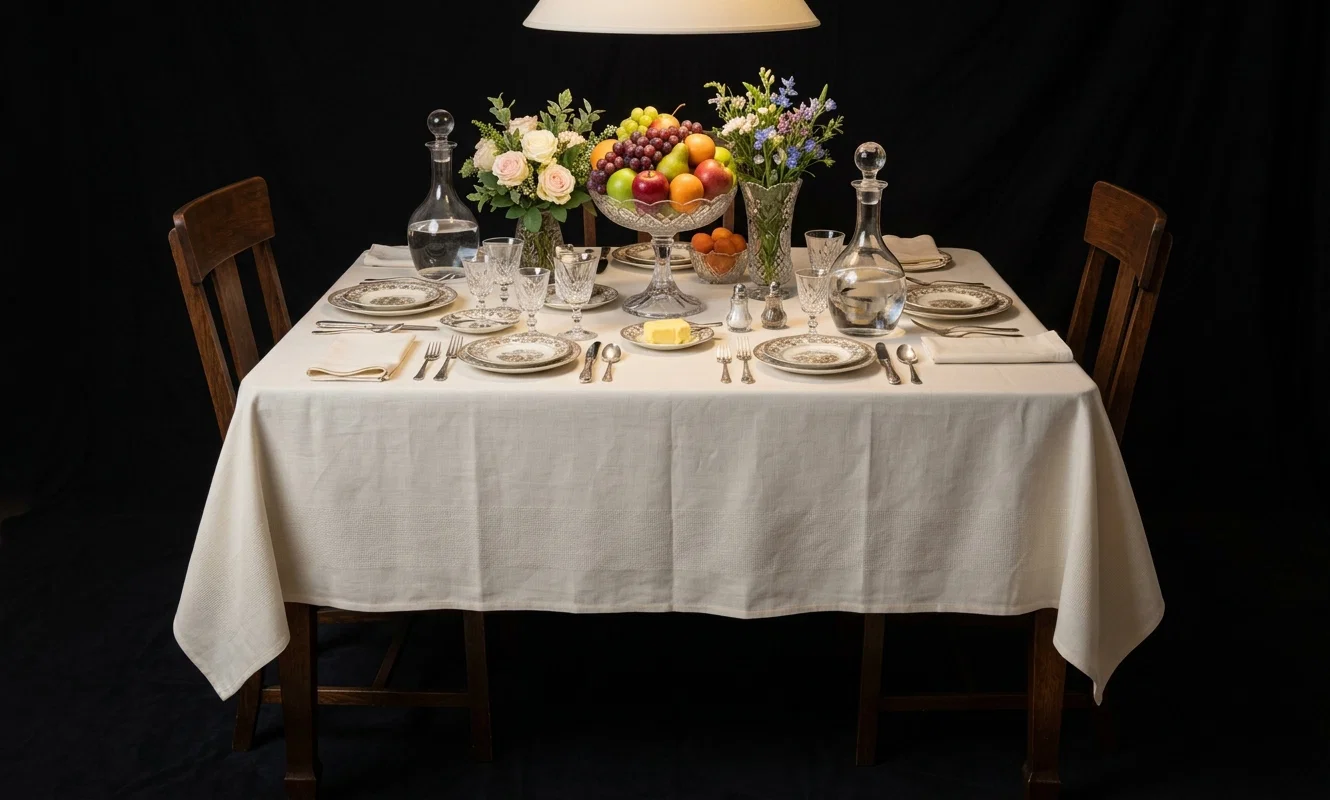
THE FOUNDATION OF TEMPERANCE IS LAID AT OUR TABLES

General Hygiene

The knowledge that man is to be a temple for God, a habitation for the revealing of his glory, should be the highest incentive to the care and development of our physical powers. Fearfully and wonderfully has the Creator wrought in the human frame, and he bids us make it our study, understand its needs, and act our part in preserving it from harm and defilement.

The Circulation of the Blood

In order to have good health, we must have good blood; for the blood is the current of life. It repairs waste, and nourishes the body. When supplied with the proper food elements and when cleansed and vitalized by contact with pure air, it carries life and vigor to every part of the system. The more perfect the circulation, the better will this work be accomplished.
At every pulsation of the heart, the blood should make its way quickly and easily to all parts of the body. Its circulation should not be hindered by tight clothing or bands, or by insufficient clothing of the extremities. Whatever hinders the circulation, forces the blood back to the vital organs, producing congestion. Headache, cough, palpitation of the heart, or indigestion is often the result.

Respiration

In order to have good blood, we must breathe well. Full, deep inspirations of pure air, which fill the lungs with oxygen, purify the blood. They impart to it a bright color, and send it, a life-giving current, to every part of the body. A good respiration soothes the nerves; it stimulates the appetite, and renders digestion more perfect; and it induces sound, refreshing sleep.
The lungs should be allowed the greatest freedom possible. Their capacity is developed by free action; it diminishes if they are cramped and compressed. Hence the ill effects of the practice so common, especially in sedentary pursuits, of stooping at one's work. In this position it is impossible to breathe deeply. Superficial breathing soon becomes a habit, and the lungs lose their power to expand. A similar effect is produced by tight lacing. Sufficient room is not given to the lower part of the chest; the abdominal muscles, which were designed to aid in breathing, do not have full play, and the lungs are restricted in their action.
Thus an insufficient supply of oxygen is received. The blood moves sluggishly. The waste, poisonous matter, which should be thrown off in the exhalations from the lungs, is retained, and the blood becomes impure. Not only the lungs, but the stomach, liver, and brain are affected. The skin becomes sallow; digestion is retarded; the heart is depressed; the brain is clouded; the thoughts are confused; gloom settles upon the spirits; the whole system becomes depressed and inactive, and peculiarly susceptible to disease.

Pure Air

The lungs are constantly throwing off impurities, and they need to be constantly supplied with fresh air. Impure air does not afford the necessary supply of oxygen, and the blood passes to the brain and other organs without being vitalized. Hence the necessity of thorough ventilation. To live in close, ill-ventilated rooms, where the air is dead and vitiated, weakens the entire system. It becomes peculiarly sensitive to the influence of cold, and a slight exposure induces disease. It is close confinement indoors that makes many women pale and feeble. They breathe the same air over and over, until it becomes laden with poisonous matter thrown off through the lungs and pores; and impurities are thus conveyed back to the blood.

Ventilation and Sunlight

In the construction of buildings, whether for public purposes or as dwellings, care should be taken to provide for good ventilation and plenty of sunlight. Churches and schoolrooms are often faulty in this respect. Neglect of proper ventilation is responsible for much of the drowsiness and dulness that destroy the effect of many a sermon and make the teacher's work toilsome and ineffective.
So far as possible, all buildings intended for human habitation should be placed on high, well-drained ground. This will insure a dry site, and prevent the danger of disease from dampness and miasma. This matter is often too lightly regarded. Continuous ill health, serious diseases, and many deaths result from the dampness and malaria of low-lying, ill-drained situations.

Cleanliness

Scrupulous cleanliness is essential to both physical and mental health. Impurities are constantly thrown off from the body through the skin. Its millions of pores are quickly clogged unless kept clean by frequent bathing, and the impurities which should pass off through the skin become an additional burden to the other eliminating organs.
It is important also that the clothing be kept clean. The garments absorb the waste matter that passes off through the pores; if they are not frequently changed and washed, the impurities will be reabsorbed. Perfect cleanliness, plenty of sunlight, and attention to sanitation in every detail of the home life, are essential to freedom from disease and to the cheerfulness and vigor of the inmates of the home.

Dress

The Bible teaches modesty in dress. “In like manner also, that women adorn themselves in modest apparel.” 1 Tim. 2:9. This forbids display in dress, gaudy colors, profuse ornamentation. Any device designed to attract attention to the wearer or to excite admiration, is excluded from the modest apparel which God's Word enjoins.
Our dress is to be inexpensive,—not with “gold, or pearls, or costly array.” 1 Tim. 2:9.
But our clothing, while modest and simple, should be of good quality, of becoming colors, and suited for service. It should be chosen for durability rather than display. It should provide warmth and proper protection.
Our dress should be cleanly. Uncleanliness in dress is unhealthful, and thus defiling to the body and to the soul. “Ye are the temple of God. . . . If any man defile the temple of God, him shall God destroy.” 1 Cor. 3:16, 17. In all respects the dress should be healthful.

The Rule of Fashion

What a contrast is this to the weariness, the unrest, the disease and wretchedness, that result from the rule of fashion! How contrary to the principles given in the Scriptures are many of the modes of dress which fashion prescribes!
It was the adversary of all good who instigated the invention of the ever-changing fashions. He desires nothing so much as to bring grief and dishonor to God by working the misery and ruin of human beings. One of the means by which he most effectually accomplishes this is the devices of fashion, that weaken the body, as well as enfeeble the mind and belittle the soul.
Tight lacing does not improve the form. One of the chief elements in physical beauty is symmetry, the harmonious proportion of parts. And the correct model for physical development is to be found, not in the figures displayed by French modistes, but in the human form as developed according to the laws of God in nature. God is the author of all beauty, and only as we conform to his ideal shall we approach the standard of true beauty.

Diet and Health

Our bodies are built up from the food we eat. There is a constant breaking down of the tissues of the body; every movement of every organ involves waste, and this waste is repaired from our food. Each organ of the body requires its share of nutrition. The brain must be supplied with its portion; the bones, muscles, and nerves demand theirs. It is a wonderful process that transforms the food into blood, and uses this blood to build up the varied parts of the body; but this process is going on continually, supplying with life and strength each nerve, muscle, and tissue.

Selection of Food

Those foods should be chosen that best supply the elements needed for building up the body. In this choice, appetite is not a safe guide. Through wrong habits of eating, the appetite has become perverted. Often it demands food that impairs health and causes weakness instead of strength. We cannot safely be guided by the customs of society. The disease and suffering that everywhere prevail are largely due to popular errors in regard to diet.
In order to know what are the best foods, we must study God's original plan for man's diet. He who created man and who understands the needs of man appointed Adam his food. “Behold,” he said, “I have given you every herb yielding seed, . . . and every tree, in which is the fruit of a tree yielding seed; to you it shall be for food.” Gen. 1:29, A. R. V. Upon leaving Eden to gain his livelihood by tilling the earth under the curse of sin, man received permission to eat also “the herb of the field.” Gen. 3:18.
Grains, fruits, nuts, and vegetables constitute the diet chosen for us by our Creator. These foods, prepared in as simple and natural a manner as possible, are the most healthful and nourishing. They impart a strength, a power of endurance, and a vigor of intellect, that are not afforded by a more complex and stimulating diet.
But not all foods wholesome in themselves are equally suited to our needs under all circumstances. Care should be taken in the selection of food. Our diet should be suited to the season, to the climate in which we live, and to the occupation we follow. Some foods that are adapted for use at one season or in one climate are not suited to another. So there are different foods best suited for persons in different occupations. Often food that can be used with benefit by those engaged in hard physical labor is unsuitable for persons of sedentary pursuits or intense mental application. God has given us an ample variety of healthful foods, and each person should choose from it the things that experience and sound judgment prove to be best suited to his own necessities.

Flesh as Food

The diet appointed man in the beginning did not include animal food. Not till after the flood, when every green thing on the earth had been destroyed, did man receive permission to eat flesh.
In choosing man's food in Eden, the Lord showed what was the best diet; in the choice made for Israel he taught the same lesson. He brought the Israelites out of Egypt, and undertook their training, that they might be a people for his own possession. Through them he desired to bless and teach the world. He provided them with the food best adapted for this purpose, not flesh, but manna, “the bread of heaven.”
Flesh was never the best food; but its use is now doubly objectionable, since disease in animals is so rapidly increasing. Those who use flesh foods little know what they are eating. Often if they could see the animals when living, and know the quality of the meat they eat, they would turn from it with loathing. People are continually eating flesh that is filled with tuberculosis and cancerous germs. Tuberculosis, cancer, and other fatal diseases are thus communicated.

Stimulants and Narcotics

UNDER the head of stimulants and narcotics is classed a great variety of articles that, altogether used as food or drink, irritate the stomach, poison the blood, and excite the nerves. Their use is a positive evil. Men seek the excitement of stimulants, because, for the time, the results are agreeable. But there is always a reaction. The use of unnatural stimulants always tends to excess, and it is an active agent in promoting physical degeneration and decay.

Condiments

In this fast age, the less exciting the food, the better. Condiments are injurious in their nature. Mustard, pepper, spices, pickles, and other things of a like character, irritate the stomach and make the blood feverish and impure. The inflamed condition of the stomach is often pictured as illustrating the effect of alcoholic liquors. A similarly inflamed condition is produced by the use of irritating condiments. Soon ordinary food does not satisfy the appetite. The system feels a want, a craving, for something more stimulating.
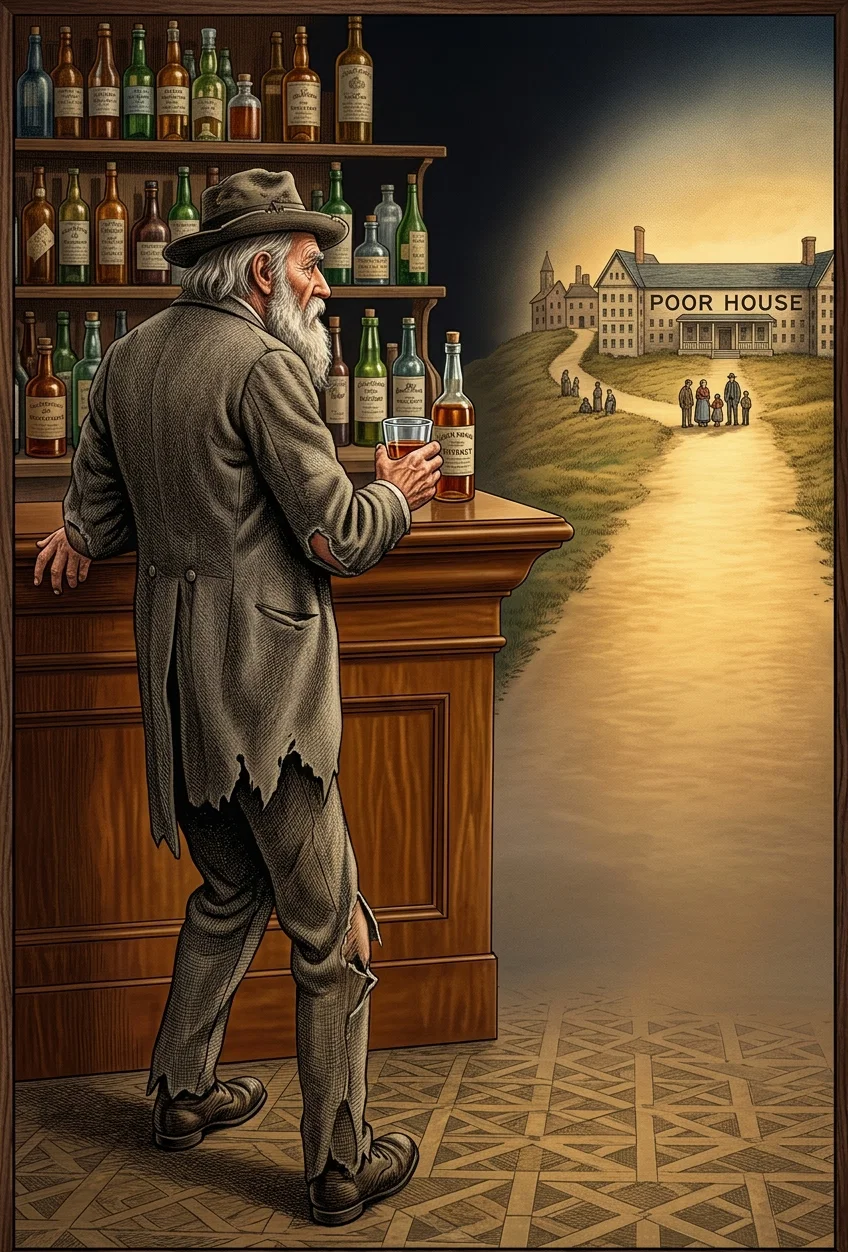
THE END THEREOF IS THE WAY OF DEATH

Tea and Coffee

Tea acts as a stimulant, and, to a certain extent, produces intoxication. The action of coffee and many other popular drinks is similar. The first effect is exhilarating. The nerves of the stomach are excited; these convey irritation to the brain, and this in turn is aroused to impart increased action to the heart, and short-lived energy to the entire system. Fatigue is forgotten; the strength seems to be increased. The intellect is aroused, the imagination becomes more vivid.
Because of these results, many suppose that their tea or coffee is doing them great good. But this is a mistake. Tea and coffee do not nourish the system. Their effect is produced before there has been time for digestion and assimilation, and what seems to be strength is only nervous excitement. When the influence of the stimulant is gone, the unnatural force abates, and the result is a corresponding degree of languor and debility.
Your Money or Your Life! Your Money and Your Life! THE TWO ROBBERS
The continued use of these nerve irritants is followed by headache, wakefulness, palpitation of the heart, indigestion, trembling, and many other evils; for they wear away the life forces. Tired nerves need rest and quiet instead of stimulation and overwork. Nature needs time to recuperate the exhausted energies. When her forces are goaded on by the use of stimulants, more will be accomplished for a time; but, as the system becomes debilitated by their constant use, it gradually becomes more difficult to rouse the energies to the desired point. The demand for stimulants becomes more difficult to control, until the will is overborne, and there seems to be no power to deny the unnatural craving. Stronger and still stronger stimulants are called for, until exhausted nature can no longer respond.

The Tobacco Habit

Tobacco is a slow, insidious, but most malignant poison. In whatever form it is used, it tells upon the constitution; it is allthe more dangerous because its effects are slow, and at first hardly perceptible. It excites and thus paralyzes the nerves. It weakens and clouds the brain. Often it affects the nerves in a more powerful manner than does intoxicating drink. It is more subtle, and its effects are difficult to eradicate from the system. Its use excites a thirst for strong drink, and in many cases lays the foundation for the liquor habit. The use of tobacco is inconvenient, expensive, uncleanly, defiling to the user, and offensive to others.

Intoxicating Drinks

“Wine is a mocker, strong drink is raging: And whosoever is deceived thereby is not wise.” Prov. 20:1. “Who hath woe? who hath sorrow? who hath contentions? who hath babbling? who hath wounds without cause? Who hath redness of eyes? They that tarry long at the wine; They that go to seek mixed wine. Look not thou upon the wine when it is red, When it giveth his color in the cup, When it moveth itself aright. At the last it biteth like a serpent, And stingeth like an adder.” Prov. 23:29-32.
Never was traced by human hand a more vivid picture of the debasement and the slavery of the victim of intoxicating drink. Enthralled, degraded, even when awakened to a sense of his misery, he has no power to break from the snare; he “will seek it yet again.” Prov. 23:35.
No argument is needed to show the evil effects of intoxicants on the drunkard. The blessed, besotted wrecks of humanity—souls for whom Christ died, and over whom angels weep—are everywhere. They are a blot on our boasted civilization. They are the shame and curse and peril of every land.
And who can picture the wretchedness, the agony, the despair, that are hidden in the drunkard’s home? Think of the wife, often delicately reared, sensitive, cultured, and refined, linked to one whom drink transforms into a sot or a demon. Think of the children, robbed of home comforts, education, and training, living in terror of him who should be their pride and protection, thrust into the world, bearing the brand of shame, often with the hereditary curse of the drunkard’s thirst.

Responsibility of Parents

Often intemperance begins in the home. By the use of rich unhealthful food the digestive organs are weakened, and a desire is created for food that is still more stimulating. Thus the appetite is educated to crave continually something stronger. The demand for stimulants becomes more frequent and more difficult to resist. The system becomes more or less filled with poison, and the more debilitated it becomes, the greater is the desire for those things. One step in the wrong direction prepares the way for another. Many who would not be guilty of placing on their table wine or liquor of any kind will load their table with food which creates such a thirst for strong drink that to resist the temptation is almost impossible. Wrong habits of eating and drinking destroy the health and prepare the way for drunkenness.

The Liquor Traffic and Prohibition

“Woe unto him that buildeth his house by unrighteousness, and his chambers by wrong; . . . that saith, I will build me a wide house and large chambers, and cutteth him out windows; and it is ceiled with cedar, and painted with vermilion. Shalt thou reign, because thou closest thyself in cedar? Thine eyes and thine heart are not but for thy covetousness, and for to shed innocent blood, and for oppression, and for violence, to do it.” Jer. 22:13-17

The Work of the Liquor Seller

This scripture pictures the work of those who manufacture and who sell intoxicating liquor. Their business means robbery. For the money they receive, no equivalent is returned. Every dollar they add to their gains has brought a curse to the spender.
With a liberal hand, God has bestowed his blessings upon men. If his gifts were wisely used, how little the world would know of poverty or distress! It is the wickedness of men that turns his blessings into a curse. It is through the greed of gain and the lust of appetite that the grains and fruits given for our sustenance are converted into poisons that bring misery and ruin.
Every year millions upon millions of gallons of intoxicating liquors are consumed. Millions upon millions of dollars are spent in buying wretchedness, poverty, disease, degradation, lust, crime, and death. For the sake of gain, the liquor seller deals out to his victims that which corrupts and destroys mind and body. He entails on the drunkard’s family poverty and wretchedness.
Houses of prostitution, dens of vice, criminal courts, prisons, almshouses, insane asylums, hospitals, are all, to a great degree, filled as a result of the liquor seller’s work. Like the mystic Babylon of the Apocalypse, he is dealing in “slaves and souls of men.” Behind the liquor seller stands the mighty destroyer of souls, and every art which earth or hell can devise is employed to draw human beings under his power. In the city and the country, on the railway trains, on the great steamers, in places of business, in the halls of pleasure, in the medical dispensary, even in the church, on the sacred Communion table, his traps are set. Nothing is left undone to create and to foster the desire for intoxicants. On almost every corner stands the public house, with its brilliant lights, its welcome and good cheer, inviting the workman, the wealthy idler, and the unsuspecting youth.

Who Will Help?

The honor of God, the stability of the nation, the well-being of the community, of the home, and of the individual, demand that every possible effort be made in arousing the people to the evil of intemperance. Soon we shall see the result of this terrible evil as we do not see it now. Who will put forth a determined effort to stay the work of destruction? As yet the contest has hardly begun. Let an army be formed to stop the sale of the drugged liquors that are making men mad. Let the danger from the liquor traffic be made plain, and a public sentiment be created that shall demand its prohibition. Let the drink-maddened men be given an opportunity to escape from their thraldom. Let the voice of the nation demand of its lawmakers that a stop be put to this infamous traffic.
Continue reading: Health and Temperance