Review and Herald, Vol. 93, No. 34.

Fundamental Principles of Life and Health
Earlier text: Fundamental Principles of Life and Health

Health and Temperance

A BIBLE STUDY

Good Health
1. What did the apostle John wish concerning Gaius? “Beloved, I wish above all things that thou mayest prosper and be in health, even as thy soul prospereth.” 3 John 2.
2. What did God promise his people anciently? “Ye shall serve the Lord your God, and he shall bless thy bread, and thy water; and I will take sickness away from the midst of thee.” Ex. 23: 25.
3. Upon what conditions was freedom from disease promised? “If thou wilt diligently hearken to the voice of the Lord thy God, and wilt do that which is right in his sight, and wilt give ear to his commandments, and keep all his statutes, I will put none of these diseases upon thee, which I have brought upon the Egyptians; for I am the Lord that healeth thee.” Ex. 15: 26.
4. What does the psalmist say the Lord does for his people? “Who forgiveth all thine iniquities; who healeth all thy diseases.” Ps. 103: 3.
5. What constituted a large part of Christ’s ministry? “Who went about doing good, and healing all that were oppressed of the devil.” Acts 10: 38. See Luke 13: 16. “Jesus went about all Galilee, . . . healing all manner of sickness and all manner of disease among the people.” Matt. 4: 23.
6. Why should the health of the body be preserved? “Ye are bought with a price; therefore glorify God in your body, and in your spirit, which are God’s.” 1 Cor. 6: 20.
7. What are our bodies said to be? “What? know ye not that your body is the temple of the Holy Ghost which is in you, which ye have of God, and ye are not your own?” Verse 19.
8. What will God do to those who defile this temple? “If any man defile the temple of God, him shall God destroy; for the temple of God is holy, which temple ye are.” 1 Cor. 3: 17.
9. What example did Daniel set in this matter? “Daniel purposed in his heart that he would not defile himself with the portion of the king’s meat, nor with the wine which he drank.” Dan. 1: 8.
10. Why did the Lord restrict the Hebrews in their diet? “Thou art an holy people unto the Lord thy God, and the Lord hath chosen thee to be a peculiar people unto himself, above all the nations that are upon the earth. Thou shalt not eat any abominable thing.” Deut. 14: 2, 3.
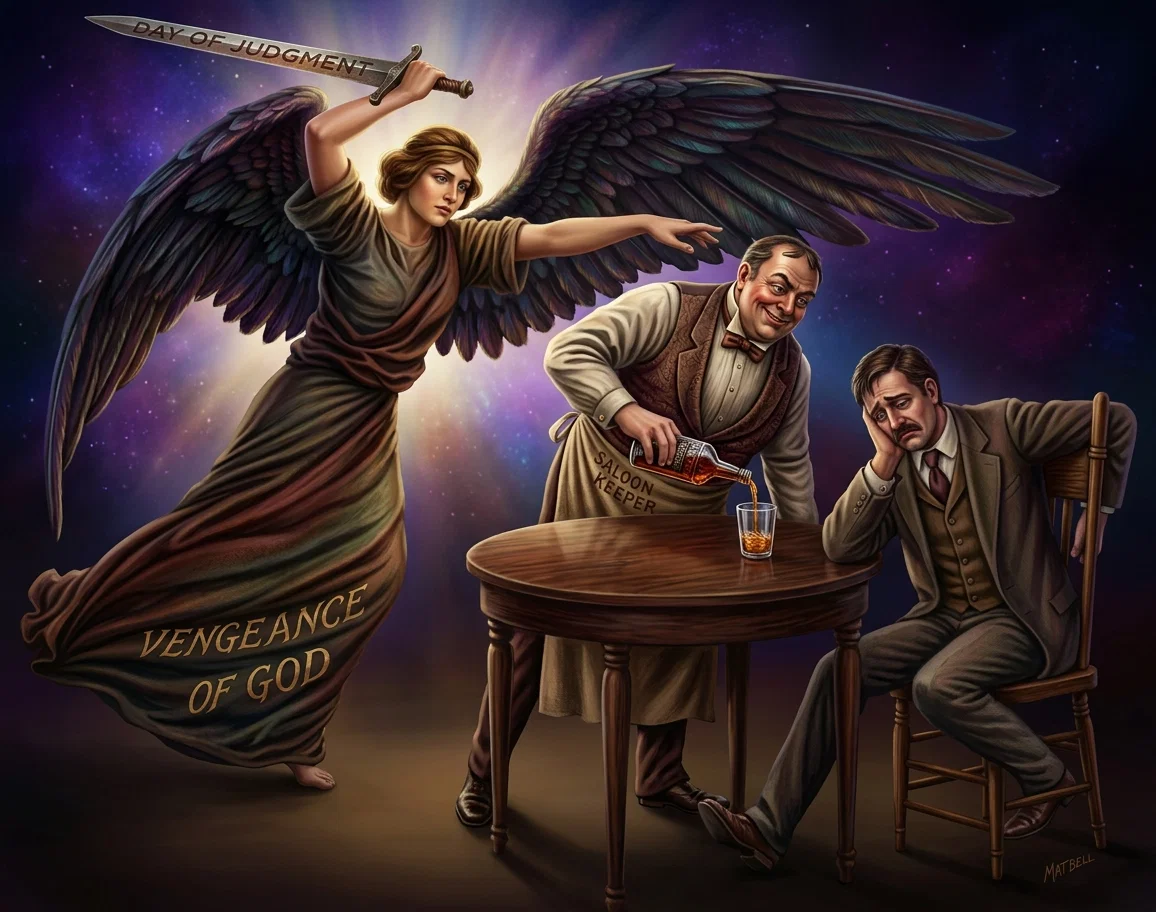
WOE UNTO HIM THAT GIVETH HIS NEIGHBOR DRINK
11. What high purpose should control our habits of life? “Whether therefore ye eat, or drink, or whatsoever ye do, do all to the glory of God.” 1 Cor. 10: 31.

Christian Temperance

12. Concerning what did Paul reason before Felix? “He reasoned of righteousness, temperance, and judgment to come.” Acts 24: 25.
13. Of what is temperance a fruit? “The fruit of the Spirit is love, joy, peace, long-suffering, gentleness, goodness, faith, meekness, temperance.” Gal. 5: 22, 23. NOTE.—“Temperance puts wood on the fire, meal in the barrel, flour in the tub, money in the purse, credit in the country, contentment in the house, clothes on the back, and vigor in the body.”—Benjamin Franklin.
14. Where in Christian growth and experience is temperance placed by the apostle Peter? “Add to your faith virtue; and to virtue knowledge; and to knowledge temperance; and to temperance patience; and to patience godliness; and to godliness brotherly kindness; and to brotherly kindness charity.” 2 Peter 1: 5-7. NOTE.—Temperance is rightly placed here as to order. Knowledge is a prerequisite to temperance, and temperance to patience. It is very difficult for an intemperate person to be patient.
15. What is said of those who strive for the mastery? “Every man that striveth for the mastery is temperate in all things.” 1 Cor. 9: 25.
16. In running the Christian race, what did Paul say he did? “I keep under my body, and bring it into subjection; lest that by any means, when I have preached to others, I myself should be a castaway.” Verse 27.
17. Why are kings and rulers admonished to be temperate? “It is not for kings to drink wine; nor for princes strong drink; lest they drink, and forget the law, and pervert the judgment of any of the afflicted.” Prov. 31: 4, 5.
18. Why were priests forbidden to use intoxicating drink while engaged in the sanctuary service? “The Lord spake unto Aaron, saying, Do not drink wine nor strong drink, thou, nor thy sons with thee, when ye go into the tabernacle, . . . that ye may put difference between holy and unholy, and between unclean and clean.” Lev. 10: 8-10.
19. Why is indulgence in strong drink dangerous? “Be not drunk with wine, wherein is excess; but be filled with the Spirit.” Eph. 5: 18. NOTE.—The danger in the indulgence of stimulating foods and drinks is that they create an unnatural appetite and thirst, thus leading to excess. Both food and drink should be nourishing and nonstimulating.
20. For what should men eat and drink? “Blessed art thou, O land, when thy king is the son of nobles, and thy princes eat in due season, for strength, and not for drunkenness!” Eccl. 10: 17.
21. What warning is given against leading others into intemperance? “Woe unto him that giveth his neighbor drink, that puttest thy bottle to him, and makest him drunk.” Hab. 2: 15.
22. What kind of professed Christians are not fellowshiped? “I have written unto you not to keep company, if any man that is called a brother be a fornicator, or covetous, or an idolater, or a railer, or a drunkard.” 1 Cor. 5: 11.
23. Can drunkards enter the kingdom of God? “Neither fornicators, nor idolaters, nor thieves, nor covetous, nor drunkards, nor revilers, nor extortioners, shall inherit the kingdom of God.” 1 Cor. 6: 9, 10. See Rev. 21: 27.

The Evils of Intemperance

24. What do the Scriptures say of wine? “Wine is a mocker, strong drink is raging; and whosoever is deceived thereby is not wise.” Prov. 20: 1. NOTE.—All intoxicating drinks are deceptive. They seem to give strength, but in reality cause weakness; they seem to create heat, but in fact lower the general temperature; they seem to impart vitality, but really destroy life; they seem to promote happiness, but cause the greatest unhappiness and misery. To intemperance may be attributed much of the world’s sorrow.
25. What is one of the evil results of intemperance? “Be not among winebibbers; among riotous eaters of flesh: for the drunkard and the glutton shall come to poverty.” Prov. 23: 20, 21.
26. What are other evil effects of intemperance? “Whoredom and wine and new wine take away the heart.” Hosea 4: 11. “They also have erred through wine, and through strong drink are out of the way; . . . they err in vision, they stumble in judgment.” Isa. 28: 7. NOTE.—“One of the subtlest effects of this many-sided drug is to produce a craving for itself, while weakening the will that could resist the craving.”—“Alcohol,” by Dr. Williams, p. 48.
27. With what sins is drunkenness classed? “Adultery, fornication, uncleanness, lasciviousness, idolatry, witchcraft, hatred, variance, emulations, wrath, strife, seditions, heresies, envyings, murders, drunkenness, revellings, and such like.” Gal. 5: 19-21.
28. What are common accompaniments of intemperance? “Who hath woe? who hath sorrow? who hath contentions? who hath babbling? who hath wounds without cause? who hath redness of eyes? They that tarry long at the wine; they that go to seek mixed wine.” Prov. 23: 29, 30.
29. How do intoxicants serve one in the end? “Look not thou upon the wine when it is red, when it giveth his color in the cup, when it moveth itself aright. At the last it biteth like a serpent, and stingeth like an adder.” Verses 31, 32.
30. What admonition against intemperance did Christ give that is especially applicable at the present time? “Take heed to yourselves, lest at any time your hearts be overcharged with surfeiting, and drunkenness, and cares of this life, and so that day come upon you unawares.” Luke 21: 34.

True Temperance Reform

31. What was the original food provided for man? “God said, Behold, I have given you every herb bearing seed, which is upon the face of all the earth, and every tree, in the which is the fruit of a tree yielding seed; to you it shall be for meat.” Gen. 1: 29. NOTE.—In other words, vegetables, grains, fruits, and nuts.
32. After the flood what other food was granted as permissible? “Every moving thing that liveth shall be meat for you; even as the green herb have I given you all things.” Gen. 9: 3. NOTE.—From this it is evident that flesh food was not included in the original diet provided for man, but that on account of the changed conditions resulting from the fall and the flood, its use was permitted.
33. When God chose Israel for his people, what kinds of flesh food were excluded from their diet? Those called unclean. See Leviticus 11 and Deuteronomy 14.
34. What special food did God provide for the children of Israel during their forty years’ wandering in the wilderness? “Then said the Lord unto Moses, Behold, I will rain bread from heaven for you.” “And the children of Israel did eat manna forty years, until they came to a land inhabited.” Ex. 16: 4, 35.
35. At the same time what did God promise to do for them? “I will take sickness away from the midst of thee.” Ex. 23: 25.
36. What testimony does the psalmist bear regarding their physical condition? “There was not one feeble person among their tribes.” Ps. 105: 37. NOTE.—When they complained at God’s dealings with them, and longed for the food of Egypt, God gave them their desires, but sent “leanness into their soul.” See Numbers 11; Ps. 105: 13-15; 1 Cor. 10: 6. Like many today, they were not content with a simple but wholesome and nourishing diet.
37. Where, above all, should true temperance reform begin? In the home.
NOTE.—Unless fathers and mothers practice temperance, they cannot expect their children to do so.
38. What classes of men especially should be strictly temperate? “Be thou an example of the believers.” 1 Tim. 4: 12. NOTE.—Of all men in the world, ministers and physicians should lead strictly temperate lives. The welfare of society demands this of them, for their influence is constantly telling for or against moral reform and the improvement of society. By precept and example they can do much toward bringing about the much-needed reform.
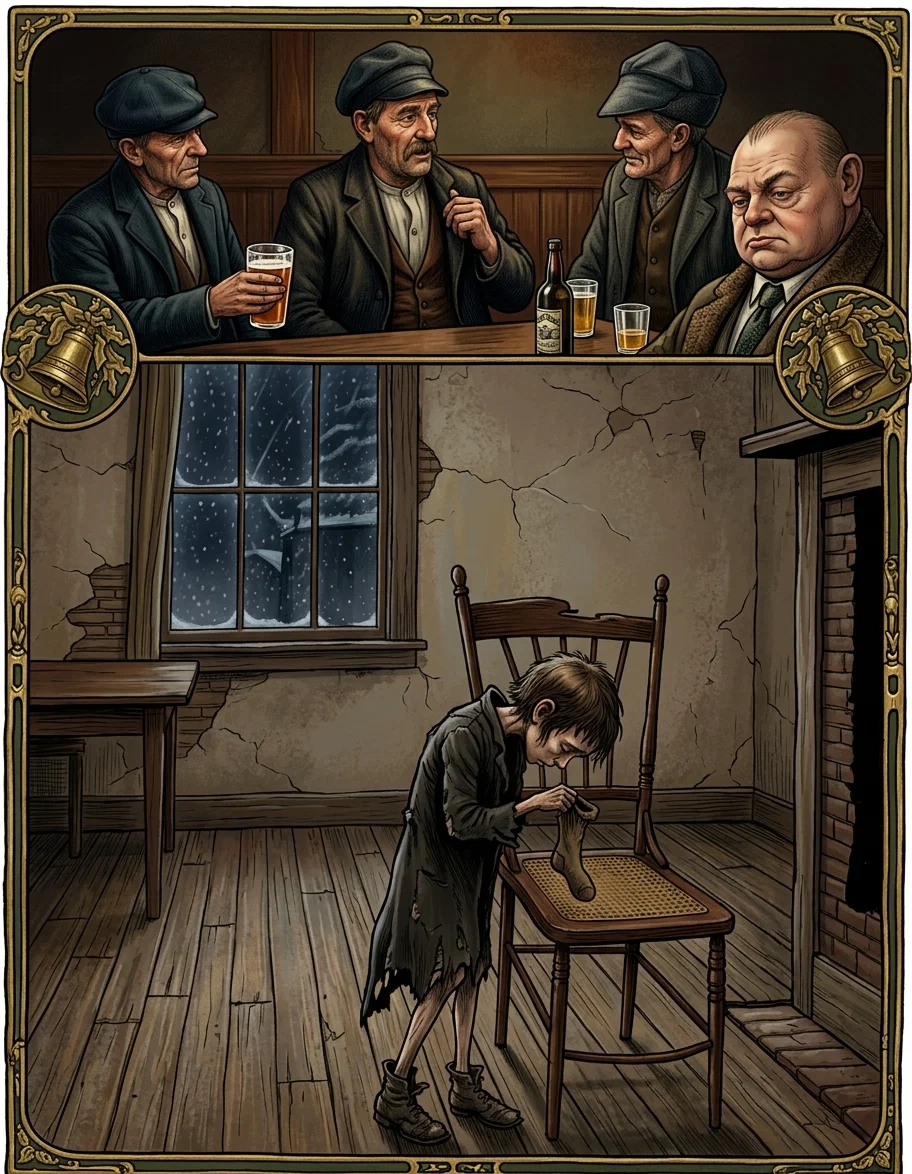
THE EMPTY STOCKING AND THE FULL FATHER
39. Can the fact that the liquor traffic brings in a large revenue to the state justify men in licensing it? “Woe to him that buildeth a town with blood, and stablisheth a city by iniquity.” Hab. 2: 12. NOTE.—In all the walks and relationships of life, whether in the home, the medical profession, the pulpit, or the legislative assembly, men should stand for temperance. To license the liquor traffic is to legalize and foster it. It cannot exist nor thrive without the patronage of each rising generation, a large number of whom it must necessarily ruin, body, soul, and spirit. For the state to receive money from such a source, therefore, must be highly reprehensible. The practice has fittingly been likened to a father catching sharks, and baiting his hook with his own children. ✦ ✦ ✦

The Origin of Tobacco Using

Tobacco using originated with the natives of North America, the Indians. In November, 1492, when Columbus discovered the island of Cuba, he sent two sailors to explore it, who, when they returned, reported, among other strange and curious discoveries, that the natives carried with them lighted firebrands, and puffed smoke from their mouths and noses, which they supposed to be the way the savages had of perfuming themselves. They afterward declared that they “saw the naked savages twist large leaves together, and smoke like devils.” Originating with the wild barbarians of America, the smoking habit, after some years, was introduced into Europe, and was rapidly adopted, not only by the lower classes, but by those in high authority, even princes and nobles participating in the new intoxication. It has since become well-nigh universal.

The Injurious Effects of Tobacco

TOBACCO is the most subtle poison known to chemists, except the deadly prussic acid.—M. Orfila, professor of medical jurisprudence and toxicology in the Faculty of Medicine in Paris in 1919.
Tobacco is ruinous in our schools and colleges, dwarfing body and mind.—Dr. Willard Parker.
I shall not hesitate to pronounce tobacco in young men to be evil, and only evil, physically, mentally, and morally.—Edward Hitchcock, of Amherst College.
The use of intoxicating liquor by men, and the use of cigarettes by boys, is creating a race of feeble-minded, unhealthy, and valueless citizens.—John Wanamaker.
We might as well go to the insane asylum for our men as to employ cigarette smokers.—The late E. H. Harriman, railroad magnate.
Cigarettes are ruining our children, endangering their lives, dwarfing their intellects, and making them criminals, fast. The boys who use them seem to lose all sense of right, decency, and righteousness.—Judge Crane, of New York City.
Cigarette smoking in the case of boys partly paralyzes the nerve cells at the base of the brain, and this interferes with the breathing and heart action. The end organs of the motor nerves lose their excitability, next the trunks of the nerves, and then the spinal cord. . . . The power of fine coordination is decidedly lost.—Prof. Sims Woodhead of Cambridge University.
The use of cigarettes affects the nervous system, weakens the will-power, and destroys the ability of the boy to resist temptation; and because of this he easily falls a victim of those habits which not only destroy the mind and soul, but irresistibly lead him into a violation of the laws of the state.

The Evil Effects of Alcohol

On the Individual. Alcoholic liquors, whether fermented, brewed, or distilled, are poisonous, increasing greatly the liability to fatal termination of diseases, weakening and deranging the intellect, polluting the affections, hardening the heart, and corrupting the morals, “bequeathing to posterity” a degeneration of physical and moral character.
On the Family. A disturber and destroyer of its peace, prosperity, and happiness, and thus removing the sure foundation for good government, national prosperity, and welfare.
On the Community. Producing demoralization, vice, and wickedness, counteracting the efficacy of religious efforts and of all means for the intellectual elevation, moral purity, social happiness, and eternal good of mankind.
On the State. Promoting crime and pauperism, paralyzing thrift and industry, corrupting politics, legislation, and the execution of laws.—American Prohibition Year Book for 1912, pp. 26, 27.

The World's Curse

The Testimony of Eminent Men

Grape juice has killed more people than grapeshot.—Spurgeon.
O that men should put an enemy in their mouths, to steal away their brains.—Shakespeare.
In every community three things always work together,—the grogshop, the jail, and the gallows,—an infernal trinity.—Henry Ward Beecher.
Give me a sober population, not wasting their earnings in strong drink, and I will know where to get my revenue.—William E. Gladstone.
I have looked into a thousand homes of the working people of Europe; I do not know how many in this country. In every case, as far as my observation goes, drunkenness was at the bottom of the misery.—Carroll D. Wright, former Commissioner of Labor, U. S. A.
The liquor traffic is a hydra-headed monster, which, with ceaseless and tireless energy, wastes the substance of the poor, manufactures burdensome taxes for the public, monopolizes the time of courts, fills the jails and penitentiaries and asylums, terrorizes helpless women and children, and mocks the law.—Gen. Nelson A. Miles.
I have no sympathy with the statement, so often made, that the manufacture and sale of liquor has contributed to the industrial development of the nation. On the contrary, I believe that liquor has contributed more to the moral, intellectual, and material deterioration of the people, and has brought more misery to defenseless women and children, than has any other agency in the history of mankind.—John Mitchell, vice president American Federation of Labor.
The saloon is the mortal enemy of peace and order, the despoiler of man and the terror of women, the cloud that shadows the face of children, the demon that has dug more graves and sent more souls unshriven to judgment than all the plagues that have wasted life since the plagues of Egypt, or all the wars since Joshua stood before Jericho.—Henry W. Grady.

Comparative Annual Cost of Liquor and Other Things in the United States

Intoxicating liquor ........................ $1,752,000,000 Tobacco .................................... $1,200,000,000 Iron and steel ............................. $1,035,000,000 Jewelry and plate .......................... $800,000,000 Printing and publishing .................... $750,000,000 Lumber ...................................... $700,000,000 Cotton goods ............................... $675,000,000 Automobiles ................................ $500,000,000 Woolen and worsted goods ................... $475,000,000 Flour ....................................... $455,000,000 Boots and shoes ............................. $450,000,000 Panama Canal ................................ $400,000,000 Public education ............................ $371,000,000 Sugar and molasses .......................... $310,000,000 Furniture ................................... $245,000,000 Silk goods ................................... $240,000,000 Potatoes ..................................... $210,000,000 Confectionery ................................ $200,000,000 Church and home work ........................ $175,000,000 Soft drinks .................................. $120,000,000 Tea and coffee .............................. $100,000,000 Brick ........................................ $100,000,000 Millinery .................................... $90,000,000 Patent medicine .............................. $80,000,000 Chewing gum .................................. $13,000,000 Foreign missions ............................. $12,000,000
The total consumption of alcoholic liquors in the United States for forty-two years (1870-1911) was 43,611,000,554 gallons.
The drink bill of the United States for 1911 was estimated at $1,833,653,425, or nearly twice the national debt.
The number of liquor dealers in the United States in 1910 was 255,765, or over a quarter of a million.
The capital invested in the manufacture of liquor in the United States in 1850 was less than $10,000,000. In 1910, sixty years later, it had increased to over $770,000,000, or more than 7,700 per cent.
The total internal revenue received by the United States for liquor for forty-nine years, or from 1855 to 1911, was $5,245,916,047.01.
The use of whisky, beer, cigars, and cigarettes in the United States increased enormously in 1912. During the three months of July, August, and September of this year alone, 33,150,000 gallons of whisky were used, an increase of 450,000 gallons over the corresponding period of the previous year; 18,800,000 barrels of beer were drunk, an increase of 320,000 barrels over the same month of 1911; 1,950,000,000 cigars were smoked, a record consumption; and more than 3,800,000,000 cigarettes were consumed, an increase of 1,000,000,000 over the same period of the previous year.

What a Barrel of Whiskey Contains

A barrel of headaches, of heartaches, of woes; A barrel of curses, a barrel of blows; A barrel of sorrow for a loving, weary wife; A barrel of care, a barrel of strife; A barrel of unavailing regret; A barrel of cares, a barrel of debt; A barrel of hunger, of poison, of pain; A barrel of hopes all blasted and vain; A barrel of poverty, ruin, and blight; A barrel of tears that run in the night; A barrel of crime, a barrel of groans; A barrel of orphans' most pitiful moans; A barrel of serpents that hiss as they pass, That glow from the liquor in the head of the glass; A barrel of falsehoods; a barrel of cries That fall from the maniac's lips as he dies!

MINISTRY OF HEALING

A vast fund of information on life and its laws, health and its requisites, disease and its remedies, written in clear, simple language.
The book is arranged in eight sections, as follows:—
The True Medical Missionary The Work of the Physician Medical Missionaries and Their Work The Care of the Sick Health Principles The House The Essential Knowledge The Worker's Need
Beautifully Illustrated. 541 pages.
Cloth ........................................ $1.50 Red Leather, Flexible ......................... 2.00

Gallons of Liquor Consumed Annually in Different Countries

Country WINE BEER SPIRITS
Australia 7,925,000 47,976,000 3,297,000
Austria-Hungary 192,800,000 545,674,043 120,000,000
Belgium 8,948,200 395,285,258 9,895,000
Bulgaria 20,100,000 946,000 770,000
Denmark 63,213,000 4,000,000
Dominion of Canada 1,386,235 39,896,636 6,054,790
France 1,710,900,000 289,103,000 97,177,968
German Empire 79,600,000 1,782,778,000 124,313,300
Holland 1,980,000 9,328,000
Italy 856,520,000 6,725,000 11,150,400
New Zealand 126,000 7,381,000 602,000
Newfoundland 7,200 312,000 364,000
Norway 8,756,000 1,672,000
Portugal 108,320,000
Roumania 52,840,000 1,320,000 6,996,000
Russian Empire 76,620,000 151,633,892 232,813,382
Serbia 6,605,000
Spain 428,000,000 20,000,000
Sweden 898,200 44,440,000 10,730,500
Switzerland 22,190,000 45,452,000
United Kingdom 26,349,873 1,021,123,632 38,133,721
United States 62,000,000 1,851,342,256 133,538,684
Total 3,673,115,708 6,323,357,717 810,836,745
Grand total, 10,807,310,170 gallons.—American Prohibition Year Book, 1918.

You have reached the end of this edition.

Review and Herald · Jul 10, 1916