Your ShelfYour Projects

Signs of the Times, Vol. 24, No. 2.

THE MAN OF SORROWS

Signs of the Times

Jan 13, 1898

Pacific Press Publishing Company · Oakland, California · Jan 13, 1898

THE MAN OF SORROWS.
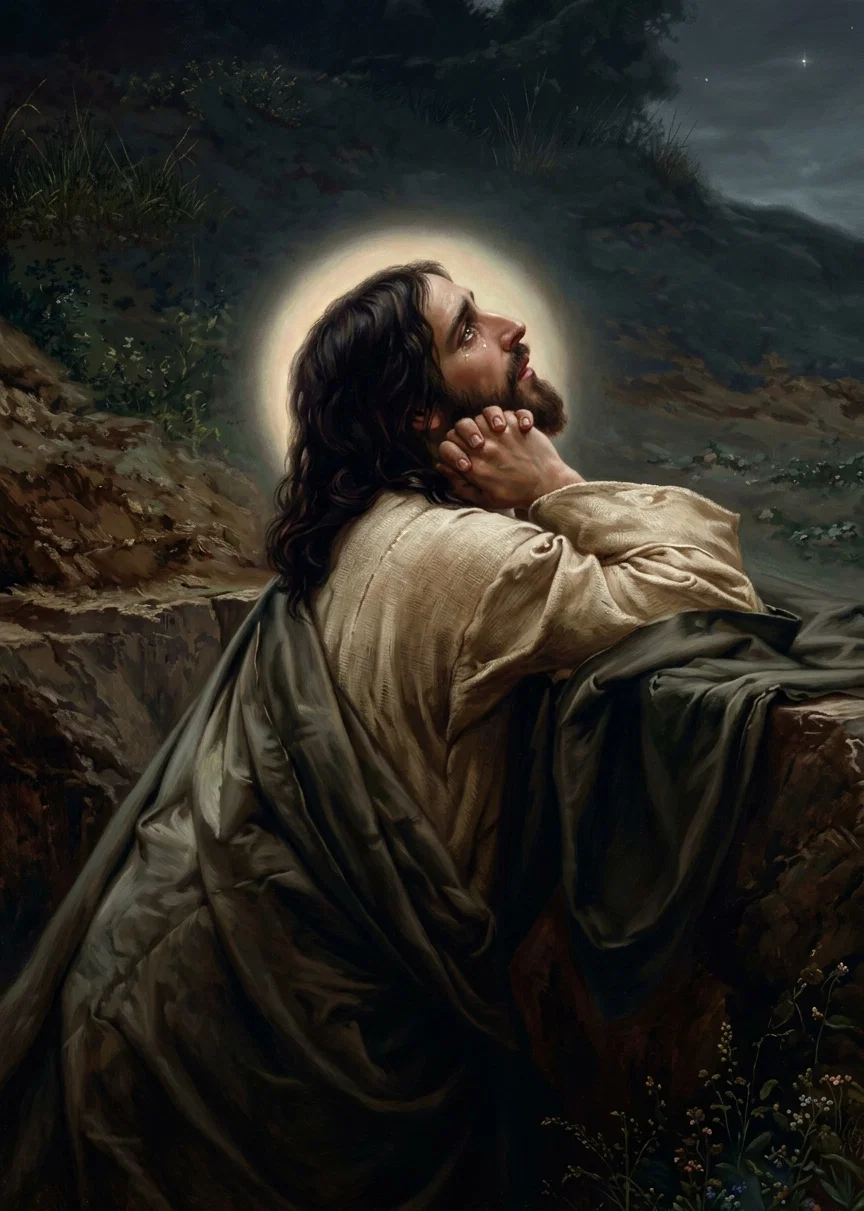
With exultant joy we contemplate the life of God made manifest in the flesh. We see how the Redeemer came to earth, bringing good gifts to man,—healing, light, love, and tenderest compassion, the promise of eternal life, and joy in His presence forevermore. Do all these tender proffers of infinite love awaken an answering response in the soul of man? We look to see the divine Benefactor enshrined in all hearts, loved above all others. How sadly then do we turn the page of Inspiration and contemplate the closing chapters of this sacred life on earth!
Jesus, the Way, the Truth, the Life, “who gave Himself for us;” who “offered up prayers and supplications with strong crying and tears unto Him that was able to save,” who was wounded for our transgressions, “that He might redeem us from all iniquity, and purify unto Himself a peculiar people, zealous of good works.”
Our Saviour was “a Man of sorrows, and acquainted with grief.” Isa. 53:3. We fail to comprehend the love which impelled the Saviour to leave the shining courts of heaven and to abide in this sin-cursed earth for the sinner’s salvation; neither can we measure the grief that oppressed His loving heart when “He came unto His own, and His own received Him not.” John 1:11.
Into the brief three years of our Lord’s public ministry were crowded the sorrows of the whole world. He passed from city to city throughout the land of Israel, healing, teaching, and preaching. He had no abiding-place, no home. His shelter seemed to Him even more precarious than that of the dumb creatures: “Foxes have holes, and birds of the air have nests, but the Son of man hath not where to lay His head.” Luke 9:58. He was forsaken by friends, and persecuted by enemies who constantly sought to catch some word out of His mouth whereby they might accuse and put Him to death. And yet the tears of the Man of sorrows were not shed for self. Those compassionate drops at the grave of Lazarus bespoke not alone His personal loss of a friend, nor sympathy for only the sisters at Bethany; they were for all the heart-broken mourners of earth who have laid their loved ones low beneath the sod to await the Archangel’s trump. Lonely one, bereaved and desolate, “Jesus wept” for you. He wept over the holy city, and the blind infatuation of His own people: “O Jerusalem, Jerusalem, thou that killest the prophets, and stonest them which are sent unto thee, how often would I have gathered thy children together, even as a hen gathered her chickens under her wings, and ye would not!” Matt. 23:37. “If thou hadst known, even thou, at least in this thy day, the things which belong unto thy peace! but now they are hid from thine eyes.” Luke 14:42. Even when toiling under the weight of the cross up the ascent of Calvary the pitiful women bewailed and lamented Him, He, ever forgetful of self, looked forward to the terrible judgments so soon to be poured out upon the Jewish nation, and exclaimed, “Daughters of Jerusalem, weep not for Me, but weep for yourselves, and for your children.” Luke 23:28.
Behold the Man of sorrows on the bleak mountain-side, the starry heavens his only canopy; there through the cold, dark night He prayed for you and for me, and through His intercession our poor petitions are accepted at the throne of grace. Behold Him in the Garden of Gethsemane bowing beneath the olive shade! There He bore the sins of a guilty world, and in His dreadful agony the life-blood oozed from each pore and fell in crimson drops to the ground. His soul was “exceeding sorrowful;” He seemed about to die, and, falling prostrate, He prayed, “O My Father, if it be possible, let this cup pass from Me!” and yet, with most complete submission to the Father’s will, He adds, “Nevertheless, not as I will, but as Thou wilt” (Matt. 26:39); and an angel was sent from heaven to strengthen Him for the final conflict. How truly spake the prophet Isaiah: “Surely He hath borne our griefs and carried our sorrows.” “The chastisement of our peace was upon Him; and with His stripes we are healed.” Isa. 53:4, 5. Every line in this dark, prophetic page met its exact fulfilment. Pontius Pilate, the Roman governor, “marveled greatly” when Jesus answered not one word to the malignant accusations of the chief priests and elders, but centuries before it was written, “He is brought as a lamb to the slaughter, and as a sheep before her shearers is dumb, so He opened not His mouth.” Isa. 53:7. The mock trial, the crown of thorns, the cruel scourging, the shameful cross, the bitter draught, the wounded side, all went to fulfil the prophetic Word, even to the parting of His garments, and the raffle for the seamless robe. Luke 23:34. Two notorious thieves were crucified one oneither side that He might be “numbered with the transgressors” and the dying prayer for those who crucified Him, “Father, forgive them; for they know not what they do,” was but the fulfilling of Isaiah’s words, He “made intercession for the transgressors.” Isa. 53:12; Luke 23:34.
In the words of another: “Our Lord was unjustly condemned; He was hurried from tribunal to tribunal by night; a Herod mocked Him, saying, ‘He called Himself a King; let Him save Himself.’ They put on Him an old purple robe of scorn, and crowned Him with a crown of thorns. They even spat in the face of the Lord of glory, He whom angels delighted to honor. . . . Then they placed on Him the heavy cross, and He fainted beneath the burden. Afterward they drove the nails into His hands and feet, and, lifting the cross, it fell with a thud into its place, and the Saviour of man hung between earth and heaven.”
The jeering multitude passed by, railing and “wagging their heads,” and saying, “If Thou be the Son of God, come down from the cross,” and “we will believe.” Matt. 27:40, 46. Then came the last bitter hour, when, in the sinner’s place, He suffered the sense of God’s displeasure. Even the Father’s presence was hidden from Him, and an agonizing cry rent the air, “My God, My God, why hast Thou forsaken Me?” Matt. 27:46. All was now finished, and, commending His spirit to God, the blessed Saviour died, not from the usual pangs of crucifixion, but literally of a broken heart. Then the rich Joseph of Arimathea, who had worshiped Jesus in secret, came boldly and begged the body and laid it in his own new tomb, which was hewn out of a rock, and “he rolled a great stone to the door of the sepulcher and departed.” Matt. 27:60.
Was this costly sacrifice needed? God is omnipotent; could He not save the sinners without shedding the blood of the gentle Jesus? Yes, it was necessary; the Son of God alone could satisfy the demands of the law. “Neither is there salvation in any other; for there is none other name under heaven given among men, whereby we must be saved.” Acts 4:12.
“The Father loveth the Son” (John 5:20), but He also loves the sinner. He accepts the costly sacrifice in man’s behalf, and Jesus Christ becomes the sinner’s only atonement. “He that believeth on the Son hath everlasting life; and he that believeth not the Son, shall not see life, but the wrath of God abideth on him forever.” John 3:36.
“A Pilgrim through this lonely world, The blessed Saviour passed; A Mourner all His life was He, A dying Lamb at last.”
AUGUSTA W. HEALD.

WHAT WILL YOU SAY THEN?

WHILE Hopu, a young Sandwich islander, was in this country, he spent an evening in a company where an infidel lawyer tried to puzzle him with difficult questions. At length Hopu said: “I am a poor heathen boy. It is not strange that my blunders in English should amuse you. But soon there will be a larger meeting than this. We shall all be there. They will ask us all one question, namely, ‘Do you love the Lord Jesus Christ?’ Now, sir, I think I can say, ‘Yes.’ What will you say, sir?”
When he ceased speaking, all present were silent. At length the lawyer said that as the evening was far gone, they would better conclude it with prayer, and proposed that the native should pray. He did so; and as he poured out his heart to God, the lawyer could not conceal his feelings. Tears came to his with eyes, and he sobbed aloud. All present wept; and when they separated, the words, “What will you say, sir?” followed the lawyer home, and did not leave him till they brought him to the Saviour.—Selected.

THE WAY, THE TRUTH, AND THE LIFE. No. 2.

In the announcement, “I am the Way, the Truth, and the Life,” Christ by no means pointed His disciples to a new way. Since the days of Adam, the Lord has had His representatives, men who have kept alive the influences imparted to them from heaven. Since the first Gospel sermon was preached, when in Eden it was declared that the seed of the woman should bruise the serpent’s head, Christ has been uplifted as the Way, the Truth, and the Life. The same Christ that is at work to-day among all classes of people, was at work in the days when Adam lived, when Abel died by the hand of his brother because he presented to God the blood of the slain lamb, representing the blood of Christ. Abel’s faithful adherence to God’s commands in bringing a lamb as his sacrifice, offended Cain. He had another way, and this way he wanted Abel to follow, instead of following the way of the Lord. Abel would not yield God’s way for the way of his brother, and he was murdered. But tho dead, Abel yet speaks.
Enoch was one of God’s representatives. During his life on earth he walked with God, and God took him to heaven without seeing death. Enoch prophesied of the great event which is the consummation of all things earthly,—the second coming of Christ. Noah’s persevering righteousness and faith made him a representative man. The deep, earnest fidelity of Abraham caused him to be called by God “the father of the faithful.” For his self-sacrificing zeal Moses received the testimony that he was the meekest and most humble of all the human family. These were characters illustrious for spirituality and moral excellence.
In every age Christ has been the Way, the Truth, and the Life. He was the Originator and foundation of the Jewish economy. In the pillar of cloud He guided the children of Israel in their wanderings. Everything was adjusted and arranged by the hand of Divinity. And all the knowledge that came direct from God to them, all the power and glory of that ancient economy, had been poured into the treasury of the Christian church. Nothing has been lost. The accumulated light of generations is given to the church of to-day, not to be hoarded; but to be circulated. Messengers are to be sent to every part of the earth, proclaiming Christ, the Way, the Truth, and the Life.
The earthly temple is no more. Its mysterious veil has been rent asunder; its sacred vessels have been demolished, and the Jewish people are scattered to every part of the world. But the judgments that fell on that nation are a symbol of those that will fall on all who, like Jerusalem, know not the time of their visitation. Let not man mock the ancient Jewish economy, of which Christ was the Originator, and the One to whom the types and shadows pointed. In these types and shadows is revealed the everlasting Gospel.
The idea that the Old Testament no longer possesses vital interest because the New Testament has been written, is an idea fatal to the soul of him who believes it. Both the Old Testament and the New are necessary. The New Testament does not contain another Gospel, a new religion. It is but the unfolding of the Old. The past ages are of peculiar value to us; and those who are ignorant of the Scriptures, and of the power of God as manifest in the history of His people, understand but dimly the manner of His working.
In the Scriptures the past is brought down to our time. The Word of God offers us the treasures of inspired wisdom that have been accumulating from age to age. Before us are examples of piety and devotion. The lives of these men have been placed on record, not to exalt them, but to make us wise unto salvation, to show us the errors and mistakes of good men, and to lead us to imitate their virtues. Let those who talk of the patriarchal and prophetic age as a Christless age, read their Bibles with humble heart, praying for power to follow the example of holy men of God.
Christ was the way by which patriarchs and prophets were saved, and to pour contempt upon this way is to pour contempt upon Christ, enshrouded in the pillar of cloud, and giving directions to Moses to be given to the children of Israel. There was plenty of light in the old way to lead every soul to the abodes of bliss.
The prophets of God spoke less for their own time than for the ages to come, and especially for the generation that would live amid the last scenes of this earth’s history. “Not unto themselves but unto us they did minister the things which are now reported unto you by them that have preached the Gospel unto you with the Holy Ghost sent down from heaven, which things the angels desire to look into.” “All these things happened unto them for ensamples, and they are written for our admonition, upon whom the ends of the world are come.” The prophets and apostles meet and unite their witness, testifying of the sufferings of Christ, and the glory that should follow. The wonderful events in the history of the children of Israel are not to be lost sight of or ignored because of the lapse of time. They are jewels of truth that have been placed in false settings. Christ came to redeem them from error, and to reset them in the framework of truth, that they might shine in their native purity and attractive loveliness. By Him they have been made to give forth a brighter and more powerful luster than ever before.
The patriarchs and prophets were representative men, and through them, from century to century, a flood of knowledge was poured into the world. Adam, repentant and converted, was a Christian; Abel was a Christian; Enoch was a Christian; Noah was a Christian; Abraham was a Christian. In types and symbols the Gospel was revealed to those of former dispensations. The Old Testament Scriptures show us the power possessed by those who looked to Christ. The glorious beams of continually-increasing light are all concentrated in our time. All testify of Christ, “the Way, the Truth, and the Life.” But never was this truth so clearly defined as in Christ’s answer to the words, “Lord, we know not whither Thou goest, and how can we know the way.” Christ is revealed to us in His first advent. We see Him sacrificing riches, power, and glory for poverty, temptation, privation, and suffering.
Christ is indeed the Way, the Truth, and the Life. There are not many ways to heaven. Each one may not choose his own way. Christ says: “I am the Way. . . . No man cometh unto the Father but by Me.” Unless we are individually in this way, we can not reach the heavenly mansions. The question for each one to ask himself is, Am I following Christ because I know that He is the Way, the Truth, and the Life? Am I in the path that leads to perfect obedience? Those who walk in this way never lose their strength, but constantly receive new power for their heavenward march. MRS. E. G. WHITE.

THE POWER OF GOD’S WORD.

It was said by the prophet many hundred years ago, “All thy children shall be taught of the Lord.” Isa. 54:13. In quoting these words, the Saviour adds: “Every man therefore that hath heard, and hath learned of the Father, cometh unto Me.” John 6:45. Nearly all nations, however benighted spiritually, have some conception of an unseen God,—some first Great Cause,—but without the Bible in hand, all ideas of a deity are necessarily crude. To such, God is austere in the extreme, and maliciously disposed toward all, unless being constantly appeased by offerings. But of God as a loving Father, they know nothing. This is one of Satan’s lessons, which has been so completely stamped upon human minds that many, even, who bear the name of Christian have failed to see its falsity.
“When the fulness of time came, God sent forth His Son, born of a woman, born under the law, that He might redeem them which were under the law.” “And the Word was made flesh, and dwelt among us.” “And this is the name whereby He shall be called, Emmanuel, which being interpreted is, GOD WITH US.”
It is impossible for sinful man to look upon God, or even to exist in His immediate presence. When Moses asked to see the glory of Jehovah, the answer returned was, “Thou canst not see My face; for there shall no man see Me, and live.” Ex. 23:20. The glory of God’s holiness is a consuming fire which is destructive of whatever comes into its presence, if contaminated with sin. Heb. 12:29. Therefore the infinite love of God for the fallen race prevents Him from appearing in person to men; but He has provided a way by which His love and mercy may be known. “No man hath seen God at any time; the only-begotten Son, which is in the bosom of the Father, He hath declared Him.” John 1:18. Whoever, then, will learn of the Father must come to Christ, since it is He who has ever revealed God as He is, to men.
From all time God has manifested Himself to men through audible and visible methods which were adapted to the condition and needs of ignorant, erring mortals. Thus we are told: “In the beginning was the Word, and the Word was with God, and the Word was God.” John 1:1. The divine Word ever was, and constantly waited on Him whom it personated, as “one brought up with him.” Prov. 8:22–30. And inasmuch as that Word faithfully voiced the will of the Eternal, it revealed His character, hence was God.
This Word was brought to men by clothing itself in a body like that inhabited by man. “The Word was made flesh, and dwelt among us (and we beheld His glory, the glory as of the only-begotten of the Father), full of grace and truth.” John 1:14. Through this means alone could God freely reveal Himself to fallen man, and come in saving contact with him. But by veiling the glory of God within human flesh, and thus adapting it to man’s nature, He could be brought in touch with the power of its glory and not be overborne by it.
And so “God was manifest in the flesh.” I Tim. 3:16. The design of Christ’s appearance among men was to make known to them the true character of the knowledge of Jehovah, which had been lost through the degrading
influence of sin. His life of self-sacrifice in behalf of the sinner and the physically afflicted, revealed the pitying love of a Father as nothing else could. Through this means God spoke to man in tender tones, making His only-begotten Son, in very fact, the Word of God.
The sayings and doings of Christ were therefore made a comprehensive communication to man of God’s power to restore that which sin had taken from him. “The wages of sin is death.” Rom. 6:23. Man having fallen under the weight of sin, he has the sentence of death upon him. He therefore needs to be quickened, that is, have the sentence of death removed, that he may live forever, as originally
designed. The power of God alone can do this, through the voice of Him who is the divine Word. “It is the Spirit that quickeneth; the flesh profiteth nothing; the words that I speak unto you, they are spirit, and they are life.” John 6:63. These words of Christ are the whole story simply stated. The breathing of God’s Spirit by which His Word was given, remains in that Word, endowing it with life and energy; hence the Word becomes spirit and life to all who receive it. Christ Himself being the One who breathed God’s Word through the Bible writers (I Peter 1:9–11), it is therefore His life which the Word carries to the heart of every believer.
The reception of the Word in the heart not only removes the sentence of death, but changes the whole man for the better. “It is
in truth the Word of God, which effectually worketh also in you that believe.” I Thess. 2:13. To work “effectually” is to work out the proper effect in every one according to God’s will. The Word has power, therefore, to meet the necessity of every believer, however much the case of one may differ from that of another. But in the unbeliever, no beneficial result is wrought. All this reveals that the work done by the Word in each individual is according to some intelligent system.
That the Word of God does exert intelligent action in its operations, is clearly shown by the following: “The Word of God is quick, and powerful, and sharper than any two-edged sword, piercing even to the dividing asunder of
soul and spirit, and of the joints and marrow, and is a discerner of the thoughts and intents of the heart.” Heb. 4:12. The word “quick” in this text means living. Not only does the Spirit in the Word make it a living thing, but it also endows it with power, or energy to act as an intelligent searcher of men’s hearts. In this search it is represented as dividing apart the joints and marrow, evident reference being made to the ancient custom of dissecting for examination a creature intended for table use by a Hebrew family. It is said that the priest was not satisfied in his search for disease by simply opening the body of the animal, but that he also cut into, and critically examined, the joints and marrow, so careful was he to give his people no diseased flesh to eat. But the apostle carries the searching power of God’s Word far beyond this, so much so as to open, and to look into, the very soul and spirit of men, in order to discern the thoughts and intents of the heart. To discern a matter is to see and understand it. So the Word of God sees and understands every thought and motive of those who profess to be guided by it. Thus we find it an intelligent power, able to meet the peculiar needs of every individual.
This must of necessity be so, since no two have exactly the same needs. One requires one sort of an operation, and another calls for altogether another kind of work, in order to find relief. On one occasion, a woman with an infirmity of thirty-eight years’ standing, and who was
bowed helplessly together, applied to the Saviour for help. “When Jesus saw her, He called her to Him, and said to her, Woman, thou art loosed from thine infirmity; . . . and immediately she was made straight, and glorified God.” Luke 13:11–13. In this case the spoken Word operated intelligently to release the rigidity of the muscles, and to restore their lost functions.
On another occasion the work done was far different. Lazarus had died, and been four days in the grave. Jesus was sent for, and, standing before the tomb, called upon God to hear Him in behalf of the unfortunate. “And when He thus had spoken, He cried with a loud voice, Lazarus, come forth. And he that was dead came forth, bound hand and foot with graveclothes; and his face was bound
about with a napkin. Jesus said unto them, Loose him, and let him go.” John 11:43, 44. These two references are sufficient to illustrate the point in hand. In one, the body of a poor cripple was made instantly straight; in the other, life was given to the dead. These truly show that the Word of God has intelligent power to perform that whereunto He sends it. Isa. 55:11.
True, on both of these occasions, Jesus was personally present at the restorations. Another reference, however, reveals that the Word of God has ability to go a long distance from the point where it is spoken, and there perform its allotted work. A nobleman, whose son lay sick at Capernaum, went to Cana of Galilee, twenty miles distant, pleading with the Saviour to return with him, to heal his son. After parleying awhile with the man, “Jesus saith unto him, Go thy way; thy son liveth.” John 4:50. Further record reveals that on the nobleman’s return to his home, he found his son restored to life and returning health. This shows that distance is no impediment to the operations of God’s Word.
It is therefore plain that a mandate or promise issued in heaven is just as effective on the earth as tho the Lord were personally present to enforce it. His word is His power, which He has given to represent Himself among men, and which is therefore freighted with His life,—the Holy Spirit. Speaking of those who have, by misuse of their bodies, brought deadly disease upon themselves, the psalmist exclaims: “Fools, because of their transgression, and because of their iniquities, are afflicted. Their soul abhorreth all manner of meat; and they draw nigh unto the gates of death. Then they cry unto the Lord in their trouble, and He saveth them out of their distresses. He sent His Word, and healed them, and delivered them from their destructions.” Ps. 107:17–20.
After thus contemplating the flight of God’s Word to the rescue of those in need, the sacred writer pleadingly says, “O that men would praise the Lord for His goodness, and for His wonderful works to the children of men!” And let all the people say, Amen.
JOHN ORR.

UNBELIEF—FAITH

One can not read the accounts in the book of Acts of the way the truths of the Gospel were proclaimed by the apostles without being particularly impressed with the great difference with which those truths were treated. On the day of Pentecost, when the Gospel work, energized by the power of the Holy Spirit, opened so auspiciously, the effect produced upon those who listened to the preaching of the apostles was so different that it seems astonishing. While some “were pricked in their heart, and said unto Peter and to the rest of the apostles, Men and brethren, what shall we do?” “others mocking said, These men are full of new wine.” A drunken man can not speak his native language intelligently, and yet men speaking many languages intelligently, were jeered as drunken!
When men reject such evidences of the powers of the Holy Spirit, is it any wonder that we find them a little later stoning Stephen, persecuting Peter, and clamoring for the blood of Paul? While the believers grew in grace, these rejecters of the mercy and love of God increased in wickedness until they filled up the cup of their iniquity, and their destruction followed.
Follow the apostles through their journeys in Gentile lands, and you will notice similar experiences, both among Jews and Gentiles. Some believed the Word spoken, others rejected, “contradicting and blaspheming.”
The unbelieving, whether Jews or Gentiles, were not satisfied with the evidences presented by the apostles that Jesus was the Christ—the Saviour of the world. Paul describes the way that different persons treated the Gospel in the following words: “For the Jews require a sign, and the Greeks seek after wisdom; but we preach Christ crucified, unto the Jews a stumbling-block, and unto the Greeks foolishness; but unto them which are called, both Jews and Greeks, Christ the power of God, and the wisdom of God.” 1 Cor. 1:22-24.
The Jews looked for signs. As a people, their whole history was marked with miracles which God had wrought in their behalf. They therefore looked for these things. They might have seen them in the signs that followed the believers, but unbelief has the power to hide anything, and they saw them not. The Greeks, unacquainted with revelation, sought by various systems of philosophy to account for all things. And when Jesus of Nazareth, of lowly birth, humble life, and ignominious death, was presented to them, they saw no form or comeliness in Him that they might desire Him.
By Christ the Jews might have mounted heavenward, but instead of stepping upon Him they stumbled over Him. The very means that God designed for their exaltation, became the occasion of their fall. “For they stumbled at that stumbling-stone; as it is written, Behold, I lay in Sion a stumbling-stone and rock of offense; and whosoever believeth on Him shall not be ashamed.” Rom. 9:32, 33. Had they believed, the stumbling-stone and rock of offense would have been to them another thing, even “Christ, the power of God and the wisdom of God.” The Greeks could have had the same experience. Had they received the truth of the Gospel, that there was one God and Father of all, that they had separated themselves from Him through sin, and that the Gospel of Christ was designed of God to lead them back to God and righteousness, Christ would have quickly taken the place of their philosophy, by which they knew not God. But so simple a way seemed to them to be but foolishness. It could not be reasoned out, and so they rejected it.
The fact that the Gospel was both received and rejected by different persons of the Jews and Gentiles evinces that it was not a national or constitutional bias that led them to do so. Had all the Jews believed and all the Gentiles disbelieved, or vice versa, then such a plea could be made. But it was far otherwise. Jews stumbled, Greeks cried foolishness and “babbler,” but those who received the Word, whether Jew or Greek, had a similar experience. They found Christ to be the “power of God, and the wisdom of God.” Power to save from sin; wisdom to direct in the ways of righteousness. They were settled and grounded: resting, trusting, and happy. The past was all cleared up, present duty was plain, and the future radiant with hope.
What did all this for Jew and Gentile?—Simple faith in the Gospel. To those who believe, Christ becomes “wisdom, and righteousness, and sanctification, and redemption.” These distinctive features of the Gospel ever go with it. While some still seek after signs or strive for wisdom, rejecting the light, wisdom, and power that God so freely gives in the Gospel, others believe and, believing, receive all that the Gospel offers. No theoretical acceptance, no mere assent of the mind that these things are so, will answer. The power of God and the wisdom of God do not wait upon such half-hearted acknowledgments. “If thou believest with all thine heart” (Acts 8:37) is still the only way that brings the blessing of God to the needy, thirsty, hungering soul. Unbelief still holds thousands in cruel bondage; but faith gives liberty and life to-day the same as in former days. Dear reader, have you received the Gospel? M. E. K.

THE INFINITY OF GOD'S HANDIWORK.

THERE isn't a brook in this wide, wide world, No matter how close you cut it, Nor a bird, nor a tree, nor a bumblebee, However you look upon it, Nor a single sprig of columbine, Or moss, or weed, or eglantine, Or a spike of purple clover, Or dread nightshade that God has made To deck the earth in glen or glade,— But the breath of God has fashioned it, As the Spirit speaketh in Holy Writ; And never a star His hands have hurled, And never a law His lips unfurled, Nor man, nor thing in this wide, wide world, Since the Godhead breathed and the universe wreathed In widening circles ’round,—
But each has grown from a mold of its own, Whether man, or beast, or boulder stone, And God is the fashioner, He alone, Whose thoughts are force, whose Word creates, Has found no place for duplicates.
More manifold are the thoughts of God Than the forms of the flowers our feet have trod, For the thing that is is God’s thought expressed, And who can think of a thought at rest? Or who would measure the mind of God By the narrow channel our thoughts have trod? The widest ken of the minds of men Is dwarfed and crooked and narrow, when We contemplate with humble mien The mighty Mind of the Great Unseen.
And who shall say that His thoughts must run In a bounded circle, and one by one As His thoughts are framed in forms more fair To people the earth, the sea, and air, That God, exhausted, stops thinking there? Or that He is bound as the years go by, And the seasons wane, and the flowers die, To summon again this earth’s array By thinking His thoughts of yesterday? Were such the case, then should we find That God had made us all of a kind; And that every pansy that drinks the dew And smiles to the sun and nods to you Its velvety cheeks of varied hue, Were the same old pansy that year by year Has bloomed and died but to reappear.
Canst thou measure the space of His dwelling-place Or check the stars in their fiery race Through age-enduring course? Or summon again earth’s buried men From sea and hill, from field and fen? If thou canst not, ’tis folly then To seek to fathom the fearful force In the thoughts that spring from that center Source.
’Tis enough to know—and this is true— That the God who thought and fashioned you And gave you a name to your nature true, Has made no soul from first to last In the mold where another had first been cast. To every being He names a name No other creature of His can claim.
That name is true to His thoughts of you And opens your soul to the angels’ view, How good or ill soe’er. There’s not a soul from pole to pole, Nor flower, nor bird, nor burrowing mole— Nor will there be while the ages roll— But God has given to each alone A form and a face that is all its own.
The narrow mind of the child of earth May question the wisdom, the plan, the worth Of this multifarious rule of birth, Since never a pea or a pansy-blow That the law of the Lord has caused to grow On His floral footstool here below, Is just like any other.
But He whose wisdom embraceth all, Who noteth every sparrow’s fall, And heedeth the humblest suppliant’s call, May one day even to us reveal The secrets hid ’neath His signet seal.
Content be thou, O child of the night, To grasp His hand and feel His might Till that glad day when eternal light Shall flood the universe through and through And open the wonders of God to you.
C. M. SNOW.
Oakland, Cal.
Continue reading: GOD’S LAW VERSUS HUMAN LAW