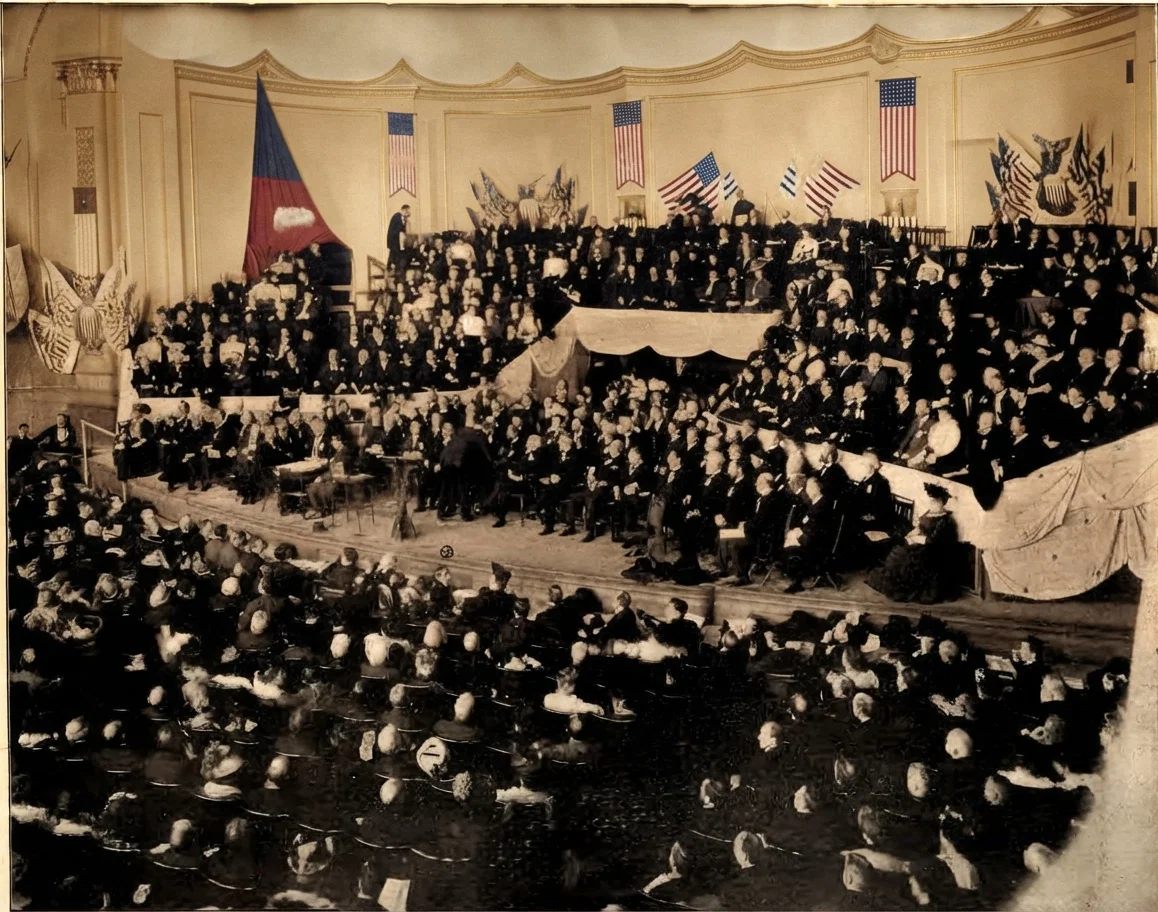
The First Regular Session of the Great Peace Congress in Carnegie Hall, New York, April 15
Page 1
Signs of the Times
May 8, 1907
Pacific Press Publishing Company · Mountain View, California · May 8, 1907
From Stereograph, Copyright 1907, by Underwood & Underwood, New York.
The First Regular Session of the Great Peace Congress in Carnegie Hall, New York, April 15.
View from the back of the audience to the delegates and rostrum. Above the cross is Secretary Root shaking hands with Governor Hughes. Below the cross is our representative, Mr. Wightman.
[All questions to this department will be answered which to the editors will minister to the general good of the readers and to the mission of the paper. The same question can not be answered repeatedly in the same volume. The name and address must accompany question, not for publication, but as an evidence of good faith, and that answer may be made by letter if deemed advisable. It is well always to enclose a stamp for reply.]
How do you harmonize 1 Cor. 13:8 with the idea of the continuance of the gift of prophecy in the church?
C. A. W.
We do not have to harmonize them, they are harmony already. The apostle is not teaching that prophecy shall cease in his day, or that tongues would cease in his day. These were "set in the church." 1 Cor. 12:28. The same apostle declares that they were placed in the church "till we all attain unto the unity of the faith, and of the knowledge of the Son of God, unto a full-grown man, unto the measure of the stature of the fulness of Christ." Eph. 4:13. The church has not reached that condition yet, she is still lame and sick and halting. Until that time the gifts which God set in the church for all time will remain. When the day dawns the "sure word of prophecy" will not be needed. 2 Peter 1:19. God's people will have one language, a pure speech, and tongues will not be necessary; but love is eternal.
What do you do with Mal. 4:5 where it says, "I will send you Elijah the prophet"?
Z. I. C.
We preach it with all the power we have. That text is best explained by the later Scriptures and events. It has a double fulfilment. Before Jesus came at His first advent, God sent a messenger to prepare the way before Him. Jesus said of that messenger, John the Baptist, "And if ye are willing to receive it, this is Elijah, that is to come." Matt. 11:14. When John was asked, "Art thou Elijah?" he said, "I am not." John 1:21. How can these statements be harmonized? The angel said of John the Baptist, "He shall go before His [Christ's] face in the spirit and power of Elijah, to turn the hearts of the fathers to the children, and the disobedient to walk in the wisdom of the just; to make ready for the Lord a people prepared for Him." Now as John the Baptist fulfilled that prophecy in part by going before Christ at the time of His first advent in the spirit and power of Elijah, so God's messengers in a far wider sense will go before Christ at His second advent in the spirit and power of Elijah to prepare the people for His second coming, the great day of God. It can be said of no one of them, "He is Elijah," and if any of them were asked the question, he would say, "I am not;" but giving the message of God in the spirit and power of Elijah, he fulfils the prophecy of Mal. 4:5, even as did John the Baptist.
2069.—Clean and Unclean Meats.
Please explain what is stated in Leviticus 11, regarding clean and unclean meats, in connection with Mark 7:18, 19.
T. M.
Leviticus 11 is simply an expression in law of what existed in the nature of the thing from the time that man sinned. Previous to sin's entrance into the world, man's food was to be fruits and grains. Gen. 1:29. After men sinned, for various reasons, the Lord permitted them to eat flesh. That was especially true after the Deluge. When the Lord would call His people from Egypt and make of them a special nation to save the world, He places the distinction between clean and unclean animals in law, and yet this was recognized before, in the animals going into the ark and in the sacrifices that were offered. God's word did not make them arbitrarily clean or unclean, but it stated just what they really were, and we have no reason whatever to believe they are not as unclean now as when God stated that they were unclean. The swine was unclean then; it is unclean still, and about the most unwholesome food that can be eaten. The question in Mark 7 was not a question over clean and unclean meats at all. The question that was raised was in regard to washing of hands. The ones who raised the question had no question in their own minds over clean and unclean meats. Jesus did not set aside the law or the distinction which was made in the word. The great truth which He wished to force upon them was that the things which made them unclean and make all men unclean are the thoughts in the heart, and not the particular food eaten; but the man who has the right heart will want to eat the right food, and will do it if it is procurable. He will heed in his own life and practise the admonition of the word in 1 Cor. 10:31: "Whether therefore ye eat, or drink, or whatsoever ye do, do all to the glory of God."
2070.—Testified in Due Time.
If Christ gave Himself a ransom for all, to be testified in due time, and if He will have all men come to the knowledge of the truth (1 Tim. 2:6, 4), and if "as I live, saith the Lord, every knee [none excepted] shall bow to Me, and every tongue [none excepted] shall confess to God" (Rom. 14: 11; Phil. 2:11; Isa. 45:23), and if "there is no other name under heaven, given among men whereby we must be saved" (Acts 4: 12), what will become of all the babies and young children who die without this knowledge? Please explain this scripture, "to be testified in due time."
A BIBLE STUDENT.
In the first place, this compound question carries on its face a wrong application of some of the scriptures referred to, for if 1 Tim. 2:6, 4 means that whatever men may be they will come to the knowledge of the truth, then even Judas himself, of whom Christ said, "It were better for him that he had never been born," would be saved; and if by the text "Every knee shall bow and every tongue confess," is meant that all shall acknowledge Him as Lord and accept of His salvation, then Satan and all the evil angels will be saved, all of whom the word of God devotes to everlasting destruction. The simple, clear understanding of 1 Tim. 2:4 is that God desires to have all men saved, as the Revised Version expresses, "Who would have all men to be saved." "As I live, saith the Lord God, I have no pleasure in the death of the wicked, but that the wicked turn from his way and live." Eze. 33:11. The meaning of Romans 14:11, and kindred texts, is that in that last great judgment day even the opposers and enemies of the Lord Jesus Christ will acknowledge His power and mercy and wisdom, and will yield, as expressed again and again in the margin of the psalms, "feigned obedience." It will be the acknowledgment of even the unrighteous of the universe that all God's ways are just. As Jesus told the unbelieving Jews that they should not see Him until they should say, "Blessed is He that cometh in the name of the Lord," yet the very ones who can say it will pray for the rocks and the mountains to fall upon them. And not simply sinful man will acknowledge, but "things in heaven, and things in earth, and things under the earth; and that every tongue should confess that Jesus Christ is Lord, to the glory of God the Father."
Now all this has nothing to do with the babies and young children who die without this knowledge. The ways and means of God, the saving of those not responsible, are not the subject-matter of His word; His word is addressed to responsible men and women; those who have not the written word, and sin without the knowledge of the written law, shall die and be judged according to the light which they have, and those who live up to the light which they have will be saved. Rom. 2:7-15. The apostle Paul tells us in Romans 1 that they who die, who have no knowledge of God, shut the knowledge of God from them; and God is not responsible, nor can He be held responsible, for the results of men's sins. It is true, as has been demonstrated again and again, that men have been brought out of the darkness of heathendom simply because of yielding to the voice of the Spirit of God upon their own consciences, and have followed the true light to Jesus Christ; "for the eyes of the Lord run to and fro throughout the whole earth to show Himself strong in the behalf of them whose heart is perfect toward Him." 2 Chron. 16:9. Every child who has not reached the age of responsibility which can glorify God in His kingdom will be brought from death to life in His kingdom. Having no sin of their own, they are perfect before Him, and in that thousand years will grow up as calves in the stall, in the light of Jesus Christ and His glorious government and presence.
"Testified in due time," better as American Revised Version, "Who gave Himself a ransom for all; the testimony to be borne in its own times." And thus it has been thru all the generations since Christ died upon the cross. In its fulness it takes in all the ages since He gave Himself a Lamb of God before the foundation of the world. In the fulness of time, He came to die, in the fulness of time He will come again, and when His children are gathered home from every land and people and tongue, and nation, they will be still the testimony of His word that it had power to save and did save in all the ages and in all times.
2071.—Mention of the Sabbath.
How do you explain the fact that the Sabbath is mentioned only one time in all the twenty-one letters addressed to Christians, and that to condemn its observance?
S. S.
The Sabbath, that is, the weekly Sabbath, is not mentioned at all in these twenty-one letters. The only time where the term Sabbath occurs is Col. 2:14-16, and there it is no condemnation of the Sabbath. It is the yearly sabbaths which are referred to, the shadow of things to come. The condemnation there is not of any of God's commandments, but it is of that class that would force those things upon souls as mere matters of form, that is all. Read that chapter with this thought in mind. No mere observance of outward forms, whatever they are, has in it justification unto life, and no one has the right to condemn others for not following the outward form. The question is not that it is wrong to keep the Sabbath. It is not a question even as to whether it is wrong to keep the holy day or the new moon. It is this, that in keeping them we must let no man judge us or condemn us in the keeping. That is something which they have no right to do.
Referring to a question in issue of March 13, especially the expression, "Doubtless there will be many in the kingdom of God whom we did not expect to see there; many will not be there whom we expected to see," does not this conflict with Isa. 65: 17; 43:18?
E. H. N.
The design of that answer is this, that we ourselves have no means of judging, and that were we to estimate character, the judgment would demonstrate that we had estimated wrongly. Isa. 65: 17 simply means that we shall not remember with longing or sorrow the things of the past, "the former things shall not be remembered, nor come upon the heart," literally (see margin); that is, they shall not be remembered to weigh upon the heart, to mar the happiness in the other world. However, before the redeemed of the Lord reach the new earth, they will pass thru the judgment spoken of in Rev. 20:4, and all the reasons and the motives of the judgment will be clearly brought before them, and in that judgment they must remember and see the former things. Isa. 65:20 refers to the new earth state which lies beyond the thousand years. Isa. 43:18 is the Lord's admonition that we shall not look to the past for salvation, but to God in the present and in the future.
Alphabet of Symbolic Prophecy
The Great Image of Daniel Two.
The Kingdom of Men.
WHAT a wonderful chapter! What a sweep of vision it covers! From more than six centuries before Christ, unto the everlasting cycles of eternity.
Down thru the kingdoms of Chaldea, Medo-Persia, Grecia, Rome in all her phases, to the present time, aye, even to the everlasting kingdom of God! From Babylon on the Euphrates to Jerusalem on the River of Life.
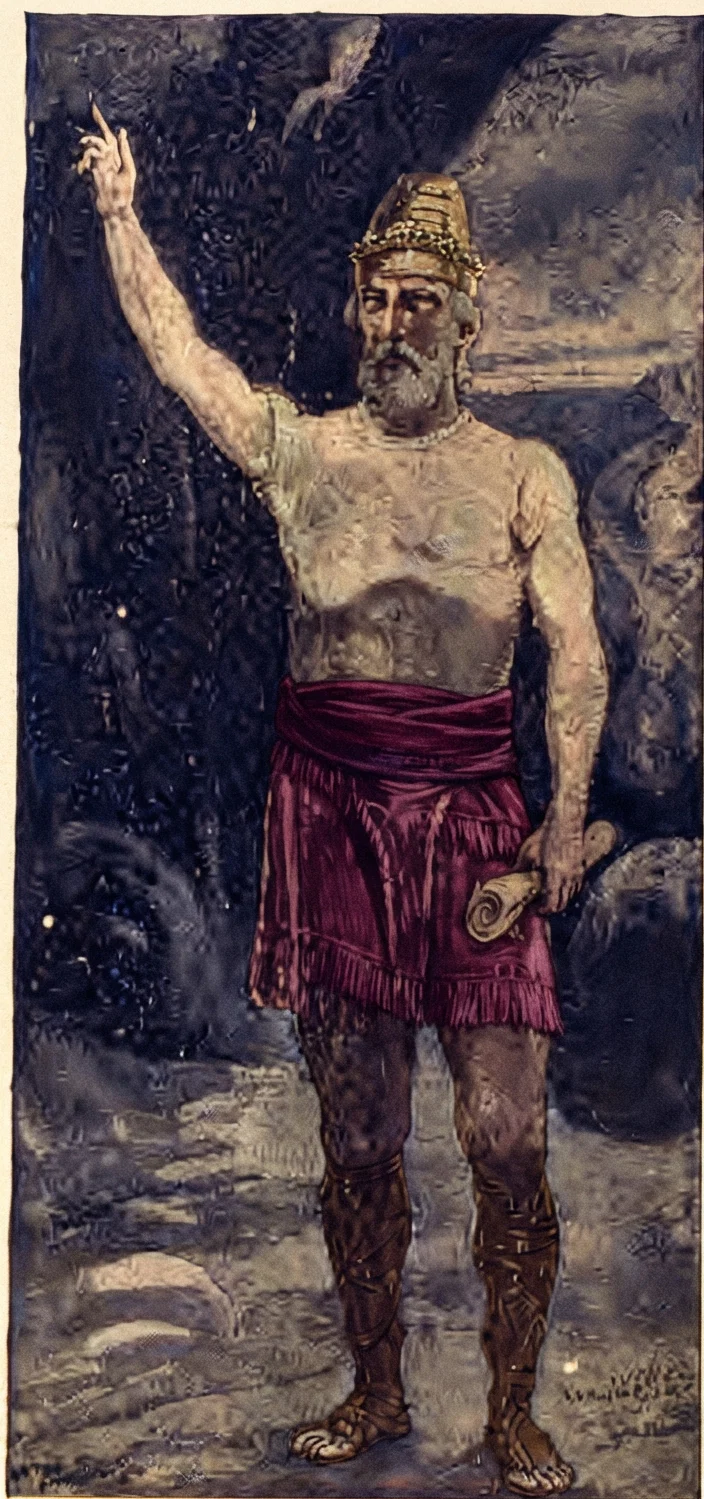
This vision of the kingdom of men came first to one of the greatest of earth's long list of monarchs. It came thru one of the greatest of the prophets of God, a noble prime minister. It was for the instruction and benefit of Nebuchadnezzar, the king of Babylon, to whom it was given, and beyond him to the people of God and all the rulers and the ruled of earth.
Nebuchadnezzar reigned over an empire which has placed its moral and religious stamp upon all the world as has no other nation. Great Babylon has had influence world-wide and ages long. We are still pursuing her methods in education, and her religious principles have affected all Christendom.
Nebuchadnezzar, mighty warrior, noted scholar, famous builder, a discriminating and wise statesman after the manner of men, but haughty and proud, ruled over Babylon from B.C. 605 to 562, a period of forty-three years.
Nebuchadnezzar was anxious to know the future. What would follow when he should die? Would any empire succeed Babylon? And to answer these questions in the king's mind, God gave the king the dream of the great image. For thus the prophet declares: "As for thee, O king, thy thoughts came into thy mind upon thy bed, what should come to pass hereafter; and He that revealeth secrets hath made known to thee what shall come to pass." Verse 29.
We appeal to the reader to turn to Daniel 2 and read the entire chapter. Read how Nebuchadnezzar was troubled by his God-given dream; how, not to be deceived, he demanded of his wise men, who claimed to possess supernatural knowledge, that they should make known both dream and interpretation. They could do neither. As imposters, the king decreed their death. Daniel, not consulted because a Hebrew in religion, was, however, numbered among those to be slain. He asks for time to consider the matter. It is granted. He holds a prayer-meeting with his fellows. God reveals dream and interpretation. They praise God for His goodness, and before the king ascribe all their knowledge to the "God in heaven" who "revealeth secrets," the One with whom there is "wisdom and might," who "revealeth the deep and secret things." This is the dream:
"Thou, O king, sawest, and behold, a great image. This image, which was mighty, and whose brightness was excellent, stood before thee; and the aspect thereof was terrible.
"As for this image, its head was of fine gold, its breast and its arms of silver, its belly and its thighs of brass, its legs of iron, its feet part of iron, and part of clay.
"Thou sawest till that a stone was cut out without hands, which smote the image upon its feet that were of iron and clay, and brake them in pieces. Then was the iron, the clay, the brass, the silver, and the gold, broken in pieces together, and became like the chaff of the summer threshing-floors; and the wind carried them away, so that no place was found for them: and the stone that smote the image became a great mountain and filled the whole earth." Verses 31-35.
In these six verses is compressed the history of the world. We need not dwell on the details of the interpretation, as there is no room to doubt the application, if we believe the prophecy. In short, the head of gold represented Babylon, of which Nebuchadnezzar was the chief. "Thou art this head of gold."
The breast and the arms of silver symbolized the successor of Babylon, Medo-Persia. The belly and thighs of brass, from the breast to the knees, represented Grecia. The legs of iron represented Rome in its imperial period; the mingling of iron and clay signified the division of the Roman kingdom, never to be united as one.
It is well to note that it is not particular parts of the image anatomically that are symbolical of the successive empires, but the metals. Gold for Babylon. Then a kingdom "inferior." Then a third kingdom of "brass." Then a fourth not a kingdom as strong as legs, but as strong as iron. No division is indicated by parts of the image. The two arms do not represent two elements in the Medo-Persia empire. Nor do the two legs or toes represent aught in Rome. But the mixture of iron and clay does portray Rome in her imperial unity and in her division. Iron and clay will never mix. Men have tried and planned and plotted to unite divided Rome, but our line of prophecy is stronger than all human effort. "They shall not cleave one to another, even as iron doth not mingle with clay." Verse 43.
In the days of this divided condition of the fourth kingdom—Rome—the God of heaven shall set up a kingdom which shall utterly obliterate all earthly kingdoms and shall stand forever. This everlasting kingdom is not established by the conversion of worldly kingdoms. It does not enter thru the gateway of politics. It is not set up4till all earthly rule has been demonstrated failure. It is established only when Jesus Christ shall come the second time, and shall sit upon the throne of His glory. Then, indeed, will the great mountain kingdom fill the world, and her people shall endure forever.
Two Pictures.
But we never shall get the emphatic view which God designs we should of this prophecy till we compare it with the third chapter. The image of the second chapter is God's picture of the kingdom of men. The image of the third chapter is God's picture of the ambitious minds of men who are patriotic and powerful. God said that Babylon was only the head of gold, and would be succeeded by others. Nebuchadnezzar, in his selfish patriotism declared, "Babylon shall stand forever;" and so he made the image all of gold—the apotheosis of patriotism, his prophecy of Babylon—and commanded all to worship it. This has been the dream of all ambitious patriots of power. So Alexander thought of Grecia, Caesar of Rome, Napoleon of France; many Englishmen so think of Great Britain, many Americans so dream of the United States. Let them all learn from the lesson to Nebuchadnezzar. Babylon has gone and all her glories. Medo-Persia long since passed away. Grecia lives only in her beautiful ruins and works of art. Rome is utterly and forever divided, and her divisions are watching each other with jealous, warlike eyes. Thus has it been for years. They will never know peace or quiet or rest or continuance, for God has spoken. Just on before lies the only kingdom worthy to exist forever, because it is a righteous kingdom. It shall "never be destroyed, nor shall the sovereignty thereof be left to another people; but . . . it shall stand forever." To that glorious kingdom, dear reader, God invites you. Will you not be His subject forever in Christ Jesus?
The True Character of Perverted Earthly Rule
By Asa Oscar Tait
The Seventh Chapter of Daniel
IN the seventh chapter of the book of Daniel is presented a vision, together with an inspired interpretation of what the vision means. The vision, as the interpretation shows, presents the history of the world in advance. It is difficult to write a true history after the events have actually occurred, yet men may do this in a very satisfactory manner. But to write the history thousands of years before the events occur, requires the all-wise attributes of Jehovah Himself. And the fact that such a history has been given by the prophet, long before the events occurred, proves that he wrote by the inspiration of the Almighty. The vision given to the prophet is in the following language:
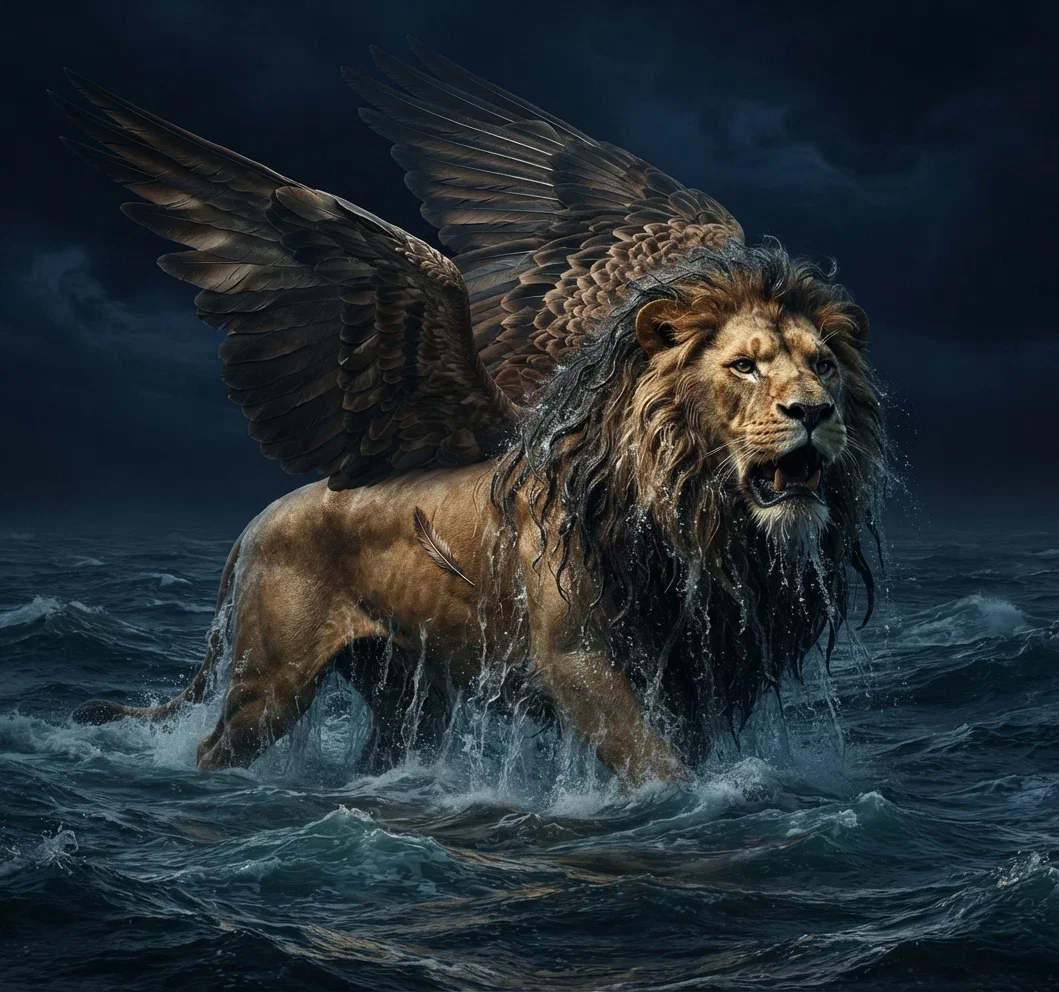
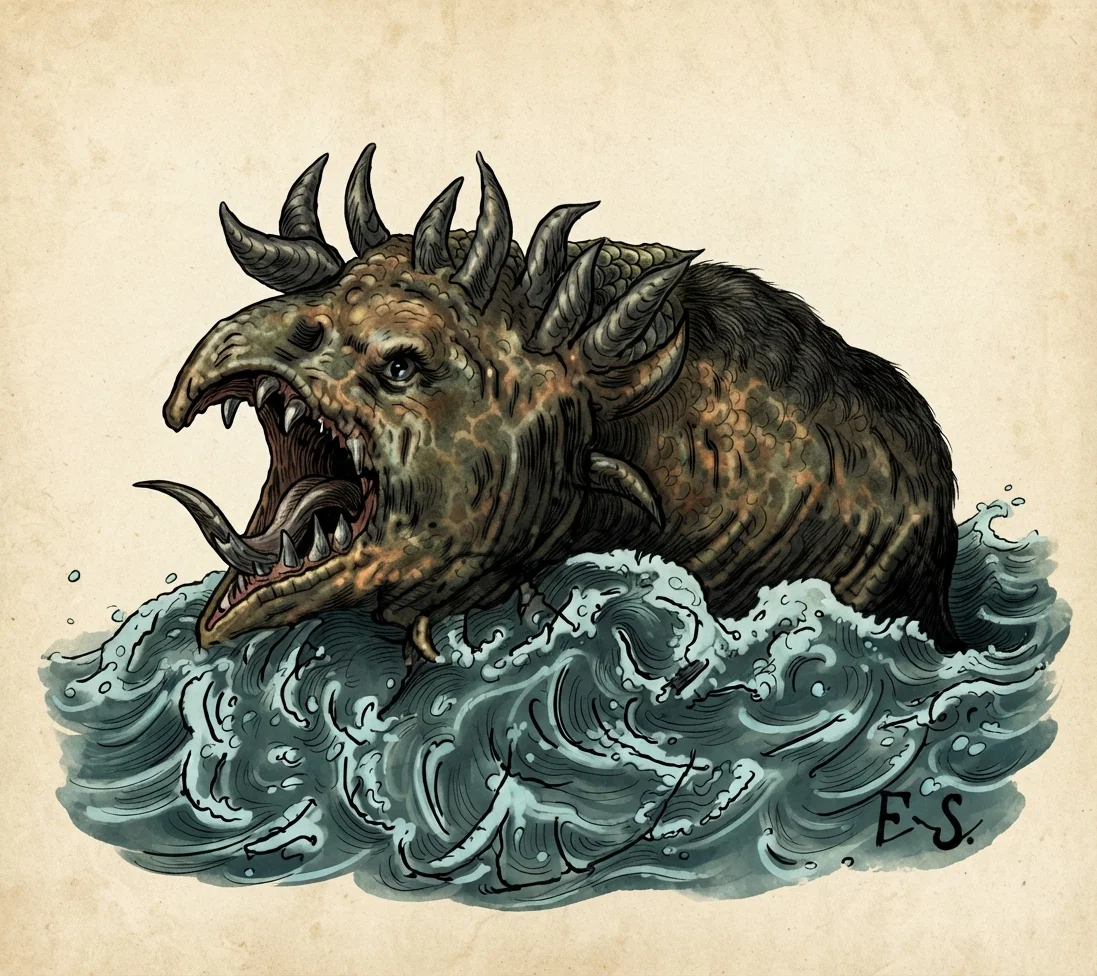
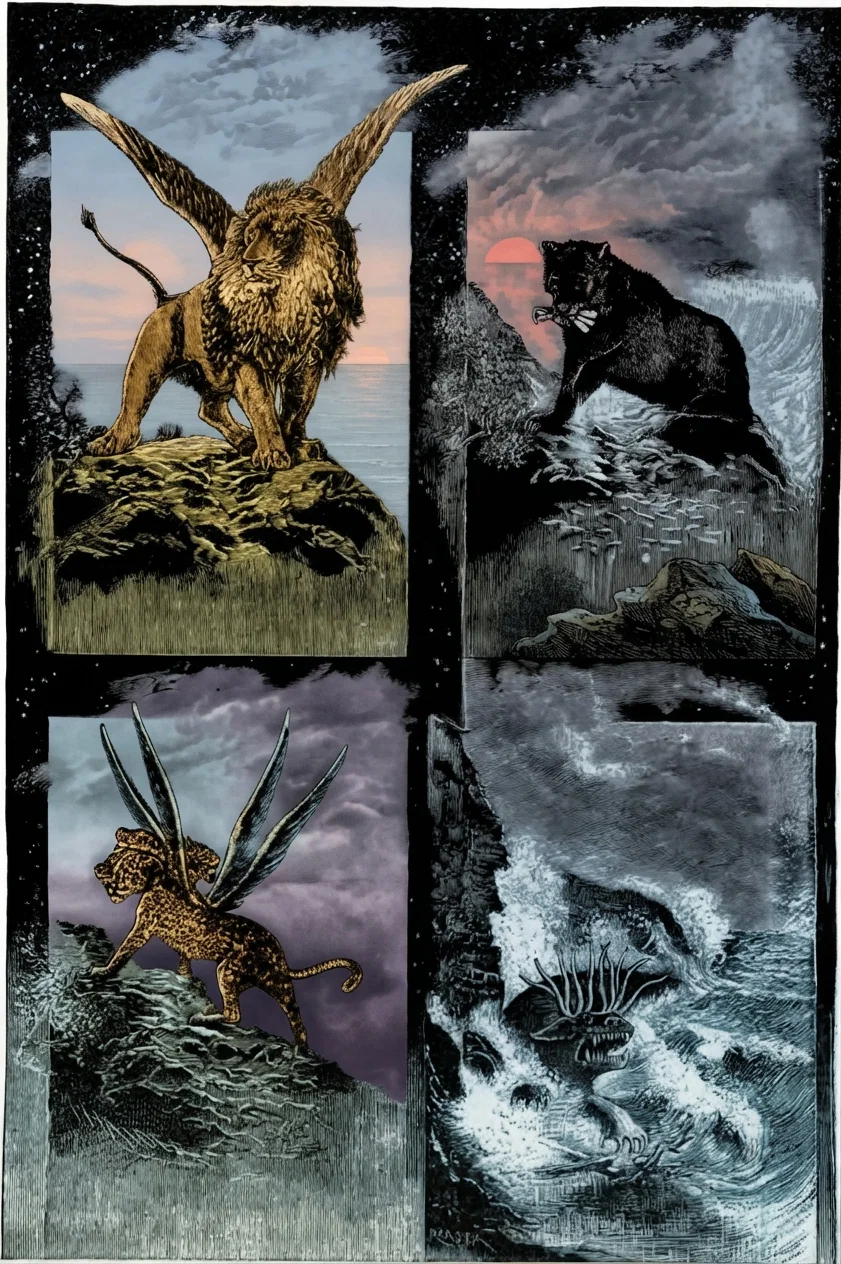
"In the first year of Belshazzar king of Babylon Daniel had a dream and visions of his head upon his bed: then he wrote the dream and told the sum of the matters. Daniel spake and said, I saw in my vision by night, and, behold, the four winds of heaven brake forth upon the great sea. And four great beasts came up from the sea, diverse one from another. The first was like a lion, and had eagle's wings: I beheld till the wings thereof were plucked, and it was lifted up from the earth, and made to stand upon two feet as a man; and a man's heart was given to it. And, behold, another beast, a second, like to a bear; and it was raised up on one side, and three ribs were in its mouth between its teeth; and they said thus unto it, Arise, devour much flesh. After this I beheld, and, lo, another, like a leopard, which had upon its back four wings of a bird; the beast had also four heads; and dominion was given to it. After this I saw in the night-visions, and, behold, a fourth beast, terrible and powerful, and strong exceedingly; and it had great iron teeth; it devoured and brake in pieces, and stamped the residue with its feet: and it was diverse from all the beasts that were before it; and it had ten horns. I considered the horns, and, behold, there came up among them another horn, a little one, before which three of the first horns were plucked up by the roots: and behold, in this horn were eyes like the eyes of a man, and a mouth speaking great things." Dan. 7: 1-8.
It will be observed in the foregoing vision of the prophet that he first saw "four great beasts come up from the sea." Then following this view of the beasts he presents in sublime the simple language the great panorama of the judgment scenes that were caused to pass before his mind, of which we can not now speak. See verses 9-14.
It would be very easy for men to get lost in speculations in regard to what this imagery of beasts and these views of judgment thrones might mean. But the great Author of the Bible does not leave us to the temptation of thus speculating. Following the vision He gave the interpretation also to the prophet. Read the interpretation in the following paragraphs just as they are presented in the inspired Book.
The Bible's Own Interpretation of the Vision.
"As for me, Daniel, my spirit was grieved in the midst of my body, and the visions of my head troubled me. I came near unto one of them that stood by, and asked him the truth concerning all this. So he told me, and made me know the interpretation of the things.
"These great beasts, which are four, are four kings, that shall arise out of the earth. But the saints of the Most High shall receive the kingdom, and possess the kingdom forever, even forever and ever. Then I desired to know the truth concerning the fourth beast, which was diverse from all of them, exceeding terrible, whose teeth were of iron, and its nails of brass; which devoured, brake in pieces, and stamped the residue with its feet; and concerning the ten horns that were on its head, and the other horn which came up, and before which three fell, even that horn that had eyes, and a mouth that spake great things, whose look was more stout than its fellows. I beheld, and the same horn made war with the saints, and prevailed against them; until the Ancient of days came, and judgment was given to the saints of the Most High, and the time came that the saints possessed the kingdom.
"Thus he said, The fourth beast shall be a fourth kingdom upon earth, which shall be diverse from all the kingdoms, and shall devour the whole earth, and shall tread it down, and break it in pieces. And as for the ten horns, out of5this kingdom shall ten kings arise: and another shall arise after them; and he shall be diverse from the former, and he shall put down three kings. And he shall speak words against the Most High, and shall wear out the saints of the Most High; and he shall think to change the times and the law; and they shall be given into his hand until a time and times and a half a time. But the judgment shall be set, and they shall take away his dominion, to consume and to destroy it unto the end. And the kingdom and the dominion, and the greatness of the kingdoms under the whole heaven, shall be given to the people of the saints of the Most High: His kingdom is an everlasting kingdom, and all dominions shall serve and obey Him." Dan. 7:15-27.
"So he told me, and made me to know the interpretation of the things." The prophet is not only told, but he is made to "know" the meaning of the vision. It is possible for a person to be told a thing and still not know its meaning. But Daniel is made to know. And if we listen to the interpretation we also may know. It is much better to know than to speculate.
The great beasts are four kings that shall arise. The interpretation says this and it is easy to be understood. Then the prophet was especially exercised in regard to the meaning of the fourth beast. He made particular inquiry concerning it, and is given many facts in regard to its character.
"The fourth beast shall be a fourth kingdom upon earth." How plain! A child can readily understand such language. Then concerning the ten horns that were on this fourth beast, the interpretation informs us, "As for the ten horns, out of this kingdom shall ten kings arise." Again, how simple and plain.
The fourth kingdom was to bear rule over all the earth, and then it was broken into ten fragments, and ten kings reign in the territory of this great world power.
When we ask for the fulfilment of this prophecy, we find that historians are unanimous in telling us of the fact that Rome ruled the entire world, and that her dominion was broken up into the ten kingdoms that are the principal nations of western Europe to-day. The three beasts that preceded this fourth one also represented universal kingdoms that followed one another in bearing rule over all the earth. But the fourth one is singled out and designated as the one that shall be broken into ten fragments. Thus do we find that the interpretation of the prophecy is very definite in telling exactly what will develop in the history of the world. And if the One who inspired this prophecy had not known definitely what was going to take place He could not have spoken so positively concerning the future history of earth's kingdoms.
Daniel had this vision about 550 years before Christ. The Roman empire had not come into existence then. Babylon was the great monarchy of the prophet's day, and she seemed so strong that it looked like folly to suppose that she would be overthrown. But the prophet not only predicts that Babylon shall be overthrown, and that three other universal monarchies shall arise, but he shows that the last one will be divided into ten kingdoms. It took a thousand years for this prophecy to unfold; but our libraries are full of authentic and trustworthy histories which show that the kingdoms arose one after the other just as predicted, and then that the fourth and last universal kingdom was divided into ten.
The remnants of these ten kingdoms are standing in the world to-day as a monument to the fulfilment of this prophecy. And note, in this connection, that just as the prophecy points out the rise and fall of these earthly kingdoms, so does it also point out that the eternal kingdom of God is to succeed them.
The four kingdoms that were to arise one after the other were each represented in the prophecy by a wild and ravenous beast. And the fourth one is so rapacious that no beast in nature could be found to fitly represent him. He is described as "terrible and powerful, and strong exceedingly," with "great iron teeth." He "devoured and brake in pieces, and stamped the residue with its feet." This description shows the character in which earthly rule, perverted to suit the ambitions and tastes of designing men, is viewed by the Lord of heaven.
Every one of these four universal kingdoms brought to light in the prophecy has persecuted the followers of the Lord. And especially is it true of the last one, that it persecuted the Lord's children in the most cruel manner. It was under the Cæsars of Rome that the Lord Jesus Christ Himself was crucified. It was under the emperors of Rome that the early apostles and followers of Christ were put to death by the hundreds of thousands. The "great iron teeth" of this monster power were not only used in grinding the peoples of earth into subjection, but they were made to crush the followers of the Christ of God.
And thus it is always the case with earthly power that does not heed the voice of the Most High, speaking to the children of men. It becomes cruel, blood-thirsty, and destructive. And with what longings of joy may we look forward to the time when the reign of earthly powers shall be at an end, and the kingdom of God, so clearly outlined in this prophecy, be launched upon its eternal career.
[The detail of this prophecy as regards the "little horn" and the judgment will be treated in future issues.]
"His Face Shone."
By Max Hill
COMING down from his interview with Jehovah in the mount, bearing in his hands the tables of stone on which the law had been inscribed by the finger of God, Moses knew not that his face shone with the glory which surrounded him. Filled with the solemnity of his errand and anxiety for his people, he hastened to bring to them what he had received. Being filled with glory, he little realized that those he approached would not and could not understand the great change.
Seeing the light in Moses' face, Aaron and all the children of Israel were filled with awe, and tho they came near to him when he gave them the commandments from God, he was compelled to veil his face that they might not be blinded. But if needs be he would veil his face that his people might understand, that he might deliver his God-given message.
God's people have a message to-day. They should bear in their hands the tables of the law, and they should be so intimate with their heavenly Father that their faces shine. It may be that the world will not understand; it may be that the Christian's own brother and "the children of Israel" will hold back; but the message must be delivered. Jehovah's law has been entrusted to human instruments, responsible for its deliverance, tho the bearer's face be veiled.
The message is well-defined and within the reach of every man who is ready to take up the cry. The glory comes by long vigils with Jehovah in the mount, the place of secret prayer. Max Hill.
Handbook on Geography.
WE heard a minister say from the pulpit the other Sabbath, “I would not go to the Bible to study geography.” If he had said “modern geography,” it would be true. But, as a matter of fact, the Bible is the best book on ancient geography known. There is no better handbook for modern Palestine now than the old Bible. If you are going to visit either Egypt or Palestine, you will find your Bible your best guidebook. You can not convict Moses and Joshua and the authors of the historical books of making even geographical mistakes. The Bible is the very best text-book on even geography for all those lands, in the centuries during which it was composed.—The Occident.
"Sure Word of Prophecy."
By Max Hill
'Tis not a fable cunningly devised,
'Tis not a dream by shallow mind surmised,
'Tis not a tale that babbling lips repeat,
'Tis not a story told where idlers meet;
They testified who saw their Saviour's face,
Who shared his wanderings from place to place,
Who saw His works, His miracles of love,
Who heard the Father's voice from heaven above,
As blinding glory crowned the Holy One,
Declaring, "This is My beloved Son."
This much they saw, this much they felt and heard,
And testified of Him they knew, the Word;
Yet more than sense of hearing, touch, or sight
Of faithful men whose love would but indite
A record sure and true of Him whom they
Had learned to love and follow and obey,
An evidence more strong, as of a light
That shineth in the darkness of the night,
Than which naught else more surely true can be,
'Tis God's own true sure word of prophecy.
Not by the word of man the message came,
Not for the praise of men or earthly fame,
Not for a selfish end or human pride;
But fearlessly, vain glory cast aside,
The prophets spake in burning words and bold,
The page of future history foretold,
The course of time, the awful judgment hour,
The coming Saviour, heralded with power;
Nor quailed tho threatened by the foe's mad host,
But spake God's word, moved by the Holy Ghost.
Max Hill.