Pacific Press Publishing Company · Oakland, California · Nov 26, 1902
Healthful, Helpful Literature
New Books
The Boy Puzzle
“It has the true ring,” says one reader, and so it has. It commends itself to parents and teachers alike, and shows how they may win love and obedience without frequent punishment. Price, Cloth 75 cents.
Outlines of Modern Science and Modern Christianity
A timely book showing the distinction between science falsely so-called and that which is science indeed; also the beautiful harmony between the Bible and true science. 260 pages, cloth bound. Price, 75 cents.
Things Foretold
Helpful, interesting, illustrated easy lessons on the prophecies. After reading it, your children may divide with you the honor of understanding Scriptures which are generally looked upon as too deep for the ordinary student to delve into. Price, 50 cents.
Sunday in History
A pamphlet of 232 pages, containing historical facts in concise form showing the development of Sunday as a day of rest. Price, 50 cents.
Essentials of Our Language
A guide to accuracy in the use of the English language. Invaluable to students, speakers, and writers generally, and to those especially who have missed educational advantages. Price, Cloth 75 cents.
Power for Witnessing
The message of this book is the Spirit’s answer to the author’s heart-cries for power for Christian living and labor. If your heart cries out after a similar power, reading this volume will wonderfully encourage you. Price, Cloth 75 cents. New paper-covered edition, 25 cents.
New Tracts
Tract
No. of Library
Price
Babylon Is Fallen
B. S. L. 169
½
An Appeal to Baptists
B. S. L. 170
1
Catholic Doctrine—How I Found the True Faith
B. S. L. 171
½
Two Laws, by E. J. Hibbard
B. S. L. 172
20
The Name
A. G. L. 72
1
Unanswerable Propositions
A. G. L. 73
½
Two Questions Answered
A. G. L. 74
½
Is Sunday the Sabbath
A. G. L. 75
½
Which Day Do You Keep and Why
A. G. L. 76
½
The Two Ways
A. G. L. 77
½
Travel and Adventure
Letters from the Holy Land
A series of illustrated letters written by Henry A. Harper, while in Palestine, to his children at home, in which many Bible parables are made plain. 160 pages. Price, Cloth 50 cents.
Among the Northern Icebergs
Interesting sketches of Arctic expeditions of England and America in the nineteenth century. 160 pages. Price, Cloth 50 cents.
Two Cannibal Archipelagoes
A graphic description of the New Hebrides and Solomon Islands. 160 pages. Price, Cloth 50 cents.
Story of Pitcairn Island
The strange but true story of the mutiny on board the “Bounty,” and the adventures of the mutineers, as told by one of their descendants. 266 pages. Price, Cloth $1.00.
Tonga Islands
The story of the customs, religions and superstitions of the natives of Tonga and neighboring islands. 160 pages. Price, Cloth 50 cents.
Native Life in India
An interesting description of the social and religious characteristics of the Hindus, by Rev. Henry Rice, who spent eighteen years in India. 160 pages. Price, Cloth 50 cents.
Fiji and Samoa
A very readable description of these two important island groups. 160 pages. Price, Cloth 50 cents.
The Sanctuary
Looking Unto Jesus
An entirely new and exhaustive treatment of the Sanctuary Question, showing the present work of Christ and its meaning. Over 300 pages, fully illustrated. Price, Cloth $1.00 and $1.50.
Story of Redemption
This volume is filled with beautiful truths concerning the redemption of man, and will leave with the reader an inspiration for a higher and nobler life. 237 pages, illustrated. Price, Cloth $1.00 and $1.25.
Christ Our Advocate
A comparison of the heavenly and earthly sanctuaries, together with a Scriptural view of the significance of their types and ordinances. 112 pages, paper covers. Price, 10 cents.
The Sanctuary and 2300 Days
An exposition of Daniel 8:14, showing the relation of the two dispensations, the Mosaic and the Christian, and presents the work of Christ for the salvation of men in both type and antitype. 224 pages, paper covers. Price, 30 cents.
Prophecy Expositions
Daniel and the Revelation
A verse-by-verse study of the two great prophetical books of the Bible—Daniel and Revelation. A truly remarkable volume, of which over 100,000 have been sold. 757 pages, exclusive of numerous full-page engravings. Prices, $2.25 to $4.50.
Heralds of the Morning
This volume treats entirely upon the significance of such current events as the increase of Crime, Earthquakes, Tornadoes, Tidal Waves, Social Vice, the Heaping Together of Wealth, etc., etc. Issued in both English and German. Nearly 300 pages, fully illustrated. Price, Cloth $1.25 and $1.50.
The Coming King
A consideration of Christ’s great prophecy recorded in Matthew 24th chapter, together with other prophecies now being fulfilled. Issued in both English and German. 288 pages, 180 illustrations. Price, cloth, $1.00 and $1.50.
Sure Word of Prophecy
A brief but comprehensive treatise on the book of Daniel. 96 pages, paper covers. Price, 10 cents.
Tracts on same subject
Tract
No. of Library
Price
Great Day of the Lord
B. S. L. 65
½
God’s Message for To-Day
B. S. L. 81
½
Truth for the Times
B. S. L. 143
1
America’s Crisis
B. S. L. 138
2
Eastern Question
B. S. L. 144
1
Wonders of the 19th Century
B. S. L. 155
2
Heralds of His Coming
A. G. L. 51
1½
Warning of Margaret
A. G. L. 53
1
Sound an Alarm
B. S. L. 167
1
Scripture References
B. S. L. 10
2
Books in Preparation
Testimony Volume Seven
By Mrs. E. G. White. Will contain about 300 pages. Price, in Cloth, 75 cents; Limp Leather, $1.25.
Education
By Mrs. E. G. White. About 400 pages. Price, Cloth $1.25.
The Two Laws
By Elder E. J. Hibbard. A pamphlet of about 100 pages. Price, 20 cents.
Three Gift Books
Thoughts from the Mount of Blessing
An ideal gift from helpful, literary, and artistic standpoints. The chapter on The True Motive of Service is beautiful beyond description, and there are five others almost as good. 27 engravings, 218 pages. Price, 75 cents.
Christ’s Object Lessons
Familiar objects are here associated with thoughts true and beautiful, thoughts of God’s loving interest in us, and of the care we should have for one another. 75 illustrations, 436 pages. Price, cloth $1.25.
Desire of Ages
The love of God for the world as revealed in the earthly life of His Son, and the provisions by which man may become perfect, even in this life, are the great themes of this volume. Nearly 900 large pages, over 200 illustrations. Prices: Cloth $2.50, $3.50, and $4.25; Leather $7.00.
Health and Temperance
Health
“There are many wonderful creative properties in good common sense; and a liberal sprinkling of it with the food we eat, the fluid we drink, and the air we breathe, will save an untold amount of suffering.” Quotation from “Health.” Price, Cloth $1.00.
A Friend in the Kitchen
A little book with 400 recipes for the preparation of palatable, healthful dishes. Price, oilcloth covers, 60 cents.
Natural Food of Man
The Biblical phase of the question, together with a series of well-tested recipes for hygienic cooking. Price, paper covers, 25 cents.
House We Live In
A story of the body-house as told by a mother to her children. Fully illustrated. Price, Cloth 75 cents.
Tracts on same subject
Tract
No. of Library
Price
There Is Help in God
A. G. L. 56
½
The Name
A. G. L. 72
1
Some One Cares for Your Soul
A. G. L. 69
½
Chat with My Tobacco-Loving Brother
A. G. L. 67
½
Food: Its Mental and Moral Value
A. G. L. 68
½
The Sabbath Question
History of the Sabbath and the First Day of the Week
This large volume treats upon every Scripture which in any way refers to the Sabbath question. It also brings in important historical testimony concerning the change from the seventh to the first day of the week. 548 pages, leather binding. Price, $2.50.
The Lord’s Day the Test of the Ages
A clear yet brief presentation of a part of the Bible, and historical evidence concerning both sides of the Sabbath controversy. 128 pages, paper covers. Price, 15 cents.
Sunday
The origin of its observance in the Christian Church. 108 pages, paper covers. Price, 15 cents.
Tracts on same subject
Tract
No. of Library
Price
Elijah on the Sabbath
B. S. L. 42
1
Which Day Do You Keep
B. S. L. 48
½
From Sabbath to Sunday
B. S. L. 95
½
Who Changed the Sabbath
B. S. L. 107
1½
Identical Seventh Day
B. S. L. 114
1
New Testament Sabbath
B. S. L. 137
1
Rome’s Arrangement
B. S. L. 150
1
Sunday in the Greek
B. S. L. 154
½
The Seventh or One-Seventh
A. G. L. 39
½
Historical Facts and Incidents
A. G. L. 45
2
Day of the Sabbath
A. G. L. 50
1
What History Says Concerning the Change
A. G. L. 70
½
Is Sunday the Sabbath
B. S. L. 24
½
The Sabbath in Prophecy
B. S. L. 148
2
ADDRESS YOUR STATE TRACT SOCIETY, OR
Pacific Press Publishing Co., Oakland, California
11 WEST TWENTIETH STREET, NEW YORK CITY :: :: 18 WEST FIFTH STREET, KANSAS CITY, MISSOURI
CONSIDER HIM
By G. W. Rine
BY PROF. G. W. RINE
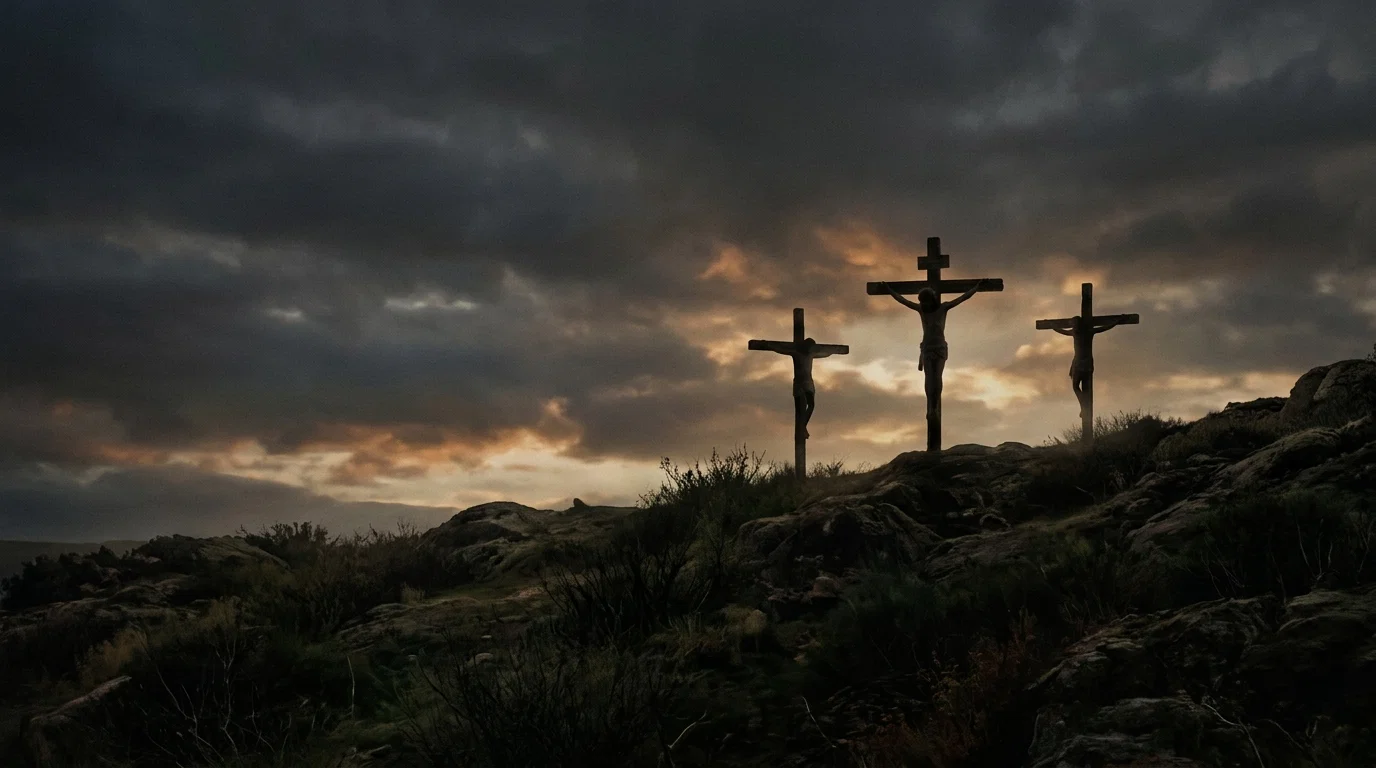
INFINITE LOVE MAKES AN INFINITE SACRIFICE.
GOD is love. Love suffereth long and is kind. Love seeketh not its own. Being love, God lives to give. He spoke from the fulness of His own nature and life when he declared that “it is more blessed to give than to receive.” It is only in ministering to the happiness of His creatures that He is happy; it is only in promoting their joy that He can be joyful. Thus it is written, “He DELIGHTETH IN MERCY.” Micah 7:18. Not only does God delight in mercy, but He assures us that He takes pleasure in those who hope in His mercy. In making me happy God is happy; in bringing to me the delights of His life and presence, He is delighted.
Love knows nothing of self-interest, nothing of self-service. “Love seeketh not her own.” Love looks away from self. Love can find no pleasure, no happiness, in self-seeking. Love seeks only to promote the happiness of others, and in so doing, love is happy. Hence, God, who is love, brought into existence angels and men that He might constitute them the objects of His affection, the recipients of His ceaseless benefits. But love knows no compulsion; love can not coerce. Therefore all creatures formed in the image of the Creator were endowed, not only with intelligence that they might apprehend and appreciate the “everlasting kindness” of God, but with the power of choice, with free volition, in order that their service, their homage, and love, might be free, glad, and intelligent.
God being all-wise, almighty, and infinitely good, it necessarily follows that the well-being of His rational creatures—their highest good—could be realized only as they render free, full, loving obedience to His righteous law. Loyalty meant life; disloyalty death. God’s law is love, and love is His law. Love is the law of life; hate is the law of death. Hence to obey was to live, to disobey was to die. But love is free, and can accept no service, no homage, that is not freely, willingly rendered.
Love Does Not Compel.
All created intelligences were left free to choose whom they would serve—God or self. Lucifer was the first to choose self and reject God. He succeeded in seducing a multitude of the heavenly hosts. Through love they were proffered a second probation. They had sinned. “The wages of sin is death.” The Son of God offered to yield His own life in expiation of their sins. They rejected and scorned the offers of love. They definitively refused to renounce self. They could not serve two masters. They were, accordingly, banished from the presence of God and cast into outer darkness, where they are “reserved in everlasting chains under darkness unto the judgment of the great day.” Jude 6.
The reader is doubtless familiar with the woeful story—
“Of man’s first disobedience, and the fruit
Of that forbidden tree, whose mortal taste
Brought death into the world, and all our woe,
With loss of Eden, till one greater Man
Restore us, and regain the blissful seat.”
Satan succeeded in compassing what appeared to be the irretrievable defection of the human race from God. Through the father and mother of the race man yielded obedience to, and confidence in, Satan in preference to God. Man sinned, and “sin is the transgression of the law” (1 John 3:4)—of the law of God, and therefore of LIFE. “The soul that sinneth it shall die.” Eze. 18:20. That the penalty for sin should be death was not an arbitrary ruling on the part of God. God, as the supreme Sovereign of the universe, has ordained a law which is an expression of His own character; and, as such, that law is the law of being, the law of life. Sin being the transgression of that law, and that law being the law of life, it inevitably follows that sin must issue in death.
Slavery of Sin.
In yielding to the tempter man sold himself for naught. He became a mental and moral slave to his new master. He shut himself away from the light and presence of God, and was enveloped in the darkness and blackness of sin and despair. He was “without God and without hope in the world.” Left to himself he would be doomed to endless death. But God sits upon a “throne of grace.” “He delighteth in mercy.” His love for the sinner, for the rebel against His own government, constrained Him to give His only-begotten Son as an eternal and all-potent sacrifice for fallen man. The awful pall of darkness in which man was enshrouded was shattered by the promise that the Seed of the woman should bruise the serpent’s head. Satan had overreached himself. He had misread the character of God. He had reasoned that, if he could prevail upon man to renounce his allegiance to God, God would eternally shut man away from Himself. But praise and honor be to the name of our God, for He laid help—help for every sinner—upon One who is mighty, yea, mighty to save even to the uttermost.
“A Curse for Us.”
The law of life can not accept anything less than the life of him who transgressed it. But the blood is the life, as we learn from Leviticus 17. Hence “without shedding of blood is no remission” (Heb. 9:22); that is, no putting away of sin. Hence the sinner must shed his own blood and die eternally, or God must supply a vicarious sacrifice, a Lamb whose blood should not only avail for the putting away of sin, but whose sinlessness would make it impossible that He—the Sacrifice—should be permanently held in the prison-house of death. In Christ, God found such a Lamb; for Christ “through the eternal Spirit OFFERED Himself WITHOUT SPOT to God.” Heb. 9:14. It was in the council chambers of eternity that our blessed Jesus, our Creator, gave “Himself for us an offering and a sacrifice to God for a sweet-smelling savor.” Eph. 5:2. Hence the beloved disciple refers to Jesus as “the Lamb of God slain from the foundation of the world.” Before sin entered God’s universe Christ made provision “to put away sin by the sacrifice of Himself.” Heb. 9:26.
How wondrous the truth that He who knew no sin “was made to be sin for us.” Though He never knew iniquity, yet “upon Him were laid the iniquities of us all.” He made “His soul an offering for sin.” Christ being the living embodiment of the law of life, which man had transgressed, was enabled, by the sacrifice of Himself, to satisfy abundantly all the demands of eternal and inexorable justice embodied in that law. He only could be an adequate sin-offering—an offering that would atone for sin indeed. Hence, by imputation, by love for man, He received into His own innocent breast the “iniquity of us all,” the sins of the whole world. Boundless love constrained Him to receive the curse of sin; for thus it is written: “Christ hath redeemed us from the curse of the law, being made a curse for us.” Gal. 3:13.
But as the curse, as the sin-offering, He must die, and die “without the camp,”—“without the gate” of Jerusalem. In order that He might die, however, Christ must empty Himself of His essential self—of His exclusive divinity, His immortality. He must remain God, but “GOD MANIFEST IN THE FLESH.” 1 Tim. 3:16. He must become God in man and man in God—the God-man. As man, He could and would die; as God, the sinless One, death could not hold Him, hell (the grave) must yield to Him, and in yielding become His prey. He must be “made in the likeness of men,” if He would die for men. But man was made a little lower than the angels. (See Psalms 8.) And so “we see Jesus, who was made a little lower than the angels for the suffering of death.” Heb. 2:9. We all know the sequel: He did die, the Just for the unjust; the King for the rebel, the Creator for the creature.
This brings us face to face with the most amazing, the most stupendous fact, in the history of the universe. He who from the days of eternity was absolute divinity, was pure Spirit, descends from that awful pinnacle to identify His immaculate and ineffably glorious Person with the person of man;—to become God manifest in the flesh, God manifest in man. God sent “His own Son in the likeness of sinful flesh, that He might condemn sin in the flesh.” Not that He might condemn sin simply in the universal flesh that He assumed when He was born a babe in Bethlehem, but that He, dwelling by His Spirit in the flesh of each individual sinner, might condemn, subdue, and cast out sin from the heart, from the flesh of every such individual. The great fact that the Word became flesh nineteen centuries ago, is the infallible pledge and guaranty that that same Word shall tabernacle in your flesh and in my flesh, and in so doing conquer sin in us, “that the righteousness of the law might be fulfilled in us, who walk not after the flesh, but after the Spirit.” Rom. 8:3. Is there any wonder, then, that Paul declares “Christ in you” to be “the hope of glory”? Paul further assures us that Christ in me, in you, that is, God manifest in the flesh, is the fundamental fact of the Gospel, the “pillar and ground-work” of the redemptive scheme, the great “mystery of godliness.” After His resurrection, Christ attested His identity with humanity by calling the attention of the disciples to His hands and His feet. And that same Jesus—God in the flesh—was “received up into glory.” “This same Jesus,” declared the angel, “shall so come again, in like manner, as ye have seen Him go into heaven.” Remember the prophecy: “Unto us a child is born, unto us a son is given.” Yea, He is GIVEN unto us, not simply loaned. Eternally He is
He hath made Him to be “a curse for us.”
SEVEN MONTHS IN CHINA.
By J. N. Anderson
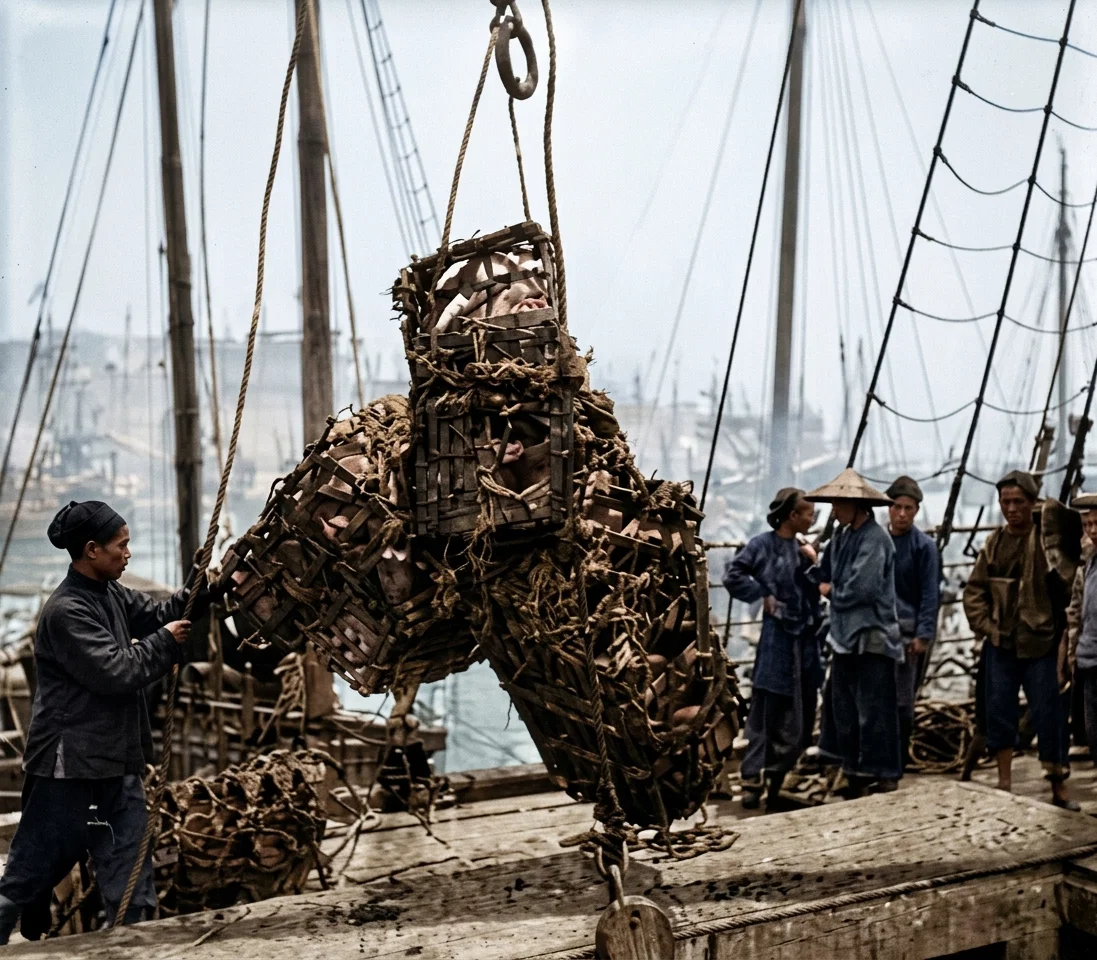
Pigs Crated Ready for Shipment.
Buddhist Priest Torturing Himself to Excite Sympathy and Obtain Money.
Receptacle for Super-fluous Babies.
Burial Completed, but the Coffin Still Above Ground.
We have now been in Hong Kong about seven months, and during that time many things have happened both to help us and try us in our endeavors to open up the work for the millions of China. In almost every respect it has been, to us, as new and strange a world into which we were plunged, as tho we were dropped out of the clouds.
But the external order of things, which at first impressed us so much, is coming to be a matter of course; while the other phase of this oriental world—its languages, its ideas, and habits of thought, and its strange life, are gradually revealing themselves to us, challenging us with puzzling and perplexing questions at every turn. When children in school we learned that the Chinese were our antipodes. And so they are; but I have since learned that their heads are more “anti” with respect to us than their feet. In many important respects these orientals make up a world all their own, which is so radically different from the Western World that all the persistent attempts to unify the two, shock and surprise and irritate the former.
But while these great differences exist, yet the Bible is true, when it declares that the race is one, and that one God and Father rules, and blesses all alike. All are of one blood, and under the curse of sin, in desperate need of the great, abundant salvation provided in Christ Jesus, our Saviour. As we stand before God, all have common needs which can be met by the Gospel alone; and this is the key to the situation.
Poor China is still in a state of unrest and uncertainty. Her financial condition is quite serious, and, as you have doubtless heard, this has been the cause of considerable trouble already. The indemnity budget is a source of great embarrassment and irritation to most of the Chinese, and many leading minds, both Chinese, European, and American, are at their wits’ end to devise plans whereby this vast sum of money can be wrung from the masses.
While the Middle Kingdom has great natural resources which can, when developed, easily redeem China, yet these are all undeveloped, and there is little besides the flesh and bones of the coolies with which to lift and transport these commodities. But, on the other hand, there are some hopeful signs. The study of English in Pekin by Chinese and Manchus is almost a fad; and the large printing-presses of Shanghai are driven to their full capacity to fill orders for books coming from different parts of China.
Along with such facts I must mention the recent riot of Chen Chow in the province of Hunan, in which two missionaries were murdered and much property destroyed. It is only a local affair, and did not arise from the Boxers, but from a superstitious belief that the water had been poisoned by the missionaries, causing an epidemic of cholera in that section. The details are unknown, and the settlement and after-effects remain to be seen. The missionaries killed were two men of the China Inland Mission.
Since coming to China our efforts have been confined almost entirely to Hong Kong. We have a small mission here, where regular meetings are held in the interest of Europeans and Americans, a large per centage of whom are soldiers and sailors. Hong Kong is a very important center, commercial and naval, and we must by our missionaries secure a firm foothold here. The work must be carried on both on land and sea; and while we need not confine ourselves to non-Chinese, yet I feel that Hong Kong will never be important, so far as the Chinese work is concerned.
We are anxiously waiting for the Mission Board to send us a good man to carry on the mission work here. We need the same kind of work opened up in Shanghai and other large commercial centers. So far as China itself is concerned, we have done very little except cast about and study the situation. I spent one week in Shanghai last spring, conferring with Brother Pilquist about plans for work in central China. My hopes constantly rise that I may join him somewhere on the Yangtse River before the beginning of the new year, and then begin the publication of literature on the message. That will call for a small hand printing-press. It should be large enough to print tracts and a small paper.
Mrs. Anderson and I recently made a brief trip to Canton, a typical Chinese city. It is ninety miles from here. By some it is held to be the largest city of all China, having two and one-half million souls packed into a compass not much exceeding that of Oakland, Cal. Many of its streets are so narrow that a man can easily reach across and touch the buildings on either side by extending his arms. The city is full of temples, idols, and altars. And as we passed through, I had feelings akin to those of the apostle Paul as he visited Athens. One temple has five hundred gods perched about on shelves. Poor people! they have gods multiplied, and yet, what wretchedness! The people live two thousand years behind the present. And what is most sad, they seem so satisfied.
Canton is noted for its intense dislike to foreigners, and the natives do not hesitate to salute them as fou gwai—“foreign devils.” Other missionary societies have done a good work in Canton. It was here that Morrison wrought so patiently and perseveringly, and after years of hard labor succeeded in giving to China the Bible in her own tongue. Not a few missionary societies have their headquarters here. While there we had the privilege of meeting the Baptist Mission people, who have a strong foothold in that city. We visited their main station, and they gave us a hearty invitation to visit one of their smaller stations in the interior, which we hope to do some time in October. These visits serve to acquaint us with the situation and the task before us. But we are hampered by not knowing the language. I feel that until that is acquired, we shall succeed in bringing but little to pass. We have begun the study, but have not made much progress.
I am sure we as a people little realize the magnitude of this field and the many unfavorable conditions and influences. I do not mention these things to discourage or because I am myself discouraged; it is only that we may see the situation as it is, and so be led to address ourselves to our task in serious earnestness. The Lord sent us, and He does not send where He would not Himself go. There are wide-open doors here, and I am fully persuaded that an army of workers will hasten to this field, and that the message will go with power. I am glad that I came to China, and my constant endeavor shall be to push forward the message God has committed to us. We crave the prayers and sympathy and the loyal co-operation of those who love this work.
Hong Kong, China. J. N. ANDERSON.
CONSECRATION
By Ella Cornish
I hunger, Lord, and thirst for righteousness;
O draw Thou near my longing soul to bless.
It is the promise of Thy holy Word,
Ye shall be filled—I claim that promise, Lord,
Oh give me yet a firmer hold on Thee;
Anoint my eyes that I may clearer see
The heights, the breadth, the depth, and length of love
That brought the Saviour from the courts above—
Yea, brought Him here to die on Calvary
That we, in Him, might be forever free.
O, clothe me with Thy robe of righteousness
And bless me, Lord, that I may others bless;
For I would not Thy blessings selfish hold,
But scatter them abroad as gifts of gold,
That when thou comest in Thy kingdom, Lord,
Thou may'st receive the increase of Thy word.
Asylum, Neb. — Ella Cornish.
Unselfishness Writes Beauty upon the Heart and Face
“UNSELFISHNESS writes beauty first upon the heart, and then, gradually, but with marvelous sureness, upon the face.”
The Good Health Adjustable Waist
Affords ease, comfort and health. Retains symmetry and grace of the natural form. Its use will add years of pleasure to a woman’s life. It dispenses with the corset. Supports all garments without harmful pressure. No stays to break. Thousands sold. Satisfaction guaranteed. Write for circular and prices. Agents Wanted.
Good Health Pub. Co. 354 W. Main St. Battle Creek, Mich.