Pacific Press Publishing Company · Oakland, California · Feb 3, 1898
KNOWING CHRIST. NO. 2.
By Ellen G. White
To-day we hear Philip’s words of doubt repeated by those who have had evidence upon evidence, weighty and most solemn. Professed believers in Christ are many, but few have an experimental knowledge of Him. To all practical purposes, they are ignorant of Christ. They know Him afar off, but they have no true conception of Him. Many from age to age have been, as it were, in the presence of Christ, have witnessed the manifestation of heavenly light, have seen the deep moving of the Spirit and power of God, and yet have failed to appreciate these gracious tokens of His goodness and love. “Show us a sign,” they say. If you have the truth, show us a sign. But the character and influence of the truth is a continual sign. Its transforming influence upon humanity testifies to its divine power, and yet the spiritual senses of unbelievers are so dulled that they can not comprehend it. They echo the words, “Show us the Father, and it sufficeth us.” And the Saviour, ever our Priest and King, addresses the unbeliever, “Have I been so long time with you [in your companionship], and yet hast thou not known Me?”
“He was wounded for OUR transgressions, He was bruised for OUR iniquities; the chastisement of OUR peace was upon Him; and with His stripes WE are healed.” “God so loved the world.”
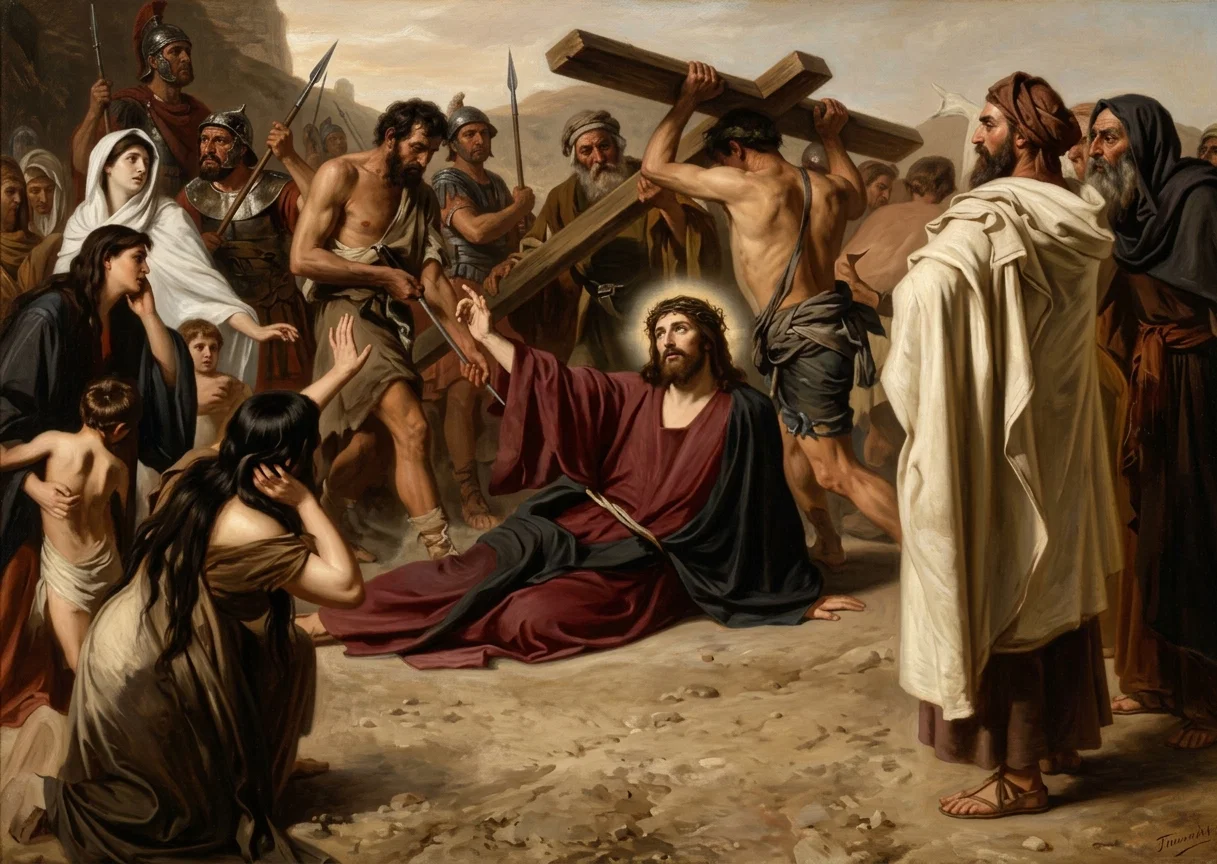
This inability to comprehend divine truth, and to see in Christ the character of God, wounds the Saviour as verily to-day as when He said to Philip, “Have I been so long time with you, and yet hast thou not known Me, Philip?” “The Word was made flesh, and dwelt among us, . . . full of grace and truth.” The Son of the infinite God tasted death for every man. He left the royal courts, and clothed His divinity with humanity. For our sakes He became poor, that we through His poverty might be made rich. When here He did not rank with kings and nobles, with the wealthy of the earth, but with the poor, those who were obliged to toil for their living. He was misunderstood, falsified, hated, maligned, by His own nation. He was “despised and rejected of men: a man of sorrows, and acquainted with grief. . . . He was wounded for our transgressions, He was bruised for our iniquities; the chastisement of our peace was upon Him; and with His stripes we are healed.” “Christ also suffered for us, leaving us an example, that ye should follow His steps; who did no sin, neither was guile found in His mouth; who, when He was reviled, reviled not again; when He suffered, He threatened not; but committed Himself to Him that judgeth righteously; who His own self bare our sins in His own body on the tree, that we, being dead to sins, should live unto righteousness; by whose stripes ye were healed.”
The sins of every man were punished in Christ. They were placed on the innocent Sin-bearer as tho they were His own. They were charged to His account. Christ so loved man, fallen tho he is, that He bound up His interest with each sinner. In Him divinity and humanity were united. He linked Himself with every son and daughter of Adam. Having taken the responsibility of dying in the sinner’s stead, His interests are identified with those of every member of the human family. And every evil deed, every transgression, every rebellion, whether of thought or action, pierces the heart of Christ, for He has pledged Himself to represent humanity.
In the cross of Calvary mercy and truth have met together; righteousness and peace have kissed each other. By taking human nature2 (66)Christ fastened each sinner to Himself with threads of sympathy and love that can never be broken until He shall say with awful majesty: “He that is unjust, let him be unjust still; and he which is filthy, let him be filthy still; and he that is righteous, let him be righteous still; and he that is holy, let him be holy still. And, behold, I come quickly; and My reward is with Me, to give every man according as his work shall be.”
Individually we must accept Christ as our only hope. We must know Him. He is our Daysman, and before Him we must confess and renounce our sins. He made a complete renunciation of Himself for man, and man, through Jesus, must make a complete renunciation of himself to God.
By studying Christ’s words we have every opportunity for knowing Him. This we must do would we be saved. “Verily, verily, I say unto you,” He said, “except ye eat the flesh of the Son of man, and drink His blood, ye have no life in you. Whoso eateth My flesh, and drinketh My blood, hath eternal life; and I will raise him up at the last day. For My flesh is meat indeed, and My blood is drink indeed. He that eateth My flesh, and drinketh My blood, dwelleth in Me, and I in him. As the living Father hath sent Me, and I live by the Father; so he that eateth Me, even he shall live by Me. This is that bread which came down from heaven; not as your fathers did eat manna, and are dead: he that eateth of this bread shall live forever. . . . It is the Spirit that quickeneth; the flesh profiteth nothing; the words that I speak unto you, they are spirit, and they are life.”
Do we know Christ, or does His voice come down to us through the ages, saying with sorrowful pathos, “Have I been so long time with you, and yet hast thou not known Me?” What is the character of our faith? Is it the same as that of the multitudes who thronged and pressed Christ? or is it like that of the woman who was healed by touching Him? She urged her way through the crowd, saying, “If I may but touch His garment, I shall be whole.” And how quickly Christ distinguished the touch of faith from the casual touch of the crowd! What is our relation to Christ? Is it illustrated by that of those who thronged and pressed Him, and yet who received no benefit, because they did not touch Him by faith?
Many are lamentably ignorant of Christ, because they take pleasure in unrighteousness. Like the multitude, they continually touch Christ, but they receive no virtue; for it is not their determination to know Him. They desire to follow their own inclinations. When they see that they can profess to follow Christ without practising self-denial, they are on His side; but when they are called upon to deny themselves, they are no longer attracted to Him. By their course of action they say, I want not Thy way, O Lord, but my own way!
Who to-day are of the number that have had every opportunity to know their Lord, and yet are saying, “Show us the Father, and it sufficeth us”? What can we say to those who as far as personal experience is concerned are so ignorant of Christ? The living oracles of God are in your possession. Search the Scriptures; for they testify of Christ. If you really desire to have a knowledge of Him you may obtain it. Search the Scriptures, that you may know Him whom to know aright is life eternal. Behold Him, that by beholding, you may obey His Word. Continue to search as for hidden jewels, that you may be spiritually enriched. Meditate upon Christ’s words, and learn what He is to you. As you confess Him, lift Him up, and talk of Him, you will gain faith in Him; and will be imbued with a zeal to become true stewards of His grace.
Do we place an estimate on our Saviour that is according to the light given us? Are we friends or enemies of Christ? This question involves our eternal interests. We must make our calling and our election sure. We can not trust to a fluctuating, haphazard faith. We must be able to say that we have not followed cunningly-devised fables. Christ must be our personal Saviour; and He can not be this unless we have an experimental knowledge of Him. A casual knowledge of Him will not avail. Our knowledge must be practical; it must make us like Him.
Christ waits at the door of the heart, saying, Open to Me; but He will not force Himself upon any one. Are we listening for His voice? Is our pride humbled and subdued by His divine compassion and pitying love? Open the door of the heart; for Christ is waiting to enter. “Behold, I stand at the door, and knock,” He says; “if any man hear My voice, and open the door, I will come in to him, and will sup with him, and he with Me.” Look to Jesus, you who are tempted and tried; for He is near, waiting to help you by His redeeming pity and grace. Keep looking to Him, and you will learn to know Him. His name is the precious birthright of every Christian. His example is to be studied and practised. This will elevate, refine, and purify the daily life. With its divine power it will brighten even the humble, every-day duties. Doubts will vanish before the bright beams of the Sun of Righteousness.
Is Christ formed within you, the hope of glory? For some one else to know Christ, and confess Him as His leader, will not avail for you. You must know Him for yourself. You must obtain such a knowledge of Him that you can say with the Samaritans, “Now we believe, not because of thy saying; for we have heard Him ourselves, and know that this is indeed the Christ, the Saviour of the world.” You must be able to say with Paul, “I know whom I have believed, and am persuaded that He is able to keep that which I have committed unto Him.” MRS. E. G. WHITE.
THE VICTORY OF FAITH.
By John Orr
God asks through His prophet, “Can two walk together, except they be agreed?” Amos 3 : 3. The question is one easily settled. Few care to associate with those whose minds are at variance with their own. Whoever has tried this knows that it is the source of endless bickerings and constant strife, which soon result in separation. It is the same in the service of God. No one gets along well there whose mind is not in accord with the will of the Master. If he performs certain required acts, all the time wishing that he were free from them, they soon become irksome, and are done in a perfunctory and imperfect way. The sure result of all this is that the person, in time, gives up the service of God altogether, to follow the bent of his own inclinations.
We have met those who reason on this wise: “Now I can not see any good to come from doing that thing; then why is it necessary?” They do not question that God, whom they say they love, has asked them to do it, but unless they can see why it should be done, they would rather do that which is more pleasing to their inclinations. We wish these were isolated cases, but they are not. Many who wish to be good and true, and sigh because they are not, have never learned to submit their judgments to the will of God, choosing rather to walk according to the sight of their own eyes. They say, “If I could only see that thing, I would not hesitate for a moment to do it.” Such can not have charged their minds with the thought that in spiritual things “we walk by faith, not by sight.” 2 Cor. 5 : 7. Had they done so, they would not have asked to see by physical sight, or to be able to reason out the matter by human logic, but would have said with one of old, “Speak, Lord, for Thy servant heareth,” and then to have unquestioningly moved in accordance with the word spoken.
God’s Word gives directions to be followed through every step of life’s journey, and, tho we may not see to the end of where it leads, faith comes in to enable us to follow its every detail, and trust that He who asks it will take care of the results. When one fully believes all that God has said, he can engage to carry it out, trusting the comforting promise, “I will never leave thee, nor forsake thee.” Heb. 13 : 5. With this promise firmly fixed in mind, “we may boldly say, The Lord is my helper, and I will not fear what man shall do unto me.” Verse 6.
Weak tho we may be in the life of humanity, there is a mighty Helper, the eternal Creator, who has pledged Himself to remain with us through every duty and trial in his service. Believing this, victory is in every thought of our minds from the very start, and we perform each day’s journey, looking back to only constant exhibitions of God’s love and keeping power. All this is but the fulfilment of that wonderful statement, “This is the victory that overcometh the world, even our faith.” 1 John 5 : 4.
Faith, then, and not sight, is the victory. Had one to wait for victory in God’s service, as does the world in temporal things, until actual contact with an obstacle conquers it, that would be wholly a matter of sight. But, under God, we are expected to walk by that faith which claims victory before any real struggle with a day’s difficulties begins. We know at early dawn that they will come, but do not wait for them. Going to God in the quiet of retirement, we ask him for overcoming strength, and by faith then and there appropriate the certain victory of infinite power. Upon this we may go calmly and confidently to meet the trials of the day, knowing that victory was gained in the power added by simple trust in the promise of God. Such victory is not only sure, but comes as a matter of course to him who has true and steadfast faith.
It is this faith, too, which gives one the possession of heavenly righteousness. “Abraham believed God, and it was counted unto him for righteousness.” Rom. 4 : 3. Righteousness is right-being and right-doing. It always was, and always will be, right-doing to believe that God is right, that His Word is true and steadfast. To believe otherwise is wrong-doing, because it is opposition to God. So, then, to doubt in the least God’s Word, is just so far to sustain Satan in his hostility to God. Since his first contradiction of God’s truthfulness in Eden, the great question to be settled by all has been, Who is right, God or Satan? The most generally-besetting sin of every age has been to question God’s love and justice in his dealings with the human race, and so give indorsement to the words of Satan in his first great deception. To believe God’s Word, independent of attending circumstances, is to step upon His side of this great controversy, and by so doing be counted righteous because of faith. Whoever does this will ever be enabled to say that God is right, and will at last be permitted to join in that eternal refrain, “Just and true are Thy ways, Thou King of saints.” Rev. 15 : 3.
Abraham’s faith was one which “against hope believed in hope.” Rom. 4 : 18. God3had promised him a son, at a time of life when human hope was against such a thing. Abraham was a hundred years old, and his wife “well stricken” in age. Yet when God told him that his seed should be as the stars for multitude, Abraham “believed in the Lord.” Gen. 15 : 6. But the Common Version here does not convey the full force of the patriarch’s reply. As expressed in the original sentence, he exclaimed, “Amen,” which means, so let it be, but is here used in the sense of “to make sure to one’s self, and so lean upon, confide in, or trust to.” In other words, Abraham said, “Lord, I lay aside all human reasoning of probability, to lean upon, confide in, and trust to this Word.” This was his victory. Had human judgment swayed him then, how different would have been the history which followed. No son would have been embraced; the twelve patriarchs of Israel’s tribes would not have appeared, and Christ would have come to earth through another means. This, then, was not a victory for Abraham alone, but also for all of God’s people in all after time.
The Saviour has clearly announced the conditions upon which all may continue in this victorious faith: “If ye abide in Me, and My words abide in you, ye shall ask what ye will, and it shall be done unto you.” John 15 : 7. This, then, is the agreement: self must drop out, and the Word of Christ live in the heart. The mind of Christ, which is in perfect accord with the will of Jehovah, must be allowed to control the daily life. This done, victory is already assured, because then no desire will be pressed that is not in harmony with the mind of God; no course will be taken that He does not approve; and, best of all, we will not do or refrain from doing anything under restraint, but will be in perfect agreement with God, and so be able to “walk together” with Him. Perfect love will then have cast out all fear, and its possessor will naturally move and do in God’s work as one who serves a loving and beloved Father. In view of the many divine promises, and the certain victory attaching to them, is it not strange that so many are satisfied to lose the power they contain, by permitting doubts to be traitors within, debarring them the good they might win “by fearing to attempt”? JOHN ORR.
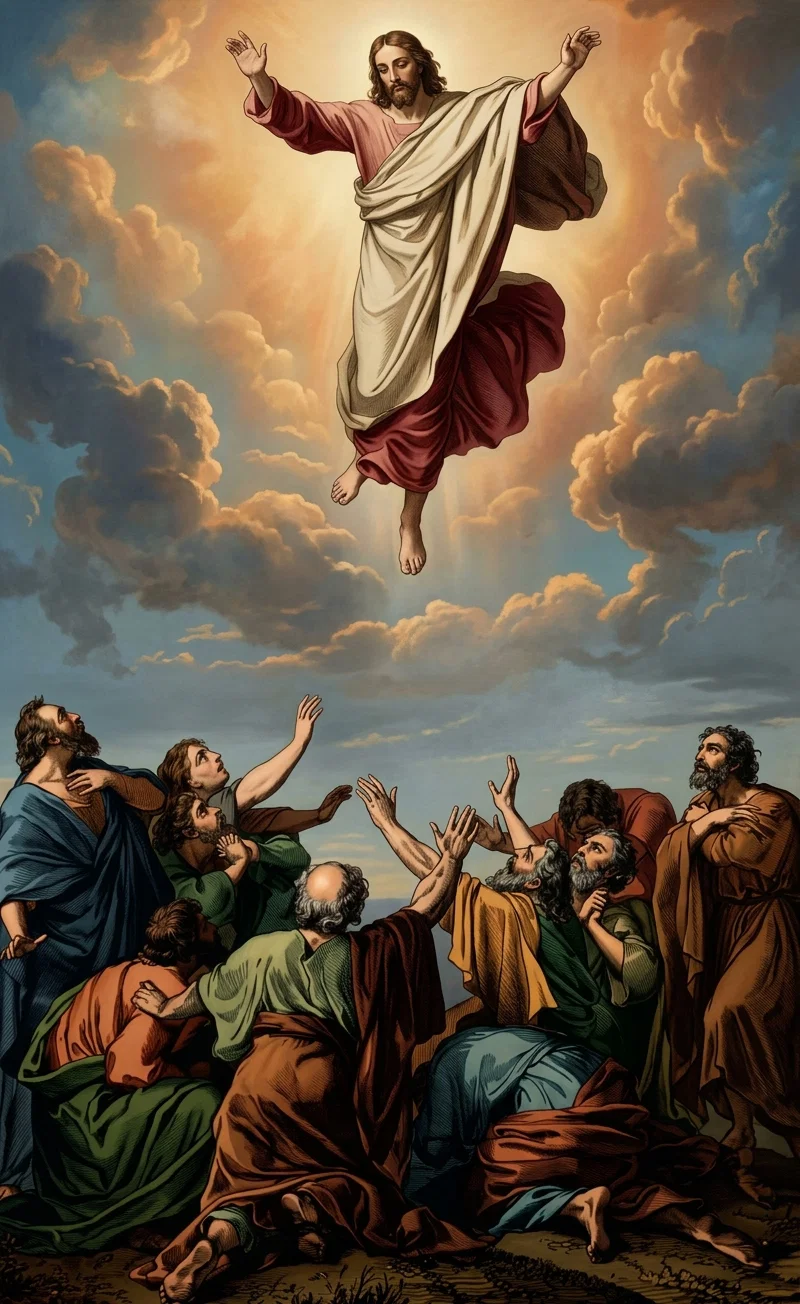
He “shall so come in like manner as ye have seen Him go into heaven.”
CHRIST IS COMING.
By J. H. Durland
Reader, do you believe it? Do you believe we are living in the last days of the Gospel dispensation? Do you know that Jesus said that He would come again? Yes, He has said this very thing: “In My Father’s house are many mansions; if it were not so, I would have told you. I go to prepare a place for you. And if I go and prepare a place for you, I will come again, and receive you unto Myself; that where I am, there ye may be also.” John 14: 2, 3. This must be so, for His Word endureth forever. “The Word of the Lord endureth forever. And this is the Word which by the Gospel is preached unto you.” 1 Peter 1:25. He can not lie about this, for He is the Truth. “Jesus saith unto him, I am the Way, the Truth, and the Life.”
Jesus not only Himself said He would come, but He sent His messengers, the angels, to say when the same thing, that in the mouth of two or three witnesses every word might be established. When He had ascended into the clouds the angels comforted the waiting, watching disciples with these words: “This same Jesus, which is taken up from you into heaven, shall so come in like manner as ye have seen Him go into heaven.” Acts 1:11. These angels had proved to man that their testimony was to be relied on by not being mistaken when they announced His first advent. Luke 1:26–38; 2:8–18.
When Jesus was about to leave His disciples, He comforted their hearts by promising them the Holy Spirit. John 14:16, 17, 26. Of the Spirit He said, “He will guide you into all truth.” John 16:13. The Holy Spirit, by the mouth of the apostles, has repeatedly declared that Jesus would come again. “So Christ was once offered to bear the sins of many; and unto them that look for Him shall He appear the second time without sin unto salvation.” Heb. 9:28. See also 1 Thess. 4:16; Heb. 10:37. Is not such an event, stated upon such good authority, of vital importance to you?
At His first coming the world rejected Him. He was a despised Nazarene. To-day many are rejecting Him and scoffing at the idea of His return to this world. Many will not have this Jesus, who offers to forgive their sins, rule over them. Reader, are you one of that number? He is soon coming, and will appear as “the blessed and only Potentate, the King of kings, and Lord of lords.” He is coming to sit upon the throne of His glory (Matt. 25:31), and to be admired in all that believe in Him, and to judge all that have rejected Him (2 Thess. 1:10; Jude 14, 15). How glorious it will be to see “the King in His beauty”!
Are you ready to meet Him? If not, you can get ready by confessing your sins and receiving pardon to-day. You need not wait for a minister to visit you, but go to Him who is so soon coming, and confess that you are a sinner, and receive pardon. Will you believe him?
J. H. DURLAND.
Battle Creek, Mich.
THE SUN A BUILDER.
By S. N. Haskell
We have noticed some of the effects of sunshine. Many more might be noticed, all of which show the sun in its operations in nature. God made no mistake when He said, “The Lord God is a sun and shield.”
The sunshine, or heat and light from the sun, is the motive power which sets in operation nearly all the forces of life, and also many of the physical forces which are continually going on upon the face of the earth. Plant life is fed by the sun. The sun, shining upon the leaves of a plant, sets up a process of digestion, or absorption. It is a process by which carbonic-acid gas is taken in, and the carbon organized into woody structure, into starch and sugar, and the various elements which compose our foods.
The sun, therefore, becomes a builder not only of plants, trees, and vegetation generally, but furnishes food which builds the human system.
It penetrates the earth down to the rootlets of the trees. In the spring it sets in operation life in the roots of the sugar maple, and as the sap is on its way to nourish the branches and small twigs of the tree, the farmer steals and manufactures it into sugar. So the sunshine is the source of food for animals as well as plants.
Some plants have very singular habits. The flowers will open to the morning sun, and close when the sun disappears. Others will always turn face toward the sun, so as to gather as much of the vitalizing influence of the rays as possible. The sunflower until ripe follows the sun through the arch of heaven all the day long, and catches the last lingering rays at the close of the day. Some flowers are so sensitive to the sun, and so regular in their manifestations, that they constitute a floral clock, and it is possible by looking at the face of them, to tell the time of day. Is there not a spiritual lesson in all this? Is not Christ the bread of life? Should not our hearts be closed to darkness and unbelief, and open to the Sun of Righteousness? See Isa. 42:18–20.
The various colors of flowers, and the variety of colors in the single flower, are all painted by the rays of the sunlight. For the sunbeams have all the colors in them; and it is from this source that the green leaf, the crimson flower, the golden orange, get their hues.
The sunlight is also promotive of human life, but destructive to germs which are fatal to human beings. If we spend a large portion of time outdoors where the sun can shine upon us, these germs can not flourish. So is Christ. His rays destroy those germs which act like a canker to the soul. He placed the natural life in the sun, to build vegetation, to give beauty to flowers by their varied hues. A harmony in variety is characteristic of divinity. See 1 Peter 3:3, 4.
The sun is also essential in the production of4vegetable and animal life, that the great Master Builder might in this instruct us. Even thus by this light He will fit His people for the heavenly kingdom. “For every house is builded by some man, but He that built all things is God.” And ye “are built upon the foundation of the apostles and prophets, Jesus Christ Himself being the chief corner-stone; in whom all the building fitly framed together groweth unto an holy temple in the Lord; in whom ye also are builded together for an habitation of God through the Spirit.” Eph. 2:20–22. “Ye are God’s building.”
We can through this object-lesson of the blessings of the sun understand better that “godliness is profitable unto all things, having promise of the life that now is, and of that which is to come.” It is by connecting the spiritual with these object lessons in nature, that we become transformed, and partakers of the divine nature, escaping the corruption that is in the world through lust. “According as His divine power hath given unto us all things that pertain unto life and godliness, through the knowledge of Him that hath called us to glory and virtue; whereby are given unto us exceeding great and precious promises; that by these ye might be partakers of the divine nature, having escaped the corruption that is in the world through lust.” 2 Peter 1:3, 4.
God never designed that man should simply appropriate to himself for selfish interests the things of this life, but that in these things he should see the divine, and learn the lesson which would fit the soul to reign in the kingdom of glory.
It is thus that science should be studied. The Bible contains the practical lessons of life, but it is only the interpreter of nature. It shows to the diligent observer Christ’s character, and in its operation are manifest divine lessons. True science and the Bible always harmonize; not only so, but science in the light of the Bible becomes to mankind an object lesson of the sublimest spiritual truths, revealing even deeper mysteries of the kingdom of God than words without nature can express.
S. N. HASKELL.
UNDERSTANDING THE SCRIPTURES.
By M. E. K.
Some one has said, “Ask an infidel to find something in the Bible and you have got him;” that is, you have given him something to do of which he is incapable.
But this is not always true, neither are infidels the only class who can not find anything in the Bible, nor quote it correctly. The modern newspaper editor is about as bad, and he is very prone to try to use Bible quotations to illustrate his ideas. The editor of a leading Chicago paper, wishing to illustrate a point in politics, exclaims, “‘Where is the sign of His coming?’ asked the impatient early Christians.”
Now there are two texts in the Scriptures which sound something like the above. And this editor has not quoted either of them correctly. One of these is Matt. 24:3, and reads thus: “Tell us, when shall these things be? and what shall be the sign of Thy coming, and of the end of the world?” This question was asked by the disciples of Christ, by the early Christians. It was not an impatient question; it was a very proper question; and the Lord replied at length, giving many signs that would in the future indicate that His coming was near. Moreover, this question was asked before the Lord went away, even before His death. It was asked also in a way that shows that the coming of the Lord was an event of the future to them. But the text as quoted by the Chicago editor seems to relate to the present: “What is the sign?” etc. It can not, therefore, be the same question.
This is all the question about His coming that the early Christians asked that we have any record of. True, there is a similar question, or a prediction that a similar question will be asked, but the time of it is not the time of the early Christians, but of the last days. Here it is: “Knowing this first, that there shall come in the last days scoffers, walking after their own lusts, and saying, Where is the promise of His coming?” 2 Peter 3:3, 4. This is evidently the text of Scripture which the Chicago editor had in mind, but in his very hazy knowledge of it, he thought it was asked by early Christians, when it is actually now being asked by last-day scoffers. Is it possible that any of the readers of the SIGNS hold ideas in regard to the teaching of any scriptures as much out of the way as that of this editor? It may be, and while we search the Scriptures we should earnestly pray that the Spirit of truth may illuminate our understandings, that we may understand what we read. Otherwise, of what use will the Scriptures be to us? M. E. K.