Signs of the Times, Vol. 39, No. 14.

He Is Risen

Signs of the Times

Apr 2, 1912

Pacific Press Publishing Association · Mountain View, California · Apr 2, 1912

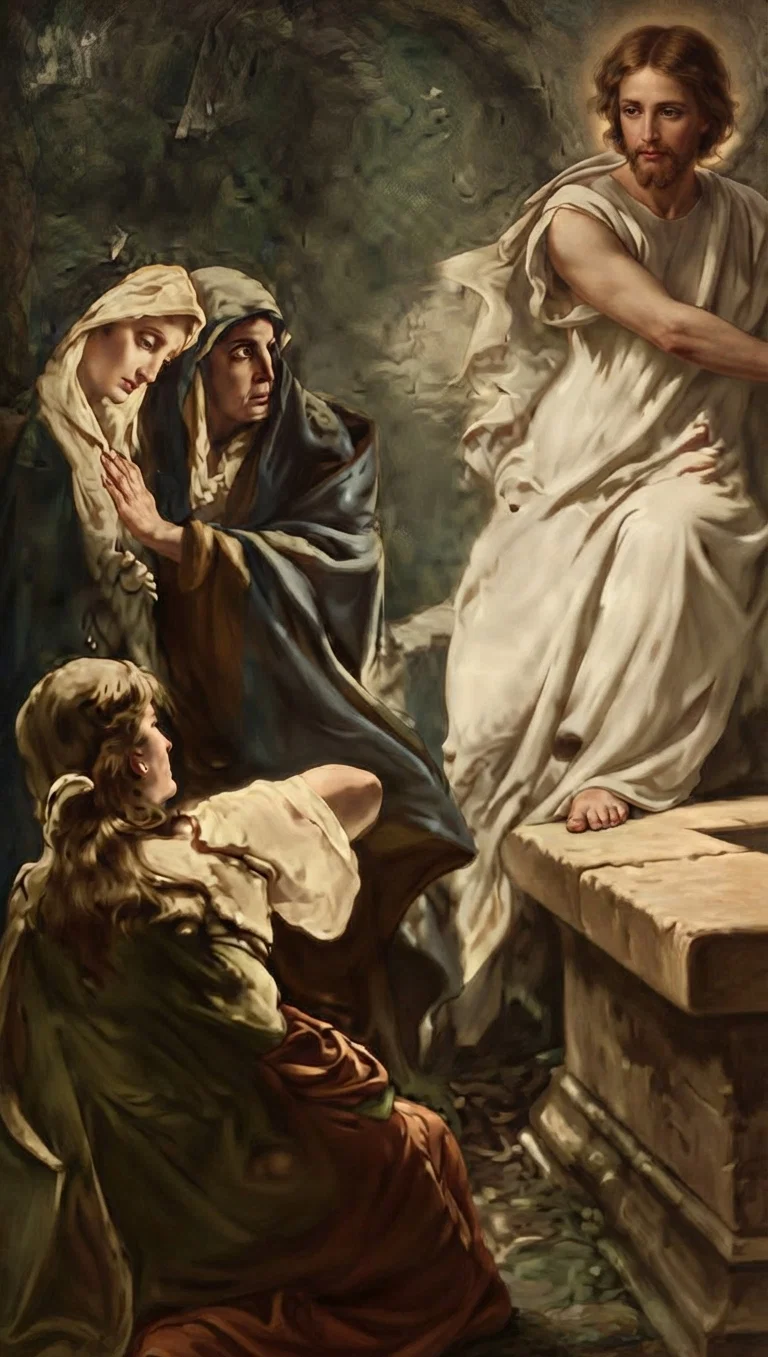
He Is Risen
I know that ye seek Jesus, who hath been crucified. He is not here; for He is risen, even as He said. . . . Lo, He goeth before you into Galilee; there shall ye see Him. Matt. 28:5-7.
NOW if Christ be preached that He hath been raised from the dead, how say some among you that there is no resurrection of the dead? But if there is no resurrection of the dead, neither hath Christ been raised: and if Christ hath not been raised, then is our preaching vain, your faith also is vain. Yea, and we are found false witnesses of God; because we witnessed of God that He raised up Christ: whom He raised not up, if so be that the dead are not raised. For if the dead are not raised, neither hath Christ been raised: and if Christ hath not been raised, your faith is vain; ye are yet in your sins. Then they also that are fallen asleep in Christ have perished. If we have only hoped in Christ in this life, we are of all men most pitiable. But now hath Christ been raised from the dead, the first-fruits of them that are asleep. For since by man came death, by man came also the resurrection of the dead. For as in Adam all die, so also in Christ shall all be made alive. But each in his own order: Christ the first-fruits; then they that are Christ's, at His coming.

The Power of His Resurrection

That I may know Him, and the power of His resurrection, and the fellowship of His sufferings, becoming conformed unto His death; if by any means I may attain unto the resurrection from the dead. Phil. 3:10, 11.
OUR BIBLE BAND
OUR BIBLE BAND

Schedule for Week Ending April 13, 1912

Sunday | April 7 | Judges 12, 13, 14 Monday | " 8 | " 15, 16 Tuesday | " 9 | 1 Samuel 1, 2 Wednesday | " 10 | " 3, 4 Thursday | " 11 | " 5, 6 Friday | " 12 | " 7, 8 Sabbath | " 13 | Psalms 24, 25, 26
Our first two days conclude our readings in the book of Judges, with the history of Samson, the rest of it being omitted as simply throwing strong side-lights on the conditions of Israel at that time, interesting because of that; but if we must omit any, let us omit some of these side-light pictures, rather than the great main lines, which show the development of God's work with the holy Seed. The history of Samson is exceedingly unsatisfactory,—a man who seemed to be almost wholly selfish and sensuous, and totally unworthy; yet is he set before us as an example of faith. Sometimes there are great sinners who have great faith, and Samson seemed to be one of them. Not this alone, but he was one whom God could use. He seemed to be the best instrument at hand at that time, and God uses the best instruments at hand; for it was not Samson alone who was involved, it was the people of Israel and the nation of the Philistines as well. Keeping these thoughts in mind will help us to solve some of the problems of Scripture.
We omit the book of Ruth. It only takes a few minutes to read the whole book,—a wonderful love story, literally true, and full of type and promise for the future. It will be seen that the actors in it are a part of the family from which our Lord Himself sprang.
The book of Samuel opens a new era for Israel. Through their transgressions and departing from God, they had been brought very low,—poor slaves to the Philistines; and they were willing to listen to the voice of the new prophet that God raised up from a child through the devoted mother Hannah. We need not take time to dwell upon it; the record itself is very plain. There is one incident, however, which is worthy of mention, regarding the ark of the Lord. Israel had been instructed regarding its holiness. It was not to be shown as a common object to all the people; and when they slighted God's commands, they suffered for it. The Philistines knew nothing of all this. To them the ark was a god among other gods. So when they put it upon a new cart and sent it away with milch kine, they were following the best light they had; and while they were not blessed because of it, judgments were withdrawn from them.
Our reading brings us down to the time when Israel is asking a king.
The week closes with the beautiful psalms 24, 25, 26. The last part of 24 is prophetic of the ascension of our Lord, after His resurrection. The two psalms which follow are echoes of true Christian experience.

IF YE WILL INQUIRE, INQUIRE YE

This Inquirers' Department is conducted for the purpose of helping those who are studying the Bible. The answers are oftentimes only suggestive. They are never to be considered infallible, only as they agree with the infallible Word. The writer who may answer them does not consider that his opinion is infallible. He will simply give the best that he has, and plead with the inquirer to search the Word. Such questions only will be answered as, to the editors, seem to minister to the good of the readers and to the mission of the paper. We can not answer repeatedly in the same volume questions upon the same scripture. The name and address must accompany question, not for publication, but as an evidence of good faith, and that answer may be made by letter if deemed advisable. No letters are answered which do not contain the name of the writer. It is well always to enclose stamp for reply.

3706 — The Coming of Christ

Please explain 1 Thess. 3:13, concerning the coming of the Lord Jesus Christ with all His saints; and also chapter 4:14-17. Is the coming of this last scripture with all His saints? This does not seem to harmonize with Zech. 14:5, last part. I. T. H.
The expression in 1 Thess. 3:13, "with all His saints," may have direct reference to angels. The word "saints" simply means holy ones, just as in Jude 14, "Behold, the Lord cometh with ten thousands of His saints"—of His holy angels, the holy ones. Then it is, of course, that the children of God will be gathered home, and the apostle prays that their hearts may be established until that time.
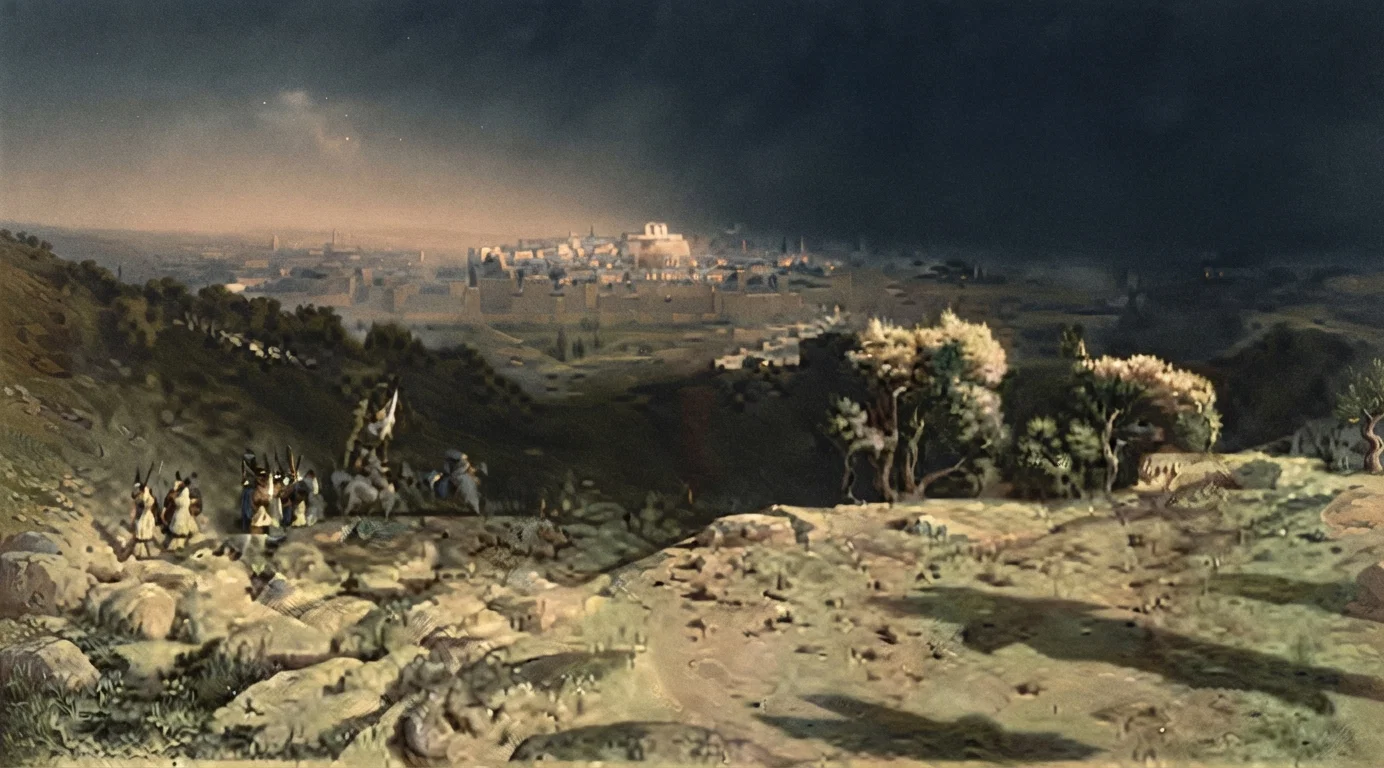
Chapter 4:14-17 applies to the same coming. God will come, and all His holy angels with Him; but at that time He will gather His saints from all parts of the earth, and they will arise to meet Him and the holy angels in the air, thus to be ever with the Lord. See also Matt. 24:31. But at the end of the thousand years, after this earth has undergone its millennium of desolation, the Lord will again come; and not only will He come, but the city of the New Jerusalem will descend, as stated in Revelation 21. Then it will be that "the Lord my God shall come, and all the saints with" Him. They will come from the heaven to the earth; the Lord's feet shall touch the Mount of Olives, and the Mount of Olives shall cleave asunder, and form a great plain; and upon this part of the earth, purified by the touch of the divine as our Lord descends upon it, will be that great plain upon which will be "the camp of the saints," and "the beloved city," as implied in Rev. 20:9, while the earth will melt by fervent heat. See 2 Peter 3:10-13. Upon that great sea of fire will the city of God rest, and the saints of God will remain unharmed. See Isa. 54:11-17; 33:14, 15. The Lord says of that city, "O thou afflicted, tossed with tempest, and not comforted, behold, I will lay thy stones with fair colors, and lay thy foundations with sapphires." And again, "No weapon that is formed against thee shall prosper; and every tongue that shall rise against thee in judgment thou shalt condemn. This is the heritage of the servants of the Lord, and their righteousness is of Me, saith the Lord." And the latter text indicates that they are able to dwell amid the everlasting burnings unharmed, because of that righteousness which is in them.

3707 — Matt. 12:40

Will you kindly explain Matt. 12:40, or harmonize this text with Luke 23:54 and 24:1? M. and F. J.
Matt. 12:40 does not mean just exactly seventy-two hours. It was customary among the Jews to speak of day and night as meaning a day, and three days and nights as meaning three days—a part of one day, perhaps, the whole of one day, and a part of a third day—and that is the way it is used here. To prove that it would mean just seventy-two hours, we would have to prove that Jonah was just seventy-two hours in the heart of the sea-monster. If we would compare all of the various texts which speak of the three days and nights of the time that our Lord was in "the heart of the earth"—not in the grave, for it does not say this—we would say that the terms were used with more or less latitude. We have not space to explain it fully here; but if our inquirers have access to "Questions and Answers," which is furnished to individual subscribers to the "Signs" for $2.00 a year, and will read what is said on pages 28 to 34, they will have a full explanation of this text, more than we have space for at the present in the "Question Corner." The article on another page entitled "Jesus and the Passover," will also be helpful on this subject.

3708 — Salvation of Children

Will children of evil parents, who have not reached the age of accountability, be saved? H. H. G.
This we do not know, for God has given us no express revelation regarding it. He has, however, shown us this in His Word,—that Christ died to save us from Adam's sin. If Adam had not sinned, he would have been saved. The consequences of that sin Christ saves us from. "As in Adam all die, even so in Christ shall all be made alive." It matters not what our character may be, or what our condition in life may be, we are saved from the Adamic death through Christ. Whether we shall be saved from the second death, the eternal death, or not, depends upon our own character; and our character, upon accepting God's plan of salvation. Those who do not do that, of course, will die; for there is no other means of salvation save through Him. But those who have no sins to answer for of themselves, it would naturally follow, would live; and that would include even the children of evil parents. Those who knew no evil of themselves, having no evil to answer for, would live, and be brought up in the nurture and admonition of the Lord. God exhorts us, however, to do all in our power to save our children, and count them with us in this salvation.
There is another consideration that is worthy of note here, that will help us to leave these questions that we do not understand with God: The Bible is addressed to responsible men and women, to those who are accountable. Those who are in no wise accountable to God, we can leave with Him, can we not, and know that He will be kind, and wise, and merciful, and will do the very best that infinitely loving and omnipotently all-wise God can do for them? Surely we can trust Him with them.

3709 — Samuel and the Woman of Endor

Will you please explain 1 Sam. 28:7, 11, 14, 15? How could a familiar spirit call a prophet of God from the grave, if this woman is one of Satan's agents, and, according to the Scriptures, the dead know not anything? M. L. M.
For a fuller explanation than we can give here, see Bible Students' Library, No. 112. Let our inquirer note these facts: 1. Samuel, before he died, would have nothing to do with Saul, nor would any other prophet. The Lord would not answer Saul, either by dreams or by Urim or by the prophets. 2. It was contrary to God's will that His children should go to those who had familiar spirits,—forbidden again and again. See Lev. 19:31; 20:27; Deut. 18:10, 11. Saul, when he was in better standing before God, had put these away out of the land as evil. 3. Saul had come to that place where, not receiving any answer from God in any way, he had fallen so low as to seek counsel from a woman who had a familiar spirit, an agent of Satan, and disguised himself and went under cover of night,—a fitting way and time to seek agents of darkness. 4. The familiar spirit of this woman warned the woman that it was Saul who came to her, and she told him that he was Saul. That was the first thing the spirit did. One would hardly believe that the spirit of Samuel was warning this woman of darkness for her safety's sake, when God had forbidden their existence in the land. 5. The king did not see the spirit which the woman brought up. The woman described what she saw,—"An old man cometh up; and he is covered with a mantle. And Saul perceived [that is, from the woman's description] that it was Samuel." Is that the way the spirits are brought from heaven?—still as old men, covered with mantles? 6. The spirit (called "Samuel" in the narrative, because Saul believed it was he) asked Saul, "Why hast thou disquieted me, to bring me up?" The theology of immortal soulism tells us that the spirits of the good are in heaven. This spirit is represented as having been "brought up." 7. It could not be the resurrected body of Samuel, because Samuel was buried at Ramah, and this woman lived at Endor. Was there a door opening to the outer world away from Samuel's grave, and the one who held that door the woman with a familiar spirit? 8. This spirit asks Saul why he had asked of him, when the Lord had departed from him and had become his enemy. Then the spirit proceeds to tell Saul some unwelcome truth—perfectly in harmony with the devil, always, who is an accuser. We are sure that if our inquirer will study the record carefully, he will see that even then the spirit told that which was not true, because it was not the next day, nor the next day after, that Saul was slain. 9. Would God reprove Saul for seeking Samuel? Saul had sought him many times in his life, in perfect harmony with God's will, and had been instructed by him; and now at his very last, when he was seeking Samuel, would the Lord reprove him, or slay him because of that? Yet we read in 1 Chron. 10:13, "So Saul died for his transgression which he committed against the Lord, even against the word of the Lord, which he kept not, and also for asking counsel of one that had a familiar spirit, to enquire of it; and enquired not of the Lord: therefore He slew him." The whole record shows that Saul, having departed from God, was brought under the deceptions of the devil, and that the familiar spirit simply professed to be Samuel, as familiar spirits are professing to be Samuel, and Moses, and Paul, and thousands of others who are good, or whom we have loved.

3710 — A. K. — Eph. 5:4

The "jesting" is just such foolish, idle, senseless talk as can properly be classed with the two preceding,—"filthiness," and "foolish talking." Rotherham renders it, "shamelessness and foolish talking, or jesting, which things are beneath you." Certainly it goes without saying that the Christian ought not to indulge in things that are beneath or do not befit him. The expression "convenient" in our Common Version does not convey the correct idea. The American Revised Version has it, "nor filthiness, nor foolish talking, or jesting, which are not befitting."

Looking unto Jesus

(Concluded from last week)
NOW is my soul troubled," said Christ,—stirred to its very depths; "and what shall I say? Father, save Me from this hour." This is the cry of the humanity of Christ, as He contemplated the future. He was about to enter upon the hour of His humiliation. To His human nature, the death on the cross could not but be clothed with horror. But glory was to come from humiliation. Life and immortality were to be brought to light by His death.
The severity of the coming conflict and trial was veiled from the disciples. Christ saw the view they took of His work, and He knew that telling them now of His suffering and death, would not give them satisfactory light. It would not correct their belief in regard to His mission. He could not open before them all that must come upon Him.
While in the presence of His disciples, Christ seemed to them as one who saw things afar off, things which were unseen by them. He did not keep before them the scenes of His humiliation; these He must bear alone. But a faint glimpse of His soul anguish is given in the words, "Now is My soul troubled; and what shall I say? Father, save Me from this hour." These words were spoken in anticipation of the future. In anticipation He was already drinking the cup of bitterness. His humanity shrank from this hour of abandonment, when to all appearances He would be deserted even by God, when all would see Him stricken, smitten of God, and afflicted. He shrank from public exposure, from being treated as the worst of criminals, from a shameful and dishonored death.
Then came divine submission to His Father's will. "For this cause," He added, "came I unto this hour. Father, glorify Thy name." Before the world was created, the plan was laid that the Majesty of Heaven should come to the earth as the sin-bearer. As Christ said these words, a cloud seemed to enwrap Him; once more divinity shone through humanity. There came a voice from heaven, saying, "I have both glorified it, and will glorify it again." Christ's life, from the manger to the time when He spoke these words, had glorified God, and His future divine-human sufferings would indeed glorify His Father's name.

Exaltation through Crucifixion

Some present, beholding the revelation of God, said that it thundered. Others, the Greek inquirers and the disciples, catching the words of the voice, said, "An angel spake to Him. Jesus answered and said, This voice came not because of Me, but for your sakes. Now is the judgment of this world: now shall the prince of this world be cast out. And I, if I be lifted up from the earth, will draw all men unto Me. This He said, signifying what death He should die." This is the crisis of the world. If I become the propitiation for the sins of men, the world will be lighted up. The defaced image of God will be reproduced and restored, and a family of believing saints will finally inhabit the heavenly home. This is the result of the crucifixion of Christ. "As many as received Him, to them gave He power to become the sons of God."
"And I, if I be lifted up from the earth, will draw all men unto Me." A short time only remained till the wall of partition reared by the Jews to keep others from the privileges which they enjoyed, would be broken down. Christ saw, as the result of His death, the ingathering of nations, tribes, and peoples. Lost in the contemplation of the scenes of triumph called up before Him, He did not immediately speak. He saw the cross, the cruel, ignominious cross, with all its attending horrors, blazing with glory.
But before the harvest can be reaped, the grain of wheat must fall into the ground and die. Even so must Christ be crucified. Only by His death could the work of redemption be accomplished.
"And I, if I be lifted up from the earth, will draw all men unto Me." The question is asked, Why, then, are all not drawn to Christ?—It is because they will not come; because they do not choose to die to self; because they wish, as did Judas, to retain their own individuality, their own natural and cultivated traits of character. Altho they are given every opportunity, every privilege, yet they will not give up those tendencies which, if not cut away from the character, will separate them from Christ. If, continuing to cherish these traits of character, they were admitted to heaven, they would cause a second rebellion.
Many people were round about Christ as He spoke these words, and one said, "We have heard out of the law that Christ abideth forever: and how sayest Thou, The Son of Man must be lifted up? who is this Son of Man? Then Jesus said unto them, Yet a little while is the light with you. Walk while ye have the light, lest darkness come upon you: for he that walketh in darkness knoweth not whither he goeth. While ye have light, believe in the light, that ye may be the children of light. These things spake Jesus, and departed, and did hide Himself from them." The Jews wished to provoke a controversy with Him there and then, that they might have something withwhichto accuse Him. Already a conspiracy for the purpose of putting Him to death had been formed.
Notice the power of unbelief. "Tho He had done so many miracles before them, yet they believed not on Him." Christ had worked many miracles before the Jews. As an evidence of His divine mission, He had raised Lazarus from the dead. But the men who witnessed this miracle had set their hearts against Christ, and nothing could lighten the darkness that encompassed them. "Tho he had done so many miracles before them, yet they believed not on Him: that the saying of Esaias the prophet might be fulfilled, which he spake, Lord, who hath believed our report? and to whom hath the arm of the Lord been revealed? Therefore they could not believe, because that Esaias said again, He hath blinded their eyes, and hardened their heart; that they should not see with their eyes, nor understand with their heart, and be converted, and I should heal them. . . . Nevertheless among the chief rulers also many believed on Him; but because of the Pharisees they did not confess Him, lest they should be put out of the synagog: for they loved the praise of men more than the praise of God."

God's Message to Us

To-day Jesus reads the hearts of all; He knows the sentiments of every soul. And to us, at the very close of this world's history, He is saying: "He that believeth on Me, believeth not on Me, but on Him that sent Me. . . . I am come a light into the world, that whosoever believeth on Me should not abide in darkness."
Christ's teaching made the disciples realize their own imperfections. And those who now behold Jesus, and fully submit to the sanctifying process that cuts away natural tendencies and habits, will be made patient, kind, forbearing, and full of compassion. This is a hope big with immortality, and full of glory.
God has graciously given men a probation, that they may through Christ obtain that power which will constitute them His sons. But full and entire consecration to God is required of us. While our Redeemer was laboring and suffering for us, He denied Himself, and His whole life was one continued scene of toil and privation. Had He chosen, He could have passed His days on earth in ease and plenty, and appropriated to Himself all the pleasures and joys of this life. But He did not. He lived not to glorify Himself, but to do good, to save others from suffering, and help those who most needed help. He endured to the end. The chastisement of our peace was upon Him, and He bore the iniquity of us all. The bitter cup was apportioned to us. But the dear Saviour took the cup from our lips and drank it Himself, and in its stead He presents to us a cup of mercy, blessing, and salvation. O, what an immense sacrifice was this! What love, what boundless love!
After this manifestation of love, shall we shrink from the small trials we have to bear? Can we love Christ, and refuse to lift the cross? Can we love to be with Him in glory, and not follow Him from the judgment-hall to Calvary? If Christ be in us, the hope of glory, we shall walk even as He walked. We shall imitate His life of self-sacrifice; we shall drink of the cup from which He drank; and be baptized with the baptism wherewith He was baptized.
Continue reading: Man as Created