Your ShelfYour Projects

Signs of the Times, Vol. 24, No. 39.

THE MIRACLES OF OUR LORD

Signs of the Times

Sep 29, 1898

Pacific Press Publishing Company · Oakland, California · Sep 29, 1898

THE MIRACLES OF OUR LORD.

Changing the Water into Wine.
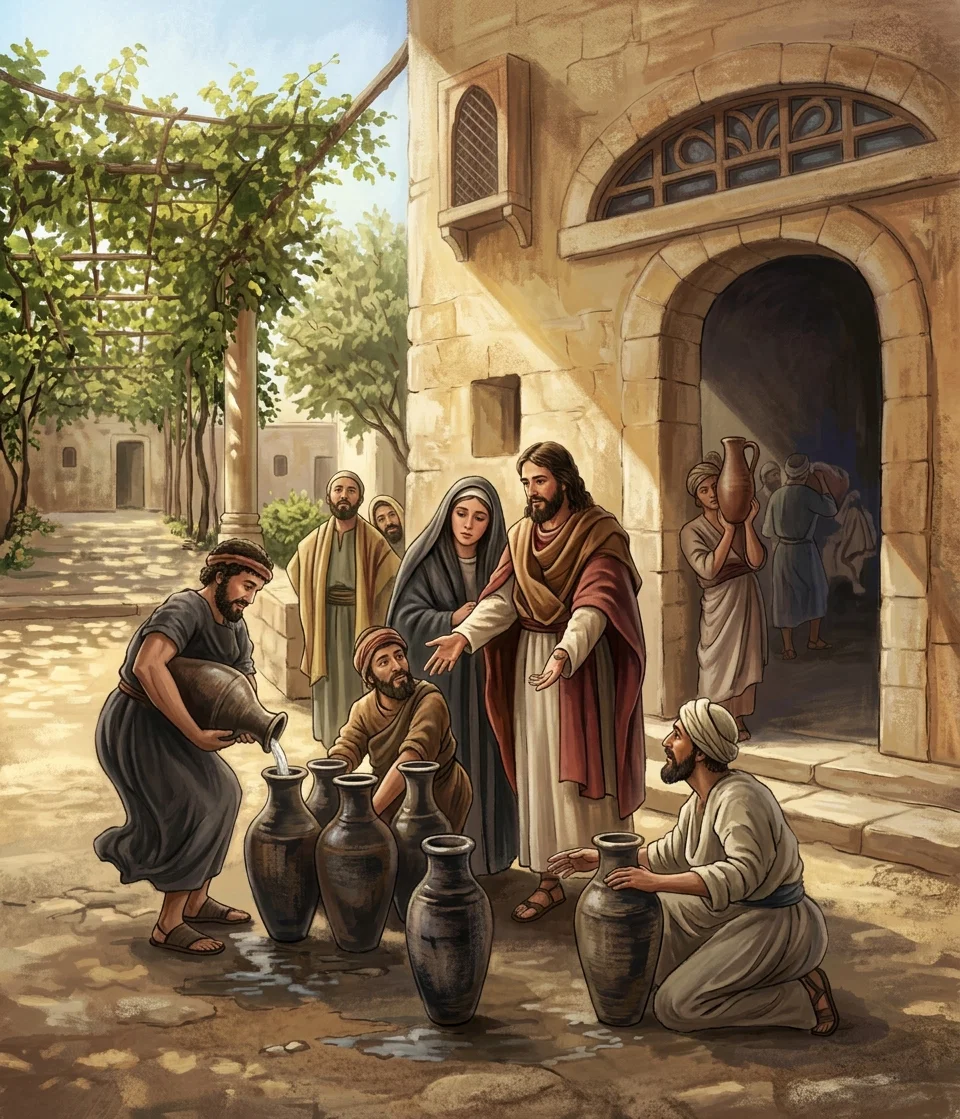
THE purpose to be served in making the miracles of Jesus a part of the Gospel record is clearly stated in the Scripture itself: “These [miracles] are written, that ye may believe that Jesus is the Christ, the Son of God; and that believing ye may have life in His name.” John 20:31, R.V. In our study of the miracles, therefore, this object should be kept in view, that we “may lay hold on the life which is life indeed.”
“Jesus saith unto them, Fill the water-pots with water. And they filled them up to the brim.” John 2:7.
All the revealings of the power of God in the world about us teach the same lesson, when they are properly understood, and so the miracles should also serve as divine interpretations of the Gospel of life and power which is proclaimed in the more familiar, and so less startling, operations of the same Master Workman. “The miracles of the Bible are not only emblems of power in the spiritual world, but also exponents of the miracles of nature, experiments, as it were, made by the great Teacher in person, on a small scale, and within a limited time, to illustrate to mankind the phenomena that are taking place over longer periods throughout the universe.” When thus viewed, they will not only teach their own lesson to us, but they will also throw such a light upon God’s book of nature that we may read the same lesson on every page. And thus recognizing constantly the presence and power of the living God in us and around us, we may learn to receive it in its fulness as “the power of an endless life.”

The Simple Record.

The record of the miracle which we are to study in this lesson is brief, simple, and natural. It is God giving us a view, at close range, of His own mighty power with the simplicity of a father explaining his work to his little child for the purpose of encouraging confidence. And the account closes with these words: “This beginning of miracles did Jesus in Cana of Galilee, and manifested forth His glory; and His disciples believed on Him.” John 2:11. In our study of the Holy Spirit’s account of this miracle we should see the manifested glory just as clearly as did the disciples, and with the same result, believing for life in His name.
Note the simple facts: “They wanted wine;” “and there were set there six water-pots of stone;” “Jesus saith unto them, Fill the water-pots with water. And they filled them up to the brim. And He saith unto them, Draw out now, and bear unto the governor of the feast. And they bare it.” Then the ruler of the feast tasted “the water that was made wine,” and immediately called the bridegroom and said, “Every man at the beginning doth set forth good wine; and when men have well drunk, then that which is worse; but thou hast kept the good wine until now.”

The Power of the Word.

We are not told how the water was changed into wine. In obedience to the word of Jesus they poured the water into the water-pots, and in obedience to the same word they drew out and bare to the governor of the feast that which on tasting proved to be the best wine of the feast. There is one word, however, which gives all the explanation which is needed, and that word is “Jesus.” He is the Word of God, and “all things were made by Him; and without Him was not anything made that was made.” “And the Word was made flesh, and dwelt among us (and we beheld His glory).” And not only were all things made through Him, but He also is “upholding all things by the word of His power,” and “in Him all things consist,” or hold together. It is by the direct constant revealing of the power of God through Jesus Christ, “the power of God,” that the orderly march of the stars and planets is maintained and that the so-called operations of nature are carried forward. “My Father worketh hitherto, and I work.” And in performing this miracle Jesus is giving a sample, as it were, of His work, and revealing Himself as the one through whose personal agency all the processes of vegetable growth and fruit-bearing are carried forward.
In the usual method of changing water into wine the vine is the visible means of accomplishing the work. The water which has been poured upon the ground by the showers of rain is gathered up by the roots of the vine, carried up by the stock into the branches, and becomes the juice of the grapes. When the process is completed and the grapes are subjected to pressure, then can be obtained the water, which is now changed into wine. Several months are occupied in this work, which goes on quietly by day and by night. But Jesus has said, “I am the true [real] vine;” and the vines which we see in the gardens and the vineyards are not independent agencies for the changing of water into wine; they are simply the visible forms through which works the life of Jesus, the true Vine; and as He at Cana of Galilee, dispensing with the usual visible forms of vegetable life, and disregarding the question of time, “manifested forth His glory” by changing the water into wine, so He would teach us that the same glory is manifested when the same change is wrought by Him in the way so familiar to us. And as “His disciples believed on Him” when they saw that which He did in Cana of Galilee, so would He have us believe on Himwhen we see what He is doing in every garden and vineyard. And as this miracle was written in order that those who read it might by believing “have life through His name,” so, viewing all the processes of growth and fruit-bearing in the light thrown upon them by this miracle, and reading them as so interpreted, we may by believing “have life through His name.”

The Gospel of the Miracle.

It is evident that the Gospel is preached to us in this miracle, and through its teaching we may see how the Gospel is preached to us in every garden and field. The Gospel is “the Gospel of the glory of Christ, who is the image of God” (2 Cor. 4:4, R.V.); “the Gospel of the glory of the blessed God” (1 Tim. 1:11, R.V.); and this glory is His goodness (Ex. 33:18, 19), His character, His righteousness. The Gospel “is the power of God unto salvation to every one that believeth; . . . for therein is the righteousness of God revealed.” And so when Jesus at Cana of Galilee “manifested forth His glory” by doing the work which He wrought that day, He was simply showing that the power which changes water into wine is the power which God uses with which to save believers. And the glory which was then manifested is the glory which brings life to the dead; for “Christ was raised up from the dead by the glory of the Father” (Rom. 6:4); and so, recognizing “the glory of His power” day by day as it is revealed to us in the true Vine, we who are “dead in trespasses and sins” are quickened together with Christ, and raised up together with Him, and made to “sit together in heavenly places in Christ Jesus.” But this is “the exceeding greatness of His power to usward who believe, according to the working of His mighty power, which He wrought in Christ, when He raised Him from the dead, and set Him at His own right hand in the heavenly places.” And so “we all, with open face beholding as in a glass the glory of the Lord, are changed into the same image from glory to glory.” And this is the work of the Gospel, that those who “have sinned and come short of the glory of God,” should once more be crowned with glory and honor.
It was the work of Jesus “to preach . . . recovering of sight to the blind,” that we might be able to see Him as the true Vine, and so submit ourselves unto Him that He “who maketh grass to grow upon the mountains,” and hangs the luscious fruit upon the branches of every vine and tree, may fill us “with the fruits of righteousness, which are by Jesus Christ, unto the glory and praise of God.” “I am the vine, ye are the branches; he that abideth in Me, and I in him, the same bringeth forth much fruit; for without Me ye can do nothing.” And this is the Gospel which He would teach us in the miracle in Cana of Galilee. W. W. PRESCOTT.
London, England.

HOW TO TAKE BLESSINGS.

To take blessings open-handed, with glad and thankful heart, and to get from them all the joy with which God has charged them, is the beginning of praise. God would have you remember, in bidding you praise, that that which you enjoy, that which exhilarates you, is His good gift to you. God puts into it that element which makes it a blessing,—God’s own hand presents the cup to your lips. Praising, you realize this, and confess it. . . . He who can praise makes his joy perennial. The particular pleasure passes, but the fountain endures, and will pour forth fresh and sparkling streams through eternity. He who mingles praises with a glad to-day makes a glad to-morrow. And so all life by praise becomes a sacrament of joy. There are no breaks or pauses in the flow of blessings to those who joy in God.—James Baldwin Brown.

THE GLORY OF GOD.

“For all have sinned, and come short of the glory of God.” Rom. 3:23. The inference to be drawn from this passage is that the glory of God was the ultimate object had in view in the creation of man. In fact, this thought is plainly stated in several passages of Scripture. Here is one: “Thou art worthy, O Lord, to receive glory and honor and power; for Thou hast created all things, and for Thy pleasure they are and were created.” Rev. 4:11.
But man has not attained to the object of his creation. By sin he has “come short of the glory of God.” “Sin is the transgression of the law.” 1 John 3:4. And if the transgression of the law causes all to “come short of the glory of God,” it follows that obedience to the law would enable all to attain to the glory of God, and therefore that the law of God is the measure of the glory of God, and that to attain to that glory is to meet the requirements of the law.
But “all have sinned, and come short of the glory of God.” Not one has met the requirements of the law in his life. “There is none righteous, no, not one.” Therefore not one can attain to the glory of God by trying to meet the requirements of the law. Transgression has made the mind of all carnal, “and the carnal mind is not subject to the law of God, neither indeed can be.” Even tho the carnal mind could meet the requirements of the law from this time forward, that is no more than it ought to do, and it would still “come short of the glory of God” in consequence of past transgression. But the carnal mind can not even meet the requirements of the law for the future, much less atone for the sins of the past. How, then, can “the glory of God” be attained, not only for the present, but also for the past?
Just at this point is where another attribute in the character of God is made manifest. Altho “all have sinned, and come short of the glory of God,” yet all may be “justified freely by His grace through the redemption that is in Christ Jesus.” It is by the grace of God that we are to attain to the glory of God. And this is true not only for the present, but by the same means the glory of God is to be attained for the past; for God hath set forth Jesus Christ “to be a propitiation through faith in His blood, to declare His righteousness for the remission of sins that are past, through the forbearance of God.”
The law condemns all men to death because it sees transgression, and all that the word “transgression” stands for, written upon the hearts of all men everywhere, when in order to the glory of God it should see obedience written there instead. The law condemns pride, and foolishness, and every other evil thing, and it holds the rod of death over every one in whom they are seen, and that is every one in the world. But the glory of God, the requirements of His law, can be fulfilled in every man by the grace of God. Man can attain to the object of his creation, he can attain to the glory of God, by the grace of God.
Listen to the Scripture: “But the God of all grace, who hath called us unto His eternal glory by Christ Jesus, after that ye have suffered a while, make you perfect, stablish, strengthen, settle you.” 1 Peter 5:10. It is through the grace of God that we are called to the glory of God by Christ Jesus. David says, “The Lord God is a sun and shield; the Lord will give grace and glory.” He gives grace as a “shield” against the death penalty of the law both for past transgressions and for present imperfections. “Let us therefore come boldly unto the throne of grace, that we may obtain mercy, and find grace to help in time of need.” He gives glory, His own glory, as the brightness of the “sun” to shine out in us through obedience to His law. But it is all in Christ.
Read again: “Grace and peace be multiplied unto you through the knowledge of God, and of Jesus our Lord, according as His divine power hath given unto us all things that pertain unto life and godliness, through the knowledge of Him that hath called us unto glory and virtue; whereby are given unto us exceeding great and precious promises; that by these ye might be partakers of the divine nature, having escaped the corruption that is in the world through lust.” 2 Peter 1:2–4. And further: “For all the promises of God in Him are yea, and in Him Amen, unto the glory of God by us.” 2 Cor. 1:20. All that we can ever know of the grace of God is what is revealed to us in the promises of God.
It is through the promises of God in Him that the glory of God is to be attained by us. “In Him dwelleth all the fulness of the Godhead bodily. And ye are complete in Him.” Col. 2:9, 10. “If any man be in Christ, he is a new creature; old things are passed away; behold, all things are become new.” 2 Cor. 5:17. The pride, the vanity, the foolishness, all the “old things” of this character, “are passed away,” when I am “found in Him,” “not having mine own righteousness, which is of the law, but that which is through the faith of Christ, the righteousness which is of God by faith.” Phil. 3:9.
When once we are found in Him, the demands of the law are satisfied: “For He hath made Him to be sin for us, who knew no sin;that we might be made the righteousness of God in Him.” 2 Cor. 5:21. And when the law looks for the evil things in us for which we were once under its curse, even the curse of death, it can see only the divine perfection of Christ, who “hath redeemed us from the curse of the law, being made a curse for us.” Gal. 3:13. The knowledge of the glory of God is given in the face of Jesus Christ. 2 Cor. 4:6. “But we all, with open face beholding as in a glass the glory of the Lord, are changed into the same image from glory to glory, even as by the Spirit of the Lord.” 2 Cor. 3:18.
But the Scripture says that Christ is in us as well as that we are in Him. And therein is the difference between the grace of God and the glory of God. We are in Christ that He may be a “shield” to us from the curse of the law. This is a grace. Christ is in us that He may be a “sun” to shine forth in the world obedience to the law of God in us. This is glory, even the glory of God. The riches of His grace is shown in the forgiveness of sins: “In whom we have redemption through His blood, the forgiveness of sins, according to the riches of His grace.” Eph. 1:7. The riches of His glory is shown by granting power to live in harmony with His law. “To whom God would make known what is the riches of the glory of this mystery among the Gentiles; which is Christ in you, the hope of glory.” Col. 1:27.
And why not this glory just now? Is not the admonition given to “arise, shine; for thy light is come, and the glory of the Lord is risen upon thee. For, behold, the darkness shall cover the earth, and gross darkness the people; but the Lord shall arise upon thee, and His glory shall be seen upon thee” (Isa. 60:1, 2)? And did not the Saviour say, “And the glory which Thou gavest Me I have given them; that they may be one, even as We are One” (John 17:22)? And the apostle Paul testifies, “Whom He justified, them He also glorified.” The glory of God is ours to enjoy just now. EUGENE LELAND.
Bethel, P. Q.

GOODNESS AND GREATNESS.

WILT thou be great? Then get thee down From proud ambition’s lofty throne; Content to wear Love’s unseen crown, Be “loved and prized by God alone.” No niche of fame in Church or State Need show to men where thou hast stood— “Only the good are truly great, The truly great are good.”
Wilt thou be great? No earthly power Can raise thee to that blissful height Where lowliness hath built her tower In simple dignity and might. Men earthly honors overrate, And meekness, strength misunderstood— “Only the good are truly great, The truly great are good.”
For goodness is from God, and He Is only great because He’s good; His power might fill eternity, His love alone is Fatherhood. Then at His feet submissive wait; Seek not earth’s laurels, if you could— “Only the good are truly great, The truly great are good.”
To humble souls at Jesus’ feet There comes a rapture all unknown To men who, taking chaff for wheat, Seek heavenly joys in earth’s renown; There is no higher, noble state Than lying at the feet of God— “Only the good are truly great, The truly great are good.”
—Anon.

TO WHOM DO YOU BELONG?

You belong to the Lord, for He made you for Himself. Tho Satan has robbed God of His own, and has taken you in his power, still you belong to the Lord. He has even bought your redemption, and paid a great price for it, that you might be redeemed back from Satan.
Every living soul belongs to the Lord. For His own pleasure He created you. Are you a pleasure to the Lord, or are you dishonoring your Maker?
He cares not what your name may be, or where you are; how young, or how old; how good, or how wicked; how rich, or how poor. It matters not, you belong to your Maker, the Lord God.
You may be very weak, even unable to move a limb, or you may have the strength of a giant, and be able to move surprising weights; you may possess great wealth, may even be a prince or a king; or you may be a poor beggar, going from door to door, still you belong to the Lord; not some other weak or strong, rich or poor person, but you.
O, do not let Satan keep the Lord’s own any longer! Perhaps he has made a wreck of you already, so that you feel that you are of no use to God, and feel ashamed to offer yourself to Him in your present condition, thinking you could never be of any use to Him. Never mind that; it is very sad if it be thus, but still you belong to God; and tho you are old and worn-out, or sin-stained and hardened, He will take you back, and give you something that you may do.
Many a human workman has found much valuable material in a wreck. Can not the infinite wisdom of God do as much, or even more?
He is even able to restore to you years of service you have lost, and you may yet do much work for your Father. You may lead others from Satan to their Maker.
Fathers, mothers, brothers, sisters, all, tho everything may seem to forbid, and tho you may be the vilest, most polluted sinner among men, do not be afraid to go back where you belong. Have no fear of a God of love. Surely He will not turn you away. He made you for Himself, but you have let Satan use you all these years.
Go back to your Owner now. He wants you, and is waiting for you, intending to receive you with joy and gladness if you will come back to Him; and the angels of heaven will rejoice with Him, and be glad when you return. Are you going back now? Remember, you belong to the Lord. He says: “Fear not; for I have redeemed thee, I have called thee by thy name; thou art Mine. . . . I, even I, am He that blotteth out thy transgressions for Mine own sake, and will not remember thy sins.”
MRS. LUELLA L. HARMON.
Flint, Mich.

“GIVE UNTO THE LORD THE GLORY DUE UNTO HIS NAME.”

Many and abundant are the promises of God to all who will be obedient to His commandments. All who have faith in Christ obtain a rich experience in His goodness and love, a goodness which is of more value than gold. It is a goodness that has been recognized in times of great necessity. Then let not any of God’s chosen ones suffer their faith to fail at the time when they should reveal the inward power of the Christian’s hope. Every soul will be tested and tried, but God has made provision that at such times His grace shall be abundantly supplied. When His people look to Him, and call upon His name, He will hear their cry, and say, “Here I AM.” He declares:—
“Fear thou not; for I am with thee; be not dismayed; for I am thy God; I will strengthen thee; yea, I will help thee; yea, I will uphold thee with the right hand of My righteousness. Behold, all they that were incensed against thee shall be ashamed and confounded; they shall be as nothing; and they that strive with thee shall perish. Thou shalt seek them, and shalt not find them, even them that contended with thee; they that war against thee shall be as nothing, and as a thing of nought. For I the Lord thy God will hold thy right hand, saying unto thee, Fear not; I will help thee. . . . When the poor and needy seek water, and there is none, and their tongue faileth for thirst, I the Lord will hear them, I the God of Israel will not forsake them. I will open rivers in high places, and fountains in the midst of the valleys; I will make the wilderness a pool of water, and the dry land springs of water. I will plant in the wilderness the cedar, the shittah tree, and the myrtle, and the oil tree; I will set in the desert the fir tree, and the pine, and the box tree together; that they may see, and know, and consider, and understand together, that the hand of the Lord hath done this, and the Holy One of Israel hath created it.”
We do not honor God if, when oppressed and afflicted, we doubt His goodness, if we cherish sadness, and mourn and repine. We dishonor God when we permit our souls to be cast down. Even when in trouble our faith should not fail. None need to feel that God has forsaken them. There should be no expressions of unbelief; for unbelief, when cherished, shuts from us the richest manifestations of the grace of God. Our lack of faith keeps from us the working of the Holy Spirit. On the part of those who are chosen of God to be His people and His representatives, it is a grievous mistake to dwell upon trying experiences, as tho the Way, the Truth, and the Life were a disagreeable companion. This pleases and glorifies the enemy, and reveals to the world that they do not recognize in Jesus a very present help in time of need.
It is our duty to be jealous for the glory of God, and bring no evil report even by the sadness of the countenance, or by ill-advised words, as tho the requirements of God were a restriction upon our liberty. The whole person is privileged to bear a decided testimony in every line,—in features, in temper, in words, in character,—that the service of the Lord is good. Thus we may proclaim, “The law of the Lord is perfect, converting the soul.” Our words should be positive on the side of the Lord. “Blessed are the undefiled in the way, who walk in the law of the Lord. Blessed are they that keep His testimonies, and that seek Him with the whole heart. They also do no iniquity; they walk in His ways. . . . I will praise Thee with uprightness of heart, when I shall have learned Thy righteous judgments.” “I will run the way of Thy commandments, when Thou shalt enlarge my heart.” “O how love I Thy law! it is my meditation all the day. Thou through Thy commandments hast made me wiser than mine enemies; for they are ever with me.”
When farmers seek to recommend their products, they do not exhibit the poorest specimens. The women bring in their best lumps of golden butter. The men bring the best fruit and vegetables of every kind, and their appearance does the skilful workers credit. No dwarfed specimens, but the very choicest that the land can produce, are brought. And why should not Christians reveal the most attractive fruit in unselfish actions? Why should not the fruit of the commandment-keeping people of God appear in good works? Their words, their deportment, their dress, should be as fruit of the very best quality. “Ye shall know them by their fruits.” Christ said, “Do men gather grapes of thorns, or figs of thistles? Even so every good tree bringeth forth good fruit; but a corrupt tree bringeth forth evil fruit. A good tree can not bring forth evil fruit, neither can a corrupt tree bring forth good fruit. Every tree that bringeth not forth good fruit is hewn down, and cast into the fire. Wherefore by their fruits ye shall know them.”
God loves His commandment-keeping people. Through their obedience they give honor to His holy name, testifying of their love for Him. But are they doing this? The men of the world who hear the sacred truths of the Word of God, are surprised that the people professing to believe these high and holy truths have not a more intense and earnest zeal to work for the salvation of their fellow-beings. Our faith and intensity of zeal should be proportionate to the great light which shines upon our pathway. Faith, humble, trusting faith in God, will reveal itself in the home, in the neighborhood,in the church. The Holy Spirit’s working will not, can not, be hindered. God delights to manifest Himself to His people as a Father, as a God in whom they can trust implicitly. Let the church-members have the precious traits of the character of Christ, and there will be much more said in praise and thanksgiving to God for the treasure of His grace. And the more we reveal to others the power of an indwelling Saviour, the more of His power will be revealed to us. Mark how full and complete is the provision made for all who accept it:—
“Elect according to the foreknowledge of God the Father, through sanctification of the Spirit, unto obedience and sprinkling of the blood of Jesus Christ: Grace unto you, and peace, be multiplied. Blessed be the God and Father of our Lord Jesus Christ, which according to His abundant mercy hath begotten us again unto a lively hope by the resurrection of Jesus Christ from the dead, to an inheritance incorruptible, and undefiled, and that fadeth not away, reserved in heaven for you, who are kept by the power of God through faith unto salvation ready to be revealed in the last time. Wherein ye greatly rejoice, tho now for a season, if need be, ye are in heaviness through manifold temptations; that the trial of your faith, being much more precious than of gold that perisheth, tho it be tried with fire, might be found unto praise and honor and glory at the appearing of Jesus Christ.”
In faith and richness of experience we fall far below our privilege as Christians. God designs that no worthless, cheap words shall proceed from our lips. He requires that the fruit of the lips shall be sanctified. “Wherefore gird up the loins of your mind,” says the apostle, “be sober, and hope to the end for the grace that is to be brought unto you at the revelation of Jesus Christ; as obedient children, not fashioning yourselves according to the former lusts in your ignorance; but as He which hath called you is holy, so be ye holy in all manner of conversation; because it is written, Be ye holy; for I am holy.” “And if ye call on the Father, who without respect of persons judgeth according to every man’s work, pass the time of your sojourning here in fear; forasmuch as ye know that ye were not redeemed with corruptible things, as silver and gold, from your vain conversation received by tradition from your fathers; but with the precious blood of Christ, as of a lamb without blemish and without spot.”
The bright and cheerful side of our religion will be represented by all who are daily consecrated to God. They will express their gratitude to God in bringing Him their thank-offerings. We do not want to dishonor God by the mournful relation of trials that appear grievous. Trials are Christ’s workmen to perfect in us the Christian graces, and these tests are not to sink the believer’s faith, but raise it equal to the occasion, that unto all it may appear more precious than gold that perisheth, tho it be tried by fire. Every trial is designed to exalt the truth to a higher appreciation, that praise to God alone may be upon the lips of the true disciple. And the growth in grace is to the honor and glory of God at the appearing of Jesus Christ, “whom having not seen, ye love; in whom, tho now ye see Him not, yet believing, ye rejoice with joy unspeakable and full of glory; receiving the end of your faith, even the salvation of your souls.”
All trials that are received as educators will produce joy. The whole religious life will be uplifting, elevating, ennobling, fragrant with good words and works. The enemy is well pleased to have souls complaining and stumbling. He is pleased to see them depressed, downcast, and mourning; but God designs that the mind shall take no low level. The psalmist says: “Give unto the Lord, O ye mighty, give unto the Lord glory and strength. Give unto the Lord the glory due unto His name; worship the Lord in the beauty of holiness.” “I will extol Thee, O Lord; for Thou hast lifted me up, and hast not made my foes to rejoice over me. O Lord my God, I cried unto Thee, and Thou hast healed me. . . . Sing unto the Lord, O ye saints of His, and give thanks at the remembrance of His holiness.”
“I will bless the Lord at all times; His praise shall continually be in my mouth. My soul shall make her boast in the Lord; the humble shall hear thereof, and be glad. O magnify the Lord with me, and let us exalt His name together. I sought the Lord, and He heard me, and delivered me from all my fears. They looked unto Him, and were lightened; and their faces were not ashamed. This poor man cried, and the Lord heard him, and saved him out of all his troubles. The angel of the Lord encampeth round about them that fear Him, and delivereth them. O taste and see that the Lord is good; blessed is the man that trusteth in Him.”
MRS. E. G. WHITE.

SERVE GOD AND BE CHEERFUL.

“SERVE God and be cheerful.” The motto Shall be mine, as the bishop’s of old; On my soul’s “coat of arms”! I will write it In letters of azure and gold.
“Serve God and be cheerful.” Live nobly, Do right and do good. Make the best Of the gifts and the work put before you, And to God without fear leave the rest. —William Newell, D.D.

“GO THOU AND PREACH THE KINGDOM OF GOD.”

A PREVAILING idea with the masses of professed Christians in this country is that God can not use this or any other nation in the line of His purpose unless it be a “Christian nation.” Therefore they would make it a Christian nation by a process of human law, as Constantine did with Pagan Rome. In that case, however, the result was the Dark Ages of religious persecution; would not another like attempt produce a like result? God never made a Christian nation on the earth, and it is clear that man can not do it. All that the Christian commission includes is to “preach the Gospel to every creature” (Mark 16:15), and let its light shine in good works (Matt. 5:16; Titus 3:14). God will manage the nations Himself. “The Most High ruleth in the kingdom of men, and giveth it to whomsoever He will.” Dan. 4:17, 25, 32; also 2:21; 5:21.
God has used the veriest heathen in the process of carrying out His purpose in the earth. Nebuchadnezzar, king of Babylon, was given dominion over the whole earth, including God’s own people Israel. (See Jeremiah 27.) In turn He used the heathen Medes and Persians, under Cyrus (His “shepherd,” His “anointed,” Isa. 44:28; 45:1), to overthrow Babylon. Again, He used the heathen Grecians under Alexander, who was a most reckless, dissipated heathen, to overturn Persia; and afterward the heathen Romans, the most cruel of all, were given universal sway for more than six hundred years. And under dominion of all these universal heathen nations God kept His promise to Abraham, Isaac, Jacob, and David, and preserved the genealogical line through which Christ was to come according to the flesh. Can He not so manipulate the nations as to preserve His chosen seed until the triumphant Saviour shall come the second time, to take them to Himself? If God can not do this, who can?
And it is stated (2 Kings 5:1) that by Naaman the leper “the Lord had given deliverance unto Syria.” This deliverance was from the Assyrians, another heathen people. So we see that God can limit the powers and operations of all nations, and do it by means of themselves. If violent measures are necessary in the restriction of the wicked world, God will assign the violent ones to the work; and there is no lack of those who love such work.
But the disciples of Christ are assigned to a different work. He came to preach the Gospel of salvation; He came not “to destroy men’s lives, but to save them” (Luke 9:56); and “he that saith he abideth in Him ought himself also so to walk, even as He walked” (1 John 2:6). “Have faith in God” (Mark 11:22); let Him take care of the nations, and let Christians do the work assigned to them. Let the world do the world’s work; there are plenty of them to do it. There is no lack of laborers in that field, but in the vineyard of the Lord “the harvest truly is plenteous, but the laborers are few.” Matt. 9:37. “Let the dead bury their dead; but go thou and preach the kingdom of God.” Luke 9:60.
W. N. G.
Continue reading: UNDER THE LAW OR UNDER GRACE