Your ShelfYour Projects

Review and Herald, Vol. 83, No. 42.

Our Publishing Work
Earlier text: Nineveh, That Great City

The German-Swiss Meeting

GUY DAIL
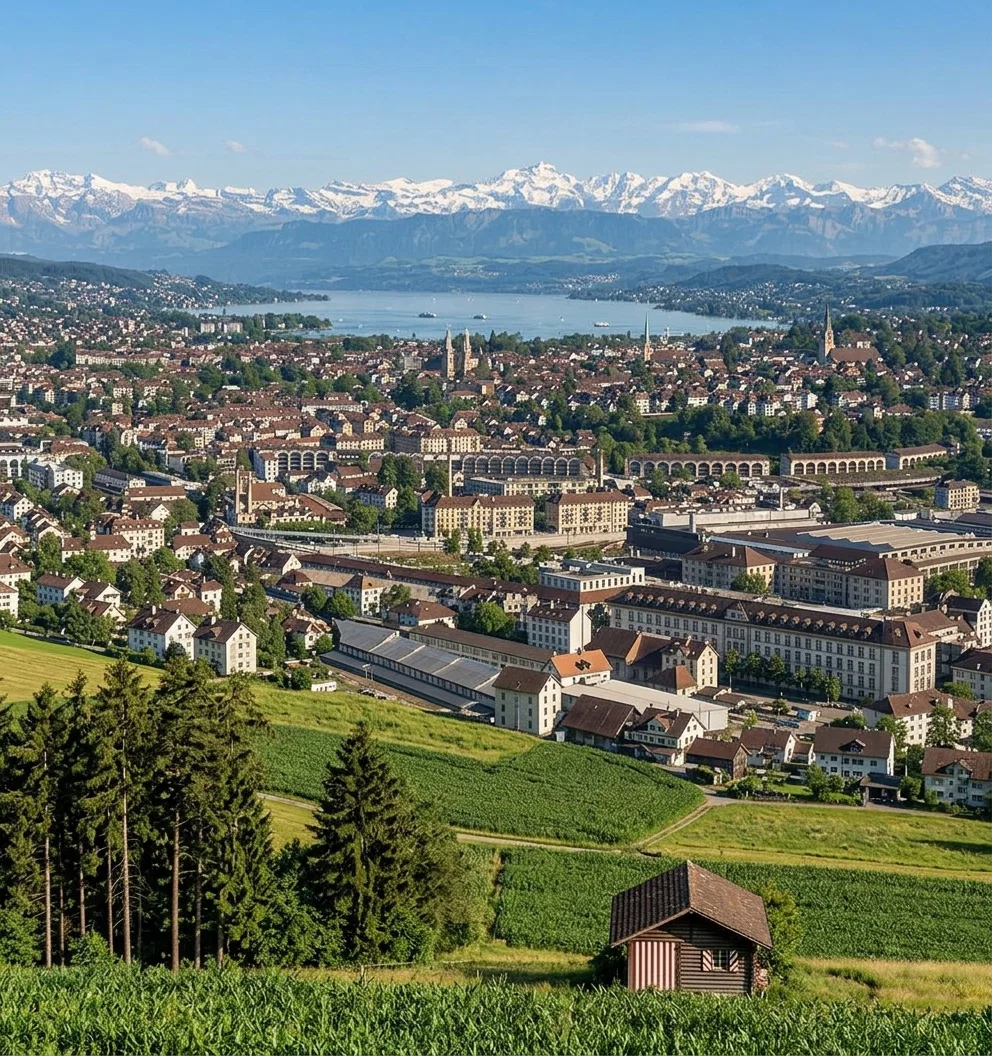
Our fifth annual camp-meeting of the German-Swiss Conference was held at Küssnacht, July 5-9, on a green plateau overlooking the Zurich Sea from the north, and half an hour's ride on the train from Zurich. About two hundred of our own people were present, and about three hundred not of our faith attended the evening services. The tent had been pitched for some little time, and a series of meetings had been in progress. The first part of the meeting, there was a little rainy weather, but it did not seem to dampen the interest that had been awakened by the preliminary tent and canvassing meetings. A number of our canvassers had held an institute in connection with the tent-meetings, and had gained a good experience in the circulation of our publications. We think this is the largest and best meeting we have yet had in German-Switzerland since its organization into a conference.
The counsel and help of visiting brethren was welcomed both by the delegates and by the strangers who were present. Brethren Conradi, Spicer, Erzberger, and Peter Nyambo were at the meeting. The consideration of missions and missionary work formed an important part of the program. Brother Nyambo related some interesting things concerning his own land and people, and the manner in which about one hundred native African boys began to observe the Sabbath at Cholo, from the simple study of the Bible alone, before they had ever heard of Seventh-day Adventists. A First-day collection amounting to almost forty dollars was taken up after Brethren Conradi and Nyambo had presented the work in Africa.
We were pleased to see so many new faces at the meeting—new converts to the truth, who rejoice with us in the message for this time. In 1905, forty-three were received, but already during the first half of 1906, fifty-seven have been taken into our fellowship, making the German-Swiss membership four hundred and fifteen; and still there is plenty of work to do, as there are yet several cantons we have thus far left untouched. The finances of the conference are also in good condition. Owing to the removal of forty-three brethren from Basel to Gland, as the Latin Union institutions were transferred, there was a slight decrease in the tithe of 1905 as compared with 1904. Last year the tithe was $3,011, but the previous year it was $3,102; however, for the first six months of 1906, the tithe has already increased so that it gives $2,423.70—a considerable gain if compared with any other like period.
The business transacted was carried forward in the spirit of harmony and brotherly union, there being no dissenting voice. It was voted to give two thousand dollars toward the erection of a home for the aged, under the direction of the German Union; the brethren strongly recommended the purchase of Sister White's new book “Education,” which has been gotten out in the German; the question of completing the sale of the remaining German “Christ's Object Lessons” was also given due attention and the plan to circulate the German “Ministry of Healing” was heartily indorsed; and the suggestion that the German-Swiss tent fund be strengthened was materially supported by about one hundred dollars in donations.
ZURICH: THE ALPS IN THE DISTANCE
Ministerial credentials were granted to H. F. Schuberth and O. Stoye; ministerial licenses to G. W. Hockarth; missionary credentials to H. Meyer, J. Seefried, Emma Steiner, and Mary Scheidegger.
The officers unanimously elected for the coming year are as follows: President, H. F. Schuberth; Secretary, O. Stoye; Treasurer, W. Sebald; other members of the Committee, J. Murbach, W. Kury, H. Lukat.
There are some things of special encouragement to our workers in the German-Swiss field, and perhaps a brief reference to one or two of them may not be amiss:—
The attitude of the public press toward our work has wonderfully changed of late. Last winter a leading religious paper contained a bitter article against us and our work, the writer being the leader of the Sunday movement in Switzerland. The elder of our Basel church wrote the pastor a very kind and courteous Christian letter, which made such a good impression on him that he called on the church elder, and, as just at that time he could not stay long enough for a visit, the pastor invited our brother to call on him. At the time of the appointment, the conference president happened along, so both he and the church elder were able to call on the pastor. Our brethren talked in a quiet, respectful way, and showed the pastor that he had been mistaken in one statement after another, until he himself acknowledged his error in every point, and said: “Well, if the church should to-morrow say we should observe the seventh day, I would keep the Sabbath.” But our brethren answered: “This is very good; however, this attitude on your part of course does not remove the false impressions created by your article, which has been sent all over Switzerland. How about that matter?” He replied: “I will write an apology for at least some of the things which I have said in my former article.” Althoughhe had always thought very harshly of Adventists, yet he said he had never had so pleasant a visit with representatives of any other sect as with our two brethren. In following issues of the paper which had contained the bitter attack on us, he stated that he had been misinformed about us in many matters, and he acknowledged that he had misrepresented us in stating that we did not believe on Christ, for he had found that Christ was the center of our system of truth, and he also acknowledged that it would be fruitless to try to withstand our principles with the Old Testament, as he had formerly attempted to do. The man's later articles seem to have turned public opinion more in our favor. We are glad to here give a short extract from a leading Zurich paper, Züricher Wochen-Chronik:—
“The Adventists belong to a sect founded . . . in 1840. They accept the Bible as the foundation of all religious life and feeling. They reject every objection and every doubt as to the truthfulness of the words of Scripture. They withstand the attacks made upon the Word by scientists and the ‘higher critics.’ They seek to live in harmony with Bible principles; their chief object is to love their neighbors as they love themselves, and they call each other brother and sister, and seek to help one another in word and deed. They observe Saturday, and claim that it is the divinely appointed rest day. . . . Through their modest, friendly appearance, the people make a good impression, and the lack of religious fanaticism is a pleasing feature of their faith. They go their way quietly and unobtrusively, seeking to overcome the inequalities of life through their simple belief (in God). Their worship is without ceremony, noise, or display, and their preaching is simple and deserving of respect. Although they are not time-setters, yet they believe that the Son of God will soon personally appear in the clouds of heaven.”
Other papers have also given very favorable notices of our tent-meetings in Küssnacht, and we are glad the Lord seems to be giving us favor with the common people, as he granted to the apostles in the beginning of the Christian dispensation. These notices have helped our meetings very much, and have seemed to break down prejudice.
We feel very thankful for the blessings God has showered down upon the work in this field, and are glad that the workers and the people go forth to their labor and to their homes with renewed cheer to press forward as never in the past, adding victory to victory, in this field with its 2,319,000 inhabitants.
Hamburg.

Progress in Cholo, British Central Africa
THOS. H. BRANCH
Sabbath, July 14, 1906, was a blessed day for the mission here. The previous week we had organized the first Seventh-day Adventist church in Cholo, with twenty-one members. On the Sabbath mentioned, after a short sermon on baptism and repentance, faith and obedience, we went to the stream to administer baptism to thirteen believing souls. Two hundred natives were present. The Lord came near by his Holy Spirit. In the afternoon the ordinances of the Lord's house were celebrated. This solemn service was enjoyed by all, and I believe that the influence of the meeting will have much to do in bringing others into the light of the truth. There are others desiring baptism, in a village quite a distance from the mission, where some of our boys go Sabbath afternoons to preach. Five persons there have presented themselves as candidates for baptism. Truly the Lord has gone before us, and hearts are being made tender; and while all are not accepting these truths, all are hearing them.
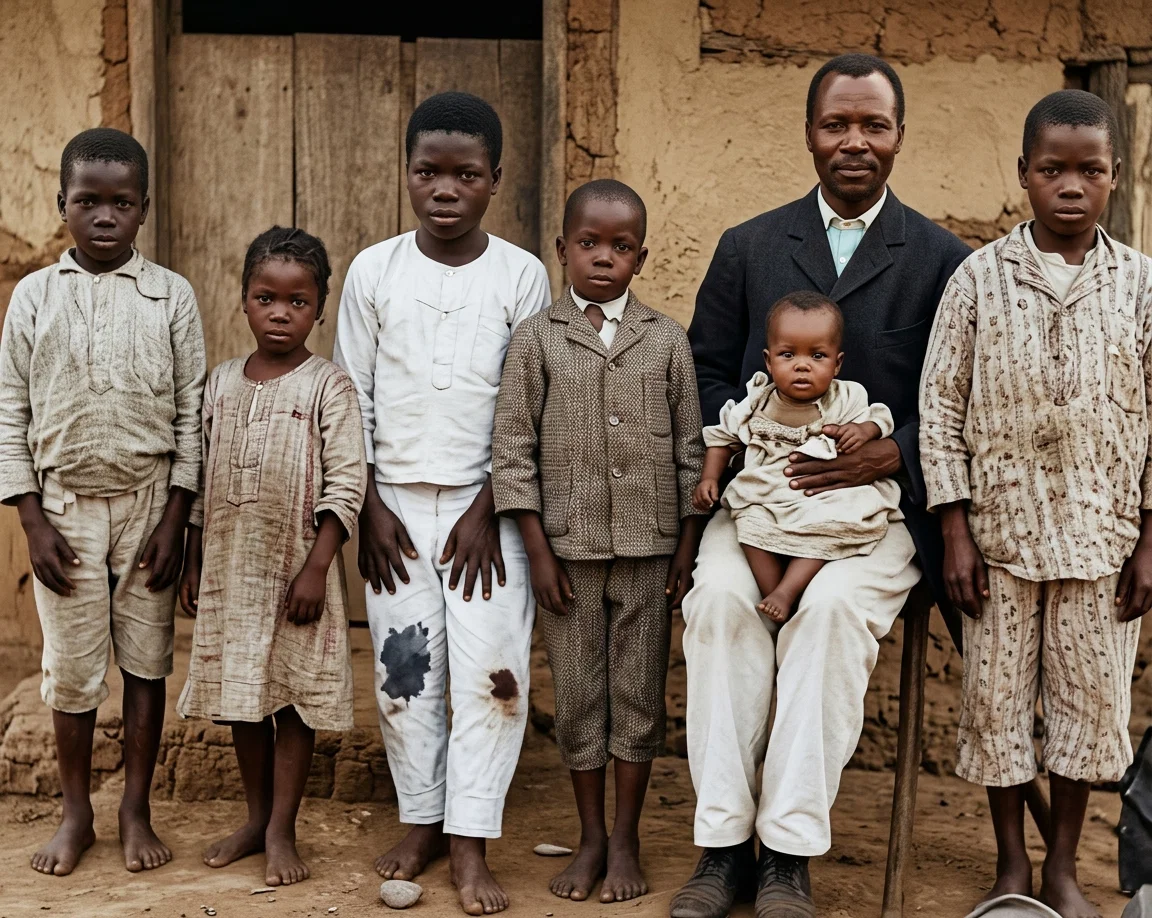
BROTHER MALINKI AND FAMILY
The adversary of souls is angry at the oft-repeated visits of the boys into his camp with the Word of God, and some poor blind souls have cried out, “Leave us alone; we do not wish to hear the Word of God, neither do we desire to hear the name of Jesus spoken.” Yet others are crying to know the way of life, and many are coming to study that they may know how to find the Saviour.
O that there were more laborers in this dark corner of Africa! God is calling. Who will answer, “Here am I; send me”? Ethiopia has her hands outstretched to God, and the cry is sounding aloud, “Send us help;” and we join our prayers and cries with these perishing ones: “Send us help, send it ere the harvest-time pass by.”
The school work is in good condition, with a daily attendance of seventy-five. Mabel, Paul, and two native teachers are instructors. The lessons in the “Gospel Primer” never seem nearly so interesting as when read by these boys, who delight to read them. We are having great difficulty in securing books and other school supplies, as the Scottish mission refuses to sell us anything, on account of the Sabbath question. They have been here about thirty years, with their schools and stores. Heretofore we have managed to move on with our work very well, as we could send a boy, and buy. But now the boy must tell from where he comes, and if he says, “Cholo,” “No” is the answer he receives. The Sabbath question is finding its way into these opposing missions, and their boys are coming to enter school and hear the truths of God.
Malinki, our native preacher, who was the first Seventh-day Adventist convert in this part of Africa, is an excellent worker. He has a good knowledge of English, speaks six of the native languages, and is of great help to us. He labors untiringly for his people. He is supported by the young people of Tennessee. It is a great inspiration to him to know that there are those who are so much interested in his brethren in Africa as to support a teacher for them.
The Lord has abundantly blessed in the mission crops during the past year, for which we are certainly very grateful. We harvested thirty tons of corn, two tons of beans, the same quantity of peanuts, and our five-acre field of sweet potatoes yielded abundantly. We are all praising God, from whom all these blessings flow.
Pray for the work here, and that the light of the third angel's message may soon spread to every kindred and tribe, and that all may quickly hear of our soon-coming Saviour.

Rome Never Changes

WALTER G. BOND
There are many people who have admired the new pope as a man profoundly religious, a reformer of the music of the church, a defender of civil marriage, and liberal in every way; but judging from his two catechisms sent out for use in all Roman Catholic provinces, his teachings are no more liberal nor evangelical than those of the Council of Trent under Pope Pius V.
The first article of the new creed runs thus: “I believe in the infallibility of the vicar of Christ (page 30); in the universal pastor; in the master of the universe, who possesses absolute and immediate authority over all pastors andsheep, who has the fulness of the power of pardon (page 125), and is the fountain and standard of faith.” See pages 352, 396, 400.
One question is, “Do all men who are baptized pertain to the church of Jesus Christ though they do not recognize the Roman pontiff as its head? Answer.—No; all those who do not recognize the Roman pontiff as its head, do not pertain to the church of Jesus Christ.”
With reference to the Bible we find the following: “What should a Christian do if the Bible is offered to him by an emissary of the Protestants? Answer.—If it is offered him, he should refuse it with horror, inasmuch as it is prohibited by the church. If he has received it ignorantly, he should cast it into the fire at once, or deliver it to his priest. Question.—Why does the church prohibit Protestant Bibles? Answer.—The church prohibits Protestant Bibles because they are adulterated, or contain errors, or they have notes to explain difficult texts, which might injure the faith. For this reason the church also prohibits the versions which have heretofore been approved by her, because they do not contain the interpretations that she has given.
“The authority of the church, that is to say in concrete cases, that of the pope, is superior to that of God, and of his word contained in the holy books.”—Translated from the Spanish.
How true it is that Rome never changes! She demands worship.
A few days since one of our brethren was out selling tracts. After having canvassed a small country village, he was out on the sidewalk arranging his bicycle to start for the next town. The parish priest came singing down the middle of the street, bearing an image. Our brother continued his work. Upon passing him the priest stopped and asked, “Why do you not do reverence by removing your hat?” The canvasser replied, “That would be against my religion. God's Word forbids my doing so.” The priest then called upon the authorities to arrest him. So he was led away to jail. But having been an old-time friend of the chief official of the town, he was released without trial, after being charged never to be found guilty of that offense again. The week before this, my brother Frank, in company with two of our brethren, went to an adjoining province to sell tracts. Having been arrested in two towns, they appealed to the governor, who ordered them to leave the province by the first train, stating that they had the Roman Catholic religion, and wanted no other. But God has said that his “gospel of the kingdom shall be preached in all the world for a witness,” and that in this generation. So we are sure, even though this door may seem closed at present, that the sound of this warning message will be heard in every part of this sin-darkened land, the home of the Inquisition. Pray for the work here.
Barcelona, Spain.

Demand for Scriptures in Russia

THE Bible Society reports that there is a greater demand than ever before in Russia for copies of the Scriptures. Notwithstanding the unrest and trouble in the land, the Word of light is spreading.

The Camp-Meeting for the Chesapeake Conference and the District of Columbia

THIS meeting was held in Brightwood, near Takoma Park, September 11-16. The ground was a large field covered with a beautiful carpet of green, only a few minutes' walk from any part of Takoma Park, and near two street-car lines. It was somewhat of an experiment, for this is the first camp-meeting that has been held here since the establishment of our work in the national headquarters.
The meeting was free from conference business, so the time was devoted exclusively to the study of the third angel's message and to the spiritual interests of the people. There was a good representation of our people from the Chesapeake Conference, and also a good attendance of our members from Washington. The evening services were well attended by citizens of Takoma Park and its vicinity. A deep interest was manifested in the truths presented, and regrets were expressed, not only by our own people, but by those from outside, that the meetings were not to be continued longer.
Elders Daniells and Spicer took a leading part in the preaching during the meeting, and the Lord added his blessing to the timely messages which they bore in the demonstration of the Spirit's power.
Sabbath, September 15, was a remarkable day for the cause of God in this part of the field. When the time arrived for the forenoon service, a large congregation, most earnest seekers for a deeper work of grace in their hearts, had assembled. Elder W. A. Spicer delivered a spiritual sermon, after which an appeal was made for all those who had been convicted of sin, and over one hundred responded to the call, including those who came for the first time, and others who had backslidden. There were many heartfelt confessions made, signifying plainly that the work which was being wrought was not a superficial one. It is to be regretted that the meeting could not have been continued longer, and thus afforded opportunity for those who made a start for the first time and those who were reclaimed, to become more firm in the principles of the gospel before separating to go to their homes to battle with the trials and perplexities of life. There will be great need of vigilance on the part of those who took their stand at this time. Let the leaders of churches, parents, and all, realize the importance of what it means to be their “brother's keeper.”
In addition to the laborers already mentioned who had a part in the meeting, there were in attendance, Elder Morris Lukens and Prof. B. G. Wilkinson, who had the arrangement of the meetings, also Elders J. F. Jones, V. H. Lucas, and J. A. Traugh. Elder W. J. Fitzgerald, of Philadelphia, was with us for one day, and rendered very efficient service in the meeting. A sermon which he preached will not soon be forgotten, in which he gave a warning against Seventh-day Adventists' following in the footsteps of other religious denominations in becoming self-satisfied and trusting to their past experience, instead of being aggressive and unsatisfied with their present attainments. His position was well supported by abundant Scripture texts.
Sunday afternoon, the last day of the meeting, twelve souls were baptized in the baptistery of the Memorial church in Washington.
The Lord willing, we trust that next season we may have another meeting that will excel, if possible, this meeting, in spiritual blessings and power. K. C. RUSSELL.

Maritime Conference

The annual conference and camp-meeting for the maritime provinces was held at Williamsdale, Nova Scotia, September 13-23. A tent was pitched on the academy grounds, and the afternoon and evening meetings were held in the tent, and the morning services were held in the academy chapel.
The churches were all quite well represented, and the attendance from the outside was good. The weather was all that could be desired, and the entertainment was first-class and reasonable.
The annual report showed some additions to the membership, and a gradual increase in tithes and offerings. A contrite and humble spirit was manifest from the very first of the meeting, and the blessing of God rested upon the camp from day to day as we studied the Bible, and planned for the extension of the gospel work.
The laborers in attendance, besides the conference workers, were Elders I. H. Evans and C. H. Keslake, and the writer. All the laborers united heartily in proclaiming the message for this time, and our own people were strengthened in the faith, and others were much interested in present truth. In view of the desire on the part of the people to hear further, two ministers were left there to continue the meetings for the benefit of the public. It is believed that several more will soon take their stand for the truth.
The business of the conference was transacted in a very harmonious manner, and the following officers were elected for the ensuing year: President, Wm. Guthrie; Secretary and Treasurer, Alberta McLeod; Executive Committee, Wm. Guthrie, F. A. Tracy, J. G. Hanna, Levi Longard, and A. A. Livingston; School Board, conference committee, E. E. Gardner, and D. W. Dimock; Auditor, E. E. Gardner.
The academy is nearly finished now, and is a comfortable, substantial building, and will accommodate thirty students in the home. They hope soon to have the school full of young people who will fit themselves for service in the finishingof the gospel work in the earth.
Elder F. A. Tracy, who has been laboring in Newfoundland for the past two and a half years, has returned to the conference, and will locate in Halifax. F. E. Gibson, a licentiate from Ohio, has recently taken up work in Prince Edward Island, supported by the Ohio Conference. Thus the corps of workers is increased, and we hope for a good ingathering of souls the coming year.
The meeting closed with a shout of victory, and the people returned to their homes, and the laborers to their fields, with renewed courage and faith in God.
W. H. Thurston.

The Ontario Conference

THIS meeting was held at Paris, Ontario, Aug. 23 to Sept. 2, 1906. In this conference each member in good standing is a delegate, and about one hundred and fifty were present. The Chair was empowered to appoint the usual committees.
The following recommendations and resolutions were adopted:—
“1. That great care be taken to place the right class of ministers in the field the coming year, and that they be paid sufficient wages so they can afford to live in respectable houses in good localities.
“2. That, after the tent session is over, and a reasonable time has been taken for rest, two of our best ministers be chosen to enter some city, there to rent a hall, the best in the city, furnish it so that it will present a good appearance, advertise extensively, and hold a series of meetings.
“3. That the rest of our ministerial force visit the churches, and spend the remainder of their time in taking orders for our publications.
“4. Resolved, That all our ministers, when visiting churches, give more attention to the subject of tithe paying.
“Whereas, Our work is extending to all parts of the world, and,—
“Whereas, This calls for more laborers and more means with which to prosecute the work, therefore,—
“5. Resolved, That all our people use great diligence in instructing our youth in missionary work and liberal offerings.
“In view of the need of more buildings at Lornedale Academy, and in view of the fact that one thousand dollars has already been raised for the purpose of constructing these buildings,—
“6. We recommend that this sum be raised to twenty-five hundred dollars, to be used exclusively for this purpose.
“7. Resolved, That we tender a vote of thanks to the citizens and officials of the village of Paris for their kind and courteous treatment while we were encamped in their village.”
The financial report of the conference showed total receipts amounting to $9,953.46, and cash on hand, $551.20.
Ministerial credentials were granted to A. O. Burrill, Eugene Leland, P. M. Howe, and I. Sanborn; ministerial licenses to J. H. McEachern and W. E. Hancock; and missionary license to Sadie Baker, Annie Johnston, Mrs. Hattie Boyce, and Mrs. R. M. Landon.
The following-named officers were elected: President, A. O. Burrill; Vice-President, T. H. Robinson; Secretary and Treasurer, B. B. Noftsger; Conference Committee, the President and Vice-President, E. Leland, C. E. Wood, and Chas. Smith; Auditor, R. A. Heard; Building Committee, E. Leland, Chas. Smith, and H. Kinster.
A. O. Burrill, President,
B. B. Noftsger, Secretary.

North Michigan Conference Proceedings

The fourth annual session of the North Michigan Conference convened at East Jordan, Mich., in connection with the camp-meeting, Aug. 31 to Sept. 9, 1906.
In addition to the local conference laborers, Elders Allen Moon, E. K. Slade, A. G. Haughey, N. W. Kauble, W. D. Curtis, J. G. Lamson, S. M. Butler, M. S. Burnham, B. F. Stureman, and Brethren S. A. Wellman, J. B. Blosser, and E. A. Merriam were present a portion or all of the time.
The Leetsville church, with a membership of twenty-one, and the Cadillac church, with fifteen members, were admitted to the conference.
It was voted that we extend our thanks to the East and West Michigan Conferences for their financial aid to the North Michigan Conference the past year.
Reports were given by the secretary and treasurer of the tract society and by the educational superintendent.
The following resolutions and recommendations were adopted:—
“1. We recommend, That all our churches heartily co-operate with the plans of the General Conference for a missionary campaign that will not cease until this work is finished.
“2. We recommend, The adoption of the dates for the holding of missionary conventions and special efforts with our periodicals and books as suggested by the General Conference.
“3. We recommend, That a colporteurs’ institute be held April 19-30, 1907, and that our brethren and sisters remember to pray for and encourage these workers in every possible way.
“Whereas, Our conference tract and missionary society is carrying a large number of accounts, and,—
“Whereas, This department should be on a sound financial basis,—
“4. We recommend, That our librarians make an especial effort to collect this money and remit it to the society at an early date, and that by precept and example we encourage our brethren to pay cash for their supplies.
“Whereas, There is at present an almost universal demand for religious legislation, as is shown by the many National Reform conventions and by the frequency of religious bills introduced before Congress during the past months, and,—
“Whereas, There is need of immediate action on the part of liberty-loving people to save the cause, and educate the State, municipal, and public officials in general upon this subject, therefore,—
“5. We recommend, That each of our churches as far as consistent, elect a local religious liberty secretary, whose duties shall be to look after the local interests and keep in touch with the conference secretary of the Religious Liberty Department, and,—
“6. We recommend, That our churches as far as possible and consistent see to it that all county and municipal officers be placed as regular subscribers to Liberty, and that we also use our influence to place it in the hands of other influential persons, such as principals of schools, teachers, ministers, lawyers, editors, etc.
“7. We recommend, That our churches hold one or more local religious liberty conventions each year.
“8. Resolved, That we urge suitable persons in every church to utilize the public press in advocating the principles of religious liberty.
“Whereas, Our church-school teachers are doing a work which calls for the most untiring effort, in the performance of which there are great perplexities, and,—
“Whereas, The successful conducting of our church-schools calls for thorough preparation on the part of the teachers, therefore,—
“9. Resolved, That we urge upon our churches everywhere the importance of paying these self-sacrificing workers a salary in keeping with their qualification and services.
“10. We recommend, That as far as advisable the conference provide employment for teachers when not engaged in school work, placing them at work, selling publications, giving Bible readings, assisting in tent-meetings, etc.
“11. Resolved, That we adopt the recommendation of the General ConferenceEducational Convention of College View, Neb., relative to the courses of study and text-books.
“12. We recommend, That church-school boards be elected at the regular election of church officers.
“13. We recommend, The placing of all our children and youth in our denominational schools at the earliest possible moment.
“Whereas, There are throughout this conference many young men and women of promise, who are unable to obtain an education necessary to properly qualify them to be workers in the cause of present truth, and,—
“Whereas, The Lord has said, ‘In each conference a fund should be raised to loan to worthy poor students who desire to give themselves to the missionary work; and in some cases, they should even receive donations’ (Vol. VI, page 213), therefore,—
“14. We recommend, That the executive committee be authorized to call for donations to a fund to be used under the direction of said committee, in aiding worthy poor students to obtain an education for the Master’s work.
“Whereas, There is great need of more thorough preparation for Sabbath-school work on the part of officers and teachers, therefore,—
“15. We recommend the use of the Sabbath School Worker.
“16. We recommend, That the executive committee take under consideration the advisability of purchasing suitable property in the city of Hancock for the establishment of a mission school in that city, and we hereby authorize them to solicit a fund for the same.
“17. In harmony with the recommendation of the Lake Union Conference we would urge upon our Sabbath-schools the importance of setting apart the collections of one or more Sabbaths in each quarter for defraying the expenses of the school, the remainder to go to foreign missions.
“Whereas, Experience has demonstrated the value of the Sabbath-school Home Department, therefore,—
“18. Resolved, That we urge upon each of our schools the importance of establishing such a department, and the regular election of a Home Department secretary with the other Sabbath-school officers.
“Whereas, There is great need of a more thorough knowledge of Bible history among our youth, therefore,—
“19. We recommend, The use of Bell’s Series of Bible Lessons in the junior departments of our Sabbath-schools.
“Whereas, The Sabbath-school is a department of the church, therefore,—
“20. We recommend, The election of Sabbath-school officers by the church.”
Ministerial credentials were granted to S. E. Wight, W. R. Matthews, Geo. G. Johnson, M. W. Lewis, and M. C. Guild. Brother O. Montgomery was ordained to the ministry and given credentials. Ministerial licenses were given to R. J. Bellows, E. A. Bristol, T. G. Lewis; honorary ministerial license was given to H. S. Guilford; missionary credentials were given to Isabella Campbell, Ethel Peters, Myrta Kellogg, Inez Lay, Sophie Wahlberg, Edith McClellan, H. W. Johnson; colporteur licenses to I. O. Stedman, K. V. Bjork, A. M. Myers, Florence Crouch, Myrtie Clough, Alma Du Bois, Ettie Young, and Etta Goff.
Officers for the coming year were elected as follows: President, S. E. Wight; Secretary, Edith McClellan; Treasurer, North Michigan Tract Society; Secretary and Treasurer of Tract Society, E. A. Bristol; Field Secretary, H. W. Johnson; Educational Superintendent, Myrta M. Kellogg; Executive Committee, S. E. Wight, W. R. Matthews, O. Montgomery, Geo. G. Johnson, M. Stephens; Trustees of North Michigan Conference Association, S. E. Wight, W. R. Matthews, E. A. Bristol, O. Montgomery, M. Stephens.
EDITH MCCLELLAN, Secretary.

The North Carolina Camp-Meeting

THIS meeting was held at Highpoint, N. C., September 7-16. It was preceded by tent-meetings, one on the camp-ground and the other in another part of the city; so there had been about seven weeks' work done before the camp-meeting began. There was an excellent attendance from the city during the entire time of the meeting, especially at the evening services. At these times the principal features of our faith were dwelt upon. A few citizens have taken their stand to keep all the commandments. The tent was kept up and labor continued after the camp-meeting closed.
The brethren of the conference took hold earnestly and willingly to make our meeting a success. A spirit of unity and love prevailed, and it was truly refreshing to be present. We were favored with the presence of Elder Geo. I. Butler, president of the Southern Union; also Elders Kilgore and Tenney, and for one day, Elder K. C. Russell of the General Conference, was with us.
Plans were laid for aggressive work. The canvassing work received special attention. During the year past it has made satisfactory progress. We still hope for more efficient and abundant labor in this line during the year to come. Brother A. F. Harrison, the general canvassing agent of the Southern Union, was present, and aided much in this work.
Our young people's meetings were well attended, and much good we believe was accomplished. Elder J. E. Tenney and others led out in these. The business passed off quietly and harmoniously, and all, it is believed, returned home refreshed and strengthened.
T. H. JEVS.

In South China

BROTHER R. A. CALDWELL, of Australia, who has been canvassing through the Malay States, Philippines, and in Hongkong, writes as follows to Australian friends:—
Back row, beginning at the left, R. A. Caldwell, B. L. Anderson, Miss Thompson. Front row, Brother Boreham, Sister Wilbur, Brother Wilbur.
“Only about ten days ago, in company with Brother Boreham [who takes up our late Brother La Rue’s work in Hongkong], I spent Sabbath and Sunday with the little company at Canton. The Sabbath-school was very interesting. Nearly all the members of Sister Thompson’s girls’ school attend the Sabbath-school, and their regularity, punctuality, and interest, even though they are not Sabbath-keepers, is an example worth following by all our Sabbath-schools. About twenty boys were also present, who nearly all came from Brother Tidbury’s day-school. All the classes with the exception of one were conducted in Chinese.”
“In the afternoon the workers meet together, and have the English Sabbath-school lesson; but on this occasion it was dispensed with, as it was the quarterly meeting. As the ordinance of humility was celebrated, our minds reverted to the meeting of the previous quarter. One who for the first time openly testified in this the Lord’s appointed way, had since been called to rest until the Life-giver appears. Though only a young Christian, the true spirit of service was manifested in his short experience. Soon after his return to Amoy some of his Chinese friends and relatives contracted the plague, and after attending on their wants, he succumbed to its ravages and died. His parting words to his people expressed a strong faith in the Saviour, and exhortations to prepare for his soon coming.”
“Immediately on my return to Hongkong, I attended to my first delivery. On the whole, it was very encouraging; out of eighty subscribers only one failed me. About thirty of my purchasers were Chinese. Two extra sales were effected, one purchaser being the consul for Brazil; the other was Father Augustine.”
Continue reading: India