How many times are heard earnest appeals to men exhorting them to give up this world, that they may gain the one to come. In order to influence them to change their course of life, the glories of the eternal world are set forth in eloquent words; the city of God is described from foundation to summit,—the streets of gold, the gates of pearl, together with the precious stones with which its jasper walls are garnished,—all are pictured in glory-hues, in order to stir the hearts of men to obedience in moral things.
But this does not suffice. While heaven is a place much to be desired by the veriest sinner, the sea of glass and the river of life do not make up the sum of heaven's joys; neither does the privilege of entering the pearly gates and walking the golden streets constitute heaven what it is to be. When about leaving his disciples to return to heaven, Jesus said, “I go to prepare a place for you, . . . that where I am, there ye may be also.” John 14: 2, 3. Without the presence of Jesus, all these other things would be dreary, and unsatisfying.
The importance of his presence in order to give fulness of joy in any place, is well illustrated by the following traditional incident: A man who was born blind, having heard others frequently speak of the pleasure of sight, often wished to experience the same. Although having a loving wife and dutiful children, he was often heard to express dissatisfaction with his enforced condition. His constant plea was that he wished to behold his wife and children, whom he so dearly loved. A very skilled occulist, happening to hear of the case, came that way, and upon critical examination of the man's eyes concluded that an operation would give him the coveted joy of sight. The afflicted man gladly submitted to the operation, and to the ensuing tedious confinement, with bandaged eyes, in a dark room. But during the entire time of his imprisonment, he frequently asked when he would be able to see his wife. The answer invariably was, “Not yet, but be patient, and you will soon have the privilege.”
In due time, however, he was told that on a certain day the bandages would be removed from his eyes, and he could then see her who was the joy of his life. When the promised and long-looked-for day arrived, the anxious man could scarcely wait for the surgeon to appear and remove the obstruction from his eyes. At last, however, it was done, and when, in the dimly lighted room, the surgeon was satisfied of the success of his operation, he quietly retired, and sent the wife and children into the presence of the husband and father, that his life's desire might be satisfied. “Is this really my dear wife, and are these my devoted children?” said the man, trembling with joy at the sight of them.
“How glad I am to see you,” he said, and wept for very joy as he embraced them. “What unutterable bliss is this,” he proceeded to say, and then,—as though something was lacking to make his joy complete, he asked: “Where is he who has made me able thus to have the desire of my life gratified? Let me see him. I shall not be satisfied until I behold him, and thank him for all that he has done for me.” Similarly must one feel who first opens his eyes to behold the glories of the future world. As soon as he finds himself able to view its goodly proportions, he can not consider his joy complete until his eyes have feasted on Him who made possible such an opportunity.
So, even amid the gold and the precious stones of the New Jerusalem, the presence of the Lord must be known, for these to be enjoyable. “Where I am.” How precious the thought! Even over there one will not enter into complete happiness, without the sense of Jesus being to him “all, and in all.”
Thou Art Coming, O My Saviour!
By F. R. Havergal
Thou art coming, O my Saviour!
Thou art coming, O my King!
In thy beauty all resplendent,
In thy glory all transcendent;
Well may we rejoice and sing!
Coming! in the opening east
Herald brightness slowly swells,
Coming! O my glorious Priest,
Hear we not thy golden bells?
— F. R. Havergal.
Timothy’s Study of Scripture
“Timothy never would have been a companion of Paul if he had never been a student of the Scriptures.”
Motherhood
By Isabel Richy
GOOD-BY, little boy, good-by,
I never had thought of this,
That some day I'd vainly sigh
For the baby I used to kiss;
That into his corner a man would grow,
And I should not miss him nor see him
go,
Till all of a sudden the scales would fall,
And one be revealed to me, straight and
tall,
Then I should be startled, and sadly cry:
“Goody-by, little boy; good-by!”
Good-by, little boy, good-by,
You are going despite my tears.
You can not, and neither can I,
Successfully cope with the years.
They fit for the burden that all must
bear,
And then, at their pleasure, they place it
there.
I love you, too, but my heart is sore
For the child who has gone to return no
more,
And deep in my bosom I sadly cry:
“Good-by, little boy; good-by!”
— Isabel Richy.
The Value of Appreciation
MANY men and women underestimate the value of expression; they take too many things for granted; they assume that their affection, or their gratitude, or their sense of obligation, is understood without words. Such people are often surrounded by those who are craving some expression of affection, some word of approval, some kind of recognition. The best work is sometimes done with shut teeth and a fixed purpose, in dead silence, so far as the world is concerned, without a murmur of applause or a word of thanks; but this is not the way in which work ought to be done among intelligent men and women, and it is not the way in which, as a rule, the best work is evoked from the greatest number of people. The majority of men and women get the best out of themselves when they are in a congenial atmosphere. This is particularly true of those finer kinds of work which express individuality, quality, and personal gift. A man may do a piece of mechanical work in arctic coldness; he may do it thoroughly in the face of distinct disapproval; but it is very difficult to do the work into which one puts his heart, and which is the expression of the finest elements in one, unless there is some warmth in the atmosphere, something which summons out of their hiding-places the most delicate and beautiful possibilities of one's nature. It is true a man like Dante can do a sublime piece of work with no other approval than his own conscience, with no other reward than his own consciousness of having done his work with a man's integrity and an artist's thoroughness; but men of Dante's temperament are few; and there are a great many other kinds of work, as important as that which Dante did, which could not possibly be done under such conditions.
It is the duty of every man, not only to do his work as thoroughly as possible, but to create the atmosphere in which other men and women can do their work thoroughly and well. It is the duty of every man, not only to unfold his own character freely and completely, but to create the atmosphere in which other people are able to develop their best qualities. There are hosts of men and women who depend absolutely on others for their finest growth, who have to be drawn out, whose sweetness and charm never find expression unless they are evoked by warm affection or by generous approval. The world is full of half-starved people whose emotions are denied their legitimate expression; who are hungry for an affection which they often have, but the possession of which they do not realize because it never finds expression; who have latent possibilities of achievement of a very high order, but whose possibilities are undeveloped because nothing in the air about them summons them forth. Such people need a summer atmosphere, and they are often compelled to live in a winter chill. Many of those who diffuse the chill instead of the cheer are unconscious of the influence for repression which they put forth simply from the lack of thought about the delicate adjustments of life. They have never studied themselves, or those about them; and so there are thousands of homes that are without cheer, not because they are without love, but because they are without the expression of love; and there are thousands of offices, workshops, and schoolrooms that are without inspiration, not because they are lacking in earnestness or in integrity, but because the habit of recognition has never been formed, and there is none of that spiritual co-operation which not only gives but evokes the best.
There is in life no more pathetic feature than the hunger for a love which exists but never expresses itself, and therefore, so far as comfort, warmth, or inspiration is concerned, is as if it were not. There is a capital of affection and good intention in the world sufficient to warm the whole atmosphere, if it were used; but there are hundreds of capitalists of this kind who leave their means untouched, and who enrich neither themselves nor others because they do not know how to give currency to their wealth. Love is not to be hoarded, but to be spent. It is great in the exact measure in which it is given, it returns in the exact measure in which it is sent away; and society needs nothing to-day so much as the use of this unused capital. If men of integrity and good intentions in the world of business would manifest their real feeling toward their associates and their employees by constant recognition of work well done, by the words spoken almost at random which show that a piece of work is valued, and that credit is rendered to the worker, a large percentage of the social unrest would disappear; for love is the only solvent of the social problems.—The Outlook.
October
Nature likes compensations; and it has gone into a proverb that a cold summer brings a sunny October. It is here. May bursting her sides with laughter would not be worth half so much just now as this contemplative month of soft sunshine and universal peace. The mood of nature is just adapted to our own mood; for we are preparing to lay away the tools of the year, while we count up the profits of the months of labor. How curiously all sounds change, as well as all sights, and for that matter all smells. The rumble of the wagon in the valley that carries home Indian corn is wholly unlike that of the same wagon in summer, carrying corn to the cannery. The steam whistle comes up out of the village, and through the orchard, playing on the apples that hang thick all over the trees, as on a keyboard; while the birds sing only in monotones. Dogs bark to one another from farm home to farm home, and the cocks crow through the morning fog, a social, rather than defiant challenge. There is a ripe smell everywhere—a blending of quinces and Spitzenburgs and beech leaves—not13a stimulant, like the fragrance of lilacs or of roses, but a sedative. We do not care to hurry.
The most wonderful thing about October is that the most modest and overlooked things of summer now are most gifted. The pokeweed becomes a miracle of color, and the chickweed creeps over the ground, like a kindergarten let loose to play in the garden. There really is nothing left insignificant in the world. The highest achievement of human intellect is to find out the utilities and the adjustabilities of things. Perhaps with some of them the only object of existence is to be beautiful. The pokeweed, however, wrote one of Thoreau's finest pages. There are things about this October that must wait for a poet—perhaps they will wait till next October; but by and by every weed shall not only have its purple robe, its sublimed mission, its duty to perform, but also its poet to see that mission, and its scientist to record it. So far we have hardly touched the frontier of the wilderness of God.
During the summer can anything be more tame and uninteresting than an old-fashioned zigzag fence, where bushes compete with weeds, in the corners, and wild vines straggle about, sometimes climbing trees, and again dropping to the ground to crawl over piles of stones? Everything is elbowing its way with its neighbor, and all together constitute a picture of neglect, suggestive of shiftlessness over in that farmhouse half hid behind the orchard. But in October the wild grape suddenly becomes long lines of gold; the clematis hangs in brilliant festoons of flossy fruit; the Virginia creeper flashes in touches of scarlet and crimson in the tops of trees and in the fence corners; while the wild blackberry, as if envious of its neighbors, gives us not only scarlet but royal purple. All up and down this line of neglected vegetation there is a continuous succession of glorious beauty that will waken all the artistic conceptions that nature has planted in our souls. But an orchard! Ah, an orchard of Spitzenburgs, Spies, Baldwins! who can ever see one without becoming a poet? One may wander up and down these orchard avenues, as if in an enchanted land. The red-cheeked fruit is the sublimation of art, the ideal of beauty, as well as the essential of utility. These greenings have hung this way for two hundred years—generation after generation. These pippins were danced about in Yorkshire, by our sires as long ago as 1600. Who knows how much the apple has contributed to Saxon brain, blood, and character?
It is hard to say which is most beautiful, a water maple or a Norway maple. The latter in October is a glowing sunset, all yellow; the other is a blaze of scarlet, forty feet high. The sugar maple and the soft maple are close competitors, and yet, for sweetness and modest beauty combined, there is nothing in America quite equal to a beech grove. If all this glory of color came about at once, nature would be less interesting. You must note the delicate work that goes on day by day, the growth of color. It comes line after line, and precept after precept. It is the inspired Bible of the soil. May spends all her forces on shrubbery. Everything is in blossom; ozone fills the valley; lilacs and syringas blossom themselves into our characters. Who can be mean in May? June is a sort of halfway house. It is then that we see that the corn is swinging out its tassels, and the grass is ready for the reaper. July and August are the yellow months; yellow is the color of growth. Indian corn grows all night, and in the morning challenges you to stand up and measure height with it. September and October are the crimson months. Red is the color of ripeness; the year's work is done. So it is that the year has been an art gallery, for the poor as well as the rich. The little cottages that are hidden down the lane among the orchards are more glorified with purple woodbines than costliest palaces.
Nature has a tidy way of strewing beautiful leaves all over the earth—her most delicately woven summer fabrics. Folk—some folk—know no better than to scratch all day to get these leaves off the grass. Nature laughs at the fools, and shakes down more, or she catches up handfuls, with a chuckling gust of wind, and tosses them all about the slickened lawn. Other idiots burn piles of leaves, and so send back into the air the gift of the skies. There is not one other provision of nature more beautiful and beneficent than this gift of leaves, to lawn and field. They cover the sod from winter's freezing; and by and by they become humous, and then soil. Without them it would be impossible to keep up earth fertility. Leaves are not litter, unless trodden under foot and ground into mud; then they are soil. So goes the year. October is the golden gateway that will soon be swung open for winter. The wise man keeps even pace with the months, and is prepared to change with its changes. He also has his moods and his seasons.—The Independent.
The Autumn Woods
By Eva J. Beede
WHAT beauty in the autumn woods,
Where in the calm, deep solitude
The amber sunshine finds its way,
The checkered light and shadows play.
Such beauty everywhere we turn,
The moss-grown rock and drooping fern,
The woodland flowers and trailing vines,
The singing brooks and sighing pines,
The murmur of the gentle breeze
That stirs the yellow chestnut leaves,
Till softly in the grasses brown
The round and prickly burs drop down.
The maples are in bright array
Of mottled gold and crimson gay;
The oak in deepest scarlet dressed,
In cloth of gold are all the rest,
Except that now and then between
There stands a tall dark evergreen
That sheds its spicy fragrance 'round,
And drops its cones upon the ground.
With asters, white and purple tinged,
And goldenrod the woods are fringed,
With scarlet berries peeping through
Where wild grapes hang of purple hue,
And fiery fingered ivy clings,
While milkweed floats on downy wings.
The crickets chirp, and insects hum,
For glorious autumn now has come.
— Eva J. Beede.
Flies as Carriers of Disease
That the common house-fly is not only a dirty insect, but distinctly injurious to health is now the opinion of most hygienists. There was a time when its services as a scavenger were highly thought of; but nowadays it is believed that whatever good it may accomplish in this capacity is more than balanced by the likelihood that it carries about with it the germs of disease. An essay on this subject, expanded from a shorter magazine article, has just been issued in pamphlet form by the author, Prof. William L. Underwood, of the Massachusetts Institute of Technology. Says Professor Underwood:—
“The house-fly (Musca domestica) is particularly filthy because it has its birthplace and lays its eggs almost exclusively in horse manure, although, in the absence of this material, it will breed in the human excrement of our country outhouses, upon which excrement it also feeds. Our domestic animals, the dog and cat, though far from clean in all their habits, we like to have about us, but we keep them in their proper places. The house-fly, on the other hand, is generally tolerated everywhere. It crawls over the hands and faces, it gets into milk, it walks over sugar and salt, over bread and cake, often soiling and contaminating everything that it touches with its filthy feet.
“Flies are a menace to health, because, after walking and feeding upon filth, they can and sometimes do carry upon their feet and tongues the germs, or seeds, of diseases like dysentery and typhoid fever.
“Unfortunately, the house-fly does not confine itself to any particular diet; but is often attracted from its meal of filth to food that is intended for our own use, and it takes advantage of every open, unscreened door or window to visit our kitchens and dining rooms, and may contaminate everything it touches with its germ-laden feet. Every one has seen flies walking over food, but few people know that on those six small feet and on the fly’s tongue there may be thousands of the deadly microbes of disease.”
Every female house-fly, Dr. Underwood goes on to tell us, lays on an average about one hundred and twenty eggs, which in a few hours hatch into larvæ, or “maggots,” and the full-grown adult flies appear ten days later. Contrary to the popular belief, flies do not grow in size after their last transformation. He goes on to say:—
“When we consider how exposed is the system so generally in use for the disposal of human excrement in rural districts, is it strange that typhoid fever so often occurs in the country? Under such circumstances every opportunity is offered for the spread of this disease through the agency of flies, particularly the house-fly, which finds in the stable and the country outhouse the conditions most favorable for its development.
“It is most important that flies should be kept away from all food supplies. To this end every effort should be made, first, to do away with all places that are favorable for the breeding of flies. Horse manure should be kept in a closed pit, or the place where it is stored should be screened. Metal screens that will not rust are best for this purpose, but, unfortunately, they are too high-priced to permit of their being used by the majority of people who live in the country. Cotton mosquito netting, however, is not very expensive, and, though it will not last as long as the rust-proof metal screens, it is just as effective in keeping out the flies.
“In the second place, screens or cotton netting should be put upon the kitchen and dining-room doors and windows, and a sheet or two of sticky fly-paper, which can be bought at nearly every country store, should be placed in all rooms where food is prepared, exposed, or eaten. Fly traps, of which there are several varieties upon the market, are also of great use in destroying those flies which sometimes, in spite of nettings, find their way into rooms where the screen doors are frequently opened.”—Literary Digest.
The German Union Field
By Louis Richard Conradi
L. R. CONRADI
We are grateful to see continued prosperity in the German Union Conference. I think it would be interesting to the readers of the REVIEW to take another glance at this important part of the European continent, with its two hundred and sixty millions of human souls.
The main strength and financial backbone of the German Union Conference are in the German empire, with a population of nearly sixty millions. At present there are four organized conferences in Germany; and it has been voted to organize a fifth conference near the close of 1903. The membership of these conferences is 2,773, and as they showed an addition of two hundred and seventy-two last quarter, we have good reason to hope that this number may reach three thousand by the last of the coming December.
West German Conference.—In this field are the Prussian provinces of Westphalia, Hanover, Schleswig-Holstein, Hesse-Nassau, and Saxony; the three free cities, Hamburg, Bremen, Lubeck; the grand duchies of Mecklenburg-Schwerin, Strelitz, Oldenburg, and Saxe-Weimar, with eleven smaller principalities. In this field are located the union publishing house at Hamburg, and the industrial school and the sanitarium in Friedensau. The conference contains thirty-two churches and companies, with ten hundred and twelve members. Here, to a population of sixteen millions, we are receiving a tithe of nearly ten thousand dollars. The conference pays a second tithe to the German Union Conference, and supports the Bible teacher in the Friedensau school. At present there are three ordained ministers and seventeen licentiates and Bible workers in the field.
Rhenish Conference.—Last winter this conference was organized from the territory of the West German Conference. It is composed of Rhenish Prussia, and has about six million inhabitants. Although the province is but little larger than Massachusetts, yet it has twice as many inhabitants. Here are the large industrial cities, of which Cologne, called the German Rome, is chief. A church of fifty-five members has recently been organized here, and the field now has eight churches and two hundred and sixty-eight members. Last quarter's tithe was seven hundred dollars. Although this is a young conference, yet it has from the first paid a second tithe to the union, besides carrying on the work in its own territory. The only ordained minister is the conference president. He has five other workers associated with him.
East German Conference.—After the proposed division is made, this conference will be composed of the provinces of Brandenburg, Pomerania, Posen, and Silesia, and the kingdom of Saxony, with eighteen millions of people, and a membership of seven hundred. There are twenty-six churches and companies, five of which are in the city of Berlin. As large as this field is, it actually has but one ordained minister now that Brother Wagner has gone to America, and Brother Oblaender is to take the presidency of the new conference. However, it has been voted that Elder D. Voth—who has just been ordained at the German-Swiss meeting—shall labor in Silesia, and perhaps there may be another minister ordained in the field this winter. In all, there are about twenty workers here. The tithe for 1902 was $7,209. They regularly pay a second tithe to the German Union Conference.
Prussian Conference.—This new field will be composed of the two provinces known as East and West Prussia, in the extreme eastern portion of the German empire, and it will have a population of three and one-half millions. This is the poorest field in Germany. The principal industry of the people is farming. Only in this section do we find any considerable number of our rural churches. There are nineteen companies of believers here, with a membership of about four hundred and seventy. Their tithe averages about three hundred dollars a quarter, but this will undoubtedly increase if the field receives more careful attention. The only ordained minister will be the president, and there will be one licentiate and three Bible workers in the field. Part of the work here is in the Polish and Lithuanian languages.
South German Conference.—This conference includes the kingdoms of Bavaria and Wurtemberg, the grand duchy of Baden, and the two southern provinces of Hessen and Alsace-Lorraine, and Hohenzollern and Luxemburg, with a population of thirteen millions. The conference was organized last winter, and it now has eighteen churches and companies, with a membership of three hundred and eleven. Last year's increase was eighty-four; tithe, $3,252. They have three ordained ministers, and nine other workers. Recently they have been holding tent-meetings in this field. Speaking of Germany as a whole, this part of it has been least developed, but as they now have a better force of workers, their membership is increasing. Last quarter's record shows an addition of three forty. This is a considerable increase over last year's showing.
German-Swiss Conference.—This adjoins the South German field. It contains two hundred and seventy-eight members, who are scattered about among two million three hundred thousand people. Last year they had a growth of eighty-seven, and a tithe of $1,989. Brother Voth is to leave them, so they will have only two ordained ministers, and three other workers. They are running two tents this summer, and the Lord is blessing the efforts put forth. A strong German church is being developed in Basel.
The Russian Empire
Next to Germany in membership comes the Russian empire, with one hundred and thirty millions of people (there are almost one hundred nationalities represented here), who inhabit not only one half of Europe, but also the larger portion of the mighty continent of Asia. Our total membership in the three fields into which Russia has been divided is 1,389.
The South Russian Conference.—This includes the German colonies in the southern and eastern portion of Russia, making a conference with about one million inhabitants. Here we have thirty-two churches and companies, with seven hundred and eighty-eight members. Last year's growth was one hundred and thirteen. They have three ordained ministers and two Bible workers, but their tithe has thus far been inadequate to support these,—it amounted to only $1,752 last year,—so that the conference has to be helped by German Union funds. However, their income is increasing, and we hope that soon this, one of the oldest of our fields, will be fully self-supporting.
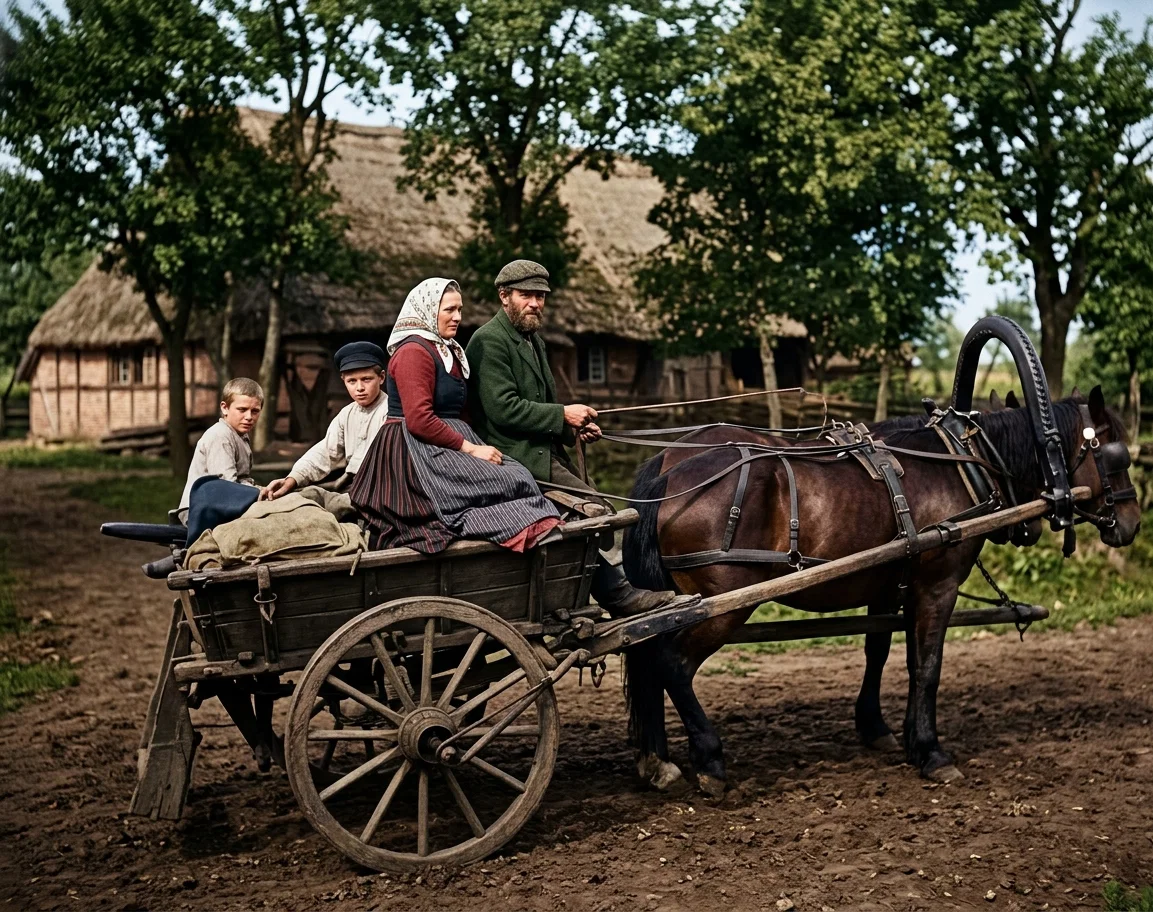
NORTH GERMAN PEASANTRY
North Russian Mission Field.—In this field are included the German colonies along the Baltic and in western Russia, and the Letts, Esthonians, and Poles of Russia—about fourteen millions in all. Since its organization, the field has shown a remarkable growth. There are now churches in St. Petersburg, Riga, Reval, but the largest increase has been in the province of Volhynia. The field has sixteen companies and churches, with a membership of three hundred and fifty-six. While the15growth last year (1902) was fifty-five, last quarter, sixty-six were added. There now is but one ordained minister here, the director of the mission, but probably another will be ordained soon, and there are only five other workers.
Middle Russian Mission.—This really includes the ninety millions of Russians in the empire. There are at present two hundred and forty-five members, divided into eight churches and companies. There are more than as many again who are keeping the Sabbath, but these have not yet been fully organized and brought into harmony with us. In fact, it has been quite a task to take hold of this work, as we did not have the proper men to put in charge of it. Until recently we have had very little opportunity to instruct the natives, but we have brought several over to the Friedensau school at quite an expense, to do what we could for them: even then they felt such a burden to return to their field that the work has not been done as thoroughly as we would like to have seen it. With the proper men and organization, we surely shall see many souls added to the faith among this class. One great difficulty is with the payment of the tithe. This amounted to one hundred and forty-four dollars in 1902, so the union really has to sustain the three workers employed there. However, we believe there are better days in store for the field. We hope soon to enter the Transcaucasus. It has nearly seven millions of people; about one million of these are Armenians, among whom Dr. Pampaian is expected to labor. We believe that our brethren in America ought to come forward to help sustain this work with their contributions, for this Armenian field will prove to us an open door to Persia and Central Asia.
Hamburg, Germany.
(To be concluded)
Some Results in Chile
By H. F. KETRING
H. F. KETRING
One who has the privilege of going from place to place with this message of mercy has many opportunities of seeing the manifold ways in which the Lord works to impress souls with his truth. My family and I spent one winter in the north, much of the time in Copiapo. Brother Davis, one of our missionary canvassers, had spent a few weeks of faithful labor here, as the result of which a small company of Sabbath-keepers was raised up. They are all native Chileans, and of the poorer classes, as are the majority of those who are converted in this country. Working for them is different from working for the poor classes at home, as this field has been held under the debasing and superstitious influence of the Church of Rome for so many centuries that they are drunken with the wine of Babylon. But the power of the gospel, the complete and thorough conversion, appears like a greater miracle, and the way the Lord works to enlighten them causes one to marvel.
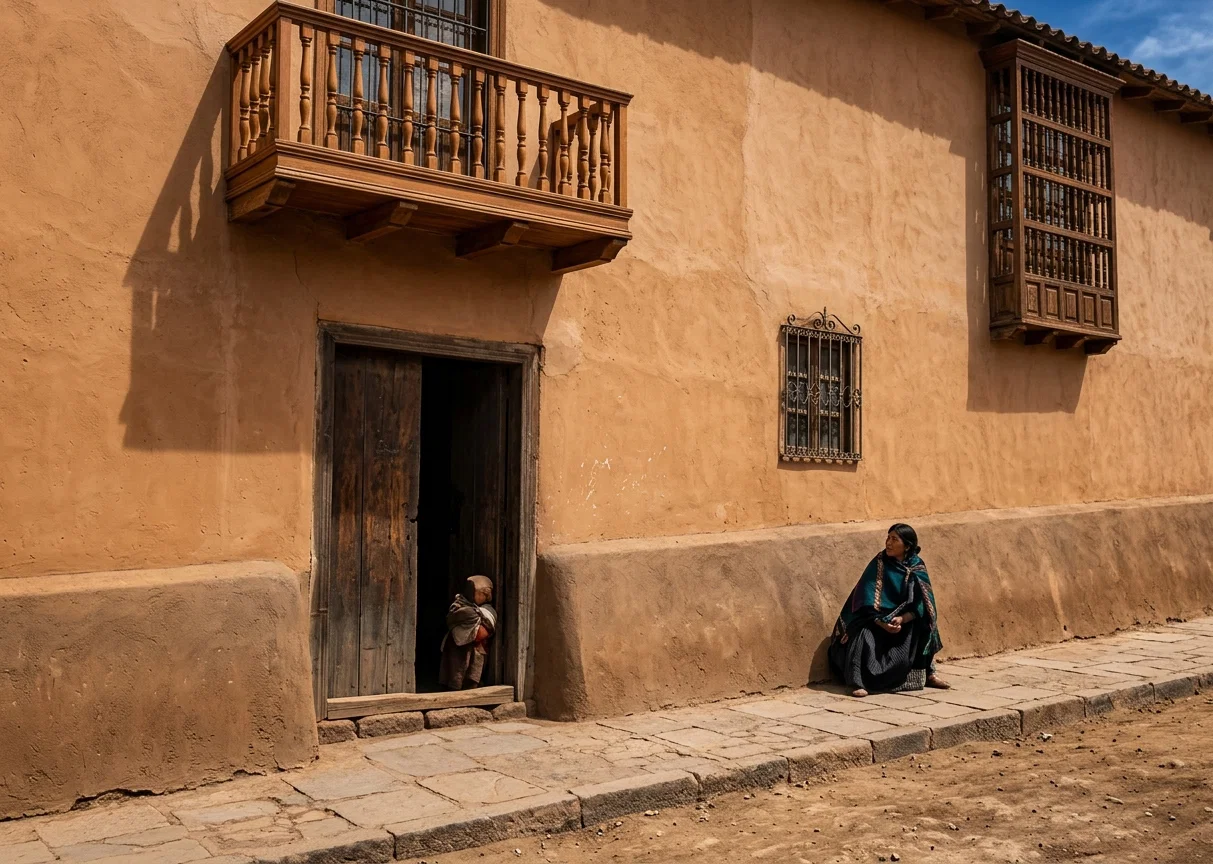
A HOME AMONG THE POOR IN CHILE
I will relate one circumstance, which will show what wonders God has wrought. After having been away from Copiapo, laboring in another part for a few weeks, I returned one Sunday to make my last visit with them. I went that evening to the house of one of the brethren, who bakes pies and sells them. A year before, when he began to observe the Sabbath, he could not read. Now he can read the Bible well, having learned by studying present truth. The week before I arrived, he received a letter from the pastor of his former church, calling him to appear before the consistory of the
church on Sunday evening, to answer for some matters pertaining to his Christian life. I went with him to the evening service at eight o'clock. After it was over, we met the pastor in the hall. He is an American. He spoke very coldly to me, and then asked the brother, in Spanish, if he wanted to remain for the consistory. He said that he did, and the pastor told him to go into the other room, but I was not permitted to be present with him. I told him that I would wait for him outside the church. For just an hour and a half I walked up and down in front of the building, praying for him, while he was answering for his faith before the pastor and two elders. When at last he came out, I could see by his countenance that he had gained a victory. He then told me the questions that were asked him, and the answers that he gave. They were as follows:—
Pastor.—Why do you not attend the services of the church?
Emmanuel.—Because I keep the Sabbath, and have to work on Sunday.
P.—But do you not recognize the work and resurrection of Christ?
E.—Christ did not come to abrogate the Sabbath.
P.—But the law and the Sabbath were for the Jews.
E.—“Fear God, and keep his commandments: for this is the whole duty of man.” Eccl. 12: 13.
P.—Who said that?
E.—Solomon.
P.—But that was for the olden times.
E.—Christ is the same yesterday, today, and forever.
P.—Then we are lost, because we do not keep the commandments?
E.—“Blessed are they that do his commandments, that they may have right to the tree of life, and may enter in through the gates into the city.” Rev. 22: 14.
P.—But we are under the covenant that God made with Abraham, which the Israelites broke.
E.—Who among the Israelites broke the covenant of God—those who observed the Sabbath, or those who did not?
P.—Those who did not.
E.—If the Israelites disobeyed the Sabbath, and thus broke God's covenant, would not we also break it by disobeying the Sabbath?
P.—But it is impossible to keep the law.
E.—It is impossible for a man to keep it in his own strength; but with God all things are possible.
P.—
E.—The psalmist said that his delight was in the law of God, and in his law doth he meditate day and night.
P.—
E.—The Lord also says that the Sabbath is his sign, or seal.
P.—But it says Sabbaths—plural.
E.—Show me.
P.—(Reading) “And hallow my Sabbaths; and they shall be a sign,” etc. Eze. 20: 20.
E.—But it does not say the Sabbaths; it says my Sabbaths, and every seventh day is the Lord's Sabbath.
P.—
E.—It was the custom of Paul to observe the Sabbath, and to preach on that day.
E.—That was after the resurrection, and if Paul taught the people to keep Sunday, and had the custom himself of preaching on the Sabbath, his life was contrary to his preaching. But it does not say it was his custom to keep Sunday.
P.—The elder, then, your pastor [speaking of me] lives contrary to his preaching, for he came here to the service this evening.
E.—He came here to show the love of God.
P.—Then how do you show the love of God when you do not come?
E.—Does the love of God pertain only to the meeting-house? The Lord teaches me to manifest God in all places. If I meet you on the street, or in any other place, I love you just the same. But I have to work; and it is impossible for me to attend the services of your church on Sunday.
After telling him that they would again have a talk with him, they told him to go.
Who would not praise God for such a work? Who would say that laboring among these people does not pay? Who would refuse to say, “Here am I; send16me,” when the Lord calls for some to go and hunt out these people and teach them the truth? To be sure, all are not like this brother. But if one spent a whole year in hunting, and found only one, would it not be worth his labor, when our Saviour would have died had he known that only one would accept him? We need many workers who will come to Chile to find those who are willing to serve God. Are there not those who are waiting for a bidding from the Master?