Your ShelfYour Projects

Signs of the Times, Vol. 29, No. 14.

A RISEN CHRIST

Signs of the Times

Apr 8, 1903

Pacific Press Publishing Company · Oakland, California · Apr 8, 1903

A RISEN CHRIST.
EIGHTEEN hundred and seventy-two years ago! From a great city under the sunny skies of the Orient winds a procession, half military, half mob. The central figure in that procession was the “Criminal,” a poor, young Man, tho of royal blood, the purest and noblest in character that ever walked the earth. Taunted, reviled, mocked, spit upon, smitten, thorn-crowned, bearing His own heavy instrument of death. He wends His weary way. But the suffering, the exhaustion are too much for His physical frame, and He sinks wearily underneath the load. A strong countryman is pressed into service, and the sad procession passes on to a hill, bearing resemblance to a skull, on the mountain-side, near the city.
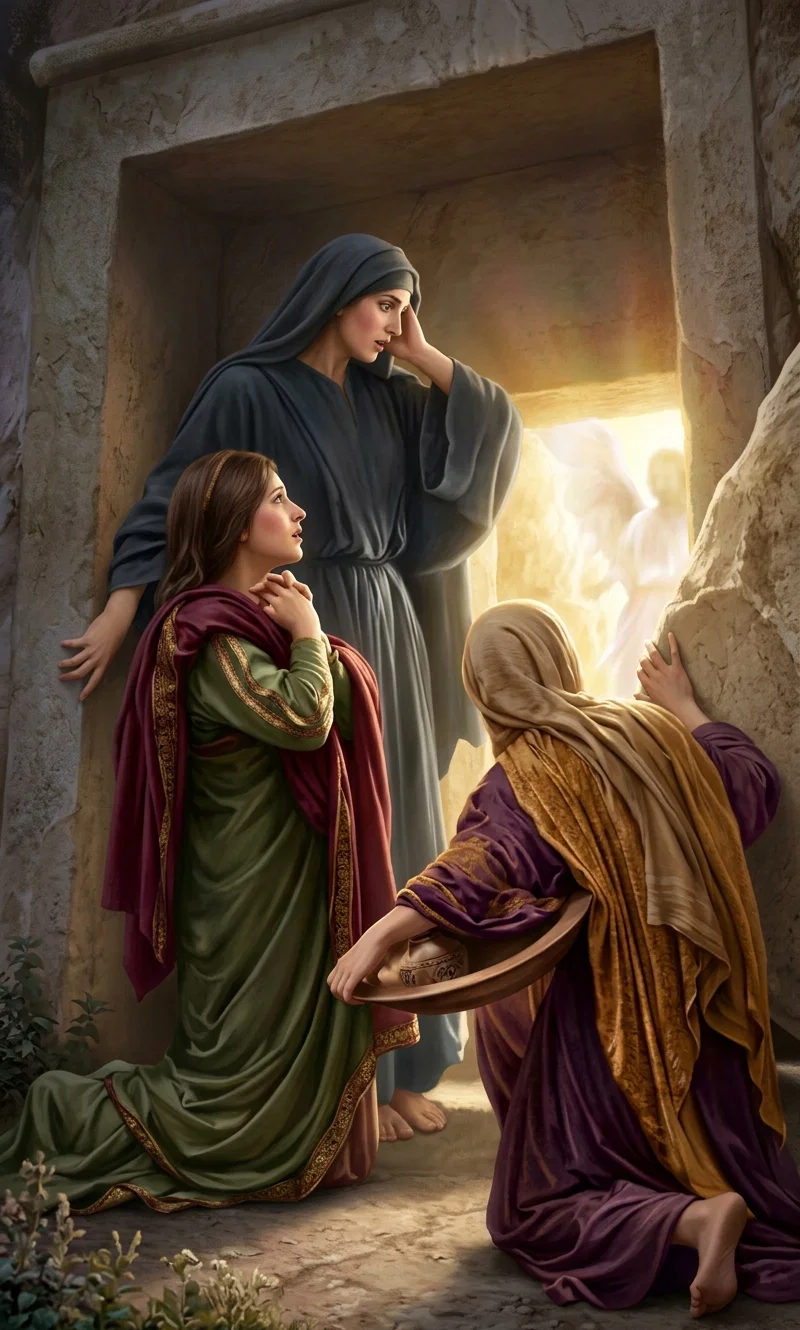
He Is Not Here; for He Is Risen.
ARRIVING here, the unresisting Victim is nailed to the cross, the cross is set in the earth, and amid wonders and convulsions in heaven and earth the young Man dies in the glorious triumph of the principle of eternal righteousness. As the day wears to its close a wealthy gentleman of the “Criminal’s” own nation comes forward, and with another wealthy friend begs the governor for the young Man’s body. They buy a linen cloth and a hundred pounds of aloes, myrrh, and other aromatic substances wrap the body in these, and lay it in a rock-hewn tomb belonging to the rich man. The grave is closed by a great stone, officially sealed with the government seal, and the incident seems to them forever closed. It is, in fact, only just begun.
WEEPING friends who had hoped for much from the young Man mourn His fate. His enemies—enemies solely because His life condemned them—rejoiced. The night passes, the Sabbath day wanes to its close, the night of First Day is well nigh gone, the morning is about to break, when, cleaving the blue ether, a mighty messenger of God lights the gloom with his glory, smites the strong Roman guard simply by the holiness of his presence, and by the authority of the Most High calls to the young Man sleeping in the tomb, “Son of God, Thy Father calls Thee.” And He who died a victim to hellish hate, to Jewish blindness, to Roman ignorance, comes forth the mighty Conqueror over the mightiest foes of the ages—Sin and Death,—a conqueror for you and for me.
THAT was the meaning of the resurrection of Jesus Christ on that far-away Orient morning. He died because of sin—our sin. He “gave Himself for our sins, that He might deliver us.” He “gave Himself for us, that He might redeem us from all iniquity.” It was sin, your sin, my sin, that placed the Man of Calvary upon the cross; that drove the pitiless nails through the hands that were never stretched forth save in blessed ministrations; that pierced the often wearied feet which tread no path save only that He might help to make the road easier and safer for wayworn pilgrims in the future. It was your sin and my sin that thrust the Roman spear into that great heart of love which ever beat in sympathy with suffering humanity, which embraced all souls in its longing love and desire to redeem, and which broke at last under its insufferable burden of the woes and sins of the world. He died for the world, to save the world from sin. He died for you—whoever you are—to save you from sin. He died for me, praise God, to save me from sin. Can we not all say it, and by believing make the fact a living truth in the life?
“Behold Him all ye that pass by,— The bleeding Prince of life and peace! Come, sinners, see your Saviour die, And say, Was ever grief like His? Come, feel with me His blood applied— My Lord, my Love is crucified.”
BUT tho bearing our sins on the cross anddown into the tomb, He was sinless. No spot stained His garment of character. The enemy applied all his hellish arts and devices to turn Him aside, but found no hooks of lustful longing in His heart on which to hang the subtle temptations. Adam, Noah, Abraham, Moses, Elijah, and all the rest in some ways failed to reach the standard, but Jesus Christ, by the power of faith and the reception of the indwelling Word, conquered the sin, and demonstrated the power of God to live righteously in the enemy’s land, the mortal flesh. How in character that Great Life towers and towers above all the centuries, above all the traditions and myths of the ages! Yet all its secret lies in the one word “righteousness,” or you may translate it “love,” or “faith,” or “obedience,”—all are the same. “Without controversy great is the mystery of godliness; He who was manifested in the flesh, Justified in the Spirit, Seen of angels, Preached among the nations, Believed on in the world, Received up into glory.”
“God was in Christ reconciling the world unto Himself.”
His resurrection was the demonstration of His righteousness. He could not “be holden” of the grave, for “in the way of righteousness is life, and in the pathway thereof there is no death.” Acts 2:24; Prov. 12:28. He “was born of the seed of David,” “born of a woman,” “according to the flesh,” for our sakes, that He might die in our behalf; but He was “declared to be the Son of God with power, according to the spirit of holiness, by the resurrection from the dead.” Gal. 4:4; Rom. 1:1–4. He demonstrated His right to live forever. And when the anxious women looked into the empty tomb on that First Day morning they saw only the negative evidence that righteousness could not stay buried.
THEN came to them the message, and to God’s people the message, and to sinners and the world through God’s people the message:—
“Why seek ye the living among the dead?” “He is not here; for He is risen, even as He said. . . . And go quickly, and tell His disciples, He is risen from the dead; and lo, He goeth before you into Galilee; there shall ye see Him.”
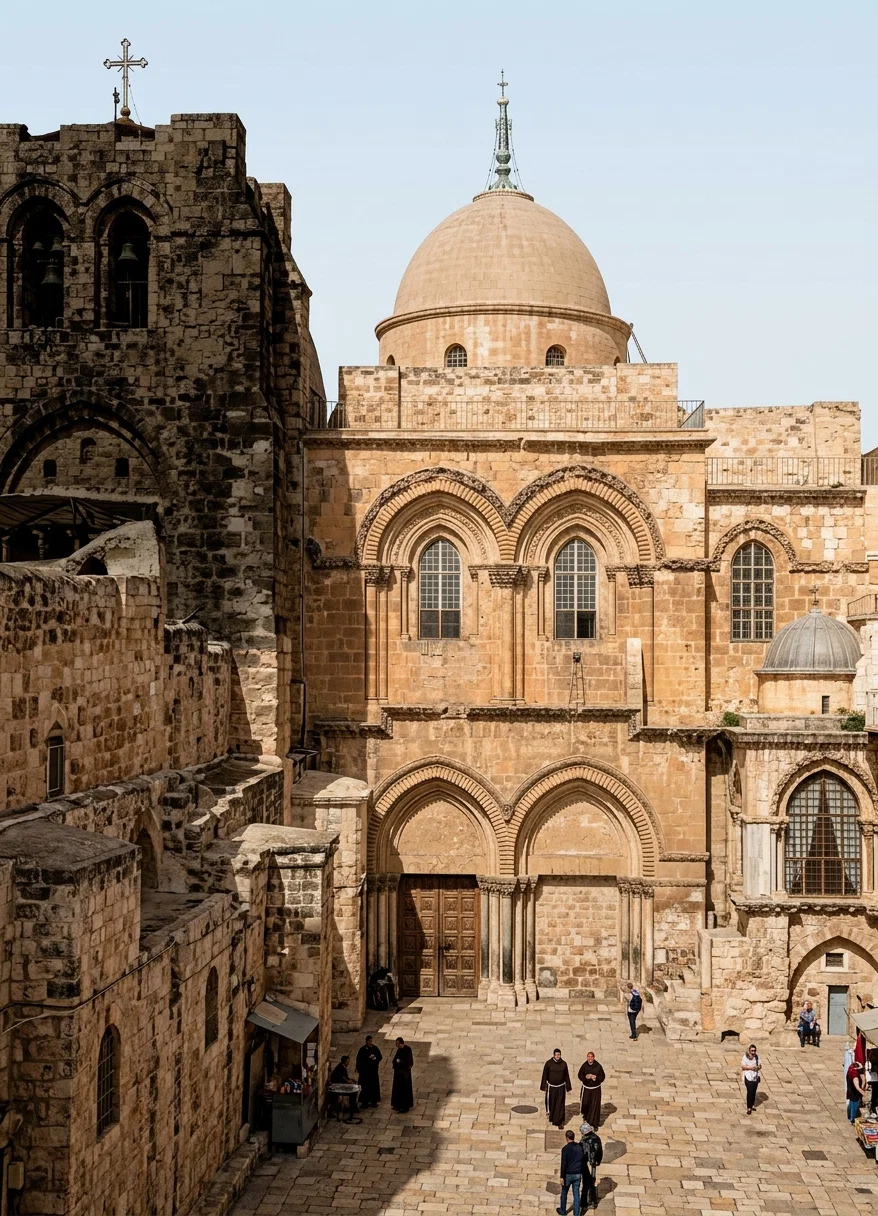
THIS message is present truth to-day. Men are still seeking for Jesus Christ “among the dead”—among dead doctrines and traditions of men, among dead tombs and mausoleums which devoutly superstitious hands have erected over that supposed tomb of Joseph, and where armed guards of Islamism keep the peace between warring factions of pilgrims professedly Christian, but who have their faces set backward to find Christ in the grave. Among dead, cold places and resolutions of men are earnest souls searching for Christ; among nicely formulated theories of Gospel work, as cold as the fern leaves painted by the frost on the window pane; among great institutions, piles of stone and brick, are men searching for Him who died, but now lives forever. Not there, not in any one or all of these places will He be found save in some faithful soul doing the Master’s work, giving the Master’s living message.
Do you wish to find Him, dear heart? Count the sin, “the old man” crucified and buried with Him forever, and open your heart to let the living Christ in, with His fulness of life and righteousness, and so live the life of the Son of God by faith. Gal. 2:20. And then do His work. He goes before, ever on before, out into the Galilee of the nations, among the great multitudes of the unsaved, among the poor and needy of earth, wherever a helping hand or a helping heart is needed, there Christ is inviting His children to co-operation, a living, helpful Christ, a blessed, constant Companion, a mighty, effectual Saviour from sin and death.

WHAT DO THESE THINGS MEAN?

II.

WHEN from Nimrod onward the despotism, the combine, of a one-man power, had afflicted the world for a long series of ages, there arose a people who renounced all that was akin to it, and established a government of the people. They threw off all kingship, and declared that they needed no such figment to govern them, but that they were capable of governing themselves, and so established a government of the people, by the people, and for the people—individual self-government, the republic of Rome. They were right. The principle was sound, and the government was a grand success—while the people really governed themselves. But the grandeur of their success brought results which caused the Roman people to lose the faculty of governing themselves, and the government fell to cliques, coteries, and combines. These presently merged in the first triumvirate—government by a special three.
“CHURCH OF THE HOLY SEPULCHER,” Jerusalem, supposed to cover the spot where Jesus was buried. Here Greek and Roman Catholics are kept at peace only by the interference of Moslem soldiers. It is a fitting object-lesson of any religion which calls its devotees back to the worship of empty forms or of a dead past.
And who were these three?—One of them was the chief capitalist, the head of the trusts, the combines of capital, of the empire; another was the pride of the populace, and the combines of the unions and of the envious crowd; and the third was the pride of the army,—Crassus, Cæsar, and Pompey. These three men sat down together and agreed that nothing should be done in the Roman State but by their consent.
This held for awhile, but Crassus was killed in a battle, Pompey was afterward killed, and Cæsar alone was the government—a one-man power. But a one-man power was dreaded. Cæsar was murdered to escape it. But immediately a new triumvirate was formed: Antony, Octavius, and Lepidus. Lepidus was soon shelved; Antony and Octavius fought the battle of Actium; Antony was defeated and shortly afterward committed suicide; and Octavius was the government—a one-man power which permanently remained and which became the most terrible despotism ever till then known. This one-man power, its despotism, and its empire sank in annihilating ruin by the floods of barbarians from the forests of Germany, and upon that ruin was built the one-man power of the Papacy, the completest combine and the greatest despotism ever known on earth.
The Barbarians established kingdoms in Western Europe. And again there was a long series of kingships expanding into empire with their consequent tyranny, tho these tyrannies were so far overtopped by the one greatest of all tyrannies—the Papacy—that they were but slightly felt in comparison. Then after that series of ages of kingships and imperialism there arose another people who cast off all kingship and established a government of the people. They declared that men are capable of governing themselves, and that, therefore, governments derive their just powers from the consent of the governed. Accordingly, they established a government of the people, by the people, for the people—individual self-government, the republic of the United States. These men were right. These principles are sound. The government was a grand success so long as the people governed themselves.
But how many of the people of the United States to-day are self-governing? And it must not be forgotten that the majority is, in effect, the government. When a majority fail to govern themselves, the government is gone. In the world of business and traffic in the United States to-day, how many of the people are governing themselves in their own business?—The vast majority are governed by the trusts. In the world of labor to-day how many of the people govern themselves?—The vast majority are governed by the unions. In the realm of government itself in the United States, in politics, how many of the people govern themselves?—Almost the whole body of them are governed by “the party,” by “the machine,” by “the boss,” and according to “the slate.”
Then where is self-government in the United States to-day? Where is government of the people in this “government of the people” to-day?—It is absolutely gone; gone to the combines, to the business combines, the labor combines, and the political combines. And do not forget that the logic of the combine, of whatever sort, is a one-man power. And how far are we from this even now?—The condition of things in this nation to-day is such that in a crisis any day the head of the trust, the head of the unions, and the chief of the national, political machine, can form a triumvirate as quietly and as absolute as was that of Crassus, Cæsar, and Pompey. And of such a triumvirate the only outcome that there can be is a one-man power.
And even for this outcome the way is already blazed. The great coal strike last summer brought the nation to the brink of such danger as could not possibly be risked. As a government the State of Pennsylvania failed. Therewas no way by which the national government could constitutionally reach the case. Then he, who is the head of the national government intervened—not as head of the government, but only as “a private citizen.” And when he intervened only as “a private citizen,” his intervention was promptly accepted and every suggestion was respected—not because he was a private citizen, but wholly because he is head of the national government. If he had been indeed only a private citizen, he would not have been listened to for a moment, any more than were the many other private citizens, who had offered suggestions. Therefore, here is an instance of the head of the national government, in a case of a national danger, acting only as a private citizen, yet with all the prestige of the head of the government: an instance in which official and constitutional government is left behind by the head of the government, yet that same head of the government, acting as a private citizen with all the prestige of official and constitutional head of the government. This is nothing else than in principle the direct intimation of a one-man power.
This is not to say nor in any way to intimate that this has been in any way intended, nor that President Roosevelt would intentionally do such a thing to any extent. It is not in any way to criticize what he did. It is only a study of the principle that is in what has been done. And this is the principle. And these great strikes, with their consequent complications, are not by any means over with. Indeed, things have now only fairly begun. A victory has been gained that will be pushed to the utmost limit. Other such strikes with their perplexing complications will certainly arise. Other men will occupy the place of head of the national government. They, too, will act as private citizens, yet with the prestige of head of the government, but with the important difference that over the course where President Roosevelt cautiously, and, as it were, tremblingly, felt for the way for his feet, the other man will, on horseback and in full panoply, ride rough shod.
And what a fearful pass it is to which this nation has already come, when the only escape from a ruinous danger is the taking of a course that carries in its train ruinous danger: in other words, when the only escape from ruinous danger is a mere temporary palliative!
As in this consequence of the coal-strike there has already been blazed the way to a one-man power, so also in it there has appeared ever in sight the religious despotism that attaches to the one-man power. In the choosing of the commission to settle the coal strike, it was stipulated that the commission should consist of five men, each chosen from a certain calling that would make him in a sense an expert. However, when the five had been chosen, the president went beyond this and added a sixth member. This sixth member was added “as a concession to the strikers.” He is Bishop Spaulding, of the Catholic Church, for the reason that he “should be an eminent Roman Catholic prelate, nearly all of the miners being adherents of the Catholic Church.” In addition to this, the president appointed a recorder to the commission. And this recorder is a man who “freely admits his admiration for the magnificent organization of the Roman Church and his appreciation of its strong and elevating influence upon artisans and wage-earners,” and who “has been for many years an active teacher in the economic department of the great Catholic university, at Washington.” In addition to all this the president appointed two assistant recorders, and one of the two “is Professor of Political Economy at the Catholic university, located near Washington.” And yet even this does not exhaust the list of Catholic influences connected with the commission, so that it is safe to say that the Catholic Church holds the dominating influence in connection with that commission which originally was to consist of five men chosen from specific callings. Under the circumstances, with “nearly all the miners being adherents of the Catholic Church,” and they being one of the principles in the controversy; and with the large Catholic influence attached to the commission; it is in no small degree simply the Catholic Church arbitrating her own cause and settling her own case. And when thus stands her power and her influence at the very outset, in the very nature of things her power in these things will grow as these troubles grow upon the government, and when from it all there is developed the inevitable one-man power, there will she be close beside him, the same perpetual Papacy. This is not to say that the Papacy herself will be the one-man power. It is only to say that she will be the inspiration and the directing voice of that which, apart from her personally, will be the one-man power.
Yet this power and influence which she has gained and will hold in connection with the strikes, combines, and complications is only a part of the true standing of the Papacy in connection with the United States government of to-day.
ALONZO T. JONES.

The Third Day—Land and Its Products

THE GOSPEL IN CREATION. NO. 5.

The Third Day—Land and Its Products.

AND God said, Let the earth bring forth grass, the herb yielding seed, and the fruit tree yielding fruit after his kind, whose seed is in itself, upon the earth; and it was so. And the earth brought forth grass, and herb yielding seed after his kind, and the tree yielding fruit, whose seed was in itself, after his kind; and God saw that it was good. And the evening and the morning were the third day.” Gen. 1:11–13. Thus the word of God was the seed from which all vegetation originally sprang, and the Creator decreed that each plant thus germinated should contain in itself seed from which it grew, which, when planted, should grow and reproduce, and thus perpetuate its kind.
When we consider the fact that all the skill, wisdom, ingenuity, and power of man can not make a seed that will produce a plant of any kind, and that all vegetation germinates, grows, develops, and matures by means of an unseen power, of which man is not the author, it is easy to believe the statement of Inspiration which tells us that all vegetation was originally, and still is, the direct product of the living seed—the Word of God.
The Creator not only thus caused vegetation to spring forth from the bosom of the earth in the beginning, but “He causeth [present tense] the grass to grow for the cattle, and herb for the service of man; that he may bring forth food out of the earth.” Ps. 104:14. The growing grass, the bursting buds, the beautiful blossoms, the fragrant flowers, and the towering trees of the present time are as verily the direct product of God’s living word as were those that first clothed the earth in robes of beauty.
“The fool hath said in his heart, There is no God” (Ps. 14:1), is but a statement of the simple truth concerning the individual who ignores this wonderful, universal, continual manifestation of the power of the Creator. Truly “that which may be known of God is manifest in them; for God hath showed it unto them. For the invisible things of Him from the creation of the world are clearly seen, being understood by the things that are made, even His eternal power and Godhead; so that they are without excuse.” Rom. 1:19, 20.
The story of creation was the first and most important of the things that God caused to be “written for our learning, that we through patience and comfort of the Scriptures might have hope.” Rom. 15:4. Here the account of creation must contain Gospel lessons since patience, comfort, and hope are Gospel products. And with the fact kept in mind that our Creator is our Redeemer (Isa. 43:1), and that creation is redemption (Eph. 2:10), we shall see in the story of creation and in the things that were made precious lessons applicable to our daily experiences. As in creation the word of God was the seed, from which vegetation germinated, grew, developed, and matured, so in redemption, “the seed is the Word of God.” Luke 8:11. By it we are begotten anew (James 1:18; 1 Cor. 4:15), and born again (1 Peter 1:22–25; 1 John 3:9). By it we grow and develop into maturity (1 Peter 2:1, 2; Acts 20:32). “Trees of righteousness, the planting of the Lord, that He might be glorified” are as verily the product of the word of God as are the stately monarchs of the forest that majestically wave to the glory of their Creator. Isa. 61:3. “For as the earth bringeth forth her bud, and as the garden causeth the things that are sown in it to spring forth; so the Lord God will cause righteousness and praise to spring forth before all nations.” Isa. 61:11. Israel “shall grow as the lily” (Hosea 14:5), and so we are told to “consider the lilies of the field, how they grow” (Matt. 6:28). And all who learn the secret of the power which, without any toil or effort on their part, clothes the lovely lilies with garments of beauty unequaled by the royal robes of King Solomon in all his glory, will be enabled to say, “I will greatly rejoice in the Lord, my soul shall be joyful in my God; for He hath clothed me with the garments of salvation, He hath covered me with the robe of righteousness, as a bridegroom decketh himself with ornaments, and as a bride adorneth herself with her jewels.” Isa. 61:10. Look at yonder stately tree, which, even in time of heat and drought does not wither, but retains its freshness and vigor, and continues to bring forth fruit in its season because its roots strike deep in the rich soil that is moistened by the waters of the river by which it stands, and then consider its counterpart in the man who delights and meditates in the law of the Lord and trusts and hopes in its Author. As is the one, so is the other, for it is the self-same power that works in them both. Ps. 1:1–3; Jer. 17:7, 8.
The vine also, in its nature and characteristics, clearly illustrates the experiences of man in his varied relations with his Creator; “for they shall grow as the vine” (Hosea 14:7) and “the vineyard of the Lord of hosts is the house of Israel, and the men of Judah His pleasant plant” (Isa. 5:1–7). Just as the vine needs the support of the trellis or tree, being unable to stand alone, so we, unable to do anything of ourselves, must be upheld by the right hand of His righteousness.
He fences His vineyard and gathers out the stones thereof, and plants it with the choicest vine, and builds a tower in the midst of it and makes a winepress therein. Moreover, Hewaters it every moment and keeps it night and day. Surely there is no more He can do for His vineyard. And yet how often when He looks for good grapes only wild ones are found; when He seeks for righteousness, often finds oppression instead. Isa. 5:1–7; 27:1, 2.
In another lesson the great Teacher declares Himself to be the Vine, His father the Husbandman, and His people the branches. The vine bears fruit through the branches—a beautiful illustration of the way in which the fruits of God’s righteousness are reproduced through His people. Phil. 1:9–11. Unfruitful branches and unfaithful men are cut off, gathered, and burned. Separated from the vine, even tho fruitful before, the branch ceases to bear fruit, withers, and dies. Just so barrenness and spiritual death speedily follows separation from Christ. While abiding in the vine, partaking of its life, cultivated, cared for, and pruned by the vine-dresser, the branch is enabled to bear fruit. And so when we abide in Christ and He in us, and the keen pruning-knife—the sharp two-edged sword of the Spirit—in the hands of the heavenly husbandman, cuts away every wrong habit and hindering cause, there will appear in us an abundant yield of the peaceable fruits of righteousness. John 15:1–8; Heb. 12:1–11.
Faith comes by hearing the Word of God. Rom. 10:17. And “if ye have faith as a grain of mustard seed, ye shall say unto this mountain, Remove hence to yonder place; and it shall remove; and nothing shall be impossible unto you.” Matt. 17:20.
But there are yet other important, significant, and helpful lessons that may be learned from the vegetable world. Observation teaches us that the grass, flowers, and trees which we admire to-day for their freshness, beauty, and vigor, may to-morrow be cut down, faded, withered, consumed. Just so “all flesh is grass, and all the goodliness thereof is as the flower of the field. The grass withereth, the flower fadeth; . . . surely the people is grass.” Isa. 40:6–8; 1 Peter 1:24, 25. “As for man, his days are as grass; as a flower of the field, so he flourisheth. For the wind passeth over it, and it is gone; and the place thereof shall know it no more.” Ps. 103:15, 16. “But the word of our God endureth forever;” and “the mercy of the Lord is from everlasting to everlasting upon them that fear Him, and His righteousness unto children’s children.”
There is no beauty nor attractiveness in the dry, dwarfed, withered heath and shrubs that struggle for existence in the parched sands of the deserts; but there is in them a significant lesson and a solemn warning against trusting in self or in others, tho they be princes or mighty men. “Thus saith the Lord: Cursed be the man that trusteth in man, and maketh flesh his arm, and whose heart departeth from the Lord. For he shall be like the heath in the desert, and shall not see when good cometh; but shall inhabit the parched places in the wilderness, in a salt land and not inhabited.” Jer. 17:5, 6. Truly our only hope is in God, for “all flesh is as grass”—whether prince or pauper, high or low, great or small, rich or poor, mighty or weak, all is vanity. Ps. 49:6, 7; 1 Tim. 6:17.
One more solemn significant lesson in the experience of plants merits our attention. As we behold from time to time the withered grass, the faded flowers, the fallen leaves, the dead branches, the fruitless vines, and barren trees, cast into the devouring flames, let us remember that “the axe is laid unto the root of the trees; therefore every tree which bringeth not forth good fruit is hewn down, and cast into the fire” by Him “whose fan is in His hand, and He will thoroughly purge His floor, and gather the wheat into the garner; but He will burn up the chaff with unquenchable fire.” Matt. 3:10, 12.
“Together they are growing, The wheat beside the tares, For work of angel reapers The harvest time appears. They are ripening, ripening, Ripening for the harvest: The wheat for the garner, The tares for the burning, The reapers soon will come.”
Reader, are you bearing fruit, or “nothing but leaves?” W. A. SWEANY.

FOUR THINGS.

[Henry Van Dyke in Christian Advocate.]
Four things a man must learn to do If he would make his record true: To think without confusion clearly; To love his fellow-men sincerely; To act from honest motives purely; To trust in God and heaven securely.
Continue reading: XVIII. THE GREAT ADVENT MESSAGE