Your ShelfYour Projects

Signs of the Times, Vol. 23, No. 19.

Editorial

Signs of the Times

May 13, 1897

Pacific Press Publishing Company · OAKLAND, CALIFORNIA · May 13, 1897

Editorial

"Come now, and let us reason together, saith the Lord, tho your sins be as scarlet, they shall be as white as snow; tho they be red like crimson, they shall be as wool. If ye be willing and obedient, ye shall eat the good of the land." Isa. 1:18, 19.
"For God appointed us not unto wrath, but unto the obtaining of salvation through our Lord Jesus Christ." 1 Thess. 5:9, R. V.
"If we confess our sins, he is faithful and just to forgive us our sins, and to cleanse us from all unrighteousness." 1 John 1:9.

The Power of Christ.

The power which dwelt in Jesus Christ was power to save from sin; and power to save from sin is creative power. The power to save from sin is shown in the words of the angel which announced the birth of our Lord: "Thou shalt call his name JESUS; for he shall save his people from their sins." Matt. 1:21.

Doubted.

But this power was doubted then as it is to-day. Man feels that in some way he must save himself, and of himself work out his own salvation. He must devise some plan; he must adopt some device; he must build some tower to reach to heaven, and call it Bab-il, the gate of God. But, as of old, God calls it Babylon. The foundation of all false religions, and all perversions of the Christian religion, is doubt or unbelief; and unbelief is founded on self. Either man must in his imagination frame his own heaven, and mark out the way to get there, or he will pervert the true way. He will add to it or take from it; in some way will self come in in the place of God. Even thus it was when Jesus, the Son of God, was upon the earth, and even thus it is now. Men can not believe that Jesus Christ, by his word, can cleanse from sin.

His Power Demonstrated.

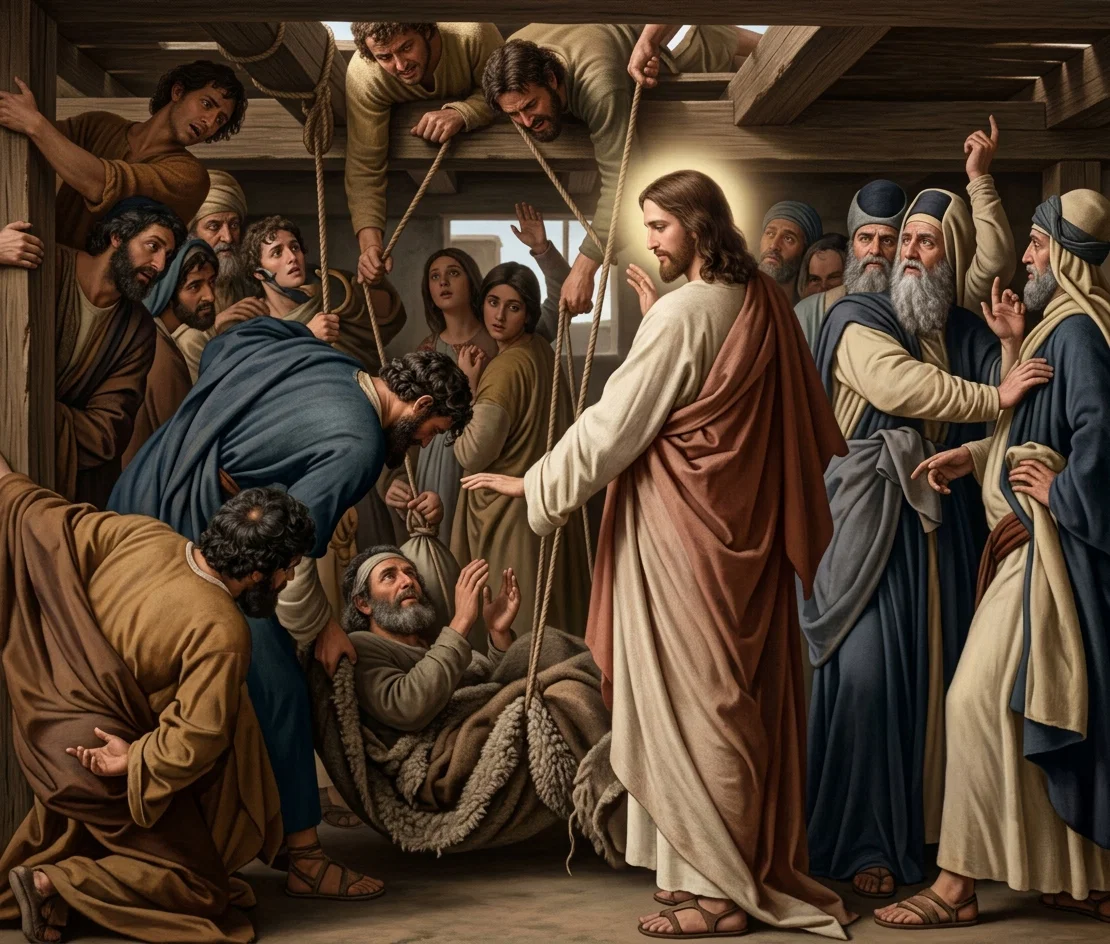
That unbelief might have no excuse, Jesus in his love for mankind frequently demonstrated his power to forgive sins. An instance of this is recorded in Mark 2:3-12. The context tells us that he had come to Capernaum from the other side of the sea, and the people flocked to hear him, insomuch that the house in which he taught was filled to overflowing with anxious and curious listeners. While thus preaching to the people, the record is:—
"They come unto him, bringing one sick of the palsy, which was borne of four. And when they could not come nigh unto him for the press, they uncovered the roof where he was; and when they had broken it up, they let down the bed wherein the sick of the palsy lay. When Jesus saw their faith, he said unto the sick of the palsy, Son, thy sins be forgiven thee. "But there were certain of the scribes sitting there, and reasoning in their hearts, Why doth this man thus speak blasphemies? who can forgive sins but God only? And immediately, when Jesus perceived in his spirit that they so reasoned within themselves, he said unto them, Why reason ye these things in your hearts? Whether is it easier to say to the sick of the palsy, Thy sins be forgiven thee; or to say, Arise, and take up thy bed, and walk? But that ye may know that the Son of man hath power on earth to forgive sins (he saith to the sick of the palsy), I say unto thee, Arise, and take up thy bed, and go thy way into thine house. And immediately he arose, took up the bed, and went forth before them all; insomuch that they were all amazed, and glorified God, saying, We never saw it on this fashion."

The Sick Man's Burden.

The palsied man had been a great sinner. This is indicated not only by his disease, doubtless brought on by excesses in living, but by his burden of soul. He wanted to be healed in body, but beyond this he desired to be made free from sin. So anxious is he that he can not wait the coming out of Jesus, and his friends can not make their way through the dense and eager crowd. But the mind of the sufferer, made active by his agony and desire, directs those who carry him to let him down through the housetop into the open court, where Jesus taught. The slight covering, to keep out the sun, is removed, and the sufferer on his mat, his body in pain, his soul in agony, is let down in the midst, before the great Teacher.

The Healing Word.

With divine and intuitive sympathy Jesus, the Friend of sinners, reads his longing heart. He will heal his body, but he will first heal the soul. The words of Jesus show the desire uppermost in the mind of the palsied, "Son, thy sins be forgiven thee." Never sweeter words came to him, and his joy was full even in his bodily pain. But the unbelievers, not seeing in Jesus the power and fulness of God, questioned in their hearts, "Why doth this man thus speak blasphemies? who can forgive sins but God only?" In their last query they were right. Only God can take away the sin from the soul. Man may forgive the special deed against himself, but Infinite Power alone removes the disposition to sin.
This demands a complete change in the affections; and this can be wrought only by the power of God by which the man is made spiritually a new creature in Christ Jesus. "A new heart also will I give you, and a new spirit will I put within you. . . . And I will put My Spirit within you, and cause you to walk in My statutes, and ye shall keep My judgments, and do them." Eze. 36:27. God alone can do this work. But Jesus Christ is God, the only-begotten Son of the Father, the One in whom it pleased the Father that all fulness should dwell.

The Demonstrated Power.

Perceiving their unbelief, and yearning to help them, Jesus asked, "Whether is it easier to say to the sick of the palsy, Thy sins be forgiven thee; or to say, Arise, and take up thy bed, and walk?" As a matter of fact, it takes the same power; but to unbelief it would be easier to say the former than it would be to raise that man who was practically dead before them. Jesus did not wait for a reply; for the only answer they could give was self-evident. He demonstrates his power to restore the spiritual man by restoring the physical. He shows that he is able to re-create the spirit, as the body. "But that ye may know that the Son of man hath power [authority, right] on earth to forgive sins (he saith to the sick of the palsy), I say unto thee, Arise, and take up thy bed, and go thy way into thine house. And immediately he arose," took up the mat or rug whereon he was lying, and went forth a strong man before them all, praising and glorifying God. The people were amazed, but acknowledged the power of God, saying, "We have seen strange things to-day;" "We never saw it on this fashion;" but they also praised God that he had given such power to men.

For Us.

For our sakes also this is written, for the sake of poor sinners, longing to be free. We are palsied with sin. In ourselves there is no power to heal, no power to cast off the dread disease which must soon paralyze every faculty of the soul, and bring to us eternal death. Jesus speaks to all who long to be free. "Son, thy sins be forgiven thee." "If we confess our sins, he is faithful and just to forgive us our sins, and to cleanse us from all unrighteousness." 1 John 1:9. You need not be kept back by the throng; you may reach him at all times by faith. Reach up your hand and grasp his; for "he is not far from every one of us." The power in the Divine Word will cleanse the sin as truly as it healed the palsied, and immediately. The power of Jesus Christ is creative power. His authority is the authority of God. And he loves the sinner. "Let us therefore come boldly unto the throne of grace, that we may obtain mercy, and find grace to help in time of need."

Publishers and Terms

(Entered at the Post-office in Oakland.)
For Publishers and Terms, see page 15.

GOD'S HOLY LAW.

What Is the Law of God?

THIS is a question frequently asked. What is the law obedience to which is required of God at our hands? What are the commandments of God we are required to keep? Let us answer the question by a few texts of Scripture.
The law which we are required to obey is the law which points out sin; for "whosoever committeth sin transgresseth also the law; for sin is the transgression of the law." 1 John 3:4. This law therefore condemns all sin.
The law which condemns sin must teach that which is the very opposite of sin. "All unrighteousness is sin." 1 John 5:17. Therefore that law, the transgression of which is sin, condemns all unrighteousness, and in itself must embrace all righteousness. So we read, "All thy commandments are righteousness." Ps. 119:172. "Hearken unto me, ye that know righteousness, the people in whose heart is my law" (Isa. 51:7), a passage which can have no other meaning than that the law of God is his righteousness.
Both the apostles Paul and James clearly show what this law of righteousness is which points out sin, and that sin can be truly revealed in no other way. "By the law is the knowledge of sin." "Where no law is, there is no transgression." "Nay, I had not known sin, but by the law; for I had not known lust, except the law had said, Thou shalt not covet." Rom. 3:20; 4:15; 7:7. "If ye have respect to persons, ye commit sin, and are convinced of the law as transgressors. For whosoever shall keep the whole law, and yet offend in one point, he is guilty of all. For he [margin, "that law"] which said, Do not commit adultery, said also, Do not kill. Now if thou commit no adultery, yet if thou kill, thou art become a transgressor of the law." James 2:9-11. The law which forbids killing and adultery and coveting is the Decalogue, the law spoken from heaven by the great Jehovah, the King of the universe. It is found in Ex. 20:2-17. It forbids other gods before the Lord, idolatry, and taking the Lord's name in vain; it points out the day of the Sabbath and enjoins its observance, inculcates duty to parents, and forbids murder, adultery, theft, false witness, and covetousness, and all the thoughts, principles, and motives which lead to these things. This law James calls "the royal law according to the Scripture," the Old Testament Scriptures; for the New was but then being written. He also declares it to be "the law of liberty," insuring liberty to the man who keeps it. James 2:8, 12.
This law is expressly called a "law" in the very connection in which is found the record of its giving. "And the Lord said unto Moses, Come up to me into the mount, and be there; and I will give thee tables of stone, and a law, and commandments which I have written; that thou mayest teach them." Ex. 24:12. The Revised Version reads, "And I will give thee the tables of stone and the law." Now what law did God write?—"And he gave unto Moses, when he had made an end of communing with him upon Mount Sinai, two tables of testimony, tables of stone, written with the finger of God." Ex. 31:18. "And he declared unto you his covenant, which he commanded you to perform, even ten commandments; and he wrote them upon two tables of stone." Deut. 4:13. And, further, to show that this law, so marvelously given, was complete in itself, to that completeness "he added no more. And he wrote them in two tables of stone, and delivered them unto me." Deut. 5:22.
It is by this holy law of God that men are to be judged. "Let us hear the conclusion of the whole matter: Fear God, and keep his commandments; for this is the whole duty of man. For God shall bring every work into judgment, with every secret thing, whether it be good, or whether it be evil." Eccl. 12:13, 14. What could be more reasonable than that God should judge us by the law which he has commanded man to observe? Nay, this must be the case: for we could not be condemned by the law which we are not obligated to obey. You would not try an Englishman for a crime committed on English soil by a law of France or Spain or Germany. Before the great tribunal of heaven the same law will judge all men. Says the apostle Paul, "For as many as have sinned in the law shall be judged by the law." Rom. 2:12. And James, in speaking of "the royal law," of the law which said, "Do not kill," and, "Do not commit adultery," enjoins the Christians he addresses to "so speak ye, and so do, as they that shall be judged by the law of liberty." James 2:12.
The law which points out sin, and which it is our duty to obey, is perfect, and therefore immutable and unchangeable. "The law of the Lord is perfect." Ps. 19:7. "All his commandments are sure. They stand fast forever and ever." Ps. 111:7, 8. "My righteousness shall not be abolished. Hearken unto me, ye that know righteousness, the people in whose heart is my law." Isa. 51:6, 7. And our Lord declares the same thing, even more explicitly, when he says, "Till heaven and earth pass, one jot or one tittle shall in nowise pass from the law, till all be fulfilled." Matt. 5:18. "It is easier for heaven and earth to pass, than one tittle of the law to fail." Luke 16:17.
This is the eternal, all-comprehending law of God. It enjoins on its positive side of love all righteousness; it condemns on its negative side of prohibition all sin. It is the same in all ages, times, periods, dispensations. It was kept by faithful patriarchs, by holy prophets, and in every jot and tittle by our Lord Jesus Christ. Faith in him applies his obedience to our own unrighteousness, and puts his mind, his Spirit, his life, within us, so that we shall bear "the fruits of righteousness," "that the righteousness of the law might be fulfilled in us, who walk not after the flesh, but after the Spirit."
Why should men oppose this law? If it were obeyed, there would be no sin, no crimes, no jails, no execution of criminals, no unhappy homes, no strife between capital and labor—nothing to mar the fair face of God's creation. Read that law in Ex. 20:2-17. What is there wrong or unreasonable in each or any commandment? What is there wrong with Jesus Christ, in whom that law was fulfilled? Why should men oppose that law? Read the answer in the Word of God: "Because the carnal mind is enmity against God; for it is not subject to the law of God, neither indeed can be." Rom. 8:7. But, reader, if you wish to be in different relation to that holy and beneficent and eternal law, confess your sins, believe in Jesus Christ, drink in of his Spirit, that the love of God may be shed abroad in the heart, and you will then say, with the psalmist, "O how love I thy law! it is my meditation all the day;" or, with our blessed Lord, "I delight to do thy will, O my God; yea, thy law is within my heart."

A HIGH CALLING.

WHEN Peter, in his boat on the Sea of Galilee, saw the power of Jesus of Nazareth over the sea and its inhabitants, he fell down before the Lord, saying, "Depart from me; for I am a sinful man, O Lord." Luke 5:8. It was the same feeling that prompted Isaiah, when he saw the same Lord sitting upon a throne high and lifted up, to exclaim, "Wo is me! for I am undone; because I am a man of unclean lips, and I dwell in the midst of a people of unclean lips; for mine eyes have seen the King, the Lord of hosts." Isa. 6:5.
It is worthy of note, also, that both these men who thus confess their sinfulness, were at once accepted as workers. To Peter, the Lord said, "Fear not; from henceforth thou shalt catch men;" literally, "thou shalt be catching men alive." But Peter had to be converted before he could strengthen the brethren; and likewise the coal from off the altar had to touch the lips of Isaiah, and purge his sin, before he could say, "Here am I; send me," to the call, "Whom shall I send, and who will go for us?" and could be told, "Go."
Herein is hope and a wondrous calling for every sinner. Christ came not to call the righteous, but sinners to repentance. He receives and saves sinners, and then, having received them into his confidence, he sends them forth as his representatives, to carry his message of mercy to other sinners. He takes us as associates with him. He was made flesh, and took the nature of fallen humanity, in order to save men; and so he commits the work not to angels, but to those who have felt the power of the sins that oppress those to whom they are sent. To thus work with Christ is the highest honor that the universe can bestow.

"WE OUGHT TO OBEY GOD RATHER THAN MEN."
CHRIST declared of the Jews, "In vain they do worship me, teaching for doctrines the commandments of men." This is being done to-day. The commandments of men are exalted, and men are trying to force their fellow-men to render obedience to them. But in no case are we to take the word of men before the Word of God. "We ought to obey God rather than men," declared Peter. And Christ in his Sermon on the Mount spoke clearly and distinctly regarding the importance of God's commandments. "Think not," he said, "that I am come to destroy the law, or the prophets; I am not come to destroy, but to fulfil. For verily I say unto you, Till heaven and earth pass, one jot or one tittle shall in nowise pass from the law, till all be fulfilled. Whosoever therefore shall break one of these least commandments, and shall teach men so, he shall be called the least in the kingdom of heaven; but whosoever shall do and teach them, the same shall be called great in the kingdom of heaven."
But God never compels men to obey him. Together truth and error take the field. The light shines forth amid moral darkness, and men are left to choose their own leader.
After the king of Babylon had witnessed the wonderful deliverance wrought by God for his faithful servants, and had seen the men walk unhurt from the fire, he published a decree that any one speaking a word against the God of heaven, who had so wonderfully saved his servants, should be cut in pieces, "because," he declared, "there is no other god that can deliver after this sort." Thus, through the deceiving power of the enemy, God's truth is misinterpreted and misapplied, and his way confused by human inventions.
The king had a right to worship the God of heaven, and to do all in his power to exalt him above other gods; but he had no right to use his authority in compelling his subjects to change from the worship of idols to the worship of the true God. He had no more right to threaten men with death for not worshiping the true God than he had to make the decree consigning to the flames all who refused to worship the golden image.
To-day, as in the days of Babylon, the accuser of the brethren is working through human agencies to hurt and destroy those who are dear to the Lord. Men in power do not realize that they can not in justice control the minds of their fellow-men, and Satan works through them to corrupt right dealing. Those who try to keep the commandments of God, will meet with much opposition. Satanic attributes will take possession of the hearts of men, making them as hard as steel; and all who depart from evil will make themselves a prey to the hatred of those that refuse to obey the law of God.
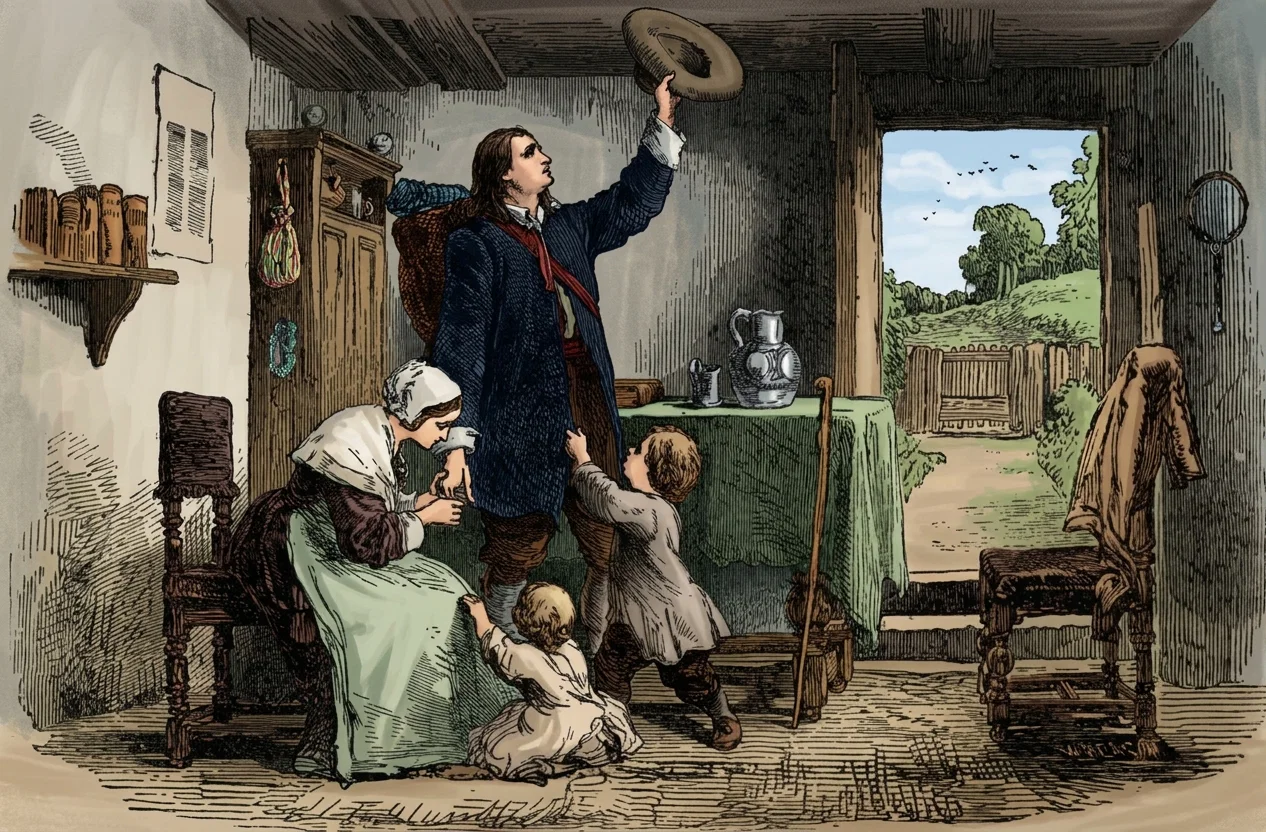
Roger Williams was banished, we are told by the Schaff-Herzog Encyclopedia, because he "declared his opinion that the magistrate might not punish a breach of the Sabbath, nor any other offense, as it was a breach of the first table" of the Decalogue. In other words, that man's duty to God was in no way subject to human control.
But when the State forms laws directly opposed to the laws of Jehovah, and thus strives to compel men to obey them, it is following the example set by the king of Babylon. When it takes the guardianship of the religious interests of the nation, a spirit of intolerance is manifested if men seek to practise the truth, which, by earnest study, they have found in God's Word. Those who are actuated by such a spirit of oppression can not understand what religious liberty means.
Every man has a right to worship God according to his own convictions; no one is called upon to obey laws that are opposed to the laws of God; and the only position the State can take, and have the approval of God, is to guard the rights of every individual, permitting no oppression to come upon any one because of religious belief.
As Nebuchadnezzar tried to force his subjects to obey his mandates, so men will try to force us to disregard the Word of God. They will endeavor to compel us to render homage to man-made statutes; but in God's strength we are to refuse to dishonor him. The laws of earthly kingdoms are to be obeyed only when they do not conflict with the laws of God. When governments are tyrannical and overbearing, when they trample on God's law, their laws are contemptible in his sight. And when they try to control the minds and consciences of those whom Christ died to make free, God's children are to show their loyalty to him by refusing to disobey his commandments.
When the judgment shall sit, and the books of heaven shall be opened, all will be judged, not by the laws that human minds have enacted, but by the law of God, which existed before the foundations of the world were laid. And the men who have been co-workers with the first great rebel, and who have not, as guardians of the State, searched the Word of God, that as rulers they might deal righteously and mercifully, will be judged by the law they have disregarded and dishonored.
In that day when every work shall be brought into judgment, when the Lord Jesus, with the marks of the crucifixion on his body, shall come in the clouds of heaven with power and great glory, those who, while holding positions of trust, have caused God's people to suffer, will cast their idols of silver and gold to the moles and to the bats; "to go into the clefts of the rocks, and into the tops of the ragged rocks, for fear of the Lord, and for the glory of his majesty, when he ariseth to shake terribly the earth."
"For, behold, the Lord cometh out of his place to punish the inhabitants of the earth for their iniquity; the earth also shall disclose her blood, and shall no more cover her slain."
They have shown no respect for God, no fear to transgress his commandments; but have refused to give their fellow-men rights equal to their own, and have tried to make them disobey God. They have stubbornly adhered to man-made commandments, and they will be judged accordingly. Those who persist in enacting laws which men can not obey without dishonoring God, and those that obey these laws, and trample on the law of the eternal God, must prepare for the result; for God will not change, nor alter the thing which has gone out of his mouth.
"As the Father hath loved me," said Christ, "so have I loved you; continue ye in my love. If ye keep my commandments, ye shall abide in my love; even as I have kept my Father's commandments, and abide in his love. These things have I spoken unto you, that my joy might remain in you, and that your joy might be full." "He that saith, I know him, and keepeth not his commandments, is a liar, and the truth is not in him. But whoso keepeth his Word, in him verily is the love of God perfected; herebyknow we that we are in him. He that saith he abideth in him ought himself also so to walk, even as he walked." "Whosoever committeth sin transgresseth also the law; for sin is the transgression of the law." "And he that keepeth his commandments dwelleth in him, and he in him."
God honors those who honor him by obedience to his precepts. John, the beloved disciple, was banished to the isle of Patmos for his faithfulness. "I John," he writes, "who also am your brother, and companion in tribulation, and in the kingdom and patience of Jesus Christ, was in the isle that is called Patmos, for the Word of God, and for the testimony of Jesus Christ. I was in the Spirit on the Lord's day." Did John here mean Sunday?—There is but one day called the Lord's day, and that is the seventh day of the week, the Sabbath instituted at creation. God created the world in six days, and on the seventh he rested and was refreshed. He blessed and sanctified this day, and set it apart to be observed as a memorial of creation. And on the seventh day John heard behind him "a great voice, as of a trumpet, saying, I am Alpha and Omega, the first and the last; and, What thou seest, write in a book, and send it unto the seven churches." "And I turned to see the voice that spake with me. And being turned, I saw seven golden candlesticks; and in the midst of the seven candlesticks one like unto the Son of man." Thus Christ honored John for his steadfast obedience to him.
Adam and Eve lost all access to Eden and to the tree of life because they took the word of another before the Word of God. By this act of disobedience they opened the flood-gates of woe upon our world. But those who steadfastly adhere to God's Word, will hear the benediction, "Blessed are they that do his commandments, that they may have right to the tree of life, and may enter in through the gates into the city." No flaming sword guards that tree from those who, after the light has been given them, in the face of all opposition turn from the commandments of men to obey the commandments of God. MRS. E. G. WHITE.

THE FRIEND OF SINNERS.

List ye to the blessed Saviour, Hear His kind and loving voice Speaking words of hope and comfort, Bidding every soul rejoice.
"Though your sins be dyed like crimson, I will make them white like wool; I will pardon your transgression, I will heal the sin-sick soul.
"You must leave all worldly pleasure, You must leave the ways of sin, You must follow in My footsteps, If you would My glory win."
Blessed Jesus, Friend of sinners, We would bring our sins to Thee, Lay them at Thy feet, believing Thou canst set the sinner free.
O, we praise Thee for Thy promise, For Thy kind and loving care! We will follow in Thy footsteps, That we may Thy glory share.
E. R. COLBURN. Ashland, Oregon.

HIS COMING AND KINGDOM.

"THE coming of the Lord draweth nigh," and the message bearing this "Gospel of the kingdom" is now due to the world. "And this Gospel of the kingdom shall be preached in all the world for a witness unto all nations; and then shall the end come." Matt. 24:14. The principal aim of the enemy of souls is to pervert the Word of God and confuse the minds of those who desire to do God service. Jesus said to his disciples, "The time cometh, that whosoever killeth you will think that he doeth God service." John 15:2. And Paul declared that he was "zealous toward God" when he "persecuted" Christians "unto the death." Such is the extent to which the evil one is enabled to confuse and deceive over-zealous people with respect to the teaching of the Word of God.
Then it is not surprising that we find men going astray in regard to the doctrine of the coming and kingdom of Christ. If men can not be dissuaded altogether from a belief in this doctrine, it will answer the great deceiver's purpose just as well if they can be drawn into an erroneous conception of it; and in this latter scheme he seems to be enjoying an unprecedented degree of success at the present time.
There is much ado in various circles about setting up the kingdom of Christ in this nation, as tho it were to be confined to this nation, or to begin in this nation to conquer the world. The various plans for the great consummation are all of a political nature, and civil law (compulsion) is to be the great lever of preparation. Christ is to be made king "thro the gateway of politics," says one of the great societies that is working to this end. The Bureau of Reforms has a great many "reform" strings to its bow, but they are all to be accomplished by means of civil law, notably compulsory Sunday observance. The National Reformers would "prepare the way of the Lord" by a formal acknowledgment of his authority in the Federal Constitution, and the formal enactment of the Ten Commandments into civil law. They are also in harmony with the "Christian citizenship" movement, which would inaugurate the kingdom of God by filling all the civil offices with professed Christians.
In contrast with this principle we have the example of John the Baptist, the forerunner of the first advent of Christ. The basis of his proclamation was, "Repent ye; for the kingdom of heaven is at hand." He did not say to the people, Put your good churchmen in office; or to the nation, Compel men by law to acknowledge the coming One; or to write it upon their statute books that God is the source of all power and to him is due all allegiance. John was "the voice of one crying in the wilderness, Prepare ye the way of the Lord, make his paths straight." How were they to do this?—They were to "repent." Repentance is an individual matter. The people to whom John came were all nominal churchmen, and so far as they filled civil offices such offices were already in the hands of churchmen. Had this been all that was required, the Jews were already in condition to receive the Messiah and to be recognized by him. But such profession did not constitute a preparation of the way of the Lord. The call went forth to all, "Repent ye;" there was not a single exception. Both the Pharisees and Sadducees were denounced as "a generation of vipers," needing to repent.
And when Jesus entered the ministry, six months later, he repeated the call, "Repent; for the kingdom of heaven is at hand." He, too, made the preparation for his kingdom a personal matter, and the initial act was repentance. Of that over-zealous religious class—the scribes and Pharisees—who thought themselves already fitted for the kingdom of God, he said, "Except your righteousness shall exceed the righteousness of the scribes and Pharisees, ye shall in no case enter into the kingdom of heaven." What kind of righteousness did the scribes and Pharisees have?—They had law righteousness, their "own righteousness, which is of the law." And this is the kind of righteousness which the legion of reform associations, unions, leagues, bureaus, federations, etc., would establish to-day as a preparation for the kingdom of Christ. It is all "of men, and will come to naught." Acts 5:38.
Man has nothing to do with the setting up or the ushering in of the kingdom of Christ. The Lord will attend to that himself. The image of Daniel 2 shows that it is not made of any of the kingdoms of this world. The stone was cut out without hands that fell upon the image representing the kingdoms of this world, breaking them to pieces together. That stone represented the kingdom set up by the God of heaven; men had no hand in it; and when it fell upon the governments which men had successively set up, none of them were spared. They "became like the chaff of the summer threshing floors; and the wind carried them away, that no place was found for them; and the stone that smote the image became a great mountain, and filled the whole earth."
In further evidence that man has nothing to do with the setting up of the kingdom of Christ in the earth, and that the preparation for it is an individual matter, we have the parable of the nobleman who left his business in the hands of his servants, and went into a far country to receive for himself a kingdom, and return. And when he returned he reckoned with his servants, individuals, and not with the nations as such. Notice, he received his kingdom in a far country; in other words, in heaven, for that is where Jesus went when he ascended from the earth.
Still further evidence on these points is found in the announcement of the manner of his coming to reward his people: "When the Son of man shall come in his glory, and all the holy angels with him, then shall he sit upon the throne of his glory; and before him shall be gathered all nations; and he shall separate them one from another, as a shepherd divideth his sheep from the goats; and he shall set the sheep on his right hand, but the goats on the left. Then shall the King say unto them on his right hand, Come, ye blessed of my Father, inherit the kingdom prepared for you before the foundation of the world." Then this kingdom was prepared before man had an existence.
What, then, has man to do with the coming and kingdom of Christ?—Nothing whatever but to prepare for an entrance into it, by repentance and bringing forth "fruits meet for repentance." What are the fruits meet for repentance?—"I was a hungered, and ye gave me meat; I was thirsty, and ye gave me drink; I was a stranger, and ye took me in; naked, and ye clothed me; I was sick, and ye visited me; I was in prison, and ye came unto me." Again, it is said of the saints at that time, "Here are they that keep the commandments of God, and the faith of Jesus." They will not be found trying to manufacture a kingdom of Christ out of the rotten material and rusty machinery of decaying civil governments. They will not be found trying to compel their fellow-men to yield obedience to man-made ordinances and religious institutions not warranted by the Word of God. All who enter the kingdom of Christ will be such as have followed in his footsteps, doing good to their fellow-men, without reference to the political affairs of those temporal governments which are all to be displaced by His coming and kingdom.

WHEELBARROW CHRISTIANS.

DURING an experience of twenty years I have found Christians not a few who resemble a wheelbarrow in their characteristics. I will name a few points of similarity:—
1. A wheelbarrow is so constructed that it has to be pushed if it renders any service whatever. If pulled, it goes backward, and that does not seem to be in accord with the fitness of things. So some people go only when they are pushed. The moment hands are off, they stop, and there they stand until the process is again applied. This is rather a clumsy, unnatural way of handling them; but I suppose it is better to push them along thannot have them go at all.
2. A wheelbarrow always empties itself when it turns over. Likewise, some people can not stumble and fall without losing all their religion. One step out of the way means for them to give up everything. The work must all be done over again. They have to be refilled.
3. When a wheelbarrow upsets, it lies perfectly helpless until somebody sets it up in position to be filled again. It is powerless in itself. So with some persons. They are not only easily upset, but they make no effort to get up when once down. They are too helpless to give a respectable kick. The church must get under them and lift them to their feet, or they will never get there.
4. A wheelbarrow, to be used, must have a clear track, otherwise it is ugly to manage. Yet if there are no obstructions in the way, and it is carefully balanced and vigorously pushed, it is rather a useful article after all. A good deal of valuable service may be gotten out of it.
So it is with the class of Christians of which I speak. If the track is kept clear, and they are constantly pushed, they do first-rate. They can be used quite advantageously. Like the wheelbarrow, they have both capacity and strength when right side up. The main trouble is in holding them level and keeping them going.—Religious Telescope.
Continue reading: JEWISH CUSTOMS AND TRADITIONS