Your ShelfYour Projects

Signs of the Times, Vol. 36, No. 13.

OUR SAVIOUR

Signs of the Times

Mar 31, 1909

Pacific Press Publishing Association · Mountain View, California · Mar 31, 1909

OUR SAVIOUR

(Boothroyd's Translation)
“Despised was He, and rejected of men; A Man of Sorrows and acquainted with grief, Like one that hideth his face from us; He was despised and we esteemed Him not. Surely our infirmities He hath borne, And our sorrows He hath carried them; Yet we accounted Him as one stricken, As one smitten of God, and afflicted. But He was wounded for our transgressions; He was bruised for our iniquities: The chastisement effecting our peace was on Him, And by His wounds we are healed. We all of us like sheep have gone astray; We have turned aside, each to his own way. And Jehovah hath caused to light on Him The punishment of the iniquities of us all.”

Question Corner

[All proper questions on Bible and history will be answered on this page as soon as possible after receiving them. This will sometimes mean a month or more. We can not promise to reply to the same question often. Let those who ask read other answers; they may find reply to their own. Always enclose stamp if answer is required. Those outside our Bible Band, please enclose ten cents. This does not begin to meet expenses oftentimes. “Foolish . . . questions avoid.”]

2789.— Instruments of God.

How could the Lord speak through such men as Balaam, and the prophet in 1 Kings 13:11? A. K.
God uses the very best instruments He has at hand always. Balaam was once evidently a true prophet of God. Through his foretelling of events, temptation came to him. Kings and noted men were willing to pay him. They had seen that after he uttered curses, curses followed; and where he blessed, blessings followed. So Balak tempted him by offering him great riches; yet God guarded the prophet, covetous though he was, so that he spoke His truth. Balaam afterward sought to earn his ill-gotten gain by corrupting Israel, or giving advice to Balak as to how Israel might be corrupted through idolatrous women; but in the wars that followed, Balaam himself was slain. The disobedient prophet was destroyed, because he trusted a brother prophet. The Lord does not declare that His children are infallible. Moses made his mistake. We even have the case of the Lord using the wicked high priest of the Jews. See John 11:50. “It is expedient for you that one man should die for the people, and that the whole nation perish not,” was what Caiaphas said. The verse following: “Now this he said not of himself; but being high priest that year, he prophesied that Jesus should die for the nation.” God used him; and so He always uses the very best material that He has at hand. All that He has to use for the salvation of humanity among humanity, is imperfect humanity. It is only God who could thus use them.
We do not know which was the best of Job’s friends, Eliphaz, Bildad, or Zophar, or whether Elihu was better than they or not. They said good things, but they misapplied them. Elihu said good things. The Lord says nothing whatever regarding his speech. It is not for humans to say as to who was the better person. He who understands motives only can determine this. The saying that Job was “right,” Job 42:4, does not imply that he was right in his complaints. He was right when he humbled himself before God and acknowledged that God was good in all things.

2790.— A Question of Square Dealing.

A borrows money on land from B. The land depreciates in value so that B neglects to secure his money in time, and so loses it. Is A required to make up his loss? J.
There may be things entering into this transaction of which we know nothing. If A borrowed a certain amount of money he certainly ought to make the money good. If he is an honest man, the matter of security ought not to enter into the question at all. B took that security, of course, to endeavor to save himself, not from A’s dishonesty, but from sickness, or death, or something of that kind which might occur to A. If A is an honest man he will, if he has ability, pay the amount that he borrowed whether his security was worthy or worthless.

2791.— The Word “Soul.”

Will you please explain the word “soul” of man. The Old Book says in regard to creation that man was made from the dust of the earth, and God breathed into him the breath of life, and he became a living soul; and some tell us that the soul is the spirit of man, or never dies. R. J. R.
The word “soul” is used in the Bible in different meanings. Sometimes it means the whole person. Man who was made of the dust of the earth became a living soul. The breath of life made him a living soul. He was a soul or person before, but lifeless. The breath of life made him living. So we read in 1 Peter 3:20 that there were eight souls saved in the ark; in Rev. 16:3, “Every living soul died in the sea.” That is, every living creature.
“Soul” is used to express the thoughts and affections common to man; all men, the animal life. “Bless the Lord, O my soul: and all that is within me, bless His holy name.” Ps. 103:1. “Soul” also means life. It does not mean spirit, for converted man has spirit as well as soul. It means simply the animal life, common to all creatures. An instance of this is found in Matt. 16:25, 26. The words “life” and “soul” in our Common Version come from the same Greek word, but nowhere in all the Bible is that soul said to be immortal, never dying, or deathless; but always that which we may lose. We can therefore give three comprehensive definitions of the word “soul”: A living person; the natural mind, thought, intellect, and affections; and mere life, or vitality.

2792.— The Observance of the Sabbath.

Does the Bible say that we shall worship at the very beginning and end of the Sabbath? A. K.
No, the Bible does not say that we shall worship on the Sabbath in so many words. It does say that we should keep it holy; and we know of no more fitting way to observe it as God commanded than to meet it with worship in the spirit of worship when it comes. The Sabbath is one of the blessed friends which God has given to us, coming to us with His own presence in it. If we had a friend who was coming at a certain hour and a certain time, whom we loved, we would be glad to welcome him, and we would make some preparations to welcome him. We would greet him as he came. If we had work to do we would get our work out of the way so that we could do it. Why not do the same as regards God’s Sabbath day? When the Lord especially comes to you in the Sabbath, why not be ready to greet the day and to greet Him with the proper kind of worship, prayer, and praise? And as the Sabbath leaves, what is more proper than that we should pray to God that the blessings which He had given us that day might abide with us through the week to come? Could anything be more appropriate? The kind of rest mentioned in Heb. 4:10 is spiritual rest primarily; the very peace that we ought to have on the Sabbath day, rest from our works of the flesh, and resting in the works of God for us.

2793.— Tithe of the Land.

Do we owe the Lord tithe on the land His followers own? That is, if the land be sold and the money invested in another piece where it would be more convenient. Does He require a tenth of the money the land sells for before buying? F. R.
That would depend. If the money for which the land had been purchased in the beginning had been properly tithed there would be no tithe when the land was sold save on the profits that were made in the sale. For instance, if the money had been properly tithed and invested in land to the extent of a thousand dollars, and the land was sold for $1,500, the tithe would be upon the extra $500. If there were no profits, there would be no tithe. See Lev. 27:30, 31.

2794.— Pentecost.

Are the days spoken of in Lev. 23:9 and Deut. 16:9 the same as recorded in Acts 2:1; and is the Jewish calendar able to locate these dates so that we can be sure of them at the present day? In other words, did Pentecost come on the first day of the week, or is the Day of Pentecost the Sabbath? or, as it is expressed in Acts 2:1, a series of days as it says, “The day of Pentecost is fully come”? W. E. G.
There is a difference over the reckoning of the days between the Jews in general and the Karaite Jews. We have not space in this department to go into discussion of this matter. See the SIGNS OF THE TIMES of March 3, “Passover and Pentecost.” You may get help from this. Kitto’s Cyclopedia declares that some authorities reckon that the Pentecost on that year fell on the Sabbath; Dimbleby’s “All Past Time,” page 121, places it on Sunday. The matter is wholly immaterial, depending upon the Passover, which fell in different years on different days. The seven sabbaths that were to be reckoned between the feasts were seven weeks; not necessarily beginning with the beginning of the week, or ending with the close of the week. The fact that the day of the week in Acts 2:1 is not important is shown by the very record itself. It does not tell us, “When the first day of the week was come on which Pentecost fell,” nor does it tell us that “When the Sabbath came, upon which Pentecost fell;” it just simply notes the Day of Pentecost because it was the fulfilment of the type; the type had met the antitype; the shadow had met the substance. You may get some thought upon this from Andrew’s “History of the Sabbath,” on Acts 2:1.

2795.— Inheriting the Kingdom of God.

In Question 2708 the answer is not definite to me. I understand from this that there will be no blood in the veins of God’s children after the resurrection. E. A. H.
We have no special desire to change the mind of our inquirer in respect to this. There are great general truths that teach us more sometimes than the mere understanding of some text. Mortal man has his life in the blood; this is stated over and over again in the Scripture, the blood is the life. It is the blood, too, which is corrupted. It is a great spiritual truth as well as a statement by medical men, the blood needs purification. That blood-life, or soul-life, is the life which is corrupted. The first man Adam was sinless, of course, when he was created, but he sinned, and all life inherited from him is also perverted life, or sinful life. The second Adam is in contrast to the first. He gives us a better nature even than the first Adam could. We are not simply restored to the Adamic life, we are given a life on a higher plane than that, and that is the teaching of 1 Corinthians 15, it seems to us. So also it is written: “The first man Adam became a living soul. The last Adam became a life-giving Spirit.” “Howbeit that is not first which is spiritual, but that which is natural; then that which is spiritual. The first man is of the earth, earthy; the second man is of heaven. As is the earthy, such are they also that are earthy; and as is the heavenly, such are they also that are heavenly.” 1 Cor. 15:45-48. Jesus after His resurrection had flesh and bones, but we do not read flesh and blood. It seems very clear to us that in this worldly state of existence the blood-life dominates, but in that state of existence, it will be the spirit-life, and God’s children will be renewed, not according to the blood-life as now, but according to the spirit-life. Very much more might be said on the matter of the life question, but there is not space for it in this department.

2796.— The Way of Holiness. Isa. 35:8.

Will you please state what you believe to be the meaning of Isa. 35:8? M. M. R.
Isaiah 34 has to do with the desolation of the earth under the type of the land of Idumea. The last part of that chapter refers to the desolate earth upon which there are no human inhabitants, left as a roaming place for wild beasts. From the third verse of the 35th chapter and onward are promises of what God has for His children, looking forward to the time when that earth which once lay desolate should bloom again in Eden beauty, fertility, and glory; and the lame man, or the one who had been lame among God’s children in this world, should “leap as a hart,” and “the tongue of the dumb” should sing. Instead of mirages of glowing sand and parched ground there should be pools of water, and there should be no more highways over which would pass the wicked and cruel, and robbers of earth; but a way of holiness. The 10th verse is the climax of the promises.

Gethsemane

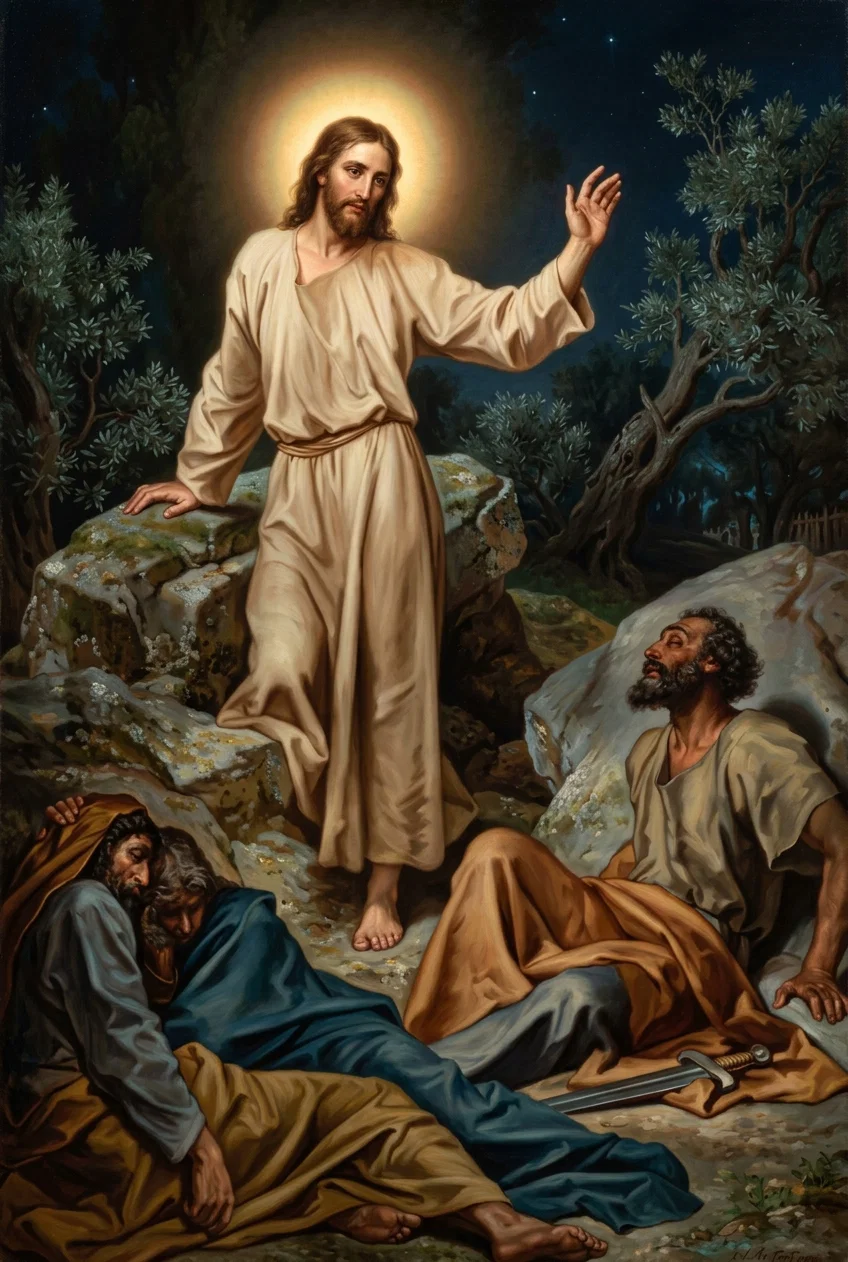
GETHSEMANE is a name endeared to every Christian. It is associated with our Lord and Saviour and His agony of blood on behalf of humanity. Locally, Gethsemane is the name of a plot of ground in the days of Jesus, in which was a garden, where Jesus often resorted with His disciples. It was across the brook Kidron from Jerusalem, on the slope of Olivet. Here grew many olive-trees, from the fruit of which was pressed the olive-oil. “Gethsemane” means “oil press,” in a double sense.
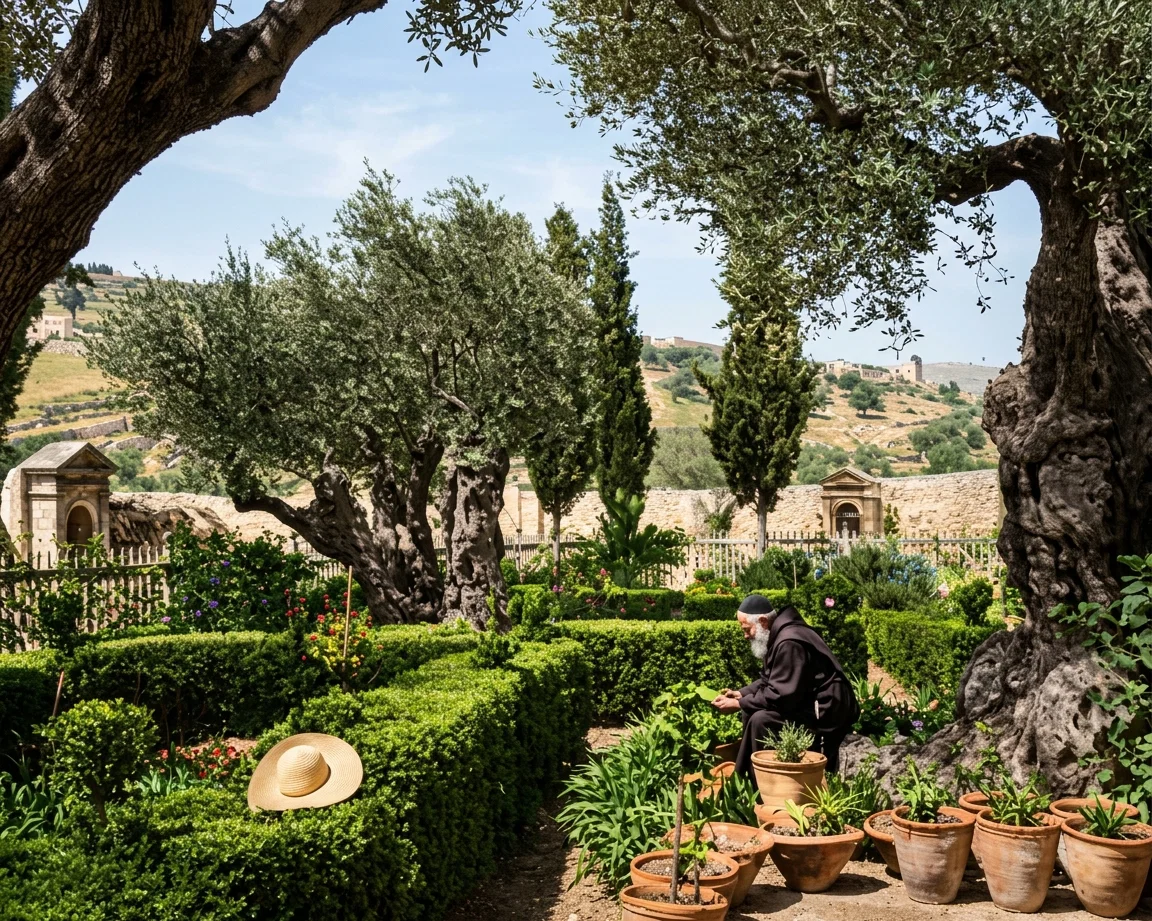
Modern Gethsemane is a matter of doubt. Our illustration is that of a flower-garden and olive-grove controlled by the Roman Catholics, while “the Greeks,” in the language of Dr. Schaff, “have set up a Gethsemane of their own farther up the Mount of Olives.” A few large olive-trees are growing here, some of which are nineteen feet in circumference, descendants, perhaps, of those in our Lord’s day. There are also younger olives and a dozen or so cypresses. The monks derive an income from the sale of olive-oil and rosaries made of olive-stones. A bouquet of flowers is presented each visitor, for which one franc (twenty cents) is expected in payment.
But let us leave the empty, mercenary form, with its vain superstitions and traditions. Gethsemane should have a deeper meaning to Christians; for here came the greatest temptation of Jesus, the Saviour of men; here was fought out the battle which decided the destiny of the world. Here was met the crisis of all the world’s ages. Here Jesus of Bethlehem, burdened with the sins of the world as His very own, met the arch-enemy in the great climax of conflict, and conquered. The record is found in the three Synoptic Gospels; we give the combined account:
“Then cometh Jesus with them unto a place called Gethsemane, and saith to His disciples, Sit ye here, while I go yonder and pray. Pray that ye enter not into temptation. And He took with Him Peter and the two sons of Zebedee, and began to be sorrowful, greatly amazed, and sore troubled. Then saith He, My soul is exceeding sorrowful, even unto death; abide ye here and watch with Me. And He went forward a little, about a stone’s cast, and fell on the ground, on His face, and prayed that, if it were possible, the hour might pass away from Him, saying, Abba, Father, all things are possible unto Thee; take away this cup from Me; nevertheless, not what I will, but what Thou wilt. And He cometh unto His disciples, and findeth them sleeping, and saith unto Peter, What, could ye not watch with Me one hour? Watch and pray, that ye enter not into temptation; the spirit indeed is willing, but the flesh is weak. Again, a second time, He went away and prayed, saying, O My Father, if this cannot pass away except I drink it, Thy will be done. And He came again and found them sleeping, for their eyes were heavy; and they knew not what to answer Him. And He went away the third time, saying again the same words. And there appeared unto Him an angel from heaven strengthening Him. And being in an agony He prayed more earnestly; and His sweat became as it were great drops of blood falling down upon the ground. And when He arose up from His prayer, then cometh He to His disciples, and saith unto them, Sleep on now, and take your rest; it is enough; behold, the hour is at hand and the Son of Man is betrayed into the hands of sinners.”
Brief indeed is the inspired account of this crisis of the ages. In the fierce temptation, the fate of the world hung in the balance. We need not ask how all this could be. Let it suffice that it was. The eternal Son of God came to this earth and became one of us, having a body of “sinful flesh.” His eternal power and glory were laid aside. His human weakness, strong only by the word of God through faith, met every temptation of the race. The prince of evil and all his host were pitted against the man Jesus, the second Adam. What seductive wiles, what appeals to every fiber of the mortal flesh, what cavernsof discouragements, what abysses of darkness pressed upon and yawned before the Son of Man in this awful struggle, none will ever know. Only those who witness in the last great day the eternal glory and bliss of the redeemed and see themselves shut out forever will be able even to approximate the fearful anguish of the last hours of Jesus before the cross. This fearful personal agony, due to the sins of the world which were resting upon Him, was set over against the refusal which He might have made to drink the cup. But infinite Love could not do otherwise. Whatever the suffering, eternal tho it might be, Jesus will meet it for the sake of a dying world who were crucifying Him. He could not let them perish. He had voluntarily taken upon Himself the dread load of man’s guilt that man might be made innocent, and He must not shrink from the duty.
And yet human nature trembled in that crisis of the ages,—deep, and black, and hopeless, rendered if possible more so, by Satan’s hellish art. Jesus longed for human sympathy. He took with Him Peter, who had just said, “Tho all men forsake Thee, yet will not I;” “I will lay down my life for Thee,” and James and John, who had declared, “We are able to be baptized with Thy baptism.” Surely these men would offer Him sympathy in His hour of trial! But even as on the Mount of Transfiguration, when this very hour of trial was talked over with Moses and Elijah, the disciples slept. They could not watch the one hour. Jesus was treading the wine-press alone, and of all the people there was none with Him. So He passed through the mightiest trial known; passed along, save the presence of the invisible God, that He for God might be infinitely able to help every soul who alone must pass through the great crises of his existence.
Modern Gethsemane.
Modern Gethsemane.
While the human longed for human sympathy, the perfect faith laid hold of the Infinite God; and in the petition we have the perfect example of submissive prayer, prayer always heard. (1) Note the confidence in God’s love: “Abba, Father,” “My Father.” It is the address of the child, the confident plea to the One He loves. (2) Note the confidence in God’s power and wisdom: “All things are possible unto Thee. Thou seest the end from the beginning; Thou knowest how to work all things after the counsel of Thy will; Thou hast almighty power; Thou lovest Me, Thine only begotten Son; take away this cup from Me.” So pleads the shrinking, human flesh. God did not despise the prayer. He does not blame His children if they pray in submission to be delivered from the sore trials. And Jesus prayed in submission—“Take away the cup, Father; nevertheless,—not-the-less however bitter the draught,—not what I will, but what Thou wilt.”
This was the prayer, this was the crowning petition, this the wish by which all others must be regulated. Such a prayer will always be answered by God, and always for our good, even tho the bitter cup be ours to drink. Surely here is a basis for unwavering faith for every child of God,—God’s infinite power, and wisdom, and love. Only in such confidence can we win the victory. Jesus won the victory of the cross in the garden; and we must win the mighty conflicts with the enemy in active life by submission to God, when alone in our Gethsemanes.
“We do not know it, but there lies Somewhere veiled under evening skies A garden all must sometime see— Gethsemane, Gethsemane, Somewhere lies OUR Gethsemane.”
“With joyous steps we go our ways; Love lends a halo to the days; Light sorrows sail as clouds afar; We laugh, and say how strong we are; We hurry on, and hurrying go Close to the border-land of wo That waits for you and waits for me, Gethsemane, Gethsemane, Forever waits Gethsemane.”
“Down shadowed lanes, across strange streams, Bridged over by our broken dreams, Behind the misty cap of years, Close to the great salt fount of tears, The garden lies. Strive as you may, You can not miss it in your way; All paths that have been or shall be Pass somewhere through Gethsemane.”
“All those who journey, soon or late Must pass within the garden gate— Must kneel alone in darkness there, Must battle with some fierce despair. God pity those who can not say, ‘Not mine, but Thine;’ who only pray, ‘Let this cup pass,’ and can not see The purpose in Gethsemane. Gethsemane! Gethsemane! God help us through Gethsemane.”

A Lesson on the Sabbath.

“REMEMBER the Sabbath day, to keep it holy. Six days shalt thou labor, and do all thy work: but the seventh day is the Sabbath of the Lord thy God: in it thou shalt not do any work, thou, nor thy son, nor thy daughter, thy man servant, nor thy maid servant, nor thy cattle, nor thy stranger that is within thy gates: for in six days the Lord made heaven and earth, the sea, and all that in them is, and rested the seventh day: wherefore the Lord blessed the Sabbath day and hallowed it.” Ex. 20: 8-10. Note all these little words italicized.
You say the world knows the seventh day is the Sabbath of the Jews; that God gave it to them as a memorial of their deliverance from Egyptian bondage. If this be true, then there must be two falsehoods in that commandment; for instead of saying it is the Sabbath of the Jews, God said, It “is the Sabbath of the Lord thy God,” that it was a memorial of His mighty work. He had made all things in six days and rested the seventh, and hallowed it and blessed it; therefore men were to remember the Sabbath. Then, too, Jesus, instead of saying it was a Sabbath made for the Jews, said it was made for man. Mark 2: 27. It is the only day that God hallowed, blessed, or rested on, or promised a blessing for the keeping thereof. Has it been changed?
God says, “My covenant will I not break, nor alter the thing that is gone out of My lips.” Ps. 89: 34. “The works of His hands are verity and judgment; all His commandments are sure. They stand fast forever and ever, and are done in truth and uprightness.” Ps. 111: 7, 8. What more do we need?
Luella D. Harmon.

Influence.

“None of us liveth unto himself, and no man dieth unto himself.” Rom 14:7.
ONE of the mightiest facts in the universe is that every man, woman, and child exerts an influence. Every one is either a sower that sows and corrupts, or a light that splendidly illuminates; every one is as salt which purifies and preserves, or as canker which eats and destroys. All exert an influence. Some hold such positions that their influence is more extended than others, while there are lives which add their influence to the world unnoticed, shedding the sweet fragrance of their life upon humanity as a little flower unseen in a great forest pours out its sweet odors upon the breezes. “There are no moral blanks, no neutral characters among us.”—St. Louis “Christian Advocate.”

Living Faith in Small Duties

LET a living faith run like threads of gold through the performance of even the smallest duties.— Mrs. E. G. White.
Continue reading: The Great Threefold Message