Your ShelfYour Projects

Signs of the Times, Vol. 40, No. 29.

Question Corner

Signs of the Times

Jul 29, 1913

Pacific Press Publishing Association · Mountain View, California · Jul 29, 1913

Question Corner

“IF YE WILL INQUIRE, INQUIRE YE.”
This Inquirer's Department is conducted for the purpose of helping those who are studying the Bible. The answers are oftentimes only suggestive. They are never to be considered infallible, only as they agree with the infallible Word. The writer who may answer these questions does not consider that his opinion is infallible. He will simply give the best that he has, and plead with the inquirer to search the Word. Such questions only will be answered as, to the editors, seem to minister to the good of the readers and to the mission of the paper. We can not answer repeatedly in the same volume questions upon the same scripture. The name and address must accompany question, not for publication, but as an evidence of good faith, and that answer may be made by letter if deemed advisable. No letters are answered which do not contain the name of the writer. It is well always to enclose stamp for reply.

4136 — A Backslidden Class

Please explain 1 Tim. 4:3-5, especially “which believe and know the truth,” “to abstain from meats,” “for it is sanctified by the word of God and prayer.” C. C. and S. D. L.
We wish that our subscriber had “Questions and Answers,” the little premium book we give with the “Signs.” On pages 192 to 195 this question is very fully explained. Note, first, that the text does not apply to any one particular class, but to “some.” It does not necessarily mean that every one of them commits the same sin. It is apostasy in general.
2. The time is not “the last days,” as sometimes interpreted, but “latter times,” that is, later times than the apostle lived. Some render “later seasons,” some “subsequent seasons.”
3. All the things condemned in this passage are the results of departing from the faith,—the only true faith there is, living, personal faith, which makes life connection with God, and that which dwelt in our blessed Lord, the faith of Jesus. The true faith is not based on the doing of any particular system, or the building up of a self-righteous character by the means of fasts, or abstinence from certain kinds of food. To live aright we may abstain from this, or that, or the other thing, and that is proper; but the mere abstaining itself does not save.
4. The doctrines, or teachings, of demons are teachings contrary to the word of God, which have developed into spiritualism, and other isms, to purgatory, to an ever-burning hell, to the invocation of the saints. All these things are doctrines which originated with the father of error.
5. “Forbidding to marry” would not involve the prohibition of marriage. Neither would it include advice against hasty and unwise marriages. We see the fulfilment of the Spirit's prediction in the enforced celibacy of the priesthood in the Roman Church, and in those organizations which, under pretense of holiness, forbid all marriages of its members as fornication.
6. The word translated “meats” is “broma,” meaning food of any kind. See John 4:34; Matt. 14:15. Victuals is its literal meaning. “Commanding to abstain from foods” does not mean instruction or advice as to what foods are good, proper, or injurious. It does not say to abstain from flesh meats, or cereals, or fruit, but from food in general. It would not apply to a physician who should forbid grains and enjoin flesh, nor to a vegetarian, who should denounce flesh meats as injurious, and advise with all the ardor of his soul a diet of fruit and grains. The prophecy relates to enjoined and stated fasts as meritorious in themselves, even as the forbidding to marry; and these can be seen in plenty in the enjoined fasts in apostate Christianity. Fasts are often beneficial, if voluntary and reasonable. They are good for the spiritual, mental, and physical man, but they should be voluntary. “If ye died with Christ from the rudiments of the world, why, as though living in the world,” says Paul to the Christians at Colosse, “do ye subject yourselves to ordinances, handle not, nor taste, nor touch, . . . after the precepts and doctrines of men?” See Col. 2:20-23. Fast if need be, but be sure it is not will-worship, self-righteousness, or from mere commandments of men.
7. God has created all that man needs for food, of every variety. Let the Christian select from that abundance, as he is able, that which will glorify God.
8. “Every creature,” meaning a created thing, whether animal, mineral, or vegetable, would, in common sense, include only the things which God gave for food. Because “every creature” is used, we would not gather that it means that men were bound to eat everything God had created, such as toads, snakes, snails, etc. Nothing that God has created for man's good and His glory is to be rejected at the command of men. Let every child of God know the truth of this, and so eat with thanksgiving.
9. “Sanctified through the word of God and prayer” would seem to limit the food to that which God had Himself given and set apart for man's use, and upon which man could with assurance pray for God's blessing. Take as the life rule in eating, and anything else for that matter, 1 Cor. 10:31. This answer is greatly condensed from the one in “Questions and Answers.” The whole point concerning all these various prohibitions, or vice versa, in such passages as 1 Cor. 8:8, 9, and in Romans 14, and so on, is that we are not to be saved by a particular abstinence from this, or that, or the other thing. It is not by any rules or commandments which men may lay down, that we are to be saved. It is not by eating any particular thing, or abstaining from any particular thing, that we are saved. We are saved only through Christ Jesus. At the same time, the one who loves God and loves His word will give heed to what God has said concerning the things that are clean and that are unclean. The prohibition was removed, but the principle abides. The prohibition was made to Israel (see Leviticus 11 and Deuteronomy 14); but when the time came that God knew His gospel would go to all the world and would reach very many who were so environed that they could not possibly carry out the Mosaic laws, that prohibition was lifted; yet God would have us learn from it still. The swine is unclean, and unclean forever, and 1 Cor. 10:31 would shut it away from our dietary.
This is also true regarding the observance of days. The keeping of the Sabbath will save no one; the refraining from the command “Thou shalt not kill” will save no one. No works that man can do will save him. We are saved only through our Lord Jesus Christ. If we will remember that it is this one thing which the apostle is endeavoring to emphasize in all his epistles to various churches, among whom were the Jews, it will help us greatly to understand these questions. He is not saying anything against the keeping of the Sabbath, anything against the eating of proper foods. That he covers in the strongest way by such texts as we have already referred to—1 Cor. 10:31. He has told us that what God requires is obedience. “Neither circumcision availeth anything, nor uncircumcision,” but the keeping of the commandments of God,—the “faith which worketh by love,” “that the righteousness of the law might be fulfilled in us, who walk not after the flesh, but after the Spirit.” But all these things come as a result of connection with Christ, and not as links to connect us with Him. The man who is truly Christ's will obey every commandment that Christ gives, if he sees it. He will eat and drink so as to glorify God, by keeping his whole system—physical, mental, spiritual—in the very best condition.

4137 — Old Style and New

When did Russia change from the Old Style to the new? I understand she used the Julian Calendar until a few years ago. B. E. T.
In 1902 Russia changed from the Old Style to the New Style.

4138 — The Day of Change

Could you tell us what day of the week Oct. 5, 1582 was, when it was called October 15 by the adoption of the Gregorian Calendar? B. E. T.
October 5 was not any day. It would have been Friday, for October 4 was Thursday, but October 5 was called October 15, so that October 15 came on Friday. There is no change in the days of the week between the Old Style and the New Style. They are all the same. The change did not affect the day of the week in any way.

4139 — What Days?

Please explain Gal. 4:9-11. What days? S. D. L.
Heathen days. Note the context. Paul tells us in the 8th verse that the Galatians, when they did not know God, did service unto them which by nature are no gods. They worshiped the gods of the heathen. Now he says, After you have come to know God, you turn back “again to the weak and beggarly elements, whereunto ye desire again to be in bondage.” Now what evidence had they shown that this was the case? “Ye observe days, and months, and times, and years.” The heathen had their days, and their months, and their times, and their years, and among their days which they observed was the Sunday every week, in honor of the sun. They observed Easter; they observed the old Saturnalia from which some of the Christian revelries come. They observed various days. And these Galatians had gone back to those observances, and thus shown that they were going back into bondage. No wonder the apostle was afraid because of the labor that he had bestowed upon them. The very next chapter, however, tells what he did want of them,—to stand fast in the liberty wherewith Christ had made them free. What did Christ free them from?—Sin. What is sin?—The transgression of the law. What were they made free from, therefore?—Transgression. What, then, were they to do?—“For in Jesus Christ neither circumcision availeth anything, nor uncircumcision; but faith which worketh by love.” Verse 6. And “this is the love of God, that we keep His commandments.” 1 John 5:3.

4140 — The Two Covenants

Will you please explain Gal. 4:21-31? Does it mean that the children under the old covenant are represented as the bond-woman, and the children under the new covenant as the children of Isaac? What difference is there between the old and the new covenant? R. G.
Our inquirer is correct. The children of the old covenant are the children of the bondwoman, the children of the new covenant are the children of Isaac, or of the free woman Sarah. The children of the old covenant are in bondage, the children of the new covenant are free. The one is following the flesh, the other the Spirit. The old covenant is man's effort to save himself,—no stronger than his own promises; the new covenant is based on the promises given in our Lord Jesus Christ. Compare Ex. 19:3-8 and 24:3-8 (the old covenant formation) with Heb. 8:10-12.
Note in the old covenant that the promises are the promises made by men. In the new covenant the promises are the promises made by God. The one is man's way, the working out of his own salvation, which always leads to bondage and failure; the other is God's way. The marrying of Hagar was Abraham's or man's way of carrying out God's will. It was the plan of the flesh, and all that were born of Hagar were bondmen. The birth of Isaac by Sarah was by the power of the Spirit of God. That was God's way, and therefore Isaac was the free child, and the children of Isaac are the children of freedom.
This expresses in very brief way the difference between the old and the new covenant. See answers to other questions on the same subject.

Our Bible Band

Schedule for the Week Ending August 2, 1913
| Day | Month | Date | Reading |
|---|---|---:|---|
| Sunday | July | 27 | Jeremiah 22, 23 |
| Monday | " | 28 | " 25, 26 |
| Tuesday | " | 29 | " 35, 36 |
| Wednesday | " | 30 | " 45, 24, 29 |
| Thursday | " | 31 | " 30, 31 |
| Friday | August | 1 | " 27, 28, 21 |
| Sabbath | " | 2 | " 34, 37 |
Our week's reading is still with the weeping prophet, and all the sad things in Judah which caused him to weep,—the false prophets, the utter repudiation of the law of God and the principles of righteousness, and the persecutions of the prophet himself,—have been left to us to show the awful enormity of sin and its sure consequences. From the 20th chapter on, the order of the chapters is more or less broken up. That is, the chapters are not in chronological order. It has been thought by good scholars that when the manuscript was placed together in book form by Ezra, or some others, that the chapters were not properly arranged, or by some accident were disarranged. It is not difficult to place them in chronological order, because the data is quite clearly given us by Jeremiah himself. We suggest the following from Boothroyd, if one desires to read the chapters in that way. After chapter 20 read as follows: 22, 23, 25, 26, 35, 36, 45, 24, 29, 30, 31; 27, 28, 21, 34, 37, 32, 33, 38, etc. The schedule itself gives this order. It will be a little more trouble for us to keep our place, perhaps, in the prophecy, but we will have the chronological story of Jeremiah's experiences in Judah.

There Is Healing in Him

By Mrs. E. G. White
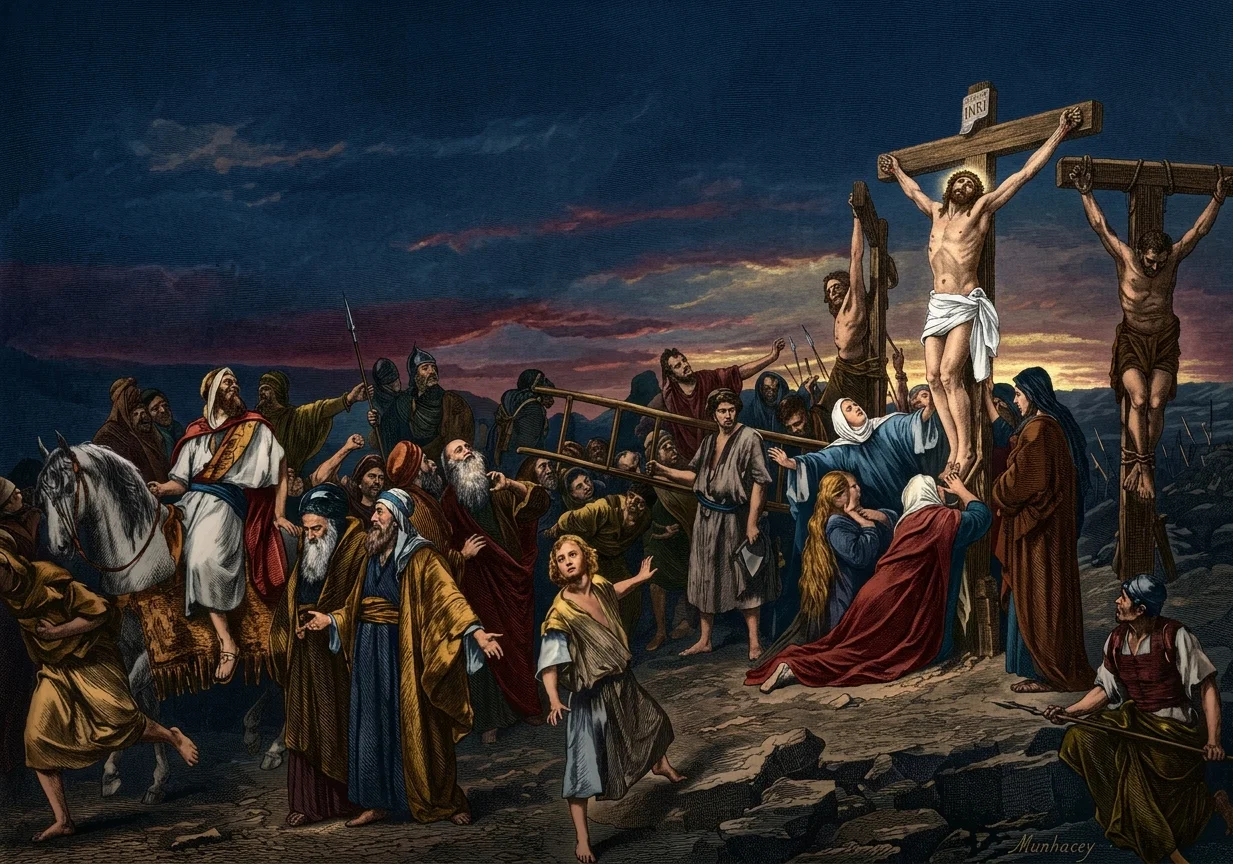
As the sinner looks upon the Saviour dying on Calvary, and realizes that the sufferer is divine, he asks why this great sacrifice was made, and the cross points to the holy law of God which has been transgressed. The death of Christ is an unanswerable argument as to the immutability and righteousness of the law. In prophesying of Christ, Isaiah says, “He will magnify the law, and make it honorable.” The law has no power to pardon the evil-doer. Its office is to point out his defects, that he may realize his need of One who is mighty to save, his need of One who will become his substitute, his surety, his righteousness. Jesus meets the need of the sinner, for He has taken upon Him the sins of the transgressor. “He was wounded for our transgressions, He was bruised for our iniquities; the chastisement of our peace was upon Him; and with His stripes we are healed.” The sin could have cut off the sinner, and forever destroyed him; but the costlier plan was chosen. In His great love He provides hope for the hopeless, giving His only-begotten Son to bear the sins of the world. And since He has poured out all heaven in that one rich gift, He will withhold from man no needed aid that he may take the cup of salvation, and become an heir of God, joint-heir with Christ.
CHRIST ON THE CROSS
CHRIST ON THE CROSS
Christ came to manifest the love of God to the world, to draw the hearts of all men to Himself. He said, “And I, if I be lifted up from the earth, will draw all men unto Me.” The first step toward salvation is to respond to the drawing of the love of Christ. God sends message after message to men, entreating them to repentance, that He may forgive, and write pardon against their names. Shall there be no repentance? Shall His appeals be unheeded? Shall His overtures of mercy be ignored, and His love utterly rejected? O, then man will cut himself off from the medium through which he may gain life eternal; for God only pardons the penitent! By the manifestation of His love, by the entreating of His Spirit, He woos men to repentance; for repentance is the gift of God, and whom He pardons He first makes penitent. The sweetest joy comes to man through his sincere repentance toward God for the transgression of His law, and through faith in Christ as the sinner’s Redeemer and Advocate. It is that men may understand the joy of forgiveness, the peace of God, that Christ draws them through the manifestation of His love. If they respond to His drawing, yielding their hearts to His grace, He will lead them on step by step, to a full knowledge of Himself, and this is life eternal.
Christ came to reveal to the sinner the justice and love of God, that He might give repentance to Israel and remission of sins. When the sinner beholds Jesus lifted up upon the cross, suffering the guilt of the transgressor, bearing the penalty of sin; when he beholds God’s abhorrence of evil in the fearful manifestation of the death of the cross, and His love for fallen man, he is led to repentance toward God because of his transgression of the law which is holy, and just, and good. He exercises faith in Christ, because the divine Saviour has become his substitute, his surety, and advocate, the One in whom his very life is centered.To the repenting sinner God can show His mercy and truth, and bestow upon him His forgiveness and love.
But Satan will not permit a soul to escape from the captivity of sin if by any means he can prevent it. Though all heaven has been poured out in one rich gift—for when God gave His Son, He gave the choicest gift of heaven, and the treasures of heaven are at our command—yet to the repenting soul the enemy will seek to represent God as stern and inexorable, unwilling to pardon the transgressor. At different times letters have come to me from persons who were in despair over their sins. One and another have written: “I fear I am past all help. Is there any hope for me?” To these poor souls the message has been given: “Hope in God. The Father has bread enough and to spare. Arise, and go to your Father. He will meet you a great way off, and will give you His love and compassion.”
When the enemy comes in like a flood, and seeks to overwhelm you with the thought of your sin, tell him: “I know I am a sinner. If I were not, I could not go to the Saviour; for He came not ‘to call the righteous, but sinners to repentance.’ And because I am a sinner, He bids me to come to Christ. I am sinful and polluted, but He suffered humiliation and death, and exhausted the curse that belongs to me. I come. I believe. I claim His sure promise, ‘Whosoever believeth in Him should not perish, but have everlasting life.’”
Will such a plea made in contrition of soul be turned away?—No, never. By the suffering and death of Christ is proved His boundless love to man. He is willing and able to save to the uttermost all that come unto God by Him.
Then as a little child come to God, presenting yourself as suppliant at His feet; for we need not ascend into the heavens to bring Jesus down, nor into the earth to bring Him up; for He is ever near us. He says, “Behold, I stand at the door, and knock; if any man hear My voice, and open the door, I will come in to him, and will sup with him, and he with Me.” How willing is Christ to take possession of the soul temple if we will let Him! He is represented as waiting and knocking at the door of the heart. Then why does He not enter? It is because the love of sin has closed the door of the heart. As soon as we consent to give sin up, to acknowledge our guilt, the barrier is removed between the soul and the Saviour.

Our Lord’s Prediction

By J. S. Kilgore
(Read Matthew 24)
His disciples ask the threefold question: “When shall these things be [that is, concerning Jerusalem]? and what shall be the sign of Thy coming, and of the end of the world?”
In answering this question, our Lord employs the entire chapter except verses 15 to 21, in which He answers their question regarding “these things,” or the destruction of the temple. However, the events predicted in the twenty-first verse also extend into the long reign of papal domination, and connect with the remainder of the chapter.
After giving a clear outline of events to occur between His time and the end of the world, He makes announcement of three great signs to be displayed in the heavens, which when fulfilled will mark the generation that will witness His second visible return to the earth. In the 29th and 30th verses He says:
“Immediately after the tribulation of those days shall the sun be darkened, and the moon shall not give her light, and the stars shall fall from heaven, and the powers of the heavens shall be shaken; and then shall appear the sign of the Son of Man in heaven: and then shall all the tribes of the earth mourn, and they shall see the Son of Man coming in the clouds of heaven with power and great glory.”
Then after trying to impress the solemnity of the event upon the generation which should be living to know of these signs, He marks such generation as the generation which should also witness the shaking of the powers of the heavens and His oncoming sign in the heavenly clouds: “Verily I say unto you, This generation shall not pass, till all these things be fulfilled.”
Now we know that He does not refer to the generation to whom He was talking, from what He said in verses six to eight. For He there said that there would be wars and rumors of wars, and that nation would rise against nation, and many other things would develop which would require centuries to fulfil. Then He continues, “These things must come to pass, but the end is not yet.”
Therefore the only conclusion we can arrive at is that when He said “this generation” He referred to the generation which should be living to witness the fulfilment of the last one of His signs in the sun, moon, and stars, and that would see them all as signs in the light of fulfilled prophecy.
As to these great signs, they are already subjects of history. The supernatural darkening of the sun occurred May 19, 1780. Astronomers speak of it, but they are not able to furnish any satisfactory explanation, which should make it to us all the more suggestive. The night of May 19, 1780, was equally as unnatural as the day had been, for the moon was at its full.
Mr. Tenney, quoted in the “Historical Society,” says of it: “The darkness of the following evening was probably as gross as has ever been observed since the Almighty fiat gave birth to light. . . . A sheet of white paper held within a few inches of the eyes, was equally as invisible as the blackest velvet.”
Dr. Adams says, “The darkness was as uncommon in the night as it was in the day, as the moon had fulled the day before.” This statement, respecting the phase of the moon, proves the impossibility of an eclipse of the sun at the time.

The Falling Stars

As to the last sign, the falling stars, you will observe that this could not have occurred in connection with the darkening of the moon; for then would the sky have been lighted up by the shooting stars. No; the great star shower occurred November 13, 1833. Many have also written concerning this. The following account of it may be found in a work entitled “Our First Century,” page 329:
“Extensive and magnificent showers of shooting stars have been known to occur at various places in modern times; but the most universal and wonderful which has ever been recorded, is that of the 13th of November, 1833, the whole firmament, over all the United States, being then, for hours, in fiery commotion. No celestial phenomenon has ever occurred in this country since its first settlement, which was viewed with such intense admiration by one class in the community, or with so much dread and alarm by another. During the three hours of its continuance the day of judgment was believed to be only waiting for sunrise.”
This wonderful prophecy was proclaimed 1800 years in advance of the “time” set for its fulfilment. And when is that time? In the twenty-ninth verse He said that these signs would immediately follow the great tribulation. Students of history know that the great tribulation, commencing after Christ’s sayings, extended through the Dark Ages, and that it was checked by the Reformation a short time prior to the overthrow of papal supremacy in 1798.
Luther commenced his work in the sixteenth century, and by 1776 the persecutions had almost ceased. In 1798 the papal supremacy was superseded. In that year the French armies under Berthier entered Rome and took Pope Pius VI prisoner, and kept him a prisoner until his death on August 29, 1799. Therefore, the days of papal supremacy ended in 1798, but the tribulation ceased earlier; hence Christ, in marking the time for these signs to begin, said they would appear immediately after the tribulation of those days. Mark’s record of Christ’s words makes this plain. He says (13:24), “But in those days, after that tribulation, the sun shall be darkened, and the moon shall not give her light.”
In view of these plain, definite, and unmistakable evidences, together with many other prophecies of like character, the wonder is how the world can be asleep concerning the imminence of the second coming of Christ. The only reason that I can assign for this condition, is that the great majority of Christendom is relying on knowledge obtained from men, instead of knowledge obtained from God; and instead of seeking God and His word for light, they seek to men and men’s word.
But this very condition, too, is a sign of the end. Of those who would turn men from the dangers against which God’s word warns them, and predict a time of peace and progress, it is said: “When they shall say, Peace and safety; then sudden destruction cometh upon them, . . . and they shall not escape.” 1 Thess. 5: 3.

Eagerly Watch

The Scripture uniformly commands us to look forward with eager expectation to the coming of Christ, and defers the crown of glory that awaits us till that period. The day of Christ’s coming is of all events the most auspicious.—John Calvin.

Time for Daily Meditation

TRY to secure some part of each day for meditation. Apart from men we can look ourselves more honestly in the face, lift up our hearts to God, and give our panting lives a chance.—Stevenson.

The Duty to Escape Poverty

It is not disgraceful to any one who is poor to confess his poverty; but the not exerting oneself to escape poverty is disgraceful.—Pericles.

The Last Key Opens the Lock

“Don’t get discouraged. It is often the last key in the bunch that opens the lock.”
Continue reading: THE WITNESSING OF GOD