CAN any of the children of the SIGNS OF THE TIMES family tell which, of all the things necessary to sustain life, the Creator has given in greatest abundance?
What does every one, even the very poorest, have all of the time?
I think I hear some little boy exclaim, “Air, of course; any one could tell that!”
Yes, air; but does every one have the right kind of air, all the time? This is a very important question, because without good air we can not have good blood, good muscles, good lungs, or good brains.
The air, or atmosphere, is an invisible gas which surrounds the earth, and extends to a height of from fifty to two hundred miles above its surface.
It is composed of oxygen and nitrogen. Besides these, a small amount of watery vapor and carbonic acid gas are always present, but not in sufficient quantities to do harm, if the air is allowed to circulate freely.
If the air is shut in by closed doors and windows, these and other impurities increase to such an extent as to be a source of danger to those who breathe them.
In many public places the air is unfit to be taken into the lungs. Have you ever been in a schoolroom where the pupils were dull and stupid? or in a church where the grown people went to sleep while the minister was trying to teach them the things of God?
Do you not think it makes the Lord sorry to see his people, who should have wide-awake, active minds, ready to take in the lessons he sends them, nodding and sleeping in his house, upon the day that he has set apart for his worship, when he has provided means by which the air may be kept fresh and pure? When it leaves our lungs, it is warm, and at once rises above our heads. If the windows are open, it passes out, and good air comes in to take its place.
Once outside, the thousands of little mouths which are on the leaves of all trees and plants drink up the impurities and return oxygen to the air.
If, on the contrary, our windows are kept closed, or only open a little, the impure air soon becomes cooled and comes down for us to breathe over again.
Sleeping rooms, especially, should always have a large supply of fresh air. Have a window open at the top, where the old air may pass out, and one open at the bottom, where the new, life-giving air can come in. Then you will awake in the morning rested and refreshed, and ready for a good day's work or play.
IF YOU WANT TO BE LOVED,
Don't find fault.
Don't contradict people even if you are sure you are right.
Don't be inquisitive about the affairs of even your most intimate friend.
Don't underrate anything because you don't possess it.
Don't believe that everybody else in the world is happier than you.
Don't conclude that you have never had any opportunities in life.
Don't believe all the evil you hear.
Don't repeat gossip, even if it does interest a crowd.
Don't go untidy on the plea that everybody knows you.
Don't be rude to your inferiors in social position.
Don't over or under-dress.
Don't express a positive opinion unless you perfectly understand what you are talking about.
Don't get in the habit of vulgarizing life by making light of the sentiment of it.
Don't jeer at anybody's religious belief.
Don't try to be anything else but a gentlewoman—and that means a woman who has consideration for the whole world and whose life is governed by the Golden Rule, “Do unto others as you would be done by.”—Ladies' Home Journal.
Hatred Stirreth Up Strifes, But Love Covereth
“HATRED stirreth up strifes; but love covereth all sins.”—Proverbs.
Love Never Turns Back
LOVE never turns back because it hears a lion roar.—Ram’s Horn.
EGERTON R. YOUNG, D.D.
By D. Berger, D.D.
BY D. BERGER, D.D.
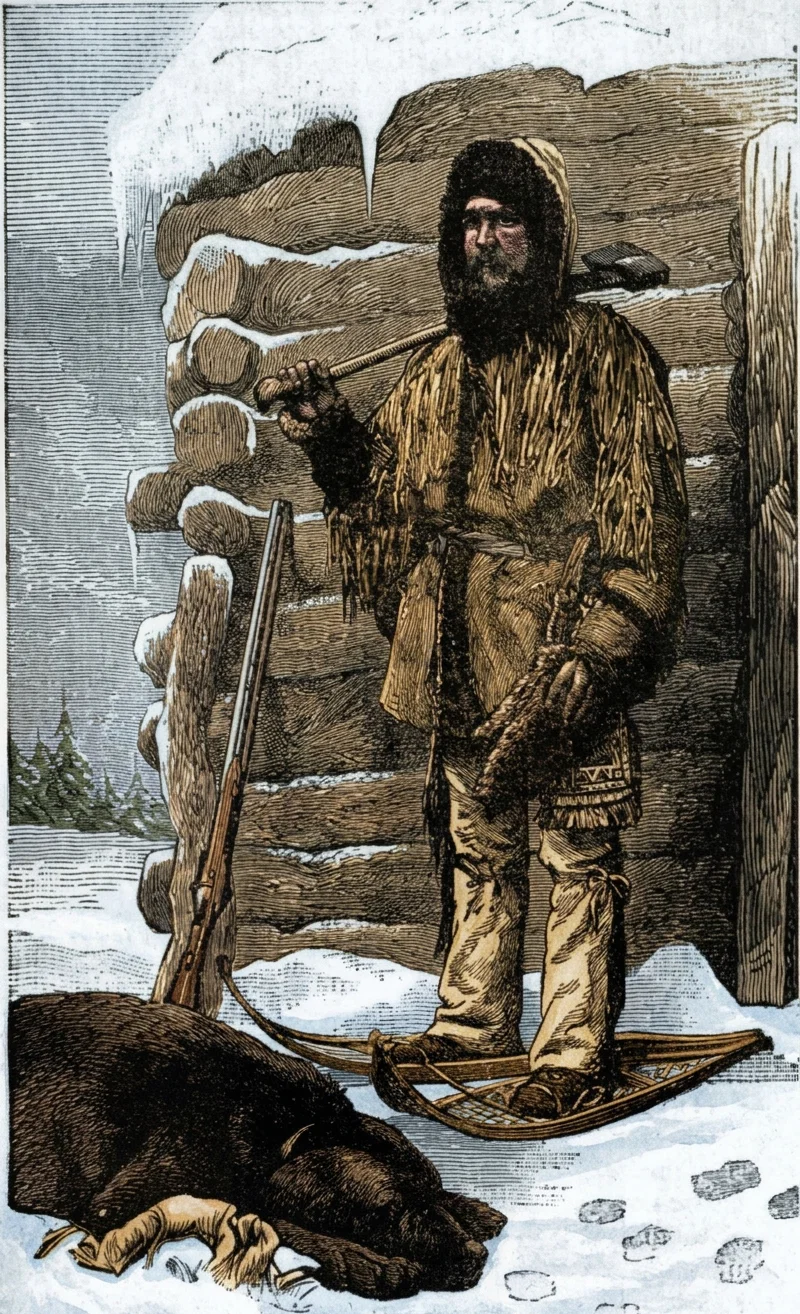
Few men as missionaries have ever undergone more thrilling experiences than has Dr. Young, the greater part of whose life has been spent among the Indians of British America in the far northwest. In his missionary tours he sometimes travels as far as seven hundred miles northward beyond the now remotest settlement of white people. Under his labors many hundreds of Indians have been converted to Christianity. Schools have been established for their children, and they have been started on the highway toward Christian civilization.
A few years ago I was shown an autograph letter to Dr. Young, written in an Indian language by an Indian chief of a far northwestern tribe. The letter was an earnest plea for missionaries to be sent to his village and for a teacher for their children. He said that they had about thirty children in his village, and he was very anxious to have a teacher for them. This Indian chief has a strange history. His tribe were not usually cannibals, but in times of extreme need they sometimes fell into this terrible practice.
Some years before Dr. Young visited his place, in a winter of unusual severity, and with great scarcity of game, and starvation among some of the tribes, this chief killed his own wife for food, and ate her as he would an animal. He has now heard the Gospel of Jesus Christ, and, with extreme horror for his past life, was trying to do all he could to lead other Indians to a Christian life. The story of Dr. Young's life and labors is told in a most interesting volume written by himself, entitled “By Canoe and Dog Train.”
ENGLAND
By H. P. H.
No nation has such an extensive hold on the world as Great Britain, and no tongue so generally spoken as the English. It is therefore not by mere chance that the closing message of the Gospel began among the English-speaking people. Whatever the political errors of England may have been, she deserves credit for having done more than any other nation to give the Bible to the nations of earth in their native tongues. Thus, an important part of the closing work has been done, for it is through his word that the Lord enlightens the world. It was when the Word was made flesh and dwelt among us that great light sprang up in darkness; and it will be by the same process that the world will be lightened just before the Lord comes. In this connection, it is cheering to note that “this Gospel of the kingdom,” which is to be preached in all the world immediately before the end, is making encouraging progress in England. For a number of years from forty to sixty colporters have been busily circulating literature on the “Second Advent” and kindred topics; and of late, from thirty to thirty-eight agents are engaged in the sale of Present Truth, a journal laden with the living word. From twelve to thirteen thousand copies of this excellent journal are sold from week to week. The good effects of all this literature are seen in interests springing up all over the kingdom to such an extent that the public laborers in the field are unable to meet all the calls.
In addition to the effect of our own literature may be mentioned the workings of the late efforts of the London authorities in closing our publishing house in that city on account of Sunday work. Through notices in the secular press, the attention of many thousands was called to the Sabbath reform, and the work that is being done in this line. So far as seen, these papers plainly stated the fact that Sunday is not the Sabbath, and many of them saw and fairly stated the issue, declaring that it was a case of religious persecution against those whose only offense is keeping the Ten Commandments.
These facts come home to many with peculiar force from the fact that all England is wrought up to the fighting point because the Turks persecuted the Armenians. Many of these Armenians are avowedly infidel and boldly advocate revolutionary principles, which are altogether antichristian; still England makes all Europe echo with her outcries against the Turks, and at the same time herself persecutes her own subjects for no other offense than keeping the commandments of God as written in his word. These facts open the eyes of some.
Recently, a general gathering of the ministers and Bible workers and some colporters was held at London. Three Bible studies were held daily, two by A. T. Jones and one by Dr. Waggoner, while H. E. Robinson and the writer held meetings daily with the workers. The Lord gave much light and encouragement from his word. Reports from the field showed general prosperity. At the present time there are 76 engaged in selling Present Truth and our books. Meetings are held in several of the leading cities, such as Southampton, Plymouth, Manchester, and Birkenhead, while in London, meetings are held in five localities.
After the close of the London meeting, Elder Jones entered the field to visit the various churches and companies in England and Ireland before his return to America, while the writer visited Birmingham, Manchester, and Liverpool. Brother Geo. N. Drew, known to many in California, still continues with good success and courage his ship-mission work at Liverpool. By this work much literature is sent by sea to various tongues and nations of earth. The outlook for the work of the message in Great Britain was never so encouraging as at the present.
H. P. H.
WHERE THE MASTER DWELLETH.
Have ye looked for sheep in the desert,
For those who have lost their way?
Have ye been in the wild, waste places,
Where the lost and wandering stray?
Have ye trodden the lonely highway,
The foul and darksome street?
It may be ye’d see in the gloaming
The print of My wounded feet.
Have ye stood by the sad and weary,
To smooth the pillow of death,
To comfort the sorrow-stricken,
And strengthen the feeble faith?
And have ye felt when the glory
Has streamed through the open door,
And flitted across the shadows,
That I had been there before?
Have ye wept with the broken-hearted
In their agony of woe?
Ye might hear Me whispering beside you,
“’Tis the pathway I often go.”
My brethren, my friends, my disciples,
Can ye dare to follow Me?
Then, wherever the Master dwelleth
There shall My servant be.
Have ye carried the living water
To the parched and thirsty soul?
Have ye said to the sick and wounded,
“Christ Jesus can make thee whole?”
Have ye told My fainting children
Of the strength of the Father’s hand?
Have ye guided the tottering footsteps
To the shore of the golden land?
—Selected.
A TRACT, AND WHAT CAME OF IT.
An incident comes to us from Miss Elizabeth Lawrence, of the Baptist Mission, Burma, which illustrates what is often called in question, the power of the truth in many instances to lead men to a new life of faith in Christ, apart from the personal teacher, and which also affords encouragement to those who do not see the fruit of their labors to hope that in some cases the seed cast on the waters or in the face of the winds may bring forth manifold. Miss Lawrence may relate her own story. She travels far into the jungle often, where the face of no other white woman was ever seen to work in heathen villages; and also among the churches, holding meetings with the women and children, and aiding the native pastors by Bible readings in the church. At the time referred to above she wrote:—
“Just now I am rejoicing over nine converts in a heathen village some thirty miles away from all Christian influences, who were brought to the light by the grandfather in one household reading a tract called ‘The Awakener,’ which was picked up under a rest-house by the wayside some fifteen miles away from their village, and carried to him by one who could not read. Altho the tract was much soiled and some of the leaves gone, the Holy Spirit used it to his salvation and that of his household of six adults, and another household, a man and wife, and they are teaching their little ones the right way. After reading the tract two men were sent to Belin, the town near which the tract was found, to inquire for the teacher of this religion; and, finding I had returned here, they took a little boat (it being in the rains) and came seeking me, but the Buddhists here hearing what they were seeking for turned12them aside, saying the teacher lived a long distance away still, so they were discouraged and returned home.
“The next dry season, when they met a blacksmith from Thaton, they inquired of him, and he told them where they would find the Christian teacher, and so the two men came again, and found the mission house, and drank in the truth, and when they returned, two of our preachers went with them to instruct them more in the way.”—Missionary Review.
THE WORK IN VICKSBURG, MISS.
From Brother J. E. White, of the southern missionary steamer, Morning Star, now at Vicksburg, Miss., we have encouraging words regarding the work among the colored people. He says the interest is increasing all the time; he acknowledges receipt of a “nice bundle of SIGNS” each week, with an assurance that they are “gratefully received, and are being read by those who receive good from them.” The people are very poor, but “they are lifting nobly in the work.” Acknowledging receipt of a bundle of Our Little Friend also, Brother White says: “This is very opportune assistance, for we have so much to supply in starting our night school and other matters, that it keeps us guessing for funds for the long work, and such assistance as this is a wonderful aid.” This work deserves encouragement. It was begun in personal self-sacrifice, and the steamer set afloat in the midst of trying circumstances, yet it has been signally blessed of God in opening the door to a new phase of the work among the millions of colored people in the southern Mississippi Valley.
MONGOLIA
By F. M. Chapin
BY REV. F. M. CHAPIN.
MONGOLIA has long been a problem to missionary societies. The immense tract of country occupied by the tribes who roam over its territory offers a serious difficulty, since it is impossible to reach only a few people from one station. Different tribes have different dialects, a difference very manifest in the only Bible at the disposal of the missionary, since of the few who can read, a great many are unable to understand what is meant. The people are the most religious of all the followers of Buddha. Probably nowhere else in the world is there manifest so much superstition mingled with the mechanical observation of rites and ceremonies as out on the great plains. In this respect they form a marked contrast to the Chinese. The latter, whatever may be their practice as to inviting priests to read prayers for the dead, are thorough Confucianists. In Mongolia, Confucius is well-nigh unknown; but Buddha, and particularly that form of worship which has been introduced from Thibet, is the sacred religion of the people. A few Mongols have received the truth; many more have acknowledged its power and their own duty to accept it, but the fear of relatives and friends, the certainty of being “put out of the synagogue,” has deterred them from an open profession.
With the exception, possibly, of the fever-stricken region of Africa, no mission field calls for the intense heroism, coupled with great intellectual qualifications, such as are demanded of the missionary who gives himself to this great work. In order to reach the people, a man must possess two languages, Mongol and Chinese, must have an iron constitution, capable of enduring the rigors of severe winters on the bleak plains, and, above all, a love that “overcometh the world.”
There is no census of the Mongols; they are supposed to number 2,500,000, but this number is purely an estimate. The conditions of life to the north of here during the last winter must have been pitiable in the extreme. Murrain broke out among the herds and swept off fully one-third. A similar disease killed off half of the sheep. And as the government had bought or seized a large proportion of the horses, the Mongols were reduced to penury.—Rev. F. M. Chapin, in the Independent.
THE WORK OF A FOREIGN MISSIONARY.
Missionaries to uncivilized, or partially civilized, countries are liable to be confronted with many unexpected emergencies. Their work is not all singing, praying, preaching, or book teaching. Their domestic lives and labors are closely noted by those whom they seek to save, and sometimes it is through these that their greatest influence is wielded. While in civilized countries the Christian’s daily life is scrutinized by the world, and critically compared with his profession, this watchfulness is even more noticeable among the heathen.
But this is not all that the missionaries to heathen countries must expect. Man or woman will find much need of self-reliance in the matter of manual labor. The man must needs be a fairly good mechanic, a farmer, and perhaps a boatman, as well as something of a physician (at least a good nurse), in addition to the qualifications incident to his primary mission as a Gospel teacher. The more he knows about the practical duties of life, the better he is qualified to give the every-day help on all sides that will give him an influence with the people, and secure the confidence so essential to the success of his mission.
The lady missionary, especially if she be a housewife also, will find it necessary to make by hand many things that she has been accustomed to buying ready made, and to do many kinds of work herself that at home she was able to hire. A sister who recently went to one of the South Sea islands writes to Sister Hannah S. Mott, of this city, that her husband, who is a preacher and physician, was building a mission house, and that she had just finished making him a coat and pants, having cut and made them all alone. She adds:—
It is quite necessary for missionaries coming to these far-away islands to be able to turn their hands to every kind of work, for they will probably be brought face to face with many unexpected occupations. It is not easy to hire work done here.
A native had asked this lady’s little boy if his father had ever been captain of a ship. When told that he had not, the native remarked that he could do everything else. He had been watching with much interest the busy, active lives of the missionaries, for it was an example unknown to the natives. Even the white men who live amongst them do but little manual labor. The encouraging feature of the situation is also set forth. “Some of the natives,” she writes, “are being educated to a higher, nobler, better life. With all their faults they are not devoid of many excellent traits of character. They are kind-hearted and generous. . . . I love my school-children very much. It is so gratifying to watch their interesting faces from day to day, and to note the eagerness with which they grasp new ideas.” She speaks in appreciation of the Little Friends received, and the good they do, and of the interest which the children have in Bible stories and pictures.
CHRIST, OUR ADVOCATE
His Ministry in the True Tabernacle
An up-to-date pamphlet on the work of Christ in the sanctuary in Heaven. Bible Students' Library No. 128, Fully illustrated. Paper covers. Price, 10 cents.
Address,
PACIFIC PRESS PUBLISHING CO.
OAKLAND, CAL.
Kansas City, Mo.
New York City, N. Y.
HOW TO GET GOOD BOOKS CHEAP
Special Offers to “Signs” Subscribers.
Steps to Christ.—By Mrs. E. G. White. This most valuable work has been published in six different languages in the United States alone, while chapters from it have been issued in tract form in some countries. Only those who have carefully read its contents can estimate its great worth. Neatly bound in cloth, 75c.
The Rights of the People.—An up-to-date pamphlet on religious liberty, and of permanent value for reference and study. Paper covers, 40c.
Testimony of History to Truth of the Scriptures.—By Geo. Rawlinson, M.D. An excellent and instructive pamphlet on recent archæological discoveries. Paper binding, 35c.
Dictionary of the Bible.—By Wm. Smith, LL.D. A very complete dictionary of the Bible, although small. 467 pages of closely written matter, well and attractively bound, Jewish calendar, map of Palestine, and other valuable features. Price, 85c.
Special Combination Offers.
The Signs of the Times one year, and “Steps to Christ” or “Bible Dictionary,” $1.50.
The Signs of the Times one year, and “Rights of the People,” or “Testimony of History to the Truth of Scripture,” $1.25.
Address
SIGNS OF THE TIMES, Oakland, Ca.
Publications on the Sabbath
THE LORD'S DAY, THE TEST OF THE AGES
Presents in the briefest, simplest manner a part of the Bible evidence concerning both sides of the Sabbath question. The subject is treated in a new and interesting way. Fully illustrated with diagrams and original illustrations. 128 pages, paper covers, just out, price 15 cents.
ABIDING SABBATH AND LORD'S DAY
A pointed review of two of the best recent productions for the defense of the Sunday sabbath. The best arguments in support of Sunday are undoubtedly presented in this book. 173 pages, paper covers. Price 20 cents.
CHANGE OF THE SABBATH
A brief treatise answering the question so often asked, “Who Changed the Sabbath?” 218 pages, paper covers. Price 20 cents.
NATURE AND OBLIGATION OF THE SABBATH OF THE FOURTH COMMANDMENT
A candid and thoroughly scriptural treatise on this important question. 96 pages, paper covers. Price 10 cents.
THE SABBATH AND THE LAW
This work covers the Sabbath institution from Eden created to Eden restored, and its arguments are clear and forcible and convincing. 192 pages, paper covers. Price 20 cents.
THE HISTORY OF THE SABBATH
An exhaustive treatise on the Sabbath question, in which every passage in the Bible which has any connection with the Sabbath, either in the Old or New Testament, is examined at length. It is a veritable mine of information, both Biblical and Historical, on this subject. Three volumes, paper covers. Price $1.00 per set.
... Send for Catalogue containing Price List of other ... Publications on this Subject.
Pacific Press Publishing Co.
Oakland, Cal.
Kansas City, Mo. N. Y. City, N. Y.
THE RIGHTS OF THE PEOPLE
By Alonzo T. Jones
Or Civil Government and Religion
BY ALONZO T. JONES
An Up-to-Date Pamphlet on the Principles of Religious Liberty.
This book can not fail to be of great value to all in the study of the series of S. S. Lessons on Religious Liberty for the last three months of 1895. It was not written to go with these lessons, but it is fortunate and timely that it should be published at this time.
“THE RIGHTS OF THE PEOPLE” contains fifteen chapters, the following being a portion of the chapter headings:—Christianity and the Roman Empire—What Is Due to God and What to Cæsar—The Powers That Be—How the United States Became a Nation—What Is the Nation?—Who Made the Nation?—Religious Right in the United States—Religious Rights Invaded—The People’s Right of Appeal—National Precedent on Right of Appeal—Sunday-Law Movement in the Fourth Century and Its Parallel in the Nineteenth—Will the People Assert and Maintain Their Rights?—Religious Rights in the States.
In the four appendixes to the book are given the Declaration of Independence—The Constitution of the United States—The Dred Scott Decision, and the “Christian Nation” Decision.
This is a book of permanent value for reference and study and one that all should possess. It contains 384 pages, with several illustrations, is issued as No. 32 of the Religious Liberty Library, and is bound in paper covers. Price 40 Cents.
A FINER EDITION on laid paper is also ready. It is neatly bound in cloth. Price One Dollar.