Your ShelfYour Projects

Signs of the Times, Vol. 33, No. 24.

SIGNS OF THE TIMES

Signs of the Times

Jun 12, 1907

Pacific Press Publishing Company · Mountain View, California · Jun 12, 1907

SIGNS OF THE TIMES

IN THIS ISSUE

WITH OUR INQUIRERS

Questions 2112 to 2119 - 2

LAW AND GOSPEL SYMPOSIUM

What Is the Law of God? 3 The Law and the Sinner 4 The Gospel and Its Purpose - - - - - 5 The Perfection of the Law - - - - - 6 The Perpetuity of the Law - - - - - 7 The Law of Jehovah - 9

GENERAL

Christ's Invitation to the Heavy-Laden - - - 6 The Love of Christ - - 13

EDITORIAL

Christ the Truth - - - 8 The Gospel: What It Is, and What It Is For - 8

OUTLOOK

World's Student Christian Federation Conference - - - - - 10 The World's Cry for Peace - - - - - 11

MISSIONS

More Workers for Honan - - - - - 12

HOME

Studies in the Christ-Life at Brother Eldred's - 14

POETRY

This New Day - - - - 14

The Law From Mount Sinai

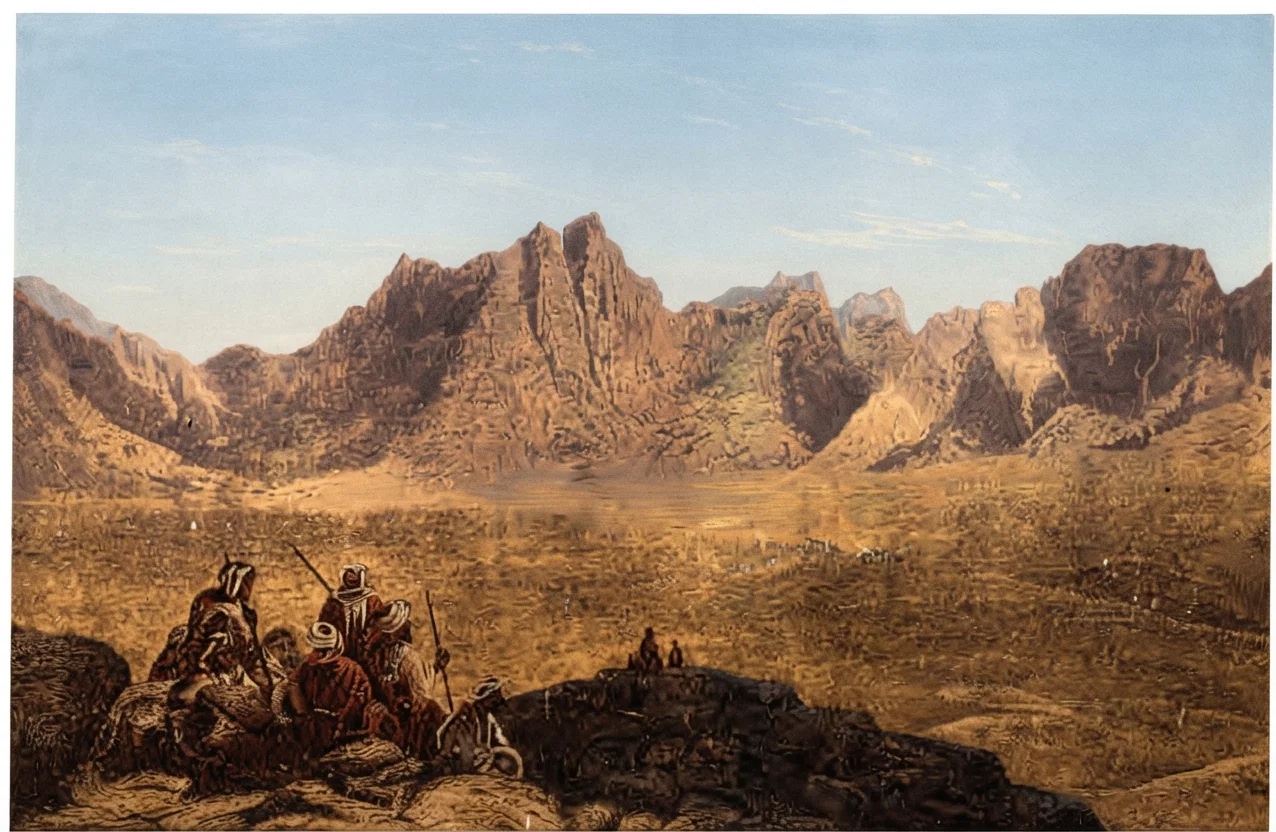
MOUNT SINAI,
MOUNT SINAI,
In the desert wilds of Arabia, where God gathered His people to speak unto them His holy law of Ten Commandments. It became to the sinner the Mount of Terror; it was to the child of God a Mount of Love. From God's "right hand went a fiery law for them. Yea, He loved the people." Stronger and more enduring than the mountains is the law which God spoke from its summit. See Page 9.

Pacific Press Publishing Company, Mountain View, California

Pacific Press Publishing Company, Mountain View, California

The Victory in Gethsemane
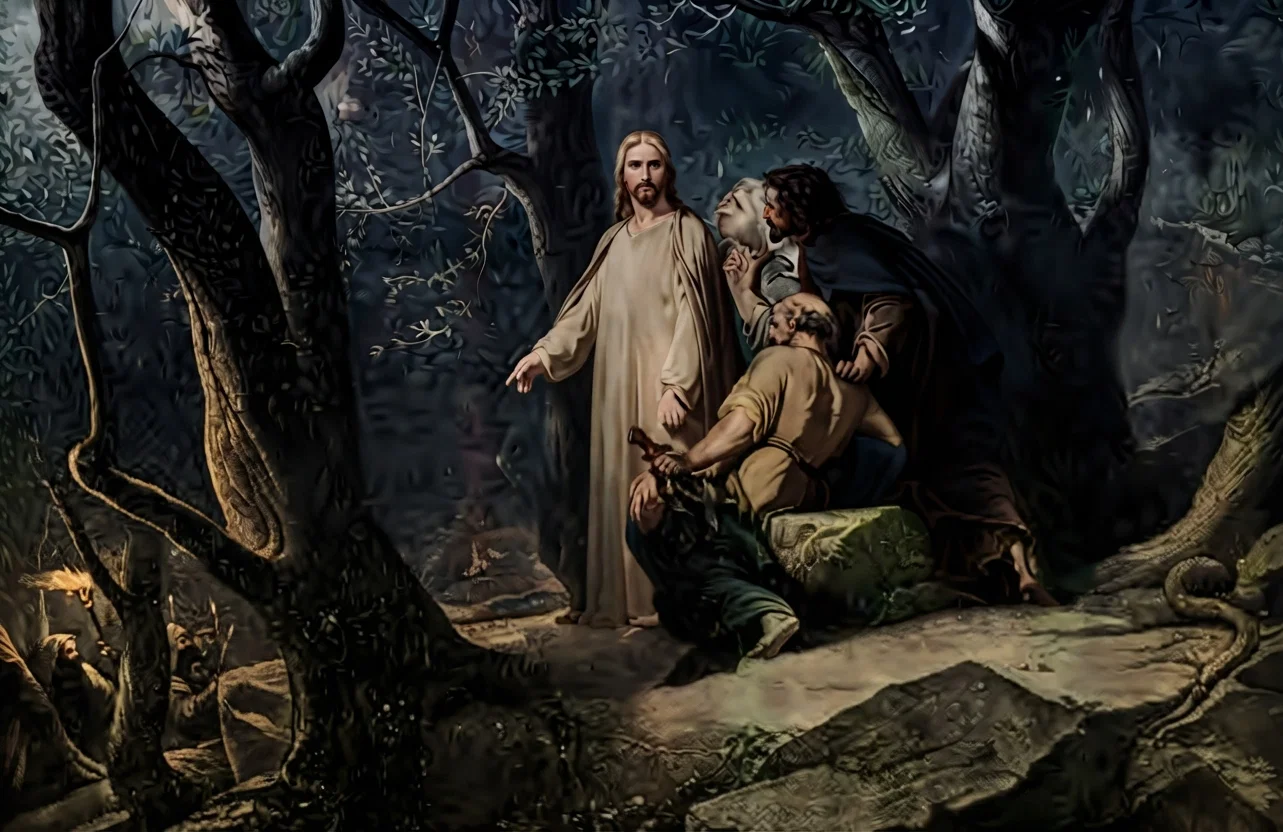
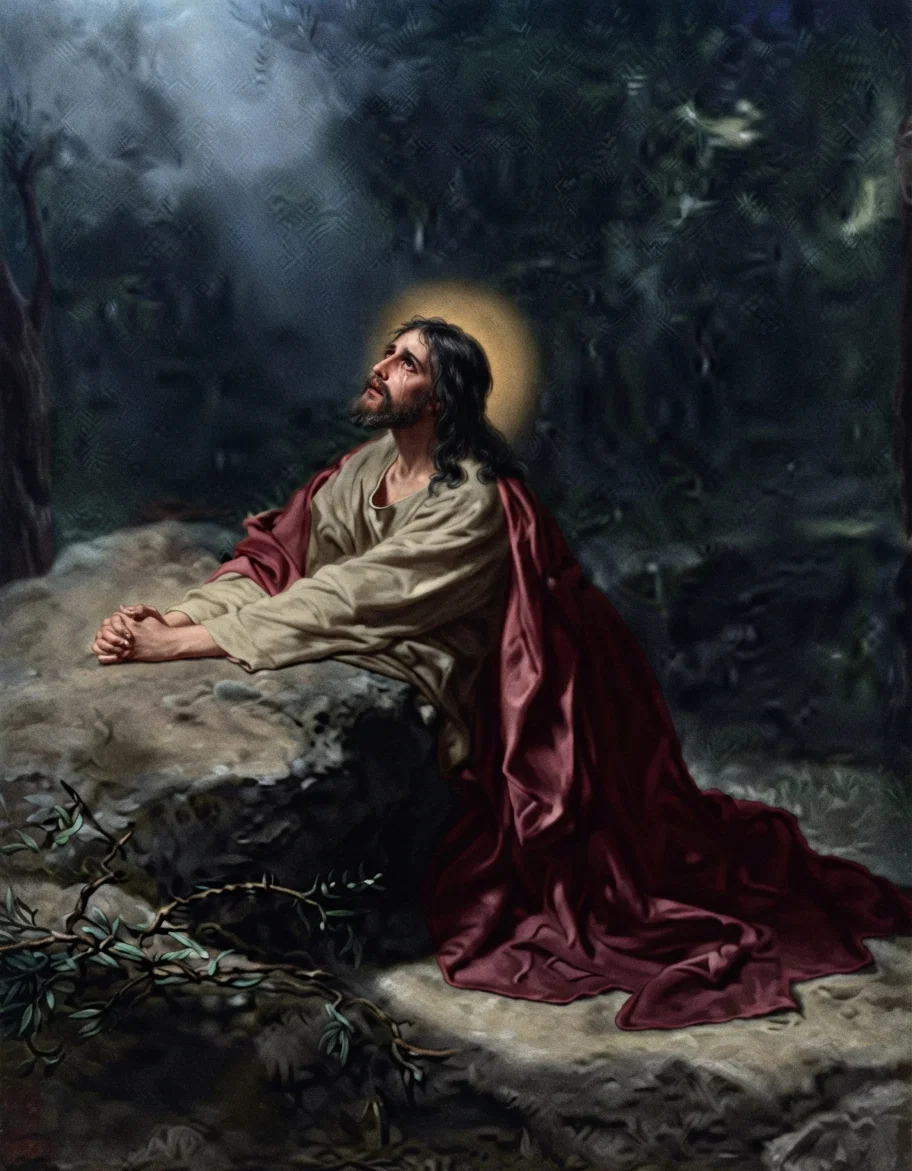
Jalabert JESUS IN GETHSEMANE.
In Gethsemane was the great final victory gained. In the Shadow of the Cross Christ uttered His thrice-repeated prayer, "Not My will, but Thine be done." The struggle of Gethsemane and the sufferings of Calvary magnify and intensify the holiness of Sinai's law.

With Our Inquirers

"If ye will inquire, inquire ye."
[All questions to this department will be answered which to the editors will seem to minister to the good of the readers and to the mission of the paper. The same question can not be answered repeatedly in the same volume. The name and address must accompany question, not for publication, but as an evidence of good faith, and that answer may be made by letter if deemed advisable. It is well always to enclose a stamp for reply.]

2117.—Jesus and His Associates.

Did Christ when on earth belong to any organization whatever, such as a carpenter's guild or anything similar? 2. Would He become a member of the Carpenter's Union if He were upon earth to-day?
There is not the shadow of a scintilla of evidence that our Lord Jesus Christ belonged to any such a society or organization. There were guilds and associations, unions, perhaps, we would call them, in that day. The union or class spirit was there. We have an instance of priestly cult in the case of the Jew that had fallen among thieves. The priest looked upon him and saw that he was not of his class, and passed him by. A Levite came along and looked upon him, saw that he was not of his set, and he passed him by. A despised Samaritan came along, looked upon the poor Jew, knew that he was not of his set or nation, and yet he took him and cared for him. Jesus commended the Samaritan, and left for all time the injunction, "Go, and do thou likewise."
Christ's heart was ever open to all classes, going out to the needy of all people. The Pharisee, the scribe, the priest, the publican, the poor isolated leper, the sick, the needy, the foreigner, all classes found in Him their Friend. His disciples wanted to make of His association a union of their own. They found some disciples one day who were preaching and working miracles in the name of Christ, and they forbade them, and said to them, "You have no business to do this because you do not go with us." Jesus rebuked them. On another occasion certain Samaritans would not receive Jesus because He was going down to the—to them—hated city of Jerusalem. They said, "Lord, let us call down fire and destroy them." The Master replied, "Ye know not what manner of spirit ye are of. For the Son of Man is not come to destroy men's lives, but to save them." Now that is what the Lord did when He was here upon the earth; and in reply to the second question, we do not know why He would do anything different, nor teach any different principles were He here, for He is "the same yesterday, and to-day, and forever."

2112.—What Shall I Do?

I know according to the teachings of Christ that Saturday, the seventh day, is the Sabbath day, but am I not safe in going on and observing Sunday conscientiously as the majority do, since I am not responsible for the day having been changed long ago by wicked men? H.
Let us ask our inquirer and others some heart-to-heart questions. Ought we to put a question in such a form as this? The Biblical question of a sinful person is: "Lord, what wilt thou have me to do?" God always will answer such a question as that thru His word and His servants. Ought we to change the meaning of the question and say, "Lord, what can I get rid of doing and still be saved?" Do you not see that there is all the difference in the world between the two questions? The one is a question of the really unselfish servant of the Master, and the other a question of wholly selfish interests on our part? Which of these questions does our correspondent wish to ask? The psalmist says, "I thought on my ways, and turned my feet unto Thy testimonies. I made haste, and delayed not to observe Thy commandments." How many would there be observing the first day of the week to-day if they all had the same disposition that the psalmist had? He found his ways wrong, God's ways right, and he made haste to do the Lord's way. Ps. 119:56, 60. Read verses 5, 6, 8, 10, 32, 34, and also the prediction of the Master, "I delight to do Thy will, O My God; yea, Thy law is within My heart." Ps. 40:8.
What would our querist think if a man should pay a debt with a counterfeit bill and when he was told that it was a counterfeit bill, he should say, "I know that that is so, but I am not responsible for its being made by evil men, nor am I responsible that it has been passed again and again. I received it as genuine!"? Would not our querist say, "But you know it now, and as you have learned it you certainly can not pass that as good money, so laying yourself liable to all the penalties of the law for passing counterfeit money, even tho you lose the amount"? Are not the laws of God as sacred and so worthy to be regarded as the laws of men? Really, would we consider that a heart was worth saving that would selfishly disregard the wishes of its Saviour, especially when those wishes were the expression of all that is highest and best for His child.

2113.—Holidays, Etc.

Should Adventist parents permit their children to go to Sunday-school or use the day as a holiday with worldly children?
Yes and no. It depends on the Sunday-school, its teachings, its teachers, on the children, on their companions, and a score of other things that it is impossible to discuss in these columns. These are matters which must be decided by the parents themselves. Only this can we say, that our children ought to be fortified, strengthened, and guided with the greatest care. This, however, can not be done in a wholly negative way; the strength of character must be formed within, thru the word of God and the grace of Christ.

2114.—Use of Vinegar.

Is the use of vinegar for seasoning wrong? INQUIRER.
It is. There is absolutely no use for vinegar, except in a chemical way. It never ought to be used alone or in combinations in cooking. It is an unnatural acid. Of course it sharpens perverted appetites and quickens blunted tastes. One of the best substitutes for it for seasoning foods is lemons.

2115.—How Reconcile the Figures. War Statistics.

In your issue of May 1, on page 282, article, "War Preparations," you refer to the Congress of the United States spending two billion dollars, while the sum of the items enumerated foot up only about $196,000,000. How do you reconcile the figures? Again, on the next page you enumerate the armed men of the world and leave out the United States. Should you not include our own nation?
1. The two billion dollars is given as a general estimate by different men. The last Congress has again and again been designated as "The Two-Billion-Dollar Congress;" while the items enumerated, amounting to about $196,000,000, are for war and defense purposes alone. Other items are not given. For instance, $90,000,000, river-and-harbor bill; pensions, about $150,000,000; etc. The first is a general statement of course; the other is specific as to war expenses alone.
2. The United States army is small and would not make much difference in the footing. Of course if there should be general war, the army of this country would be very rapidly increased by a call of the militia. The State militia might be counted as the present footing of the United States, but it has not been so recognized in the past. The regular army of the United States numbers only about one hundred thousand; in fact, less than that. The army of the United States is a wholly voluntary army, while the armies of most of the other countries of the world are composed of men in enforced service.

2116.—A Wider Application of Principle.

If the reasons given by Archbishop John M. Farley, in the commencing session of the Peace Conference in New York, for the Church of Rome, to be recognized at The Hague Congress, are reasons, then wouldn't the same argument hold good for all great churches who have their members in all nations to be recognized at The Hague?
Yes and no. Every true church of Christ would not wish to involve itself in any State decision at all; they would reply in the words of Christ when one came to Him asking for arbitration, "Man, who made Me a judge or a divider over you?" So the true church of Christ should say to the nations of earth, Who made me a divider over you? That ought, of course, to be the position of every church. Among the chief arguments presented by Archbishop Farley, however, is the position, the extent, and the influence of the Roman Church. Of course that never ought to be recognized by the nations of the world, and yet according to the prophet it will be.

2118.—War in Heaven.

When was the war in heaven?
It is impossible for us to locate chronologically the war in heaven. It certainly began before man could witness it at all, evidently about the time of the foundation of this world. That war extended clear down to the time that Christ came to this earth and became man. It was a spiritual warfare, not fought with weapons of flesh. Revelation 12; Luke 10:18; John 12:31, and other scriptures give us some idea of it, as does also the first chapter of Job. Michael, spoken of in Revelation 12, was the Son of God, the chief of the angelic host, His first step downward for the salvation of men. The dragon is symbolic of Satan, the chief of all the rebellious hosts; and that war was until Christ died upon the cross and was raised from the dead, triumphant over all the power of the dragon. Then it is said, Rejoice ye heavens, but wo unto the earth; for the devil is come down unto you having great wrath.

2119.—Was Cornelius Saved?

Was Cornelius a saved, converted, Christian man before Peter visited him and before his baptism by Peter, or was his baptism by Peter the step which made Cornelius a saved, converted, Christian man? If he was a saved man, what was the message the Lord had for him by asking him to send for Peter? See Acts 10. F. W. P.
The answer would turn on what our querist means by "saved, converted, and Christian man." Evidently Cornelius was a proselyte Jew, one who had accepted the Jewish faith, himself a Roman. His sincere devotion and conversion to God was shown by his works. He "feared God with all his house, who gave much alms to the people, and prayed to God always." He certainly was a converted man, but still seeking for more light. Had he died then and there, he without question would have been saved, because it was in his heart to do God's will as demonstrated by the doing of it when it was revealed to him; for "the eyes of the Lord run to and fro throout the whole earth, to show Himself strong in the behalf of them whose heart is perfect toward Him." 2 Chron. 16:9. Peter himself echoed the same thought, "But in every nation he that feareth Him [God], and worketh righteousness, is acceptable to Him." Acts 10:35. Peter's wish was to give him more light, to bring to him greater blessings, to show to him that all truth centered in the Lord Jesus Christ, and so bring him into personal relationship to the One whom God sent as a Saviour. A mere form of baptism does not save; it is really the public marriage ceremony which unites the believer to the Lord Jesus Christ and confirms before the world the profession which he makes. It is oftentimes a means of great spiritual blessing, just as a marriage ceremony is a time of happiness and joy to those who enter into it.

Necessity of a Written Law

Of men's laws one writer has said, "Laws grind the poor, and rich men rule the law." Another has remarked: "The law is a sort of hocus-pocus science, that smiles in your face while it picks your pocket." And so men judge their fellows' attempts to govern. The laws of men at the best are imperfect, and even at their best are often unlawfully or inequitably administered. Notwithstanding this, the poorest law and the worst attempt at government are better than lawlessness and anarchy.
All these imperfections cry out for the one God, the one Law; the perfect Ruler, the perfect Law. Such the Bible reveals God and His law to be. Perfect the law of Jehovah must be if He is the true God. We could not conceive of an infinite God having an imperfect law; for that law in the nature of the case must be the reflection of His own mind. Justice demands that He make it plain to those whom He will call to account.
In the beginning that law was planted in the very nature of man. He was given a conscience in accord with that law; and conscience still, perverted as it is, holds in its better mood some standard higher than itself, to which the ever-present Spirit of the living God is calling. By that unwritten law, and the conscience of that law, God will judge the unenlightened heathen. It is not the amount of light which saves men, it is the reception and following of the light with all the heart. A single ray of solar light followed to its source leads to the great central sun. A single truth of God received and followed will lead to all truth. "For the eyes of Jehovah run to and fro thruout the whole earth to show Himself strong in the behalf of them whose heart is perfect toward Him." 2 Chron. 16:9. On the other hand one ray of light rejected dooms to destruction the soul which may have been flooded with light. When one turns from the one living truth, he turns from the Author of truth.
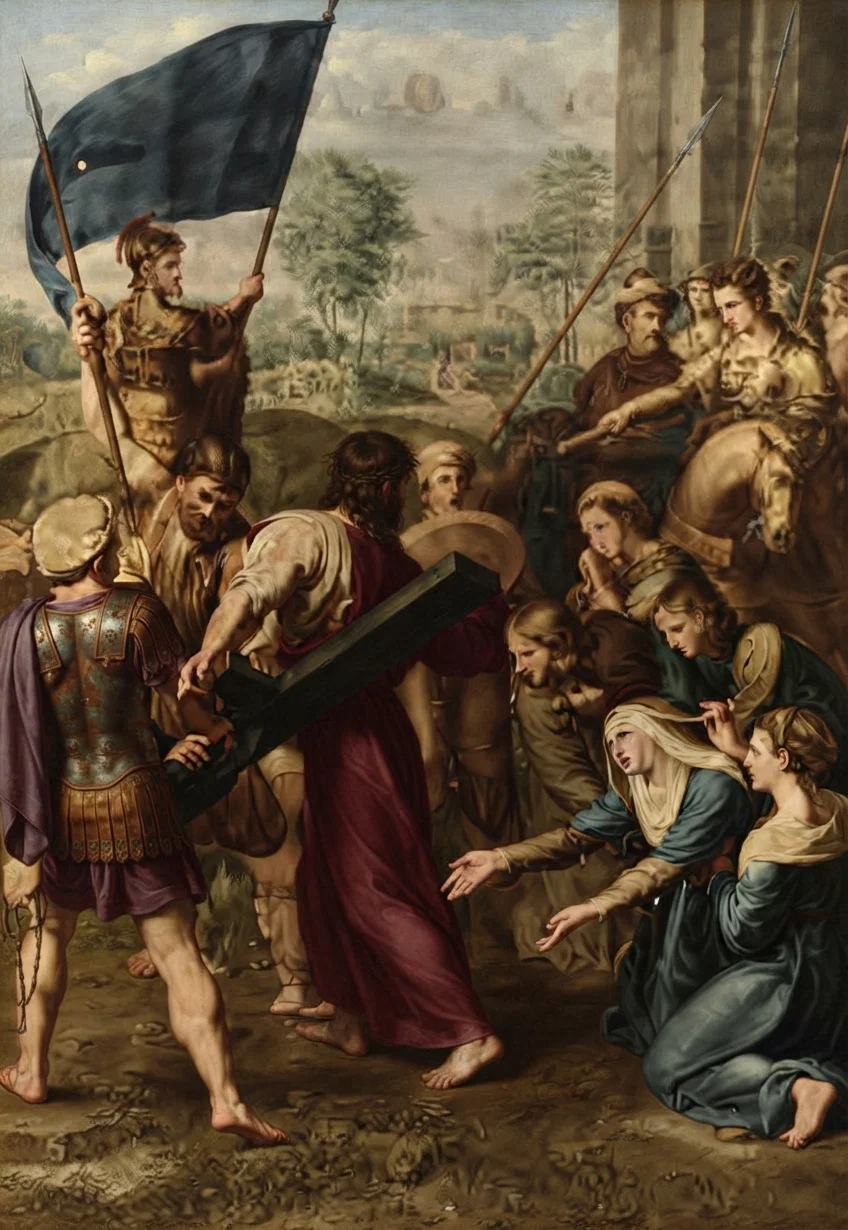
From Raphael's Christ Bearing the Cross. "He was wounded for our transgressions; He was bruised for our iniquities." God's law was so holy that it could not be set aside, and it was necessary that the Son of God must die in order to save the sinner, and vindicate the Law.

Necessity of a Written Law.

As man continued in sin, as sinful generation succeeded sinful generation, it is manifest that conscience would become more and more perverted and stifled by tradition and sinful practises. A standard becomes necessary that men might know sin, and God has given the standard. "The [written] law entered, that the offense might abound" (Rom. 5:20); that sin by the commandment might become exceeding sinful" (Rom. 7:14).

Does the Bible Reveal Such a Law?

It does—a law complete and excellent in every part, the admiration and conceded standard of the enlightened good in all ages. That law is as clearly identified as the God who gave it; and as Jehovah is high above all other gods, so is His law infinitely higher than all other laws. And as all the excellence ever attributed to any other god is borrowed from Jehovah, so any excellence there may be in any laws of human devising is borrowed directly or indirectly from the law of God.
In James (2:8-12) we read of "the Royal Law according to the Scripture." "Royal" means "kingly." The "Royal Law" of the apostle is therefore the law of the great King. The recognized Scripture when James wrote his epistle was that of the Old Testament. The Royal Law is therefore a law of the great King which is recorded in the Old Testament.
But the apostle makes it clearer than this. He refers to two precepts of that law as follows: "For He that said, Do not commit adultery, said also, Do not kill. Now if thou dost not commit adultery, but killest, thou art become a transgressor of the law." What law contains these two prohibitions as essential parts of its provisions?—Clearly the Decalogue, found in Ex. 20:1-17, and printed on page nine of this paper.
There are other important considerations set forth by the apostle James. This "Royal Law" is also a "law of liberty," by which men are to be judged; for after the words above quoted, he continues: "So speak ye, and so do, as men that are to be judged by a law of liberty." The law by which men are to be judged is the law of conduct, the standard of life, and must embrace the whole duty of man. And this also is expressly declared in the scripture to which James referred: "Let us hear the conclusion of the whole matter: Fear God, and keep His commandments; for this is the whole duty of man. For God shall bring every work into judgment, with every secret thing, whether it be good, or whether it be evil." Eccl. 12:13, 14. And thus it is again manifest that "the Royal Law" of the New Testament is God's commandments of the Old, the supreme rule of conduct, as it is the standard by which God shall judge all.
James' law of liberty is also the law of the Old Testament; for so reads the scripture: "I will walk at liberty; for I seek Thy precepts." Ps. 119:45. "Great peace have they which love Thy law; and they shall have no stumbling-block." Ps. 119:165.

The Universality of the Law.

The universality of this "Royal Law" is indicated in the fact that its transgression is sin. Those who disobey its precepts commit sin, and are convicted of the law as transgressors. Another apostle bears similar testimony: "Whosoever committeth sin transgresseth also the law; for sin is the transgression of the law." 1 John 3:4. That is God's definition of sin, brief, yet all-comprehensive. To show that the law condemns all sin, we read in the same epistle (5:17): "All unrighteousness is sin;" all unrighteousness, all wrong-doing, is, therefore, the transgression of the Royal Law of God, the Ten Commandments.
These facts are still further confirmed by the great apostle to the Gentiles, in an epistle addressed to a Gentile or mixed church: "Where no law is, there is no transgression;" "by the law is the knowledge of sin.""For all have sinned, and come short of the glory of God." Rom. 4:15; 3:20, 23. But by what law is the knowledge of sin revealed? —"Nay, I had not known sin, but by the law; for I had not known lust, except the law had said, Thou shalt not covet." Rom. 7:7. How clearly these passages show the universality, the depth, the comprehensiveness, of the Decalogue, the law which defines sin, which condemns all sin, which therefore witnesses to all righteousness, and which will condemn or acquit us at the last day.

The Giving of the Law.

The giving of that law attested its importance. It was given out in the solitudes of the great world, to a pilgrim people, called out to be priests to the whole world, and to proclaim God's glory among all the nations. Ex. 19:5, 6; 1 Chron. 16:24-36. It was only after most careful three days' preparation on the part of the people that God gave His law. Then amid such grandeur as earth had never before witnessed, the Majesty of Heaven came down and spoke the Royal Law from Sinai's blazing peak to the assembled thousands. See Exodus, chapters 19 and 20. Thus Moses describes that sublime scene forty years later: "These words [the Ten Words] Jehovah spake unto all your assembly in the mount out of the midst of the fire, of the cloud, and of the thick darkness, with a great voice: and He added no more." Deut. 5:22. That Infinite Wisdom "added no more" shows clearly that it was in itself complete. It covered the ground. Its prohibitions were complete.
Not only did Jehovah speak the Ten Words with His own voice, but He Himself "wrote them in two tables of stone." God left it not to be written in a book alone by the careless hand of man, but He wrote it in tables of enduring rock; for the "two tables of testimony, tables of stone," were "written with the finger of God." Ex. 31: 18. "The tables were the work of God, and the writing was the writing of God, graven upon the tables." Ex. 32:16. True, Moses broke these first tables, but of the second tables it is said: "He [Jehovah] wrote on the tables, according to the first writing, the Ten Commandments, which Jehovah spake unto you in the mount out of the midst of the fire." Deut. 10:4.
Those tables were placed in one of the most beautiful and costly chests ever constructed. It was about 45 inches long, 27 inches wide, and 27 inches deep, made from acacia wood, overlaid with pure gold without and within, with a marvelous covering, on which were the figures of cherubim, beaten out of pure gold. Ex. 25:10-22; Deut. 10:2, 3. That cover was the "mercy-seat," and that ark became the earthly center of the worship of God's children.
The Decalogue is therefore God's law, full, complete, comprehensive, the epitome of all morality, the reprover of all sin.

What Is the Law of God?

By Abdiel

The Law and the Sinner

By A. O. Tait
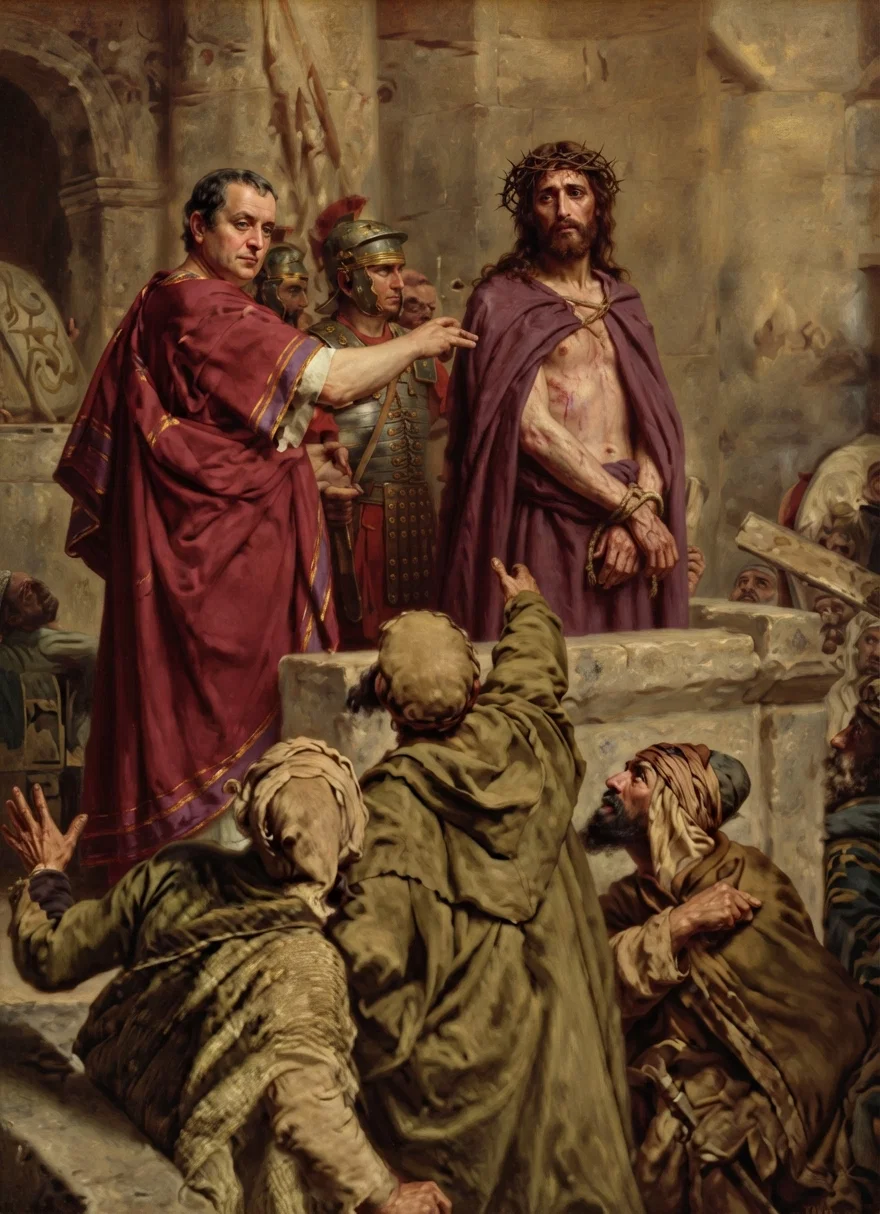
Hofmann Behold, the Man.
Hofmann Jesus in Gethsemane.
A VIEW of God's law erects before the mind the perfect structure of righteousness. Such a view of the law of the Lord enables a person to see just what a man should be in order to be perfect.
The written law of Jehovah, as it was given on the tables of stone, gives a word picture of the character of a perfect, upright man. But man in his fallen condition could not fully understand the breadth, meaning, and requirements of that law from the presentation in words alone. And so the Lord sent His Son Jesus Christ to actually live the perfect life required by the law so that sinful man could have before him in infinite perfection the life that the law really demands.
"For the law having a shadow of the good things to come, not the very image of the things, can never with the same sacrifices year by year, which they offer continually, make perfect them that draw nigh. Else would they not have ceased to be offered? because the worshipers, having been once cleansed, would have had no more consciousness of sins. But in those sacrifices there is a remembrance made of sins year by year. For it is impossible that the blood of bulls and goats should take away sins. Wherefore when He cometh into the world, He saith, Sacrifice and offering Thou wouldst not, but a body didst Thou prepare for Me; in whole burnt-offerings and sacrifices for sin Thou hadst no pleasure: then said I, Lo, I am come (in the roll of the book it is written of Me) to do Thy will, O God.
"Saying above, Sacrifices and offerings and whole burnt-offerings and sacrifices for sin Thou wouldst not, neither hadst pleasure therein (the which are offered according to the law), then hath He said, Lo, I am come to do Thy will. He taketh away the first, that He may establish the second. By which will we have been sanctified thru the offering of the body of Jesus Christ once for all."
God's will is expressed in His law. And twice in the foregoing scripture is the statement made that Christ came to do the Father's will. The sacrifices and offerings of the law of shadows and ceremonies of the old dispensation did not bring the relief that the sinner craved. It pointed forward to the relief that was to be experienced in the perfect sacrifice of Christ. For Christ had the will or law of His Father in His heart, and it was His delight to do that will.
And hence the sinner can look at the life of Christ and see what the law actually requires. The Christ-life is the one perfect representation that man has of what the law demands in real life. And as any one compares his own life with the life of Christ, and realizes that this perfect life is what the law of God demands, he feels his hopeless and undone condition. He realizes that for him to attain to the perfection of that law is a hopeless undertaking.
But bringing the sinner into a realization of his hopeless condition is one of the objects of the law. For the word of the Lord is:
"Before faith came, we were kept in ward under the law, shut up unto the faith which should afterwards be revealed. So that the law is become our tutor to bring us unto Christ, that we might be justified by faith. But now that faith is come, we are no longer under a tutor. For ye are all sons of God, through faith, in Christ Jesus."
The law reflects the perfect character of God, and in so doing it reveals the hideous nature of sin. It fills the soul with remorse of conscience at the thought of the iniquities and failures of the past life. But all this suffering because of past sin is a part of the plan. The law of God is thus revealing our defects, and the Spirit of God is thus filling our minds with the remorse of sin in order "to bring us unto Christ, that we might be justified by faith."
What a blessed thought it is to be "justified;" that is, to be made just. We have sinned, and can not make ourselves just. We have no power to reach into the past and undo the wrongs of the sins that we have committed. But God lays hold of our consciences thru His law, and brings us to Christ so that He may make us just, "justified," made righteous thru the power of the divine Father.
"For Christ is the end of the law unto righteousness to every one that believeth." Rom. 10:4. The end, or object, that the law has in view is to bring us to Christ. This scripture reiterates the same thought that is found in the text in Galatians. It is that we may find Christ and be cleansed from sin that the law discloses our characters. And when we accept Christ, with His life in perfect harmony with God's law of righteousness, we ourselves are brought into harmony with that law, and from thattime on the law, instead of filling us with terror because of its righteous demands, becomes our joy. For it is now our standard of right living, and thru Christ our past lives have been brought into harmony with its perfect requirements, and by the same power of the Master we are enabled to live from day to day so as to meet the demands of the law of Jehovah.
With such a perfect and desirable arrangement for righteous living as is thus provided thru the Gospel of Christ, why is it that men can be content to live in the disappointing and unsatisfying paths of sin and crime?
Continue reading: The Gospel and Its Purpose