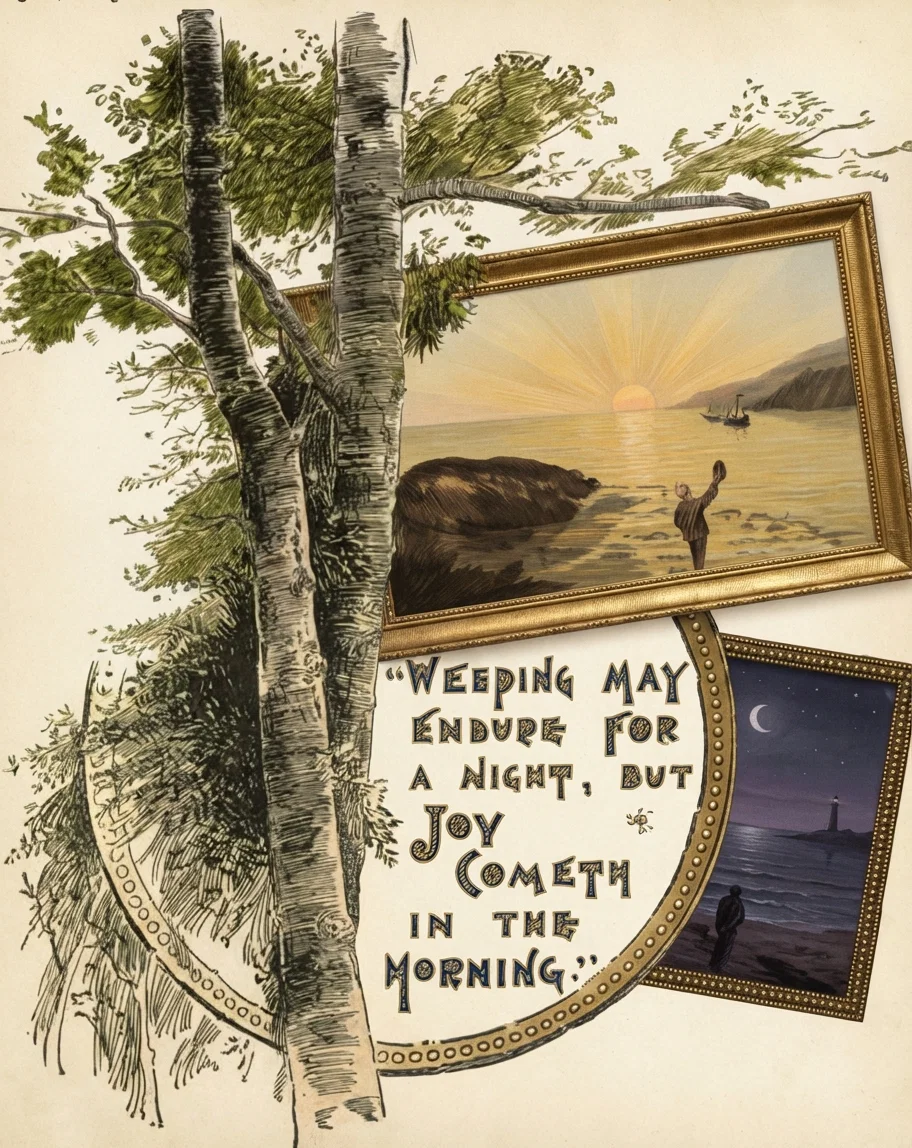
Joy of the World.—Many rejoice, or have joy, in the lustful things of this life—some in riches, some in fame, some in pleasure, and all in man or some thing or things that man has done or may do. All this, apart from God, we are assured by the wise man is "folly," and folly is joy to him that is destitute of wisdom. The prophet declares that such "rejoice in a thing of naught;" hence, at the best, "the joy of the godless is but for a moment." And this the children of earth know to be true. "Man
Page 1
Signs of the Times
Dec 17, 1896
Pacific Press Publishing Company · Oakland, California · Dec 17, 1896
Joy of the World.—Many rejoice, or have joy, in the lustful things of this life—some in riches, some in fame, some in pleasure, and all in man or some thing or things that man has done or may do. All this, apart from God, we are assured by the wise man is "folly," and folly is joy to him that is destitute of wisdom. The prophet declares that such "rejoice in a thing of naught;" hence, at the best, "the joy of the godless is but for a moment." And this the children of earth know to be true. "Man
Joy.—"The fruit of the Spirit is love;" and "joy"—gladness, pleasure, delight, happiness, rejoicing, exultation in triumph—follows love. This is true joy.
Joy of the World.—Many rejoice, or have joy, in the lustful things of this life—some in riches, some in fame, some in pleasure, and all in man or some thing or things that man has done or may do. All this, apart from God, we are assured by the wise man is "folly," and folly is joy to him that is destitute of wisdom. The prophet declares that such "rejoice in a thing of naught;" hence, at the best, "the joy of the godless is but for a moment." And this the children of earth know to be true. "Man that is born of a woman is of few days, and full of trouble." Pleasure is sought and followed as the little child chases the elusive butterfly, or the benighted traveler is led by the treacherous will-o'-the-wisp. The quest ends in weariness, tears, and utter disappointment, if not in the slough of despair and death.
Why?—Why the vain quests? Why the disappointed hearts? Why the sad, the discouraged, the pitifully drawn, the haggard, the sorrowful faces, which one continually sees, faces which rarely or never are lighted by joy? Is this God's plan? —Nay; the cause is sin. Joy, true joy, is ever absent where sin reigns. In God's perfect plan there was no place for sorrow, pain, death, disappointment, despair. All these came in with the usurper, sin. And in sin and through sin, which is the perversion of God's way, we will never find joy; for sin is slavery, and there is never joy in bondage. Sin is death, and in death itself there is never true joy, but sorrow and despair. And yet, despite the sin, God has joy for the children who are subject to sin and sorrow.
"Joy in God."—Even as love is from God, so is joy. Love comprehends all good things, and we have joy because we love. Whatever, therefore, brings love to our hearts brings joy. And in whatever love finds exercise there joy is found. First of all we joy in God because of his mercy toward us as sinners. Says the psalmist: "My heart shall rejoice in thy salvation," and the reason is, "I have trusted in thy mercy." "We also joy in God through our Lord Jesus Christ, by whom we have now received the reconciliation." (Rom. 5:11, margin.) Joy comes, therefore, through the mercy of God, which reconciles us to the Father.
How Reconciles.—God does not hate the sinner. He loves him in all his weakness, waywardness, and wickedness. God is not at enmity with us, but "the carnal mind is enmity against God; for it is not subject to the law of God, neither indeed can be." But God in his great mercy and love gave his only-begotten Son to save the sinner, to reconcile the sinner to himself. Nay, more; he gave himself in that Son, that he might save man. "Hereby perceive we the love of God because he laid down his life for us." "God was in Christ, reconciling the world unto himself, not imputing their trespasses unto them." He took upon himself in giving his Son, and that Son took upon himself in giving himself, the sin, the bruises, the wounds, the death, the misery, the sorrow, that we might have the joy. "He was wounded for our transgressions; He was bruised for our iniquities; the chastisement of our peace was upon Him; and with His stripes we are healed."
It is by such love, such mercy, that God reconciles us to himself; it is that such love, such mercy, may lead the sinner to renounce the carnal heart, renounce in himself all that is unlike God, and yield himself to the ways of eternal love and joy. For God knows there is no other way by which the sinner may be made to rejoice. The way of sin tends ever to death. God's way is eternally good and righteous. He has in Christ Jesus forever reconciled all sinners to that way. It is for the sinner to accept the mercy which has thus wrought for him, and rejoice, or reject it and die. O, is it not joy to have sins forgiven? Is it not joy to know that Jesus paid all the debt, bore all the sin? Is it not joy to know that his mercy is "for me, even me"? This is the joy of faith, of simply believing in Jesus; "whom having not seen ye love; in whom, tho now ye see him not, yet believing, ye rejoice with joy unspeakable and full of glory."
Rejoice in What?—In what may the forgiven sinner rejoice?—In the righteousness of God. It is not God's plan to simply forgive, to make of no account the sins of the past; but to account the believer as righteous, even with the righteousness of God: "He shall pray unto God, and He will be favorable unto him; and he shall see His face with joy; for He will render unto man His righteousness." Surely to one who comes into God's presence, knowing that upon him is the righteousness of God, there is reason for joy. Upon him is the beauty of holiness. It is his privilege to say, "I will greatly rejoice2in the Lord, my soul shall be joyful in my God; for he hath clothed me with the garments of salvation, he hath covered me with the robe of righteousness."
Rejoice in Freedom.—The sinner is a slave. "Every one that committeth sin is the bondservant of sin." (R. V.) He is bound or "holden with the cords of his sin." Of all the dread bondage that earth has known sin is the greatest. It is the blighting, blasting, blinding bondage of death. It oftentimes deceives as it destroys, and its poor dupe believes himself in freedom when he is in the most hopeless bondage. Yet God in mercy does not suffer sin's deadly opiate to ever benumb conscience and heart. The sweet and mighty voice of the Spirit in various ways breaks through the hardness of sin and whispers to the soul of his fearful bondage, and points him to the Deliverer, the Son of God. It says: Poor prisoner of sin, your pardon has been purchased by Jesus Christ. Your eternal freedom has been secured in him: "If the Son therefore shall make you free, ye shall be free indeed." How the poor slave in many a land has rejoiced to hear at the voice of freedom his fetters break and fall. Shall not we, dear reader, tho born bond-slaves of sin, rejoice with joy unspeakable at the freedom which comes through Jesus Christ? We are still mortal, environed by countless limitations, hindrances, difficulties, sickness perhaps, ruled over by tyrants, but the freedom of Jesus Christ lifts us above all these; for "we know that to them that love God, God worketh all things with them for good." (R. V., margin.)
Rejoice Always.—"Rejoice in the Lord alway." "Rejoice evermore." Reader, in all things rejoice. In common air, in common rain, in common sunshine, in all the blessed common things of life, in the gifts of the great and merciful and kind God of all grace, rejoice. "Count it all joy when ye fall into divers temptations," because therein ye may "rejoice in his salvation." In this, as with Jehoshaphat of old, praise will glorify God, will bring back to you the power of God, and you will find, as has ever been found, that "the joy of the Lord is your strength." In searching his word you will say with Jeremiah, "Thy word was unto me the joy and rejoicing of mine heart; for I am called by thy name, O Lord." As you obey that word with all your heart, you will find that "it is the joy of the just to do judgment;" and you will find verified the scripture: "Thou meetest him that rejoiceth and worketh righteousness, those that remember Thee in Thy ways." If persecutions come, therein "rejoice, inasmuch as ye are partakers of Christ's sufferings." If you are poor, let meekness and teachableness reign in your heart; for "the meek shall increase their joy in the Lord, and the poor among men shall rejoice in the Holy One of Israel." The poor, the outcast, the despised of men may rejoice. Yea, "let all those that put their trust in Thee rejoice; let them ever shout for joy, because Thou defendest them; let them also that love Thy name be joyful in Thee." And whatever may come, the Christian may say:—
"For tho the fig tree shall not blossom, Neither shall fruit be in the vines; The labor of the olive shall fail, And the fields shall yield no meat; The flock shall be cut off from the fold, And there shall be no herd in the stalls; Yet I will rejoice in the Lord, I will joy in the God of my salvation. Jehovah, the Lord, is my strength."
The Nature of True Joy.—But the truest, highest joy never comes from seeking the joy. God could not have it thus, because the very seeking would develop sin. If we could get joy by seeking it, it would make us selfish. The joy of God comes because we forget self and labor for others. "Joy shall be in heaven over one sinner that repenteth." "The joy that was set before" Christ, which cheered him in all his labor, was the joy of souls saved in his kingdom, upon which he will then look, and "be satisfied." This is the joy of the people of God, to turn from self and "declare His works with rejoicing;" for "the voice of rejoicing and salvation is in the tabernacles of the righteous." The righteous will love God's law; for "Thy testimonies have I taken as an heritage forever; for they are the rejoicing of my heart." John the Baptist saw his own prestige and popularity waning before the presence of Christ, yet he could say as he saw Christ's glory, "This my joy therefore is fulfilled." Laboring for Christ's sake, for the purchase of his blood, laboring in his way, in his truth, this is joy. And yet the servant of God will find cause of weeping. Sorrowing hearts, wounded hearts, cold hearts, hard hearts set against the message that would save, the whelming sin and evil of the world, the backsliding of God's professed people, are all a cause of sadness and sorrow; yet God is faithful; in Him he can rejoice. "Sorrowful, yet always rejoicing." "Poor, yet making many rich." This is his work even as it was Christ's. The child of God can not compel faith on the part of others; for faith is voluntary. He will not, therefore, rejoice in a political or coercive religion. "Not that we have dominion over your faith, but are helpers of your joy; for by faith ye stand."
There Is Joy in God,—joy that man can not give nor take away,—joy unspeakable and full of glory. And so believing, praying, seeking, trusting, laboring, yea, weeping, in the joy of our Lord, the Christian pursues the path of Christ. He drinks of fountains of joy of which the world never tasted. His heart is lighted with a radiance which the eye of earth-life never knew. He holds a sweeter communion with the King of kings than lovers' most precious tryst. In darkness there is light; in sorrow, joy. And thus he goes on in ever-increasing joy at finding greater and more abundant proofs of God's wonderful love, until, at last, the work is over, the children all come home, sorrow and pain and death and sin are banished by the presence of the Lord, where is "fulness of joy," and at whose "right hand are pleasures forevermore." O reader, this is the joy which God offers you. Will you not be among "the ransomed of the Lord," who will "come to Zion with songs and everlasting joy upon their heads"? Thus doing, we may commend you "unto Him that is able to keep you from falling, and to present you faultless before the presence of His glory with exceeding joy."
REVELATION XVII.
The Seventh Head.
ROME in her various phases is represented by various prophetic symbols. In the second chapter of Daniel the great civil world-empires are represented by various parts of a great metallic image. The head of gold, Babylon; the breast and arms of silver, Medo-Persia; the belly and thighs of brass, Grecia; and the legs of iron, and the feet and toes of iron and clay, Rome. The unity of the Roman kingdom is shown by the iron. The division by the mixture of iron and clay; for "whereas thou sawest the feet and toes, part of iron and part of potter's clay, the kingdom shall be divided." (Dan. 2:41.)
In Daniel 7 Rome is represented by a "dreadful and terrible" beast, with "great iron teeth," and the divisions in the kingdom are symbolized by ten horns. So also in Revelation 13. It is a noted fact that there did exist just ten divisions of the Roman Empire between the years A.D. 476 and 493. Then the up-pushing of the diverse kingdom of the Papacy overthrew three of these kingdoms—Heruli, Vandals, and Ostrogoths. Following this, for 1,260 years the Papacy held, to a greater or less extent, spiritual domination over the kingdoms of Europe; but never was there a specific union among these kingdoms to receive and accept the Papacy as such. She was so regarded generally, but not always of choice. It was oftener through fear or intrigue that she ruled.
The latest phase of this great empire is presented in Revelation 17. It is that phase which exists while the judgment of God is impending, and just before the final destruction of earthly rule. At that time, even as at the beginning, there will be ten divisions, but at that time, as not at the beginning, these ten powers will be of "one mind" to elevate the spiritual domination of the Papacy. However, there is this difference between the symbols of Daniel 7 and those of Revelation 13 and 17, which it is well to bear in mind. In Daniel each world-power is represented by a separate symbol, while in Revelation all are represented by one symbol (a beast), existing under different consecutive heads, showing that the church and state governments (the persecuting elements) were practically one system throughout, yet manifest in various phases, represented by the heads.
The first six of these heads were Babylon, Medo-Persia, Grecia, Pagan Rome, Papal Rome, and the Papo-religious governments of Europe as now existing, embodying the same principles as preceding heads, and opposed3to the principles of true religious liberty. We reprint again from the Revised Version of Revelation 17 the explanation of the vision given by the angel to John:—
"[8] The beast that thou sawest was, and is not, and is about to come up out of the abyss, and to go into perdition. And they that dwell on the earth shall wonder, they whose name hath not been written in the book of life from the foundation of the world, when they behold the beast, how that he was, and is not, and shall come. [9] Here is the mind which hath wisdom. The seven heads are seven mountains, on which the woman sitteth; [10] and they are seven kings: the five are fallen, the one is, the other is not yet come; and when he cometh, he must continue a little while. [11] And the beast that was, and is not, is himself also an eighth, and is of the seven, and he goeth into perdition. [12] And the ten horns that thou sawest are ten kings, which have received no kingdom as yet; but they receive authority as kings, with the beast, for one hour. [13] These have one mind, and they give their power and authority unto the beast. [14] These shall war against the Lamb, and the Lamb shall overcome them, for he is Lord of lords, and King of kings; and they also shall overcome that are with him, called and chosen and faithful. [15] And he saith unto me, The waters which thou sawest, where the harlot sitteth, are peoples, and multitudes, and nations, and tongues. [16] And the ten horns which thou sawest, and the beast, these shall hate the harlot, and shall make her desolate and naked, and shall eat her flesh, and shall burn her utterly with fire. [17] For God did put in their hearts to do his mind, and to come to one mind, and to give their kingdom unto the beast, until the words of God should be accomplished. [18] And the woman whom thou sawest is the great city, which reigneth over the kings of the earth."
The beast that "was and is not, and is about to come up," we learned last week, as the prophecy clearly shows, is the beast under the papal head. When it comes up again it is called "an eighth" (verse 11), and goes "into perdition," or utter destruction. It is therefore the last phase of the dragonic system, which has cursed the world for ages. It is "of the seven." It was the fifth head; but as it appears again it is called an eighth. As it is both the fifth and eighth, there must be two intervening heads. One of these (the sixth) we have found to be the present phase of church and state rule in Europe.
What Is the Seventh Head?
Upon this part of the prophecy, which pertains to the future, we have no disposition to dogmatize. As to the past and present of the prophecy, and as to the future, so far as it relates to the fact of the restoration of the Papacy, it seems to the writer that the position taken is clear, logical, and consistent, tho its setting forth may not be in the happiest style. We believe it is buttressed by Scripture principles of prophetic exposition, and by historical facts. But as to the future, this article can only suggest what seems reasonable and probable.
Whatever the seventh head may be, it is evidently connected with the ten horns; for it is with the horns that the beast is again restored to power (verse 12), horns, which, as contemplated by the prophecy, have received no kingdom as yet.
Present Political Condition of Europe.
For the last quarter of a century Europe has been a great seething political caldron, with the "iron" (imperialism) and the "clay" (democracy, socialism) struggling for the mastery. Discontent reigns everywhere. Lawlessness is rampant. The war budgets of the various countries, and the still heavier burden of royal houses with an army of dependents, have galled beyond endurance, and well-nigh broken the backs of an overburdened people. As a result the nihilistic and socialistic propagandas, hidden at times by more prominent public affairs, have in secret grown apace. For a score of years thoughtful and observing men have been talking of a repetition of the French Revolution on a scale before which that of 1793 will pale into insignificance, in which not only a "tenth part of the city," but the whole European camp, shall be given over to the red hand of a great international mob, goaded to madness by long years of oppression and injustice—fancied and real.
Present Religious Condition of Europe.
A century ago France gave the deadly wound to the spiritual domination of the Papacy, which had been gradually weakening since the Reformation. Whatever may be said of the means by which it was accomplished, the result was a long step in the way of progress, while the means, the atheistic revolution of France, was but the logical result of a law-bound, yet lawless, religion—a religion bound about by human tradition, and civil and priestly laws in its smallest detail, but through which the law and word and worship of God were made of none effect. It was called Christianity. It was simply a part of the old dragonic system, which began with Babylon. But the people, believing it to be Christianity, and not knowing what Christianity was, logically were swept into infidelity—the logic always of a disregard of God’s law.
Just here Protestantism would have helped France, but France had driven that out; and it is a sad fact to record that in those nations where two centuries before it was such a power, it had been false to the principles which gave it life, had followed in the way of the Roman Church by uniting with the state, and was itself inciting to lawlessness and contempt of God’s authority by making void his word through legalized traditions. Religion has been kept alive in Europe by the non-conformist religious bodies, called by the state churches, as by Rome, "sects," and by devoted members in the state churches, despite the system with which they are connected. It is now a still sadder fact that these nonconformist bodies are uniting with the state churches, and demanding more stringent legal regulations to support state dogmas, notably the Sunday,—an ages-long mark of apostasy, the wild solar holiday of all pagan times. Thus are all the great religious bodies making void the law of God through the tradition of men, and thus breeding contempt of all law among the masses. Whether or not it is true, millions among the masses feel that the religious people, who to them represent Christianity, look down upon them, or utterly ignore them in the just demands that they are making of rulers. And by this means is disregard of God and religion fostered. Sometime the tension will reach its utmost strain, and will break. The trodden worm will turn. The century-oppressed and patient people will rise, throw off all restraint, and the thrones of Europe will totter and fall, and Anarchy and Red-Republicanism will be enthroned.
Roman Catholic Policy.
When triumphant, the Papacy has ruled arbitrarily, merciful only to those who submit without reserve. She believes this course to be her duty. Admit her premises, and her conclusion is inevitable: "The end justifies the means." Since her domination was destroyed, she has played the double game of stirring up the nations, arousing strife and discord secretly, if we may believe such men as Lord Robert Montagne, while in public she is pointing back to what she calls the golden days of her rule, but which history calls the Dark Ages, and tells the nations that then there were no paupers, labor difficulties, Socialists, Nihilists, and internal troubles; and that if the Papacy is again restored all these things will cease, and the blessing of God will rest upon the nations. It was only a few years since that the late Cardinal Manning, of England, declared: "If governments will not obey him [the supreme pontiff] the people will;" that is, the people will obey the pope and rebel against the constituted authorities.
But such rebellion would overstep, in all probability, Rome’s desire, and Anarchy would be upon the nations. Is not this what is meant by the "abyss," the chaos, of Rev. 17: 8, above? Such the earth was previous to God’s calling it into order. (Gen. 1: 2.) The same word is applied evidently to the place from which came the unorganized hordes of Arabia, and to the infidelity and Red-Republicanism of France. (See Rev. 9: 1, 2; 11: 7.) It seems to us that some such condition will succeed the restoration of the Papal domination; and that out of it will arise the ten horns, symbolizing ten united states of Europe. These United States of Europe (Rev. 17: 12), will be the seventh head of the dragonic system in embryo.
But as France found infidelity a poor basis for a submissive government, so will these united powers speedily find it. The Vatican, the Roman Curia, the ecclesiastical body of the Roman Church, still exist. While the turbulence and the rebellion are the direct result of the system she has fostered, she emphatically disowns them all, and in dulcet tones pleads with the rulers of men. She says in effect: "Make me the Supreme Arbiter; restore me to my rightful place as Head over all Religion and Corrector of Heretics; Honor the Bride of Christ by exalting her as his representative. I can control the masses. These dissensions among the people, these judgments in the earth, are manifestations of God’s wrath against the nations because they have cast off God’s rule by rejecting me, his Vicar. You have tried Protestantism, and that has failed; you have tried infidelity, and that has failed, and the judgments of God are increasing. Reinstate me, the true mistress of the kingdoms of earth, and your laws will be respected, heresy will be extirpated, the Sunday honored by law, and the judgments of God will cease."
This ten-divisioned empire, arising out of the abyss, continues as such but "a short space." (Rev. 17: 10.) The powers composing it see their authority shaking as they shook the powers that preceded. Unable to discern the causes of the difficulties and4dangers that menace their rule, they are persuaded to listen to the Babylonian harlot. They pause; they are pleased; they are persuaded; they take her to their hearts; they reinstate her in power, and the now restored Babylon sings in her short-lived triumph, "I sit a queen, and am no widow, and shall see no sorrow." (Rev. 18: 7.)
The Eighth Head.
And now the deadly wound is healed. The apostate church receives again what she lost. The two essentials to a persecuting power exist once more, seen by the children of God in its true light as a bane, but seen by the blindness of the world as a blessing. The papal church, uniting with the ten kings, form the eighth head, which is of the seven, and that goeth into perdition. The National Reformers of the earth are jubilant. The heathen nations of the earth, like heathen nations of old, having accepted of Christ by law, the following scriptures will be fulfilled: "And they that dwell on the earth shall wonder [admire], whose names were not written in the book of life from the foundation of the world, when they behold the beast that was, and is not, and shall come." (Rev. 17: 8.) "And his deadly wound was healed; and all the world wondered after the beast. . . . And they worshiped the beast, saying, Who is like unto the beast? who is able to make war with him?" "And all that dwell upon the earth shall worship him, whose names are not written in the book of life." (Rev. 13: 3, 4, 8.)
The One Hour.
These ten divisions receive power as kings one hour with the beast. (Rev. 17: 12.) "These have one mind, and shall give their power and strength unto the beast." "For God hath put it in their hearts to fulfil his will, and to agree, and give their kingdom unto the beast, until the words of God shall be fulfilled." (Verses 13, 17.) For one hour. A numeral adjective modifying a noun, denoting definite quantity as one of its meanings, would have a definite meaning. While we use "day" and "hour" in an indefinite way, as "day of salvation," "hour of action," yet in such cases we never preface the term with a definite adjective. One day, or one hour is definite. Dean Alford says: "One hour (during the space of one hour, just as the corresponding term in chapter 8: 1 means during the space of half an hour). Some, e. g., Vitringa and Elliott, have upheld the meaning of 'at one and the same time with.' But I venture to say that but for a preconceived opinion, no one would ever have thought of any other meaning for these words than the ordinary one, 'for the space of one hour.' And thus, accordingly, we will take them as signifying some definite space . . . thus designated."—Notes on Revelation.
The one hour, therefore, is definite prophetic time. A day in prophecy is a year; an hour is one twenty-fourth part of a year, or fifteen days. It begins when the law reinstating the Papacy goes into effect. These fifteen pregnant days are the period of papal triumph. The apostate church again rules supreme; it is her crowning, dying glory.
The daughter of Babylon once more says: "I am, and there is none else beside me." (Isa. 47: 10, R. V.) "I sit a queen, and am no widow, and shall in nowise see mourning." But God says: "Therefore in one day shall her plagues come, death and mourning and famine, and she shall be utterly burned with fire; for strong is the Lord God which judgeth her." (Revelation 18: 7, 8, R. V.)
Thus the promises of the apostate church to the ten kingdoms are proved false, and the kingdoms, enraged at the deception and avarice of the church, turn upon the siren and rend her to pieces, fulfilling the following: "These shall hate the harlot, and shall make her desolate and naked, and shall eat her flesh, and shall burn her utterly with fire." (Rev. 17: 16.) The very system which is the outgrowth of her fornication unites in her destruction. She falls in the nets which she herself spread. Her scheme of self-exaltation has proved her destruction. This destruction, at the close of this hour of her triumph, is pointed out in Rev. 18: 10, 17, 19.
Her destruction is Eternity's condemnation of all man-made religion. It sets the seal of eternal infamy upon the mystery of iniquity, which has exalted itself in the place of the mystery of godliness—Jesus Christ and his word supreme in the heart and in the church. Simple faith in God eternally triumphs.
The Time Is Short.
It may be said that this view of the prophecy calls for so much to be performed that it puts the Lord's coming far away. But who knows how long it will take to accomplish all this and more in this paramount age of rapid development? and who knows if the greater part of it—the molding of character—is not already performed? When Jesus died upon the cross there was but one penitent thief to do him homage. Less than threescore days later 3,000 had acknowledged his claims as the Christ.
When Moses went up into Mount Sinai to talk with God, all the people were professedly loyal to the great Jehovah, but in less than forty days they had turned from him to Egyptian sun-worship.
The French Revolution was comparatively a short work of itself; the seeds of infidelity had, however, been sown by Rome through her inconsistent example, her self-laudatory creed, and her terrible oppression. July 3, 1870, not a breath of war stirred the political atmosphere of Europe. Less than one month later France was fighting for her place among the nations; and another month witnessed the victorious German army at the gates of Paris. The revolution in Brazil, Nov. 15, 1889, took place in a day, and the world was startled by the news that an empire had become a republic; and two days later the emperor and his family had sailed for the Old World.
And so with the last revolution among the governments of earth. The seeds of discord, lawlessness, socialism, and anarchy have been sown by governments and churches for centuries, have been breaking down all respect for government, law, and order, by breaking God's law; and dire revolution will be the result. It can all occur in a very brief space of time. "The nations are angry," and God's power alone restrains the devilish passions raging in the hearts of multitudes to-day. Let him but withdraw his restraining power, let the angels of God but remove their restraining hand from the winds of strife (Rev. 7: 1-3), let the work of God's Gospel be finished among men, and no one can foretell how soon will all the prophecies of God's word pertaining to the nations be fulfilled. Let those who believe in the "sure word," awake.
Question Corner.
By Editor
Note.—The Signs of the Times answers no anonymous correspondent. We do not ask the name for publication, and unless desired will merely append the initials to the question asked, or any proper term not too long which the subscriber may wish. But there must accompany the question the name and address of the questioner. Otherwise the question will be consigned to the waste-basket. For instance, we have two questions, one signed H. C. B., and the other, D. A. W. Both are proper questions, but both are without name.
Stoning to Death
By Editor
No. 445. Stoning to Death.
PLEASE explain John 8:5. Was the penalty of stoning to death placed upon all the other sins in Moses' time, such as picking up sticks on the Sabbath? C. G.
All wrongs were not punished alike under the Theocracy. The books of Moses reveal what crimes were punished with stoning; they were those which were especially demoralizing in their effect upon the people. Worshiping of false gods, open and notorious blasphemy, defiance of God, the obdurate, stubborn, and untractable son, certain forms of fornication, etc. See Lev. 20:2, 27; 24:14, 16, 23; Num. 15:35; Deut. 13:10; 17:5; 21:21; 22:21-24, etc. The case of stoning mentioned in Num. 15:35 was one of notorious and presumptuous defiance, in which God had given no special penalty; and the course pursued on that occasion shows that the case was a special one, in which God specially revealed the penalty. The man did not pick up sticks because he needed a fire, but because he wished to show that God's command amounted to nothing. The question of the Jews was: Moses says, Stone; what do you say? They thought if Jesus should say, Stone her to death, they would accuse him to the Romans of inciting to murder, but if he should say, Let her go, they would accuse him of rejecting the word of the Lord through Moses. The wisdom of Christ baffled all their wicked devices.
Congregation of the Lord
By Editor
No. 446. Congregation of the Lord.
PLEASE explain Deut. 23:1-3. Does it mean that these classes shall not get to heaven? C. A.
Being shut out of the congregation of the Lord evidently means that these classes should not have the privileges of citizens. Being shut out they could not hold office. It does not mean that they could not get to heaven or will not be saved. The Lord did not want his people to be put into a position where those who were godless could come in and be rulers among them, or who would be contemptible because of defects. But his promises of eternal salvation embrace all these. See Isa. 56:3-8.
Here is a translation (Rotherham's) of verses 14 and 15, which may throw light on the question, and which we present with paraphrase in brackets: "And Adam was not deceived [he sinned despairingly, presumptuously, knowing that it was sin], but the woman, being completely deceived, has come to be in transgression. Yet shall she be saved through the child-bearing [the Seed of the woman, Gen. 3: 15], if, perchance, they abide in faith and love and holiness with sobermindness." There is hope for woman even as men. Altho she sinned, yet through Him born of woman she may be saved through faith.