Your ShelfYour Projects

Signs of the Times, Vol. 11, No. 16.

General Articles
Earlier text: North Pacific Camp-Meeting and Biblical Institute

Fixing the Responsibility.

A suit for damages has just been entered in one of the Brooklyn courts by a tenant against the owner of the house in which he lived. The plumbing of the house was defective, and the tenant notified the owner of that fact several times, but no notice was taken of the complaints. Finally, some members of the tenant's family were attacked by diphtheria. Now the tenant brings suit for damages.
When owners of property are compelled to keep tenements in habitable condition, and are held responsible pecuniarily for all damages to health or property resulting from their negligence or penuriousness, there will be hope of tenants' reasonable demands receiving attention. It should be a State-prison offense for the owner of property to allow defective plumbing to remain, when he knows that the lives of his fellow-creatures are jeopardized by his action. There is small difference between the man who with murderous intent deprives a human being of life, and he who through negligence and greed allows those who are in a manner his wards to breathe an atmosphere of deadly poison, which must eventually result in disease and death.—Christian Union.

A Tea-Drunkard

A TEA-DRUNKARD.—The term "tea-drunkard" is known throughout Russia, and implies, not the abuse of robur or any spirit distilled from the herb, but that the cup which cheers intoxicates also, if zealously adhered to. Strong tea is well-known to be a powerful though fleeting excitant of the nervous system; and if the reader likes to make the experiment, let him drink a dozen or fifteen cups of tea in the Russian style—that is, without cream or sugar, but flavored with a drop of lemon juice—in the space of a couple of hours, and he may arrive at the conclusion that there is something rational about such an epithet as tea-drunkard after all.—Christian at Work.

News and Notes.

RELIGIOUS.

—New Orleans has over 10,000 colored Baptists.
—A Conditional Immortality Association was organized March 10, in Brooklyn, N. Y.
—Berlin, Germany, has but one church to 50,000 of its population, but it has 11,000 drinking saloons in the city.
—The Albany County Bible Society of New York celebrated its seventy-fourth anniversary March 10. It circulated during the year 2,349 Bibles.
—A new schooner is to be built for the Gaboon and Corisco Missions, West Africa, which is to be paid for and supported by the children in America.
—Nearly all the Esquimaux of Greenland are adherents to the Lutheran faith, having been converted through the missionary enterprise of the Danish church.
—Of twenty-one missionaries of the London Missionary Society sent to Central Africa since 1876, fully one-third have died, and several have been compelled by illness to go to other fields.
—There are more than thirty Jewish synagogues in New York, some of which are among the most imposing structures in the city. The Jewish population of New York is said to be nearly 100,000.
—The Mennonite Church of Indiana, Michigan, and Ohio, at its late session of conference passed a resolution advising and entreating its members to adopt the system of tithe-paying, as a means of supporting their work.
—The Fifth Avenue Presbyterian Church, of which Rev. Dr. John Hall is pastor, last year contributed $146,671, of which $91,007 were for benevolent and miscellaneous causes, and $36,564 for congregational purposes.
—The Boston Watchman says that through the distribution of Swedenborgian literature "there are in all denominations, ministers and laymen who are essentially Swedenborgian in their interpretations of Scripture; a fact the significance of which it is not easy to estimate."
—The number of Methodist Churches in the United States is now 19,065, an increase of 324 during the last year. The number of lay members in full connection with the Methodist Church, not counting the 182,000 on probation, is 1,604,402, an increase of 4,992 during the last year.
—A new sect in Russia, calls its members Jerusalemites. Each member pledges himself to make at least one pilgrimage to the Holy Land. The patriarch at Jerusalem gives to each one who visits him, a card on which is a printed dispensation, which is worn by the possessor as a distinctive sign of his standing. Their meetings are all held in the night in an unlighted place.
—Arrangements have at last been completed for holding the long-talked-of Church Congress. The first meeting is to be held in Hartford, Conn., in May, and invitations have been extended to all Christian denominations to send delegates. One object of the gathering is to promote "good feeling," and unity of action in religious labor. Good feeling is the essential thing with many religionists nowadays.

Obituary.

WILLIAMS.—Amelia Williams, aged 2 months and five days, died in San Francisco, April 4. Funeral from the residence of Sister Thorn, the grandmother. Words from Luke 18: 15, 16. EDITOR.
WILSON.—Died of meningitis tuberculosa, in San Francisco, Cal., April 5, 1885, Willie J. Wilson, youngest child of Olaf and Mary Wilson, aged 1 year and 26 days.
Willie was an attractive child and of a sweet disposition, beloved by all who knew him. After the sickness of about ten days he was taken from our midst by the intruder. We laid him away to rest, but it will not be long until he will return from the land of the enemy. The afflicted parents find comfort in the blessed hope of the first resurrection. Funeral service took place on April 7, from the house of worship on Laguna Street. Words of consolation were spoken by Elder J. H. Waggoner, from Jer. 31: 15, 16. ANDREW BRORSEN.

Appointments.

OAKLAND.—House of worship, northeast corner of Clay and Thirteenth Streets. Sabbath-school every Sabbath at 9:30 A. M. Preaching at 11 A. M. Prayer and missionary meeting every Tuesday evening at 7:00. Seats free. Preaching every Sunday evening at 7:30.
SAN FRANCISCO.—House of worship, 912 Laguna Street, between McAllister and Tyler Streets. Sabbath-school every Sabbath at 9:45 A. M. Preaching at 11 A. M. Prayer and missionary meeting every Wednesday evening at 7:45. Preaching every Sunday evening at 7:30. Mission Reading-rooms at the church.

California T. and M. Society.

THE State Quarterly Meeting of the California T. and M. Society will be held in connection with the General Meeting in Oakland, April 24-30, 1885. The President, Elder Haskell, will be present at this meeting, and important matters in connection with the missionary work will be considered. It is very desirable that the districts be generally represented. WM. INGS, Vice-Pres.

Stockholders' Meeting.

PURSUANT to Article 6, Section 2, of the By-laws of the Pacific Seventh-day Adventist Publishing Association, the tenth annual meeting of the stockholders of said Association will be held at the Office of the Pacific Press, corner of Twelfth and Castro Streets, Oakland, Cal., on Monday, April 27, 1885, at 9:30 A. M., for the purpose of electing a Board of five Directors, and transacting such other business as may come before the meeting.
S. C. STICKNEY, Secretary.

Specimen Pages.

We have printed at this office, in the form of a 16-page tract, selections from Vol. IV, to be used by those who wish to canvass for the book. It consists of pages 31 to 36, and 316 to 323, the latter being the entire chapter on the "Origin of Evil." These selections are complete in themselves, so that this makes an excellent tract for general circulation. The last two pages are a notice of the book. Wherever this tract is read there is created a strong desire to read the book. They will be furnished by this office at $1 per hundred, post-paid.

RECEIPTS.

CALIFORNIA CONFERENCE FUND.—El Monte $20, San Jose $13, Ferndale $159.10, Grass Valley $45.25, Woodland $75.45, Fresh Water $26.35, Placerville $31.50, Lakeport $15.50, Pleasant Grove $43, Napa $35.10, Fresno $99.85, San Diego $116.65, Ferndale $22.60, C Maynard $10, Los Angeles $54.20.
AUSTRALIAN MISSION.—C H Peach $9.65, Mrs A J Hutchins $70, Willger Hutchins $50, E F Hutchins $50, L A Hutchins $50.
CHURCH DEBT FUND.—C H Jones $25.
CALIFORNIA T AND M SOCIETY.—District No. 1, per Mrs E J Church $27, per Jos Eggleston $8.60, District No. 7, per S K Shannon $50, C P Bollman $1, C Maynard $6.85, Margaret Green $1.75, D L Fisher $1, Erastus Banta 20c, P M Partridge $1.55, T A Kilgore $2, Mrs D Smith $3, H F Courter $3, Mrs Harvey $2, M J Church $2, C A Cary 30c, Jos Leininger $2.50, C B Caldwell $2.

ORDERS FORWARDED.

BOOKS SENT BY FREIGHT.—C Maynard, Mrs C Ruoff.
BOOKS SENT BY EXPRESS.—Mrs A C Walden, P M Partridge, Hetty Hurd, H F Courter, Belle Baker, Clara Wood Gibbs.

VOLUME FOUR.

"THE GREAT CONTROVERSY BETWEEN CHRIST AND SATAN."

By Mrs. E. G. White,
Author of "The Life of Christ," "Sketches from the Life of Paul," "Bible Sanctification," and other popular works.

9,000 COPIES SOLD IN FOUR MONTHS.

OVER FIVE HUNDRED PAGES, ELEGANTLY BOUND.
This volume, giving first a sketch of our Lord's great prophecy (which, in brief, covers the whole dispensation), contains a history of the church in her warfare to her final redemption, and vividly describes the triumph of the people of God, the destruction of Satan and all his followers, and the renewing of the earth, which ends the awful controversy between the Son of God and the powers of darkness.
The period of history which it covers is one of deepest interest to every Christian, and the fact that the closing chapters relate to the present duty and the future experience of the people of God adds still greater interest to the volume.
Earnest Christians of all denominations will find in it encouragement and instruction in the delineation of the struggle maintained by men raised up of God in each successive age to preserve the pure and true religion, and they will see that the world has been led to accept one after another of Satan's devices, till her teachers are corrupted with false doctrines and with infidelity.
Over 500 pages. Price, - - - - $1.25
For descriptive circulars and sample pages of the book, address the nearest State agent, or, PACIFIC PRESS, Oakland, Cal.

THE HONOR DUE TO GOD.

By Eld. E. J. Waggoner.
This is a candid examination of the question as to what the Lord expects from his children as an acceptable manifestation of gratitude for his gifts and care. It treats the important subject of tithes and offerings in a new and interesting way. Its arguments are clear and concise. It is a plain and faithful presentation of the truth of God's word on the important subject. An idea of the scope of the work may be obtained from the following brief synopsis:—

CHAPTER I.

Man's Duty to Love God Supremely.—God's Pleasure Man's Profit.—Love is Active, not Passive.—Two Ways of Honoring God—with Our Time and Our Substance.—Tithing Rests on Same Foundation as Sabbath.—The Right of Property; Everything is the Lord's.—Tithing Not Peculiar to Jewish Dispensation.

CHAPTER II.

First Instance of Payment of Tithes.—What the Tithe Is.—Jacob's Vow.

CHAPTER III.

From What is the Tithe to be Paid?—When Shall It Be Laid Aside?—Redeeming the Tithe.—Object of the Tithe.—Nehemiah's Example.—Offerings; Various Kinds in Old Dispensation.—David's Example.—Christian Obligation.

CHAPTER IV.

Difference Between Tithes and Offerings.—Offerings to be Given Willingly.—Modern Methods of Raising Money for Church Support Contrasted with Ancient.—Tithe Must Be Paid Continuously.—Church Expenses; How Raised in Ancient Times.—Support of the Poor; Bible Plan.—A Second Tithe.

CHAPTER V.

Who Should Pay Tithes.—Who should Make Offerings.—The Promise of God.

CHAPTER VI.

Parable of Rich Man; Luke 12:15-21. "Rich Toward God."—Parable of the Unjust Steward.—Children of this World Wiser than Children of Light.—Why God Requires Men to Give of Their Means.

CHAPTER VII.

Systematic Giving.—Impossible to Discharge Our Obligations Without a Plan in Giving.—Purposing in the Heart.—How to Make Duty a Pleasure.—Giving One of the Christian Graces.

CHAPTER VIII.

An Objection; Tithing Not Mentioned by the Apostles.—The Reason Why.—Not One-tenth Merely, but All Belongs to God.—"Sell That Ye Have, and Give Alms."—When Does this Command Apply?
PRICE, 10 CENTS. Address, SIGNS OF THE TIMES, Oakland, Cal.

TEMPERANCE PACKAGES.

We have put up in packages three different assortments of our health and temperance works which we will furnish, post-paid, at the prices named.

Ten Cent Package.

The smallest package contains 100 pages in thirteen tracts, as follows:—
True Temperance—Alcohol, What is it?—Our Nation's Curse—Cause and Cure of Intemperance—Effects of Intemperance—The Drunkard's Arguments Answered—Alcoholic Medication—Alcoholic Poison—Tobacco Poisoning—Tobacco-Using a Cause of Disease—Tobacco-Using a Relic of Barbarism—Evil Effects of Tea and Coffee—Ten Arguments on Tea and Coffee.

Forty Cent Package.

The second package, costing forty cents, post-paid, contains the above list and the following in addition;—
Pork, the Dangers of its Use—Diphtheria, its Causes, Prevention, and Proper Treatment, By J. H. Kellogg, M. D. This book should be in every household. Its instructions, if faithfully carried out, will save many a precious life.

One Dollar Package.

The third package, costing $1.00, post-paid, contains in addition to the above:—
Proper Diet for Man, price 15c—The Uses of Water, price 25c—Dyspepsia, Its Cause and Cure, price 25c.
The object in arranging these packages is to get them in a convenient form for sale and for selection.
Address SIGNS OF THE TIMES, Oakland, Cal.

THE NATURE AND TENDENCY

OF MODERN SPIRITUALISM.

BY ELD. J. H. WAGGONER.
This is a thorough expose of the system of Spiritualism. The author has carefully studied the subject, and has given such copious extracts from a large library of Spiritualist publications, as to fully condemn them in their teachings and in their practices, by their own testimony.
It is also shown from the prophetic scriptures that Spiritualism is one of the most impressive signs of the times.
184 pp. Price, 20 cents. Address, SIGNS OF THE TIMES, Oakland, Cal.

THE HOME OF THE SAVED.

By Eld. J. N. LOUGHBOROUGH.
Gives the Bible evidence upon the interesting topic of the earth made new, as the inheritance of the saints. 82 pp. Price, 10 cents.
SIGNS OF THE TIMES, Oakland, Cal.

Question.

"WAS Adam created mortal or immortal?"
There is a difficulty attendant upon such a question as this; there is no positive declaration of the Scriptures on the point. Three positions have been assumed in regard to it.
1. That he was created neither mortal nor immortal, but a candidate for immortality, or, so to speak, for mortality, if he failed in his probation. This may appear sensible to some people, but to us it is utterly incomprehensible. Mortal means "subject to death," and immortal means "exempt from liability to death." We will not venture to say that a person cannot occupy such a position; we only say that we cannot conceive the possibility, even as we cannot conceive that a person may be neither dead nor alive.
2. That he was created immortal, and was put on probation for a continuance of his immortality. We do not accept this as truth, though we have no confidence in the objection that is usually urged against it, namely, that immortality could not be lost. We can readily believe that God could change or reverse any condition in which he should place his own creature. The mystery of the incarnation of the Son of God ought to make us modest in fixing the limit of God's power over his own work.
3. That he was created mortal, and put on probation for immortality, eternal life. This appears the most reasonable, and we think is most nearly in harmony with the teachings of the Scriptures. It appears that all that was necessary to execute the threatening that he should die, was to shut him away from the tree of life, and he necessarily decayed and returned to the earth. The Apocrypha says that Adam was made to be immortal, but that is not considered sufficient as authority.
The nearest that we can come to positive proof we here give. In 1 Cor. 15:47 Paul says: "The first man was of the earth, earthy." The last word, earthy, is from choikos, which Greenfield defines as follows: "Of dust, earthy, terrestial, and by impl. corruptible, frail, mortal. 1 Cor. 15:47, 48, 49." But we find no other lexicon which gives this implied signification. The following from commentators of repute seem to give a warrant for these words of Greenfield. Olshausen on the text says:—
"When employed by the apostle Paul on the contrary, psuchee and psuchikos mark a lower relation, standing parallel to the choikos (v. 47), and indicating not the sinless creature, proceeding from the hand of his Creator, but the fallen being under the power of corruption."
If it be so that choikos expresses a corruptible condition of being, then Greenfield is justified in his definition. But Olshausen would not then be warranted in his distinction, as relating to this word, between the sinless man as he proceeded from the hand of his Creator, and the fallen, corruptible man, for Paul uses the word choikos of the first man as he was made. From this it would appear that he was made of the earth, corruptible, mortal. And Dr. Barnes comments as follows:—
"The first man. Adam. Is of the earth. Was made of the dust. See Gen. 2:7. Earthy. Partaking of the earth. He was a mass of animated clay, and could be appropriately called 'dust.' Gen. 3:19. Of course he must partake of a nature that was low, mortal, corruptible."
This is the best light we can afford on this question, and we think our querist will agree with us that the balance is in favor of the last position stated, that Adam was created mortal.

Short Musical Notes.

OUR Hymn Book says: "The music introduced into this book will greatly promote uniformity and correctness in singing." To this we may say: "That depends." Strictly speaking, there is no music in the book, nor in any other book. See Webster and Worcester. Music is a science; or it is a succession of pleasing sounds, as in melody, or a combination of those sounds, as in harmony. But neither of these is in the book. But there are characters which are technically called music, because they guide in producing melodious and harmonious sounds. They represent to the eye the form in which music is or should be presented to the ear.
How, then, can these characters "promote uniformity and correctness in singing?" A book will promote correctness in reading only provided that we study and follow its rules, and correctly express its words. The music in a book has of itself no power to form correct habits in any one, or to correct wrong habits. The reader may say that this is a round-about method of saying that, to have the music serve any good purpose we must use it—must heed its construction. Well, if he will look at it in both methods of statement, we shall the better be satisfied; as that may insure his attention to an important subject.
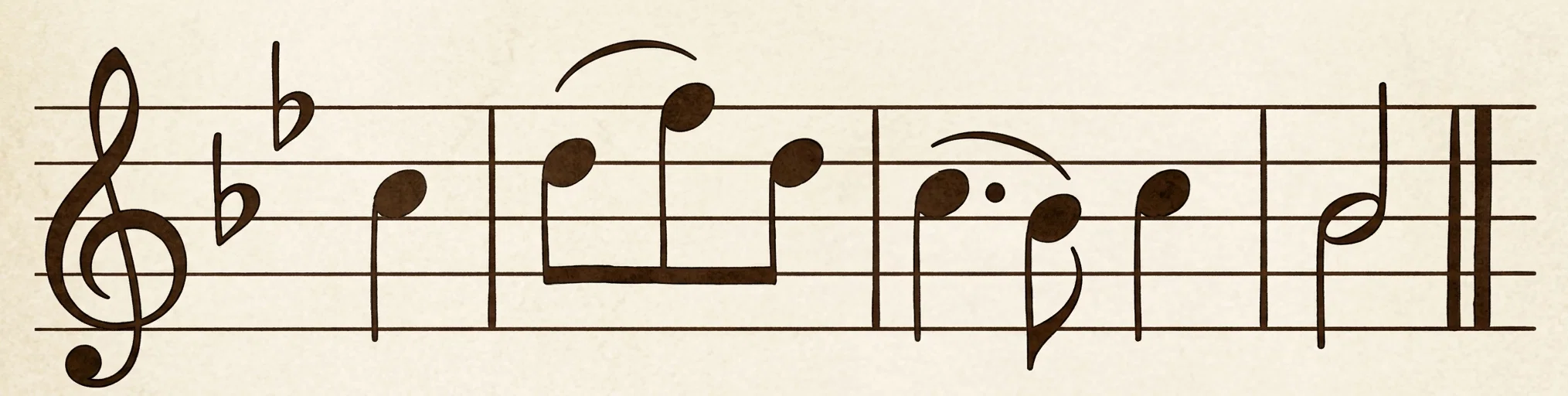
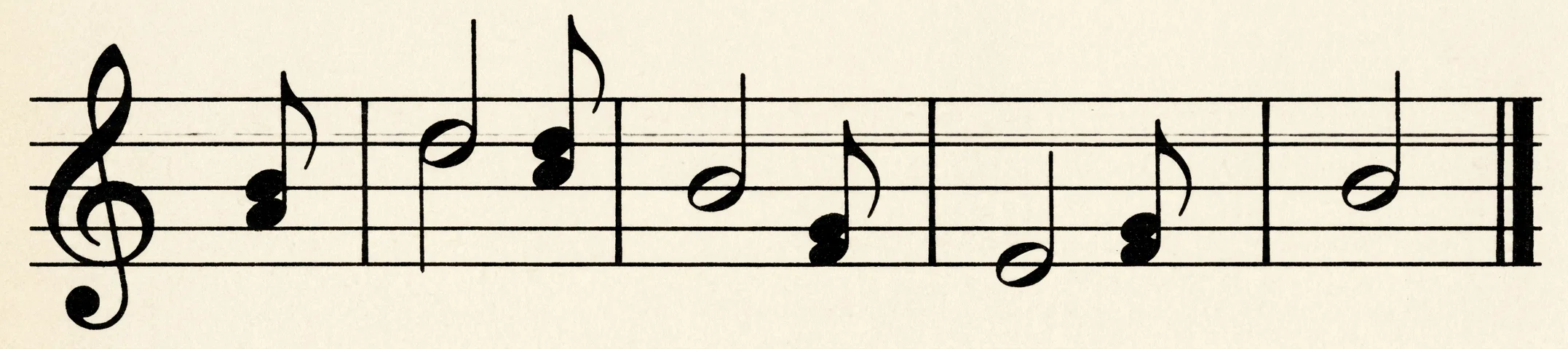
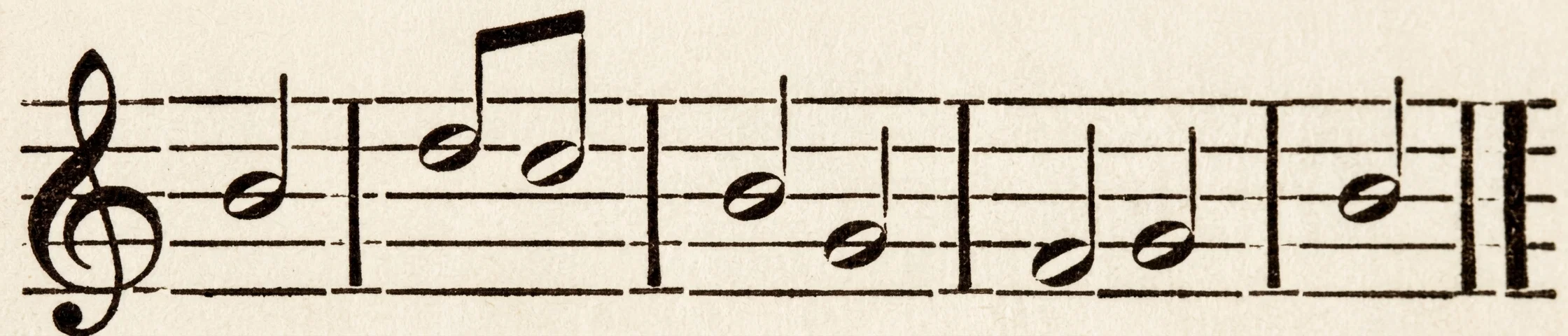
We have said that too many of our tunes are not sung at all. We now further notice that very few are sung correctly. Some old familiar tunes are almost uniformly mutilated in the singing. We will give a few instances: The last strain of Balerma is written as follows:—
But it is sung in this style:—
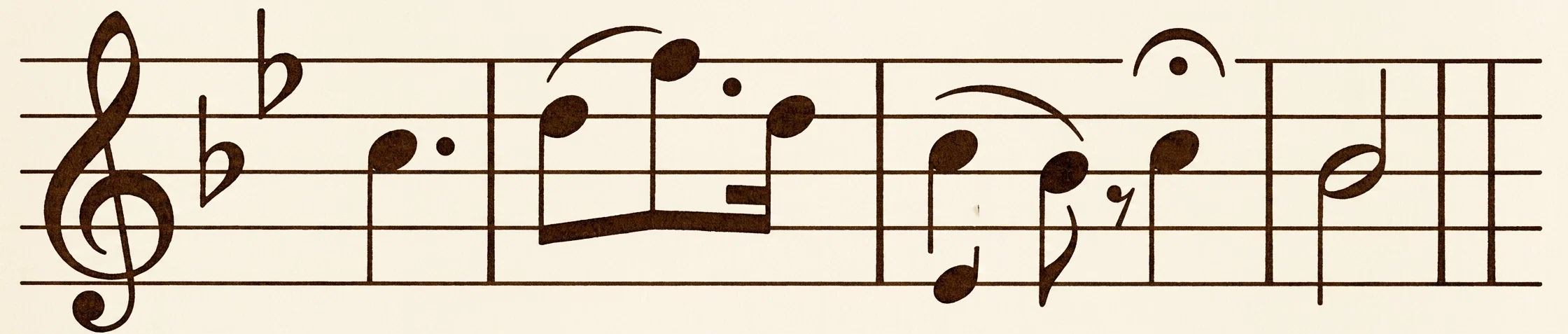
A certain writer has said that the tune to the words, "Nearer, My God, to Thee," has never been written. Thus far the favorite is Bethany, and probably will remain so. The movement is not difficult, and is generally preserved until we come to the last strain. Then a change takes place, as follows:—
As written
As sung
The effect is easy to see if part of the congregation sing it correctly, or if an instrument is used, as performers very laudably aim to keep the correct time.
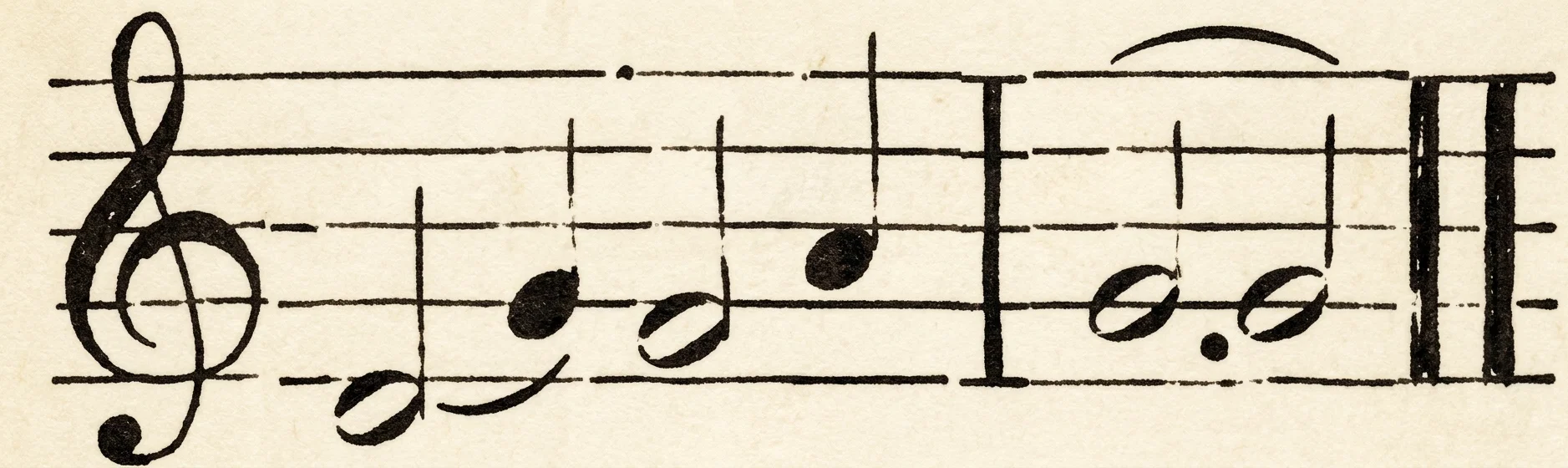
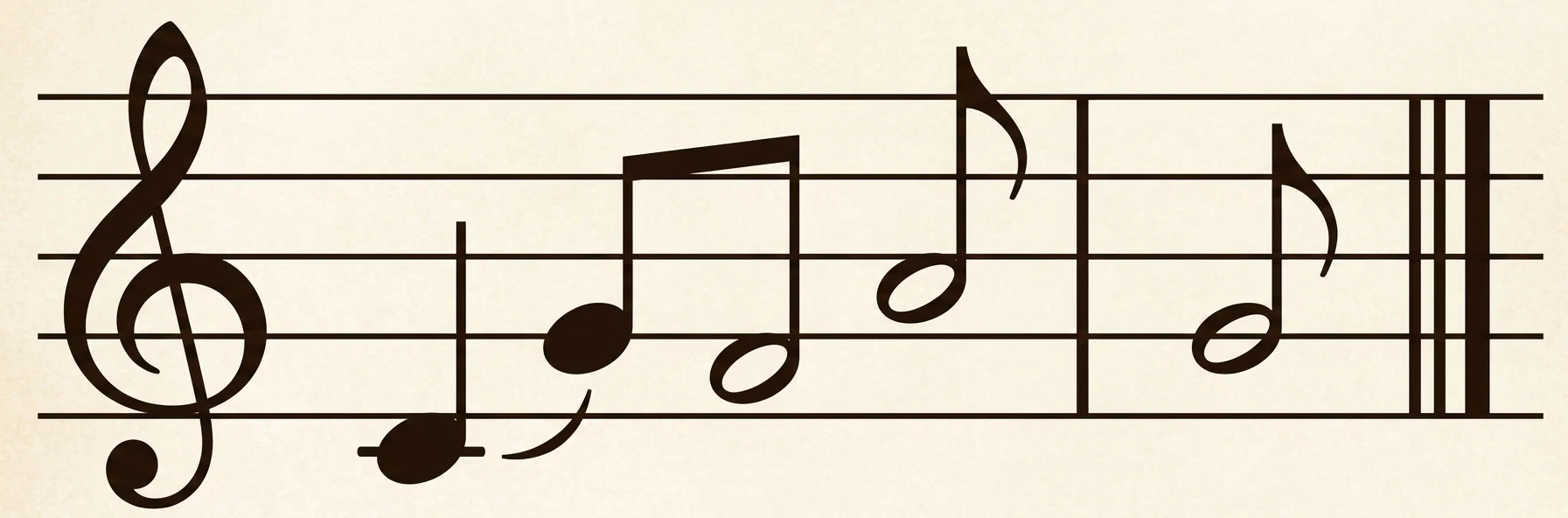
A common error is that of singing tunes of the style of Balerma or Ortonville as if they were written in notes of equal length, or very nearly so. The effect is as follows:—
As written
As sung
Let a few singers perform these as here written, some on one staff and some on the other, and note the effect. Of course such an effect in full will never be actually produced, because those who know how it should be sung are compelled to give way, and let the error prevail. In this manner a compromise may be obtained; the half or open notes will be given their proper time, and the quarter notes will be sung as if dotted—their time increased only by half.
For another instance let the singers in any of our churches sing Chopin, and let some one try to beat the time on the last strain.
Some insist that such inaccuracies in time make no difference, only so that all are agreed upon the time in which the piece is sung. For two reasons we dissent: (1) There is a material difference between producing a piece correctly, in the time in which it is written, and producing it in a careless, drawling manner. And, (2) All will never be agreed. When we are present, they never can obtain our consent to such mutilations! and we know many more of the same mind.
We are referred to such singers as Sankey, who observe no time, who aim only at the effect, without regard to rules. But such sing alone, and they do not sing church music. Of such we have nothing to say. We do not care how songs are sung by soloists. We are pleading only for congregational singing of church music. Here regard must be paid to time.

The Signs of the Times.

OAKLAND, CAL., FIFTH-DAY, APRIL 16, 1885.
REMEMBER that our annual meeting will commence the 24th inst. Again we request that blankets and comfortables be brought as far as convenient. They will be needed. We hope for a full and profitable meeting.
CALIFORNIA has been visited with splendid rains, which have done untold good. On Wednesday evening, April 8, a beautiful thunder storm passed over Oakland, and other points on the coast. The lightning was vivid, the thunder heavy, and the rain came down in torrents—all in good Eastern style. The days following were unusually warm. Good crops now seem assured in this State—only for the north winds, of which California ranchers always stand in dread.

Ministers, Attention!

WE desire the present permanent address of all the Seventh-day Adventist ministers in the United States and Canada. As there have been some changes made in the fields of labor since the last Year Book was issued, we will ask each of the ministerial brethren to drop us a postal card giving his post office address.

Tithing.

IN the article on tithing, in this paper, mention is made of a pamphlet on tithing by Elder G. I. Butler. It is published at the Review and Herald Office, Battle Creek, Mich. Price only five cents, 112 pages. It is put down so low in order that it may have a wide circulation among our churches. And it ought to have. We think the last twelve or fourteen pages should be published in a tract—not to take the place of the whole book, but—to be scattered thoroughly in addition to the book, so as to insure a thorough examination of the facts there presented. Address as above, or Signs of the Times, Oakland, Cal.

New Orleans Exposition.

THOSE who intend to visit the Exposition, and are strangers to the city, ought to remember that there is a "Department of Information" organized by the managers of the Exposition, where information will be always given free of cost upon any subject which strangers may desire. They will be directed to suitable lodging and boarding-houses; will be informed of the exact cost of accommodations; will be directed to the various lines of travel, etc. This is to prevent imposition by runners, agents, and others who volunteer their services at the depots.
The office of this Department is at 164 Gravier Street, and 15 Union Street, between St. Charles and Carondelet Streets. Open day and night. This is of great service to strangers.
The weather is said to be beautiful in New Orleans now, and the facilities for reaching the park have been increased.

You have reached the end of this edition.

Signs of the Times · Apr 16, 1885