IT seems a fitting time, as Woodrow Wilson is inaugurated into the great office of the chief magistrate of the United States, to present some of the principles that the man holds which our readers ought to know, and which it would seem as tho our Christian readers would pray that he would hold to in all his influence in guiding the great ship of state. These which we present are excerpts from his address on "The Bible and Progress" delivered in the auditorium, Denver, Colorado, on the Tercentenary Celebration of the translation of the Bible into the English language, May 7, 1911. These passages which we quote from this speech are just such as ought to take hold of the very manhood of the nation, and as pointed out, unless they do do that, the nation itself will fall. (Bold face ours.)
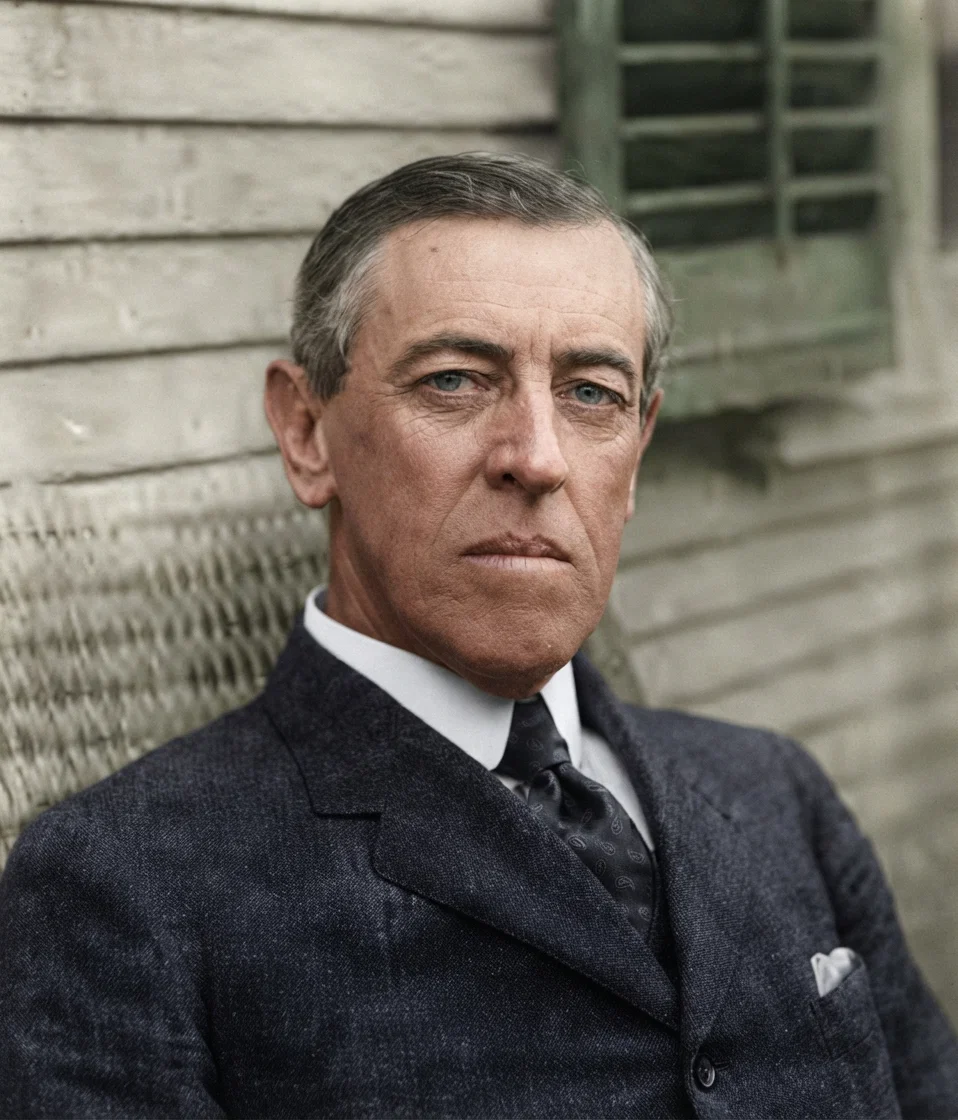
From Andrew H. Kellogg Co. Woodrow Wilson, President of These United States
"Up to the time of the translation of the Bible into English, it was a book for long ages withheld from the perusal of the peoples of other languages and of other tongues, and not a little of the history of liberty lies in the circumstance that the moving sentences of this Book were made familiar to the ears and the understanding of those peoples who have led mankind in exhibiting the forms of government and the impulses of reform which have made for freedom and for self-government among mankind.
"For this is a book which reveals men unto themselves, not as creatures in bondage, not as men under human authority, not as those bidden to take counsel and command of any human source. It reveals every man to himself as a distinct moral agent, responsible not to men, not even to those men whom he has put over him in authority, but responsible through his own conscience to his Lord and Maker. Whenever a man sees this vision, he stands up a free man, whatever may be the government under which he lives. . . .
"A man has found himself when he has found his relation to the rest of the universe, and here is the Book in which those relations are set forth. And so when you see a man going along the highways of life with his gaze lifted above the road, lifted to the sloping ways in front of him, then be careful of that man and get out of his way. He knows the kingdom for which he is bound. He has seen the revelation of himself and of his relations to mankind. He has seen the revelations of his relation to God and his Maker, and therefore he has seen his responsibility in the world. This is the revelation of life and of peace. I do not know that peace lies in constant accommodation. I was once asked if I would take part in a great peace conference, and I said, 'Yes, if I may speak in favor of war'—not the war which we seek to avoid, not the senseless and useless and passionate shedding of human blood, but the only war that brings peace, the war with human passions and the war with human wrong—the war which is that untiring and unending process of reform from which no man can refrain and get peace.
"No man can sit down and withhold his hands from the warfare against wrong, and get peace out of his acquiescence. The most solid and satisfying peace is that which comes from this constant spiritual warfare. . . . I will not cry 'Peace' so long as there is sin and wrong in the world. And this great Book does not teach any doctrine of peace so long as there is sin to be combated and overcome in one's own heart and in the great moving force of human society.
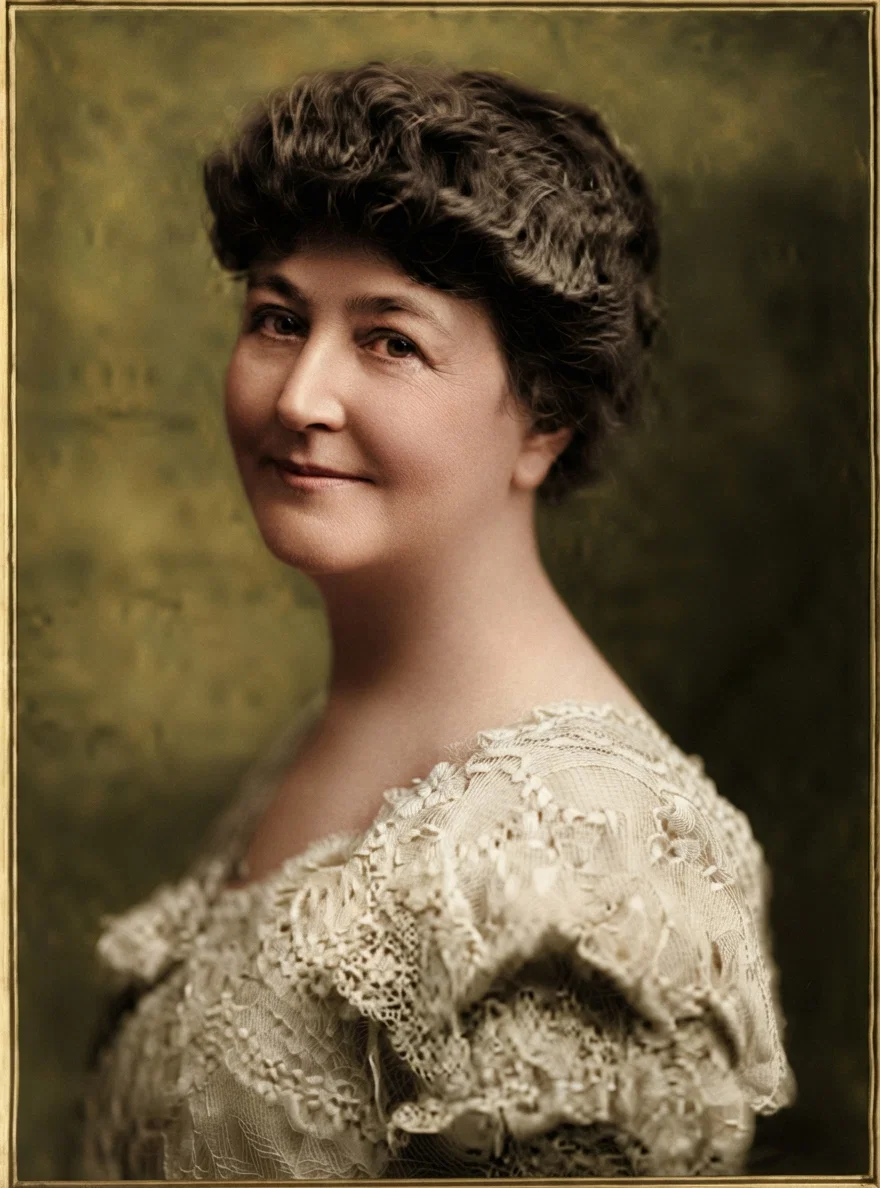
Clinedinst Service, Washington, D. C. Mrs. Woodrow Wilson
"And so it seems to me that we must look upon the Bible as the great charter of the human soul—as the 'Magna Charta' of the human soul. You know the interesting circumstances which gave rise to the Magna Charta. You know the moving scene that was enacted upon the heath of Runnymede. You know how the barons of England, representing the people of England—for they consciously represented the people of England—met upon that historic spot and parleyed with John, the king. They said: 'We will come to terms with you here.' They said: 'There are certain inalienable rights of English-speaking men which you must observe. They are not given by you, they can not be taken away by you. Sign your name here to this parchment upon which these rights are written, and we are your subjects. Refuse to put your name to this document, and we are your sworn enemies. Here are our swords to prove it.'
"The franchises of human liberty made the basis of a bargain with a king! There are kings upon the pages of Scripture, but do you think of any king in Scripture as anything else than a mere man? There was a great king David, of a line blessed because the line from which should spring our Lord and Saviour, a man marked in the history of mankind as the chosen instrument of God to do justice and exalt righteousness in the people.
"But what does this Bible do for David? Does it utter eulogies upon him? Does it conceal his faults and magnify his virtues? Does it set him up as a great statesman would be set up in a modern biography? No, the Book in which his annals are written strips13the mask from David, strips every shred of counterfeit and concealment from him, and shows him as indeed, an instrument of God, but a sinful and selfish man; and the verdict of the Bible is that David, like other men, was one day to stand naked before the judgment-seat of God, and be judged not as a king, but as a man. Isn't this the Book of the people? Is there any man in this Holy Scripture who is exempted from the common standard and judgment? How these pages teem with the masses of mankind! Are these the annals of the great? These are the annals of the people—of the common run of men.
Paul Thompson, New York
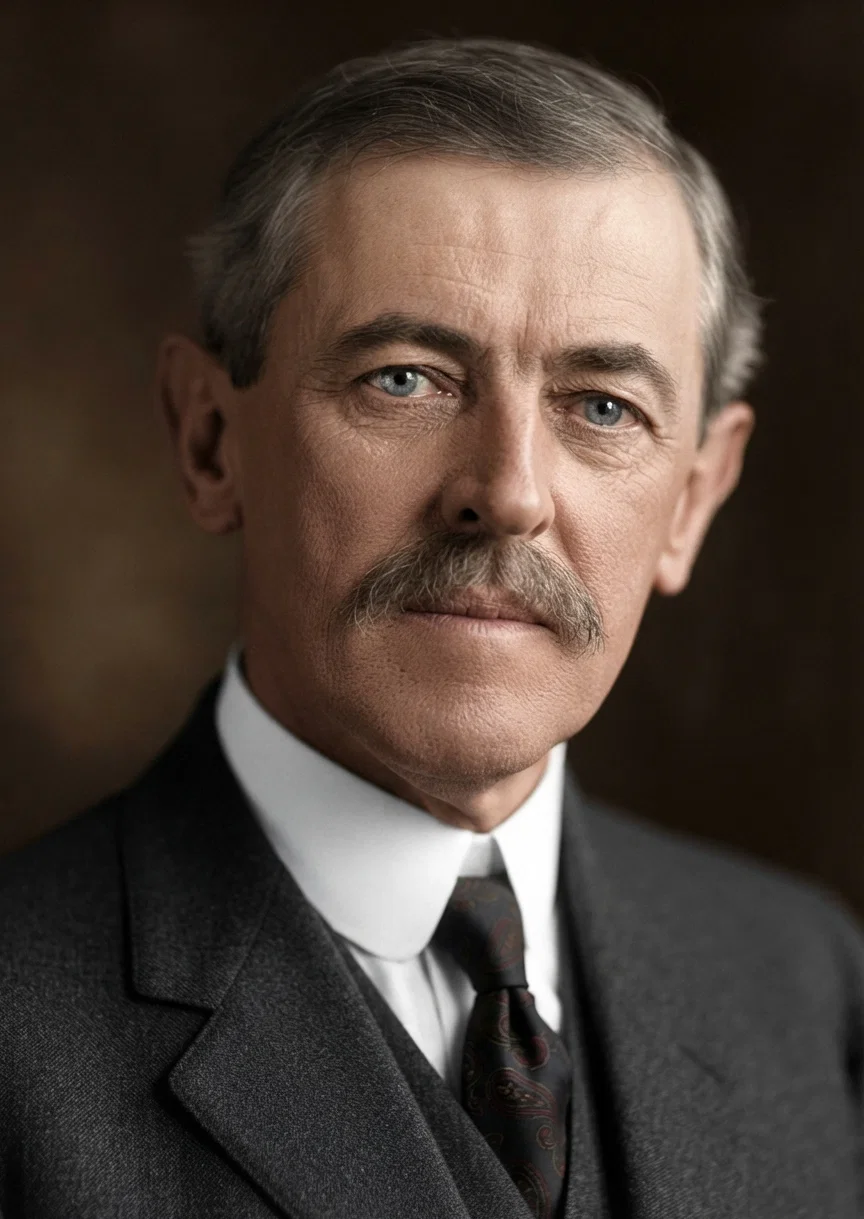
Thomas R. Marshall, Vice-President of These United States
"The New Testament is the history of the life and the testimony of common men who rallied to the fellowship of Jesus Christ, and who by their faith and preaching remade a world that was under the thrall of the Roman army. This is the history of the triumph of the human spirit, in the persons of humble men. And how many sorts of men march across the pages, how infinite is the variety of human circumstance and of human dealings and of human heroism and love! Is this a picture of extraordinary things? This is a picture of the common life of mankind. It is a mirror held up for men's hearts, and it is in this mirror that we marvel to see ourselves portrayed."
"Do you wonder, therefore, that when I was asked what my theme this evening would be I said it would be 'The Bible and Progress'? We do not judge progress by material standards. America is not ahead of the other nations of the world because she is rich. Nothing makes America great except her thoughts, except her ideals, except her acceptance of those standards of judgment which are written large upon these pages of revelation. America has all along claimed the distinction of setting this example to the civilized world,—that men were to think of one another, that governments were to be set up for the service of the people, that men were to be judged by these moral standards which pay no regard to rank or birth or conditions, but which assess every man according to his single and individual value. This is the meaning of this charter of the human soul. This is the standard by which men and nations have more and more come to be judged. And so the form has consisted in nothing more nor less than this—in trying to conform actual conditions, in trying to square actual laws with the right judgments of human conduct and more than liberty.
"That is the reason that the Bible has stood at the back of progress. That is the reason that reform has come not from the top but from the bottom. If you are ever tempted to let a government reform itself, I ask you to look back in the pages of history and find me a government that reformed itself. If you are ever tempted to let a party attempt to reform itself, I ask you to find a party that ever reformed itself.
"A tree is not nourished by its bloom and by its fruit. It is nourished by its roots, which are down deep in the common and hidden soil, and every process of purification and rectification comes from the bottom—not from the top. It comes from the masses of struggling human beings. It comes from the instinctive efforts of millions of human hearts trying to beat their way up into the light and into the hope of the future.
"Parties are reformed and governments are corrected by the impulses coming out of the hearts of those who never exercised authority and never organized parties. Those are the sources of strength, and I pray God that these sources may never cease to be spiritualized by the immortal subjections of these words of inspiration of the Bible."
"Can you imagine a man who did not believe these words, who did not believe in the future life, standing up and doing what has been the heart and center of liberty always—standing up before the king himself and saying, 'Sir, you have sinned and done wrong in the sight of God and I am His messenger of judgment to pronounce upon you the condemnation of Almighty God; you may silence me, you may send me to my reckoning with my Maker, but you can not silence or reverse the judgment'? That is what a man feels whose faith is rooted in the Bible. And the man whose faith is rooted in the Bible knows that reform can not be stayed, that the finger of God that moves upon the face of the nations is against every man that plots the nation's downfall or the people's deceit; that these men are simply groping and staggering in their ignorance to a fearful day of judgment, and that whether one generation witnesses it or not, the glad day of revelation and of freedom will come in which men will sing by the host of the coming of the Lord in His glory, and all of those will be forgotten—those little, scheming, contemptible creatures that forgot the image of God and tried to frame men according to the image of the evil one.
"You may remember that allegorical narrative in the Old Testament of those who searched through one cavern after another, cutting the holes in the walls and going into the secret places where all sorts of noisome things were worshiped. Men do not dare to let the sun shine in upon such things and upon such occupations and worships. And so I say there will be no halt to the great movement of the armies of reform until men forget their God, until they forget this charter of their liberty. Let no man suppose that progress can be divorced from religion, or that there is any other platform for the ministers of reform than the platform written in the utterances of our Lord and Saviour."
Clinedinst Service, Washington, D. C.
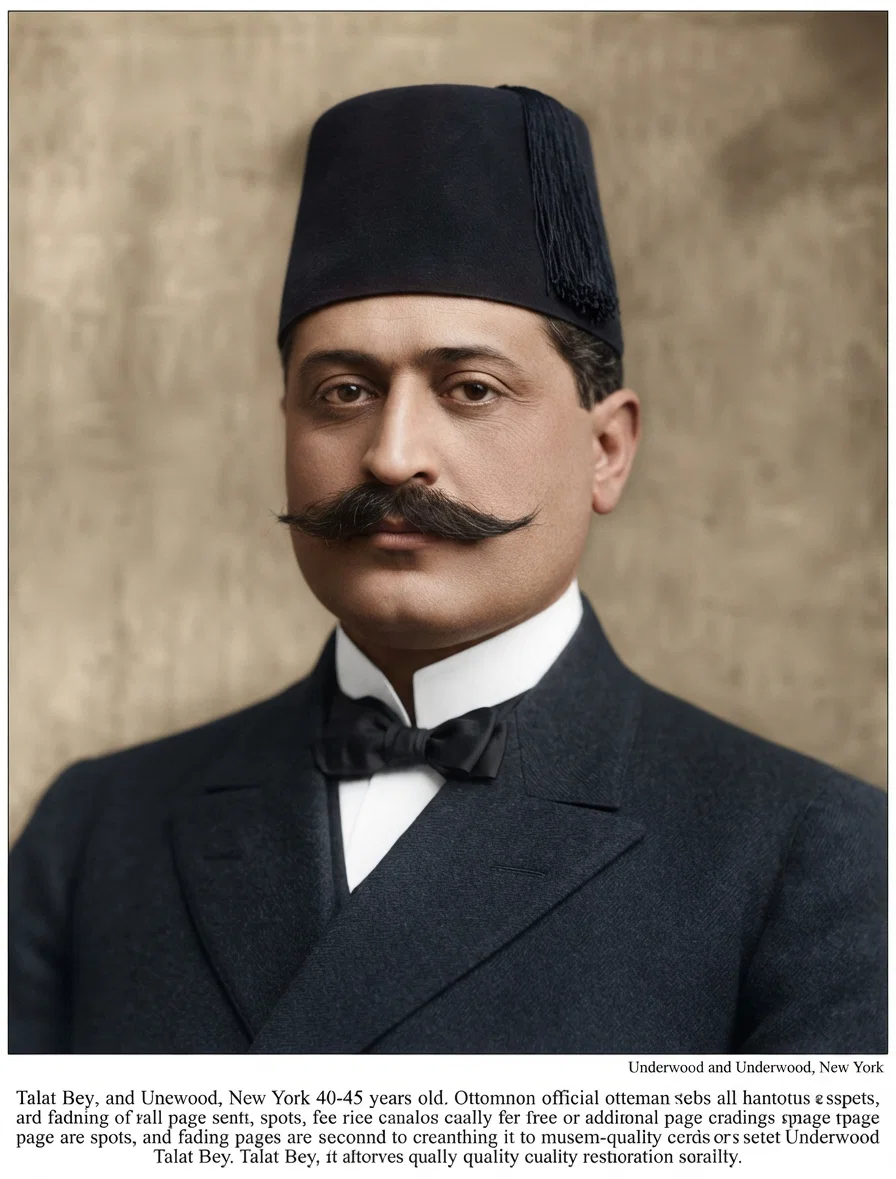
Underwood and Underwood, New York
"Ladies and gentlemen, I have a very simple thing to ask of you. I ask of every man and woman in this audience that from this night on they will realize that part of the destiny of America lies in their daily perusal of this great Book of revelation—that if they would see America free and pure they will make their own spirits free and pure by this baptism of the Holy Scripture."
Clinedinst Service, Washington, D. C.
Principles of Our Vice-President
By Editor
IN another column we have given excerpts from a soul-impelling speech from President Wilson. We feel it but just also to let our readers know the principles of our vice-president, Thomas R. Marshall. The quotations which follow are taken from an address by him before the second quadrennial council of the Federation of Churches of Christ in America, and was delivered Friday evening, December 6, 1912. It was an address delivered upon the Young People's Organizations and Christian Unity. We know of no stronger utterances of the need of faith in the Lord Jesus Christ and of the true principles of Christian liberty than these, and we will say of this, as of the extracts from the president's address, that we hope that our readers who pray, will pray that these may be the principles which will guide and direct in the mighty responsibilities which will rest upon him in his new office.14
"What are the conditions of the various Christian denominations in America to-day? Is it just the complaint of old men like myself, founded upon no facts whatever, that the church organization is losing to a greater or less degree its hold upon the lives and conduct of men? Is it true that the pews of our places of worship are measurably being deserted by the men of America? Has the church organization lost its ancient power and its all-compelling influence? When asked if her husband was a member of the church, Mrs. Wiggs said, 'No, he is just a well-wisher.' Are men now, whether their names are upon the rolls of the churches or not, just well-wishers?"
"There is, I sometimes think, a weakening to a greater or less degree in the spiritual power of the church together with a lessening of the faith and hopes of men. I think I know what has produced it. From my view-point, Jesus Christ was not a reformer in the usual and ordinary acceptance of that term. He lived when the greatest despotism that the world has ever known ruled the habitable globe. Yet, the only recorded statement of anything He said with reference to the Roman Empire was, 'Render therefore unto Cæsar the things which are Cæsar's; and unto God the things that are God's.' Slavery had reached the very depths of degradation, and yet His great apostle advised a runaway slave to return to his master. The Christ was not engaged in repealing bad laws nor in providing criminal punishments for the violators of good ones."
"Jesus Christ was more than a reformer. He was a regenerator. The church is to stand as the representative of the kingdom of God on earth, and 'except ye be born again, ye can not enter into the kingdom.' He brooded over Jerusalem as a hen broods over her chickens, and yet, He never strove to make bad Jerusalem appear to be good Jerusalem. He was wiser, because He was divine, than we are. He sought to teach men that God was their Father; that He had come to save them from their transgressions; and that no man could approximate unto good citizenship, or hope to enter into His kingdom, unless he had an abiding faith in Him as the mediator and redeemer of mankind, despite the weakness, frailties, follies, and sins of human nature."
"It may be that there is no lessening of faith upon the part of the people, but that it is only a lessened knowledge. It is true that the average of knowledge among all the people with reference to the vital principles of our religious faith, is not as great as it was in the days of our fathers."
"If I remember aright, the Shorter Catechism defines sin as any want of conformity unto, or transgression of, the law of God. The church was a divinely appointed institution to proclaim the necessity of regeneration and an honest endeavor to be obedient unto the law of God. I do not wish to criticize, but I do want you to look around and see whether the church is not more and more becoming an ethical society interested in the uplift of humanity by good works and good laws, and in the preaching of propagandas against public evils which it dreams are immediately suppressed, if general assemblies and congresses enact laws making such evils offenses. This, I call symptomatic treatment. I do not deny that it affords some relief, but it does not go to the root. You may investigate and should investigate a thieving public official, and you should put him out of office for the protection of the public service. But by so doing, you have not added anything to the sum of the world's honesty. With like opportunity he will be a thief somewhere else. It is only when he is regenerated, and comes to regard larceny not as a breach of faith nor as a violation of the civil law but as a violation of the law of God, that the sum of human honesty has been increased, and I maintain that the state can not do this thing. That is the work for which the Saviour of mankind set up His church in this world."
"Let me ask, Are not men more and more picking out some particular evil of the day and devoting their entire time, energy, and ability to the enactment of some law which will make that evil unlawful, and are they not shouting with joy when some general assembly enacts a statute to cover it? If there is a weakness in the church organization of to-day, that weakness springs from the fact that too many of the followers of the Nazarene are more interested in some particular phase of evil in civil life than they are in proclaiming the original sin of mankind and its only sure remedy—an undoubting, unqualified, and everlasting hold upon the gospel of the Galilean."
"The world is filled full of good works and good workers; of men and women who want things to be right; who are striving to have right laws; who are longing to do good and kindly things; but no man can go through life successfully upon a mere emotion. He is foolish who thinks to minister to a soul diseased by some sporadic deed of goodness. I do not care how much the prominent member of the church may give to missions and to charities; if I am convinced that he got the money from the blood and sweat and toil of his weak brothers and sisters, or if he made it by transgressions—legal under the law of the land, but unmoral under the law of God—he is not a Christian. Such men would better cease trying to bribe God by good works; they would much better seek for forgiveness, and, Zaccheus-like, try to straighten the past."
"I do not think that we would be harmed if denominationalism were a bit stronger than it is at the present time. I think there is a noblesse oblige of religion as there is of patriotism. The three hundred made the charge at Balaklava not because of hope of success but because England expected every man to do his duty. Men daily do things they do not want to do because the obligations of society or of business require it of them. The fine things of life are done in this spirit."
"No one will ever be able to convince me that the church is not a divinely appointed organization upon earth; that it is not a hospital wherein men and women are to be reborn, not once, but at least once a week, and soon, I hope, once each day; reborn to a knowledge of their need of dependency and reliance upon a higher power; reborn to a faith that if they will grip the Unseen, the Eternal, and trust it in every hour of sunshine and in every moment of despair, that not by might and by power, but by the Spirit of the living God, out of weakness shall come strength, and out of evil shall arise good, and that sometime, somewhere, somehow, the new-born soul, stripped of the sins of life, shall rise in a newer and a brighter life in the perfection of beauty and of holiness."
Value of a Young People's Organization
"The kingdom of God was to be in the earth and not of it. I hope soon, all church organizations will make it their exclusive mission to preach the gospel of Jesus Christ, and to reach the conclusion that the world is to be regenerated by regenerated men and women and not by regenerated laws and ordinances. The value and efficiency of a young people's organization must essentially depend upon the zeal and fervor of the church from which it springs. If its minister can draw more inspiration from a Titanic disaster than from the cross of Calvary, the church will be a very beautiful literary society, whose Saturday evening hops are largely attended, but so wearying as to keep the members from church until some fresh horror has furnished the pastor with a text upon which to preach. If, however, the organization springs from a church whose pastor has the spirit of John Knox, when he cried, 'Give me Scotland or I die,' who is not brooding over laws and ordinances and constitutions, but over the ruined and needy condition of men, who is not taking men in a mass, but who is taking them one by one and bearing them to the throne of God, then that organization will be strong not only in the good works of this life but in the faith which it has in the ultimate triumph of the gospel of Christ. . . . The real life of the people depends on their faith in Almighty God."
"It should be the business of a young people's society to get a firm hold not only upon the good works of life but also upon the vital principles of our religion. The members should grapple them to their hearts as with hooks of steel, and set them as jewels in the coronets of their lives. They should understand that there can not be much faith in any person or anything about which we know nothing. The pendulum of good works has swung us too far away from God. Some of us trust Him with utter indifference, as tho He did not exist. Some of us have exalted His goodness and mercy until we trust Him as tho He were a next-door neighbor with whom we have no social relations, but whom we trust will send flowers at our funerals. I hope that I may not be considered a mere carping critic. I am sure I am not an iconoclast. I do not want to tear down one good thing in society. I do not knowingly want to prevent one good thing from being accomplished, but I would like to have every single church organization in America and every young people's society connected therewith, to understand that there are certain truths of religion which no man is wise not to learn and which every man is foolish to neglect."
"The church anywhere that is being deserted, is being deserted because its various organizations are not appealing to the one vital need of every sentient human being, a need which may not be everywhere and always present, but which is sometime and somewhere surely present—a feeling by man that he can not bear the burdens of life alone, that he must rest his faith and hope upon the Unseen and the Eternal. When that feeling comes, man wants some place in which some person may tell him how to grasp and hold securely in his hand the one great fact of human history—the sacrifice upon the cross of Calvary."
"Churches and church organizations ought always to have their lamps trimmed and burning, that there may be no night so dark that one who wants to find his way may not be enabled to grasp the flickering torch of faith in the sacrifice of the Sinless One. And these lamps will only burn brightly when all of us not only know but believe that all the law and all the prophets found their fulfilment in that cross which the Man of sorrows bore in weariness along the Via Dolorosa."
Decorative Divider
—★★—
IN THREE DAYS
SAN FRANCISCO
Overland Limited
TAKES YOU
To Chicago
ACROSS GREAT SALT LAKE
AND
HIGH SIERRA BY DAYLIGHT
Luxurious High-class Equipment Electric Lighted Throughout
Pullman Drawing-room
Stateroom
Vestibuled Sleeping-cars
Careful and Attentive Dining
Service
Parlor Observation-car with
Library and Cafe
Ladies' Reading-room
Gentlemen's Smoking-room
Daily News Bulletins
Latest Papers and Magazines
Southern Pacific
AN OPPORTUNITY
Free fruit homestead for missionary family. Homesteaders located. Orchardist on shares wanted. Dry, sunny climate. L. J. Caldwell, Wilson, Owyhee Co., Idaho.
Liberty Magazine
By Editor
"Statue of Liberty" and "Sunday Labor" Number
A FEW FEATURES
Frontispiece,—Cartoon "Religious Legislation Darkening the World;"
Statue of Liberty—Its Meaning;
President Taft on "Religious Garb;"
Catholic Church and Sunday Observance;
President at "Pan American Mass;"
Menace of a National Religion;
Rome Dictates to Catholic Voters;
Digest of State Sunday Laws;
Religious Liberty in Holland;
Cardinal O'Connell on Religious Liberty;
Sunday Closing of Post-Offices;
Center Photographs,—President and Vice-President Elect and White House.
Special Offer: 10 copies, one year, to one or to ten addresses, only $2.00, or 20 cents each. Sender may include his name.
Order through our nearest agency or Desk "S"
A Good Seller Apply for Agency
35 Cents a Year 10 Cents a Copy
Liberty Magazine
Washington, D. C.
Second Coming of Christ
By Editor
Thousands believe in a second coming of Christ, but are confused as to how He will come. The sixteen page tract "Manner of Christ's Coming," Bible Students' Library, No. 124, will assist greatly in a careful study of this subject. Single copy, post-paid, 2 cents; $1.00 a hundred. This office.
An outline of the messages presented in the Revelation, and especially the one mentioned in the fourteenth chapter, is clearly given in Bible Students' Library, No. 188, "The Gospel Message for To-Day." Price for single copy, post-paid, 2 cents; $1.00 a hundred. This office.
"Heralds of His Coming," Apples of Gold Library, No. 85, gives an outline of the unmistakable signs of the nearness of Christ's coming. Increase of riches, of crime, of knowledge; last-day scoffers; signs in sun, moon, and stars; peace and safety cry; preparation for war; great spiritual declension,—are some of these evidences. This popular tract, a copy, 3 cents, post-paid; a hundred, $1.50. This office.
SUBSCRIPTION RATES
By Editor
N. B. We send no papers from this office to individuals without pay in advance. When persons receive copies without ordering them, they are sent by other parties, and we can give no information in regard to them. Persons thus receiving copies of the "Signs" are not indebted to the office, and will not be called upon to pay for them. Please read the papers you may receive, and hand them to your friends to read.
SUBSCRIPTION RATES
Three months .............................................................. $0.50
Six months ..................................................................... .90
One year (50 numbers) .................................................. 1.75
With "Questions and Answers" ...................................... 2.00
One new yearly subscription and one renewal, or two new yearly subscriptions, sent at one time, $3.00.
Two new yearly subscriptions and one renewal, or three new yearly subscriptions, sent at one time, $4.00.
Three new yearly subscriptions and one renewal, or four new yearly subscriptions, sent at one time, $5.00.
Sample copies sent on application.
Weekly and Monthly SIGNS one year, combined, $2.25.
DATE OF EXPIRATION
The SIGNS wrapper bears date of last issue due on your subscription. Unless renewed in advance, paper stops with expiration date.
If herewith is an order-blank, you will know you have overlooked sending renewal. You will not wish to miss a single issue. Back numbers often can not be furnished.
G. C. Hoskin, Circulation Manager.
SANITARIUM COOKING OIL
Refined Cotton Seed Oil direct from refinery. Pure, wholesome, and delicious.
Five acres in bearing grapes and prune-trees. Healthful location, delightful climate. Near the Pacific Union College. A bargain. For further particulars, address Mrs. O. M. Hatch, St. Helena, Napa Co., California.
LADIES, READ THIS
Do your washing in half the time, with half the labor, by using E-Z Washing Tablets. One tablet in the boiler removes the dirt, by chemical action, positively without injury to the finest fabric. Sold through agents. Drop a dime in an envelope now, and get a 10 cent package by return mail. The results will surprise you. Address, E-Z Washing Tablet Co., 721 H. Street, Sacramento, Cal., or east of Chicago, to Cumberland Md.
Life and Health
By Editor
"VEGETARIANISM" AND "SPRING FEVER" NUMBER
Send 10 cents for sample copy.
April Features
Vegetarianism; Spring Fever; Treatment of Flatfoot; Hygiene of Deep Breathing; Alcohol—A Habit-Forming Drug; Babies, Brothers, and Sisters; Is Your Stomach to Blame? The Food of the Future; Watch Your Milk Supply; Non-Drug Treatment; Nine Questions Answered.
Yearly subscription, $1.00.
Why not earn your own subscription by sending us two subscriptions at $1.00 each?
Many of our agents make from $2.00 to $5.00 a day selling this magazine. Try selling a few in your community. Send $2.00 for 50, or $1.00 for 20 copies. Address our nearest agency or
LIFE AND HEALTH, WASHINGTON, D. C.
Protestant Magazine
By Editor
"PRIEST'S LETTER" AND "CONVENT TRAGEDY" NUMBER
Second Instalment of "A Convent Tragedy"
Some April Features
Double Frontispiece: Photographs of Mrs. Magnuson, her kidnaped daughter Marjory, the academy she attended, convents in Tacoma, Washington, and Portland, Oregon, St. Leo's Church, and brave Attorney Kelley, who won the case.
A Convent Tragedy (Part II); A Priest's Letter to "The Protestant" Denouncing Romanism; Scriptural Designations of "Popery"; The Hope of the Church; Protestantism — What It Means; Explanation of "Thou Art Peter," etc.
Do not fail to read the opinion of a great priest, in good standing, in this number.
We can still begin a few subscriptions with the March number containing the first "Convent Tragedy" article. Yearly subscription, $1.00.
Special on 10, Six Months
10 copies, six months, to one address, or to 10 separate addresses, only $3.00, or 30 cents each. Sender may include his own name. Or send $3.00 for five copies, one year. We can furnish many names and addresses of prominent people. Send 10 cents for sample copy.
Address our nearest agency or
PROTESTANT MAGAZINE, WASHINGTON, D. C.