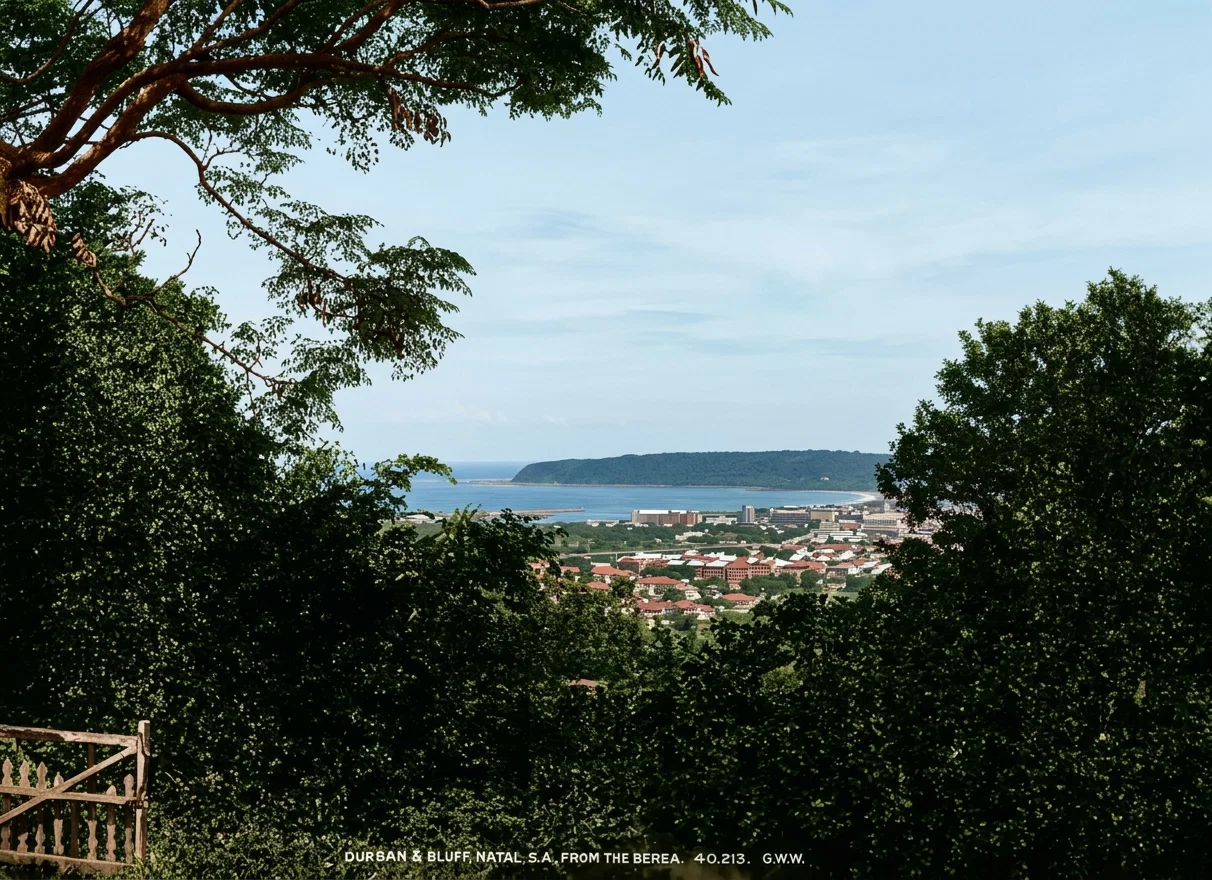
The first annual meeting of the Natal-Transvaal Mission Society was held at Sweetwaters, Natal, Nov. 6–11, 1902. At the second meeting of the session it was decided to organize the Natal-Transvaal Mission Society into the Natal-Transvaal Conference. The reasons for this change were that the constituency of the field has nearly doubled during the past year, and the increase of our funds will enable us to carry on the advance work in the field, for the evangelization of the European population within our borders, without calling upon our brethren in America for financial aid.
Our tithes and offerings for the period of thirteen months, since our society was organized, are considerably in excess of three thousand dollars. The present worth of the conference is nearly five thousand dollars, the major portion of this amount being cash; and in addition to this, we have every reason to expect a tithe of more than three thousand dollars for the year 1903. Thus we shall have available resources to the extent of approximately eight thousand dollars, for the support of the laborers for the coming year. The average amount of tithe paid by each member for the thirteen months, was nearly ninety dollars. Taking these things into careful consideration, it was thought that we should relieve the Mission Board, which has thus far carried the financial responsibility of the work in this field, so that it may give more attention and assistance to more needy fields. The new conference has but two organized churches, two companies as yet unorganized, and a few scattered members. Our entire constituency will scarcely number as many as the family of Jacob when they went to sojourn in the northern part of Africa, but we hope for a host when we get ready for the final march to the heavenly Canaan.
The increase in our membership has not been due so much to accessions to the truth, but rather to returning refugees after the close of hostilities between Britain and Boer. In fact, we have had no minister who could spend sufficient time in one locality to complete a series of meetings, and but one Bible worker,—Sister M. A. Cornwell Chaney,—whose time has been somewhat divided between laboring for the white people and the natives.
Our great need is more workers. For these we have been sending urgent appeals to the Lord of the harvest, and to the Mission Board, for some months in the past, and we live in daily expectation that our appeals will be answered. We are prepared to support at least four ministers and two trained nurses. We believe this to be one of the most promising English-speaking countries in the world. This conference has numerous towns and villages, where the last message which15must go to the world ere the coming of the King, has never been proclaimed. Truly this is “virgin soil.” Who will offer himself to the Lord and to our Mission Board, to come to this land, where he can proclaim the truth in his own tongue, and thus have a part in the home-gathering of the sheaves, which must be near at hand?
DURBAN, NATAL, SOUTH AFRICA, AS SEEN FROM THE BEREA
Young men who can speak both the Dutch and the English, would be the most valuable workers in this field; but we need workers at once, even if they have not the use of the Dutch language. If such will apply themselves to acquiring the Dutch, they can master it in a short time. Those who come here for commercial purposes, readily acquire three languages, at least so that they can converse on matters of business. It should not stagger any of our younger workers to undertake to acquire a new language for the purpose of presenting the message of life and salvation to a people who are now more ready than ever before to hear something which may differ from the tenets of the church wherein they have been nurtured.
The writer was elected President of the new conference, Brother J. H. Camp, is the Vice-President, and C. H. Pretyman, Secretary, Treasurer, and Business Manager.
While we are confident that we shall not hereafter be obliged to appeal to our brethren in America to support laborers who advance the message among the white people; yet we cannot carry the financial responsibility of giving the truth to the millions of natives and East Indians within our borders. We now have workers to equip a good, strong missionary training station, but no money with which to establish the same.
We have looked over the field quite thoroughly for a location for a mission farm, to be used as a station for training native teachers, for giving white laborers an experience in native work before sending them out to take charge of pioneer stations beyond the bounds of civilization, and also for a health-recruiting station for our missionaries, who must have occasional changes from the debilitating climate of the up-country districts, or be prematurely laid away, to rest from their labors. Will not the Lord hold us responsible if we fail to heed the lessons so dearly learned by other missionaries, and by our workers in Matabeleland, relative to taking sacred care of the health of our missionaries?
The most favorable place that we have yet found for the location of such a mission station is at a point near the convergence of the Transvaal, the Orange River Colony, Basutoland, Natal, and Zululand. This is reputed to be one of the best farming districts, and most healthful locations for man and beast, in all South Africa. Many men in this locality have lived from eighty-five to one hundred years, while a number have lived from one hundred to one hundred and seven years. Also many invalids, coming from other countries and climes and locating in this district, have fully regained their health. We might with propriety speak of this district as “the sanitarium of South Africa,” and as it is thickly peopled with natives, and is perhaps one of the most accessible places to the up-country districts, where the deadly fevers lurk to a greater or less degree,—owing to local conditions,—it seems to us that we should secure a farm here, and begin operations at the earliest possible date. We believe that this plan, which has been approved by the South African Union Council, and most heartily by Brother and Sister Booth as well,—for they are well aware that the stations where they and their fellow workers are located are in one of the fever districts,—will appeal to the good judgment of our people in America, and to a share in their liberality in the support of the great missionary enterprise of carrying the “everlasting gospel . . . to every nation, and kindred, and tongue, and people.”
A station established at the place mentioned would enable us to reach and evangelize many of the most populous nations of natives in South Africa. We believe that such a station, after being established and equipped, would be largely self-supporting. We hope to devote all the missionary funds which accumulate in South Africa for the year 1903 to this enterprise, but we shall need several thousand dollars besides. We should be thankful beyond words to express, if some of our union conferences in America would supply capital for starting this health-recruiting, and thereby life-saving station, the primary object of which is to wrest many captives from the enemy, and in co-operating with our Captain, to bring “many sons unto glory.”
The conference meetings were held in the new schoolhouse at Sweetwaters, around which ten buildings have been erected during the past eight months, and four more are in process of construction, while still others are in contemplation, and will doubtless be erected in the near future. Until work upon our school building was begun, the only habitations which marked the portion of the farm which we purchased, were a few thatched cooly huts. Within full view of the school grounds may be seen numerous native kraals (villages), occupied by hundreds, perhaps thousands, of Zulus, which indicate that our new seat of learning is located in Darkest Africa.
The school building is surrounded by eight acres of land, suitable for cultivation, and capable of producing oranges, bananas, papaws, pineapples, figs, naartjes, mandarins, and other subtropical fruits, as well as the fruits and vegetables of the temperate zone. Brother Chaney has had charge of the erection of the school building, which is now nearly completed; and as our teacher, Sister Cora Blodgett, is expected to arrive by the next mail steamer from London, the hearts of our people will soon be gladdened by having the first church school in our young conference in full operation.
Two encouraging features of our school enterprise are that the property is entirely free from debt, and the support of the teacher is fully guaranteed.
During the conference, about one hundred and fifty dollars in cash was raised, with which to secure five hundred copies of “Christ’s Object Lessons,” to be sold for the benefit of our school work in Natal. We expect to secure a like amount at Johannesburg at the beginning of the year, to start a school in that city.
Our canvassing work has made excellent progress, the sales of a recent month amounting to over $2,800. The blessing of the Lord has manifestly been over his work in this field. For this we praise him from full hearts, and take new courage for the future. Our conference meetings were characterized by a most desirable spirit of union and brotherly love, and by the manifest presence of him who said, “Go ye into all the world, and preach the gospel to every creature,” “and, lo, I am with you alway, even unto the end of the world.”
Cape Town.
S. A. LOCKWOOD
By S. A. Lockwood
Japan
TOKIO.— We arrived in Yokohama on the morning of October 21, and were met by Brethren Field and Burden. Although the ocean was rough much of the way, we did not suffer so much from seasickness as from lack of proper food. We came expecting to be content with the country: we think we shall be quite well satisfied. When we see the great needs about us, we are glad the Lord has given us the privilege of working here. I thought, while in America, that Japan was a needy field, but it seems to me now that it is a hundred times more needy than it appeared then.
S. A. LOCKWOOD
Prince Edward Island
By Wm. Guthrie
We have now been in this place just six months, and have learned, to some extent, the great need of the field. Our hearts go out after a people pre-eminently religious, but who have yet many things to learn about spiritual growth. By far the larger part of the people are church members, but many of them feel that they have only the shell, while the kernel is studiously kept from them by the pastors and rectors. Only a few days ago I said to a man, “I suppose most of the young people are members of the church.” “Yes,” said he, “they are, and yet we have not had a conversion in this parish for twenty years. They go through the forms, and are taken into the church, but there is no change of heart.”
We are now holding a service each week in a hall located in that parish, and we are praying that God will use us to carry to that people a knowledge of the transforming power of his grace.
The Lord has blessed us in our work here in Charlottetown, and some dear souls are being led nearer to him. The people move very slowly here, yet one sister has decided to keep all the commandments, and several other truth-loving souls leave their own church to attend our Sunday night service. Much love is needed to win souls here, as it is a great cross to leave the popular church.
We find a large number who will not come to the public services, but will read if they have opportunity. These we are trying to reach with the printed page. Since we began work here, we have placed about twenty thousand pages of tracts in the hands of this class, also about twenty-five thousand pages of other reading matter, such as books, papers, etc. We are receiving a club of twenty-five Signs, which we are using to acquaint the people with our work. We are also using some free tracts. We have received about $7.50 in donations from the States, to be used in this way. The printed page is the great educator; hence we wish to scatter the tracts as the leaves of autumn. God’s Spirit will arouse some as they read the precious message for to-day. Many are longing for the old-time change-of-heart religion, and will break the yoke under which they are held, as soon as they can be led to see that a church of true Christians still survives.
Many of the people are poor. So we are using all the profits from sales, and all that we can give ourselves, to meet this lack on their part, trusting that God will bless the sacrifice to the salvation of some of them. If you would like to help us in placing our literature among this long-neglected yet dear people, send your donations to the Mission Board, and they will be sent to us. Now is the time for work, as the long evenings are upon us here. You will be blessed in blessing others.
WM. GUTHRIE.
The Health Work in Central Europe
By P. A. De Forest
THE foundation of the health and temperance work in this field was laid, as many of the brethren remember, by Brother Andrews, whose abstemious life and faithful adherence to health principles are well known. After the arrival of Sister White in this country, there was a general awakening to the importance of the health reform message, and soon an advanced step was taken in sending Brethren Paul Roth and Leon Tieche to the Sanitarium to study nursing and kindred topics.
About this time (1890) Brother Grin, an employee in the Imprimerie Polyglotte, began to incorporate health ideas in his journal, Le Vulgarisateur, then devoted almost entirely to scientific subjects. Brother Holser encouraged him in this new undertaking; and when Brethren Roth and Tieche returned, a new impetus was given to the health work. Tracts and booklets were published, and health and temperance meetings were held.
The stringent enforcement of the Factory Act, with the consequent closing of the Imprimerie Polyglotte, hindered the publishing work to a considerable degree; and it was resolved to remodel the building, and install the necessary outfit for a small sanitarium.
My wife and I being invited to make this our field of labor, we arrived in August , 1895, and the Institut Sanitaire (sanitary institute) was opened in the spring of 1896. A health food bakery was installed in the basement, Le Vulgarisateur was pressed into service to herald the message of health, and the training school for nurses was started at the same time. Brother and Sister Holser led out in the enterprise, and by the end of the year we had received about forty patients.
We had fifty patients in 1897; last year (1901) one hundred and seventeen house patients were received. Our patronage, though not so large as we wished, has steadily increased. The health food department has proved a valuable adjunct to the medical work proper, and without it the institution would not be so prosperous. The sale of health foods has increased by leaps and bounds. This fact, together with the growth of the medical work proper, is the result of persistent effort to extend these principles in spite of many prejudices among a people who are used to being treated at the hospitals and clinics almost free of charge. People are being aroused by the message of life, and are calling out, “What must I do to be saved?” The writer has recently had the privilege of addressing good audiences of representative Swiss on health topics, and was encouraged to note their attention and their eagerness to obtain reading matter. We pray that the honest in heart may heed the call to “obey and live,” and thus be prepared to receive the special truths of the third angel's message.
Our training school has, we believe, been an important factor in building up the work. Of twenty-one nurses who have been graduated, thirteen have gone to foreign lands, four are at work in Turkey and Palestine (one is working as obstetrical nurse under the permit of the Turkish government at Constantinople; Brother Hörner has conducted the mission at Jaffa with good results; Sister Jespersson is at the Jerusalem mission; and Sister Haussmann and her husband are nursing in Beirut). In Egypt, Sister Ida Schlegel has spent several years nursing and helping Brother Passebois, while two Armenian brethren are engaged in self-supporting medical missionary nursing in Cairo and Alexandria. Three of our young men are doing evangelistic and medical missionary work,—one in Belgium, one in Italy, and one in France.
Sister A. Wright, one of the two English sisters who took the course, is at present laboring in connection with the new sanitarium enterprise just begun at Belfast. Sisters Roth and Perrin are at Paris; and several Swiss nurses are engaged in the home field. Sister Weidmann, one of our faithful German-Swiss nurses, recently fell a victim to dysentery, while on her way to engage with Brother Hörner in labor at Jaffa; she was buried at Cairo. God permits his workers to lie down in peace, but his work must go forward.
We are seeking to promulgate these life-saving principles by pen and voice and example. We are also cheered as we note the power of the health journal and health tracts and books to influence people to grasp the practical truths. We expect to see souls in the kingdom as a result of this work. How true it is that health principles are “an entering wedge to be followed by a religious influence.”
The workers are of good courage in the Lord. We go forward, knowing that those who attach themselves to truth will17triumph with it. Brethren, remember the health work in this needy field, where so many hearts are longing for the bread of life, and so few laborers are engaged in giving it. P. A. DE FOREST.
Northern Michigan
By S. E. Wight
A CHURCH of eleven members was organized at Alpena, December 14. The Lord was present, and eleven decided to band themselves together in church relationship. There are as many more to join later.
Elders Guild and Soule and two Bible workers, Miss Kiep and Miss Tyte, went to this place two years ago. Later Sister Faulkner began work there, and after two years of faithful work this company was organized. It was a day of rejoicing to Elder M. C. Guild and Mrs. M. M. Faulkner, who were present. The Lord has been present with the workers, and the way is prepared for a prosperous work.
I would not fail to note that one man who joined this church became acquainted with the truth by the faithful work of a canvasser. If all could realize how much good our books do, what an army of canvassers there would be!
S. E. WIGHT.
The Greatest Commercial City in the South
By W. C. Wales
The healthiest large city in the world is New Orleans, La., the metropolis of the whole vast South. It covers a larger area than any other city in the world, not excepting London; and but one American city enjoys a larger export trade than does this city. It is therefore by all odds the most important commercial center in the South. Here at the mouth of the great Mississippi, it sits as a queen over the immense valleys behind it, and, extending its mighty scepter over all lands and shores bordering the Gulf of Mexico, it seems to hold by nature the key to the entire South American continent. New Orleans is three times the size of any other Southern city except Louisville, and at the annual spring festival the number of visitors equals the population of Memphis, with its one hundred thousand inhabitants. This shows the city to be one of striking possibilities in the way of missionary work.
“New Orleans has four hundred and seventy miles of streets, shaded by forest trees, haunted by song birds, fragrant with a wealth of ever-blooming flowers, abundant in season with fruit—the fig, the plum, the pomegranate, and the orange. No other large city in America is so laid open to the sunshine and the air.”
Along its extended wharves may be seen shipping from every maritime country. This makes it an important field for the ship missionary. New York is the only city on the continent that surpasses it in the volume of its exports.
And what is being done to get the truth before the three hundred thousand people of New Orleans, and through this city to the needy millions that face its portals southward?
This great metropolis, with its wonderful beauty, its immense possibilities, its cosmopolitan character, its surpassing location as the gateway to the Mississippi Valley and the key to South America, is having nothing done for it at all in proportion to its needs, its demands, and its dimensions.
Elder S. B. Horton, who carried the entire burden of conference, tract society, medical missionary, and city mission work as president of the little Louisiana Conference, last July secured a commodious building for a hygienic restaurant in the very heart of the city. It is but two doors from the palatial St. Charles Hotel, the leading public house of the city, and but one door from the two leading telegraph companies. I know of no city where our people have secured such a central location, and where the prospects are brighter for reaching the boarding business men. The restaurant is at present under the management of Brother D. D. Fitch, and is thronged each day by increasing numbers of professional and business men from the offices and marts of the city. This morning as I sat at breakfast, the United States circuit judge having jurisdiction over five Southern States, came in and ate his morning meal. Thus daily is the way being prepared for the truth to be carried to the best classes of people.
Elder Horton's home has always been in New Orleans, and as he has been closely identified in former years with leading men of the city and State, he commands an unusual opportunity of reaching these typical Southern people. The Lord has certainly led out in securing the foothold already gained. But the work in this great city of such continental and international importance should not be allowed to rest upon one frail man's shoulders, nor upon the young and struggling Louisiana Conference. The rent of the large building is more than one hundred dollars a month. This is a heavy drain. Our people should come to the rescue, by furnishing donations and workers. If a class of young people could be formed to take instruction in cookery from Sister Fitch, they could pay their expenses by assisting in the restaurant. Sister Fitch formerly taught the cooking school in the Battle Creek Sanitarium, and is a skillful teacher and cook.
In this great city and State there is a painful lack of laborers. No other Southern conference is so bankrupt in workers. Help is greatly needed at once. Many of our brethren could do great good by moving to places where there are at present just a few believers. Preachers and gospel workers are greatly needed. A secretary for the tract society is a pressing necessity. Treatment rooms should be opened in the city at once, and this great metropolis should receive the attention which its size, location, and importance demand.
Who will come? Who can assist at once with even small cash donations? In this State the calls come in from new places; small companies must be built up; and work in New Orleans, so trustingly and auspiciously begun, must be sustained and prosecuted; and every branch should at once receive re-enforcement. Does not the Lord impress the heart of some brother as he reads these lines? Elder Horton must have help. The large educated French element of New Orleans must be reached. Here is a mild climate, here are hospitable people, here is work to do for the Master.
Address all inquiries and send all donations to Elder S. B. Horton, 303 St. Charles St., New Orleans, La.
In behalf of the Master,
W. C. WALES.
Cyclone in Argentina
By N. Z. Town
“CYCLONE last night. School nearly destroyed. Few hurt.” Such was the startling telegram received on the twenty-third of this month from Dr. R. H. Habenicht, who was in our workers’ school in the province of Entre Rios.
The storm struck the school about one o’clock at night. The main building has nine rooms one story high, and all except one of these were unroofed, and some of the roofing was completely destroyed. A number of the doors and windows were also damaged, and considerable furniture broken. Very little of the walls were blown down, but some portions will have to be relaid. The new building which the students have put up this year suffered the same fate, as did all the outbuildings.
The disaster occurred the first night after the school family had returned from our camp meeting. As quite a number of the students remained on the camp ground to attend a canvassers’ institute, there were comparatively few in the school building when the storm struck it. Otherwise more might have been hurt. One sister received quite a severe bruise by falling bricks, but aside from this no one was seriously hurt.
Why this disaster has been permitted to come we do not as yet see, nor can we at present see where the money is coming from to make repairs, but we believe that it will come, and we are determined to “arise and build.”
Owing to crop failures, our brethren here can do but little, but they will do what they can. So, brethren and sisters, we ask you to help us rebuild our school.
The Lord has abundantly blessed the school this year. Before this reaches you, eight consecrated young men who have been in the school will have entered the work.
N. Z. TOWN.
October 25.
Labors Among the French
By D. T. BOURDEAU
After an unavoidable stay of over six months at Battle Creek, Mich., caused by a serious accident already mentioned in the REVIEW, and by my being occupied in doing heavy mental work, which had been too long crowded out by field work, it was a source of joy to start, November 12, on a tour among the French and some of other nationalities in Wisconsin and in northwestern Michigan.
I spent about four weeks in laboring principally for our French brethren and sisters at the following places: Little River (near Oconto), Wis.; Stephenson, Mich.; Wilson, Mich.; and Robinson, Wis. At each of these places I remained about one week, walking and visiting much, and speaking from two to seven times in public. It was a source of mutual profit and encouragement, after a separation of nearly four years, to meet these brethren again, and to recount God's mercies and his gracious dealings with his people and with the nations of earth, take a retrospective view of the progress of the cause, and a prospective view of its final triumph in the near future, and to dwell on the moral fitness needed to meet the momentous events so soon to be a present reality. Most of those to whom the words of life were dispensed seemed to be convinced that it is impossible to form characters that will stand the trying ordeals through which we are soon to pass, to enable us to stand before the Son of man at his coming, and to secure an admittance into the immortal kingdom, without earnestly laboring for the salvation of others, and for the advancement of the work of the closing gospel message by every laudable means at our command.
While laboring for my dear French brethren and sisters, not only has my thirsty soul been watered, but I have also been blessed and strengthened physically, without, however, being led to forget the fact that a man of my age needs to be prudent, and especially to guard against exposures to the rigor of the climate in the winter season in this part of the country. At an evening meeting at Little River, while my French brethren and I were feasting on truths relating to the formation of holy characters, a refreshing came upon us, and removed from me a dull headache with which I had been more or less afflicted ever since my accident last April.
At Wilson, Mich., the believers had increased, and it seemed evident that the organization of a French church at an early date would meet the mind of the Lord, and I labored both in private and18in public with this end in view; and here, too, we were favored with a refreshing from the presence of the Lord. This came as we were looking after a sick brother, and drawing out the French believers toward him in Christian sympathy and brotherly love.
About four years previous to this effort at Wilson, the brother just referred to had sold his farm for about one thousand dollars, and had given about half of the proceeds to the cause. Since then he had conscientiously paid his tithe to the Lord, and had bought another farm, mostly of standing timber, with neither house nor barn on it. Some thought that he had gone to extremes in giving so much to the cause, and in placing himself in such trying circumstances, and yet returning to the Lord an honest tithe. But the Lord intervened, and heaped blessings into this brother's bosom, so that I found him with a better farm and better buildings than those he had about four years before. This man I found very sick in his lumbering camp in the woods. He had not been able to keep even pure water, much less food, in his stomach for days. He lay in his bed, and could not attend our meetings. For five successive days I walked about five miles each day to see and instruct this sick man in the forest, besides doing other heavy work. The day before leaving—a holy Sabbath morning—I walked this distance through the mud and in a heavy rain storm, to pray with this man, then laid his case before the brethren in our early Sabbath morning meeting, showing the object of the Lord in permitting such afflictions; namely, to draw us out in sympathy and love for the afflicted, and to take glory to himself in granting to all concerned the greatest of all blessings to erring and imperfect mortals, and that is, the healing of the soul of moral maladies, and advancement in the important work of character building. If this blessing is granted, we are prepared to receive physical healing, if God sees fit to give it, and we are prepared to die, if God shall decide that we can glorify him more by our death than by our life.
Having presented such principles to the congregation, we united in a general season of prayer for the sick and for all engaged in prayer. The next morning, several hours before day, accompanied by six brethren and sisters, I went again to the sick man, and after giving him, his wife, and those present instructions regarding the physical laws governing us, and impressing the sick with the fact that God did not require him to overdo that he might be able to give more means to the cause, there was a precious season of humbling the soul by confession of sins. This was followed by a season of prayer, during which the Holy Spirit drew near to all, especially to the sick brother, who arose, declaring that he felt better in his body. All felt that they had received a moral healing, and had been greatly strengthened spiritually; and I felt some of the blessing that healed me of consumption over forty years ago.
The subject of replenishing the French Tract Fund without neglecting the tithing system nor overlooking other demands of the cause upon us, was presented to the French brethren and sisters, who nobly responded to a careful appeal for means and pledges. I had determined not to say anything on this subject to the brother who had been afflicted; but he would not be deprived of the privilege of doing something for this noble object, and took the lead by heading the list of pledges for the French Tract Fund. Since then the French believers at the other places mentioned have followed the example of the Wilson company, and we are happy to report that the debt that rested on the French Tract Fund is canceled, and that there is enough ahead in cash and in pledges unpaid to justify the publishing house at Battle Creek in soon beginning to print small works that are greatly needed by the French; such as, “A Royal Visit Imminent;” “True Holiness, How Attained;” “The Bible and Tradition,” etc. But the French Tract Fund needs to be greatly increased to meet the urgent demands of this branch of the work; and in this we ask the co-operation of believers of other nationalities. Let donations be sent to the Review and Herald, Battle Creek, Mich.
We hope to be able to say more on this subject after finishing our present work of following up interests created by our French and English literature, and by the personal efforts of our French believers and of English-speaking brethren and sisters in this field.
At every place where we have held meetings with our French brethren and sisters they have resolved to make earnest efforts to circulate such works as “Readings for the Family” (or French “Bible Readings”), the French “Life of Christ,” etc. D. T. BOURDEAU.
“Wanted — Men”
This headline is copied from the Central China Christian, published at Nanking. The missionaries are begging for more men. Can those qualified resist the call, the greatest call that ever came to man? There is more Christlike honor resting upon our missionaries in other lands than can be found in any field of Christian usefulness.
Men are wanted. The men that I have met abroad strike me as being the honor guard of Christ, the advance guard of Christian civilization, the heralds of the cross and church.
Men are wanted,—men who are equipped mentally, socially, spiritually. And what a welcome awaits them! A welcome similar to that which awaits the finally triumphant in heaven, for these missionaries feel a thrill of companionship, of sympathy, of love, and of service which can only be experienced amid hideous idols, warped minds, and diseased bodies. Men are wanted,—preachers, teachers, educators, physicians,—men and women who feel the call of God, and who respond, as did Livingstone and Carey and Marsden. There are more physicians in New York than in all China!
The doors are open, the fields are white, the needs are urgent, the toil is great, the reward is sure. Who will go and step in Christ’s footsteps?—Selected.
Religious Liberty in Rarotonga
BROTHER PIPER, writing of the need of workers in the Cook Islands, says: The special need of more workers in the islands is not so much because of the density of population, but because the people are scattered over so much territory, and the facilities for traveling are poor. Of the conditions in Rarotonga he says further: “On Sunday afternoon, August 31, several of the schoolboys went into the sea for a bath. They were seen by a native policeman, who, thinking they were breaking the Sunday law, came to secure their names. While the policeman was here, he saw our native helper doing some work on his house; and as he also was breaking the law, he had to go to court, too. The case was heard before Colonel Gudgeon. He dismissed the case against the boys, remarking that it was no sin to bathe on Sunday any more that to go for a ride on a horse. Our native helper was next called. He told the judge that as he had kept the seventh day for the Sabbath, and that as God did not forbid his working on the first day of the week, he had worked. I spoke a few words for him in the court. I pointed out that he had not annoyed anybody whatever by working; that it would not have been known had not the policeman come19to get the names of the boys; that God had not placed any restrictions upon man's laboring upon the first day of the week; and that God discountenanced the state's interfering with religion. Colonel Gudgeon asked me if I taught the natives that idea, and when I replied in the affirmative, he told me that I was a very mischievous man. There were a few other points I wished to speak on, and was doing so when the judge cut me short by sentencing Tonga, our native man, to pay twelve shillings, or work on the road twelve days. He quietly said that he would do the work. He did so, but when he had finished eleven days, was given his discharge.”
In his previous letter Brother Piper had stated that he did not think they would be troubled by the authorities, and that letter was scarcely more than two hundred miles on its journey when this experience occurred. These facts should arouse us to activity while the four winds are being held.
GEORGE O. STATES
By George O. States
Colorado
FROM November 10 to December 17 I visited churches and isolated members in the Colorado Conference. Some of the lonely ones whom I visited had not had a minister in their homes for fifteen years, and others told me that they had never had a visit from one of our ministers since they first accepted the truth.
At Gunnison, a young man gave himself to the service of God. Two were added to our church at Cañon City.
My labors were of a practical nature, and intended to revive the advent message in the hearts of our people. I labored with this thought: “In order to keep pace with the message, every family should have our church paper.” I secured twenty-five subscriptions for the REVIEW, two for The Signs, and eight for other periodicals. Over fifty dollars tithe was paid in. While thus laboring, I felt much of God’s presence.
GEORGE O. STATES
Field Notes
Brother F. H. Conway, who has been holding meetings at Iconium, O. T., reports nine converts to the truth as the result of his effort there.
Church Organized at Perkins
A CHURCH of twenty members was recently organized at Perkins, O. T. Others at that place are observing the Sabbath, and the prospect for an early increase in membership is good.
South African Conference Camp Meeting
The annual camp meeting of the South African Conference will be held at Uitenhage, January 15-26. Only two camp meetings have ever been held in this field, and the coming meeting will be an occasion of much importance.
Church-School Building Near Quitman
Good progress has been made toward the erection of a church-school building near Quitman, Miss. A tract of one hundred and sixty acres of good fruit land has been donated for a site, and liberal donations of money and building material have been made by the people of the neighborhood.
Work at Skodsborg Sanatorium
A LETTER from the Skodsborg Sanatorium reports the work progressing in that institution. Elder O. A. Olsen has recently spent some time there, holding Bible readings and meetings with the helpers and guests. A number of the patients have become interested, and our workers look for a rich harvest of souls.