Your ShelfYour Projects

Review and Herald, Vol. 86, No. 51.

Our Father's Admonition
Earlier text: Church Dedication at Singapore

Chicago, Ill.

In response to an urgent call from the president of the Northern Illinois Conference, Elder William Covert, for a special series of meetings in Chicago, I spent eight days with the churches there, beginning on the evening of December 3. During this time we conducted twelve services, four of which were lectures on religious liberty.
We held five services at the South Side church, two of them being on the Sabbaths of December 4 and 11.
A most excellent spirit pervaded these services, as was evidenced by a large number responding on both Sabbaths to an earnest call to give their hearts to God, and be released from the bondage of sin. The attendance at all the meetings was excellent, considering that a severe snow-storm was holding Chicago in its grip at that time.
The Lord has been blessing Elder M. C. Kirkendall as pastor of this church in winning a substantial class of people to the truth. We were gratified to find in connection with this church a substantial church-school of seventy pupils, conducted by two consecrated teachers. We found, by questioning the students, that they had a clear idea as to the object of the church-school. They were able to explain the difference between the instruction given in the public school and that which is given in our schools. These things should ever be kept before the minds of the pupils in our church-schools everywhere.
We spoke twice at the North Side German church—Monday evening, December 6, and Sabbath afternoon, December 11. These meetings were well attended, especially on Sabbath afternoon. The Ravenswood church united with the German church in these services. This church also has an excellent church-school, although not so large as the one on the South Side.
We spoke to the State Street church Sabbath afternoon, December 4, from Heb. 12: 25-28, on the shaking time.
Sunday afternoon I spoke to the Swedish church, located on Oak Street, which is in charge of Elder C. Meleen. This is a neat and commodious church. In the basement is being conducted an ideal hygienic café, which is well patronized. They also have some treatment-rooms, with a good patronage. What a blessing it would be if similar enterprises could be established and conducted on a paying basis in many parts of this and other cities!
Friday evening, December 10, I spoke to our Danish church on Rockwell Street, composed of an attentive congregationof earnest and intelligent people. The Holy Spirit was present, and souls were greatly blessed.
We regret that the demands of the work in Washington were such that we could not continue the meetings longer with our people in Chicago, and also meet with other companies that we were unable to visit during the limited time we could remain in the city.
In addition to the public meetings, we enjoyed some excellent visits with our people at their homes.
One evening I had the pleasure of meeting with our medical students who are taking the medical course in the Chicago Medical Universities, in order to qualify themselves for missionary service in any country where, in the providence of God, they may be called to labor for perishing souls. It is with great difficulty that they are able to secure their degrees in these universities and remain true to the Sabbath. We should remember these medical students in our prayers, that they may remain steadfast to the truth while they are in these universities, whatever the cost may be. The influence of unswerving fidelity to the truth while in these institutions will have its effect upon their fellow students. It is evident that in the future it will be more difficult for our students to get through these institutions than it has been in the past.
When one considers the magnitude of the work that must be accomplished in such great cities as Chicago, the question naturally arises, How can the workers abbreviate their course of lectures or Bible studies, and thus more quickly bring the people to a decision. In “Early Writings,” page 67, the Lord says: “Some of us have had time to get the truth, and to advance step by step, and every step we have taken has given us strength to take the next. But now time is almost finished, and what we have been years learning, they will have to learn in a few months. They will also have much to unlearn, and much to learn again.”
There can be no question but that these words are applicable, and if those who embrace the truth now must learn it in a much shorter time than many of us who learned it in years past, it is equally true that those who teach it now must condense it in such a manner that those we teach may get it more quickly. “Ye must step fast.”
K. C. RUSSELL.

Bonacca, Bay Islands

OUR little school at Northeast Bight is still in progress. It has been some time since we reported to the good old REVIEW, yet its visits always bring encouragement. We certainly are living in perilous times,—a time in which Satan is having more control of the young people especially than ever before. It is encouraging to hear the youth in school recite scores of Bible verses. O that we all might treasure up more of God's Word in our hearts!
The Testimonies say the burden of the closing message to the world rests on the young people. Satan knows this only too well, so he is entrapping them with utmost zeal. As we look out on the ripening fields and see the dearth of laborers, our hearts pray to the Lord of the harvest to send more laborers into the fields. These laborers must first be prepared. Consecration and education are needed. Our schools should be like schools of the prophets of old. The Lord will work with our schools in accordance with our faith.
We are told to sow our seed beside all waters, not knowing which shall prosper. May we all be faithful in sowing the good seed, leaving the results with the Lord. He has promised that his word shall not return unto him void, but it shall accomplish the thing whereto he sends it. F. E. CARY.

Fiji

OUR European and native teachers' council is now past, and we are trying to put into operation the plans there made. We had expected to have the presence and counsel of Elder J. E. Fulton, but were disappointed. However, we had his advice, as his steamer stayed in port overnight, and we spent the whole time talking over plans. We were glad to have the counsel and long experience of Brother Cole at our council.
OUR PRINTING OFFICE IN FIJI
Everything passed off pleasantly, and with the manifest presence and guidance of the Holy Spirit.
We have been able to put two new teachers in the field, besides opening up a new province. We also added three departments—the canvassing, the educational, and the religious liberty. Plans are laid for a trial of the canvassing work, and a young man is selected for this. We hope that the REVIEW family will remember this branch in their prayers, as the Fijians have but little interest in it.
The educational work for this people is receiving a great deal of attention just now. A committee, composed of a number of ministers from the other denominations, including the Catholic, with also a few government officials, is studying the subject. We have been written to for a statement of our views on it, which we have already sent in. Religious teaching and government aid is being considered. We are sending leaflets on our position to those who will have to deal with this matter.
I had an interesting time in returning from Suva, where we had been to see Sister Fulton and Brother Cole and family off to Australia. I reached a native governor's town at midday. He immediately sent a request for a meeting, which I held. It was on the subject of the apostasies and reformations from the beginning, closing with the third angel's message. A good impression was made.
A white woman who is married to a Fijian requested that a daughter, a girl of seventeen, be permitted to go to school with us. We brought her home.
I am now off for a long tour of the easterly islands of this group.
C. H. PARKER.

Tunesassa (N. Y.) School

SOME time ago I promised to tell you about our work with the REVIEW. Our territory is thinly settled, and there are not many well-to-do people in it. The students distributed six hundred papers, and received a little over twenty-five dollars. We have not received returns from the remainder of the papers.
The school is doing well. Although we are expected to care for but twenty-five students, the register shows an enrolment of forty-two. Others are coming soon. Probably between fifteen and twenty will take the regent's examination next month. We have six or seven who are to take the teacher's examination. This year our aim is to send out five teachers, and sufficient canvassers to sell two thousand dollars' worth of our literature.
The Lord has greatly blessed us in our work this year. Perplexities often arise, but the Captain of our salvation is directing the battle. It now seems that we shall need another building before next fall. E. A. MANBY.

In Memoriam

It is with feelings of deepest sorrow that we record the death of our beloved sister, Miss Sue M. Andrews, who died at the Pennsylvania Sanitarium, Tuesday morning, November 30, of pneumonia, from which she had suffered much for two weeks.
In the death of our Sabbath-school and Young People's Missionary Volunteer secretary, the Eastern Pennsylvania Conference has sustained the loss of one who daily walked with her Saviour and manifested his love and spirit in a life that was fully devoted to his service, and especially to the work which her brethren had assigned her. Though always performing her duties with satisfaction to others and credit to herself, she was prone to feel her inefficiency, and ever strove to render better service for her Master.
After six years of faithful service in this conference, we lay her to sleep in Jesus with the assurance of the Lord's promise concerning her: “Blessed are the dead which die in the Lord from henceforth: Yea, saith the Spirit, that they may rest from their labors; and their works do follow them.”
W. H. HECKMAN, Pres. Eastern Pennsylvania Conference.

A Pioneer Gone to Rest

In the providence of God the great threefold advent message that is now going to all parts of the world with such marked success was first brought to public attention by a company of people who had been eminently fitted for that work by the remarkable experience under the great advent movement of 1836-44.
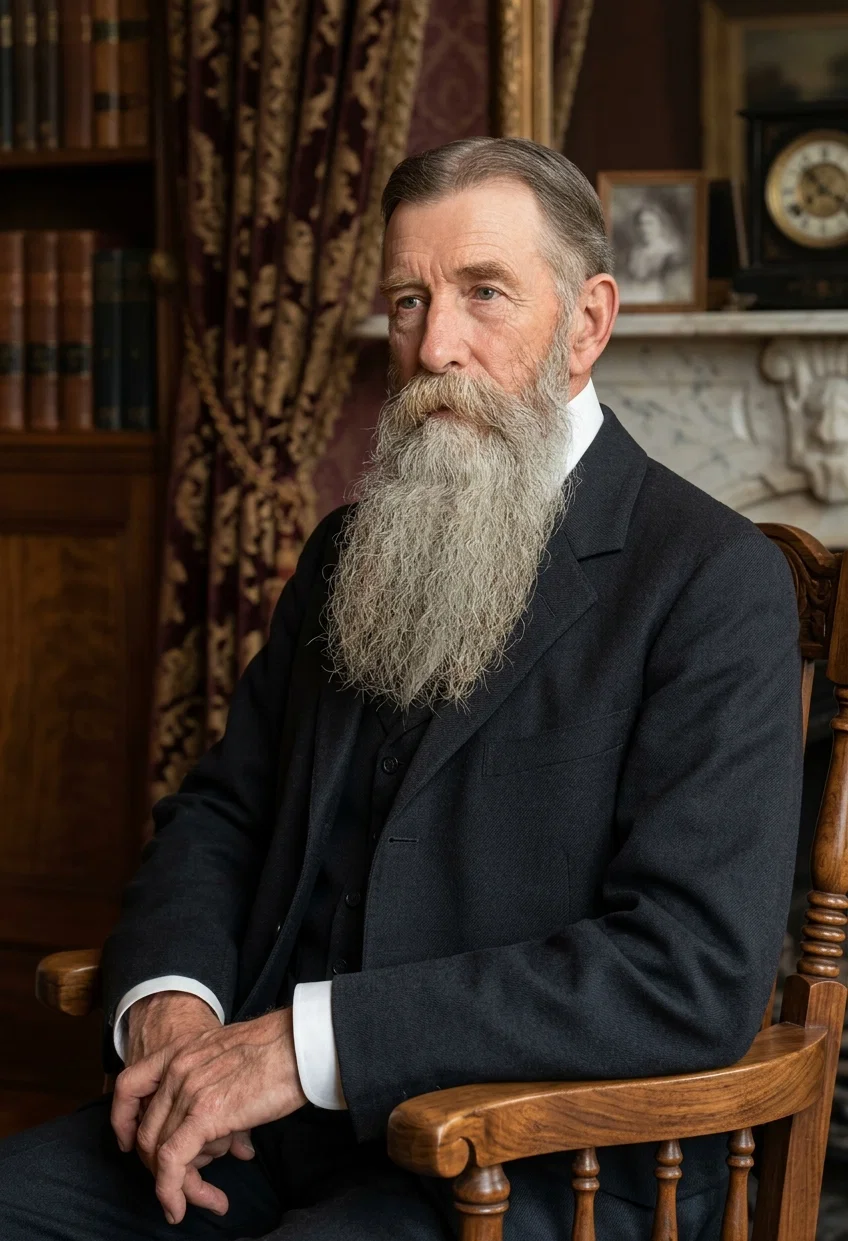
WASHINGTON MORSE
Taken Oct. 22, 1906, the 10th day of "the 7th month"
WASHINGTON MORSE Taken Oct. 22, 1906, the 10th day of "the 7th month"
As there are now only a few survivors of that company of pioneers, it seems very fitting that when one lays off the armor and goes to his last sleep, more than a mere passing mention should be made of the incident. There is much to be learned and great good to be derived by studying their lives, and especially by candid thought upon their wonderful experience under the first message.
Washington Morse, the subject of this sketch, was one of those pioneers—one who wore the “prophetic scar” for sixty-five years, but who now rests from his labors, awaiting the glad summons, “Awake and sing, ye that dwell in dust.”
Father was born in Brookfield, Vt., June 24, 1816, and died at the home of his son, G. W. Morse, DeLand, Fla., Nov. 9, 1909, at the age of 93 years, 4 months, and 15 days. Oct. 15, 1836, he was married to Miss Olive Buzzell, and together they walked life's journey for nearly sixty-five years, she dying in 1901, at Muskoka, Canada. To them were born twelve children, seven of whom are still living. At the age of fifteen years father was converted and united with the Methodist Church. Later on he became a class leader in that church, and was very active in that capacity.
Early in the rise of the great advent movement of 1836-44 father and mother accepted the expositions of prophecy as presented by William Miller and his co-laborers, and identified themselves with it. Father was more or less closely connected with those great leaders in the proclamation of the advent message, and put all his earthly possessions into that cause. With them he labored for many months with no thought or expectation of financial remuneration. Their faith was unwavering that Christ would come Oct. 22, 1844, and when that date was reached, father and mother, with many others, were gathered at the home of a Brother Cushman, at Tunbridge, Vt., to watch for the appearance of the Saviour in the clouds of heaven.
That was a most thrilling experience, and one that has been related by father many hundreds of times, very greatly to the edification of his hearers, and, we believe, to the glory of God.
With the bitter disappointment that came to them by the “passing of the time” without the realization of their hopes, our dear parents entered a cloud of deepest gloom. But they held fast their confidence in God and his Word, and believed that somehow and sometime all would be made plain. And so, when a few years later light came to them regarding the further work that God had for his people before the Saviour would come, they gladly embraced it. As they clearly saw the explanation of the strange experience through which they had passed, they praised God for it, and never afterward felt otherwise. To the end of their lives they were both unswerving, faithful believers in what is generally known as the third angel's message, with all that is signified by that term.
In the winter of 1852 Elder James White sent to father a prophetic chart with an earnest exhortation that he engage in public labor in preaching the message. As this was in harmony with what he believed to be the call of God, he started out, not only without means to defray expenses, but with no thought or prospect of financial remuneration. His first meeting was held at East Randolph, Vt. Continuing his labors in that part of the State, the Lord gave him many precious souls for his hire. In the summer of that year he was duly ordained to the gospel ministry. To the extent of his opportunities, while supporting his family of several children, he labored in that State until the autumn of 1856, when he removed with his family to Illinois, locating, temporarily, about thirty miles south of Chicago. During the winter, while laboring toearn the wherewithal to support his family, he also did what he could to spread the message, God adding the seal of approval to his work, to which there are numbers who can now testify with joy.
In the spring of 1857 father arranged with the gentleman for whom he had been working, to remove himself and family to the then Territory of Minnesota. They went in pioneer emigrant wagons, and located in Steele County. So far as information has ever been secured, there were only two other families of like faith in the Territory at that time. Ordinarily, the prospect that was then before our parents would be considered as desperately dark and discouraging. In a new and strange country, with a family of eight children—most of whom were too young to do work of any kind—absolutely no financial capital, provisions of all kinds exceedingly high in price, it is evident that they must have been wonderfully sustained by a merciful Heavenly Father. The struggles with poverty and hardship were many, and at times very severe. But the Lord blessed with health and strength and brought them all safely through.
Almost from the first of his location in that new country, father was active in presenting the glorious themes of present truth to his neighbors far and near. In fact, he traveled to many distant points in the State to hold meetings. Many, very many, were the long and weary journeys that he made on foot, with his Bible and chart, to tell the people the glad news of a soon-coming Saviour. For a number of years he was practically the only one who was publicly proclaiming the message in Minnesota. In nearly all localities where he labored, honest souls accepted the light of truth and became steadfast believers, many of whom remain to this day.
Later on other ministers—Elders Wm. S. Ingraham, J. N. Andrews, John Bostwick, and Stephen Pierce, and others—went to that field, with all of whom father labored to a considerable extent. Upon the organization of a conference in that field, father was chosen as its president, a position that he held for several years. His labors were nearly always given gratuitously, and at reasonable figures amounted to many thousands of dollars during the first ten years of his residence in Minnesota. Up to the year 1861 he received only thirty dollars from the conference as compensation for labor.
In the spring of 1862 father went as a delegate to a general gathering that convened at Battle Creek, Mich., May 18-26. That was practically the first General Conference of Seventh-day Adventists. The following year he was also a delegate to another General Conference at the same place. Those were two very interesting and important occasions, and there are now but few persons living who were delegates to those gatherings.
Although not engaged publicly in ministerial labors to any great extent subsequent to 1865, father never ceased his activity nor slackened his zeal in behalf of the cause that he loved dearer than his life. In 1874 he bore heavy burdens in the construction of the first Seventh-day Adventist church building that was erected in Minnesota. This was at Mankato.
In 1896 father and mother removed from Minnesota to Canada, so as to be near some of their children who were connected with the work in that field. Stopping for a short time with the undersigned at Toronto, they then went on to Peterborough, where a daughter, Mrs. H. I. Farnum, lived. During the eleven years—1897 to 1908—father was for most of the time quite active in the missionary canvassing work, and placed many thousands of copies of periodicals, tracts, pamphlets, and books in the homes of the people of Peterborough and its vicinity. It was really quite remarkable that a man of his age should be able to accomplish so much. The Lord greatly blessed him in his work, and watered the precious seed that he scattered. For about eight years he did a great amount of missionary correspondence, averaging some two hundred letters each year.
In July, 1908, he came to our home in Florida. As a matter of fact, one chief reason of our getting a home here was on father's account. He came with the full expectation of remaining here the rest of his natural life. This genial climate was very favorable for his health, and he greatly enjoyed it. While attending the camp-meeting at Orlando, October 21-30, he contracted a cold that resulted in peritonitis. Upon his arrival home it was evident that he could live but a few days. The ablest medical counsel of the place was employed, and all was done for him that could be suggested, but without avail so far as his recovery was concerned. He fully realized that his end was near, and so expressed himself many times, and always with an earnest desire for it to come speedily. Many times he would pray, “O Lord, come and take a poor sufferer home.” A few days before the end came, he repeated 2 Tim. 4:7, 8: “I have fought a good fight, I have finished my course, I have kept the faith: henceforth there is laid up for me a crown of righteousness, which the Lord, the righteous judge, shall give me at that day.” A day or two later he called us to his bedside, and requested that 1 Cor. 15:51-57 be read and prayers offered. The occasion was a very precious one as we talked with him of the glories of the resurrection morning, and the loved ones who would meet there. He especially requested us to tell all the children to be sure to meet him on that glad day. His hope was without a cloud, and he had no fear of death. He felt sure that he would go to sleep before morning, and requested us to kiss him “good-by.” But death did not come until several days after that, though at no time was he able to converse as he did then, and we realized that it was providential that he improved that occasion as he did. He never murmured or complained of his sufferings, although they were very severe and trying at times. Many times he expressed the deepest gratitude for the care that was being given to him by his children and the many friends and neighbors who were extremely kind.
A few hours before he passed away, he repeated Rev. 14:12: “Here are they that keep the commandments of God, and the faith of Jesus.” When asked if the Saviour was precious to him, and if he was being given his sustaining grace, he answered very emphatically, “O, yes!” Just before the end came, he reached out his hands to be taken up. His request was granted, and in a very few moments he passed to the last, long, dreamless sleep in the arms of his son, with not a struggle as he “crossed the bar.”
A goodly company of sympathizing friends and neighbors gathered on the day of the funeral. The service was conducted by Rev. U. M. Tabor, pastor of the Methodist Episcopal church (South) of DeLand, with whom father had formed a pleasant acquaintance during the summer. He gave a very appropriate and comforting discourse, taking as his text the words before quoted, 2 Tim. 4:7, 8.
And so we laid father to rest, comforted with the blessed assurance that his life is hid with Christ in God, and that we shall meet him, with many other loved ones, on the immortal shore.
G. W. MORSE, LIZZIE J. MORSE.

Berrien Springs, Mich.

WEDNESDAY evening, December 8, I spoke on religious liberty in the Emmanuel Missionary Training College chapel at Berrien Springs, Mich. It was one of the course of lectures to be delivered from the college platform during the present school year. The evening was exceedingly stormy, but notwithstanding this, there was a good attendance. This was my first visit to this school, and in spite of the storm, I enjoyed it very much.
The present enrolment in the college is about one hundred thirty. They seem to be an earnest class of students, and fully sense the purpose for which they are attending the school.
This school is certainly admirably situated, separated as it is from the many demoralizing attractions that prevail in every city and large town. I was especially interested to learn about the industrialdepartment connected with the school, and about the farm products, consisting of numerous kinds of fruits and vegetables. In the industrial and agricultural work lie great possibilities. Besides enabling our schools to supply a large portion of the food consumed, and furnishing a large amount for the market, it helps to solve the difficult financial problem of meeting the running expenses.
Owing to the fact that I had an appointment to meet in Chicago, I was obliged to leave the next forenoon, immediately after addressing the students during the chapel exercises. I spoke on the present aspect of the religious liberty work, and the need of all doing what they could in enlightening the people on the true principles of religious liberty.
I was gratified to learn that the Bible teacher, Elder W. E. Videto, is conducting special studies, in which is presented the principles of religious liberty. This is a step in the right direction, and should be adopted in all our schools. If the religious liberty work, or the warning against the beast, his image, and the reception of his mark, is the message for this time, why should we not give it more than simply a passing notice in our schools by teaching a class in civil government? This is no more than any ordinary public school is doing, which is not blessed with the principles that God has committed to us. With the aid of the excellent material that can be secured on religious liberty,—the revised edition of “American State Papers,” which is a veritable encyclopedia on this subject, the magazine Liberty, the Protestant Magazine, and the Religious Liberty Leaflets,—we have ample data to equip one in teaching these principles.
Prof. O. J. Graf, the principal of the Emmanuel Missionary College, and the other members of the faculty, are of the best courage in their work. Do not forget in your prayers those who are carrying the responsibility of our schools, from our colleges down to the church-schools. K. C. RUSSELL.

The Message Came Too Late

HERE is one instance where the message came too late in Florida. Mrs. Button was canvassing one day in Lakeland, and called at the home of a railroad man. He was not at home, but his wife, after learning the merits of the book, subscribed for one. In speaking of her husband, she said: “I do not suppose he will ever read the book when it comes; but if he does pick it up, I fear it will only be to swear at it, for he is such a wicked man, and swears so much.”
The next day he went hunting, and by the accidental discharge of a gun his life was snuffed out in an instant. The book reached him too late. Will some one who might have gone before be held accountable for the delay?
Dear reader, there are thousands of souls here in Florida who never yet have had the message carried to them. Should they, too, be cut down without a moment’s notice, would their blood be upon your garment?
Our cry to God is that he will send forth more laborers into this needy field.
E. R. BUTTON, State Agent.

Christian Liberty

Reports, Notes, and Comments Pertaining to the Current History of the Rights of Conscience
Conducted by the Religious Liberty Bureau
K. C. RUSSELL     -     -     -     -     Secretary
W. A. COLCORD     -     -     -     -     Assistant Secretary

The Petition Work

We judge from the returns being sent to our office that a good number of petitions against the religious measures now pending in Congress have already been sent in. We are very glad that this is so. In an article dealing with District matters, the following paragraph appeared in the Washington Post of December 11:—
“Declaring that the provisions of Senate bill 404, for the proper observance of Sunday as a day of rest in the District, are religious in character and design and unconstitutional, petitions presented by Senator Bristow, from citizens of Emporia and Lebanon, Kan., yesterday were placed on file in the Senate. The petitioners also take exception to the House joint resolution proposing to amend the Constitution by beginning with the words, ‘In the name of God.’”
The same article also reported that another District Sunday bill had been introduced in the House of Representatives, by request, by Representative Livingston, of Georgia. This makes one Sunday bill in each house, besides the proposed religious amendment in the House of Representatives.
A brother, writing from California, states that the people in his district are not easily reached with the petitions, and that it “requires a sermon to get them to understand the matter.” He further says that the Seventh-day Adventist people are looked upon as a terrible people by many.
Another brother, writing from Pennsylvania, seems to have quite a different experience. He says he spent but little time with the petition, and succeeded in getting almost “every one to sign it, with hardly an exception.” He further says that “the people with one accord are in favor of letting the Constitution remain as our forefathers established it.” Another, writing from the State of Washington, says, “We found it easy work to get the signatures.”
W. A. C.

Religious Liberty Notes

An opinion from the attorney-general’s office of the State of Kansas is to the effect that those whose religious belief does not permit them to “accept the Sunday as the seventh day of the week are exempt from the Sunday-labor law.”
The W. C. T. U. of Webb City, Mo., has engaged an attorney to go thoroughly into the matter of prosecuting infractions of the Sunday-closing law. The course adopted in that section of Missouri is likely to influence considerably the remainder of the State.
Friends in Canada send us copies of a number of articles on a variety of topics bearing on present truth which they have recently succeeded in getting into the public press of the Dominion. This is good work. They report that by this means some have become deeply interested.
Brother E. W. Webster, of Ormond, Fla., has an excellent article in the Jacksonville Times Union of Sunday, December 5, on the history of Sunday sanctification. Doubtless good work of this sort could be done all over the country if our people would wake up thoroughly and prepare the matter.
Recently a convention was held in Minneapolis for the purpose of organizing a branch of the Lord’s Day Alliance. It was presided over by the Episcopal bishop of Minnesota, and numbered among its delegates President Northrup of the State University. All discussion proceeded on the two false suppositions that the Sabbath of the Bible was Jewish, and as such had passed away forever, and that all the present dispensation required was simply the observance of one day in seven. The rest feature of the sabbath (Sunday) was almost exclusively dwelt upon, and nothing much was said of its spiritual phases. A State organization was formed.
The December Homiletic Review sees a possibility of getting proper legislation through the New York Assembly to close the “Raines Law hotels” of the State on Sunday, provided the legislators do not listen too subserviently to the catch-penny economists who, when the matter was up in the last legislature, tacked on the provision that these places, for an extra heavy money consideration, might remain open on Sunday for ten specified hours. The Review gives warning that not till a bill is brought in which is for straight, strict closing on the first day of the week,—all day,—will there be any show for its avoiding the tooth-and-nail opposition of the clergy and church people. It is hard to divest one’s self of the conviction that if these same clergy and church people would work as hard to close the saloons every day of the week as they do on the first day only, the doom of that iniquitous institution would soon be sealed.
California is now holding a goodly number of religious liberty institutes. Elder J. O. Corliss, the religious liberty secretary of the Pacific Union Conference, invites all communities in that conference wishing such gatherings to correspond with him in regard to the matter, and make proper arrangements.

Field Notes

AT ALPENA, MICH., four persons were recently baptized.
BROTHER J. ADAMS STEVENS writes from Goldfield, Nev., of the baptism of two souls.
BROTHER FRANK S. BUTZ reports that five have taken a stand for the truth at Alpena, S. D.
SUNDAY, October 10, Elder W. D. Parkhurst baptized six candidates at Des Moines, Iowa.
SEVEN young people were recently baptized by Brother B. F. Stureman and taken into the church at Memphis, Mich.
BROTHER ROY L. BENTON reports one family of Sabbath-keepers at Portales, N. M., and says there is a good interest among the people.
AS a result of the work of the Brethren Brown in Warren, Ark., a lady of one of the leading families of the town is keeping the Sabbath.
A CHURCH of eighteen members has been organized in Haviland, Kan., by Elder Chas. Thompson, three of this number having been baptized recently.
ELEVEN persons have taken their stand to keep the Sabbath at Littlebirch, W. Va., as a result of the meetings conducted by Brethren Foggin and Adkins.
ELDER T. G. LEWIS baptized seven new members at Warsaw, Wis., recently. These were added to the church as the result of Brother Lewis Drew’s work there.
BROTHER FRANKLIN G. WARNICK reports five new converts at Danville, Va., and four at News Ferry, Va. Brother Warnick recently baptized five at News Ferry.
ON Sunday, November 7, Elder G. A. Snyder baptized Brother H. Kanako, one of the students of the Japanese school in Oakland, Cal., who accepted the truth as a result of a series of Bible studies.
A LETTER from Elder Stephen G. Haughey, of Nottingham, England, reports sixty new Sabbath-keepers as the result of four tent efforts in the North England Conference this year.
Continue reading: Summary of Magazine Sales for November, 1909