Signs of the Times, Vol. 43, No. 38.

Sixty Miles of Sin

Signs of the Times

Sep 26, 1916

Pacific Press Publishing Association · Mountain View, California · Sep 26, 1916

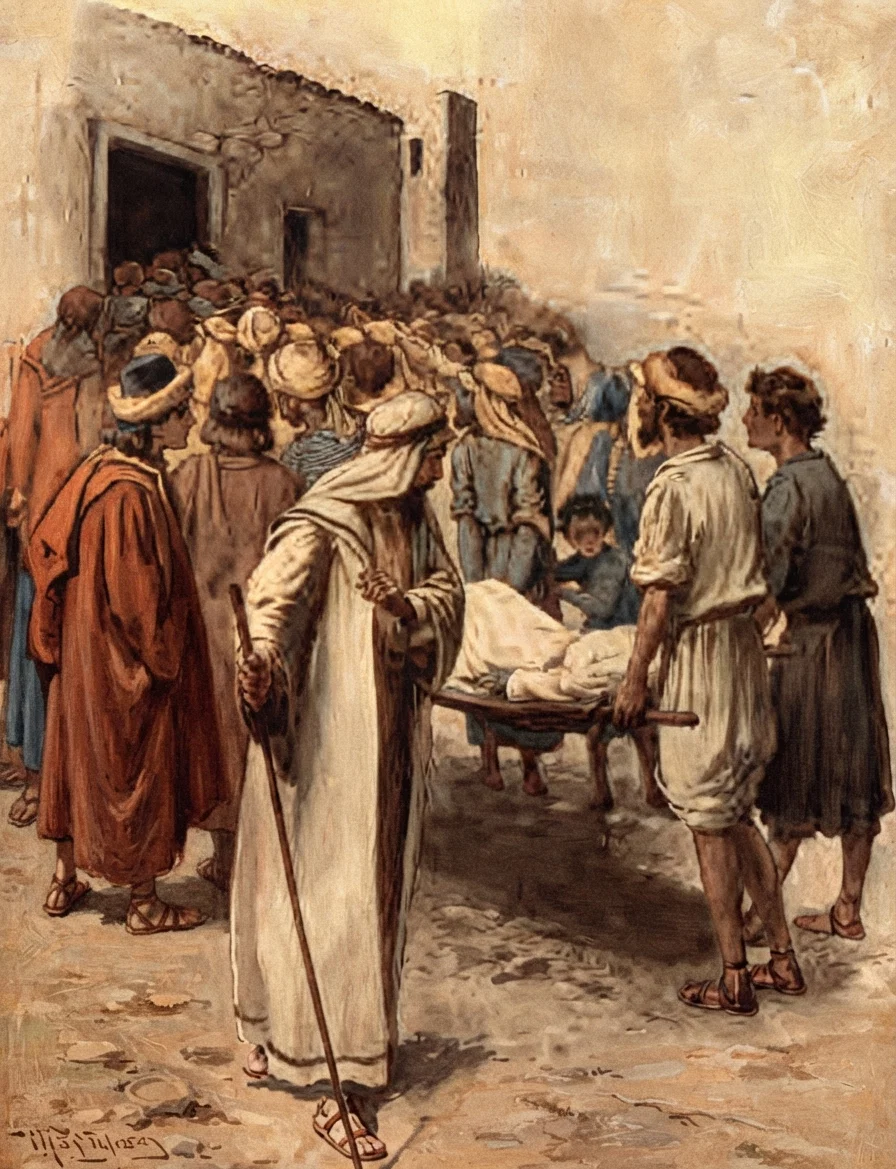
Accustoming to scenes of sin and iniquity the eyes of tens of thousands.

Sixty Miles of Sin

By DAVID PAULSON, M. D.
OUR large cities are to-day the modern wilderness in which we must search diligently for the lost sheep. The concentration of sin in these centers of population is almost beyond comprehension. Chicago alone contains over seven thousand saloons, which, if placed side by side, would make a solid wall of sin nearly sixty miles in length; and in more recent years, there have sprung up an almost incredible number of nickel theaters and "movies," which are accustoming to scenes of sin and iniquity the eyes of tens of thousands of young people and even mere children who throng to them.
Can any one question, for a moment, that our large cities have about reached the condition of Sodom, and hence must soon have meted out to them the doom of Sodom? But just as certainly as this is true, there must be Abrahams to-day who are pleading with God to spare these cities for the sake of God's children who are still in them.
We have reached the time when there must be men and women who are fired with such a love for human souls that they will search out the modern Lots, and seek to arouse them from the lethargy of sin, even if they have to lay hold of their hands, as the angels did of the hands of Lot and his family, to bring them forth.
Our hearts are touched as we read of Christ weeping over Jerusalem as its day of probation was fast hastening to a close; but to-day every true follower of Christ who has really caught the Master's spirit, and who realizes the importance of the hour in which we live, must begin to weep with Christ over the present condition of our large cities.
But Christ did something more than weep. He entered Jerusalem, cleansed its temple, and preached the gospel, and laid down His life while doing it. So to-day it is not enough for us merely to weep over our large cities. Somebody must enter them, and again heal the sick, and preach the gospel, and perhaps lay down his life, and then fail in saving the city, even as Christ failed; for the servant is no greater than his Lord.
As we look at these large cities, walled up to heaven with sin and sinful practices, we can understand a little better the feelings of the ten spies when they said: "We be not able to go up against the people; for they are stronger than we. . . . We were in our own sight as grasshoppers, and so we were in their sight." Num. 13: 31, 33.
But those whom God will use to make the final and decisive stroke in our large cities will possess the spirit of Caleb and Joshua, who "wholly followed the Lord," and knew that He would go before them and fight for them.
The proportion of the poor in our large cities is constantly increasing, and the sick among them are becoming more numerous. Hence here is an open door for consecratedworkers who are prepared to enter with the healing for the body in one hand, and healing for the soul in the other.
It is often very difficult for the Bible worker to secure entrance into the homes of the city dwellers; but let the heavy hand of sickness touch some loved one in one of these homes, and then that same Bible worker, if she is prepared to treat the sick one, will not only be welcomed into that home, but she will have ten times better opportunity, after the Lord has used her to heal the sick, to say, "The kingdom of God is come nigh unto you." Luke 10: 9. As soon as we adopt literally the Saviour's original plan, we shall have no lack of opportunities to present the saving gospel for this time.
Viewed from a human standpoint, there are but few young women who possess the genuine consecration needed to resist the commercial allurements that lie before the nurse, and who will dedicate their lives so unreservedly to the saving of human souls, that God will go out before them, and prepare hearts for them, and have His holy angels attend them, and thus make their work effective. But God is unquestionably raising up just such genuine missionary workers for this closing work.

The Ministry of Healing

By the late Mrs. E. G. White
“During His ministry, Jesus devoted more time to healing the sick than to preaching.”
OUR Lord Jesus Christ came to this world as the unwearied servant of man’s necessity. He “took our infirmities, and bare our sicknesses,” that He might minister to every need of humanity. The burden of disease and wretchedness and sin, He came to remove. It was His mission to bring to men complete restoration; He came to give them health and peace and perfection of character.
Varied were the circumstances and needs of those who besought His aid, and none who came to Him went away unhelped. From Him flowed a stream of healing power, and in body and mind and soul men were made whole.
The Saviour’s work was not restricted to any time or place. His compassion knew no limit. On so large a scale did He conduct His work of healing and teaching, that there was no building in Palestine large enough to receive the multitudes that thronged to Him. On the green hill slopes of Galilee, in the thoroughfares of travel, by the seashore, in the synagogues, and in every other place where the sick could be brought to Him, was to be found His hospital.

Carried an Awful Weight

IN every city, every town, every village, through which He passed, He laid His hands upon the afflicted ones and healed them. Wherever there were hearts ready to receive His message, He comforted them with the assurance of their heavenly Father’s love. All day, He ministered to those who came to Him; in the evening, He gave attention to such as through the day must toil to earn a pittance for the support of their families.
Jesus carried the awful weight of responsibility for the salvation of men. He knew that unless there was a decided change in the principles and purposes of the human race, all would be lost. This was the burden of His soul, and none could appreciate the weight that rested upon Him. Through childhood, youth, and manhood, He walked alone. Yet it was heaven to be in His presence. Day by day, He met trials and temptations; day by day, He was brought into contact with evil, and witnessed its power upon those whom He was seeking to bless and to save. Yet He did not fail or become discouraged.
In all things, He brought His wishes into strict abeyance to His mission. He glorified His life by making everything in it subordinate to the will of His Father. When, in His youth, His mother, finding Him in the school of the rabbis, said, “Son, why hast Thou thus dealt with us?” He answered,—and His answer is the keynote of His life work,—“How is it that ye sought Me? wist ye not that I must be about My Father’s business?”

An Unrecognized Wayfarer

His life was one of constant self-sacrifice. He had no home in this world, except as the kindness of friends provided for Him as a wayfarer. He came to live, in our behalf, the life of the poorest, and to walk and work among the needy and the suffering. Unrecognized and unhonored, He walked in and out among the people for whom He had done so much.
He was always patient and cheerful, and the afflicted hailed Him as a messenger of life and peace. He saw the needs of men and women, children and youth; and to all, He gave the invitation, “Come unto Me.”
During His ministry, Jesus devoted more time to healing the sick than to preaching. His miracles testified to the truth of His words, that He came not to destroy, but to save. Wherever He went, the tidings of His mercy preceded Him. Where He had passed, the objects of His compassion were rejoicing in health, and making trial of their new-found powers. Crowds were collecting around them, to hear from their lips the works that the Lord had wrought. His voice was the first sound that many had ever heard, His name the first word they had ever spoken, His face the first they had ever looked upon. Why should they not love Jesus, and sound His praise? As He passed through the towns and cities, He was like a vital current, diffusing life and joy.
“The land of Zebulun and the land of Naphtali, Toward the sea, beyond the Jordan, Galilee of the nations, The people that sat in darkness Saw a great light, And to them that sat in the region and shadow of death, To them did light spring up.” Matt. 4: 15, 16, A. R. V., margin.
The Saviour made each work of healing an occasion for implanting divine principles in the mind and soul. This was the purpose of His work. He imparted earthly blessings, that He might incline the hearts of men to receive the gospel of His grace.
Christ might have occupied the highest place among the teachers of the Jewish nation; but He preferred rather to take the gospel to the poor. He went from place to place, that those in the highways and byways might hear the words of truth. By the sea, on the mountainside, in the streets of the city, in the synagogue, His voice was heard explaining the Scriptures. Often He taught in the outer court of the temple, that the gentiles might hear His words.
So unlike the explanations of Scripture given by the scribes and Pharisees was Christ’s teaching, that the attention of the people was arrested. The rabbis dwelt upon tradition, upon human theory and speculation. Often that which men had taught and written about the Scripture was put in place of the Scripture itself. The subject of Christ’s teaching was the word of God. He met questioners with a plain “It is written,” “What saith the Scripture?” “How readest thou?”
At every opportunity, when an interest was awakened by either friend or foe, He presented the Word. With clearness and power, He proclaimed the gospel message. His words shed a flood of light on the teachings of patriarchs and prophets, and the Scriptures came to men as a new revelation. Never before had His hearers perceived in the word of God such depth of meaning.

The Peerless Evangelist

NEVER was there such an evangelist as Christ. He was the Majesty of heaven; but He humbled Himself to take our nature, that He might meet men where they were. To all people, rich and poor, free and bond, Christ, the Messenger of the covenant, brought the tidings of salvation. His fame as the great Healer spread throughout Palestine. The sick came to the places through which He would pass, that they might call on Him for help. Hither, too, came many anxious to hear His words and to receive a touch of His hand. Thus He went from city to city, from town to town, preaching the gospel and healing the sick,—the King of glory in the lowly garb of humanity.
He attended the great yearly festivals of the nation; and to the multitude absorbed in outward ceremony, He spoke of heavenly things, bringing eternity within their view. To all, He brought treasures from the storehouse of wisdom. He spoke to them in language so simple that they could not fail of understanding. By methods peculiarly His own, He helped all who were in sorrow and affliction. With tender, courteous grace, He ministered to the sin-sick soul, bringing healing and strength.
The prince of teachers, He sought access to the people by the pathway of their most familiar associations. He presented the truth in such a way that ever after, it was to His hearers intertwined with their most hallowed recollections and sympathies. He taught in a way that made them feel the completeness of His identification with their interests and happiness. His instruction was so direct, His illustrations were so appropriate, His words so sympathetic and cheerful, that His hearers were charmed. The simplicity and earnestness with which He addressed the needy, hallowed every word.

Can One Live an Unsullied Life?

WHAT a busy life He led! Day by day, He might have been seen entering the humble abodes of want and sorrow, speaking hope to the downcast, and peace to the distressed. Gracious, tender-hearted, pitiful, He wentabout lifting up the bowed down, and comforting the sorrowful. Wherever He went, He carried blessing.
While He ministered to the poor, Jesus studied also to find ways of reaching the rich. He sought the acquaintance of the wealthy and cultured Pharisee, the Jewish nobleman, and the Roman ruler. He accepted their invitations, attended their feasts, made Himself familiar with their interests and occupations, that He might gain access to their hearts, and reveal to them the imperishable riches.
Christ came to this world to show that by receiving power from on high, man can live an unsullied life. With unwearying patience and sympathetic helpfulness, He met men in their necessities. By the gentle touch of grace, He banished from the soul unrest and doubt, changing enmity to love, and unbelief to confidence.
He could say to whom He pleased, "Follow Me," and the one addressed arose and followed Him. The spell of the world's enchantment was broken. At the sound of His voice, the spirit of greed and ambition fled from the heart, and men arose, emancipated, to follow the Saviour.
"THE relation that exists between the mind and the body is very intimate. When one is affected, the other sympathizes. The condition of the mind affects the health to a far greater degree than many realize. Many of the diseases from which men suffer are the result of mental depression. Grief, anxiety, discontent, remorse, guilt, distrust, all tend to break down the life forces, and to invite decay and death.
"Disease is sometimes produced, and is often greatly aggravated, by the imagination. Many are lifelong invalids who might be well if they only thought so. Many imagine that every slight exposure will cause illness, and the evil effect is produced because it is expected. Many die from disease the cause of which is wholly imaginary.
"Courage, hope, faith, sympathy, love, promote health and prolong life. A contented mind, a cheerful spirit, is health to the body and strength to the soul. 'A merry [rejoicing] heart doeth good like a medicine.'"

SATAN'S ENFORCED VACATION

The Earth to Be Uninhabited and Unvisited for a Thousand Years

By Benjamin G. Wilkinson
The word "millennium" is a familiar expression these days. But the conflicting views concerning the conditions dominant throughout that memorable thousand-year period are almost without number. Can the truth of the matter be determined? Is it possible, among this babel of theories, to ascertain the correct one? Read carefully this able presentation of the question by Dr. Wilkinson. This series of five articles began in our issue of September 12. They deserve more than a cursory reading.
THE great war that broke forth over the earth in the autumn of 1914 will seem but a small event in the eyes of earth's inhabitants, compared with the greater catastrophes yet to come. Just as a mighty earthquake is preceded by rumbles and crashings that awake a terrified humanity, so will the resurrection of the dead, which marks the beginning of the thousand years, be preceded by an unrivaled time of trouble.
The coming of the millennium will be preceded by just such amazing revolutions. "At that time," says Daniel the prophet, "there shall be a time of trouble, such as never was since there was a nation even to that same time. . . . Many of them that sleep in the dust of the earth shall awake." Dan. 12: 1, 2.
Great and disastrous will be the devastations produced by the ravages of men, but more fearful still will be the ruin wrought by the ushering in of the seven last plagues. The imagination pales and wanes and faints in the attempt to realize the withering effect of these, the greatest of God's judgments. The prophet Joel in vision, eight hundred years before the first advent of Christ, beheld this final visitation of the Almighty's wrath; and he begged that the scene might be torn from his eyes.

Seven Unparalleled Devastations

LITERATURE does not contain language, neither do the rest of the Scriptures, equal to that which is given in Rev. 15: 1: "And I saw another sign in heaven, great and marvelous, seven angels having the seven last plagues; for in them is filled up the wrath of God." Then follows the description of those tragic judgments. Over land and river, sweeping across ocean wave, eating their way into the human flesh, and changing out of their natural course even the sun and the atmosphere, sweep on the final seven devastations. On every side, ruin and horror meet the eye. The earth itself is torn to pieces as the doom blast of the last trump announces the return of Christ.
Earth's inhabitants will awaken from unhappy delusions when they learn that the return of Jesus is no secret visitation. Not out in the desert places, nor in the quiet chambers, unseen and unheard by any one except the favored, will the Lord Jesus Christ come, but in terrific majesty, with power equaling that pouring forth from the fire clouds of the sun, and enveloping the earth in floods of splendor.
"For as the lightning cometh out of the east, and shineth even unto the west; so shall also the coming of the Son of man be." Or, as the Gospel by Luke puts it, "For as the lightning, that lighteneth out of the one part under heaven, shineth unto the other part under heaven; so shall also the Son of man be in His day."

Asked to Be Crushed by Rocks

"BEHOLD, He cometh with clouds; and every eye shall see Him," says John the revelator, "they also which pierced Him: and all kindreds of the earth shall wail because of Him." If any have been deluding their world-loving hearts into believing that the Saviour will come again with hands outstretched in blessing, receiving with infinite kindness both friend and fiend alike, they are mistaken. Weeds go to seed, and in multiplying, thus ruin the ground. So likewise do the wicked. They, like weeds, have in God's arrangements been appointed to be cut down.
This is the mighty vision which John the revelator sees in his sixth chapter: "And the kings of the earth, and the great men, and the rich men, and the chief captains, and the mighty men, and every bondman, and every freeman, hid themselves in the dens and in the rocks of the mountains; and said to the mountains and rocks, Fall on us, and hide us from the face of Him that sitteth on the throne, and from the wrath of the Lamb: for the great day of His wrath is come; and who shall be able to stand?" Rev. 6: 15-17.
The guilty consciences of the wicked cry out before they are hurt. They know well enough beforehand, even as Belshazzar did before any one read for him what the bloodless hand was writing on the banqueting pillars of Babylon, that eternal doom is impending.
The second coming of Jesus Christ is not a day to be desired for the wicked. It is "as if a man did flee from a lion, and a bear met him; or went into the house, and leaned his hand on the wall, and a serpent bit him. Shall not the day of the Lord be darkness, and not light? even very dark, and no brightness in it?" Amos 5: 19, 20. Or, as another prophet says: "The slain of the Lord shall be at that day from one end of the earth even unto the other end of the earth: they shall not be lamented, neither gathered, nor buried; they shall be dung upon the ground." Jer. 25: 33.

His Coming Spells Death

As if to make assurance doubly sure—as if to warn us so that there never could be any excuse—John the revelator returns to this great and alarming fact that the coming of Christ spells death to the wicked: "And the nations were angry, and Thy wrath is come, and the time of the dead, that they should be judged, and that Thou shouldst give reward unto Thy servants the prophets, and to the saints, and them that fear Thy name, small and great; and shouldst destroy the earth." Rev. 11: 18.
Widespread desolation is everywhere. "The cities of the nations fell," said John. "And there fell upon men a great hail out of heaven, every stone about the weight of a talent." And to show that men are still unrepentant, the revelator adds, "And men blasphemed God because of the plague of the hail; for the plague thereof was exceeding great." Rev. 16: 19, 21.

Uninhabited a Thousand Years

FOR a thousand years, this terrestrial ball will swing, desolate and uninhabited, around and around its mighty orbit of over 586,000,000 miles, until once again, at the end of the millennium, the Creator lays upon it His beneficent hand; and then will come to pass the prediction of the apostle that "I saw a new heaven and a new earth: for the first heaven and the first earth were passed away."
The word used in Genesis to describe the earth at first, before its creation, is in the Greek of the Septuagint Abusos. This is exactly the same word used in Revelation 20, where John says that Satan was bound a thousand years, and cast "into the bottomless pit."
The twentieth chapter of Revelation, the great millennium chapter of the Scriptures, pictures forth the desolations of its thousand years. Just as when the Lord Jesus left Jerusalem for the last time, He turned to look upon it, and said, "Behold, your house is left unto you desolate," so, for a thousand years, Satan is bound to this "bottomless pit" by a chain of circumstances.

Not with a Literal Chain

THE chain by which he will be bound will not, of course, be a literal chain of iron. We read, in reference to the encounter of Christ with the madmen in the tombs, that oftimes men had sought to bind them with chains, but they had broken the chains asunder. If iron bands were broken asunder by the ordinary demons influencing humanity, how could it ever be possible to bind the prince of demons with any such thing? But do you see the child there who is about to break that chair? I can do one of two things to bind him: I can bind him to a post with some enchaining cord, or I can take the chair away from him.
The second coming of Jesus Christ destroys everywhere the wicked, so that they lie like refuse upon the ground. The righteous living, as well as the resurrected saints, He takes back with Him, to be introduced to

Satan’s Enforced Vacation

(Continued from page 3) the mighty universe of His own creating; and thus, aside from Satan and his fallen angels, the earth is desolate. So Satan is bound.
A man has laid a beloved wife away in the grave, and returns home after the saddening funeral. When he reaches the door of the house, there is no sweet smile to give him a welcome. In the midnight hours, he wanders through the rooms, and as the moonlight streams through the windows of what once was his happy home, he exclaims aloud, in unmistakable grief, "This is desolation."

Falls into His Own Pit

HOW many homes to-day has the devil made desolate! Throughout the space of six thousand years, how many homes has he, with his cruel hand, cursed by the silence of eternal desolation! Just as he made humanity suffer, so shall he suffer. And the solitude and desolation that he inflicted upon suffering humanity, he himself will experience throughout that thousand years.
Moreover, there is another reason why God should enchain the devil to this wasted and riven planet. The writer recently traveled through one of the countries of the East. He asked a native merchant who was sitting in the seat with him if his countrymen felt any resentment in their heart against the people who had taken from his nation some of her territories.
Pulling a cigar from his mouth, he replied: "We have only one thing against them. Why didn’t they take the whole of our territory, and give us a good government?"

Reserved for a Glorious Destiny

YOU may travel for miles and miles in that country without seeing a tree, a hut, or a living being — anything but the falcon as he wings his lonely flight upon the mountaintop. The country is going to ruin. What is the matter with her? — She needs a new government. By a desolate earth, God will demonstrate over and over again to an understanding universe, throughout a thousand years, what would have been the results if Satan had succeeded in usurping His government.
Before, in further study, we follow the righteous as for a thousand years they continue their mission in regions of unutterable splendor, we will say good-by to old earth.
Roll on, old earth, as you pursue, year after year, your appointed course! The moonlight shall steal over the hills and mountain tops, and witness to your solitudes. The wicked shall sleep upon your dusky, silent bosom, unwept, ungathered. Tenderly the Father will keep watch over this habitation, yet preserved for a glorious destiny.
And now, as this terrestrial planet is left to roll on a thousand summers and a thousand winters, uninhabited and unvisited, we turn our attention to the future of the righteous.

The World's Greatest Doctor

*"This was the calling, out of all the realm of vocations, that God the Father chose for His only-begotten Son."
By
Percival
T. M.
M. B.
By Percival T. M. M. B.
By Percy T. Magan M.D.
CHRISTIANITY does not ignore any part of man's nature. From the most ancient times, it has been a gospel to the whole man—to his body as well as to his spirit.
Now medical missionary work may be defined as that phase of the activity of the church of Christ which endeavors to spread the knowledge of "the glorious gospel of the blessed God" through the healing of the sick.
Therefore medical missions are fundamentally agencies for the salvation of the souls of men, and consequently their purpose is intrinsically evangelistic. All else connected with their operations is tributary to this one great end. And it is of the highest importance that all who engage in the work should forever keep this goal in remembrance.

A Unique yet Unappreciated Blend

MEDICAL missionary work is no mere accompaniment to the proclamation of the gospel. It must never be considered as merely a useful appendage. It is rather the blending of a twofold work into one harmonious whole. Concerning this, one man has said that it is "no crude mechanical mixture, but rather a scientific compound of the alchemy of faith." This is a cardinal principle.
Once the medical phase of the work is permitted to drift into a side channel, and to be regarded as something that can be carried on separately and apart, and by different hands, from the distinctively evangelistic aspect, and medical missions have lost the vital fountain of their power, and their part and lot in the missionary campaign.
From the above, it will be easy to realize that medical missions call for the knowledge and qualities that are required in skilled physicians and surgeons, in combination with the gifts and training necessary to those whose passion in life is to win men and women to a faith in the world's Redeemer. This is a unique blend, which worldlings little appreciate. Viewed from this angle of vision, medical missions hold title to an important position in the vanguard of gospel work.

God's Only Son a Doctor

THE great Dr. David Livingstone once said, "God had an only Son, and He was a missionary and a physician." This was the calling, out of all the realm of vocations, that God the Father chose for His only-begotten Son. Consequently the inspiration which fires the hearts of men and women to sacrifice their lives upon this altar comes not from a creed or philosophic theory, but from a Person. Its dynamic force lies in the life and death of a divine Saviour, whose vocation and passion here below was that of a healing evangelist. In His life and ways of doing things, therefore, must be sought the type for all who would make His calling their own.
Twenty-six of Christ's miracles had for their direct object either the healing of disease or the raising of the dead, and a further three were solely for the purpose of ministering to the physical needs of mankind. At the very start of His public ministry (Luke 4:16-19), the Master quoted some Old Testament Scripture in which His work as a healer was divinely set forth. And it is worthy of note that when unbelief hindered Him from doing any other mighty work, His blessed acts of healing continued still. (Mark 6:5.)
So notable, indeed, was this aspect of the Master's life, that over and over again the audiences who thronged Him were largely made up of sick people and their attendant friends. In nine instances, it is recorded that He was "moved with compassion" because of the purely bodily needs of men and women. And it cannot be denied that it was the Master's healing work that attracted men and women to His glorious gospel. "His fame spread abroad" by virtue of the fact that He was a mighty healer. The crowds came to Him "bringing their sick," because He could heal. Once they were there, the great Physician presented not only physical health, but also the words of eternal life.

The "Miraculous" Cavil Answered

THE longer we study the life of the Son of God, the more strikingly does this interplay between His preaching and His healing ministry impress us as being not a coincidence, but a divine coördination. Well did He know that frail humanity was ever more ready to appreciate that which met its felt physical needs, than it was to welcome that which met its unfelt spiritual needs. He approached man along the line of least resistance. He used His power in the lower realm as a mighty lever for His operations in the higher sphere.
Oftentimes we are told, by the opponents of this work, that we cannot establish a parallelism between healing as practiced by the Master and His disciples, and that which is done to-day. They, men tell us, accomplished their work by virtue of a special endowment of miraculous power. We possess little or none of such a gift, and are obliged to rely on physiologic remedies and rational therapeutics. Hence, it is argued, there is no Biblical basis for the assumption that we are called to carry on the work of healing in missionary ministry.
In answer to this cavil, let it be declared that we do not have the miraculous gift of tongues as the early church possessed it, and by which the disciples accomplished such wonders in the promulgation of the gospel among the heathen. But it is never argued that because of this, Christ's church on earth to-day is not called to preach and teach in heathen lands. It is taken for granted that by the use of God-given faculties, the same end can be attained through the acquisition of languages.

The Practice of the Healing Art

AND so, in like manner, whilst to-day the blessed gift of miraculous healing is only sporadic in its cheering visitations, men may nevertheless acquire, and bring into the service of the gospel, the practice of the healing art—true medical science, by the utilization of which the command to heal the sick can still be carried out.
Let us, then, both laymen and workers, vow within our souls to have some practical part in medical missions. Not all can engage actively in this work, but there is room for all to help. The One from whose lips fell the commission, "Preach and heal," also enjoined us in the words, "Freely ye have received, freely give." Let us, if we cannot go ourselves, esteem it a sacred privilege to send forth others, as once He did, to "heal the sick."
Continue reading: Burying a Dead Empire