Your ShelfYour Projects

Signs of the Times, Vol. 33, No. 3.

Contained in this Issue
Earlier text: THERE IS NO NEED TO WORRY

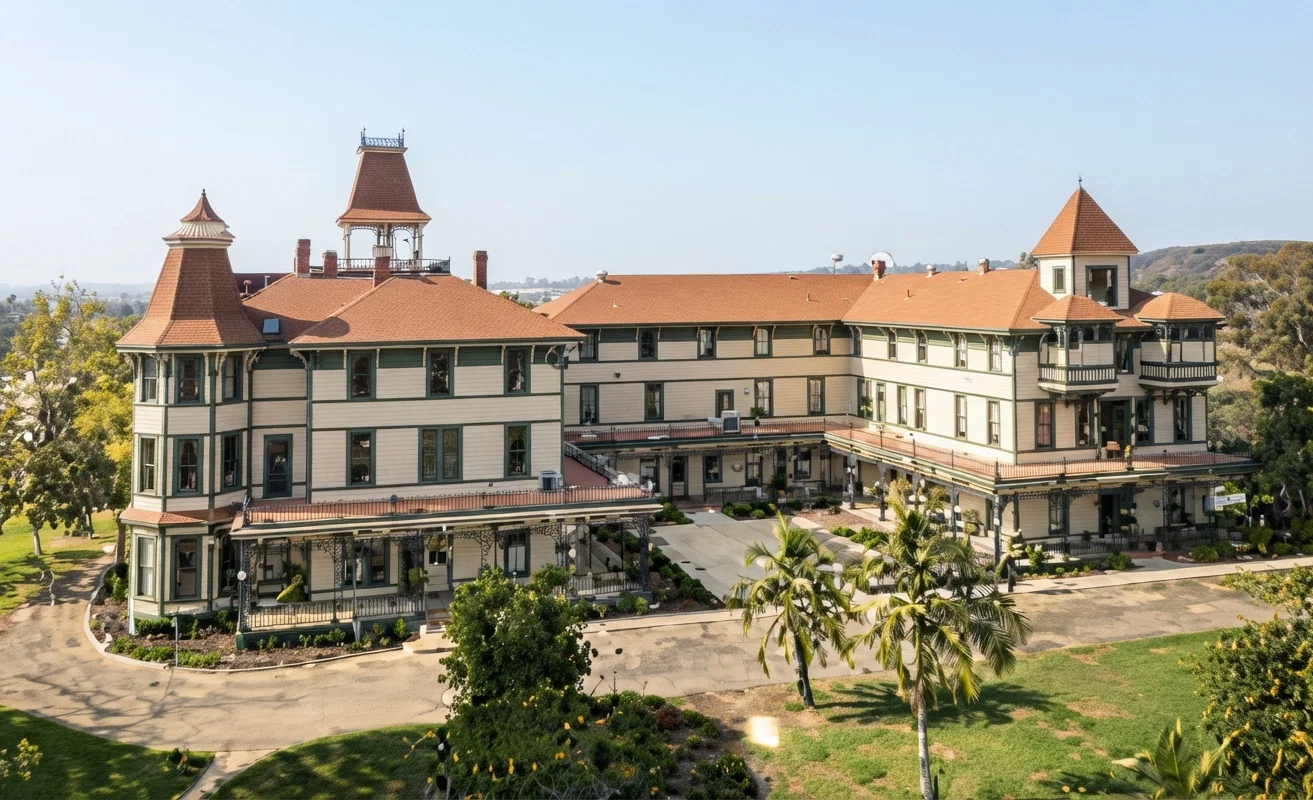
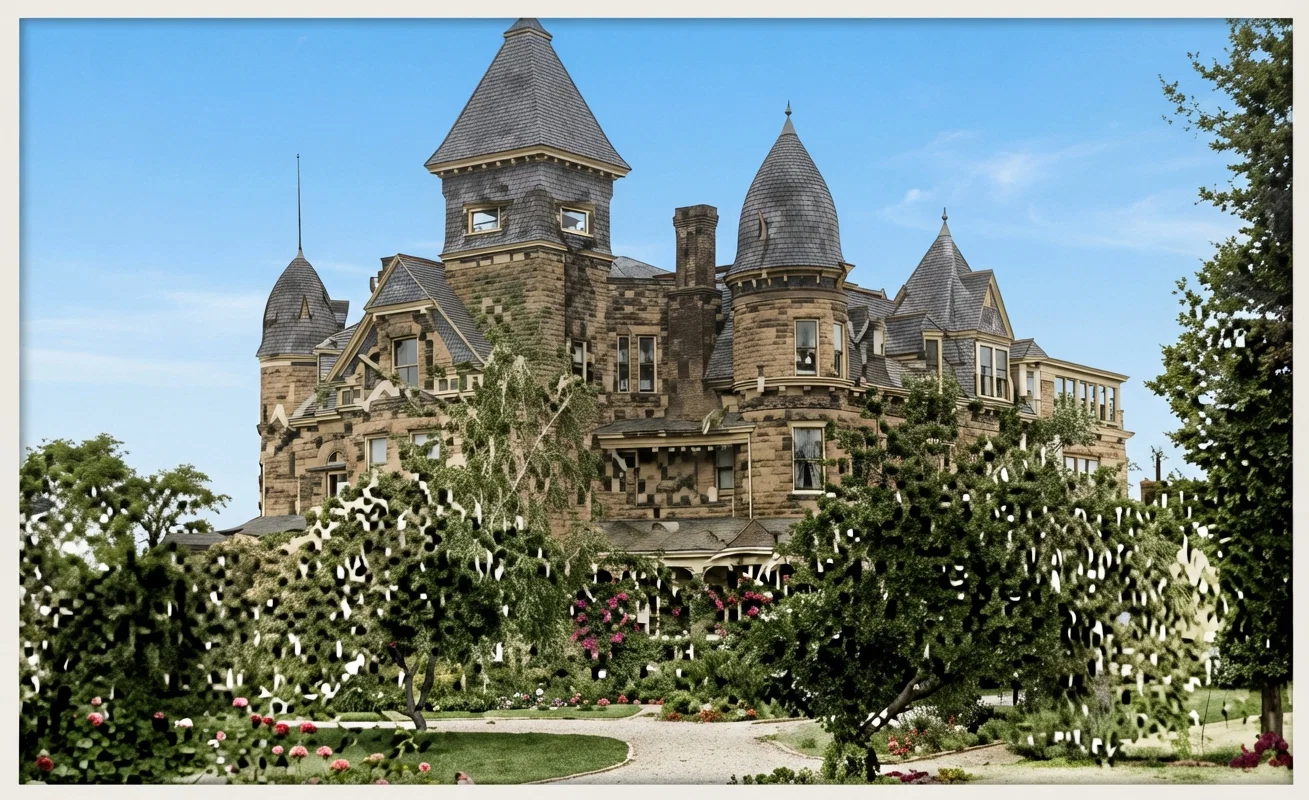
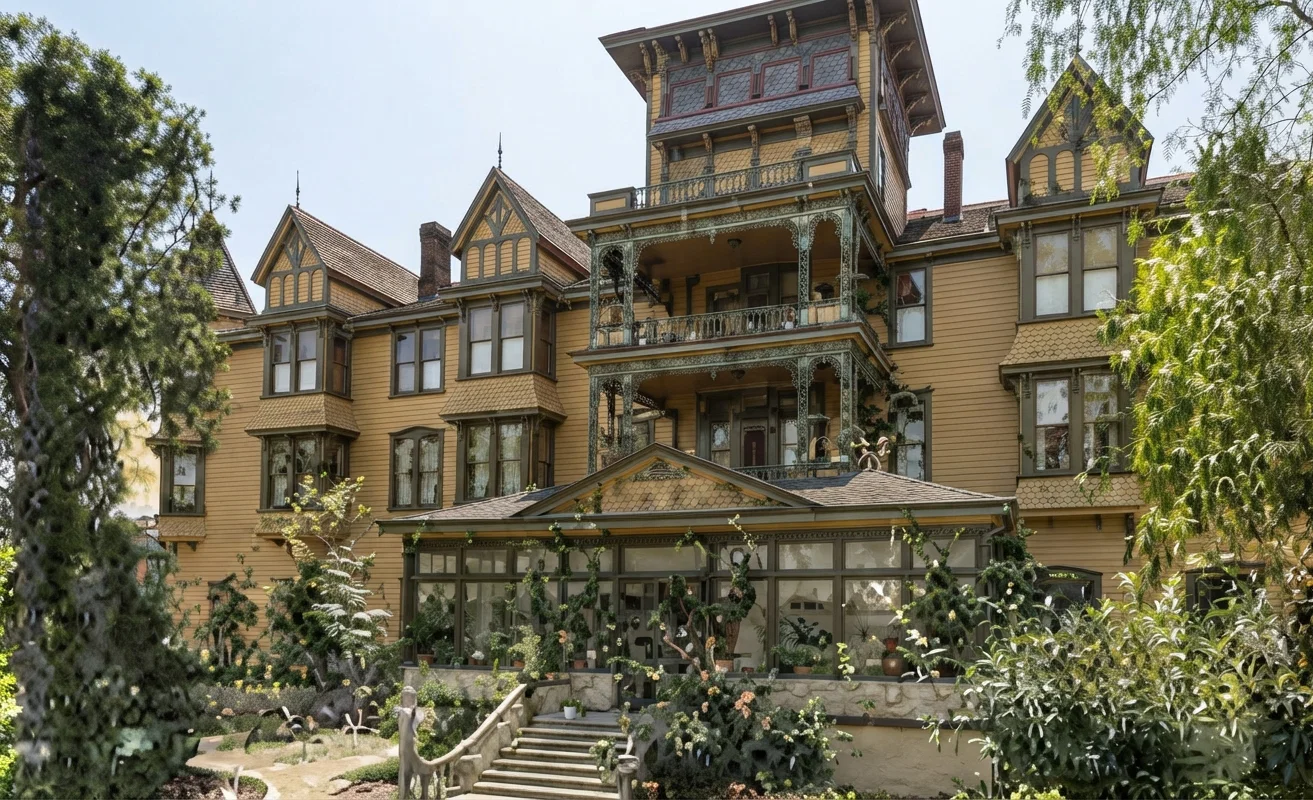
The Joy of California Sunshine at the California Sanitariums
IS NEVER FORGOTTEN
Where your wants are anticipated by Christian physicians and nurses.
Country Life Best of Food Ideal Climate Skilled Physicians Trained Nurses
The same methods are used as at the Battle Creek (Mich.) and other Sanitariums.
LOMA LINDA SANITARIUM (Redlands)
On main line Southern Pacific Railroad, near Redlands. Write for free booklet "A." Address, Loma Linda Sanitarium, Loma Linda, Redlands, Cal.
ST. HELENA SANITARIUM (Napa County)
Reached by Southern Pacific Railroad from San Francisco or Oakland. Write for free booklet 16. Address, St. Helena Sanitarium, Sanitarium, Cal.
GLENDALE SANITARIUM (Los Angeles)
Reached by Santa Fe to San Diego or National City. Write for free booklet 23. Address, Paradise Valley Sanitarium, National City, Cal.
PARADISE VALLEY SANITARIUM (San Diego)
Take electric car at Pacific Electric Building, Los Angeles. Write for free booklet "L." Address, Glendale Sanitarium, Glendale, Cal.
OPEN EVERY DAY IN THE YEAR

FIFTY YEARS IN CHINA.

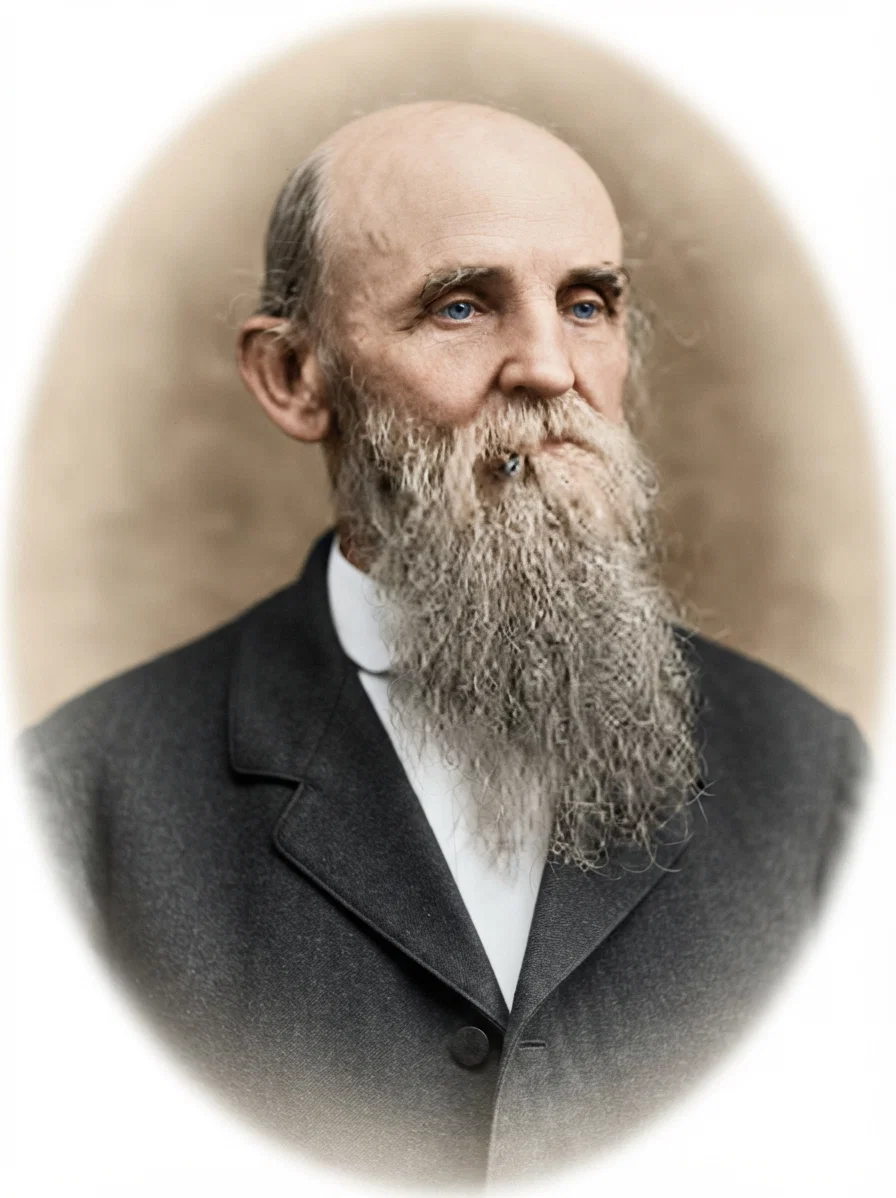
IT was my privilege recently to attend a celebration of the fiftieth anniversary of the arrival in Canton, China, of the Rev. R. H. Graves, M.D., D.D., missionary of the Southern Baptist Convention, U. S. A. This meeting was attended by about two hundred fifty Europeans, many of whom were missionaries, and addresses were given by prominent speakers, including the British and American Consuls at Canton. The subjects considered were as follows: “Fifty Years of Diplomacy;” “Fifty Years of Government;” “Fifty Years of Commerce;” “Fifty Years of Education;” “Fifty Years of Bible Translation;” “Fifty Years of Mission Work;” and by Dr. Graves himself, “Fifty Years of Canton.”
On April 19, 1856, Dr. Graves started from New York on a sailing ship. Coming by way of Cape Good Hope, he arrived in Hongkong after a voyage of one hundred fourteen days. Two days later, August 14, he arrived in Canton. With the exception of an occasional visit to the United States, Dr. Graves has continued faithful at his post, thru all these fifty long years, treating the sick, preaching the Gospel, teaching, writing, translating, etc., until the present time; and, even now, at the age of seventy-three years, is still actively engaged in translating, teaching, and preaching. He seems to have adhered closely to his one aim in life, that of preaching the Gospel of Christ to the Chinese. I heard him say recently, in an address before his Chinese church, that he had endeavored to teach the truth as it is found in the Bible, as he understood it. He said he preached because he loved to preach, and not merely because it was a duty.
To the question as to whether any other missionaries had spent fifty years in South China, Dr. Graves replied that there had been two others, Rev. Dr. Ashmore, of the American Baptist Missionary Union, of Swatow, but now at home in America, and the Rev. R. Lechler, of the Rhineish Mission, who has returned to his home in Germany.
Great changes have taken place since fifty years ago. Instead of requiring the long, tedious voyage by sailing ship of one hundred fourteen days, the journey can now be made from New York to Hongkong by railway and steamship in about twenty-six days. Then foreigners were allowed to live only in the five open treaty ports of China. Now there are about forty open ports, and over 3,000 European missionaries are scattered thruout the empire.
R. H. Graves, M.D., D.D.
When Dr. Graves came to Canton, no European was allowed to enter the walled city, but as long ago as 1869 he took personal oversight in erecting a chapel on one of the main streets inside the old city. It was in this very chapel, beautifully decorated with flowers, that the Chinese recently celebrated Dr. Graves’ fiftieth anniversary.
When Dr. Graves arrived here, he found not only his colleague, Rev. C. W. Galliard and wife, but there were also Dr. Hobson, a missionary of the London Mission, who was a son-in-law of Dr. Robert Morrison, besides missionaries of the Wesleyan, American Board (Congregationalists), and the Presbyterian missions; also the Rev. Mr. Roberts, an Independent Baptist who had a chapel on the river front. On the same site there now stands an old chapel which is occupied by a Seventh-day Adventist mission-school.
Last, but not least, it should be mentioned that among those previously on the ground was John G. Kerr, M.D., who spent forty-six years as a medical missionary in Canton, dying here in 1901. When Dr. Graves came to China, his mission had but one chapel, one native preacher who was the only Chinese member. He labored several years before baptizing his first convert. Their mission now has twenty-six American workers in this and Quangsai Province, thirteen Chinese pastors, thirty Chinese preachers, and over 3,200 native members. Other missions have also made great progress in the same time.
Ten years ago Dr. Graves issued a book in English of over 300 pages entitled, “Forty Years in China.” This book gives a good description of the conditions then existing, and, to a large extent, still existing in south China. Besides assisting in Bible translation and in translation of “Gospel Hymns,” Dr. Graves has also written and published in Chinese a book in four volumes on “The Teachings of Jesus,” a book of 220 pages on “The Parables of Jesus,” a book of 108 pages on homiletics, a geography of Palestine, besides many smaller works.
Dr. Graves has made it a rule of life never to miss an appointment, and to always be on time. By his faithful and sympathetic life he has won the confidence and esteem of both Chinese and Europeans. He has done much to prepare the way for those who come later, and it is to be hoped that many more consecrated workers will come to take up the work of giving the Gospel of Christ to the Chinese.
E. H. WILBUR. Canton, China.

THE SEAMAN’S BIBLE.

(Translated from the Christlicher Hausfreund.)
SOME years ago a brave seaman of the English navy died and left behind him, among other possessions, a Bible. This Bible was held by the family in particular esteem; but what gave it so much honor was a few words written on the fly-leaf by its former possessor. They were simple but full of meaning, and read thus:
“In January, 1791, this Bible was given to me by Mr. Neikes, in Herford, England, as a reward. It has been my constant companion for fifty-three years, forty-one of which I spent on the sea. During these years I was in forty-five sea battles and engagements; received wounds, and suffered shipwreck three times. Once our ship was burned, twice our boat capsized, and fifteen times I was afflicted with fever of different kinds, and this Bible was always my trust. All this I certify with my own handwriting.”
Indeed, a much-used Bible! And what a rich history these plain words on the blank leaf relate. One hears the roar of the storm, the beating of the waves, the crash of the shipwreck, the thunder of the battle, the groans of the wounded, the sighs of the fever-stricken,—and from all this suffering and danger one turns to that Book and hears the words “this Bible was my trust.”
Is not the Bible a wonderful Book? Is there anything else that could have supportedhis trust? or anything else so enduring? No; indeed.
“And heaven and earth shall pass away, but God's word shall not pass away.” Dear reader, take it to heart, “Blessed are they who hear and keep God's word.”

THE WAITING-TIME.

THE King and the kingdom are coming, Tho long has the waiting-time seemed; And oft to the eye of the watcher, A light in the distance has gleamed, But only to go out in darkness, And leave the heart sad as before, Be patient a little while longer, The waiting-time will soon be o'er.
The crown is a thing of the future, The glory will yet be revealed; The royal gift has not gone by thee, Nor Jesus His promise repealed, Be faithful a little while longer; The night must give place to the day; The King and the kingdom are coming, And for their arrival we pray.
Our prayer is the prayer of the ages, Which Jesus Himself taught to men; And thus He is pledged to performance, Without telling all about when. So, praying, and hoping, and working, In faith to each other we cry: "The King and the kingdom are coming! Keep heart, for the Lord draweth nigh." —Charles H. Gabriel.

Bank of Mountain View

Mountain View, Santa Clara County, California
If you haven't already done so, why don't you drop us a postal asking us to send you a copy of our monthly paper, "The Bank of Mountain View Journal." It is very interesting. It is full of good ideas, and it is free to you for the asking. If you live in the East, send for a copy and see how we do it in California. We still hold ourselves ready to furnish you with information about Mountain View. Write us.
Address

Cumberland Presbyterian Union Controversy

Cumberland Presbyterians do not all appreciate the idea of amalgamation with the Presbyterian Church of the United States. It was supposed that the official union would settle the matter, but it is developing that a number of the Cumberland body are desirous of perpetuating that wing of Presbyterianism.
Not only on the Pacific Coast has it been decided to preserve the name and policy of the Cumberland body, but in the South as well there is a decided disposition to ignore the union.
At the recent session of the Cumberland Presbyterian Synod of Alabama, held in Birmingham, a resolution was adopted calling upon all congregations to employ none but Cumberland ministers, and to ask the resignation of all pastors who may have agreed to the union of the two Presbyterian bodies. It was also resolved to demand the money, books, records, etc., which it is claimed are the property of the Cumberland Church.
It is expected that extended litigation will result in order to decide this feature of the controversy. The right of an organization to unite its members to another body against their will, and to abolish the organization to which they belong, is the question at issue.

OUR WORK AND WORKERS.

"Two Eskimos are keeping the Sabbath in Nome, Alaska," writes Brother J. M. Estes.
Three or four have taken their stand to obey on Manitoulin Island, Canada, under the labors of Brother W. E. Hancock.
Brother and Sister G. F. Jones have organized a Sabbath-school of thirty-five members in Singapore. Two soldiers are among the converts.
A Chinese Seventh-day Adventist Church of seventeen members has been organized at Fookin, China, a part of them thru the labors of a native preacher, Brother Keh.
During the first three quarters of 1906, one hundred and thirty-one were added to our numbers in the Russian field, making a membership of five hundred and seventy.
About twenty colored people have been brought to a knowledge of the truth in Baltimore, Md., and Laurel and Cheswold, Del., the past year thru the labors of Brother Fred H. Seeney.
On November 23 Prof. J. L. Shaw and wife, with a company of about a dozen, sailed from London on the steamship "India," to bear the tidings of salvation to the waiting millions of India.
From the Pacific Union Recorder we quote: "Sister Elma Pennock, in Los Angeles, made a banner record for selling Signs of the Times last week. She received $32.88 for her sales in a single week."
Following an interest awakened by Bible work by Sister Curry, Brother J. H. Carroll conducted a series of meetings near New Brunswick, N. J., for one week, with the result that six souls have taken their stand for the truth and have become Sabbath-keepers.
The work in Arkansas is onward. Two were recently baptized at New Hope by Brother E. B. Hopkins. Eight are keeping the Sabbath at Alazan as a result of the labors of Brother E. L. Neff and Brother and Sister J. I. Taylor. A Sabbath-school of nineteen members was also organized at Alazan.

"AS THE ANGELS."

IN times of trial, when the burdens of life press heavily, there is truest comfort in thinking upon the "eternal years," and the promised life beyond the resurrection.
The Saviour's words, "Neither can they die any more; for they are equal unto the angels" and they "are as the angels," convey to us a most precious assurance concerning the life to come.
How fitting, then, it is that we learn of the nature and employments of the angelic host! We are told that they do God's commandments, "harkening unto the voice of His word." Ps. 103:20. Also, that they are "all ministering spirits, sent forth to minister for them who shall be heirs of salvation." Heb. 1:14.
What a vast work this ministry represents! It is far beyond our utmost conception; for the angels are endued with greater powers than the human family possess. They "excel in strength." Ps. 103:20.
Yet we, too, may engage in the service of God, and to the extent of our capacity become coworkers with the angels. We may "harken unto the voice of His word" as revealed in the Gospel of His dear Son. By God's grace we may "keep the commandments of God, and the faith of Jesus," and we, too, may engage in loving ministry for them who shall be "heirs of salvation."
The service of ministry is ever at hand. We need not seek a foreign field, or a larger sphere, but go to work in the Master's name—in the home, or wherever we may be—speaking kind words, doing kindly deeds, guiding the tender feet of infancy, or sustaining the faltering steps of age, thus preparing, it may be, for broader service in years to come.
But whatever our sphere of action, be it narrow or extended, let love to God and man be the ruling motive. Then "harkening to His word," and ministering in His name, we may be "as the angels" in character and attributes here below; and in the resurrection life, we shall be equal to them in power and glory, excelling in strength, praising the name of the Lord, and ever beholding His blessed face. AUGUSTA W. HEALD.

ALONE WITH JESUS.

ALONE with Jesus! O how sweet To sit, like Mary, at His feet, To look into His loving face, And feel the touch of His embrace! His hand in mine, my hand in His, My heart o'erflows with heavenly bliss. Before He speaks one gracious word, I look, and know He is my Lord. The chiefest among ten thousand He Is now to me, and e'er will be. Upon His bosom let me rest, And feel I am supremely blest.
Alone with Jesus. O how sweet To meet Him at the mercy-seat! To tell Him every doubt and fear, Pour all my sorrows in His ear; And then, assured of pardoning love, To rise all care and sin above, And from the foolish world retire, Resting on Him my soul's desire. He seems so near, so very near, He is so dear, so very dear, That earth recedes, and, lifted high, I seem to soar above the sky.
Alone with Jesus. O how sweet! My heart is full, my joy complete. He speaks, and O such words I hear, So full of wisdom and good cheer; Love in His eyes, love in His voice, How can I but in Him rejoice? He condescends to speak to me, And says, "Dear one, I died for thee." Then shall I not in prayer and praise My tribute to the Saviour raise? But sweetest far, with Him alone, To hear Him say, "Thou art My own." —Peter Stryker, D.D.

WANTED FOR MISSIONARY WORK.

CONTINUOUS supply of SIGNS and other denominational literature for distribution from dispensary. Address, G. A. Kuhns, 916 Laguna St., San Francisco, Cal.

THE NASHVILLE AGRICULTURAL AND NORMAL INSTITUTE.

THE Nashville Agricultural and Normal Institute is prepared to give ten men students and five women students an opportunity to earn all of their regular school expenses while taking a course of instruction in preparing for missionary work. This offer is made with the special object of encouraging men and women to obtain a preparation to enter the Southern field as missionaries. Some of these who desire to enter the work are not prepared to bear all of the expenses necessary in taking the required training. This offer will make it possible for such persons to enter the school. Those who expect to enter this field and desire some training before entering upon their regular work, are invited to write to E. A. Sutherland, Madison, Tenn. The winter term opens Jan. 16, 1907. E. A. SUTHERLAND.

"SAVE THE BOYS."

THE youth of our land have fallen among thieves—rum and tobacco. These are robbing them of every virtue, even of life itself, and will leave them naked before the bar of God. "Save the Boys" is the Good Samaritan, and asks your cooperation. Only 40 cents a year.
Special number, 24 pages, illustrated, now ready. A valuable temperance document. Should be in every home. Agents wanted. Price, $2.50 for 100 copies; $1.25 for 50 copies; single copy, 5 cents. Address, "Save the Boys," Washburn Park, Minneapolis, Minn.

Overland Limited

Chicago 68 Hours

Electric Lighted Equipment
World's Events Telegraphed, Train Daily
Unexcelled Dining Service
Observation---Parlor---Cafe Cars
Drawing-room---Stateroom Sleepers
Through without Change
Across Great Salt Lake and High Sierra by Daylight
Fastest Time---Most Direct Route
VIA

Southern Pacific

Nursing Course Opportunity

WANTED.—Young woman between 20 and 30 years of age, of good Christian character to take the nurses' course. Exceptional opportunity for the right party. For information, address, Santa Barbara Sanitarium, 118 W. Figueroa St., Santa Barbara, Cal.

THE UNITED STATES AND ROME.

The Storer Incident.
THE controversy between Mr. Bellamy Storer and President Roosevelt the last month will, we hope, be of help in orienting officials of the government regarding their duty AS officials and WHILE officials. We will not take the time, nor do we wish to enter into the unpleasant details of the quarrel. The main facts for our purpose are as follows:
1. Mr. Bellamy Storer and wife are, or were, personal friends of President Roosevelt; since his daughter's marriage indirectly related.
2. Mr. Storer and his wife are ardent, converted Catholics, with great political ambitions.
3. Mr. Storer and wife, and President Roosevelt are warm mutual friends of Archbishop Ireland. The late President McKinley was also a warm personal friend of the archbishop.
4. The archbishop, we suppose, desires to become a cardinal; or, at least, many of his friends desire it, and have worked for it, among them Mr. and Mrs. Storer, the late President McKinley, the late Mark Hanna, Secretary Taft, and others.
5. From personal friendship, and doubtless also from Mr. Storer's ability, he was appointed minister to Belgium, and Spain, and ambassador to Austria-Hungary, with ambitions for France and England.
6. When in Austria, he was recalled on the charge that he had involved the administration with the Vatican in an endeavor to secure the appointment of Archbishop Ireland to a cardinalate.
7. Smarting under his recall, Mr. Storer has made public much of the correspondence which has passed between himself and the President. This correspondence shows, as the Washington "Post" of December 9, puts it, "that INTIMATE RELATIONS have existed between the White House and the Vatican since the battle of Manila Bay, when grave church problems in the Philippines confronted this government."
Judge Taft, while in the Philippines, wrote Mr. Storer that he greatly desired to see Archbishop Ireland advanced, and that other liberal Catholics should bear sway in church affairs, believing that this would be of mutual benefit to the United States and the Catholic Church. Under date of April 30, 1899, Mr. Roosevelt, then governor of New York, is said to have written Mr. Storer as follows:
"I need not say what a pleasure it would be for me to do anything I can for Archbishop Ireland. You know how high a regard I have always felt for him; he represents the type of Catholicism which, in my opinion, must prevail in the United States if the Catholic Church is to attain its full measure of power and usefulness with our people and under our form of government."
8. Mr. Storer tells us that when Mr. Roosevelt became President he seemed to fear that some of his former letters concerning Archbishop Ireland would be made a wrong use of, and so he wrote to have the letters returned. Cardinal Rampolla had in his hands copies of some of them, and the President feared that a resolute effort had been made to try to mix up facts and to show that as President, "I have been endeavoring to interfere with ecclesiastical matters."
9. Mr. Storer was appointed ambassador to Austria-Hungary in October, 1902. The following summer he visited the President and Mrs. Roosevelt at Oyster Bay. During his visit the relations of the Catholic Church with America were discussed by the President, and the President was warm in his praise of Archbishop Ireland, and told Mr. Storer that if he went to Rome, he, the President, "would like to have me [Storer] see the pope and say to him that the archbishop was his friend, and that he would be pleased to hear that he had received the honor of promotion to the cardinalate," and Mr. Storer says that Mgr. O'Connell was commissioned by the President to say the same thing to Pope Pius X, which he did on Sept. 24, 1903. And the pope transmitted a message saying the President's wishes would probably be fulfilled.
Mr. Storer's memoranda of the President's verbal message reads as follows:
"He said to me, and he authorized me to say to your Holiness that the Archbishop of St. Paul is his personal friend, and that he possesses all his confidence as prelate and citizen; that he desires emphatically for Mgr. Ireland all the honors of the church, and that he will see with the greatest pleasure and satisfaction the elevation of Mgr. Ireland to the cardinalate."
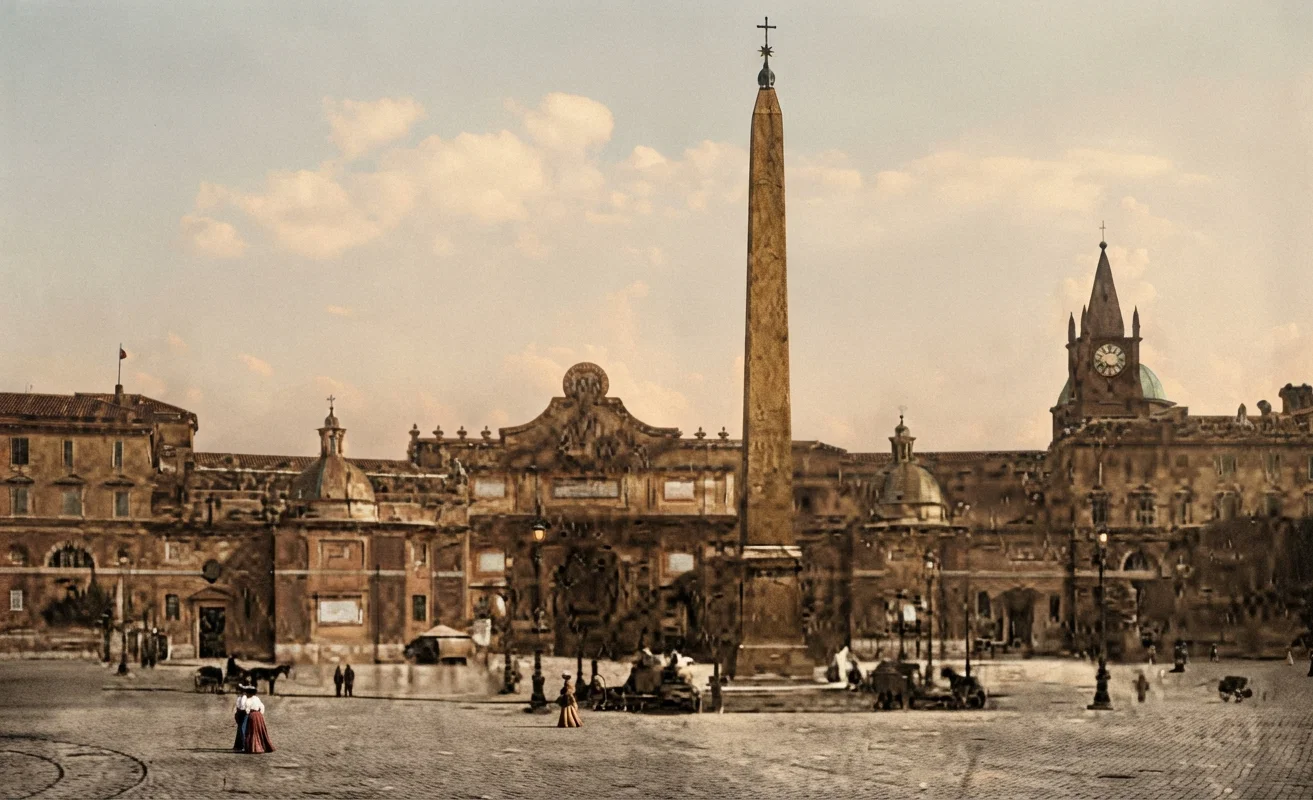
The Gate of the People, Rome.
Following this a report was telegraphed from Rome that Mr. Storer had seen the pope in behalf of Archbishop Ireland. This stirred up President Roosevelt, who wrote as follows:
"What has occurred shows clearly that it is hopeless for you to expect that the pope will appreciate the difference between what you say as an American Catholic in you private capacity, and what you as an American ambassador say. I take it for granted that you supposed you were speaking merely in your private capacity to people who would not misunderstand you, and who would not repeat what you have said. . . .
"As President it is none of my business to interfere for or against the advancement of any man in any church; and as it is impossible to differentiate what I say in my individual capacity, from what I say as President—at least in the popular mind, and apparently in the Roman mind—I must request you not to quote me in any way or shape hereafter."
Mr. Storer says that this letter filled him with astonishment, and especially since what he had spoken had been by the President's request.
On Dec. 13, 1903, the President wrote him another letter which reads as follows:
"Let me repeat to you that in reference to matters affecting the Catholic Church, events have absolutely shown that while you are ambassador, you must keep absolutely clear of any word or deed in Rome or elsewhere which would seem to differentiate your position from that of other ambassadors. The mere fact of a report in the newspapers about your calling at the Vatican had a very unfortunate effect. . . .
"While I am President and you are ambassador, neither of us in his public relation is to act as Catholic or Protestant, Jew or Gentile, and we have to be careful not merely to do what is right, but so to carry ourselves as to show that we are doing what is right. I shall ask you not to quote me to any person in any shape or way in connection with any affair of the Catholic Church, and yourself not to take action of any kind which will give ground for the belief that you as an American ambassador are striving to interfere with the affairs of the Church."
All that Mr. Roosevelt has said, he declares, is the mere expression of his own personal regard for Archbishop Ireland, as he would express a similar wish for any other friend of any other denomination; and in a letter to Mrs. Storer, he declares again:
"In the first place I wish to be explicitly understood that, tho since I have been President, I have been approached at different times by prelates of your church and even by laymen in your church with requests that I ask of the Vatican or indicate a preference for the appointment of some person as cardinal. I have always positively and unequivocally refused, directly or indirectly, thus to ask for the appointment of any man as cardinal, and it would have been a gross impropriety for me to have made any such request, while it is an outrage to represent me as having in any shape made it.
"To Archbishop Keene, to Mgr. O'Connell, and to other men who have approached me on behalf of Archbishop Ireland, I have said I had a very high regard for the archbishop, and that I should be delighted to see him made a cardinal, but that I could no more try to exercise pressure to have him made a cardinal than pressure to get the archbishop of Canterbury to establish an archbishopric in America.
"Other persons have spoken to me, saying that Ireland could not be made a cardinal unless another cardinal was made in the Eastern States, and that they hoped that two cardinals (usually mentioningIreland and Farley) would be appointed, one in the East and one in the West. I always answered that I had a great regard for both men and would be delighted to see them made cardinals, just as there were Episcopal clergymen and Methodist clergymen whom I would be delighted to see made bishops, but that I would no more interfere as you desire me to interfere, and as you yourself have been trying to interfere, under any possible circumstances."
Summing it all up, it seems to amount to just this: Mr. Roosevelt in his warm, impulsive way desired to see Ireland wearing the cardinal's hat, and so expressed it, believing that would be a fine thing for the archbishop and a good thing for American politics, because he thought Ireland was a true American. Mr. Roosevelt showed the same ignorance of Rome's designs that many other Protestants do. He has since learned, as before quoted:
"It is impossible for me to differentiate what I say in my individual capacity from what I say as President—at least, in the popular mind, and apparently in the Roman mind."
If Mr. Roosevelt had read ecclesiastico-political history, and read it aright, he would have learned that it was Theodore Roosevelt's opinion as President and not as an individual that Rome was after. We are glad that he has come to see it, and expresses himself as to his relations and feelings as strongly as he does. The President positively denies that he sent a message to the pope by Mr. Storer, or received a message from Mr. Storer reporting his deliverance of the message to the pope. Secretary Loeb affirms this.
Dr. Michael Walsh, former editor of "Catholic Herald," friend of Archbishop Ireland, the late Mark Hanna and President McKinley, declares that if Pope Leo XIII had lived, "Archbishop Ireland would have become a cardinal long before now." He also tells us that there were several working for him, among whom were President McKinley and Mark Hanna. A Republican politician told him (Dr. Walsh) that "whatever Ireland asks, McKinley will do if it is in his power." Dr. Walsh, however, does not believe that President Roosevelt had given any intimation officially that he desired Ireland's promotion. But he thinks Ireland's chances for the red hat are now ruined.
The lesson ought to be (but it is too much to hope) that the United States Government ought to have naught to do in any legislation, grant, treaty, or contract, thru any of its officials or branches, national, colonial, or otherwise, with any ecclesiastical body whatsoever. But can the politicians stand the temptation, when so many of them are desiring office, and Rome is in the field to sell support for favors demanded?
As the Lord has foretold us in His prophetic word, we are rapidly nearing that time when all the world shall worship the beast—that system of State and Church, the strongest manifestation of which is in the Papacy; and many of our statesmen and politicians, consciously or unconsciously, are doing all they can to help forward the ruinous climax.

DOES THE POPE OWN ALL AMERICAN CHURCH EDIFICES?

The San Francisco "Chronicle" of January 1 says: "It [the Roman Catholic Church] does not dispute the right of the French Government to abolish the Concordat. It does dispute its right to TAKE AWAY CHURCH PROPERTY or in any way control church polity or worship. It demands, on the contrary, that the church be let alone, and its property be let alone. The government of the Catholic Church, the direction of its worship and the control OF ITS PROPERTY rest with the church authorities, of whom the pope is the head." In such case, of course, the "Chronicle" would hold that the disposition of all Catholic Church property in America rests ultimately with the pope of Rome. It is to this that France objects. Many of the great structures in France were built by the French Government, and France does not propose to turn them over to a foreign power. Is she wrong?

WHERE DOES THE TRUTH LIE?

The "Western Watchman," edited by Father Phelan, one of the most virile Catholic papers published in the United States, very plainly declares that President Roosevelt stated a falsehood in the controversy between himself and the Storers. Mrs. Storer wanted to have Archbishop Ireland promoted to the cardinalate, and pressing the matter too hard, the President recalled Bellamy Storer, who was at that time acting as ambassador to Austria. Mr. Roosevelt states that it was for this reason. But the "Western Watchman" declares:
"That we know to be false because we knew that Mr. Roosevelt has more than once interested himself actively in a similar direction (that is, in securing favors for Roman Catholics). There were other ambassadors whom we could name who had done more in that matter than Mr. Storer, and they were not disturbed. The offense that brought about Mr. Storer's recall was not against the chief executive but against his daughter."
The "Watchman" tells us that Miss Roosevelt, before she was married, was turned down by Mr. Storer's relatives, and the President took the action he did to resent the slight.
The editor continues: "Mr. Roosevelt has done what any fond father would have done if so tried, but we can not so readily excuse juggling in Archbishop Ireland, Archbishop Farley, Cardinal Gibbons, Cardinal Rampolla, and the Pope of Rome in this kitchen war. They had absolutely nothing to do with the squabble and were brought into it only to give it a color of dignity, and take from it its character of triviality and feminine spitefulness."
Our readers have the "Western Watchman" on the one side, and the President on the other. We are glad of this, however, that the matter is coming out, disagreeable as it is, because it has compelled the President to take a square stand, just where every American President ought to stand in the matter of relationship with Rome.
Continue reading: A NATIONAL MOCKERY