Your ShelfYour Projects

Review and Herald, Vol. 79, No. 14.

SOME VALUABLE BOOKS
Earlier text: Come; for All Things Are Now Ready

Christ in the Home

On this subject it is easier, and perhaps more profitable, to cite instances than to elaborate theories. And it chanced that in a certain week I fell so naturally and unexpectedly on Christ in two homes that I am tempted to recount what I saw, and to show that there is nothing in either case which is in any sense exceptional.
Christ can be in the home only by being in the people who make the home. His presence is distinct and overwhelming if he is in all who make the home, but it is manifest, and sometimes by contrast even more startling, if he is in only one or two, while the rest, even in view of his manifestation, remain for a time blind and indifferent to him.
The two homes which I had the privilege of entering in one week, are just such homes as are to be found by thousands in this country; and there is no reason why every home should not be of the same kind; for Christ is able and willing to enter every house in all the world. “Behold, I stand at the door, and knock: if any man hear my voice, and open the door, I will come in.”
It is highly important in thinking of Christ in the home to remember that there is no favoritism with him. He does not prefer rich homes to poor, nor does he choose homes where trouble is unknown. He enters the house where the mother is sick of a fever, and he enters a house where all the godless people of the neighborhood are asked to dine. On the other hand, he has no contemptuous aversion to the rich as such. He chooses Zacchaeus as his host, and is found at the table of a covetous Pharisee.
But to come to my two homes: the one was a manse in a remote village, a home of the kind in which Christ often elects to dwell. There were father, and mother, and child.
The pastor was passing rich on sixty pounds a year; this was a mark of Christ, for he was an educated and cultivated gentleman; his brother, who had chosen medicine as a profession, was making many hundreds a year, and another brother in business was well to do; for a wage not much greater than that of a laborer, and not nearly so great as that of an artisan, this follower of Christ was bestowing all his best of heart and mind on the people of the village.
So diligent was he, that for years he had not taken a walk, for a walk’s sake, in the sweet fields and along the leisurely river which flows past the village. His sermons were as carefully prepared as if he had to preach in St. Paul’s. His flock were all known by name, and carefully watched. All the neighborhood was participant of his friendship and pastoral zeal, though few would enter the chapel to hear him preach.
But this lowly, diligent service, prolonged in gratitude and love for many years, had produced its effect.—Christ was in the home. You knew it at once when you entered; you knew it better when you left. The prayers, quiet and reverent, did not tell it you more than the conversation, cheerful and charitable, at the table. You recognized it in the way the mother held the child, and in the prattle and baby acts of the child himself. That diligence of unrequited service, that humble love of the poor, that ineffable gentleness and sweetness of the little circle within, announced that Christ was in the home.
And then, as it chanced, I was the day after in another home with the same inhabitant.
This home was spacious, lying in the shrubberies and meadows like a sweet abode of peace. An old man welcomed me, bearing the reverence and wisdom of well-spent years; and his quiet references to a home elsewhere and the undreaded change, gave me the sense of Christ, the resurrection and the life.
There were busy fingers knitting stockings—for whom? It came out incidentally; for the pastor, whose narrow income was not the worst of the ills to which his work exposed him. There were little children gathered in, to roll over the hay. There were the poor women invited to spend the afternoon on the shady lawn. There were the lives of girls, themselves free of the enjoyments that the world offers, quietly and inwardly dedicated to the service of others. There was the note of love, of mutual care, of worship, of faith, in all that was said and done. Christ was in the home.
How does he enter? Why does he abide?
It is very strange that any one who has come across the traces of him in a house should be indifferent to the inquiry. Is it possible that the fact of his being there can be missed, or that one could slight its significance?
Let every one realize, whether parent or child or servant or guest, that he can take Christ into a home. Though nine in a house be opposed, yet the tenth can bring him in. He will enter sometimes by a child, for “of such is the kingdom of heaven.”
A tiny thing who can only just speak, whose words therefore still carry some of the inspiration of another world, brought Christ into a home I know a little time ago. The father had gone off to business; and the child suddenly said to her mother, with perfect naturalness, “O, I bedot.”
“What did you forget, darling?”
“I saw Jesus zis morning, and he said, ‘Give my love to daddy.’”
I think the father felt that this mysterious message, duly delivered on his return, carried more weight than any sermon he had ever heard.
I may be exaggerating, but I can never see a child in the cradle, still less smiling up into the mother’s face, without a feeling that Christ has come, at least tentatively, into the home.
But with a more deliberate and conscious purpose, when we are older, it is given to us to bring the honored Guest into the home where we dwell. To believe in Christ, where faith is real, involves more than the adoption of a principle, or the attempt to shape life, according to a certain ideal; it means that the invisible Presence himself has effected a lodgment in our nature, and is beginning to act through us as his agents. We should try more definitely to conceive this. “I live; yet not I, but Christ liveth in me.”
What alien and uncongenial elements there are in your home! What a blight falls from the cultured sneer of a father or brother who does not believe! What a chill creeps from the ineradicable selfishness of a mother or a sister whose heart is in the world, not in Christ! Conceive yourself as set against these forces, and you are helpless. Your wit and learning cannot parry the sneer; your fire of love is far too faint and faltering to melt those hearts of ice.
But consider that in your trembling faith Christ himself has entered your heart, and has therefore entered your home. He is asleep for a moment in the prow of the ship. But he can awake at summons, and utter his authoritative, “Peace, be still.” Assuredly he can entirely disarm the sneers and the selfishness which are too much for you.
Let the reader go with Christ into his own home, and allow Christ to carry on his warfare of subjugation and conversion. Be more eager to keep the life of Christ clear and operative in you than to assert your opinions or to correct the faults of others. He will quietly but surely work. Introduced by you into your home, he will slowly make your home entirely his.—R. F. Horton, D. D., in C. E. World.

Happiness Found in Serving Others

“It is one of the paradoxes—and yet of the commonplaces—of life that only by seeking the happiness of others can we truly find any for ourselves.”

Practical Hydrotherapy Lesson 8—Heart Tonics

GEO. THOMASON, M. D.
The normal rate at which the heart beats is about seventy-two times a minute while a person is engaged in the ordinary activities of life. There is a lessening of about six beats in the pulse rate when one is lying down or while sleeping. The heart accomplishes a prodigious amount of work every day. It toils on ceaselessly, constantly responding to the Creator’s commands to beat, sending the life-containing fluid to nourish every fiber and cell of the body. It is estimated that in carrying on its work the heart daily expends an amount of energy equivalent to the lifting of a body weighing twenty tons more than three feet from the ground.
The only opportunity the heart has for rest is during the brief interval between the beats, or about four tenths of a second during the waking hours, and a little longer during sleep. There are many conditions which greatly increase the work of the heart, and modify or limit the period of rest. For example, during vigorous exercise it is necessary for the blood to pass more rapidly through the lungs to receive oxygen, and to the tissues to gather up the waste products thrown off, hence the heart beat is increased in frequency according as to the vigor of the exercise.
The training of an athlete is largely a daily increase in the ability of the heart to cope with the extra strain brought upon it by violent exertion. “Good wind” means a strong heart. Getting “out of breath” is simply a failure of the heart to keep sufficient blood passing through the lungs to supply the increased amount of oxygen demanded by the tissues during vigorous exercise.
The work of the heart is increased when the capillaries, or minute blood vessels in the skin and internal organs, are contracted. This is spoken of as increased resistance. In fevers the work of the heart is greatly increased in the effort to keep the blood vessels of the skin well filled, and thus more rapidly to eliminate heat, and also to carry the increased waste and poisonous substances to the excretory organs. The great increase in pulse rate during fever greatly lessens the period of rest between the beats of the heart, hence the danger of exhaustion. In pneumonia, in addition to the tendency to exhaustion from increased rate, there is an added danger in the fact that the consolidated area in the lung increases the work of the heart in forcing the blood through the lungs. Besides this, on account of diminished area in the lungs, the blood is less well oxygenated, and the heart itself is poorly nourished. Impoverishment of the blood—whether from lack of food, from living in close or poorly ventilated apartments, from sedentary habits, from lack of exercise, or from any other cause—produces a weakening of the heart.
In the treatment of a weak heart it is essential to bear in mind that both the heart and the peripheral, or capillary, circulation are to be considered. As before mentioned, an increased or diminished peripheral resistance determines much as to the work of the heart, and it becomes doubly important when it is known that this state of the peripheral, or terminal, blood vessels, and hence the degree of resistance, may be so directly influenced and controlled. It is apparent, then, that by securing a free circulation of blood in the skin, the resistance will be overcome, and thus the work of the heart diminished.
It is possible at the same time to make such applications as will lessen the rate of the heart beat, and thus prolong the period of rest between the beats. Cold applied over the heart slows the rate of the heart beat. The application may consist of a soft rubber bag partly filled with broken bits of ice, or of a linen towel or a cheese-cloth compress folded so as to be from six to eight inches square, and wrung from ice water. In most cases of heart weakness, the application over the heart may be continued from twenty to thirty minutes, and repeated two or three times a day. In case the cold compress is used, it must be renewed at least every three or four minutes. At the same time the blood vessels of the skin must be dilated by a very short hot bath of some sort, as an immersion bath at from 102° to 105°, four or five minutes, or a hot-blanket pack of eight or ten minutes’ duration, always to be followed by friction of the body with the hand or with a coarse cloth dipped frequently in cold water. A vigorous cold friction may be given without the preliminary hot bath, in many cases.
It should be borne in mind that persons with weak hearts do not well tolerate either prolonged hot or general cold applications, but the careful and judicious treatment by the simple means suggested will afford relief from the unpleasant symptoms accompanying heart weakness.

Helping People

TWENTY years ago a discouraged young doctor in one of our large cities was visited by his old father, who came up from a rural district to look after his boy.
“Well, son,” he said, “how are you getting along?”
“I’m not getting along at all,” was the disheartened answer. “I’m not doing a thing.”
The old man’s countenance fell, but he spoke of courage and patience and perseverance. Later in the day he went with his son to the “Free Dispensary,” where the young doctor had an unsalaried position, and where he spent an hour or more every day.
The father sat by, a silent but intensely interested spectator, while twenty-five poor unfortunates received help. The doctor forgot his visitor, while he bent his skilled energies to this task; but hardly had the door closed on the last patient when the old man burst forth:— “I thought you told me that you were not doing anything! Why, if I had helped twenty-five people in a month as you have in one morning, I would thank God that my life counted for something.”
“There isn’t any money in it, though,” explained the son, somewhat abashed by his father’s earnest words.
“Money!” the old man shouted, still scornfully. “Money! What is money in comparison with being of use to your fellow men? Never mind about money; you go right along at this work every day. I’ll go back to the farm, and gladly earn money enough to support you as long as I live—yes, and sleep sound every night with the thought that I have helped you to help your fellow men.”—Selected.

The Spirit of Christ in the Home

“The spirit of Christ is one of gentleness, courtesy, refinement, politeness, tenderness, and love. This is the atmosphere that pervades heaven, and we are bringing heaven itself into our homes when we bring what may seem at first but a small current of this atmosphere into them. It will eventually fill our home, crowding out all bitterness, fault-finding, coarseness, and unkindness.”

A Misuse of Terms

A great deal has been said the past month about the measures which the German emperor proposes to take “against faith healing and other like practices which have lately been carried on in some parts of the country.” It is evident that there is a general misunderstanding of terms. It is reported that in an interview with the police president, the emperor was anxious to know “whether the teachers and leaders of Christian Scientists and faith healers could not be proceeded against as swindlers.” But if they were really “faith healers,” how could they be swindlers? Surely it is not swindling a man to heal him; and we can hardly think that the German emperor would wish anybody to be prosecuted for doing good to another, and actually healing disease. But the trouble is, the people termed “faith healers” are not healers at all, since their patients are not healed. It should be understood that real healing by faith has no connection whatever with what is known as Christian Science. Healing by faith is all right, for whatever is healed through faith is healed indeed; but much of the so-called faith healing is a fraud, and the professed faith healers are indeed swindlers, inasmuch as there is neither faith nor healing.
“If people knew that in real faith healing there is never any uncertainty, but that the healing is sure to the one who has real faith; and, moreover, that those through whom God works to heal never advertise; and that there cannot possibly be such a thing as a “professional faith healer,” they would be safe from those who under the name of Christianity would prevail upon them while they profess to pray for them.—Present Truth.

The Neglected Continent

J. W. WESTPHAL
“Four thousand seven hundred miles long, and over three thousand wide—a stupendous continent, seven million square miles in area, nearly twice the size of Europe, containing one eighth of the land surface of the globe; the most magnificent system of river drainage in the world; a coast line eighteen thousand miles long; and two rocky-mountain chains of extraordinary magnitude and sublimity. It lies away in the western seas, between the Pacific and the Atlantic,—South America,—well called from a spiritual standpoint, the Neglected Continent.”
In this age of missionary enterprises, efforts have been made to carry the good news of salvation to various parts of the world. Following the explorer, and not infrequently conqueror, has gone the faithful missionary to bring a living Christ to the people. Explorations have been made with a special view to opening up new fields to missionary enterprise. In various lands mission stations have been established as centers of light and influence to draw men to the Saviour. For a hundred years and more, faithful messengers of God have gone to India, China, Japan, Africa, the North American Indians, the islands of the sea, and other darkened portions of the earth, to carry the gospel to their benighted inhabitants, until they may now be numbered by thousands. We are all glad of this, and wish that many more had gone. But one in the field will naturally inquire, “What has been done for South America?”
After the discovery of the Americas near the close of the fifteenth century, North America was opened up to the northern European nations, while South America was claimed by Spain and Portugal. The principles of the pure Protestant faith which resulted from the sixteenth century Reformation were brought by the Pilgrim Fathers and others to the British possessions of the new world, where, in the course of time, they obtained a firm foothold in civil as well as in private life, while South America was dominated by the See of Rome. For many years she held it under her complete control; and although the example of the United States in the recognition of better principles has done much to bring about a higher ideal in civil government, yet the blighting influence of Romish superstition and darkness is still only too plainly and painfully discernible. Where, in religious life, Romish superstition has lost its influence, unbelief and infidelity have taken its place. As regards the gospel, the people know nothing of it. Evidently the power to save from sin is unknown; and practically no effort has ever been made to evangelize them. It would seem as though South America was regarded as either being beyond hope, or else Catholicism was regarded as sufficient to save her. At any rate, she has been left to grope her way in darkness, “having no hope, and without God in the world.”
The total population of South America is approximately 37,000,000, divided among the several countries as follows:—Guianas, 390,000; Ecuador, 1,260,000; Peru, 3,000,000; Colombia, 4,200,000; Paraguay, 400,000; Bolivia, 1,450,000; Chili, 3,300,000; Brazil, 16,000,000; Uruguay, 750,000; Venezuela, 2,200,000; Argentina, 4,000,000.
Exclusive of the Guianas, there were in 1893, two hundred and sixteen Protestant missionaries of every class, including wives of the missionaries and helpers, among this vast number of people. Ecuador and Bolivia, with an aggregate population of three million, were, and as far as the writer knows, are still, without a single missionary. Venezuela had but one, while Uruguay and Paraguay each had five. Peru had nine, Colombia twelve, Argentina twenty-seven, Chili sixty-one, and Brazil one hundred and sixteen. This is an average of one missionary for every one hundred and seventy-five thousand of the people.
Besides the millions who have come from Southern Europe, or their immediate descendants, who have been reared in the bosom of Catholic superstition, and whose morals are indeed at a low ebb, there are five million Indians, who are still either in heathen darkness, or else have been further degraded by the influence of the papacy and Spanish and Portuguese civilization. While planting the visible cross everywhere, the early discoverers and conquerors of this vast region had one ruling mania—an insatiable lust for gold—one unalterable ambition—a determination to rule. To secure these, every principle of right and humanity was sacrificed. They came not to justify, but to condemn; not to save, but to destroy. Of the meaning of the cross in self-sacrifice, they knew nothing, and their history is one continuous story of the sacrifice of the lives of others. Millions of these aborigines perished through wars of conquest, wanton cruelties, and especially through forced labor (for they were literally worked to death), until nearly all whom the conquest had delivered into the hands of white employers had disappeared. Others, who fled to the mountains and forests, could not escape the epidemics that followed in the wake of the invaders. “Thus,” says one writer, “in the seventeenth century a great part of the natives perished.” Another says, “At the time of this mortality, it was supposed that the western aborigines were destined to disappear.”
But contrary to expectation, they survived. “After the period of decline,” says the author of “The Neglected Continent,” “the natives increased, some of the tribes advancing even at a more rapid rate than the whites, and to-day they display more vitality, more power of resisting the destructive forces, than the ‘red skins’ of North America. While the latter have either disappeared or been for the most part swept into ‘reserves,’ the former still constitute the substratum of the population in the land of their forefathers.”
Of their present condition, Mr. Milne, of the American Bible Society, writes: ‘Since the Spanish conquest the progress of the Indian has been in the line of deterioration and moral degradation. Nor could it be otherwise: they are downtrodden by the landowners, who hold them as serfs; they are wronged by corrupt authorities, who always give the right to the man who has money; and they are oppressed by the Roman clergy, who can never drain contributions enough out of them, and who make the children render service to pay for masses for deceased parents and relatives.’
Up to 1894 attempts had been made in only four places to reach them with the gospel,—in the extreme south, in Paraguay, in Chili, and in the Amazon basin, the last of which, on account of climatic and other reasons, has been abandoned. Yet there are five millions of them, three millions of whom speak a single language,—the Quichau,—and who once formed the flourishing Inca empire, and over a million more who speak the Guarani. They are uneducated,—mentally, only children,—but not without latent intelligence. Only one of the Gospels has been translated into the former, and the sermon on the mount into the latter, language.
But if so little has been done in this field in the interests of the gospel in general, what shall we say for the special work for this time? A few of the countries have been entered, and the work has made a beginning. In Guiana, Brazil, Uruguay, Argentina, and Chili, seed has been sown, and the work has become established. In Paraguay, Elder E. W. Snyder has begun the work, and a few have accepted the faith. Elder Balada, of Chili, has gone to Lima, Peru, to begin the work, while other countries, as Bolivia and Ecuador, have not been touched. And what has been done for the millions of Indians?—Nothing, absolutely nothing. Shall not they, with the rest, hear the message?—Yes, for it is to go to every kindred, tongue, and people. From every tribe and nation there will be those who, because of the last message, will sing the song of Moses, the servant of God, and the song of the Lamb. A work must yet be done for all these people, and that in this generation. And who is to do it?—This people to whom God has intrusted it. The Lord has called us to do it. In the acceptance of Christ and his precious truth, we have assumed a work and a responsibility which we cannot lightly throw off.
‘In the great eternity beyond, among the many marvels that will burst upon the soul, this surely will be among the greatest, that the Son of God came to redeem the world, that certain individuals were chosen out from among mankind as a first fruits, that to them was committed the inconceivable honor of proclaiming the glad tidings of salvation to their fellow-creatures still in darkness, and that they did not do it.’
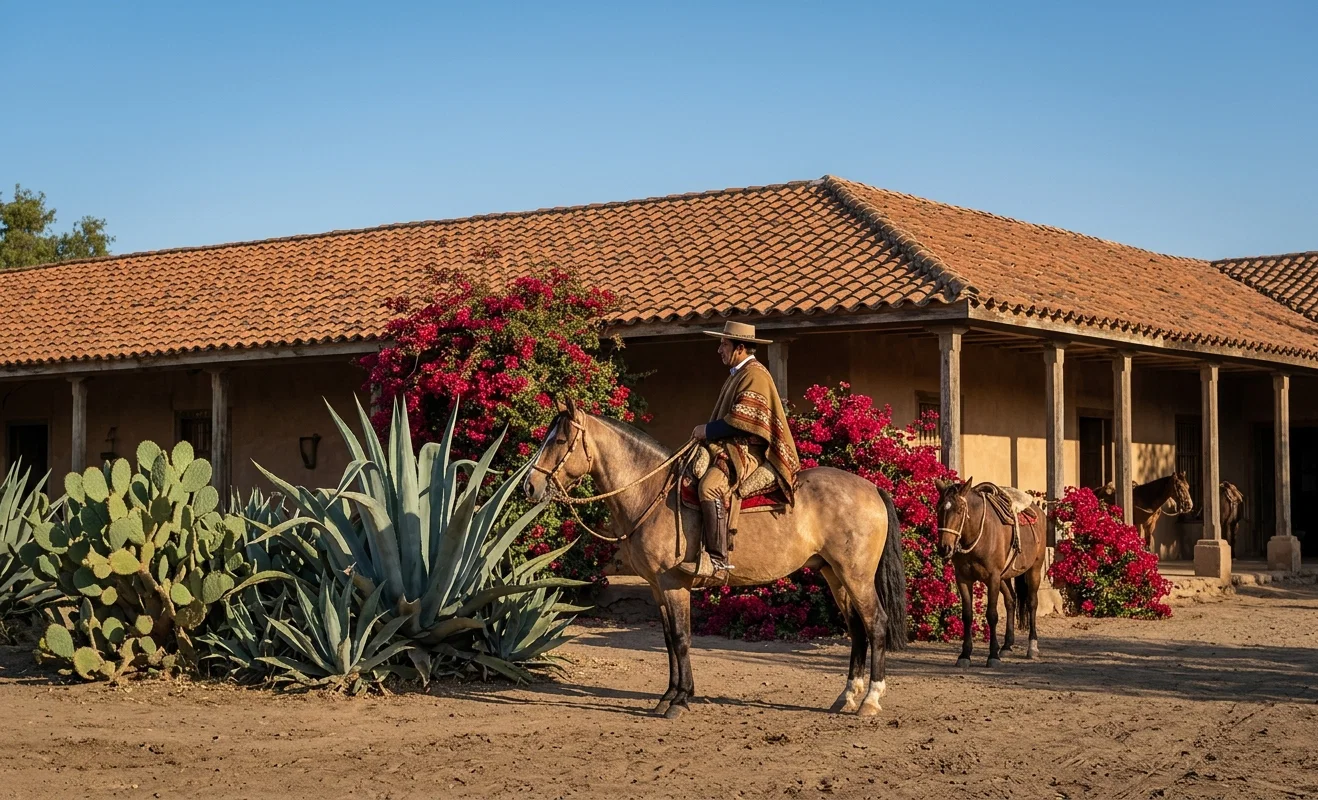
A CHILIAN FARMHOUSE
A CHILIAN FARMHOUSE
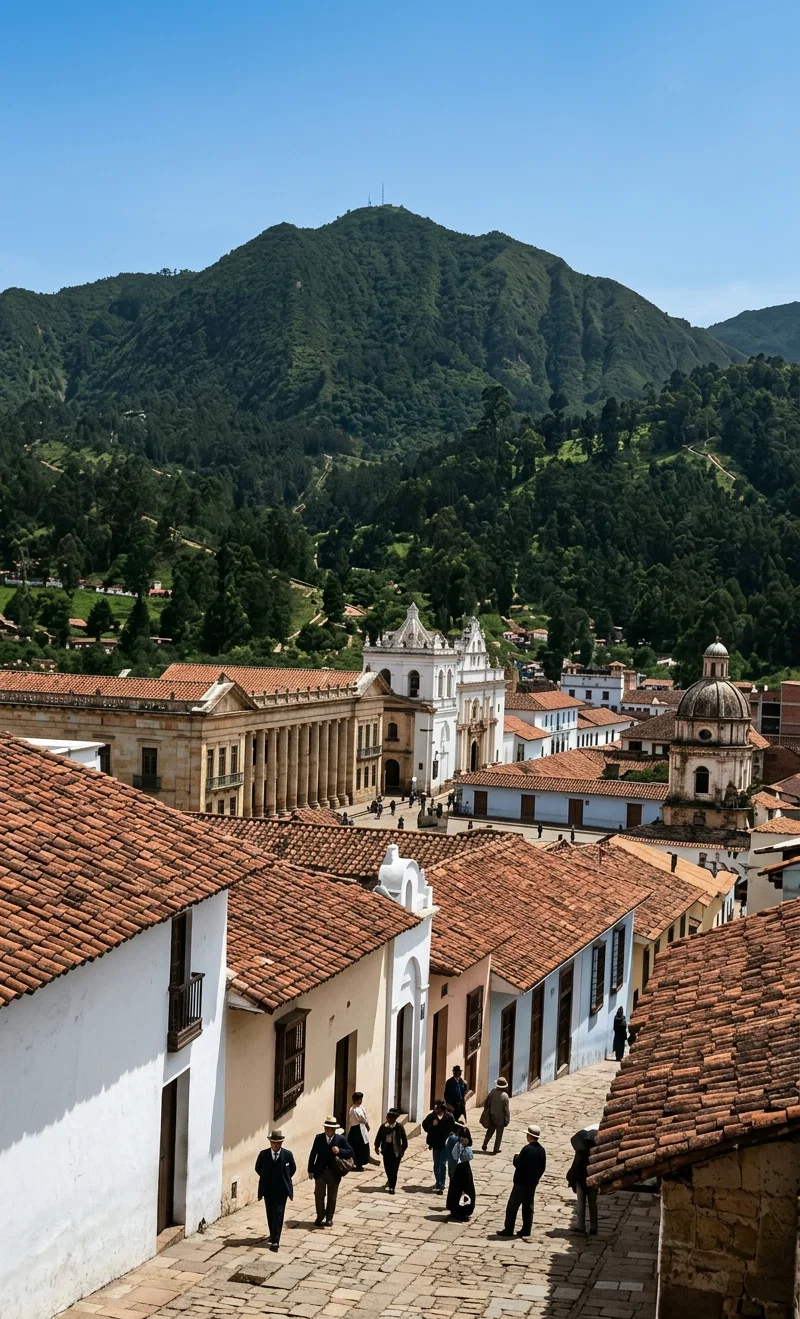
BOGOTA, U. S. COLOMBIA
A BOLIVIAN BABY
A BOLIVIAN BABY

Among the Islands

E. S. BUTZ
The Tonga, or Friendly, Islands are situated in the South Pacific Ocean, just north of the tropic of capricorn (from nineteen to twenty-one degrees south latitude), and three hundred miles east of Fiji.
There are about one hundred islands in the group, which are clustered into three natural divisions. The southern division is called Tonga, the middle Haapai, and the northern Vavau. They are principally of coral formation, and hence very low, being raised scarcely above the sea level. Being so low, there are no springs or streams of water. Wells are dug in the coral rock, but the water is not fit to use for drinking or cooking. The village in which we lived was only from four to six feet above high-water mark. Our well was about four feet deep, and the water rose and fell in it as the tide ebbed and flowed. The natives, being accustomed to it, can use it. The white people depend upon rain water, which is caught in iron tanks. It can be readily seen that water thus kept in tanks can be neither wholesome, sweet, palatable, nor cool in the tropics.
There are between twenty-two and twenty-three thousand natives, and about five hundred white people in this group. The natives are called Tongans. They are of a dark-brown color, shading to black. Some have straight, black hair, like the American Indian; others have curly hair; and some have bushy heads. They have some odd ways of dressing and cutting the hair. They are fine-looking people, with plump, symmetrical forms and intelligent faces. They are a proud and conceited people, very tenacious of their ideas and customs, manifesting a haughty spirit of self-confidence.
The Friendly Islands form the little independent kingdom of Tonga. They were brought under one rule by King George I, the grandsire of the present king. He seems to have been quite a wise man, with many good qualities. He threw his whole energy into whatever he undertook. He set his people a good example by taking his spade and planting and digging yams. He gave the people a constitution, and a parliament was formed, modeled after that of the British government, consisting of thirty-one nobles and an equal number of representatives chosen by the people. The nobles hold office for life, subject to the will of the king. The representatives are chosen simply to sit as delegates through one session of parliament, which meets once in three years.
The land belongs to the king and chiefs, who make allotments to their subjects. They all live in villages, so each one is given a village lot, and a garden allotment outside of the village. Land cannot be bought, but only leased for a term of years. The foreigner wishing land must first pay the native having a claim upon it a good sum to get him to relinquish his claim to the government, then apply to the government for a lease of twenty-one years, which it may or may not grant, according to his influence; or it may be granted, then withheld by diplomatically placing the annual lease so high that it cannot be paid.
They have many good laws covering the various departments and functions of government, but it is often difficult to recognize them when the attempt to carry them into effect is seen.
Some effort has already been made to give the closing message to the people of these islands, with encouraging results.
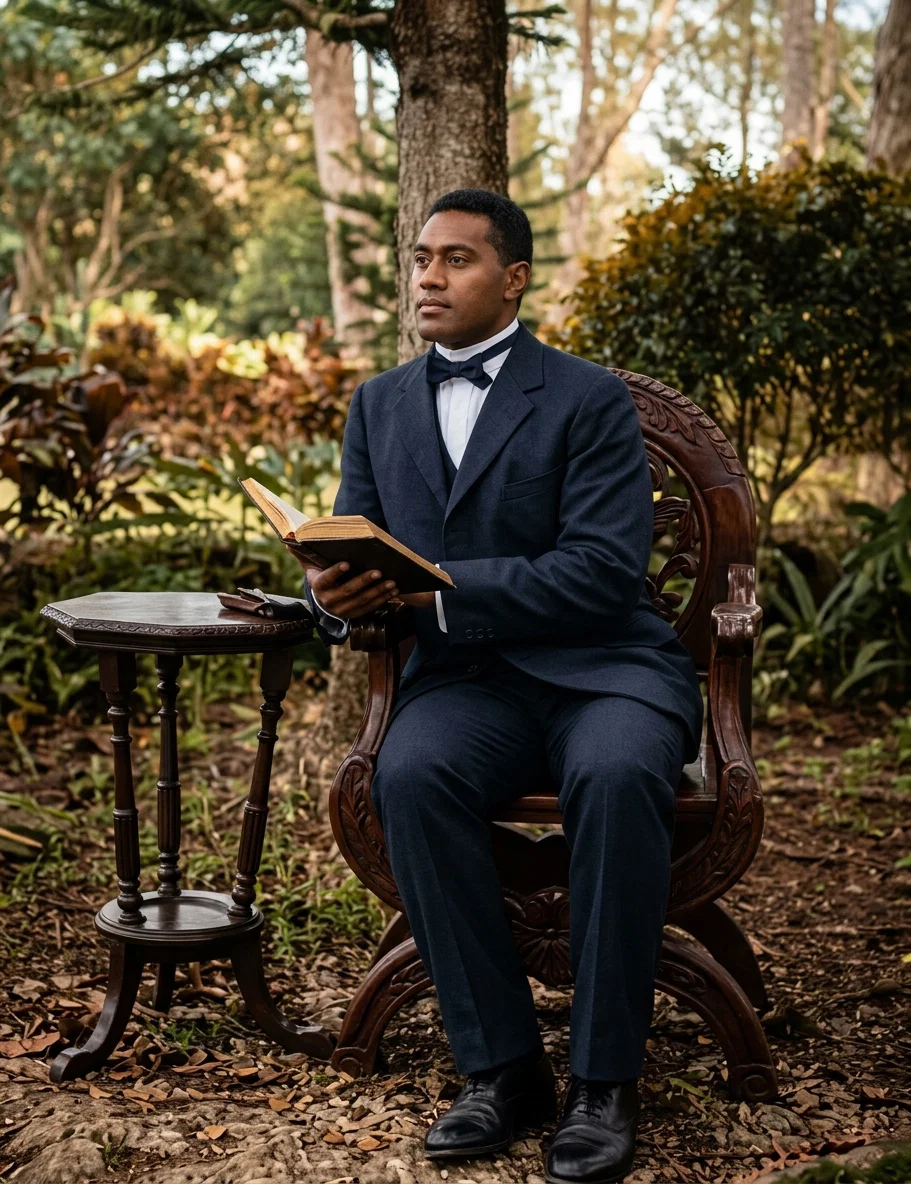
KING GEORGE II, TONGA ISLANDS
“Two things are required of a well: it must not freeze in winter, it must not run dry in summer. Two things are required of piety: it must not be chilled by adversity; it must not wither in prosperity.”

W. W. QUANTOCK

Ceylon

COLOMBO.—Before coming to this place, we spent about five weeks in Madras, in the interest of the Oriental Watchman. We secured nearly five hundred subscriptions for the paper, besides selling some small books. While there, I met a lady who believed in conditional immortality. She wanted to know what we believe, and when I told her about the Sabbath, she could not quite see why we kept the seventh day, but after a little conversation on the subject, she said, “If that is the thing to do, I want to do it.” She seemed very anxious to study the Bible with us.
We have already spent about two weeks in Colombo, and have taken over one hundred orders for the paper, and expect to get others before we leave. We have also disposed of a number of small books. This is a pretty place, but the people say that it does not compare ably with the scenery farther inland. The weather is quite pleasant now, but it is very hot during March and April. A short ride brings one to the hills and mountains, where it is much cooler.
The Catholics have a strong hold on southern India and Ceylon, and their membership is continually increasing. In Colombo they have many schools and churches and printing offices. The man in whose home we are living told me that at one town here on the island they have a school in which they are educating twenty-five hundred priests. These have been in training two years, and will soon be ready for work in the island.
The Buddhists are also quite strong, and so far as I can see, are growing in numbers. Many who are forsaking their former religion, if they had any, are joining something that is just as bad. We frequently meet people who say that they belong to the Catholic Church, and at the same time frankly confess that they know nothing about the doctrines which that church teaches. I trust that Seventh-day Adventists will arouse to their opportunities, and that ere long many will come to these Oriental fields to proclaim the gospel of the third angel’s message in all its fullness.

W. W. QUANTOCK

Trinidad

PRINCESTOWN.—We began meetings in this place the latter part of February. We have had a good attendance, and many are deeply stirred by the gospel truths we have presented thus far. As a result of the canvassing work and the meetings, twelve are now keeping the Sabbath of the Lord. Many others are convinced, and we trust that by carefully following up the interest, we shall see a large company of believers developed here.
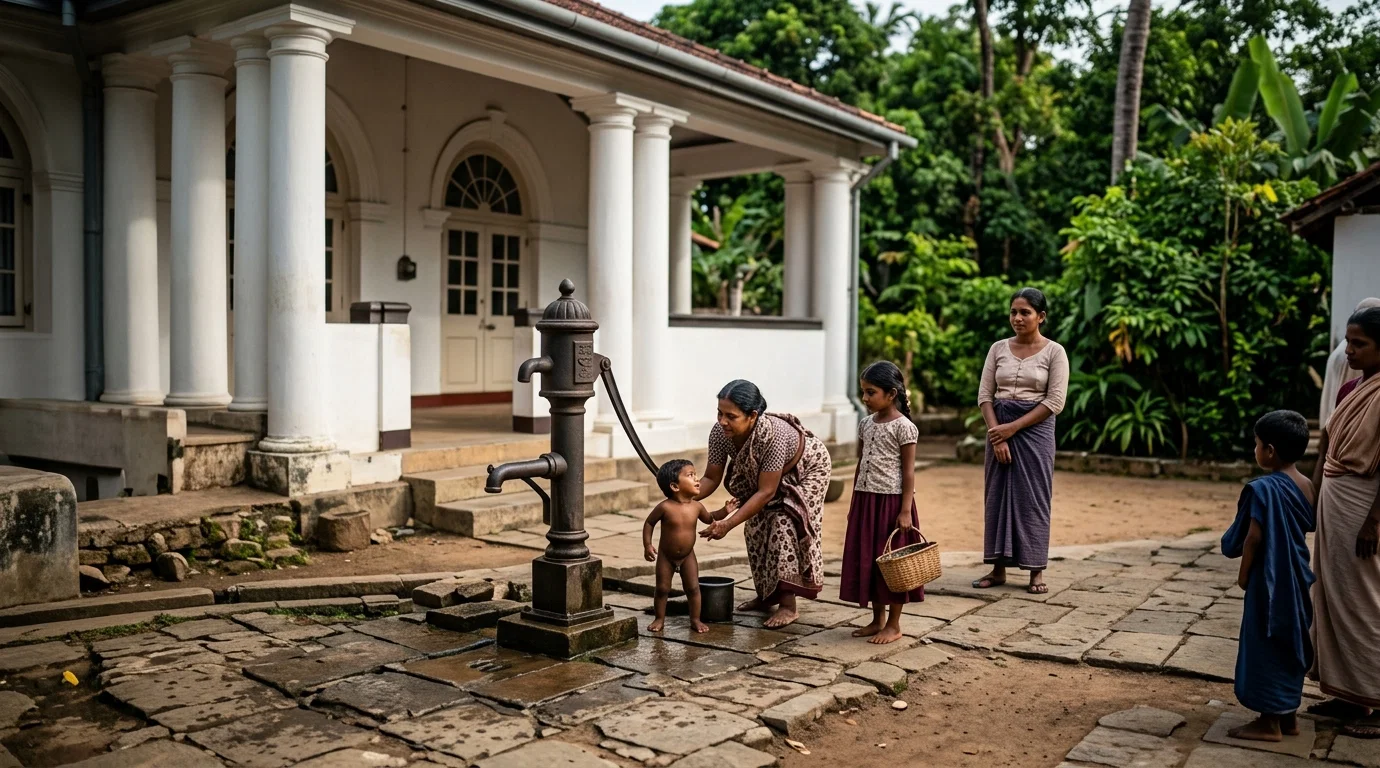
A STREET SCENE IN COLOMBO
The one pressing need in this place, as in every town in Trinidad, is a church building. The people are all very poor, but they are willing to work; and if they could be encouraged by a little help to secure their own buildings, the funds would soon flow into the treasury in increased tithes and offerings. Do not some of our brethren already comfortably housed, desire to lend something to the Lord, with which to build churches in this island? Means thus expended will bear much fruit in this world, and in the life to come, eternal riches to the investor.
W. G. KNEELAND, G. MATHEWS.
Continue reading: J. T. BOETTCHER