Your ShelfYour Projects

Signs of the Times, Vol. 26, No. 46.

DEPARTED GLORY

Signs of the Times

Nov 14, 1900

Pacific Press Publishing Company · OAKLAND, CALIFORNIA · Nov 14, 1900

DEPARTED GLORY.
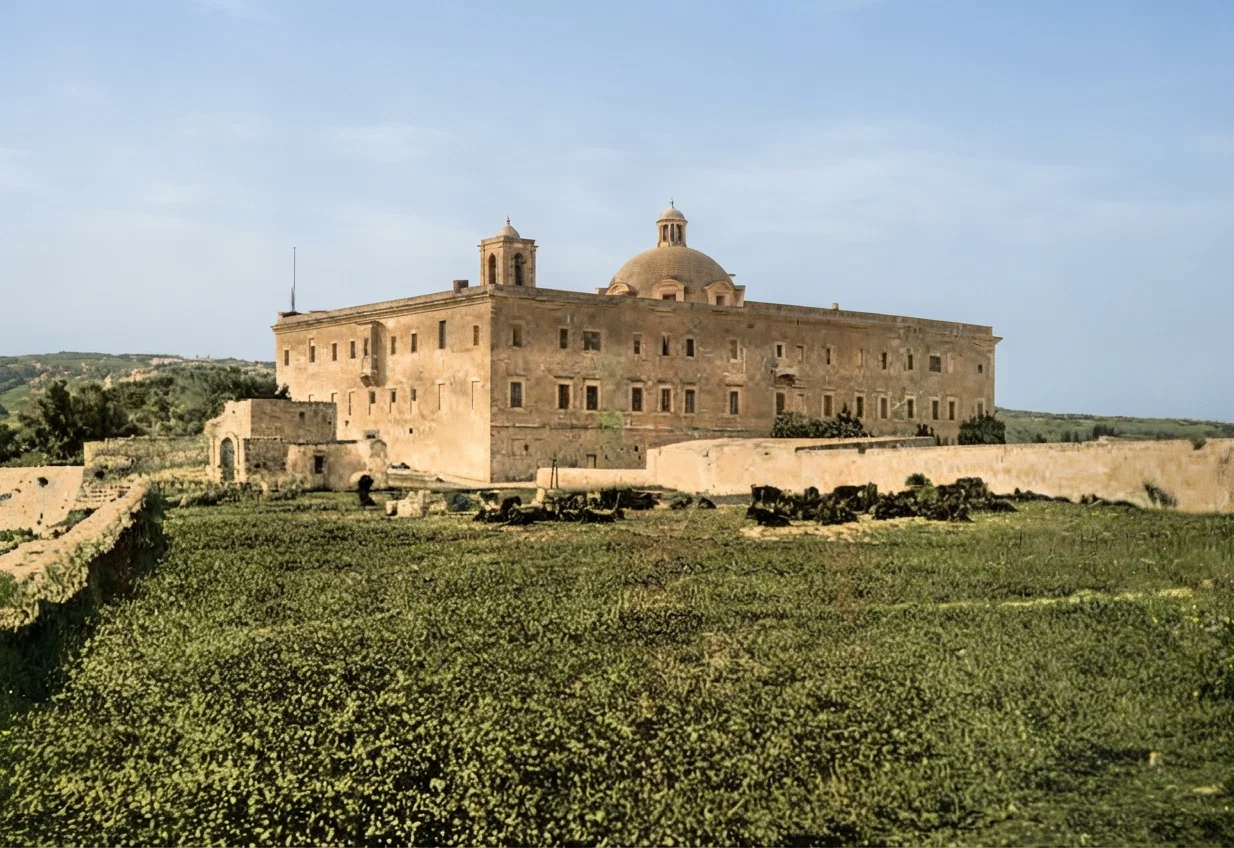
CARMEL, "the Fruitful," is one of the most noted mountains of the "Holy Land." It is not a single peak, but a range or ridge, twelve miles in extent, directly west of the Sea of Galilee, on the Mediterranean coast. One end of the ridge juts out into the sea, ending in a bold bluff 500 feet high. From thence it extends southeasterly, ending in an inland bluff about 500 feet above the sea. Its highest elevation is about eight miles from the Mediterranean, where it rises to a height of 1,740 feet.
THE mountain still proves its title to the "excellency of Carmel." Its steep and rugged sides, sometimes precipitous, are covered with shrubs of pistachio, sponge-laurel, hawthorn, and arbutus. Such flowers as rock-roses, striped asphodel, hollyhocks, the daisy, and the red and purple anemone, abound. From the thyme and mint the feet of the traveler's horse, Schaff tells us, press sweet fragrance. Herds of goats browse its steep sides; occasionally gazelles are seen, while foxes, jackals, wolves, wild boars, panthers, woodcock, and partridges add to its animal life. "Huge valleys upward of 1,000 feet deep wind tortuously from the main ridge to the sea, requiring hours to cross to the opposite summits."
THE section in which it is located was given to the tribe of Asher. Along its northerly base flowed the swift river Kishon. Twenty miles to the southeast was the town of Jezreel, where lived King Ahab in his marble palace, and where also was a temple of Astarte, with its 400 priests, supported by Queen Jezebel. It was on Carmel that it is supposed that those sent to take Elijah were destroyed. 2 Kings 1:9-15. It seems also to have been a stopping-place for Elisha (2 Kings 2:25; 4:25), whence the Shunamite sent to call him when her child died.
Mt. Carmel and the Carmelite Monastery.
BUT the chief event for which the mountain is noted was the conflict between Elijah, the servant of Jehovah, alone, and the united priests of Baal and Astarte, 850 in number. The record is found in 1 Kings 18. The place was near the top of Carmel, where could be seen the great sea on the one side, and the beautiful Valley of Esdraelon on the other; in the distance, the royal city of Jezreel.
THE famine was sore in the land. Heaven had stayed its rain for three years by the word of Elijah because of the backslidings of Israel. Ahab had married Jezebel, the daughter of Ethbaal, the sun-worshipping king of the Zidonians. She had brought with her all the abominable nature-worship of both Baal and Astarte, the licentiousness ever connected with the ancient sun-worshipping cult. Four hundred and fifty prophets of Baal and four hundred of Astarte ("the groves") were fed from the queen's table. Under the royal leadership the people were utterly losing sight of God, and He in His goodness left them to themselves. He withheld the rain till the brooks were dried, the cattle perished, and the people in their anguish began to long for God.
JEZEBEL, and Ahab weakly influenced by her, thought if the prophet were slain the famine would cease, just as tho the slaying of His messenger would destroy God! Here andthere throughout his own realm and into adjacent kingdoms, Ahab had sought the bold prophet, but in vain. At last Elijah meets the king, and tells him that it is he and his father's house that are the cause of Israel's trouble, in that they had "forsaken the commandments of Jehovah," and had "followed the Baalim." One of God's commandments, that which points out the Giver of the law as the Creator, is the Sabbath precept. It is God's sign between Himself and His people forever, that they might know that He is God. Eze. 20:20. Connected with sun-worship was the observance of the "wild solar holiday of all pagan times," the Sunday. The two customs, one based on God's authority and the other on pagan traditions, were antagonistic, and so must be their followers.
ELIJAH proposes a test on one of the upper broad shelves of the mountain, where a perennial spring pours forth its waters. He tells Ahab to gather there the prophets and the people. They come, and the prophet of God, going near to the people, thus addresses them: "How long halt ye between two opinions? if the Lord be God, follow Him; but if Baal, then follow him. And the people answered him not a word." Verse 21. The poor, blinded, carnal people could not decide.
THEN, filled with the divine Spirit, Elijah lays before them his test: "Then said Elijah unto the people, I, even I only, remain a prophet of the Lord; but Baal's prophets are four hundred and fifty men. Let them therefore give us two bullocks; and let them choose one bullock for themselves, and cut it in pieces, and lay it on wood, and put no fire under; and I will dress the other bullock, and lay it on wood, and put no fire under; and call ye on the name of your gods, and I will call on the name of the Lord; and the God that answereth by fire, let Him be God." And the blinded people could see this; and they "answered and said, It is well spoken."
THE prophets of Baal chose their bullock, dressed it, built their altar, placed the bullock upon it, and cried and leaped and cried from morning till noon, but there was no voice nor sign. As the sun reached the meridian and was about to decline, urged on by Elijah's justifiable mockery, the pagan prophets grew more violent. They leaped, they danced, they cut themselves with knives and lances, till blood flowed freely, until the sun declined, and hope was dead.
THEN the prophet of God calls the people to him that they may see all that he does. According to God's instructions, he takes twelve unhewn stones, according to the numbers of the tribes, and builds the simple altar. Then he digs a trench about it, places the wood upon the altar, slays the bullock, places the parts upon the altar, and twice calls for four barrels of water, both times pouring the water on the sacrifice and the wood, and filling the trench, that all might know that the answer was not from man's device, but that it came direct from God.
ALL this work had brought the prophet to the time of the evening oblation; for he was abiding by God's direction in all this. Then he offers his simple prayer of faith from a heart burdened for a sinful people: "O Lord, the God of Abraham, of Isaac, and of Israel, let it be known this day that Thou art God in Israel, and that I am Thy servant, and that I have done all these things at Thy word. Hear me, O Lord, hear me, that this people may know that Thou, Lord, art God, and that Thou hast turned their heart back again." It was not a long prayer, but it was a prayer of faith, asked according to God's will, and it went directly to the Heart of Heaven. "Then the fire of the Lord fell, and consumed the burnt sacrifice, and the wood, and the stones, and the dust, and liked up the water that was in the trench. And when all the people saw it, they fell on their faces; and they said, The Lord, He is God; the Lord, He is God."
IT would seem as tho all this had been sufficient to convert both Ahab and all the priests. But no, their profession was too lucrative, their hearts too gross and hardened. Yet they must not be left to turn back a misguided people, and God's judgment followed upon them swift and sure.
GOD gives the weak king another assurance. He was told to eat and drink, for rain was coming. Seven times the prophet bows before God; seven times he sends his servant to look out over the sea for the appearance of rain. But not until the seventh time do the brazen heavens answer, and then only by a little cloud. It is enough to the prophet; he warns Ahab, and then he himself, girding up his loins, runs the twenty miles to Jezreel before Ahab's chariot.
O, THERE are lessons for to-day in this story! Ahab represents the State, weak and vacillating. Jezebel is God's own symbol for apostasy in religion. As of old, the conflict centers around the Sabbath of the Lord and "the wild solar holiday of all pagan times." As of old, God is calling to His people, "How long halt ye between two opinions?" He appeals to them by all the Word of truth, by all the record of the past; by the life of Christ, to serve Him. But the test does not lie in ocular signs; it lies in the Word of God. The agents of the devil will work false miracles, will imitate Elijah of old in bringing down fire from heaven; and this miracle will be used to deceive people into the worship of the beast and the reception of his mark. Rev. 13:13-17. Christ declares, "Not every one that saith unto Me, Lord, Lord, shall enter into the kingdom of heaven; but he that doeth the will of My Father which is in heaven." Matt. 7:21. In the great final conflict only he whose feet are upon the Rock of eternal truth will stand. God's message will again go in "the Spirit and power of Elijah;" so would He have all receive it; and only so will we be saved from Satan's delusions.
THERE is another lesson worthy of our notice. Carmel was once holy ground, because God there met His prophets. It was "the Fruitful" in the lessons it taught to the back-sliding Israel. Its only merit, as of that of any spot or thing of earth, lies in the continued presence of God; for His presence only makes glorious. So was the temple made glorious; so was Jerusalem; so is still the Sabbath. So was Carmel. But its glory is departed. Yet poor, ignorant, spiritually-blinded man will endeavor to go back to the old places and gather up some rays of departed glory to bolster up an unworthy cause. Thus an order of monks, the Carmelites, about the year 1200, or a little later, settled on Mt. Carmel. They invented the scapular, and pretended to great exaltation, were acknowledged by the popes, till the Jesuits exposed some of their hollow pretensions and wretched frauds. For centuries the order has languished. They have both monks and nuns belonging to the order, and an institution is still maintained on Mt. Carmel. But the glory is departed. The presence of God is not there; and the former "excellency of Carmel" will never be known till God shall "make all things new."

Not as Pleasing Men, but God

"But as we were allowed of God to be put in trust with the Gospel even so we speak; not as pleasing men, but God, which trieth our hearts."

"REMEMBER THE SABBATH."

IT is worthy of note that the Sabbath commandment is the only one beginning with the word "remember;" that it is most explicit in giving the manner of and reason for its observance; and that it is located in the heart of the Decalogue. Knowing man's proneness to forget and trample upon the Sabbath, the Lord used such emphatic language as would tend to impress us with the importance of the commandment, and He placed it where man must walk over three moral precepts on one side, and six on the other, before he can trample on the Sabbath.
If men had always remembered the Sabbath to keep it holy, they would have had a continual reminder of God's creative power, which would have been a safeguard against drifting into idolatry. But, instead of remembering the Sabbath, they forgot it, and, having nothing to remind them of the Creator, soon began to worship the creature.
The great center of the intricate system of idolatry has always been the worship of the sun. This was natural, as the sun was the visible center of earthly action, and the visible source of light. It was also natural to name the first day of the week for the chief object of worship, and to make that day the chief day of idolatrous worship. So, just as the Sabbath observance is the great safeguard against idolatry, Sunday observance became the chief rite in idolatrous worship.
When and how this heathen festival superseded the Sabbath in the Christian church, is best told in the words of others. Neander, the father of church history, says:—
The festival of Sunday, like all other festivals, was always only a human ordinance, and it was far from the intention of the apostles, . . . and from the early apostolic church, to transfer the laws of the Sabbath to Sunday.—Rose Ed., p. 186.
Wm. Prynne, in his "Dissertation on the Lord's Day Sabbath," pp. 33, 34, 44, 1633, says:—
It is certain that Christ Himself, His apostles, and the primitive Christians, for some good space of time did constantly observe the seventh-day Sabbath, . . . till the Laodicean council did in a manner quite abolish the observance of it.
Sir Wm. Domville traces this testimony in his "Examination of the Six Texts," p. 291:—
Centuries of the Christian era passed away before the Sunday was observed by the Christian church as a sabbath. History does not furnish us with a single proof or indication that it was at any time so observed previous to the Sabbatical edict of Constantine in A.D. 321.
This first Sunday edict speaks of the day as "the venerable day of the sun," showing that Constantine recognized it as a heathen festival. This law seems to have been a mild compromise with the heathen element which was fast flowing into the church. It was not until A.D. 364, at the council of Laodicea, that the observance of the Sabbath was prohibited under an anathema.
In speaking of this first Sunday law, Neander says, "In this way the church received help from the State for the furtherance of her ends." The church was willing to adopt the heathen festival for the sake of being herself adopted by the heathen State. After the State had established a precedent by legalizing Sunday at the request of the church, it was a comparatively easy matter for her to secure other favors, even to the extent of State aid in the apprehension and punishment of those whom she denounced as heretics. Thus we see that in those apparently mild measures for the observance of Sunday lurked the deadly bacilli that soon broke out in the open sore of the Inquisition, which has so long spread its evil contagion among the nations of earth.
The Church of Rome rightly claims the honor (?) of having substituted the observance of Sunday for that of the Sabbath. She also uses this substitution as the proof of her power to change the precepts of Jehovah. The "Doctrinal Catechism" says:—
Had she not such power, . . . she could not have substituted the observance of Sunday, the first day of the week, for the observance of Saturday, the seventh day, a change for which there is no scriptural authority.
The "Abridgment of Christian Doctrine," another Catholic work, asserts that the power of the church is proved "by the very act of changing the Sabbath into Sunday," and declares that Protestants are inconsistent, "because by keeping Sunday they acknowledge the church's power," and by ignoring other commands of the same church they deny the same power.
One of the titles conferred upon the popes by the Church of Rome is "VICARIUS FILII DEI," vicegerent of the Son of God,—virtually God on earth. And the right to use this august title is upheld "by the very act of changing the Sabbath into Sunday." The Catholic Church virtually says that Sunday observance is the sign by which we acknowledge the pope as God on earth. Jehovah says, "Hallow My Sabbaths; and they shall be a sign between Me and you, that ye may know that I am the Lord your God." Eze. 20:20.
In view of the above facts, which reveal the almost universal tendency to forget the Sabbath, and to trample upon it, is it any wonder that the Lord prefaced the Sabbath commandment with the word "remember"? Tho to remember the Sabbath may be a cause for scorn and ridicule among those who seek to overwhelm it by the tidal wave of papal error, let us still "remember the Sabbath, to keep it holy;" for it will outride the angry dash of the warring elements.
"It will weather the blast, and land at last Safe on the evergreen shore." GEO. A. SNYDER.

"NOT BY MIGHT NOR BY POWER."

"THIS is the word of the Lord unto Zerubbabel, saying, Not by might, nor by power, but by My Spirit, saith the Lord of hosts. Who art thou, O great mountain? before Zerubbabel thou shalt become a plain; and he shall bring forth the headstone thereof with shoutings, crying, Grace, grace unto it."
The world begins its work with pomp and show and boasting; but all will come to naught. God's way is to make the day of small things the beginning of the triumph of truth and righteousness. For this reason none need be elated by a prosperous beginning, nor cast down by apparent feebleness. God is to His people riches, fulness, and power. His purposes for His chosen people are, like the eternal hills, firm and immovable.
Remember that human might did not establish the church of God, neither can human might destroy it. From age to age the Holy Spirit is an overflowing fountain of life. "This is the victory that overcometh the world, even our faith." There is victory for all who strive lawfully, in perfect harmony with the law of God. They will triumph over all opposition. As they carry forward God's work in the face of all foes, they will be given the guardianship of holy angels.
Christ has pledged Himself to help all who join His army, to co-operate with Him in fighting against visible and invisible foes. He has promised that they shall be joint heirs with Him to an immortal inheritance, that they shall reign as kings and priests before God. Those who are willing to share in this life the humiliation of the Saviour, will share with Him in His glory. Those who choose to suffer affliction with the people of God rather than to enjoy the pleasures of sin for a season, will be given a place with Christ on His throne.
Hold fast the Word of life. The tempest of opposition will spend itself by its own fury. The clamor will die away. Carry forward the Master's work bravely and cheerfully. The Father above, who watches over His chosen ones with the tenderest solicitude, will bless the efforts made in His name. His work will never cease until its completion amid the triumphant shout, "Grace, grace unto it."
MRS. E. G. WHITE.

RELIGIOUS LIBERTY.

LIKE the kingdom of heaven, religious liberty is in us, if anywhere. If it is not in us, we seek it of men; that is, we want somebody else to protect and defend our unbelief. The heathen, the hypocrite, the Judas Iscariot, always wants temporal or ecclesiastical power and authority for the maintenance and propagation of his creed, his aspirations, or his dominion. The followers of Christ seek help and comfort of God. His grace is sufficient to them that believe.
The very kingdom Jesus declined, some seek to utilize for initiating and establishing the kingdom of God. Because many hope to master the impossible, to subjugate the faith of Jesus unto their carnal assumptions and conceits, those that are overcome of them, fear, with their masters, that some other power than God's may despoil them of liberty to worship God as they see fit. Were they not slaves to their own contempt and scorn for our charters, precepts, and example, were they in Christ and Christ in them, they would indeed be free, and never dream of appealing to Pilate, Herod, or high priest for support or tolerance.
Jesus might have conciliated Herod by giving that worthy an answer. But He did not. Christ was free. He had overcome fear of death, fear of men, fear of torture, and all Satan could heap on Him. Thus He revealed the mockery of human justice, the folly of human aspirations, and the unutterable emptiness of human dominion.
Now the simple fact is, it is sin to fear aught but God. It is traitorous to our only Saviour to seek aid or comfort or authority not of Him. Let no sane person expect that our Lord will hear his prayer while he depends on His enemies for succor.
Let the blind lead the blind. Let them compass land and sea, and make all nations tributary to their authority. There is no divine promise that those who love a lie shall not be deceived. On the contrary, the mark of the beast will be found in the forehead and in the hand of any one trusting in its protection.
Paul says, "All things are lawful for me, but all things are not expedient." True liberty of conscience is only found in obedience to the Holy Spirit, and never in servitude of what is carnal. All the government of the world, army, and navy can not insure a life one hour. Neither death nor hell respect human authority, nor can all science and mortal ingenuity make a blade of grass grow.
If the love of God prolongs days for repentance, let no man imagine that we are not responsible for every hour at our disposal; for our liberty in Christ is of a nature that requires constant watchfulness and earnest prayer, lest we sin against a dispensation of divine love given for our schooling in the only life worthy of eternal continuance.
It is needless to state that with cessation of this dispensation—which may end to us tomorrow—the world will end, and judgment is at our door. Left to their own resources, men will succeed in making earth what it would be now but for the grace of God. Yet blessed is he who is called to suffer and share our Saviour's reproach and death. For what men can deprive us of, can not inherit life everlasting.
J. C. KASTNER.

HE HUMBLED HIMSELF.

CHRISTIANS sometimes pray that they may be humbled. They are thus asking God to do that which He has left for us to do. When Jesus took upon Himself our human nature, and became subject to all the temptations the devil ever can present to a human soul, it is written of Him that He "humbled Himself." "Let this mind be in you, which was also in Christ Jesus; who, being in the form of God, thought it not robbery to be equal with God; but made Himself of no reputation, and took upon Him the form of a servant, and was made in the likeness of men; and being found in fashion as a man, He humbled Himself, and became obedient unto death, even the death of the cross." Phil. 2:5-8.
Jesus is our Pattern; and in this scripture we are told of three things that He did,—He made Himself of no reputation; He took upon Himself the form of a servant; and He humbled Himself to die, not even as servants die, but submitting Himself to the death of criminals.
Thus we are taught to humble ourselves. God is abundantly able to humble the proudest of earth. And all those who fail to heed the admonition, "Humble yourselves therefore under the mighty hand of God" (1 Peter 5:6), will, under this same mighty hand, be humbled. For of God it is written, "Those that walk in pride He is able to abase." Individuals, nations, kingdoms, or powers of the kingdoms of darkness, shall not be able to withstand God. Altho in self-exaltation they may ascend into the clouds, from the clouds will they be brought down.
The human heart is proud. Pride manifests itself in different ways; but the result is always the same,—to forget God. The heart filled with self has no room for Jesus. Because of this, God hates pride. "These six things doth the Lord hate; yea, seven are an abomination unto Him: A proud look, a lying tongue, and hands that shed innocent blood, an heart that deviseth wicked imaginations, feet that be swift in running to mischief, a false witness that speaketh lies, and he that soweth discord among brethren." Prov. 6:16-19.
God loves the humble, contrite ones. He walks with them. His promises are abundant for them, and they might all be summed up in this one, "He shall save the humble person." Therefore let us not ask God to humble us, but humble ourselves, that we may "walk" with Him. T. E. BOWEN.

The Bread of Life

To go on in sin is starvation of soul; to return to Father's house means the satisfying of the soul with the bread of life.
Continue reading: LESSONS FROM MATTHEW 24