Your ShelfYour Projects

Review and Herald, Vol. 79, No. 28.

A NEW REVISED BIBLE
Earlier text: Love Divine

Health by Faith Versus Health by Works

FRANCIS M. WILCOX
THERE are two kinds of success. One is the success based upon right principles, the victory of faith; the other is a so-called success, the result of wrong principles. There are two kinds of righteousness. One is the righteousness of faith, the true righteousness; the other is the righteousness of works. One points to Christ, the other is self-centered. One seeks to do good in order to become good; the other does good because of having been made good by the power of faith. There are two ways of seeking for health. One is the way of God, the other is the way of human effort.
In the realm of Christian experience God has a standard of right, the moral code of ten commandments. These are an expression of the character of God. By conformity or nonconformity of the Christian experience to this standard, it may be determined whether or not the life is in accordance with the life and character of the Life-giver. How shall one become like God? Shall he take this expression of God’s character, the ten commandments, and by mental processes and physical strivings seek to obey their requirements?—Nay, verily. Righteousness works from within outwardly. The principles of this divine law must first be instilled in his heart. Then can he say with the psalmist, “O how love I thy law! it is my meditation all the day.” And in the prophetic words uttered of Christ, “I delight to do thy will, O my God; yea, thy law is within my heart.” The keeping of the ten precepts should be but an outward expression of the inward possession of the same principles.
In the physical world, in those things that pertain to the material, as of food and raiment, God likewise has a standard,—certain principles which determine the proper course of conduct,—principles which have their origin in the great moral code of which we have already spoken.
That which tears down and destroys the body, the temple of God, violates the law of God. That which nourishes and builds it up, and makes it a fit dwelling place for the Spirit, accords with that law. How shall one seek to observe this law of his being? In other words, how shall one relate himself to the question of healthful living? How shall he choose the good and reject the evil? In what spirit should he leave off those things which he knows are harmful, and adopt better habits of eating and drinking? Should it not be in the same way in which he relates himself to the great moral code? Should not those principles be first brought into his heart, and he receive them in the love of them? This is God’s way. If it is not a thing unreasonable that God should raise the dead; if it is a matter of daily occurrence that God can change the heart and natural affections, is it too much to believe that God would take the perverted appetite and change it, that he would take away the cravings for strong drink, the lust for flesh, the desire after evil things, and put in their place the love of the wholesome and the pure? Overlooking this point,—the willingness of divine aid,—many have made the question of healthful living a laborious process; they have sought, by their own works and efforts, to bring themselves into that place where God wants to bring them physically, the same as he wants to bring them spiritually,—into harmony with his own divine will. We may expect the operations of this principle of health by works in the man who knows not God. Indeed, we see its exercise in the world to-day. We see men accepting God-given truths and precious principles of health, and following them purely from the scientific or physiological standpoint, leaving God out of the question. Though recognizing the principles of heaven, they are seeking to follow these principles without God. It should not be so with his professed children. “Whatsoever is not of faith is sin.” “Whether therefore ye eat, or drink, or whatsoever ye do, do all to the glory of God.”
If there could be grasped in this question of healthful living the element of faith,—if that could come in in the application of every detail, the principles of health would not be the yoke of bondage which, in the experience of too many, they have proved to be. It is one thing to sit down to a table loaded with the bounties of heaven, and eat and drink from a sense of duty, while the thoughts continually wander off to the viands of Egypt, and the appetite craves those things which God condemns; and another thing to sit at the same table, and eat with thankful heart, delighting in the bounties of God, rejoicing in them because they come from God, and are the best for the upbuilding of his temple.
“Health reform” has been the curse of too many in the world because they have sought it by works and not by faith; because it has been taken up from a sense of duty, and not entered into through faith, as the blessed thing of God that it is. God does not want his people to-day to go about, as did mourning Israel, loathing the food they eat. There is for them a better experience than this. God wants them to eat their food with joy and gladness of heart. He wants them to eat it because they believe that it is the best food; because they relish it; because they rejoice in it; because physically, spiritually, mentally, and in every other way, they would rather have it than anything else that earth might produce.
The principle of righteousness is far reaching. It pertains not alone to the exercise of the mind, but it enters into all of life’s doings and activities. It is this principle that God wants us to recognize in the matter of healthful living. Education is necessary. God has bestowed upon us the powers of thought and of reason and of discernment. By the aid of his Spirit we are to recognize the good, and choose the good. And so upon this question of healthful living education has its place. Having learned what is best for us, and what God wants us to eat, then let us eat it with joy and with gratitude, eating it because it is good, and because we like it.
Living health reform from a sense of duty places one in the old-covenant relationship. It puts him in bondage, and that bondage brings death, and has brought death upon thousands who have gone down supposing they were following the principles of high heaven. They may have seen those principles, but they related themselves to the principles in awrong way, even as the children of Israel related themselves in a wrong way to the words of God spoken from the summit of Sinai. God wants every one of his children to live out health principles by faith, even as they keep the Sabbath by faith, even as they pray by faith, even as they perform any other Christian service through faith in the Lord Jesus. When that is done, a song of victory and triumph will well up from every heart, and the joy within will manifest itself in joy without, and love and happiness and peace and prosperity will reign in every heart and in every home, and the body of every one of his children will be truly and appropriately and fittingly that which God wants it to be, the temple of the Holy Ghost.

Our Neighbors

Somebody near you is struggling alone Over life's desert sand; Faith, hope, and courage together are gone: Reach him a helping hand. Turn on his darkness a beam of your light; Kindle, to guide him, a beacon-fire bright; Cheer his discouragement; soothe his affright; Lovingly help him to stand.
Somebody near you is hungry and cold; Send him some aid to-day. Somebody near you is feeble and old, Left without human stay: Under his burdens put hands kind and strong; Speak to him tenderly, sing him a song; Haste to do something to help him along Over his weary way.
Who are our neighbors? Look up and behold, Pressing on every hand, Little ones, lonely ones, sad ones and old; Everywhere see them stand. He is our neighbor whom we can befriend, He to whom comfort or aid we can lend, Or he whose footsteps we may cause to wend Toward the heavenly land.
Dear ones, be busy; for time fleeth fast, Soon it will all be gone; Soon will our season of service be past; Soon will our day be done. Somebody near you needs now a kind word; Some one needs help such as you can afford: Haste to assist in the name of the Lord, There may be a soul to be won.
— Mrs. E. E. Williams.

Israel Left Egypt in Health

S. N. HASKELL
WHEN Israel came out of Egypt, where they sat by the fleshpots and were full, and came to the station of Marah, the Lord made them the following promise: “If thou wilt diligently hearken to the voice of the Lord thy God, and wilt do that which is right in his sight, and wilt give ear to his commandments, and keep all his statutes, I will put none of these diseases upon thee, which I have brought upon the Egyptians: for I am the Lord that healeth thee.” Ex. 15:26.
At this time the Lord brought them forth; “and there was not one feeble person among their tribes.” Ps. 105:37. The light on a reform diet had not then shone upon them. But immediately after this they came to the station in the “wilderness of sin, which is between Elim and Sinai” (Ex. 16:1), and there the Lord gave them bread from heaven. So God “rained down manna upon them to eat, and had given them of the corn of heaven. Man did eat angels’ food.” Ps. 78:24, 25. While around Mount Sinai, there was no complaint of this food; but on their journey to Kadesh-barnea they said, “Our soul is dried away: there is nothing at all, beside this manna, before our eyes.” Num. 11:6. They wanted some of the old diet they had down in Egypt. “He gave them their request; but sent leanness into their soul.” Ps. 106:15. Here is a wonderful lesson. First, when they had not the light which the Lord caused to shine upon them in the wilderness, they were not sick on the Egyptian diet. But after he had recommended to them what was better, and they had eaten and enjoyed the change of food, then when they went back to the old diet, for the first time recorded in the Bible they had the disease of Egypt upon them, and with it leanness of soul. So leanness of soul, disease, and their former diet were associated.
The bread that God gave them in the wilderness represented Christ; for he was “the bread which came down from heaven.” Had they seen Christ in it, they would have found in that bread a life similar to that in the tree of life, the same life which was in Christ when he came. He healed all that were sick. Now we are in the antitype of their journeying, and sooner or later disease will be unknown among the remnant. But who will experience this? Who experienced freedom from sickness in the antitype? It was not those who returned to their former Egyptian diet, neither will it be those in the last days who turn back to the diet they either have left or ought to have left years ago. In a special sense God is now calling upon his people to leave the fleshpots of Egypt, and is asking them to feed on the manna that is coming from heaven. It is the word of God in its fullness.
Do not many of us need a special education on this subject? It is time that we aroused and embraced every opportunity to inform ourselves as to this heavenly manna, and prepare for the final outpouring of the Spirit of God, that we may be ready to enter the heavenly Canaan.

Things That Are Lovely

SOME earnest young Christians make a mistake in putting too light a value upon those graces of manner and little courtesies of speech and conduct that might commend their excellent qualities to others, and give them the vantage ground of personal influence. If a merchant has diamonds to sell, he does not shut them up in a drawer, nor display them in a rough box. He does not say: “Nothing can add to the value of a diamond, and I will not condescend to any tricks to catch admiration or draw customers. If a man really wishes to buy, he will come to me.”
What he does is to put his jewels upon beds of satin, in cases of velvet, using every art to display their beauty. He knows very well that people who have never thought seriously of buying may be attracted by the beauty that catches the eye and arrests the attention.
Your Christian principles ought to be rendered so attractive by your personality that those who know you will associate goodness with graciousness.
Neatness and taste in dress, careful avoidance of all rude and disagreeable habits, conformity to the customs of good society,—these are by no means trifles to be ignored by those who claim to belong to the highest court of honor. You do not properly represent your Sovereign unless you are not only a patriot, but a gentleman.
The great majority of those with whom we come in contact must judge us by externals; and if we covet that most precious power of influence, we must see to it that we do not so repel them by the prickly outside that they will never care to go deeper. We are, indeed, to think upon the things that are true and pure, but not less upon those that are lovely and of good report.—Emily Huntington Miller.

Domestic Bliss

HAPPY they, the happiest of their kind, Whom gentler stars unite, and in one fate. Their hearts, their fortunes, and their beings blend. 'Tis not the coarser tie of human law, Unnatural oft and foreign to the mind, That binds their peace, but harmony itself, Attuning all their passions into love; Where friendship full exerts her softest power; Perfect esteem, enlightened by desire Ineffable and sympathy of soul; Thought meeting thought and will preventing will, With boundless confidence; for naught but love Can answer love and render bliss secure. — James Thompson.

Twelve Thousand Barrels

A few days ago a gentleman pointed out a bonded warehouse to me, and remarked that it contained twelve thousand barrels of whisky. I began to think:—
12,000 barrels of liquid woe, Breeding anguish in its flow; 12,000 barrels of hell on earth, Cursing the day of many a birth 12,000 barrels of frenzied mind, Scorning the laws of human kind; 12,000 barrels of blind deceit, Snaring the paths of youthful feet; 12,000 barrels of sisters' tears Rolling down through coming years; 12,000 barrels of brothers' blight, 12,000 barrels of stormiest night; 12,000 barrels of heaviest sighs, 12,000 barrels of broken ties; 12,000 barrels of cunning lies, 12,000 barrels of orphans' cries; 12,000 barrels of pressing cares, 12,000 barrels of widows' tears; 12,000 barrels made of staves, 12,000 barrels of drunkards' graves; 12,000 barrels of intense pain, 12,000 barrels of terror's reign; 12,000 barrels of impure thoughts, 12,000 barrels of broken hearts; 12,000 barrels of honor vain, 12,000 barrels of blackest stain; 12,000 barrels of bloody knives, 12,000 barrels of ruined lives; 12,000 barrels of—I'll say—well, 12,000 barrels of death and hell.
—Rev. U. G. Foote, Temperance Cause.

MRS. C. W. MITCHELL

EDITORS OF REVIEW AND HERALD: I am anxious to learn how to prepare green peas and beans for winter use, but more especially how to can them so they will keep well in glass cans. As I am sure many others would also like the same information, I send my request to you, hoping it will not be long before it is answered, as the season is so far advanced. If any of the sisters have a good method of canning sweet corn without adding any injurious preservative, I would be glad to know it.
Very truly yours,

MRS. C. W. MITCHELL

Runnells, Iowa.

The Inner Side of Every Cloud

“THE inner side of every cloud. Is bright and shining; I therefore turn my clouds about, And always wear them inside out, To show the lining.”

A Trip Through Sumatra

E. H. GATES
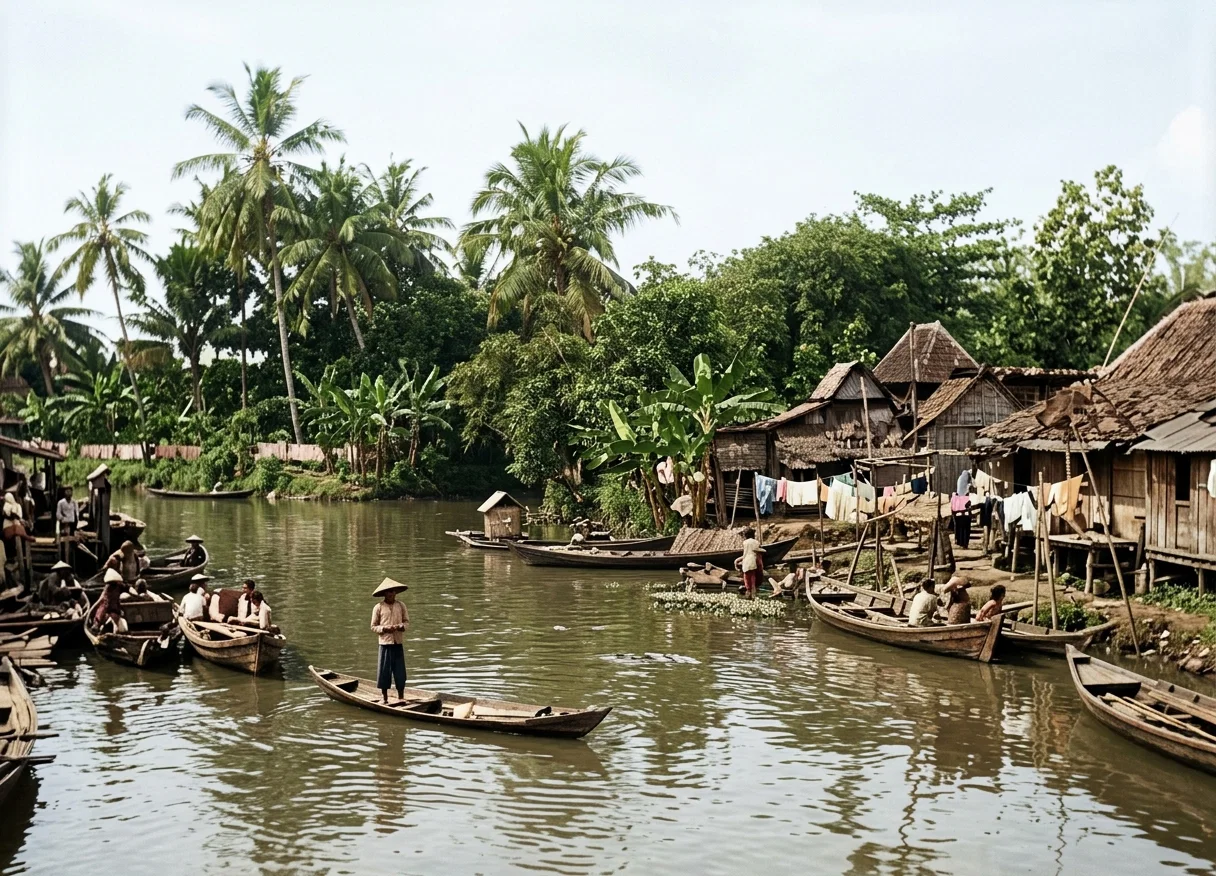
AFTER nearly a week's stay at Singapore, I started for Padang, West Sumatra, to visit Brother Munson. As there is no railroad across Sumatra, I had to go across to Batavia, Java, opposite the southeast point of Sumatra, and then sail along the southwest coast of Sumatra to Padang.
RIVER SCENE, BATAVIA, JAVA
Java, where I spent two days, is one of the most densely populated parts of the earth. This island is six hundred miles long, and probably does not average much more than one hundred miles wide, but it has a population of more than twenty-five million. The natives are of the Malay race, and are mostly Mohammedans. This island, like many of the East Indies, is under the government of Holland.
From Batavia to Padang, the passage was made in a Dutch steamer. I have had great difficulties in different parts of the world to get hygienic food, but never before the experience that I had in these Eastern islands. There being no lodging houses, I was obliged, when on shore, to stop at hotels. While these were very fine, and the accommodations high priced, there was scarcely a thing that a vegetarian cares to eat. A meat eater could get a great variety; but take away the flesh food, and there was little left. My first trouble was to make myself understood. Not being able to speak the language of the country, I had to take what was on the table, or go hungry. My next trouble was the time of the meals. The heavy meal of the day, and the one that furnished the best variety from which to select, was the dinner, which was served between eight and nine in the evening. I could not think of eating at that unreasonable hour. In the morning I had a good appetite; but of course the people who had the night before overloaded their stomachs with half a dozen kinds of meat, pickles, rice, and curry (which was like liquid fire), and had drunk two or three bottles of beer, had little or no appetite. For this reason the breakfast was but a mockery, there being generally nothing on the table but some exceedingly white, white bread, strong butter, cold meat, a cup of tea, with perhaps occasionally some jam or jelly. And as a rule, even this was not served till eight or nine o'clock. Occasionally, however, I obtained some soft-boiled eggs.
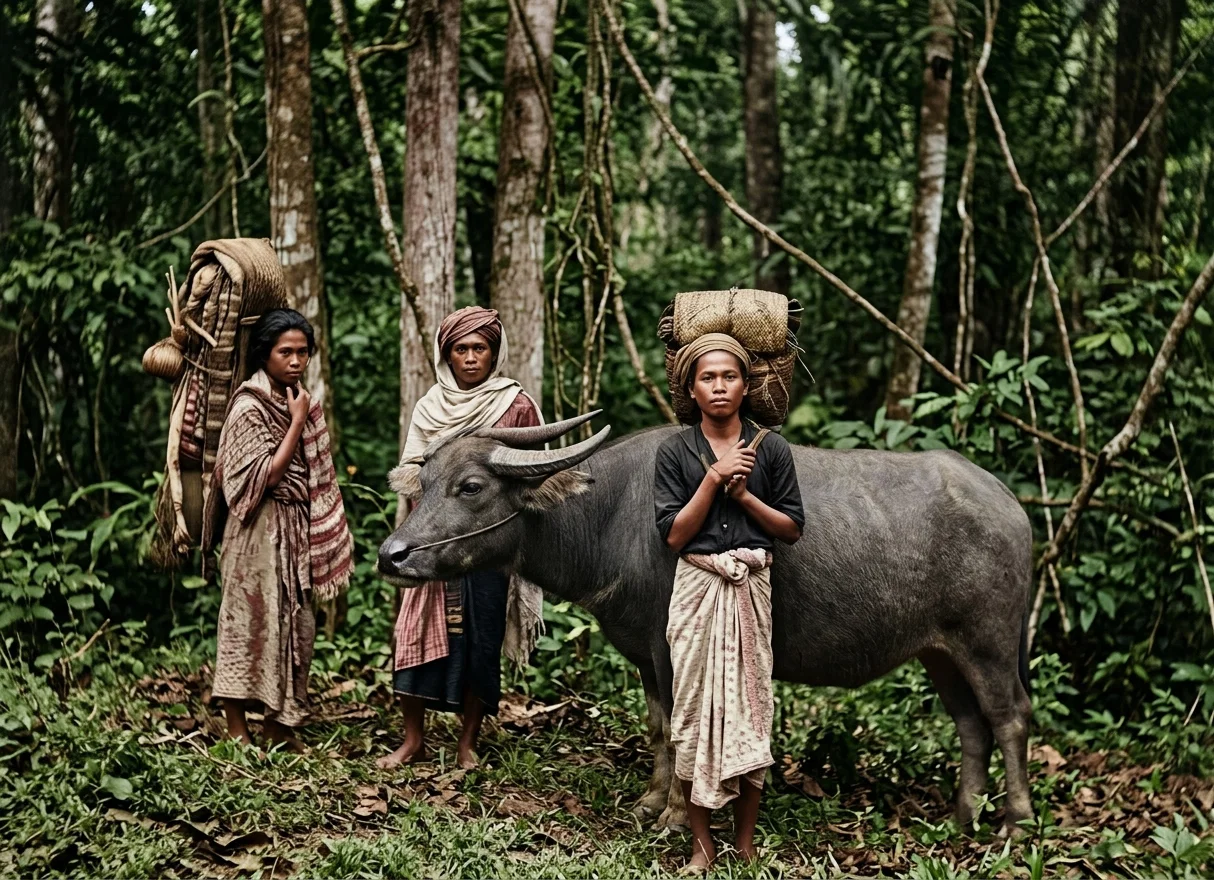
MALAYS AND WATER BUFFALO, SUMATRA
The second meal, or tiffin as it was called, was served from 12 to 1. Of course the poor stomach had not finished its work of digesting the breakfast; but this meal must be taken now, or a person must wait till the next morning. Outside of the hotels nothing could be obtained except at Chinese shops, which were not to be even thought of. Many times I made my second meal of bananas, there being often no other fruit to be purchased.
In all these Eastern countries food is prepared and eaten with most fiery condiments, the very taste of which drew floods of tears from my eyes. When I saw the wretched trash eaten by the people, I ceased to wonder that their poor, illy nourished bodies clamored for stimulants—tea, coffee, and alcoholic liquors. And when I saw all their health-destroying habits, I ceased to wonder that the people were morally bad. And never before did I see as now the value of the blessed health reform which God has committed to us.
After leaving Batavia, we sailed along the southwest coast of Sumatra, stopping at different points to discharge cargo. The general appearance of Sumatra is not unlike that of tropical islands in other parts of the world. The island is one thousand miles long, its greatest width being two hundred and fifty miles. The population is three million. The inhabitants are principally Malays and Bataks. The latter are wild and fierce pagans, and reside in Batakland, toward the northern part of the island, and in the small islands off the west coast. I am told that German missionaries are doing a good work among them. As the missions were in the interior, I was not able to visit them without heavy expense and much loss of time.
The Malays, who make up the great bulk of the population, are Mohammedans. Their religion was first introduced here in the beginning of the thirteenth century, and has since spread over a large part of the East Indies. Wherever there is a collection of Malays,there is a prayer house, or, as the larger ones are called, a musjid, or mosque. The British and Foreign Bible Society is doing commendable work in placing the Holy Scriptures among them, but with little apparent result. Very few Mohammedans ever accept Christianity; but after seeing the treatment they receive from professed Christians, I am not surprised at their slowness to receive it. In their estimation, Christianity is synonymous with idolatry, greed, cruelty, and bloodshed. But God's last message will find some adherents even from among this people. At one place I was told by an intelligent man that the Mohammedans have a tradition that when the Turks leave Constantinople, then Christ will come to earth again.
The products of Sumatra are varied. Of minerals there are gold, tin, lead, coal, marble, and slate. Vast forests of valuable timber, including teak, are found. Gutta-percha, rattan, and kapok are exported in considerable quantities. Among the articles of consumption are rice, coffee, sugar, copra, tobacco, quinine, vanilla, pepper, ginger, nutmeg, and cloves. There are several native fruits which are peculiar to the East Indies, as the durian, mangosteen, rambutan, pomelo, rambah, jamboo, etc., etc.
In the jungles, a little back from the coast, are found lions, tigers, elephants, rhinoceroses, tapirs, bears, orang-outangs, monkeys, wild pigs, and the water buffalo. The latter is tamed and used by the natives to haul their two-wheeled wagons.

The Waiting Gold Coast, West Africa

D. U. HALE
I saw in a recent copy of the REVIEW a letter from Fred Dolphijn. I was glad to see that the Mission Board is still interested in that field. My own heart has ached many times because that mission has lain vacant so long. Brother Dolphijn is as faithfully holding up the banner of truth as he knows how. His faithfulness has been quite remarkable. For over twelve years he has stood almost alone on that coast. The Lord has used him for much and lasting good, but he needs help.
I have not received a letter from him for some time, but among the last he spoke of ten or twelve places where the kings and the people desired that some one would come and teach them the truth. There are over a million persons on that coast who speak the Fanti language, the native tongue of Brother Dolphijn, and they are crying for the truth. In one of my trips to the interior I was passing through a village one morning early, when suddenly I heard some one hallooing at the top of his voice. I turned, and saw a tall, stalwart man holding his 'cloth' about his body, waving his hand, and running toward me with all his might. We were then sixty or seventy miles inland, and I could not imagine what he could want. I told Brother Dolphijn to stop, and find out what he wanted. After talking for a minute, Brother Dolphijn said that he wanted us to take his boy, about twelve years old, and put him in our mission. He had just heard that we were missionaries, and he wanted his boy brought up in the Christian religion. He himself was tired of their native fetish, and he wanted his boy brought up in something better. I had Brother Dolphijn explain to him that our mission was not ready to receive any one for training. When we left, tears of disappointment were in his eyes.
Brethren, souls on that coast are going down to eternal ruin while we are sitting here doing nothing for them. Surely the Mission Board can find some volunteers who are willing to sacrifice for their brethren there, as Christ sacrificed for us. I am sure that the Mission Board would be glad to hear from any one who is willing.
Keene, Tex.

The Situation in Australia

G. C. TENNEY
The Australian commonwealth has barely passed the first year of its career, ere it finds itself in the grasp of circumstances that try men's souls. Economy in either public or private life has never been carefully considered by the people, who have been accustomed to see money freely produced from rich mines and vast pastoral enterprises. The mother country has ever been very indulgent in the matter of lending her surplus capital to the young and aspiring colonies, until enormous debts have accumulated; and the habit of borrowing and expending freely is one hard to break off. But the day of trial seems to be coming on at least a portion of this country.
The lack of water has always been the great drawback to the development of the interior regions of Australia. One very seldom sees in Australia such babbling brooks, gushing springs, and smiling lakes of fresh water as bless other lands. There are but few fresh-water rivers, and in dry times most of these become dry beds, or pools scarcely linked together by a driveling stream. Droughts are of such usual occurrence as to be almost normal. On the other hand, the soil is most productive. Every other condition for great prosperity prevails, so that when a season of reasonable moisture comes, the country responds bountifully, and prosperity at once lifts its head. If given an adequate supply of rain, Australia would become the garden of the world.
For several years past there has been over the most of the country a deficient rainfall, and in some parts an entire absence of rain. I am told that in Queensland children are now going to school who have never seen a shower of rain, and it is probably true. Gradually this condition has been extending southward into New South Wales. Except for a narrow region along the coast, the country is mostly in the hands of squatters and pastoralists, who lease from the government large tracts of lands, on which they undertake to pasture vast flocks of sheep and herds of cattle. In prosperous years the business has yielded enormous returns.
But in recent years many millions of sheep and cattle have died of thirst and starvation in Queensland. One may travel hundreds of miles without seeing a single blade or even a root of grass or herb. Several varieties of trees bear leaves on which cattle and horses will subsist, but these trees have been cut down.
I have been the witness of some of these scenes of desolation. Around the edges of every water hole may be seen almost a rampart of bones. The weakened animals coming down to drink, having no strength to extricate their feet from the mud, lie down there and die. The dead and dying mingle with the bones of those that perished earlier. One constantly sees horses and cattle lying in a helpless, dying condition. Sometimes horses will lie for days unable to rise. They beat a cavity in the ground in their struggles, but no one comes to their relief. Often the crows pick the eyes out of animals yet alive. These scavengers and the pigs are the only beings that seem to thrive on this awful distress. Large piggeries are established, and animals that are about ready to die are driven into the enclosures, and left to the voracity of the swine. It is no unusual sight to see one or more pigs rush out of the frame of a decaying horse. These pigs are shipped to the cities for human food!
Of the condition into which New South Wales is coming, a member of the government writes to a daily paper as follows:—
The present drought is without parallel in the memory of any man in this state. In some parts it has continued now for five years without a break, and save in a very few districts, it is of many months' continuance, so that every reserve of dry grass, seed, or shrub on which stock may subsist is almost if not entirely gone. Where there may be any feed, there is no water. From Riverina to the Queensland border, from the western slopes to the far west, the drought holds undiminished and undisputed sway. I have traveled many of our inland districts recently, and I have met men from all parts, and there is the one story everywhere: Stock are dying off at an appalling rate, and the losses are being spoken of with fear, and with almost a desire for concealment. The outlook is the most serious that has ever faced the great pastoral industry of this state in my time, and the whole community will have to face for many years to come the dire effects of this terrible run of bad seasons, culminating in this the worst of all, in 1902. In a few weeks, too, we shall be face to face with famine prices for meat and food of every kind, and the winter is bound to see work scarce and food dear, a combination of circumstances that no community can face with complacency.
In order to “protect the industries” of the commonwealth, a heavy import duty was placed on all foods for man and beast. This now serves to increase the prevailing distress by greatly enhancing the price of food and fodder.
The men are rushing into the cities, where work is scarce, and living is expensive. Sydney and Brisbane, the capitalsof the afflicted states, are plague-infected. Although the outbreak is not alarming, yet new cases are of daily occurrence, and the public mind is agitated as different portions of the cities are startled with the announcement of the dread disease among them.
This is a troublous time and a serious outlook, especially to those whose vision does not extend beyond these regions of perplexity. We thank God that he has not left us in darkness as to the portent of these things. We are grateful to see, too, that many among the people see a significance in these events. Amidst it all, the work of the Lord goes forward, and we know that our redemption draws nigh.

Mission Notes

THE Australian Methodist church, which has had charge of missionary operations in Fiji, is now about to enlarge its work in the South Pacific by entering into the Solomon Islands, a part of Melanesia. This step has been undertaken as a result of repeated and most urgent calls from a number of Solomon Islanders now resident in Fiji, who there having found Christ, are eager to have the glad tidings carried to their friends also.

Progress in Raratonga

A. H. PIPER
Last November it seemed that the time had come for us to make another effort to secure land in Titikaveka on which to build a meetinghouse. After seeking the Lord for wisdom, I went to a chief who owned the land, and talked with him about it. He seemed to be afraid, and asked me if the secretary of the government knew that we wanted the land. I told him that I did not know, but would call upon him. I did so a day or two later, and asked him plainly if the government was opposed to our securing land in Titikaveka. He said that he did not think so, although the late secretary had been much opposed to us. I told him that I thought the chief was afraid to let us have the land, although I did not know why, and he told me that he thought it would be all right, that they wanted the natives to lease their land, and he was quite sure I would be able to get what I wanted.
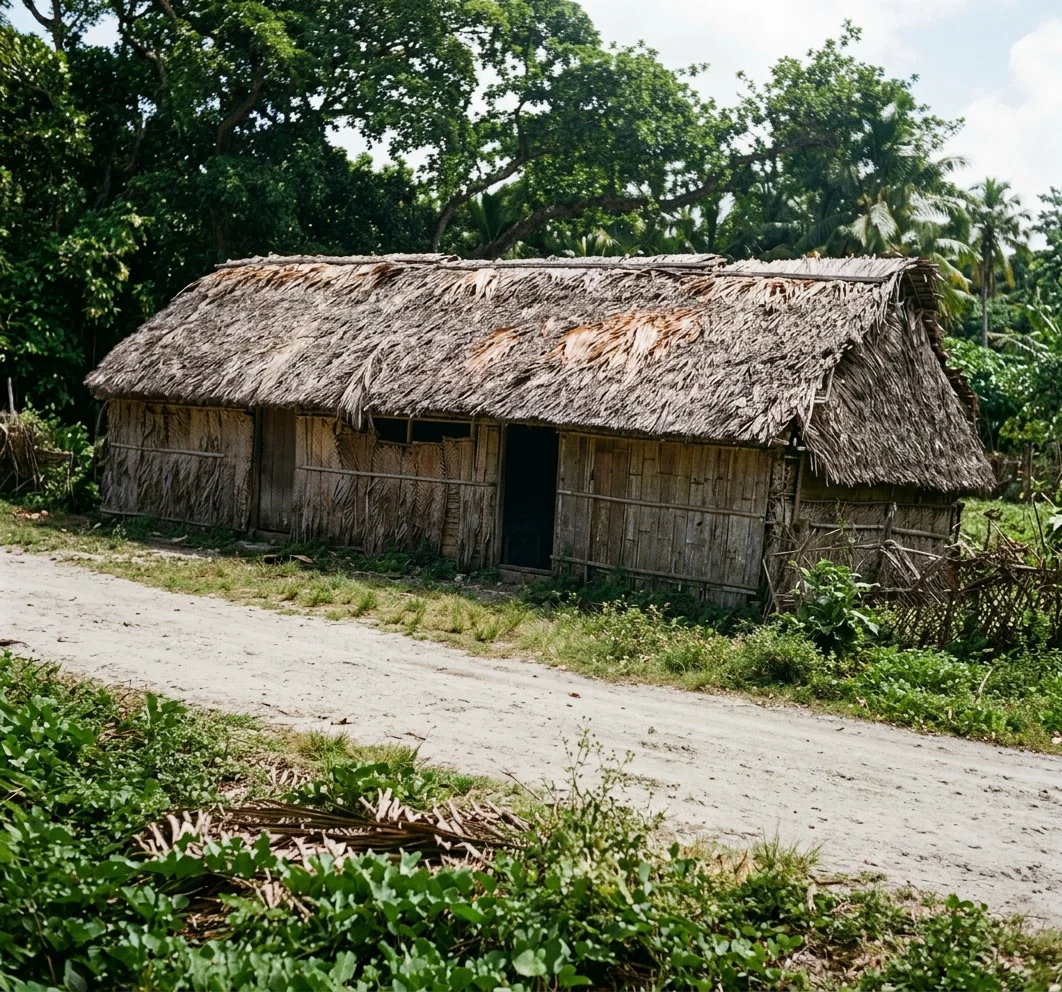
THE CLOSED CHURCH
THE CLOSED CHURCH
The next time I went to the chief, he was quite ready to let us have the land, and asked me to have the lease made out. He first wanted thirty dollars a year; but when I told him for what purpose it was to be used, he finally gave it to us for ten dollars a year for the first thirty years, after that fifteen dollars a year for a further period of thirty years. Now we must have a church; but we cannot erect it alone.
Our brethren here have been driven from pillar to post. First they built a primitive native house in which to worship; but it was taken from them and shut up. Then they have had to lease two private houses, one after the other, because the owners were threatened with the loss of their homes if they continued to harbor the meetings. Next we had the loan of a piece of land upon which to build a temporary house; but as soon as we began the work, the brethren were called upon to resume work on the roads as common prisoners.
The brethren here will do all they can to erect the church. They will carry stone from the sea, and wood from the mountain, but they cannot do all. I believe the Lord wants us to erect a good, durable house. We have asked the Sabbath schools in Australia to assist us some. We will do all we can with the money that is furnished.
It is very cheering to have Sister Gooding, of Australia, with us. We have opened a small boarding school at Arorangi. This seems the best plan. To do the children good, they must be taken out of their evil surroundings. All that we might accomplish during school hours would be more than offset by the evil that the children would come in contact with out of school. All our native brethren wish their children taken away from the influence of the other children; and, too, if we simply have a day school, we cannot accommodate the children that we have been asked to take from other islands. Our own little native boy is growing in grace, and there is much in him to encourage us in our work for the children. Already he reads the English Bible with us at worship, and gets along very nicely, only having to be helped with some of the harder words. He looks after the horses, cuts the wood, and does all those little things that the American calls “chores.”
We are having an increased attendance at our Sabbath meetings in Titikaveka. However, they do not ask for baptism, and we are not in a hurry to baptize some of them. The tobacco habit is one of the hardest for the natives to overcome. We know that there is power in Jesus to help them, and we try to be faithful in presenting this power to them. I feel persuaded that the Lord helps me every day in undertaking to speak, and I am surprised that I have been enabled to use the language so freely.
We are well, and of good courage.

China Inland Mission Annual Report Shows Growth

The last annual report from the China Inland Mission shows an income of £53,633 for the year, an increase of £267, and 123 missionaries leaving for China during the same time, bringing the total number of workers of that mission in the Chinese field up to 735.

Rhenish Mission Work and the Toba Batak Field

IN his report of a recent visit to the stations of the Rhenish Missionary Society, Dr. Schreiber tells of his experience in penetrating Sumatra to the Toba country, where he found a teeming population. This seems to be the real seat of the old Batak heathenism. The Rhenish Society has been operating in Sumatra for thirty years, and has a membership of over twelve thousand in its churches. But there remains much more to be done. The whole northern part of the Toba Island, as well as the eastern and northern shores of Toba Lake,— all thickly populated,— are yet unoccupied, and present an open door.
Continue reading: Lepers' Gift to the Bible Society in India