Your ShelfYour Projects

Review and Herald, Vol. 93, No. 49.

A Place for You
Earlier text: Influence of the Spirit of Prophecy in Our Missionary Work

Kitchen Efficiency Versus Kitchen Slavery
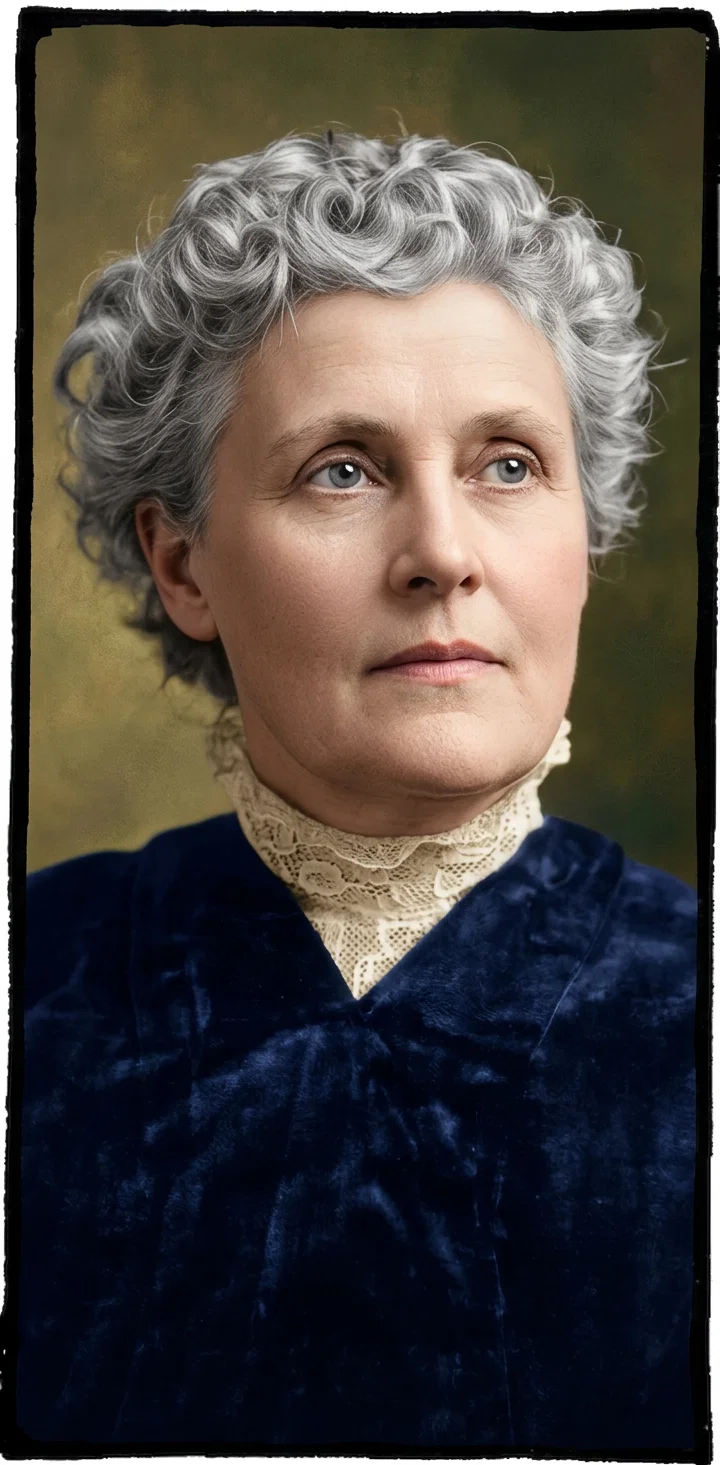
MRS. INEZ HOLLAND STEVENS
Recently, while talking with one of our workers about the many demands upon our time as missionaries, I remarked that I had put much thought upon the arrangement of my kitchen, and methods of work in it, so as to economize time needed for other things. She replied, “Well, I guess that is what I need to do, too. It seems to me I spend most of my time in the kitchen.” Having only her husband and one child to cook for, it seemed to me like a fairly clear case of kitchen slavery. Whether we realize it or not, most of us are or have been in similar bondage to a greater or less degree. We have spent so much time being cook that there was little time left to be an inspiration to our households.
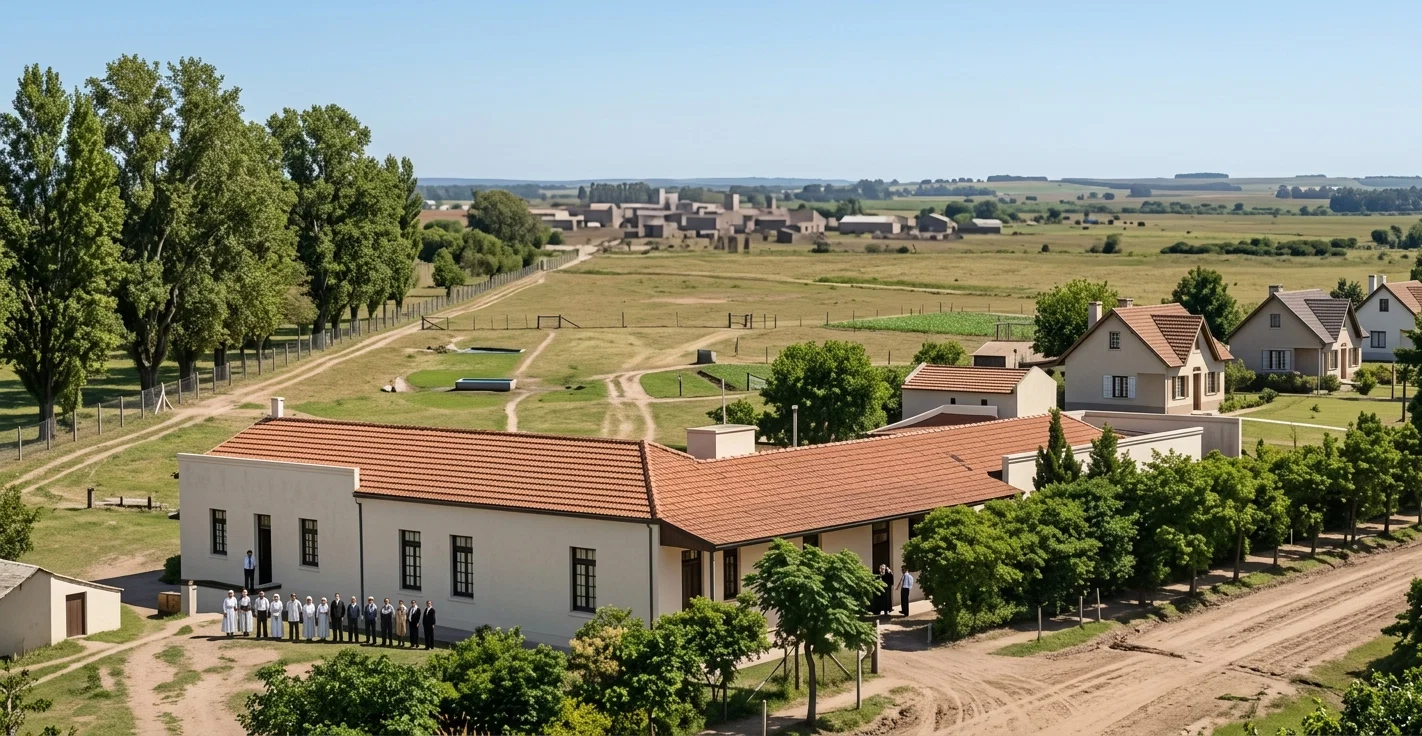
OUR HEADQUARTERS IN FLORIDA, BUENOS AIRES
It seems, however, that the first notes of the emancipation proclamation are being struck in these days, when so much is being said and written about “efficiency” and the “new housekeeping,” together with the numerous time-and-strength-saving machines and devices which have recently come to the housekeeper’s rescue. And we need all such assistance we can get, if we ever succeed in doing all that is expected of us as home makers and as missionaries.
In my effort to “use my head to save my heels,” especially in the kitchen, I have worked out by experience the following suggestions, which may also prove to be time-and-strength savers to others, so I pass them on:—
Have your stove, table or cabinet, and sink as near together as possible. See to it that they are also the right height for you to work by without stooping.
Kitchen utensils (I like to call them “tools”) should be as near as possible to where they are most often used. I have tried many plans, but like my present arrangement best. Against the wall, back of the worktable, are nailed two horizontal strips of wood, into which were driven nails. Here hang egg beaters, large spoons of various kinds, can opener, grater, chopper, etc. My stove being next to the table, I had the strips extended back of the stove far enough so as to hang there the articles most used while cooking, such as covers, skimmer, long-handled testing fork, potato masher,and ricer. Here hangs also the salt box with a teaspoon in it. Utensils not so commonly used are in the table drawer.
Paring knives (and one really needs two or three, always kept sharp) I keep in a small case made of denim, and having four pockets, one being used for the putty knife, of which I shall speak later. This little case is tacked on to the lower strip of board above the worktable.
The butcher knives (I have three,—a French knife, a serrated bread knife, and an ordinary one) are hung in a similar but larger case, tacked to the side of the kitchen cabinet, the bread being kept in the drawer below. Those who have tried it will agree with me that this pocket method is far superior to having all the knives together in a drawer, where they dull quickly, and are not so convenient to get at.
If you still dry your dishes with towels (scalding them is a shorter, better method), have the towels as near as possible to where the dishes are wiped.
Above the sink should hang the wire soap dish, soap shaker, dish mop, and kettle scraper. Cleanser, scouring powder, and vegetable scrubbing brush should also be within easy reach. Try using a cork for scouring; instead of a cloth. It makes a soft but firm surface, and there is no washing necessary afterward.
By all means buy a putty knife. I know of no utensil which has a greater variety of uses in the kitchen. The broad blade is splendid for turning any fried food, and is especially good for lifting out pieces of pie or cake from the tin. I often use mine to scrape the bottoms of kettles, or other flat surfaces. Get one with as long a blade as possible.
And if you really wish to convert kitchen drudgery into a song, get a high stool. Do not mind if some one thinks you lazy because you sit on it while ironing or washing dishes. Just smile your broadest smile, and tell her to go and do likewise.
Diamante, Entre Rios, Argentina.

Papara, Tahiti

F. E. LYNDON
OUR latest development in these islands during the past year is a small company of believers on the island of Morea, near Tahiti. This is the first time the truth has been preached there, and we are very much pleased to get the work started at that place. Brother H. A. Hill has been chiefly instrumental in developing the company.
There are bright prospects for the work for the coming months, and we believe that the time has come for a great work to be done in these islands. I do not suppose there will be a more favorable time to preach the message than now. We all feel that we must press into new fields as rapidly as possible, and get the work started before more difficulties arise.

I Would

I WOULD we grew more gentle day by day; I would that smiles more often came to play About our lips, to dwell within our eyes; I would that we could see in God's fair skies And more oft the blue and not the somber gray; I would we grew more flowers on life's way.
I would we grew less swift to chide and blame; I would we used more oft love's other name, And that our hearts grew daily yet more kind; I would we were more oft a little blind; And in our homes and on the crowded street I would we heard the coming of His feet.
I would we grew more like a little child; I would our spirits were as pure, as mild, And that the childlike faith might still be ours; I would in all life's dark and lonely hours We, too, might put our hand in his, and say, “I'm not afraid; my Father knows the way.” —Irene E. Angleman.

Home Life

Conducted by Mrs. I. H. Evans, Takoma Park, Washington D. C.
Assisted by Miss Lora E. Clement
Through the columns of this department, hints will be given on all matters pertaining to the home life. Short articles and letters are solicited from home makers, telling of their everyday experiences,—their joys and sorrows, their failures and successes.

Efficiency in Housework

WHY is it that some women who are regarded as good housekeepers always have time to read or make calls or entertain a friend, and others who have no greater cares are busy at some routine household task from morning until night? The difference is one of efficiency, a word that every successful man knows the meaning of in his business, but that not one woman in a hundred thinks of as in any way applicable to the business of managing a house.
To most women, efficiency means doing their own tasks well. The executive ability shows itself in his power to get the most out of such help as he has. A business man soon learns that his progress depends not merely upon what he himself does,—a quantity that is necessarily limited,—but upon what he can make others do for him. If his position is such that he can hire and discharge his subordinates, the task is so much the easier; but, even if it is not, his executive ability shows itself in his power to get the most out of such help as he has.
What holds good in the office holds good at home. No woman is a really efficient housekeeper who tries to do everything with her own hands. She may think she is more efficient than her servants or her children because she can do some special thing or many things better than they can, but that is only being a skilful dishwasher or a good cook or a faithful scrubber; it is not necessarily being an efficient housekeeper.
The better a woman is at doing her work the harder she finds it to put up with careless or unskilled assistance; nevertheless she must make up her mind either to train others to do their part acceptably, or to be a drudge. What would be thought of a man who had been at the head of a business for twenty years and still considered it necessary to sweep out his office every morning, open packing cases, empty the wastebaskets, and lock up at night? Many a woman who has been the head of a domestic establishment for twenty years does just that, although in the meantime the number of her servants has increased, and children have grown up about her.
Such a policy is particularly unfortunate in a family where there are children. True, little Mary may be awkward about wiping the dishes, and so careless that she breaks many, and it is, indeed, easier to do it yourself; but how about Mary? Has she not the right to be taught? And how can she learn except by doing? Better a broken dish than a daughter growing up to idleness and incompetency.
The woman who wears herself out in the service of a large family has proved her industry and her unselfishness—but she has proved her essential inefficiency also.—Youth’s Companion.

Nature Teaching to Children

MRS. E. H. RISLEY
CHILDREN are busy observers of natural objects, and have many questions to ask about them. Their inquisitive observation should not be repressed, but encouraged and guided. Many of the facts of nature are especially adapted to teaching the children of God’s love and care, and these can be readily understood when they are properly explained. The baby reaches out his little hands for the bright-colored flowers and fruits before it can grasp anything, and shows its pleasure by its smiles and gurgles of delight. The child that can run about and talk is delighted as it runs up and down the garden, and says, “Pretty! Pretty!” to every flower.
The first way of awakening in the children an interest in nature is by bringing them in contact with nature. This can be accomplished by walks in the garden, fields, and woods. To the older children an occasional visit to a greenhouse or nursery will be very instructive.
Reading nature books, and listening to others read them, is another way in which the child’s interest in nature may be aroused. Various nature books with colored illustrations, may be obtained from bookstore and library. The nature stories in the Instructor and Little Friend, and the nature books of the Missionary Volunteer Reading Courses, are also a source of instruction that should not be overlooked.
In the study of plant life there are many points to be brought out; such as, how flowers are formed, their colors and perfume, their shapes and habits, their use, and what the Bible says about flowers.
A study of different kinds of seeds is very interesting,—what seeds are for, life in the seed, how seeds are scattered, etc.; so also a study of fruits,—their varieties, improvement, shape, color, etc.; or of leaves,—baby leaf buds, the sap in leaves, uses of leaves, leaves in autumn; of roots, stalks, and trunks; of the bark of trees and shrubs; of the sap and its circulation; of the sleep and death of plants.
Take the children out into the garden to help prepare the soil, sow the seeds, and care for the young plants. Adam and Eve were given just such work to do. Each child may have a small plot all his own, the little girl her flower garden, the boy his vegetable plot, or each may have both. Let the keeping of flowers on the dining table and in other parts of the house be one of the children’s home duties. Lessons of thoughtfulness for others may be taught by encouraging the little ones to share their flowers with others. The teacher at school will enjoy the simple bouquet, so will their older friends who are perhaps no longer able to raise flowers for themselves.
In the fall, or as the flowers go to seed, the children can save the seeds, and make a collection of the different kinds. Large-mouthed small bottles can be obtained at a small price, and are ideal containers for the seeds. Each bottle should be tightly corked, and plainly labeled. This care in gathering and saving the seeds will teach the children valuable lessons in system and classification.
The study of birds opens an interesting field to the children, and one that grows more absorbing as they gain in years and experience. They may first learn the most common birds, their color and habits, to distinguish their songs, to recognize their nests. Boys, and girls too, may be encouraged to build bird homes. The United States government has issued a booklet telling all about how to make a number of bird houses, from a tin-can house for wrens to an apartment house for martins. This booklet may be had for two cents. Why not send for one, and let the boys make some bird houses this winter, and be prepared to welcome the birds next spring? Government experts tell us that the birds need our hospitality, and that they richly reward it.
Mothers who have the gift of drawing have a good field in which to work. However, the less artistic drawings frequentlyserve the purpose of gaining the child’s attention and impressing the thought desired. Colored crayons are excellent for this purpose, and the blackboard is a great help. A good-sized board painted black, and hung on the wall at a proper height, will serve the purpose as well as a more expensive board. One mother painted the four sides of a box black, thus giving a blackboard to each of her older children, while the baby amused himself in the box.
Nor should music be forgotten. Singing to the children, and with them, having them sing their childish songs over and over, is one way to awaken in their hearts a love for singing.
The love for beautiful pictures should also be cultivated. There are a number of companies which make a business of selling reproductions of the world’s best-known pictures in different sizes, some as low as one-half cent each, others for a penny apiece, and some at a higher price. These pictures are beautifully printed, and on each is the name of the artist, and some information concerning him.
In connection with all this study the mother should strive to instill lessons of truth and righteousness that will never be effaced from the minds of her children. The child who learns not only to see, but to think while he sees, will never lack entertainment, wherever he goes. He will not be obliged to go to a museum to find something to look at, but he will find things of interest all about him. To him the air and water, the sky above and the earth under his feet, will be full of wonders.

A Mother’s Wisdom and Power

LATE one evening the telephone rang, and I was informed that a very dear friend was dying. Hurrying to her home, I found her already unconscious. The family had gathered, and were silently waiting the end. How my heart went out to her fourteen-year-old daughter, to whose side I instinctively went, and put my arms about her as if to shield her—the world is so hard for a motherless child! Neither of us spoke. Not a sound was heard in the room but the rapid breathing of the dying woman. Presently the child’s arm stole round my waist, and so we stood, our arms about each other, our eyes always on the face of the one we loved.
After a long time the wild beating of the heart and the rapid breathing, which seemed determined to keep life in the wasted body, halted a little. The girl at my side disengaged herself, and softly left the room. She returned at once with her Bible—her mother’s gift. Turning to the ninety-first psalm, and taking her place again under my sheltering arm, she whispered, “Mamma said to read this.” She began in a low, controlled voice, and I joined her, and in unison we read the psalm through to the end, as the life was going out.
I shall never forget the scene. Knowing for a long time that the separation must come, that mother had prepared her daughter for the change without in the least exciting apprehension. When other mothers died, she said what she would like her girl to do and to feel if it had been her girl’s mother who was taken; and so she gently and quietly led her up to the supreme moment without shock or terror or fear of the change.
And so much had she made her Bible and her God a part of her daughter’s very being, her guide in all the things of life, her refuge in every trouble, that she passed safely by the pitfalls of the years of youth to a womanhood of fine character and usefulness.
The power of motherhood! that can project itself across the chasm of death, and lead her lonely child in paths of righteousness and peace.—Youth’s Companion.

Is the Home to be Lost to the World?

Fragments of Conversation Heard on the Street, in Stores, Banks, Hospitals, Etc.

MARTHA E. WARNER
“It makes a fellow think twice about getting married when he sees a week’s wages on a girl’s head,” said a young man, as a dainty girl wearing an expensive hat passed him.
“Miss Page is a nice girl,” remarked another young man; “we have been friends for nearly a year, but we are not engaged. I do not intend to marry — I want to be free.”
“You say if I have not been able to save any money before getting married, I shall surely not be able to save afterward,” said a young man to his older companion. “But the girl I expect to marry will work. She is working now, and can keep on. Together we shall soon have a bank account.”
“You will marry him?” said a girl to her friend across the counter. “Oh, I don’t know,” was the reply; “if I marry, I’ll have to learn to cook and keep house, and I’m not anxious for that job.”
“They don’t get along a bit well,” said a voice back of me. “Lila wasn’t satisfied at home, so she married to get away; and now she has trouble, it serves her right. I haven’t been near her.”
“Yes, I have left Jack,” said a young woman. “I could not stand being tied in a house all day. I want to be on the go all the time. Jack doesn’t; so he goes his way, and I go mine. Divorce is the only way out of it.”
“I married to get rid of work,” remarked a woman with a baby in her arms and two little ones clinging to her skirts, as she stood waiting for a car.
“Housework I hate, and housework I will not do,” said a pretty girl to her friend. “If I marry Phil, and he can’t keep a servant, I will manage some way to get out of it.”
“My time is too important to spend in sweeping a room,” said a trained nurse.
“I’m too talented to do housework,” said another nurse to her friend, who had begged her to try to win back the love and respect of her husband by keeping their home neat and clean.
“I told John if he did not keep help, I would not marry him,” said one young woman. “I told him I would not wash dishes for any one — we’d use wooden plates first. Then he got mad, and said, ‘There will be no wedding, then.’”
It is a sad thing to note that the present-day conditions of society are tending to break down and destroy all that remains of the home, the fragment left to this sorry old world of Eden itself. We need to respect and honor the home, divinely made and given to man, and to teach our sons and daughters to do the same.
Clintonville, Conn.

Stopping a Child’s Sobbing

“It often happens that little children, especially those who are nervous or high-strung, are disposed to keep on crying when they get started. When you wish a child to stop sobbing, get him to take a good drink of cold water. It almost always will stop the sobbing immediately.”

Making a Coward of Bobby

I MET them on the street one evening, just as it was growing dark. The father and mother were walking on ahead, rather slowly, while their small son—a child of perhaps three years—brought up the rear, toddling along as fast as his short little legs could carry him.
The father turned and called impatiently, “Hurry up, there!” and then the mother said, “Hurry up, Bobby, or we’ll go on and leave you;” but with all their urging the child kept lagging behind. Finally they stopped and waited for him to catch up.
Just then his attention was attracted by a little white kitten, sitting quietly on a doorstep; and as Bobby turned to look at it, he cried out gleefully, “O muver! see nice kitty!”
Again the father urged the child to hurry on, but the kitten proved too interesting.
“Look out, Bobby,” cried the father, “there’s a big dog coming behind you! It will get you if you don’t hurry up!”
The child gave a frightened scream, and started to run. As he glanced back over his shoulder to catch a glimpse of the terrible dog that was going to “get” him, he stumbled and fell—coming down with his hands and knees on the cement sidewalk.
And what do you think that foolish father and mother did? They stood there, watching the little fellow scramble to his feet, and they laughed!
I wanted to run and pick poor Bobby up, wipe away his tears, rub his bruises, and apologize for the mean trick his father had played on him. Instead, I hurried on toward home, wondering how parents could find amusement in abusing the trust of a little child by frightening him, or by lying to him, or by laughing at his misfortune. As I pondered these things, I remembered what the Great Teacher said of those who “offend one of these little ones.”—American Motherhood.

The Twenty-sixth Opening of Union College

The readers of the Review will be interested to learn something of the prospects of Union College for the year 1916-17. This institution has turned the corner stone of a quarter of a century. It opened its doors for students September 14, for the twenty-sixth year of its operation as a training center for the denomination. Last year the school made ten per cent gain in attendance over any period since the separation of the foreign departments, about six or seven years ago. The present opening indicates an increase over last year, at least the enrolment at the present date is considerably in advance of the corresponding period last year. We cannot always tell for certain what the attendance will be until two or three weeks are past, as a number of students — those engaged in canvassing and some others — are a little late in coming.
The first meeting of the student body with the faculty was held on Wednesday evening, September 13, in the large chapel. An address of welcome was made by the president, Prof. H. A. Morrison, and short addresses were given by Profs. C. L. Benson, W. W. Ruble, J. I. Beardsley, and others. Quite a number of students were present for the first time.
The meeting on Friday evening was one of special interest. It was conducted by the president of the college. Some anxiety on the part of the managers of the school had been expressed that the first Sabbath after the opening of the school in Union College should prove to be a great blessing, not only to the student body, but to the entire College View church. College View has grown in population, and a large number of our people are now living in the town or in its vicinity. Most of these are very devoted, earnest people.
Considerable anxiety had been manifested on the part of the church with reference to its ability to conduct a strong church school in coöperation with the normal department of the college, for the reason that during the past two or three years quite a large deficit had accumulated in carrying on the church school. However, the opening of the church school was encouraging, and showed quite a large increase of students in this department, and sufficient means was provided to make the school self-sustaining.
The Sabbath school, as usual, was opened in the college with an attendance of nearly all the students, filling the large chapel almost full.
The services at the eleven-o'clock hour on Sabbath were conducted by the writer. An endeavor was made to place before the church, the student body, and the teachers, the responsibility resting upon each individual, especially in view of the location of Union College in this place. An appeal was made to the members of the faculty, to the student body, and to the church members, to dedicate themselves anew to God for service, to consecrate their all upon the altar of service, and to indicate the same by coming forward. Every member of the faculty and hundreds of students came forward and stood in front of the large audience. Then, before the consecration prayer was offered, we appealed to those in the congregation who would unite with these teachers and students in seeking God to rise to their feet. Many eyes were filled with tears as we stood and implored God for his blessing and grace to rest upon the church, and upon the students and teachers connected with the college.
After this service the faculty had a most precious meeting together. This was followed by an assembly of young people in the chapel at four o'clock, where was conducted a round table talk suggesting various ways by which the students as well as teachers could be more helpful in their efforts to make effectual the motto adopted, 'Every student in Union College for Christ, and to be ready for service at Christ's call.'
ELDER J. L. EDGAR
ELDER J. L. EDGAR
The faculty as well as the students gave expression to their purpose in a united effort to make the work of Union College this year the best in the salvation of souls and in the uplifting of the cause of Christ that it has ever experienced.
As the school starts out this year for the first time in its history with the burden and load of debt rolled away, its faculty possessed with one purpose, its patrons praying in its behalf, and its students making a united effort, we shall hope to see the most successful year in soul-winning and in preparation for service that this noble institution has ever had in its history of a quarter of a century.
R. A. Underwood.

Life Sketch of Eliza H. Morton

ELIZA H. MORTON was born in North Deering, Maine, July 15, 1852. The house in which she was born still stands across the street from “The Cedars,” where she made her home from the age of nine years to the time of her death, July 31, 1916. She was the only daughter of William Morton and Hannah Phenix-Morton. Her father was a native of New Vineyard, Maine, a member of the Morton family which counts its genealogy back to the half brother of William the Conqueror.
Her parents accepted the truth when she was a child, thus she was brought up in the faith, and later joined the North Deering church, of which she was a lifelong member. Both her parents were inearly life teachers in the rural schools of Maine, and at an early age she manifested talent in this direction. At the age of sixteen she taught her first school, this being the beginning of fifteen years of teaching in the public schools, principally in Portland and its vicinity.
In 1880 she was called to take charge of the normal and commercial departments of Battle Creek College. During her three years’ work there her ideas on the teaching of geography brought her into favorable notice before the public, and resulted in the publishing of the two series of Potter Geographies written by her, and later in the well-known Morton Geographies used all over the world.
During these years she was a constant contributor to our leading periodicals. One of the pleasant memories of her life was a letter received from one of our leading physicians in which he said that an article written by her in the Youth’s Instructor was the means used by the Lord to cause him to give his life to the service of God.
From 1893 to 1910 she was secretary and treasurer of the Maine Seventh-day Adventist Conference and Tract Society. It is safe to say that during these seventeen years no single individual contributed more to the upbuilding of the work in Maine than she did by her earnest labor, her influence, and her financial aid. Her good judgment, clear views, and aggressive policy were unfailing assets. To the two hundred or more isolated members she was a friend and counselor. She was closely associated with the work of Christian education, having served as conference educational secretary for several years.
In January, 1909, she fell upon the ice near her home, from the results of which she suffered during the rest of her life.
In October, 1914, one of the very interesting features connected with the Maine Teachers’ Association Convention held in Portland, Maine, was her geographical exhibit. This exhibit occupied a whole room in the city hall, and was visited by thousands of teachers and others. It is understood that this exhibit is to be placed with the Maine Historical Society of Portland, Maine.
Among her effects is a unique and interesting scrapbook of a biographical nature. This book contains samples of sewing, drawing, painting, composition, etc., made by her at an early age. There are photographs of her during childhood and youth, also many pictures connected with her childhood days. Her first poem as published in the REVIEW AND HERALD is preserved in this scrapbook, also an autograph letter from the poet John Greenleaf Whittier. She was a member of the National Geographical Society.
Her complete published works are as follows: Two series of Potter Geographies; two series of Morton Geographies; “Chalk Illustrations;” “Geographical Spice;” “Lessons on the Continents;” “Thought; Its Origin and Power;” “Still Waters” (poems); “Star Flowers” (poems); and her last work, “Rays of Light on the Sabbath Question.”
Many of her poems have been set to music. The most notable perhaps is “The Songs My Mother Used to Sing,” which D. B. Towner, who used to travel with D. L. Moody, the evangelist, set to music for his own use.
Her last sickness covered a period of four months of great suffering. Three weeks of this time were spent at the New England Sanitarium, to which she had gone hoping that a surgical operation might give relief. Her case was found to be incurable, and she returned to her home to spend her last days amid the loving ministrations of the friends of a lifetime. She manifested no fear of death, but a perfect submission to the will of God. In all her suffering she looked forward to a time when there would “be no more pain,” and this was her choice of a text for the funeral discourse. Many seasons of earnest prayer were held for her recovery, but God, who knows best, saw fit to let her fall asleep.
Her living relatives are two cousins, William Morton, of New Vineyard, Maine, and Eliza McLain, of Farmington, Maine; and two second cousins, C. O. Morton and Clarence Morton, of Portland, Maine. After certain bequests are paid, the remainder of her property is left in the hands of eight trustees to be devoted to missionary work.
The funeral services were conducted from her late residence by Elders H. W.
Carr and E. E. Osborne. The rooms were filled to overflowing with friends and neighbors who came to pay their last respects to one they had known as a friend.
By her request the following poem, taken from “Star Flowers,” was read:—

If I Should Die

I do not care to die, for life is sweet; But death is here, An enemy forever on my track, Forever near. If I should die, I ask not for a throng To crowd around To gaze upon my face, to see me lowered Into the ground. I ask not for an epitaph of fame When I am dead, I care not for the flattering words That may be said; I would the poor that I have helped, The sick and sad, Might say with tears beside my bier, “She made me glad.” If I should die, I ask my friends To kindly speak, Forgetting all the things that grieved And made us weak; And looking on beyond the days And years to come, Think of the promise of our Lord, The Mansion-home.
Four young ladies sang her favorite hymn, “Abide with Me.” The interment was in Evergreen Cemetery, Portland, Maine.
We feel very sure that these words apply to her: “Blessed are the dead which die in the Lord from henceforth; Yea, saith the Spirit, that they may rest from their labors; and their works do follow them.”
MRS. W. O. HOWE. JENNIE R. BATES.
ELIZA H. MORTON
ELIZA H. MORTON

Elder J. L. Edgar

Elder J. L. Edgar was born in Steuben County, New York, Sept. 13, 1827. Experiencing conversion at the age of twenty, he became a member of the Methodist Church, and for ten years acted as minister in that denomination. In 1856 the light of present truth came to him, and he cast his lot with this people. Soon afterward he began preaching the third angel's message, and for nearly sixty years was one of God's faithful ministers. His first ministerial effort in connection with Seventh-day Adventists was at Wright, Mich., in 1858, where he labored with Elder J. B. Frisbie. A church of more than fifty members was organized. As at this time no salary was paid our ministers, he would preach for a time, then return to his farm for a season. Soon he was ordained to the gospel ministry, Elder J. H. Waggoner offering the prayer, and Elder James White giving the charge. The Lord signally blessed his ministry to the salvation of souls, and many churches and companies are rejoicing in the truth today as the result of his untiring efforts. Elder Edgar was a personal friend of Elder and Mrs. James White, a member of the council which chose a name for this denomination, and also a member of the committee that planned for the first Seventh-day Adventist camp meeting.
His public labors were largely confined to his home State, Michigan, but there he held many places of responsibility. For six years he had charge of the mission at Kalamazoo. His last charge, which he held for eighteen years, was at Flint and its surrounding town and city churches. Always of a retiring disposition, he shrank from a leading position, but faithfully and humbly performed the tasks which fell to him. He had great power in prayer, and many were healed through his intercessions. The truth of God was the dearest thing on earth to him, and to uphold its honor his chief desire. He was quick to detect and denounce error.
In 1852 he was married to Mary Griswold, who died eleven years ago. He was cared for most tenderly by his youngest daughter until he fell asleep on Aug. 22, 1916. Three daughters — Mrs. C. N. Fox, of Cedar Lake, Mich.; Mrs. R. E. Tefft, of Flint, Mich.; and Miss Henrietta Edgar — are left to mourn, but they sorrow in hope of the resurrection morning soon to come.
A. J. CLARK.
Continue reading: The West Pennsylvania Camp Meeting