Signs of the Times, December 12, 1916

Proclaimed with Elijah Power

Signs of the Times

Dec 12, 1916

Pacific Press Publishing Association · Mountain View, California · Dec 12, 1916

Proclaimed with Elijah Power
Preparing the World for Its Climax By CARLYLE B. HAYNES
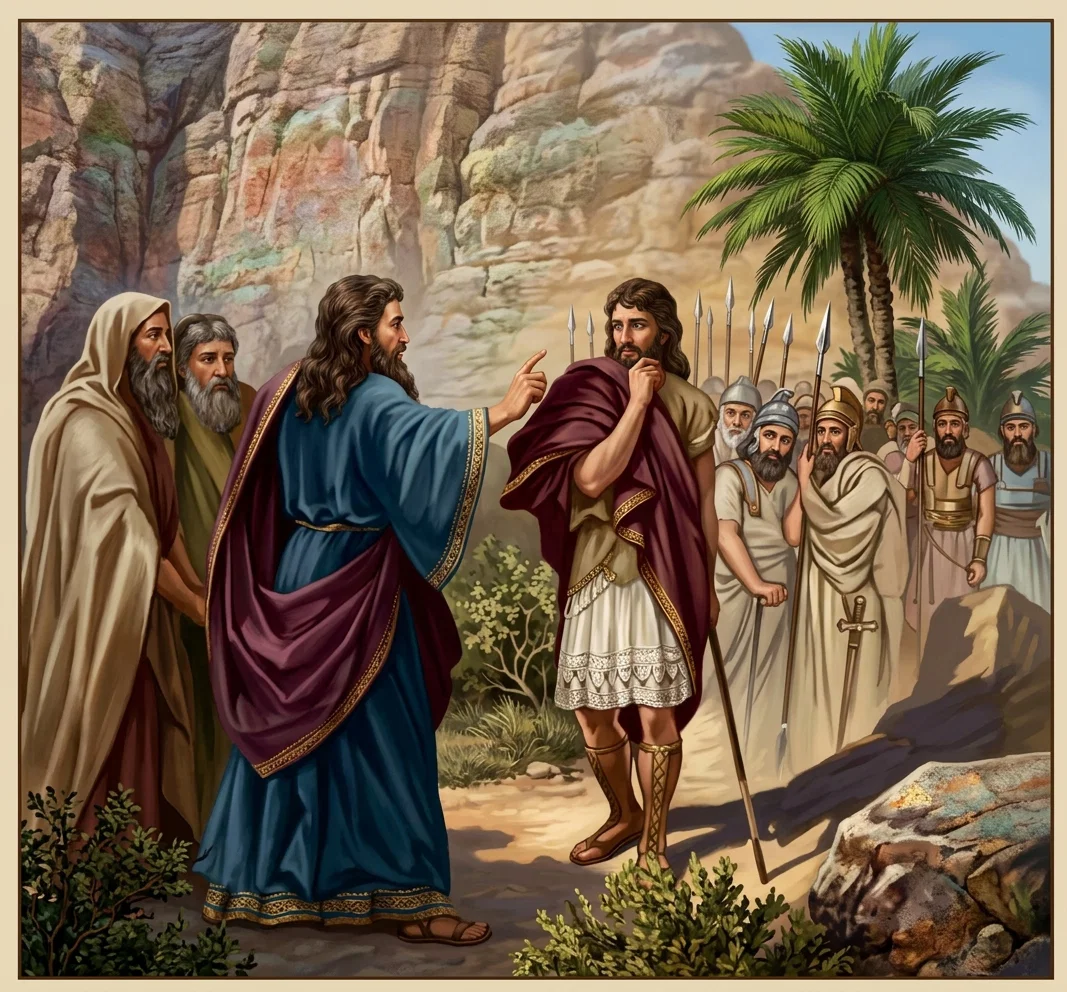
Behold, I will send you Elijah the prophet.
At every time of crisis in the work of God among men, the Lord has sent to the earth a message of truth which would fit the very conditions in view of which it was sent. These special messages have contained the truths of the gospel which have been previously revealed; and in addition to this, they have proclaimed certain truths which were then due, and which pointed out the duty of the people at that particular time.
Prior to the destruction of this earth by a flood, God sent a message in which there was salvation from the impending destruction, for every soul who believed that message and acted on it. Before the destruction of Sodom and Gomorrah, God sent to those cities a message in which was the salvation of every person who believed and acted on it. Previous to the destruction of Jerusalem by Titus, God gave a message which saved all who believed and acted on it. Thus messages of present truth have always had in them the salvation of those to whom they were given.
Before the destruction of this earth in the fires of the last day, and before the second coming of Christ, which will usher in that destruction, God will send a message of this coming destruction and His coming kingdom; and in that message will be the salvation of the people of this earth. This message is to be preached over all the earth; and it will be the last message of the gospel ever to be given to this world; and when it is completed, then Christ will come. “This gospel of the kingdom shall be preached in all the world for a witness unto all nations; and then shall the end come.” Matt. 24: 14.
In “this gospel of the kingdom,” the coming kingdom, will be contained not only the announcement of the coming of Christ, but also the very fullness of the gospel. Every truth which has been perverted and changed during the past ages will in this message be restored. And among the truths which have been lost to sight in the past, and which will be proclaimed again in God’s last message, is the precious truth of the Sabbath. This great truth has been changed into a lie by the antichristian system of Romanism, and that lie has been handed down to us. But God’s final message of the gospel will discover this lie, will point out the perversion of the Sabbath truth, and will call the people of God back to their allegiance and loyalty to God’s commandments and to the Sabbath.
The fact that such a message as this would be given in the last days has been clearly pointed out in the Bible. The last prophecy of the Old Testament says: “Behold, I will send you Elijah the prophet before the coming of the great and dreadful day of the Lord; and he shall turn the heart of the fathers to the children, and the heart of the children to their fathers, lest I come and smite the earth with a curse.” Mal. 4: 5, 6.
This prophecy of the coming of Elijah has been the source of considerable perplexity to Bible students. Students of the Bible generally believe that the present days are those which immediately precede the second coming of Christ, and therefore this prophecy of the coming of Elijah should even now be in process of fulfillment.
This prophecy has been further complicated by certain men having arisen in the church claiming that it was fulfilled in them. And they have been successful in getting many people to believe their claims, and have then led them into all manner of fanaticism. Thus the prophecy itself has come to be discredited.
A study of this prediction will make clear that it does not foretell the personal reappearance of Elijah. Rather should we look for a movement, a message, which will be the counterpart of the work of Elijah when he was on earth. This we learn from the divine comments made on this passage by our Lord Himself, in the New Testament.
Speaking of the work and message of John the Baptist, Jesus said, “And if ye will receive it, this is Elias, which was for to come.” Matt. 11: 14. Christ in this passage plainly declares that the work of John the Baptist fulfilled the prophecy of the coming of Elijah, at least partially.
This thought was repeated by the Saviour when He said: “Elias truly shall first come, and restore all things. But I say unto you, that Elias is come already, and they knew him not, but have done unto him whatsoever they listed. Likewise shall also the Son of man suffer of them. Then the disciples understood that He spake unto them of John the Baptist.” Matt. 17: 11-13.
This seems to state very clearly that John the Baptist fulfilled, at least in part, the prophecy concerning Elijah. We are not to understand from this, however, that John was Elijah in person; for of his reply to a deputation of priests from Jerusalem sent to inquire who he was, we have this record: “He confessed, and denied not; but confessed, I am not the Christ. And they asked him, What then? Art thou Elias? And he saith, I am not. Art thou that prophet? And he answered, No. Then said they unto him, Who art thou? that we may give an answer to them that sent us. What sayest thou of thyself? He said, I am the voice of one crying in the wilderness, Make straight the way of the Lord, as said the prophet Esaias.” John 1: 20-23.
Here is apparently a serious discrepancy between the words of Christ and the words of John. Christ said John was Elijah; John said he was not. This apparent contradiction, however, has been cleared up by the words of the angel to Zechariah concerning John: “Many of the children of Israel shall he turn to the Lord their God. And he shall go before Him [the Messiah] in the spirit and power of Elias, to turn the hearts of the fathers to the children, and the disobedient to the wisdom of the just; to make ready apeople prepared for the Lord.” Luke 1: 16, 17.
From these passages of Scripture, it is evident that the prophecy of the coming of Elijah does not involve the appearance of some certain person, but rather a great movement or message which would combine the chief features of the work of Elijah and the work of John. And the result of the preaching of that message will be “to make ready a people prepared for the Lord.”
John was not Elijah in person, but his work and message fulfilled the prophecy of the coming of Elijah. Therefore Christ was right when He spoke of John as Elijah, and John was right when he said he was not Elijah in person. John’s message was given “in the spirit and power of Elijah,” and fulfilled, in part, the prophecy we are studying.
But it was only a partial fulfillment; for the prophecy declares that Elijah will come “before the great and dreadful day of the Lord.” John’s work was accomplished before the first coming of Christ, and it is the second coming of Christ which is pointed to in the expression “the great and dreadful day of the Lord.”

The Message of Elijah to Appear Now

This is the day of which Peter wrote: “The day of the Lord will come as a thief in the night; in the which the heavens shall pass away with a great noise, and the elements shall melt with fervent heat, the earth also and the works that are therein shall be burned up.” 2 Peter 3:10.
Joel also wrote of the day of the Lord: “The sun shall be turned into darkness, and the moon into blood, before the great and the terrible day of the Lord come.” Joel 2:31.
Thus it is seen that the time spoken of in the prophecy of the coming of Elijah, “the great and dreadful day of the Lord,” refers to the second coming of Christ, and not to the first coming. John’s work and message, then, were but a partial fulfillment of this prophecy; and it will be completely fulfilled in the days before the second coming of Christ, or in the very days in which we now live.

Messages of John and Elijah Combined

For what, then, are we to look as a fulfillment of this prophecy to-day? It is plain that we should look for a movement which will be like that of John the Baptist before the first advent of Christ, and also like that of Elijah. It will combine the leading characteristics of both messages. And this movement will go forth to the world with “the spirit and power of Elijah,” and will “make ready a people prepared for the Lord.”
The principal theme of John’s message was the coming of Christ. This doctrine, then, will be prominent in the message which will fulfill the prophecy of the coming of Elijah to-day. That message will herald to the world the second coming of Christ, and it will be sent “in the spirit and power of Elijah.”
But it will also possess something else. It will have not only the most important feature of John’s message, but also that of Elijah’s. What, then, was the work and message of Elijah?
In the fourteenth chapter of Revelation, there is a prophecy of just such a message as we have now learned that the message of Elijah will be. It is found in verses 6-11. At the close of that message, Jesus is represented as coming in the clouds of heaven, to reap the harvest of the earth. Therefore this message must be the last message of the gospel, for it is followed immediately by the coming of the Lord. And that it also contains the message of obedience to the commandments of God will be seen from verse twelve, where the people who accept and preach the message are thus described: “Here is the patience of the saints: here are they that keep the commandments of God, and the faith of Jesus.”
From a study of these passages, we are now in a position to recognize the message of God for the present time. That message will proclaim that Christ is soon coming. And it will urge the necessity of obeying all the commandments of God, as a preparation to meet Christ at His coming. It will therefore teach the obligation to observe the Sabbath commandment, and those who preach it will be Sabbath keepers. When the reader comes into contact with such a movement or message as here described, he may know that he is seeing the fulfillment of the prophecy of the coming of Elijah the prophet, and he may also know that he is hearing the final message of the gospel of Christ. May the reader, when he hears this message, not oppose it, but bring his life into harmony with it; for as with every other special message of the gospel, the salvation of all who hear it will be found in heeding it.
The most striking feature of both these prophecies is that they are being literally fulfilled before the eyes of men to-day. There actually is a message going to all the world in fulfillment of these very prophecies. And that message contains the truths of the second coming of Christ and the obligation to keep the commandments of God. As in the days of Elijah, so in these days, God’s people have forsaken the commandments of God, in the acceptance of the false and counterfeit Sunday institution. Therefore God is sending to them and to the world a message to bring them back to their allegiance to the commandments, calling for a reform in regard to the Sabbath, revealing that the seventh day is the Sabbath, and that it should be kept by His people. This message is the fulfillment of the prophecy of the coming of Elijah.

Elijah’s Message Is Here

And this message of the coming of Christ and the keeping of the commandments of God is going to all the world “in the spirit and power of Elijah.” Thousands of men and women are connected with this great world-wide movement. In every state in this country, and in every country in this hemisphere, these workers are proclaiming this message of Elijah. It has leaped across the ocean, and is preached in Europe, and is gaining thousands of adherents wherever it goes. It is taught in China, India, Japan, Korea, Burma, and even in Siberia. Scores of faithful workers are publishing it in Australia and Africa. And so the message of Elijah is going to all the world. And when it has been given to the world, when “this gospel of the kingdom” shall have been “preached in all the world for a witness unto all nations,” “then shall the end come.” Christ will then return; and the people who, by accepting His final message, have prepared themselves to meet Him, will be taken to be with Him throughout eternity.
It should not be overlooked that when Elijah faithfully delivered the message of the keeping of the commandments of God, he was bitterly persecuted. See 1 Kings 19: 1-3. Likewise the people of God in this age will be persecuted, those who deliver the message of the commandments now.
But ultimately, faithful Elijah was translated to heaven without seeing death. So also will those be who proclaim God’s message for this time, those who live until the coming of Christ.

Striking Parallels

So we see an exact agreement between the prophecy of the message of Elijah, and the actual message which is being proclaimed in all the world to-day. The message of Elijah has come, and is being presented to men. It is gathering out a people to meet the Lord; and though many may turn away from it with scorn, yet others will receive it and teach it and live it, and thus be prepared to meet the Lord in peace when He comes.
One last thought in connection with the parallel between Elijah’s message and the message for our own time is worthy ofnotice. When Elijah taught the people that they should keep the commandments of God, he was called a “troubler of Israel.” It will be the same again. When this message of the second coming of Christ and the keeping of the commandments of God is proclaimed in any community, it may be expected that those who preach it will be called troublers of Israel. They will be charged with upsetting the established order of things, and disturbing the churches. But let Elijah’s reply to this charge be remembered. He declared that he had not troubled Israel. He pointed out that the real troublers of Israel were those who were breaking the commandments of God, and not those who were keeping them.
So it is to-day. The message of the commandments, of the true Sabbath, is not that which troubles the church. The real trouble is that many of the professed people of God have forsaken the commandments, and they resent the proof that they are really commandment breakers, and not commandment keepers.

In the Shadows

BY CLARENCE SANTEE
While God is love, yet in the paths He leads me, The way of sorrow seems dark. I hear His voice, I see His steps before me; But storms beset my bark.
Lord, is it true that lessons yet unlearned Are messengers of light? Is in them found the lamp for which I've yearned To guide me through the night?
This life, so false and fleeting as I see it, Brings naught of joy to me. Its promised fame, its shouts of mirth, still leave it A gilded mockery.
A man of fame, one whom the world applauded, No wish to him denied, Left written on his desk, the words that follow, Then shot himself, and died:
“Life is a masquerade, and well I know it, And well I play my part. I wear a smiling mask drawn o’er my features; But, oh, my heart, my heart!
“Life is a masquerade, and many a heartstring Wails but a dirge of pain. We weep and mourn, with hands pressed on our bosoms, Then turn and smile again.”
'Tis so with multitudes along life's pathway Who lift weak hands in vain. They see no moving cloud, no guiding pillar, Across the trackless plain.
But not for aye these clouds remain unlifted. The morn will break at last. The doubt and darkness soon will burst in sunshine That long their shadows cast.
Then rest, my soul, nor doubt the hand that leads thee. His footprints mark the way. He will not sleep, nor will He fail or leave thee Till breaks eternal day.

Worse than the Flood

Have the Days of Visitation Broken Loose?

By PERCY T. MAGAN
“THE days of visitation are come, the days of recompense are come; Israel shall know it: the prophet is a fool, the spiritual man is mad, for the multitude of thine iniquity, and the great hatred.” Hosea 9:7. If there is one thing clear above another in the fulfillment of prophecy, it is that, beginning with the first days of the month of August, 1914, something happened in heaven. Some sort of decree went forth at that time. Some word was issued, and there was a change in the dealings of God with men; for at that time, there came “the days of recompense” on this old world, “the days of visitation,” as never before.
Think for just a moment on this point. Do you know that you and I are living in the time when greater judgments are being poured out than before since the days of the Flood? Have you thought, since this war began, that there is nothing in all the history of the world to compare with what is going on at the present time? There is nothing in all the history of the world, except the Flood itself, to compare with the loss of life, with the destruction of property, that is occurring at the present hour.

Even Worse than the Flood

You may even take a stronger position than that; because the Flood itself, while it was a mighty judgment, caused less sorrow, less trouble, less suffering, than there is in the wake of the present struggle. When the Flood came, in only a few hours, all those poor, sinful souls were dead and gone. But at the present time, it is different. There has been woe and sorrow and death and pain and disease and famine and trouble the like of which the world has never seen from the days of the Garden of Eden down to the present time. It is the mightiest judgment that has ever come upon the world since the days of the Flood; and in some ways, it is far more awful and terrible than that.
All the wars of all the world have been a mere nothing compared with what is taking place now. All the wars of Julius Caesar would not make a decent rear guard action compared with what is going on to-day. All the wars of Clovis and Charlemagne, all the wars of Charles V and Louis XIV of France, all the wars of Napoleon Bonaparte, — the man who was supposed to be the greatest pugilist of war that ever lived up to his time, — would not make a reconnaissance force compared with what is occurring at the present time.
Think of it! To the battle of Waterloo, Napoleon Bonaparte led only 125,000 men; but since this war began, there have been 28,000,000 men called to the colors of the armies of Europe. There has never before been anything like it. Out of the original armies that went to the front, there is hardly a soul that is alive and strong and well to-day. It is almost impossible for us to realize what this means. Here is one instance: A major in one of the armies led a thousand men, a battalion, into a battle; fifteen men and three officers came out. That is only one little instance among very many that might be related.
On the western front, there is a battle line five hundred miles in length; on the eastern front, the line extends from the Baltic clear down into Galicia, over one thousand five hundred miles. And that is saying nothing about the fighting in the Balkans, in Egypt, in Africa, and other places. I repeat, there has never been anything like it in all the history of the world.

God Also Makes a Stir

When this terrible war began, there were many men and many statesmen who said, “It will all be over in about three months.” Yet more than two years have past, and the war is going on stronger than ever. Why? — Because “the days of visitation” have come; because “the days of recompense” are here; because, beginning with the summer of 1914, there came a change in the way God was handling things down here on this old earth.
It has taken all the kings of Europe, all the statesmen, all the generals, and all the millions of men, to make all this mighty stir in the earth; but God is going to do something mightier than that. He is going to take a mere handful — say 144,000 — of poor men and women, without any earthly government back of them, without any men of great wealth, without any men of great knowledge or learning, and He is going to put His Holy Spirit on those men and women, and He is going to attract the attention of all the earth to what those men and women do, far more than it is attracted now to all the armies of earth.
While intensity is taking hold of every earthly power, intensity must also take hold of the people of God. We must set our faces to seek the Lord. We cannot go along in this way much longer. It seems to me that the way we are doing is as if England and France and Germany and Russia should try to fight this war with an army on a peace footing. I tell you, my friends, they cannot do it, and you and I cannot do it.
We have come to the place where we cannot fight this battle through with a missionary army on a peace footing. We have come to the place where every son and every daughter and every man and every woman must be engaged in the fray. We have struck a new day in this cause, when we have to hurl ourselves into the work as we have never done before. We cannot do it by excitement; we cannot do it by working up a frenzy; we have to do it by having our hearts made intensely earnest by the living fire from the God of heaven.

Compulsion Versus Free Choice

BY ARTHUR G. DANIELLS
It is in every sense deplorable and unjust for civil government to legislate on religious questions. Many reasons can be adduced in proof of this. We will here present one. It is this: Civil law means force; religion means free choice; and these ideas are absolutely incompatible.
We will demonstrate this. Government is defined to be “the administration of laws.” To administer law is to carry it into effect, to execute or enforce it. To enforce is to compel.
Civil government exists for the protection of the individual rights of its citizens. The value of the legislative branch of a government lies in the just laws it enacts for the protection of its citizens’ rights. The dignity of the executive department lies in the impartial execution of those laws. A government that has not the power to make and to enforce just laws is a farce. Thus the idea of force is inseparable from civil government.
But not so in matters of religion. Religion is man’s personal relation of faith and obedience to God. “Whatsoever is not of faith,” says Paul, “is sin.” Faith, then, must be the mainspring of all action in matters of religion.
But faith is voluntary. “Faith cometh by hearing, and hearing by the word of God.” Faith cannot be produced by law, nor by any amount of compulsion. It is a matter of free will absolutely.
The basis of civil government is law, and law means force.
The basis of religion is faith, and faith is voluntary. For this reason, then, we submit that civil government and religion never can be united except at the peril of one or the other, or both.

B. P. F

The smallest, weakest life in eternity will be worth infinitely more than the longest, strongest life under present conditions.

B. P. F

Continue reading: Grandest Since Apostolic Times