Your ShelfYour Projects

Signs of the Times, Vol. 22, No. 2.

Desire for Freedom

Signs of the Times

Jan 9, 1896

Pacific Press Publishing Company · Oakland, California · Jan 9, 1896

Desire for Freedom
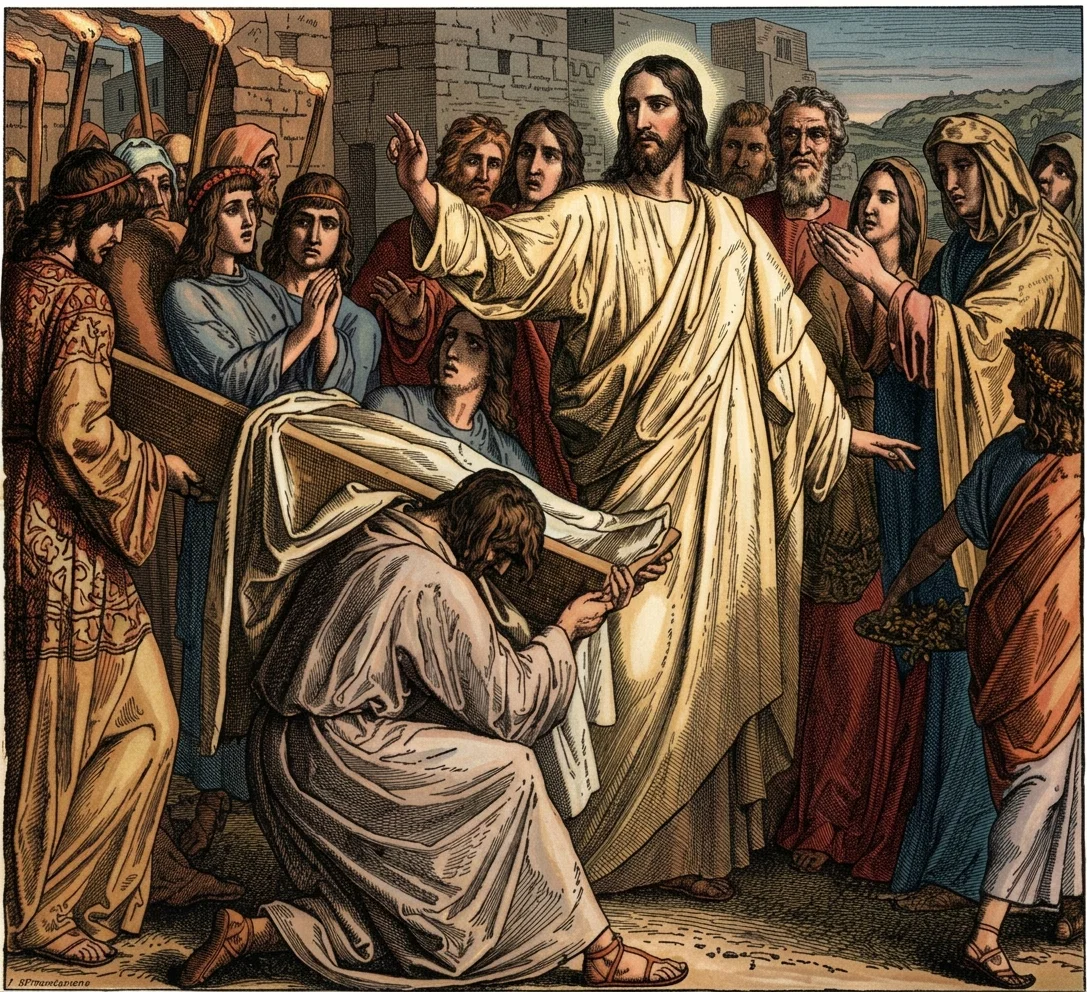
Desire for Freedom.—There is no one thing more desired in this world than freedom, and it follows that there is nothing more galling than the opposite of freedom—bondage. Some men are in bondage to others, some are bound by debts, by disease, by chains of law. Men who are bound by financial obligations desire to be free from debt. Men in the bonds of disease desire to be free from pain and weakness. The prisoner desires to be released from his cell. The sufferer under unjust and tyrannical laws desires political freedom.
THE GREAT DELIVERER.
The Worst Bondage.—But the worst of all bondage is sin; for sin is responsible for all other bondages, all woes, sufferings, and deaths. It is the most deceptive bondage, the most alluring, yet the most cruel and pitiless. A legendary tree of Madagascar furnishes the draught that intoxicates and thus deceives its victim till its piercing, poisonous fangs close round him in his death struggle. So sin allures, deceives, intoxicates, blinds, till it brings into a bondage that to an aroused conscience is worse than the death in which the victim often voluntarily seeks relief.
Proclaim Liberty.—Yet from this bondage there is freedom as glorious and joyous as is the bondage baleful and terrible. This freedom is found in Christ Jesus, and is expressed in the following scriptures: “And ye shall know the truth, and the truth shall make you free.” “If the Son therefore shall make you free, ye shall be free indeed.” John 8:32, 36. Christ Jesus the Son makes us free through faith in the truth. “Purifying their hearts by faith,” says the apostle Peter. Acts 15:9. Again, “Seeing ye have purified your souls in obeying the truth through the Spirit.” 1 Peter 1:22. In all these scriptures different agencies are mentioned, yet it is Christ in all. The Spirit is his Spirit. The truth, the word, is his word, which is spirit and life (John 6:63), and he is in it all. But he was the revelation of the Father to men (John 14:9, 10), and therefore the receiving of Christ, of the truth, the Spirit, is by faith taking God into our heart and life, to reign and rule. This is faith—to submit to God, to receive God, to let God reign within, to choose his way and will. And this is freedom, because it is wholly voluntary. God coerces no one. He who is coerced by fear or by force to yield to God does not choose God. To choose God we must voluntarily, willingly, gladly choose his service.
“Servants.”—“But to do his service makes us servants, does it not?”—It does. It makes us “bond slaves,” for the original is as strong as that, to Infinite Love. Love is the chain that binds us. Love is the rule that guides us. Love is the instruction that directs us. Love is the boundary that circumscribes us. Love is the master that restrains us. Love it is that chastises us when we are out of the way. Love warns us of the danger, and the free soul yields to the service, the glad free service of love. Thus yielding to the service of our beloved Lord, we “stand fast” “in the liberty wherewith Christ hath made us free” (Gal. 5:1), and we walk in obedience to God’s great royal law of liberty (James 2:8–12); but if we refuse and rebel, we voluntarily choose sin and become entangled again in “the yoke of bondage” (Gal. 5:1; Rom. 6:16).
How Choose Sin?—To reject Christ is to choose sin. We may not, can not, say that we will not choose sin. To not choose God’s way is to choose our own way, and our way is the way of sin. Of the children of men in their natural state it is truly said: “They are all gone out of the way,” “and the way of peace have they not known.” “All have sinned, and come short of the glory of God.” Rom. 3:12, 17, 23. The end of man’s way, of the way of sin, is death. James 1:15; Prov. 16:25. To rescue men from sin and death, Christ, the Way, the Truth, the Life, came to this earth. He walked in the way of God’s perfect law. In other words, God’s law walked in him. He was its personification. He was also personified truth and consistency, his character showing just what truth will produce of itself. His life was lived here in truth that it might be lived out in every soul who would renounce sin and choose his way. And his way is the way of freedom, joy, and love.
Service of Freedom.—“One is your master, even Christ; and all ye are brethren.” “Ye are bought with a price; be not ye the servants of men.” But does this mean that we are not to obey kings, governors, rulers? Does it mean that the employee should not obey his employer, the maid the mistress of the house? Does it mean that we shall be conspirators against government, foes to order, murmurers against those in authority?—No, indeed; the liberty of Christ, the freedom in obeying God’s law, means none of these things. It requires obedience and subjection to kings, to rulers, to governors (1 Peter 2:13, 14; Rom. 13:1–4), to father, to mother, to masters (Eph. 6:1, 2, 5), to the church and its ordainedofficers, to the counsels of brethren (Heb. 13:7, 17; 1 Peter 5:5); but it does not mean a servile service of fear (Rom. 8:15); it does not mean service given for the mere sake of money, fear, reward, policy, or expediency; but “for conscience’ sake,” “for the Lord’s sake.” That is the mainspring of the Christian’s motives and actions. Others may ill-treat us; unjust service may be demanded; others may be treated better than we are; there may be unreasonable exactions in the levy of tribute, taxes, or service; yet, if we are Christians, we will not rebel; we will submit to it all as long as it does not interfere with our duty to God. Do the rulers of earth interfere with our worship, our duty to God?—We ought to obey God rather than men. Do they demand what in conscience toward God we can not perform?—We shall have to say, “Whether it be right to hearken unto you more than unto God, judge ye,” and we will hearken and obey God, let the consequences be what they may. But we will not rebel nor resist the government by force. We will not plot nor conspire against the government. We will, if Christians, simply do our duty. If we have cruel, unappreciative earthly employers, foremen, or overseers, we will simply do duty, “not with eye-service, as men pleasers; but as the servants of Christ, doing the will of God from the heart; with good will doing service, as to the Lord, and not to men; knowing that whatsoever good thing any man doeth, the same shall he receive of the Lord, whether he be bond or free.” Eph. 6:6–8. If the service is hard, we will soften it with love for the Master above. He called us there in his providence; we will render glad service to him. Whether earthly wages are adequate or fair, God will do right and we will trust him.

EXAMINING OURSELVES.

We are to examine ourselves, whether we be in the faith. It is not to find out what is in the heart, because no man on earth can find out what is in the heart. The man who starts out to do that is going to be terribly deceived; for “the heart is deceitful above all things,” and it will deceive him every time. But the Lord says, “I the Lord search the heart.” He makes known to every man the fruit of his ways, and we want to have confidence enough in him to let him do the searching of the heart.
When we find out that we are in the faith, we shall not be afraid to trust the Lord to search the heart and make known the sin. If we be in the faith, we know that Christ died for sinners, in order that they might be separated from sin. Therefore he is more interested in having us know the sins, so as to give them up to him, than we are to know them. It is not an unheard-of thing, by any means, to find professed Christians who do not know that the Lord loves them when in sin; and so they are always afraid of the Lord, from a sense of their sinfulness. Are you in the faith? If so, you will accept the knowledge of sin as the result of the revelation of the righteousness which will take away that sin, and rejoice in the Lord.
E. J. W.

THE SUM OF THE MATTER.

We have now finished the study of the first two chapters of the book of Romans, and it is time to take a brief review. It is not really correct to say that we have finished the study of these two chapters, because we can never finish the study of any portion of the Bible. After we have put the most profound study upon any portion of Scripture, the most that we have done is only a beginning. If Newton, after a long life of study of natural science, could say that he seemed to be as a child playing on the seashore, with the vast ocean before him unexplored, with much more aptness can the same be said by the greatest student of the Bible.
Let no one therefore think that we have by any means exhausted this portion of the book. When the student has the text well in mind, so that he can quite distinctly recall any passage at will, and can locate it with reference to the connection, he has just got where he can begin to study with real profit. Therefore let the reader who is anxious to acquire an understanding of the Scriptures for himself, dwell upon the words as though he were digging in a sure place for treasure. An inexhaustible treasure awaits his search.
We found that the first portion of the first chapter, containing the salutation, some personal remarks, and the statement of the theme, really contains an epitome of the whole Gospel.
Leaving out the introduction, we might say that the first chapter is devoted to a statement of the origin of heathenism, and the condition of the heathen world.
The second chapter is really all summed up in the first verse, “Therefore thou art inexcusable, O man, whosoever thou art that judgest; for wherein thou judgest another, thou condemnest thyself; for thou that judgest doest the same things.” The remaining verses are but an amplification of this statement.
Thus, we find that there is no exception to the fact that the wrath of God is revealed from heaven against all ungodliness and unrighteousness of men. Hearing and knowing the truth is not a substitute for practising it. God is no respecter of persons, but will punish sin wherever it is found.
Accepted with God.—In this connection, before taking up the next chapter, it may be well to call attention to the statement made by the apostle Peter in the house of Cornelius. “Then Peter opened his mouth, and said, Of a truth I perceive that God is no respecter of persons; but in every nation he that feareth him, and worketh righteousness, is accepted with him.” Acts 10:34, 35. There are men in heathen lands who may never have heard the name of God, or seen a line of his written word, who will be saved. God is revealed in the works of creation, and they who accept what they there see of him are accepted with him as surely as they are who have learned much more of him.

Objections Answered.

The first part of the third chapter of Romans consists of questions and answers. The thoughtful reader of the epistles of Paul must have noticed the frequent occurrence of questions in the midst of an argument. By means of them every possible objection is anticipated. The apostle asks the question that an objector might ask, and then answers it, making his argument more emphatic than before. So in the verses next following. It is very evident that the truths set forth in the second chapter would not be very acceptable to a Pharisee, and he would combat them with all his might. That the questions raised by the apostle are not difficulties that lie in his own mind, is clear from the parenthetical clause in verse 5, “I speak as a man.” With this in mind, we may read Rom. 3:1–18—
“What advantage then hath the Jew? or what profit is there of circumcision? Much every way; chiefly, because that unto them were committed the oracles of God. For what if some did not believe? shall their unbelief make the faith of God without effect? God forbid; yea, let God be true, but every man a liar; as it is written, That thou mightest be justified in thy sayings, and mightest overcome when thou art judged. But if our unrighteousness commend the righteousness of God, what shall we say? Is God unrighteous who taketh vengeance? (I speak as a man.) God forbid; for then how shall God judge the world? For if the truth of God hath more abounded through my lie unto his glory; why yet am I also judged as a sinner? And not rather (as we be slanderously reported, and as some affirm that we say), Let us do evil, that good may come? whose damnation is just. What then? are we better than they? No, in nowise; for we have before proved both Jews and Gentiles, that they are all under sin; as it is written, There is none righteous, no, not one; there is none that understandeth, there is none that seeketh after God. They are all gone out of the way, they are together become unprofitable, there is none that doeth good, no, not one. Their throat is an open sepulcher; with their tongues they have used deceit; the poison of asps is under their lips; whose mouth is full of cursing and bitterness; their feet are swift to shed blood; destruction and misery are in their ways; and the way of peace have they not known; there is no fear of God before their eyes.”
As this text consists almost wholly of questions and sharp, clear answers, we shall not, as heretofore, specially question the text. Read it carefully.
“The Oracles of God.”—An oracle is somethingspoken. That which was emphatically spoken by the mouth of the Lord, is the Ten Commandments. See Deut. 5:22. Stephen, speaking of Moses receiving the law, said, “This is he, that was in the church in the wilderness with the angel which spake to him in the Mount Sina, and with our fathers; who received the lively oracles to give unto us.” Acts 7:38. The Ten Commandments are primarily the oracles of God, as they were uttered by his own voice in the hearing of the people. But the Holy Scriptures as a whole are the oracles of God, since they are the word of God, spoken “in divers manners” (Heb. 1:1), and because they are the law, being but an expansion of the Ten Commandments. That Christians are to shape their lives solely by the Bible is seen from the words of the apostle Peter: “If any man speak, let him speak as the oracles of God.” 1 Peter 4:11.
The Law an Advantage.—There are many people who think that the law of God is a burden, and they imagine that the advantage of Christians is that they have nothing to do with it. But, on the contrary, John says, “This is the love of God, that we keep his commandments; and his commandments are not grievous.” 1 John 5:3. And Paul says that the possession of the law was a great advantage to the Jew. So Moses said: “What nation is there so great, that hath statutes and judgments so righteous as all this law, which I set before you this day?” Deut. 4:8. All who truly love the Lord, count it a great blessing to have God’s holy law made plain to them.
“Committed.”—The advantage of the Jew was not simply in the fact that to them were made known the oracles of God, but that “unto them were committed the oracles of God.” The Revised Version has it, “They were intrusted with the oracles of God.” That is, the law was given to them to hold in trust for others, and not simply for their own benefit. They were to be the missionaries to the whole world. The advantage and the honor conferred upon the Jewish nation in intrusting them with the law of God, that they might make it known to the world, can not be estimated.
Tell It to Others.—When Peter and John were arrested and threatened for preaching Christ, who is simply the living law in perfection, they said, “We can not but speak the things which we have seen and heard.” Acts 4:20. They who appreciate the gift which God commits to them, must tell it to others. Some people, when they hear that God justifies the heathen who walk according to the little light that shines to them, just the same as he does the man who walks according to the light that shines from the written word, and that the wicked heathen are in no worse case than the unfaithful professed Christians, think that it is useless to carry the Gospel to the heathen. None who appreciate the blessings of the Lord could think so. Light is a blessing. The more people know of the Lord, the more they can rejoice in him, and all who truly know the Lord must be desirous of helping to spread the “good tidings of great joy” to all the people for whom it is designed.
God’s Faithfulness.—“What if some were without faith? Shall their want of faith make of none effect the faithfulness of God?” A very pertinent question. It is an appeal to the faithful of God. Will he break his promise, because of man’s unbelief? Will he be unfaithful because man is unfaithful? Will our wavering cause God to waver? “That can not possibly be;” for this is the force of the expression which is incorrectly rendered, “God forbid.” God will be true even though every man be a liar. “If we believe not, yet he abideth faithful; he can not deny himself.” 2 Tim. 2:13. “Thy mercy, O Lord, is in the heavens; and thy faithfulness reacheth unto the clouds.” Ps. 36:5.
Power and Faithfulness.—Some one might hastily affirm that this overthrows the previous statements, that only those who have faith are heirs of the promise; for “how can it be that only the faithful are Abraham’s seed, and thus heirs, if God will fulfill his promise even though every man disbelieves.” Very easily, when we consider the Scriptures and the power of God. Listen to the words of John the Baptist to the wicked Jews who could be fitly characterized only as “vipers:” “Think not to say within yourselves, We have Abraham to our father; for I say unto you, that God is able of these stones to raise up children unto Abraham.” Matt. 3:9. God will bestow the inheritance only on the faithful; but if every man should prove unfaithful, he who made man of the dust of the ground can of the stones raise other people, who will believe.
God Justified.—“That thou mightest be justified in thy sayings, and mightest overcome when thou art judged.” God is now accused by Satan of injustice and indifference, and even of cruelty. Thousands of men have echoed the charge. But the judgment will declare the righteousness of God. His character, as well as that of man, is on trial. In the judgment every act, both of God and man, that has been done since creation will be seen by all in all its bearings. And when everything is seen in that perfect light, God will be acquitted of all wrongdoing, even by his enemies.
Commending God’s Righteousness.—Verses 5 and 7 are but different forms of the same thought. God’s righteousness stands out in bold relief in contrast with man’s unrighteousness. So the caviler thinks that God ought not to condemn the unrighteousness which by contrast commends his righteousness. But that would be to destroy the righteousness of God, so that he could not judge the world. If God were what unbelieving men say he ought to be, he would forfeit even their respect, and they would condemn him more loudly than they do now.
“I Speak as a Man.”—Was not Paul a man?—Most certainly. Was he ever anything other than a man?—Never. Then why the expression, “I speak as a man”? Because the writings of Paul, like those of the ancient prophets, were given by inspiration of God. The Holy Spirit spake by him. We are not reading Paul’s view of the Gospel, but the Spirit’s own statement of it. But in these questions the Spirit speaks as a man, that is, the Spirit quotes the unbelieving words of man in order to show the folly of that unbelief.
Unbelieving Questions.—There is a great difference in questions. Some are asked for the purpose of gaining instruction, and others are asked for the purpose of opposing the truth. So there must be a difference in answering them. Some questions deserve no more notice than would be given the same unbelief if uttered as a positive statement. When Mary asked, “How shall this be?” (Luke 1:34), with a desire for further information, she was told. When Zacharias asked, “Whereby shall I know this?” (Luke 1:18), thus plainly showing his disbelief of the angel’s words, he was punished.
Wickedness Exposed.—When the objector says, “If the truth of God hath more abounded through my lie unto his glory, why yet am I also judged as a sinner?” the swift retort comes, in effect, “You might rather say, what you really mean, Let us do evil that good may come.” The real intent of these unbelieving questions is that that which is called evil is really good; that men are really righteous, no matter what they may do, so that good will at last come out of evil. This is the substance of Modern Spiritualism, and of Universalism, which teaches that all men will be saved.
Evil not Good.—There are many besides Spiritualists who virtually say, “Let us do evil that good may come.” Who are they?—All who claim that man is able of himself to do any good thing. The Lord declares that only God is good, and that good can come only from good. See Luke 18:19 and 6:43–45. From man only wickedness can come. Mark 7:21–23. Therefore he who thinks that he of himself alone can do good deeds, really says that good can come from evil. The same thing is said by the one who refuses to confess that he is a sinner. Such an one is placing himself above God, for even he can not make evil good. He can make an evil man good, only by putting his own goodness in place of the evil.
“All under Sin.”—The objector is silenced by the exposure of his infidel sentiments, and the statement that the damnation of those who hold such positions is just; and now the conclusion is emphatically stated, namely, that all men, both Jews and Gentiles, are alike under sin. Thus the way is fully prepared for the further conclusion that there is but one way of salvation for all men. The man who has been brought up within the sound of church bells, and who hears the Scriptures read every day, has the same sinful nature, and the same need of a Saviour, that the Hottentot or the Kaffir has. No one can justly despise another.
All Out of the Way.—When the apostlewrote concerning both Jews and Gentiles, “They are all gone out of the way,” he was but repeating what Isaiah had written hundreds of years before: “All we like sheep have gone astray; we have turned every one to his own way; and the Lord hath laid on him the iniquity of us all.” Isa. 53:6.

Forever Free.

Thus will we be free; “for he that is called in the Lord, being a servant [slave], is the Lord’s freeman; likewise also he that is called, being free, is Christ’s servant.” 1 Cor. 7:22. But his service is the service of freedom. It is freedom from sin, freedom from bondage. Even in chains the Christian is free in all the freedom of God’s boundless love. Man can not take it away. He may endeavor to; he may for a little while disturb its fullness, but it is eternal. The freedom which Christ gives is evermore gloriously endless. Have you it?—Stand fast. If not, seek it in him.

OBEDIENCE BETTER THAN SACRIFICE.

BY MRS. E. G. WHITE.
The word of the Lord is to be obeyed without question; it is to be the supreme authority in our life. Saul departed from the express commandment of the Lord, and sought to quiet the compunctions of conscience by persuading himself that the Lord would accept his sacrifice, and overlook his disobedience. When Samuel, the prophet, came to meet him, Saul acted as though he regarded himself as a righteous man, and exclaimed, “Blessed be thou of the Lord; I have performed the commandment of the Lord.” But the unmistakable tokens of his disobedience were so manifest that his assertion of obedience was of little weight. “And Samuel said, What meaneth then, this bleating of the sheep in mine ears, and the lowing of the oxen which I hear? And Saul said, They have brought them from the Amalekites; for the people spared the best of the sheep and of the oxen, to sacrifice unto the Lord thy God.” “And Samuel said, Hath the Lord as great delight in burnt offerings and sacrifices, as in obeying the voice of the Lord? Behold, to obey is better than sacrifice, and to hearken than the fat of rams. For rebellion is as the sin of witchcraft, and stubbornness is as iniquity and idolatry. Because thou hast rejected the word of the Lord, he hath also rejected thee from being king.”
Though disobeying the express command of the Lord, Saul claimed to have performed the directions that had been given him; and in this day there are those who claim to be the children of God who take a similar course. But John tells us that “he that committeth sin is of the devil.”
There are those who claim to be wholly sanctified, and yet they persist in keeping up an unrelenting warfare against the law of God. We do not need to specify to what class they belong, for John has plainly declared that “he that committeth sin is of the devil.” “Whosoever is born of God doth not commit sin,” that is, is not found in transgression of the law of God. We are not tobe deceived by the high pretensions of those who claim advanced piety; for our Saviour has given us a rule by which to measure their claims. He says: “By their fruits ye shall know them.” “To the law and to the testimony; if they speak not according to this word, it is because there is no light in them.”
“Blessed are the undefiled in the way, who walk in the law of the Lord. Blessed are they that keep his testimonies, and that seek him with the whole heart. They also do no iniquity; they walk in his ways. Thou hast commanded us to keep thy precepts diligently. O that my ways were directed to keep thy statutes! Then shall I not be ashamed, when I have respect unto all thy commandments. I will praise thee with uprightness of heart, when I have learned all thy righteous judgments. I will keep thy statutes. . . . Give me understanding, and I will keep thy law; yea, I shall observe it with my whole heart. Make me to go in the path of thy commandments; for therein do I delight. . . . Take not the word of truth utterly out of my mouth; for I have hoped in thy judgments. So shall I keep thy law continually forever and ever. And I will walk at liberty; for I seek thy precepts. I will speak of thy testimonies also before kings, and will not be ashamed. And I will delight myself in thy commandments, which I have loved. My hands also will I lift up unto thy commandments, which I have loved; and I will meditate in thy statutes. . . . O how love I thy law! it is my meditation all the day. Thou through thy commandments hast made me wiser than mine enemies; for they are ever with me. I have more understanding than all my teachers; for thy testimonies are my meditation. I understand more than the ancients, because I keep thy precepts.”
The language of David will be the language of every truly obedient and sanctified heart. But those who are continually pouring out bitterness against the law of Jehovah, have another spirit. They are following the leadership of him who first brought sin into the world, and who has worked, and is still working, with all deceivableness of unrighteousness. Through his misrepresentations of the law of God, Satan led many of the angels of heaven to take his side in apostasy and rebellion, and by this same method he has secured the world, and even the largest share of the professedly Christian church, to be at enmity with the law of Jehovah. But the fact that Satan has the world on his side, does not argue that the truth is error, or that error is truth. Numbers can not make sin anything but sin,—the transgression of the law of God.
“In this the children of God are manifest, and the children of the devil; whosoever doeth not righteousness is not of God, neither he that loveth not his brother.” Every character must be brought to the test of this measurement; but it has been the determined purpose of Satan to tear down the standard of the law of God, and erect in its stead a lower standard, a finite measure by which men may measure themselves among themselves; and thus their ideas as to what constitutes righteousness have become lowered and confused. This is the reason that so large a number who profess to be followers of Christ, claim to be perfect and sanctified when they are sinners in the sight of God.
“For this is the message that ye heard from the beginning, that we should love one another.” John refers in these words not to a new commandment, but to the old commandment, which ye heard from the beginning, “Thou shalt love thy neighbor as thyself.” “Not as Cain, who was of that wicked one, and slew his brother. And wherefore slew he him? Because his own works were evil, and his brother’s righteous.” Those who are unreconciled to the law of Jehovah, are unreconciled to those who magnify the law of God, calling it holy, just, and good. They manifest the same spirit of bitterness, malice, and hate, as did Cain toward Abel. The younger brother carried out the express direction of God in bringing the sacrifice to the altar; but Cain, exalting his judgment above that of the Infinite, determined to bring an offering according to his own ideas. When the Lord manifested his approval of Abel’s course, and refused to accept the offering of Cain, Cain was filled with envy, jealousy, and hate, and slew his brother, whose righteous works condemned his sinful course.
Many, many in the Christian world are following a course after the order of that which Cain followed. The Lord has given to men his law, and has promised that he will bless those who keep his commandments. In the fourth commandment he has enjoined upon men the keeping of the Sabbath, a memorial of his creative works and power; but men have sought out many inventions, and Satan has been permitted to wind his way into the faith and doctrine of the professedly Christian church, until the Sabbath of the Lord, the memorial of creative power, has been set aside, and the law made void by sinful men, while a spurious sabbath has been instituted in its place. Men declare that the first day of the week is commemorated in honor of the resurrection of Christ from the dead, when not one line in the word of God can be found requiring this at their hands. “To obey is better than sacrifice, and to hearken than the fat of rams.” But many sweep away the Ten Commandments entirely, announcing that they were nailed to the cross with the ceremonial law of types and sacrifices. While professing to honor the Son by keeping a day in honor of his resurrection, they pour contempt upon the law of Jehovah, and are following the course of Cain in offering that which God has never commanded, and in ignoring a plain command which he has given. Those who obey the voice of God, as did Abel, receive from the hands of the disobedient, treatment similar to that which Abel met with from the hands of Cain. John says, “Marvel not, my brethren, if the world hate you.”
The word of God is to be of supreme authority. The Lord says, “My covenant will I not break, nor alter the thing that is gone out of my lips.” God could not change one title of his law without ceasing to be supreme. Men can not bend the law of God to suit their ideas, and, failing to bring it into harmony with themselves, they break its commands and violate its precepts. All too late the world will learn that they can not judge the word of God, but that the word of God will judge them. Would that men would consider how foolish and how wicked it is to contend with God! Would that they would cease to oppose their will against the will of the Infinite! Those who oppose God will yet learn that in so doing they have forsaken the only path that leads to holiness, happiness, and heaven.
Continue reading: Question Corner