Signs of the Times, Vol. 34, No. 16.

With Our Inquirers
Earlier text: The Outpouring of the Spirit

Japan's Attitude Toward the United States
THE following are excerpts and condensations from an open letter addressed to Congressman Richard P. Hobson by Rev. John H. DeForest, for thirty-three years a missionary in Japan. Mr. DeForest utterly repudiates the war talk of Captain Hobson. The letter appeared in the Hartford (Conn.) 'Courant' of January 13:
"'You said: 'Japan has had the war habit for more than eight hundred years; it is with her a question of heredity. It is inevitable that, as the Japanese emerge from wars of their own, they engage in wars with other countries. Japan uses the science and knowledge of the world chiefly for war.'
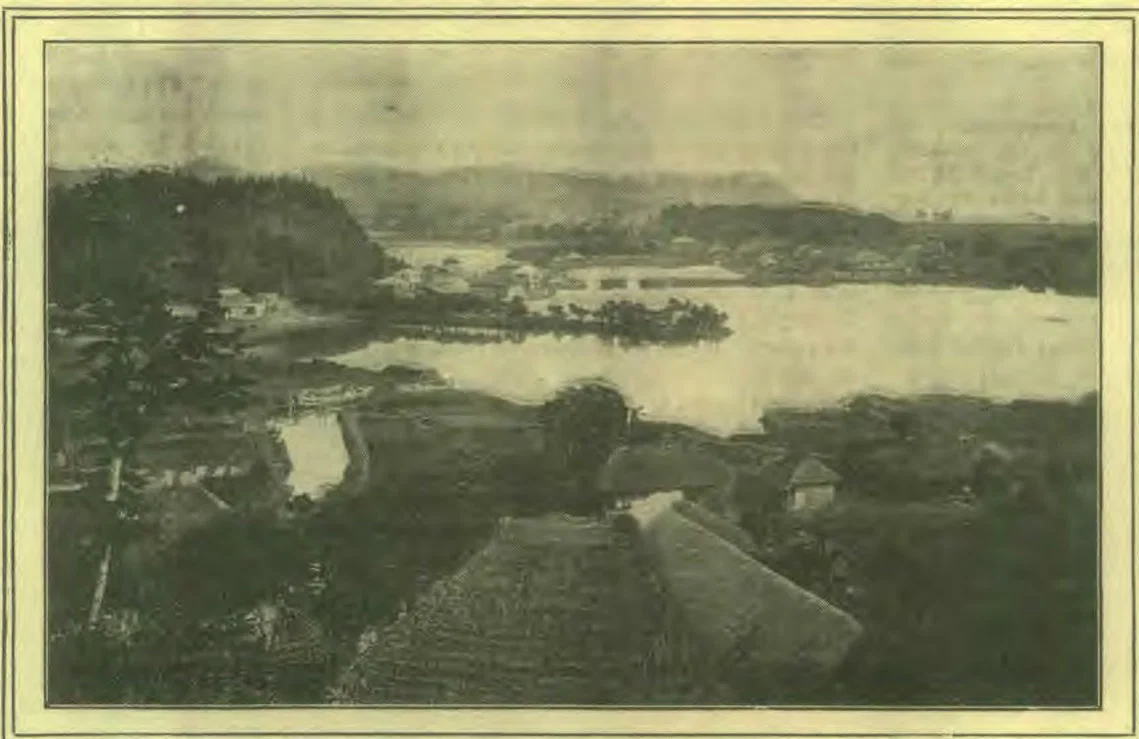
Kanazawa, Japan.
Kanazawa, Japan.
"'Please let me ask you, Captain Hobson, where did you learn this? I should suppose that a congressman would know that for two hundred and fifty years before Commodore Perry's visit, there was no nation on earth that could compare with Japan for the peace habit. While Europe and America were in the midst of long years of bitter wars, revolutions, and mutual slaughters, there was for two hundred and fifty years neither internal nor external disturbance of peace in the empire of Japan.
"'Your sweeping judgment of the national character is that they have the war habit. For ages it has been the traditional teaching in Japan that the cherry blossom, which fills valleys and plains with its delicate perfume, and then in self-sacrifice gives itself to die, is the symbol by which they have always interpreted themselves.
"'Probably you did not know that, when Perry opened Japan to the knowledge of Western history, one thing that shocked the Japanese was the awfully bloody histories of the nations on this side of the globe. And one of their great moralists, Yokoi Shonan, expressed this wide feeling when he begged his government to send him on a mission to the West, that he might plead with those nations to put an end to the brutal wars which two hundred and fifty years of peace had made Japan profoundly dislike.
"'Have you ever compared the national hymn of Japan with those of the nations of the West? Her hymn is of very recent date, hardly thirty years old, and you would expect to find something of 'the war habit' that has grown 'for eight hundred years' in this hymn; for hymns, to be national, must express the deepest and strongest sentiment of the nation. Not a shadow of war here. We of the West have to be careful how we sing our national hymns where representatives of different nations are gathered. But Japan's national hymn is so absolutely without the war spirit that it can be sung anywhere in the world without giving the slightest offense.
"'In the course of your address, your vivid imagination led you to picture the millions of China, too, as virtually possessed with this same war habit, and you painted in fiery colors those five hundred millions of yellow men, 'where countless soldiers could shoot as straight as we can, and could live on one-tenth of what we should need,' descending on our Pacific Coast with irresistible force. Are you not as far afield here as with Japan? I had the honor recently of an interview with the Hon. John W. Foster, who kindly presented me with a copy of his 'Present Conditions in China.' With his long and honored diplomatic service in the East, whose peoples he knows, and whose trusted adviser he has been for decades, he has a right to say in this pamphlet: 'For many generations China has been the least warlike of any of the great nations. Her most venerated philosopher and statesman, Confucius, taught her people that nations as well as individuals should settle
their differences by appeals to right and justice.'
"'In view of these facts, it seemed to me that you had somehow gotten the wrong perspective, and that you should have reversed your vision and told your audience that we Westerners have the war habit badly, and might well learn something from those oldest and most peaceful nations of the East. I was in Manchuria as a guest of the army for six weeks, and was given in my passport the grade of a colonel. I had letters of introduction from the premier, Count Katsura, to all the generals and Marshal Oyama. The premier is a general of the regular army, and he said to me in all solemnity: 'I am a soldier, but I hate war. I tried every possible way to come to a settlement with Russia thru peaceful means, and after six months of useless diplomatic correspondence we simply had to fight for our national existence.' This is a true expression of the heart of Japan's generals.
"'Mr. Foster is right in his estimate of the peaceful character of the peoples of the East. What he says agrees with the conclusions I have reached, after thirty-three years of residence out there.
"'Let me now refer to the charge you repeatedly made that Japan is trying to bring on war with America at the earliest possible moment, knowing that we are unprepared and that she could win easy victories provided she can get a pretext for beginning the fight.
"'Our Secretary of War, Mr. Taft, unqualifiedly stated in Tokyo only last October that the two governments and the two peoples are perfectly secure in their friendly relations, which no local disturbances can affect. He says, with reference to war talk: 'It would be a crime against modern civilization if Japan and America went to war, and it would be at once hateful and insane. The people of both countries are alike repugnant to the idea, and the governments of both countries may be trusted to be faithful in this matter to the people's wishes.'
"'You say that Japan virtually gave 'an ultimatum' to our government, and made 'demands.' Secretary Root said in his address before the American Society of International Law: 'The government of Japan made representations to the government of the United States that, inasmuch as the children of residents who were citizens of all other foreign countries were freely admitted to the schools, the subjects of Japan residing in the United States were, by that exclusion, denied the same privileges, liberties, and rights which were accorded to the citizens or subjects of the most favored nation.' The difference between a diplomatic representation and an ultimatum or a demand is the difference between impending war or peace. An ultimatum is the last diplomatic word before the beginning of active war. Secretary Root has told the world that therewasn't a shadow of an ultimatum. And he adds: 'It is a pleasure to be able to say that never for a moment was there, as between the government of the United States and the government of Japan, the slightest departure from perfect good temper, mutual confidence, and kindly consideration.'
"'Our ambassador, Luke Wright, on his return from Japan last September, said to Americans thru the papers: 'The talk of war between this country and Japan isn't even respectable nonsense. There is no situation between Japan and the United States other than the very pleasant and friendly relation which has always existed. Japan no more wants a war with us than we want one with her, and the idea that there is an impending conflict between the two countries is ridiculous. Japan regards us as her best friend, and there is a perfect understanding between the two countries.'
"'Our new ambassador in Tokyo [Hon. Thos. J. O'Brien] asserted before the Oriental Association on December 11 that 'so far as our two countries are concerned, there is not now one serious question that remains unsettled.'
"'I will quote the missionaries who speak the Japanese language, live with the people, have strong friendships among the educated classes, read the papers, and are agreed on this one vital point—the way the Japanese think about us. They have watched not without anxiety the irresponsible jingo utterances of a section of the American press and their slanders of Japan. And they have openly sent their formal message to the people of the United States; and, in view of such utterances as you feel impelled to make, the public should have the saner views of men who have first-class opportunities for knowing what you can get only in less direct ways. Here is their message:
"'While we, as missionaries, have nothing to do with questions of national economics or international politics, yet in matters affecting the mutual good-will of nations, we, as messengers of God's universal Fatherhood and man's universal Brotherhood, are peculiarly interested; and, as Americans now residing in Japan, we feel bound to do all that is in our power to remove misunderstandings and suspicions which are tending to interrupt the long-standing friendship between this nation and our own. Hence, we wish to bear testimony to the sobriety, sense of international justice, and freedom from aggressive designs exhibited by the great majority of the Japanese people, and to their faith in the traditional justice and equity of the United States. Moreover, we desire to place on record our profound appreciation of the kind treatment which we experience at the hands of both government and people; our belief that the alleged "belligerent attitude" of the Japanese does not represent the real sentiments of the nation; and our ardent hope that local and spasmodic misunderstandings may not be allowed to affect in the slightest degree the natural and historic friendship of the two neighbors on opposite sides of the Pacific.'
"'This document is signed by over a hundred men, many of whom have lived in Japan over a quarter of a century. Every one of these men would repudiate without hesitation every one of your assertions to which I have referred.
"'In thus replying to your public statements, I am not ignorant that the immigration question is a perplexing and also an irritating one. And I happen to know that, because it is irritating, both governments have kept pen from paper. Of course, I am not in the secrets of the government, but, as far as I understand things, I believe there has been no diplomatic correspondence whatever between the two governments until the very recent note of Secretary Root to Viscount Aoki concerning the immigration question, and the Japanese government's reply thru our Ambassador O'Brien. Heretofore it has been simply diplomatic conversations. But meantime, and repeatedly, both governments, thru their most responsible agents, have unwaveringly said to the world,—in the straightest possible use of words,—there is no break in the friendly relations between the two governments. Just a year ago I was in our ambassador's box at the opening of the Japanese Diet, and heard Premier Saionji say: 'I have been questioned with reference to the San Francisco affair and asked what our government is going to do about it. To this I reply that the matter has not reached the diplomatic stage. It is merely a local affair within the jurisdiction of a friendly country, and we trust the government
of the United States to do the just thing.'
"'A few weeks ago I was accorded an interview with Japan's ambassador, Viscount Aoki. His words to me were: 'War with America is impossible. If immigration tends to make an unfavorable economic situation here, or arouses race prejudice, then we will stop our laborers from coming to this country. The good-will and friendship of the great republic is not to be imperiled for the sake of a few emigrants.'
"'Undoubtedly Japan feels hurt over the determination to exclude her laborers while those of other nations are freely allowed to come. It is like a blow from a friend—from one she has always called with profound respect her 'teacher.' But again and again, during the last year's misunderstandings, Japan's great statesmen and warriors, and her great newspapers, have said, with deep regard and gratitude for what America has done for her: 'We can never fight the United States.' You may be sure she will never raise a finger against us, unless we become so unrighteous as openly to insult her, throw away her valuable friendship, and aggressively arouse her war feelings.'"
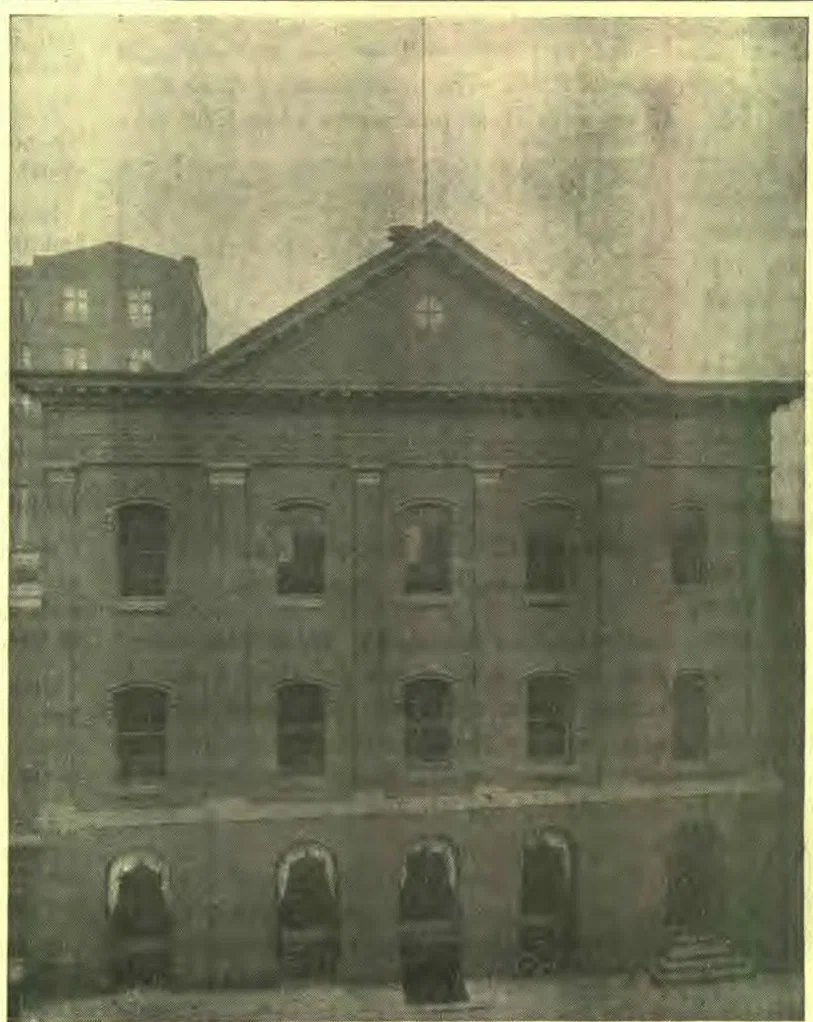
Old Ford Theater, 10th St., Washington, D. C., Where Abraham Lincoln Was Assassinated, April 14, 1865.

Striking Students.

SEVERAL items have appeared in these columns in regard to the difficulty the faculty of Stanford University is having with its students; and now there comes a threatened strike in the New York University. A certain "freshman" has violated some unwritten student law, and a mass meeting of the students ordered him to leave the institution. He refused to do it, and so was "ducked" in the university horse-trough. He entered a complaint to the faculty against this treatment, and its student affairs committee suspended the leader of the "ducking" ceremony. Then followed the threatened strike, and the school is practically doing nothing and the affair is still unsettled.
The unwritten law that the student has violated is rather interesting because of its absurdity, and is summarized in the press despatches as follows:
First—Would not rub down the members of the varsity teams, as all good freshmen are supposed to do.
Second—Wore violet-colored ties, same being the college color and a privilege no freshman is allowed.
Third—Sat on the steps of the library, where no "freshies" are supposed to rest.
People who like rules such as the foregoing should be allowed to have them, no matter how much we may disapprove of their bad taste. And if there are those who desire to have their children given these rudimentary degrees in the notions of aristocracy, they should be allowed the privilege; but at the same time there should be schools where the useful branches of knowledge are the all important thing, and where a "strike" would be very promptly and vigorously handled among students who were in rebellion over such absurd matters.
The public schools have aped all this nonsense that has come into the universities, and we have come to the place where it is next to impossible to send our children to school without subjecting them to many indignities that are altogether out of harmony with true manly and womanly education.
Young people, and older ones as well, need pleasure and recreation; but real pleasures are mutual all around. There is no one in such games who is getting a "ducking," or some other thing that is not only very disagreeable, but in many instances, positively dangerous. There needs to be a strong reversal of the whole plan of government in the schools, and the students need to be taught the difference between pleasure and the violent riotings of hoodlums.
"Horse-trough duckings" and similar things have been winked at in the schools, until government in many of these institutions of learning is giving way to a spirit of lawlessness that is bordering onto anarchy, one of the worse curses of the race.
T.

Rome's Life Over Again

Rome's Life Over Again.—A recent number of the London Times, referring to a lecture by Mr. Warde Fowler on “the decay of Roman home life, in which the speaker drew a parallel between Roman times and ours, as both interesting and instructive,” says, “There is room, as all must admit, for anxiety, as we look at the signs of our time.” “There is much, no doubt, in our civilization, social and domestic, to which we can point as indicating real progress; but there are also hands that beckon us to the downward road along which Imperial Rome hastened to its decay and fall. Nor can there be any doubt that any decline in home life and the domestic virtues must, if it spreads, spell national degeneration, as it did in ancient Rome among the masses who were ‘homeless in the sense of being without a home,’ or among the wealthy who ‘were building themselves palatial residences too magnificent to be worthy of the name of home.’”

Burning Lunatics

Burning Lunatics.—The Western Watchman (Roman Catholic) in discussing Giordano Bruno quotes with approval Marion Crawford, who tells us that while Bruno was not tortured in Venice, he was brought before the tribunal of the Inquisition in Venice three times. He was then sent to Rome at the demand of the pope where he was burned at the stake. Mr. Crawford concludes: "He was in reality a degenerate and a lunatic who should have ended his days in an asylum." Yet it was this "lunatic" which the Papacy burned at the stake. A sane heretic could not have been treated much worse.

Gifts to the University of California

Gifts to the University of California the past year aggregate $175,000. The Hearst Memorial Mining Building, just finished, cost about $600,000.

The Preaching of the Gospel to the Jews.
SOME nineteen hundred years ago the apostle Paul was inspired to write the following statement: "Brethren, my heart's desire and prayer to God for Israel is, that they might be saved." Rom. 10:1. While the church has read it, while the Bible has contained it, and while thousands have thought upon it, comparatively few have ever made it a part of their own experience. This prayer is certainly as important as any other prayer of the Bible, and we feel sure it is time the church of God prayed this prayer, and worked with the end in view that they believed it would be answered.
We feel sure that the Holy Spirit is beginning to answer this prayer to-day, and we see signs and indications that there are Jews who are being saved, and we know from the word of God and the sure word of prophecy that there are hundreds, yes, even thousands, who will yet be saved, and help make up the true Israel of God.
It is doubtless true that the Jews are a hard class to reach with the Gospel, and for this reason there are few people who care to undertake the work. But Jesus did the work; the early church worked for them, and God said He had not cast them away. Then why should we? God designed the Jews to be the missionaries of the world; and if the children of God would but remember, they would recall that every blessing the church has had or enjoys to-day came to them thru the Jew. We certainly are debtors to them, and it is time we began to pay that debt.
We have seen the Lord at work among the Jews, breaking down their prejudices, and inclining their hearts to hear the pure truth of the Gospel. The work with the literature has been going steadily forward during the past three years, and we are glad to say we have distributed more than twelve tons of literature among them. No doubt some of this has been wasted, but we thank God most of it has been read, and a good deal of it has been received with joyfulness. Souls have accepted the truth and have been baptized, and are rejoicing in the hope of the glory of God that they have found their own Messiah, Jesus.
The work at the mission in Boston has been going along quite steadily, and there have been several who have taken their stand for Christ and His truth.
Several have been baptized, and others are awaiting baptism. A good work has already been going on with the children. This winter we have not been able to do so much as we desired on account of lack of funds, and also on account of other conditions, but we believe the time has come when we must put forth more diligent efforts.
It is doubtless known that the Jew has a fierce time when he accepts Christ. He is persecuted, cursed, starved, and at times buried in effigy; still he will love Jesus in spite of it all. The question arose as to what to do with these poor Jews when they take their stand for the truth? We felt impressed that we ought to secure for them a city of refuge where we could give them employment, and at the same time have a training school where we could give them a training to work for the Master. There is so much need for such workers.
Industrial Home for Converted Jews.
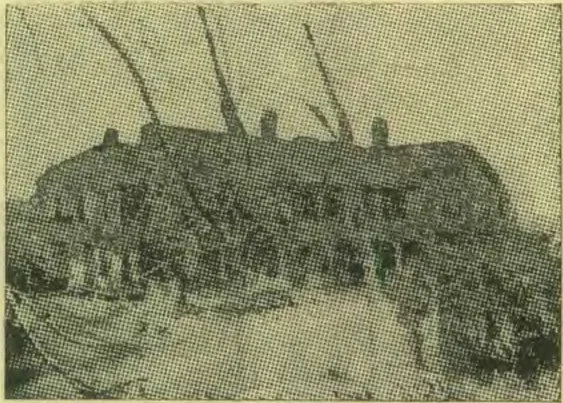
The Lord providentially opened the way for us to secure just such a place within twenty miles from our mission in Boston. It is a farm of eighty acres, with a twenty-five room house. It has two large barns, other buildings, fruit orchards, and some thirty acres of valuable wood and timber. The whole could be secured, stocked, and fitted up for a training school for the sum of ten thousand dollars. We are glad to say that we have more than half of the sum already secured, and many souls have become deeply interested in this enterprise. We need the sum of $3,500 to finish paying for the place, and to secure the necessary things to carry on the work. The accompanying cut shows something of the buildings. We assure our friends that whatever assistance they can render toward this noble enterprise will be greatly appreciated, and much blessed of God. We ought to have the balance of this money within a few weeks, and we trust the Holy Spirit will impress the hearts of His dear children to remember this work for the lost sheep of the house of Israel.
Any funds may be sent either to the SIGNS OF THE TIMES, or to the Jewish Mission, 105 Stanford St., Boston, Mass.
F. C. GILBERT, Supt. Jewish Mission.

Waking Thoughts.

Another day God gives me, pure and white, How can I make it holy in His sight? Small means have I and but a narrow sphere, Yet work is round me, for He placed me here. "How can I serve Thee, Lord? Open mine eyes; Show me the duty that around me lies."
"The house is small, but human hearts are there, And for this day at least beneath thy care Some one is sad—then speak a word of cheer; Some one is lonely—make him welcome here; Some one has failed—protect him from despair; Some one is poor—there's something you can spare!
"Thine own heart's sorrow mention but in prayer, And carry sunshine with thee everywhere. The little duties do with all thine heart, And from things sordid keep a mind apart; Then sleep, my child, and take a well-earned rest, In blessing others thou thyself art blest!"
—Anon.

Our Work and Workers.

A NEW church building was dedicated at Kincaid (Kan.) Sunday, April 5.
MEETINGS held at Parma, Idaho, have resulted in bringing ten to accept the truth.
A CHURCH of fifteen members has been organized by Brother H. J. Dirksen at Midvale, Idaho.
SABBATH, March 21, four members were added to the Topeka (Kan.) church, three on profession of faith.
ELDER R. D. QUINN, recently returned from Australia, has been elected president of the Montana Conference.
AT Falls City, Ore., four have accepted present truth thru the labors of Brother G. W. Pettit and Brother J. M. Cole.
A NOTE from Brother Clarence Santee states that the brethren at Hamby, Texas, dedicated a new church building March 28.
NEW MEXICO has been transferred from the Central Union Conference to the Southwestern Union, with Brother H. L. Hoover as director.
A SABBATH-SCHOOL of twenty-three members was recently organized at Porter, Okla., by Brother C. M. Hayhurst. Much interest is manifested.
BROTHER CHAS. THOMPSON, president of Kansas Conference, writes of the dedication of a church building by the brethren at Conway Springs, Kan., March 15.
"THERE has been great opposition on the part of some, but, notwithstanding this, six precious souls have taken their stand on the commandments of God."—E. W. Wolfe, Eddyville, Iowa.
BRETHREN R. D. QUINN and J. C. Foster have just closed a series of meetings at Stevensville, Mont., in which seven honest souls gave themselves to the Lord.
A SABBATH-SCHOOL of twenty-six members was recently organized in South Peoria, Ill. The interest was created by Brother J. L. Galbraith by canvassing and holding Bible-readings.
At the close of a discourse by Brother Meade MacGuire at Kansas City, Mo., March 7, twenty-four gave their hearts to the Lord, nearly all of them young people. Brother H. B. Steele assisted in the meetings leading to this splendid harvest.
THREE charter members of the first Seventh-day Adventist Church still survive, Sisters Harriet I. Farnsworth and Sarah P. Mead, both still members of the church at Washington, N. H., and Sister Cynthia J. Farnsworth, now a member of the church at Hastings, Neb.
OFFICERS elected for the Northern Union Conference, which includes Iowa, Minnesota, North and South Dakota, are as follows: President, R. A. Underwood; vice-president, M. N. Campbell; secretary, T. D. Gibson; treasurer, C. M. Everest; educational and young people's secretary, C. L. Benson; religious liberty secretary, C. M. Clark; secretary medical department, Dr. C. P. Farnsworth.

Wanted for Missionary Work.

SIGNS OF THE TIMES, Watchman, and other missionary literature. Send late, clean copies to Jacobs & Harris, McKinney, Ky.
TRACTS and papers for city work. J. S. Killen, Asheville, N. C.
SIGNS, Watchman, Instructor, Liberty, Life and Health, and tracts. George Bell, Luray, S. C.
ENGLISH papers and tracts. Address H. W. Reed, Crandon, Wis.

Special to Our Subscribers

Our Bible-Reading Series of twenty-six numbers of the SIGNS OF THE TIMES will soon close. We have received many appreciative letters of this series of which the following is an average sample:
"I can not express in words how pleased I am with the SIGNS. We have reached a time when we can point to the SIGNS as the grandest and greatest missionary paper in all the world, not only in its special numbers, but in its regular issues from week to week."
As the Bible-Reading Series is about finished, our readers will naturally wonder what are the plans for the paper beyond that. We have completed arrangements for

172 SPECIAL ARTICLES

covering all the leading themes of the Gospel. These will be illustrated and presented clearly and attractively. Here are some of the subjects to be considered:
  • The Law of God
  • The Everlasting Gospel
  • Man's Sin and Saviour
  • Man's Nature and Destiny
  • The Holy Spirit
  • Bible Election
  • The Complete Sabbath Question
  • The Coming of the Lord
  • The Signs of the Times
  • Conversion and Regeneration
  • The Church Militant and Triumphant
  • The Great Field of Prophecy
  • Union versus Confederation
  • The World's Ills and Remedies
  • The Great Threefold Message
  • Religious Liberty
  • The Day of the Lord
  • The Earth and Its Future
In addition to the foregoing there will be

50 MISCELLANEOUS ARTICLES

on subjects of practical godliness, true Christian living, etc., which will be very helpful to all.
The series of Bible-Readings just closed have given such general satisfaction that the editors have decided to continue this feature thru the coming year, therefore there will be

52 BIBLE-READINGS

on the subjects presented in the foregoing articles in addition to the articles themselves. These readings will be brief but comprehensive.
Following are the subjects of some of the good things that will appear in

THE HOME DEPARTMENT

  • Breathing
  • Ventilation
  • Blood Circulation
  • Food Combinations
  • Common Sense
  • Absence of Worry
  • Simplicity of Life
  • Few Varieties at Meals
  • Clothing: Effects of Improper Clothing
  • Clothing for the Trunk
  • Clothing for the Limbs
  • Clothing for the Feet
  • The Responsibilities of the Father
  • The Responsibilities of the Mother
  • Responsibilities and Privileges of the Son
  • Responsibilities and Privileges of the Daughter
  • Pernicious Reading
  • Good Reading

THE OUTLOOK DEPARTMENT

The reader knows of the mighty issues that are agitating the world, and how that the bravest men are trembling before what they see coming on with an irresistible force. In the Outlook Department these issues will be considered by the able corps of correspondents that we have scattered thruout the world, and the meaning of the disquieting events will be fully presented in the light of prophecy. No one can afford to miss the important matter that will be found in this department from week to week.

MISSIONS

The SIGNS has always taken a lively interest in missions and missionary enterprises. During the coming year special attention will be given to this department. There will be articles on the great needy fields of China, India, Africa, South America, Korea, Japan, and the Philippine Islands. These articles will be furnished by persons right on the ground, acquainted with all the difficulties and advance steps that are being taken.

QUESTIONS AND ANSWERS

or "Our Inquirers' Department," will be continued, together with the Bible-Reading Band already organized, beginning with 1909, reading the Bible thru in a different way from the present.
During the year the senior editor will spend several weeks in Europe gathering information and material with which to enrich the pages of the SIGNS. He will make a special study of the great problems now agitating the social, religious, and political world, and give the readers of this paper the benefit of his research. His weekly letters, embodying notes of travel, etc., will be of special interest to all.

SUBSCRIPTION PRICE

One year . . . . . . . . . . . . . . . . . . . . . $1.50 Six months . . . . . . . . . . . . . . . . . . . . . .75 Three months . . . . . . . . . . . . . . . . . . . .40 In clubs of 5 or more, to one name and address, per copy . . . . . . . . . . . .$1.00 To foreign countries . . . . . . . . . . . . . . . 1.75
Address, SIGNS OF THE TIMES, Mountain View, California

Simplicity in the Home

By Mrs. L. D. Avery-Stuttle
A GREAT deal is being said lately about the simple life, but I fear that it will take even more than the efforts of our respected President at the White House to make it really and practically popular. Madam Style is so fond of her fine clothes, and Mr. Dissipation is so determined to eat late suppers and to turn night into day; while Madam Folly still delights to shock sensible people with her unreasoning extravagance, that the task of reforming the people is bound to be a hard one.
A friend was telling me yesterday of a lady who cried all day Christmas because her husband had presented her with a pair of slippers which she did not consider fine enough; and of another, who for a similar reason rudely threw the present her husband had just handed her across the room into the corner.
"O, how unkind! Why that was downright cruel!" exclaims Mrs. Elegance, who, altho she has her faults, is a very tender-hearted little woman.
But look here, Mrs. Elegance; don't you remember encouraging John to buy that expensive suite of furniture, when you knew he could ill afford to do so? He did it, of course, to please you, tho it went against his better judgment. But he has felt obliged to put in another extra hour of hard work every day since then, because he did it. Then there are the children's school dresses. Really the old gowns would have done nicely with only a little alteration, but they were somewhat out of style—as last summer's dresses are bound to be—and so—
"Now you are touching a tender point," declares Mrs. Elegance; "I think my little girls are as good as anybody's, and I am determined they shall be well dressed, even if—"
Even if your poor, over-worked husband has to foot the bills, which grow larger and larger every season. He needs a vacation badly, but he does not dare to take one. The first thing you know, Mrs. Elegance, your tired husband will take a long vacation from which he will never return. This rushing, hurrying, strenuous life he is leading, this continual reaching and stretching and grasping after the ever elusive dollar, with which to satisfy the growing demands of his wife and children, this busy, restless life, can not be kept up very much longer. Now pray don't cry, but just listen to reason. Why not get Minnie a serviceable gingham for school, instead of that flimsy, expensive silk mull? Why do you buy for your little girls costly bracelets, and then—folly of follies—allow them to wear these to school, like grown-up ladies dressed for an evening reception?
I can not tell you how sensible people look upon such folly. And even if these vanities cost no more than you are well able to pay, still I assure you that in the end you would find to your sorrow that the false training you are giving your girls will be the most expensive thing in the world. Already do you not see that they are losing their childish modesty and simplicity? You think not? —Allow me, and I will convince you.
Just step here, Mrs. Elegance, and watch your little daughters coming down the street. School is just dismissed, and they are walking home with their mates. "Walking," did I say? I ought to have said "mincing," like the foolish daughters of Zion that we read about. They do not "make a tinkling with their feet," but O how the bangles and buckles and bracelets and chains and rings and pins and beads and what not do shimmer and sparkle and "tinkle"!
These little old women of yours walk very sedately and seem to feel their vast importance. When you were a little girl, Mrs. Elegance, you used to trot along the winding path, with your little bare feet brushing the dew from the grass, happy and thankful if your mother allowed you a new calico or gingham once or twice a year. If you wanted to climb a tree, or go racing after a butterfly you did it; but your poor little fashion-fettered daughters know better than to attempt such a thing. The limbs on the tree would tear and ruin the fancy dress of little Miss Elegance.
Now step a little nearer and listen to the conversation of your small girls, and remember that they are yet wearing short dresses, and have barely entered their "teens," and that they are returning from school, where they are supposed to learn something more than folly. Listen:
"O Elizabeth! mama has bought me just the sweetest silk gown for Jennie's party; it's too lovely for anything! There are to be four ruffles on the skirt, and I'm to have three yards of ribbon for the sash, and a love of a bow for my hair,—a perfectly immense one you know,—and O Elizabeth! father thinks I'm pretty young for gentlemen company, but mother doesn't object, and Mr. Jack Smith,—he's fifteen, you see, and his father's just awfully rich,—he's going to take me. Now if I can only coax papa to buy me a new bracelet and chain, I'll be perfectly happy. It's awfully expensive of course, but look here, Elizabeth, if we're ever going to marry rich—"
And then these old little girls passed on, and Mrs. Elegance and I failed to hear the remainder of this edifying conversation. I turned to steal a glance at my companion.
I don't wonder you blush, Mrs. Elegance, but this revelation has come none too soon. But how it must pain you to realize that all this silly folly is but the result of your own training.
Now take my advice; please do. Have a good, long talk with your husband and get his cooperation—he will be only too delighted, poor man. Tell him you have resolved to quit your life of fashion and folly. Then call your daughters and have an understanding with them. Confess to them that you have been a foolish mother. A confession will be good for them and for you, too. Turn square about; and it may be, Mrs. Elegance, that it is not yet too late to undo some of the mischief of the past, and to make sensible little girls out of these twaddling fashion-plates of yours.
Continue reading: Mistakes Concerning Alcohol