Your ShelfYour Projects

Review and Herald, Vol. 85, No. 42.

The Reward of Obedience
Earlier text: Note and Comment

The Crusade Against the White Plague

G. H. HEALD, M. D.
Of the great epidemic diseases which have afflicted mankind, two have been distinguished by the name plague. The black plague has in former generations depopulated cities and devastated Europe and Asia. After lying quiescent for decades or centuries, it bursts forth in fury on its mission of destruction. Such a general epidemic is now in progress, though greatly modified by the efforts of modern science to check it.
We now have very accurate knowledge of the nature of the disease, the means of its transmission, and the proper procedures for preventing its spread; yet its appearance in a city causes consternation, and all the resources of science are applied to stamp it out. Notwithstanding the efforts to eradicate it, including quarantine against infected cities, and sometimes the destruction of infected districts by fire, the disease is gaining foothold in practically all parts of the globe.
It is right that the appearance of this disease should cause consternation, for it means loss of life and financial loss to any unfortunate city that harbors it. But it is strange that this disease, which is confined more or less to rat-infected and filthy quarters, should cause such consternation as compared with that caused by the presence of the white plague; for the white plague takes no vacations, is never quiescent, but works steadily all the time and overtime. All races of men are more or less subject to its ravages, those being particularly susceptible who (like the American Indian) have not acquired a hereditary tolerance by generations of exposure to it.
Not only man, but almost the entire animal kingdom is more or less susceptible to the ravages of the bacillus of tuberculosis. There are few animals that will not, under favoring conditions, yield to the disease, and there are probably no tissues of the body that the organism will not attack.
More lives are destroyed by the white plague in the United States than by the black plague in India. More Americans are carried off by consumption in one year than have been killed by yellow fever in the entire history of this country. More people die by the bacillus of tuberculosis every four years than were killed by bullets in the four years of the Civil War. Tuberculosis stands at the head of the list of diseases which deprive us of our loved ones, being responsible for about one seventh of all deaths. Its onset is so insidious that we do not immediately observe the source of the contagion, and we tolerate it. In contrast is our prompt quarantine of a case of smallpox, a disease which does not cause any perceptible damage, as compared with that of tuberculosis.
Till within about a quarter of a century, tuberculosis was supposed to be hereditary, and then through the discovery of Koch it was definitely learned that the cause of the disease is a small micro-organism,—the tubercle bacillus,—which is transmitted from one person to another; in other words, to use a common expression, that tuberculosis, or consumption, is contagious.
We know that the disease is more than contagious; that is, communicable by direct contact. It is not necessary to be directly in contact, or even to see the tuberculosis patient, though intimate contact may greatly increase the chances for infection. It may be communicated by breathing infected dust, by eating infected food, including milk,—whether infected from diseased cows or dirty flies,—and in other ways.
But knowledge often filters slowly down to those who need it most. At first there was a marked disinclination to accept the theory of the contagiousness of the disease; then after a campaign of education many went to the other extreme, and there was an epidemic of phthisophobia, and an effort to drive the poor consumptive away from civilization. To this inhumanity is now succeeding a more humane effort to render public aid to the helpless consumptive and his family, and to improve the housing and general sanitary conditions, so as to lessen the ravages of the disease.
Soon after it was learned that the disease is preventable, humane people, by the organization of societies and through the machinery of government, began the work of perfecting a crusade against this mighty foe, and at the present time there are engaged in this great fight bacteriologists, physicians, veterinarians, educators, philanthropists, settlement workers, and government officials, attacking this gigantic problem from many sides.
The first international congress on tuberculosis was convened in Paris in 1898, only ten years ago. The next year it met in Berlin, and the next in Milan, and again in London in 1901. But it was in the Paris meeting of 1905 that it took on a really international character. Every one of these meetings served to encourage advanced efforts for the prevention of tuberculosis; for the report of the success of a certain measure in one country was certain to be followed by its adoption in other countries. By this interchange of methods, by arousing new enthusiasm, and giving a new impetus to the work, the anti-tuberculosis movement has made a distinct advance after each world-meeting.
In 1904 the National Association for the Study and Prevention of Tuberculosis was formed in this country, and has since held annual meetings, which have served to carry the work into nearly every city, hamlet, and rural district in the land. It was this national association that enabled our country to participate profitably in the Paris international meeting of 1905.
But the most important, the most momentous, of the gatherings that have convened to combat tuberculosis is the International Congress held in Washington, D. C., September 21 to October 12 of this year. Never before, perhaps, have so many scientists come together to discuss this subject. At no former gathering have so many important questions relating to this disease been decided. Never before has there been such an extensive tuberculosis exhibit assembled; and we may predict that the warfare against the white plague will be pushed with a vigor and enthusiasm never before known.
Takoma Park, D. C.
(To be concluded)

Cheerfulness and Health

In the maintenance of health and the cure of disease, cheerfulness is a most important factor. Its power to do good like a medicine is not an artificial stimulation of the tissues, to be followed by reaction and greater waste, as is the case with many drugs; but the effect of cheerfulness is an actual, life-giving influence through a normal channel, the results of which reach every part of the system. It brightens the eye, makes ruddy the countenance, brings elasticity to the step, and promotes all the inner forces by which life is sustained.—A. J. Sanderson, M. D.

Malamulo Mission Schools

JOEL C. ROGERS
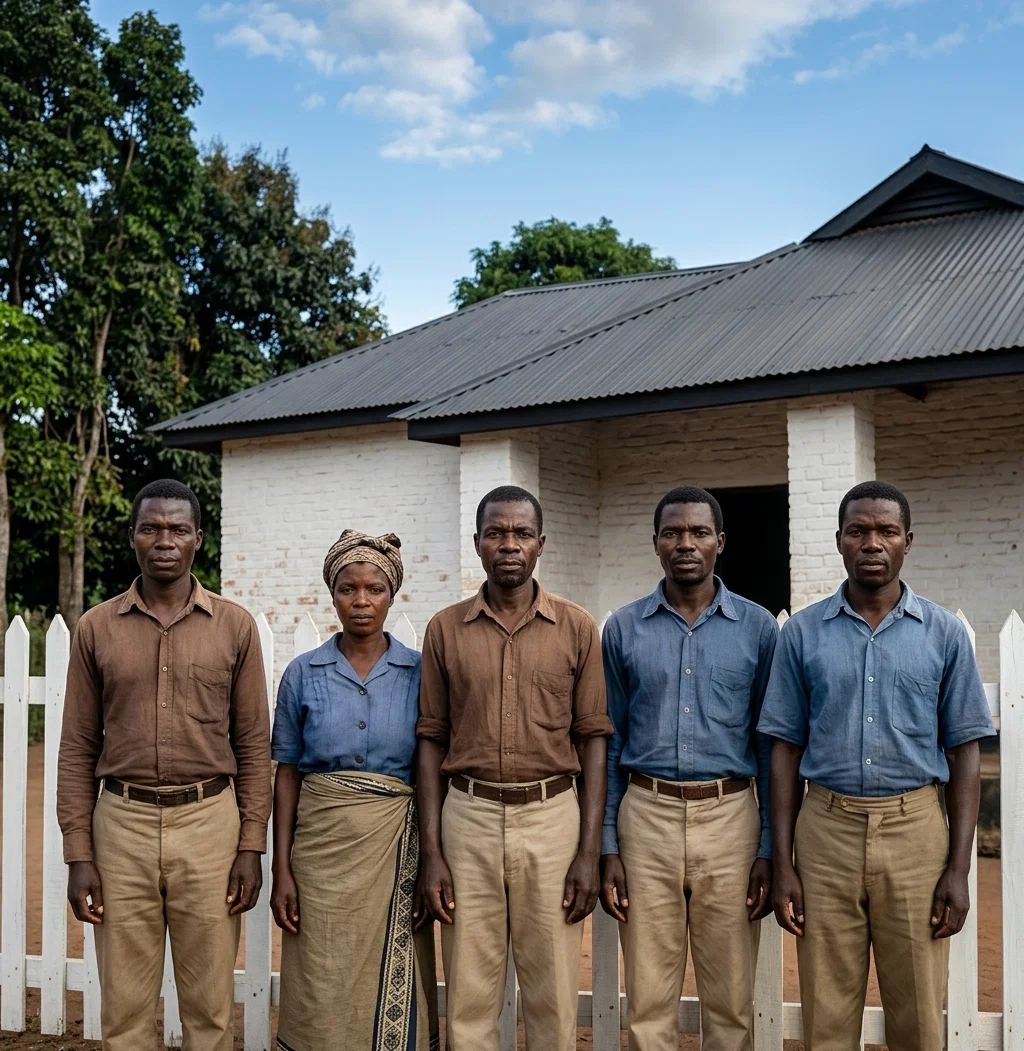
NATIVE TEACHERS AT MALAMULO MISSION
OUR people who keep informed on the growth of the missions are familiar with this new name of our old Plainfield mission. In this report I shall try to give a clear idea of the work done in the mission schools, and our hopes concerning them.
First, I will give the name of each school, its distance and direction from our main station, its attendance, and the number of teachers. The past year my wife and myself have been the only teachers — except native teachers trained here. Peter Nyambo, however, came to us from the British East African mission, and we hope will make a good teacher, as this is his native land.
At Malamulo, in Cholo, we have an attendance of one hundred fifteen, with two white and five native teachers. Tabva, two miles south, has twenty pupils, with one teacher; Messingere, four miles west, twenty-five pupils and two teachers; Monekera, fifty miles from Cholo and twelve miles from Blantyre, has an attendance of fifty, with three teachers. Chifide, six miles from Monekera, has forty pupils, with two teachers; while Milala, seven miles from Monekera has twenty pupils and one teacher. Matandane, our farthest out-station, one hundred miles northwest from Cholo, has two teachers and an attendance of twenty-five. Thus it will be seen that we have a total attendance of two hundred ninety-five, with two white and sixteen native teachers. The enrolment has at times been over three hundred fifty.
The Malamulo School is designed to be a training-school for native teachers. Until the past year there were no out-stations where pupils could go for their preparatory work. The two out-stations opened last year, and others which we intend establishing, will, we hope, be the means of allowing this main school to give more attention to the training of teachers.
There is scarcely any limit to the number of schools which may be held by native teachers in this country. The old missions, working fifty years here, have given birth in many native minds to a desire for schooling. And this message may reap from their sowing, if we can only have the help and money to train teachers, and support them.
In view of the many calls made for money for our rapidly spreading missions, I am so thankful that a native teacher in Africa can be supported on so little. The average wage of our sixteen native teachers is $1.25 a month, and board. For board we reckon only fifty cents a month, the native growing most of his food. So $1.75 a month is the present average wage of our teachers. We must increase this wage a little as our teachers gain in experience and efficiency. At the present wages, a native teacher can be supported for $15.75 a school year of nine months.
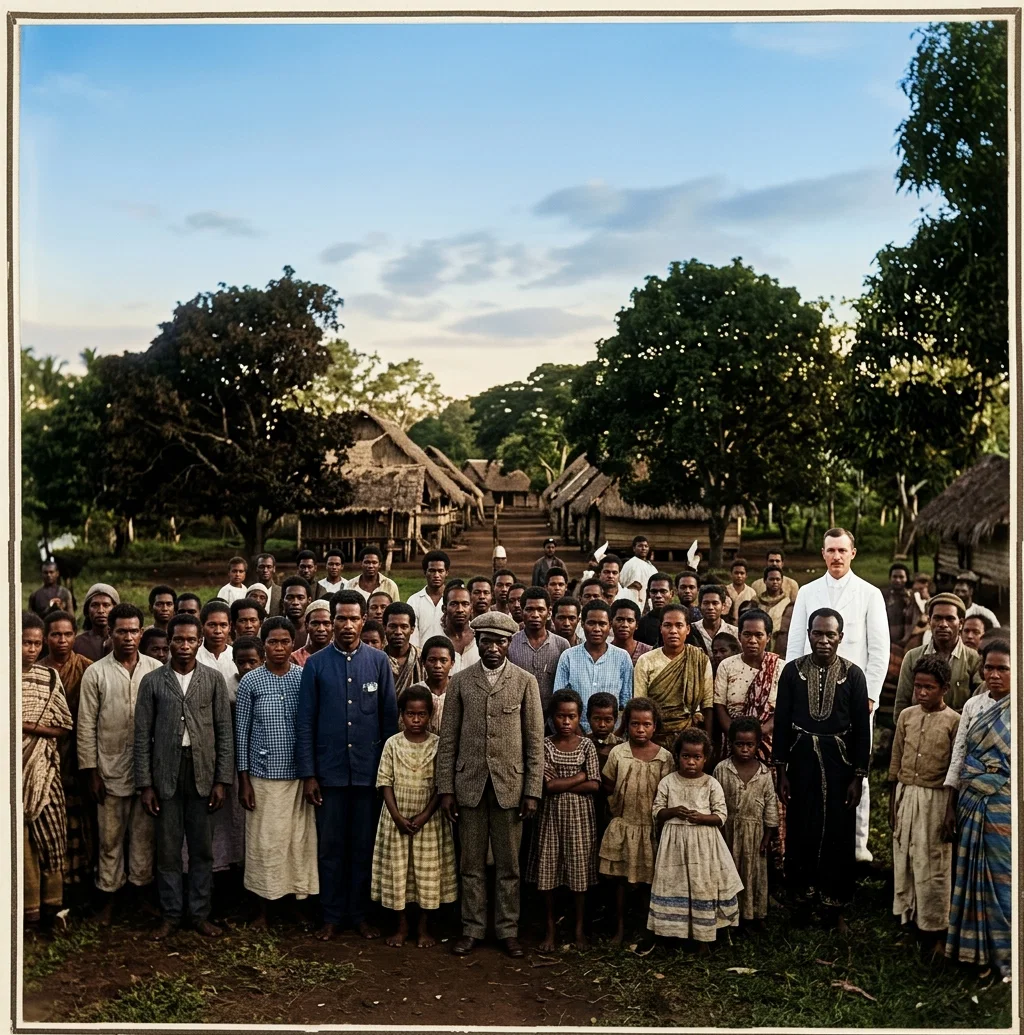
THE MALAMULO MISSION SCHOOL
What and how do we teach the native student?—Reading his own language from a native primer, working simple examples on a slate, and memorizing Bible verses make up the beginner’s daily program. Memorizing is his stronghold. Last week I was at the closing exercises of our Monekera out-station, where we called together the three village schools. The pupils repeated, very correctly in their language, the Lord’s prayer and the beatitudes. Having no Bibles, the learning of verses is the best thing for these children, we think. In the out-schools, only reading, arithmetic, and Bible are taught. The teachers are usually married men. A native girl teacher is a thing almost unknown. As a rule the native teacher has class work only two, or at most, three hours a day. The children have to work or want to play the other nine hours. They have little incentive for exertion. The native boy is a mystery. His horizon is bounded by the limits of his village of a few huts. His father and mother, aunts, uncles, brothers, and sisters drink beer and eat porridge from their hands out of a common pot. The conversation he hears is about his neighbors, or their pigs and goats,—or possibly his “relish” eaten with his porridge, whether it will be worms, grass-hoppers, or weeds. His besetting sin is laziness.
Yet, out of these conditions come remarkably bright, hopeful boys. We hope by selecting the best of these boys, and training them, to see the message carried to Nyassaland. In July we are to hold a teachers’ school for special instruction of our teachers.
Nyassaland, B. C. A.

Among the Tamils—South India

J. S. JAMES
OVER four months have passed since we settled among the Tamils of South India. These months have been crowded with hard work and not a few rich experiences, for which we praise the Lord.
The hot season had already set in before we got settled, and this is a very trying time of the year to begin such work as we had before us; but it seemed that God had led us step by step, and we could not think of drawing back because of the difficulties that lay ahead.
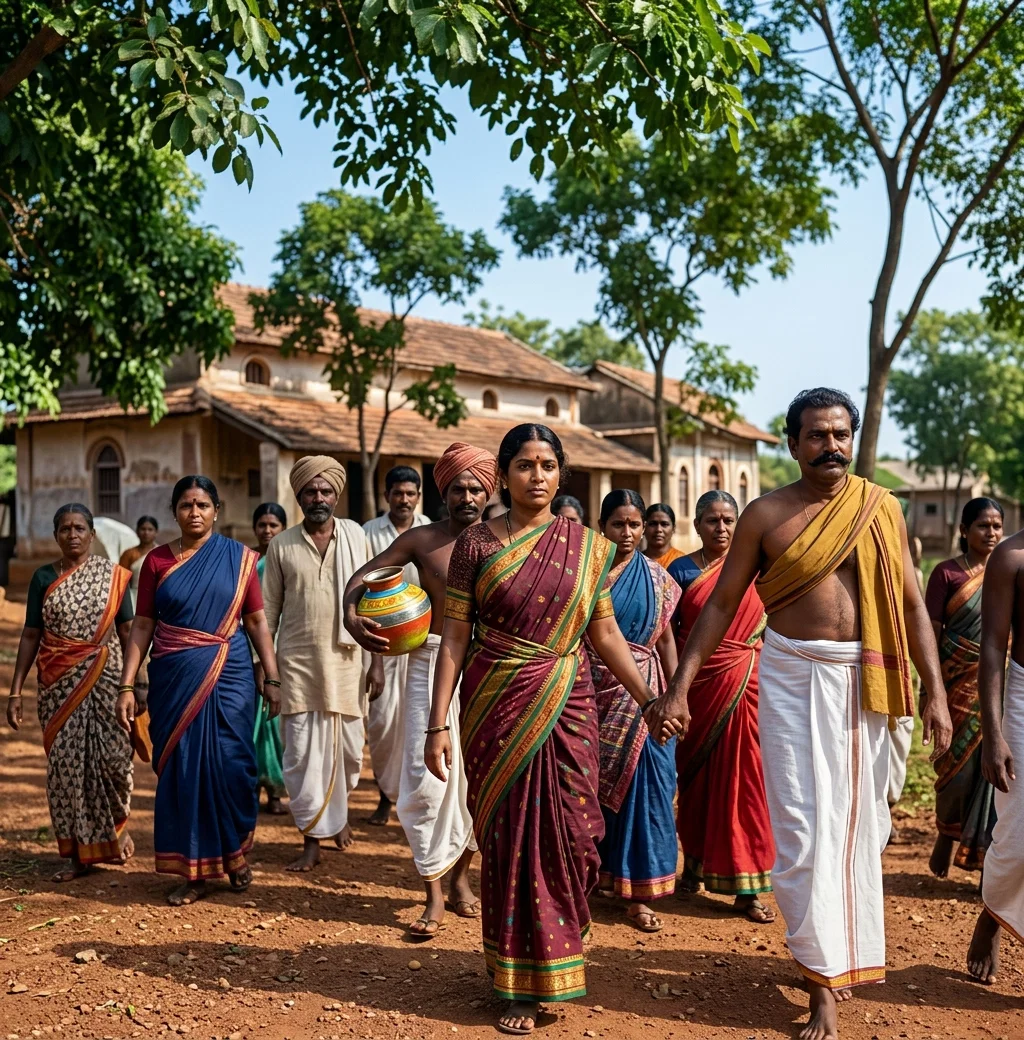
MONEKERA OUT-STATION
The first question that had to be settled after we located was, How shall we begin our work so as to gain a foothold among the people, and win their confidence? We knew that the surrounding heathen were not especially interested in our coming. We knew that the professed Christian element among the natives was opposed to our advent, and that their opposition was only augmented by the ill-will of the local church societies. All sorts of absurd stories had been put in circulation about us, much to our discredit; and many of those who professed to be our friends were secretly working to hinder our plans. We did not know the language well enough to make our way alone, and we knew not where to look for friends among the disinterested ones.
But there is one language that appeals to human hearts the world over, and which is able to soften, melt, and subdue the hardest heart, and win the confidence and unfeigned love of the bitterest enemy.
That is the language of ministry to human suffering. This language we could speak, and we resolved to use it at once. All about us were multitudes of sick and suffering,—babes in arms and small children covered with sores and dirt of every description. Sore eyes, mouths, ears, scalp diseases, ulcers, abscesses, skin diseases, and fevers were most in evidence. To these must be added the chronic ailments of the adult and the never-ending complaints of the aged and infirm. We felt that here was a most needy field that should be cultivated without delay.
The people would not come to us at first, not knowing that we were able to help them. We began by treating a few sores. These did so well that others came, and shortly the news spread all over the village and to the villages beyond. We improvised a dispensary on the back veranda of our bungalow, and set aside two hours in the morning, and an hour and a half in the evening, for treating the people. Often these hours stretched out through the whole day. Mrs. James gave most of her time to the women and girls, and I looked after the men and boys. We made no distinction in the caste, position, or influence of the people who came. All were treated alike, and in their turn. To those whom we could not help we always gave a few encouraging words to cheer their hearts, and to send them away feeling that we had some real sympathy for their sufferings. Our work grew rapidly, and we soon found ourselves unable to care for all who came. One morning I counted fifty-four men, women, and children waiting outside our bungalow for medical attention. June was our busiest month. Our record for that month shows the following cases treated: Sore eyes, 325; skin diseases, 102; sore ears, 73; scalp diseases and wounds, 11; sore mouths, 9; ulcers, 123; abscesses, 36; dysentery, 9; cholera, 28; fever, 8. During the month we applied 218 dressings with bandages, and made forty-eight visits to the homes of the people, at which time we gave many water treatments, and offered prayer for the sick.
It did not require much of this kind of work to convince the people that we had come among them for their good. A decided change soon took place in the social atmosphere. Members of other churches began to come to us for help, and invite us to their homes. One evening a deputation consisting of the leaders of the local churches, the head men of all the surrounding villages (some of them heathen), and the munsiffs of three villages (the office of munsiff is about equal to that of mayor), with a large number of representative men, waited on me and delivered short addresses, in which they thanked us most heartily for what we were doing for them, and expressed their desire to see us locate a permanent mission among them. At present we have the utmost freedom of the place, and the majority of the people respect us highly.
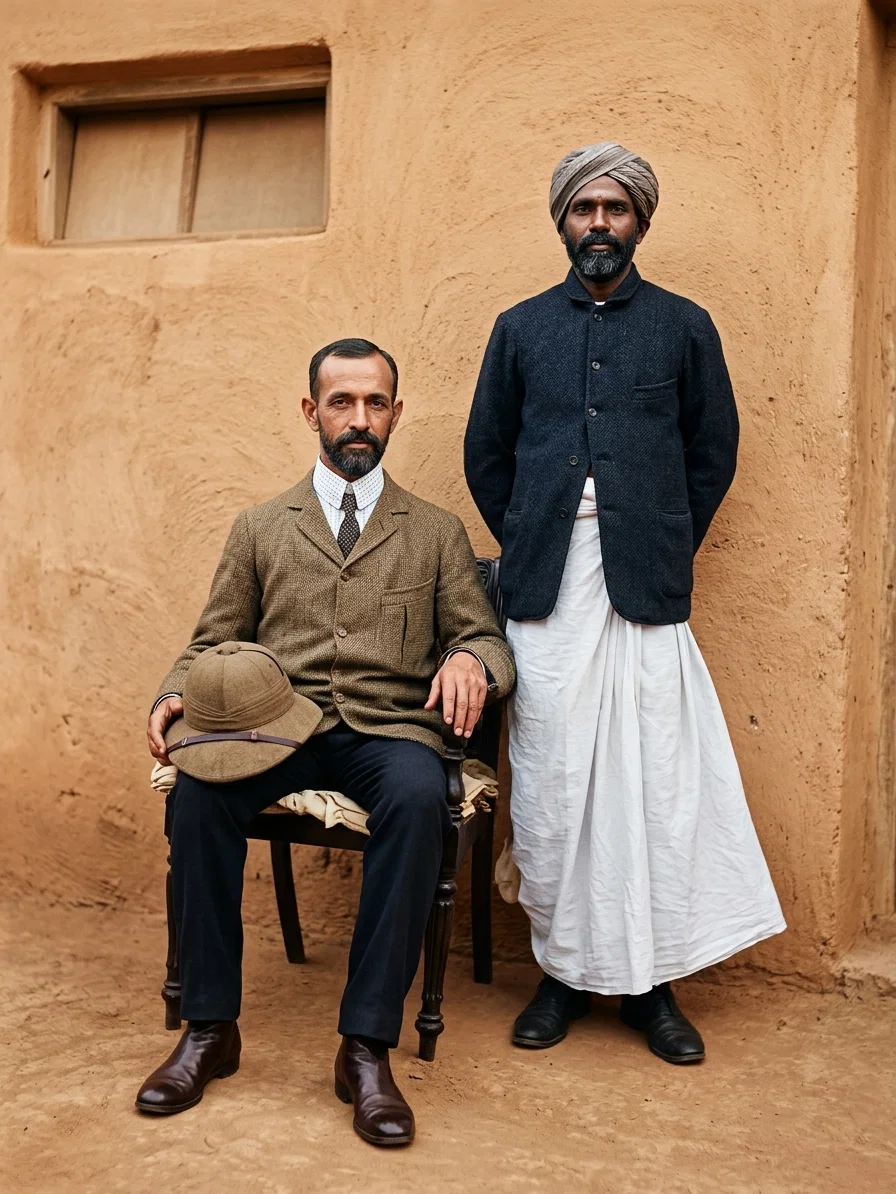
J. S. JAMES AND HIS TAMIL LANGUAGE TEACHER
About the middle of June an epidemic of cholera broke out in this and surrounding villages. People came to our bungalow day and night, imploring us to come and help or send medicine. I continued my visits to many of the homes of these stricken ones, going at times to other villages, treating many with my own hands, and instructing the people as best I could how to care for themselves. By God's help some were saved, and are with us to-day; but many more have fallen victims of this terrible disease, some of them from among the Sabbath-keepers whose picture appeared in the REVIEW some months ago. Some whole families were taken away in less than twenty-four hours. The funeral pyre was kept burning for several days, and grave-diggers were in demand. All night long the wailing and crying of widows and orphan children could be heard. These were anxious days for us, but God's hand was over us through it all, and kept us from all harm.
We are at this writing taking a little rest from the heat of the plains in one of the hill-stations of South India. The excessive heat, which sometimes runs the thermometer up to one hundred twelve degrees in the shade, the hard work and anxiety, together with poor food and water, were telling on our strength very fast. We felt it to be the part of wisdom to relax for a while, and secure a fresh grip on life.
Just before I came away, the Sabbath-keepers finished a sale-deed to our mission of two acres of valuable land near the village as a free gift. One and one-quarter acres of this is admirably adapted for building purposes, while the remaining portion is under good irrigation, and can be turned into a splendid fruit and vegetable garden.
We are greatly in need of help. A doctor and his wife who would like to learn a language and preach the gospel both in word and in deed, would add much strength to our work. The educational question among these people is a serious one, and should receive our earnest attention at an early date.
Our courage in the work is good, and although we are up in the hills some seven thousand feet above sea-level, our hearts and thoughts are with those dear people on the plains. Our prayers ascend daily that God will lead them out of their heathen darkness, and make them to shine as bright stars in his kingdom. Pray for us, and send us help.
Tinnevelli, South India.

Mohammedanism in Cairo

MRS. JAY J. NETHERY
Of all the Mohammedan cities of the world, Cairo is now growing the fastest. It is thronged during the season with tourists, and those who stay at the large hotels, and drive over the asphalt streets of the European quarters, are apt to think that it is almost wholly European, and fast becoming a Christian city; but this is not so. It is a city of the Egyptians, and not one tenth of its inhabitants are Christians. This can easily be comprehended by one taking a general view of the city from the hill of the citadel, from which one may see, dotted here and there, hundreds of round-stone towers with galleries running around them, and under each is a mosque, which is a Mohammedan church. Every one has its worshipers, and upon every tower, several times a day, may be heard the shrill voice of the priest calling out for the people to pray.
The Mohammedans have just finished celebrating their Lent, or Ramadan, and during the month of their fast not one devout believer will taste food or water from sunrise to sunset, and it is said that the more devout ones will not even swallow their saliva.
Their religion is more of the lips than of the heart. The name of God is heard on every hand with no meaning. The water-carrier, who goes about with a goat’s skin upon his back, jingles his brass cups, and cries out as an advertisement, “May God recompense me;” and those who drink utter the same.
The largest university of the Mohammedan world is in Cairo. This university has existed for more than a thousand years, and nearly ten thousand students are now in that institution studying the Koran.
Indeed, the amount of time these people spend on their Koran is a cause of wonder. It is their primer, and also their college text-book.
As soon as a baby is born, the call to prayer is shouted in its ear, and when it begins to speak, it is taught short sentences of praises to God and Mohammed.
When a boy reaches five or six years of age, he starts to the mosque school, and there he squats down, cross-legged, and sways to and fro as he yells aloud the texts of the Koran.
There are now more than two hundred thousand pupils in the Egyptian schools, the majority of whom are under thirteen years of age; and from a recent census it was found that many of them could recite nearly all their text-book, while forty-five hundred had memorized thewhole from beginning to end. When we remember that the Koran contains one hundred divisions, and about eighty thousand words, we can more fully comprehend what this means.
There are many other interesting things about the Mohammedan world, but I think these few facts are quite sufficient to help us to realize in some degree what a hold Mohammedanism has upon these people, rich and poor, and what an effort it will take to win any of them to Christ.
This is surely a needy field, and we are praying, and looking forward to the time when more laborers will be sent to help in proclaiming the message to the Egyptian people.
Cairo, Egypt.

In Holland and Flemish Belgium

GUY DAIL
The annual session of the Holland and Flemish Belgium mission was held in the pleasant city of The Hague, July 29 to August 2. About one hundred eighty of the two hundred twenty-five Sabbath-keepers in this field, and a number of interested persons in the city, were in attendance.
As we met the brethren, and saw the expression of hope and courage that was plainly visible on their faces, our thoughts went back to the meeting held in 1902, when we had about two hundred forty-five members, but when gloom, doubt, and dissatisfaction marked the conduct of by far the larger number of them, because of the “new light” they had discovered, and the strong national feeling among some of the leaders. We recalled the hard struggle, the falling away of nearly two hundred members, and for the moment reviewed the long pull our faithful members have had in bringing the work up nearly to the same numerical strength it then had. We are glad God remembered his people, that he worked for them, and that brighter days have dawned for us in Holland.
There are many tokens of improvement. One of the chief is the growth in the canvassing work, the sales for 1907 being $3,588, against $794.43 in 1905, more than quadrupling within two years. It encourages our hearts to know that thirty-two canvassers are now at work here under careful and thorough leadership, and that the Holland paper has increased its circulation to sixty-five hundred—five times what it was a year and a half ago.
The meetings have been characterized by earnestness and the blessing of God. Six were baptized. Brethren J. Wibbens and P. Schilstra were ordained to the ministry. About fifty came forward for a deeper work of grace in their hearts after the forenoon service Sabbath.
The brethren feel very grateful for the tent that has been given them by the friends in America; and it is now pitched in Brussels, where we have a good interest. A fund is being raised for the purchase of a tent for the Holland part of the field. The brethren hope to have this tent made the coming winter, if possible.
Five young people were recommended to the Friedensau School from here, so that we trust we shall soon be able to put some more earnest young Dutch workers into the field. We know all will be glad to learn that already there is considerable enthusiasm in this country with reference to furnishing Holland workers for the colonies, and that their first-fruits in this direction are already seen, as Brother van de Groep is under appointment to the Dutch East Indies, and will be en route to that field by September 12. We trust it may not be long until Holland will be able to offer other laborers for the “regions beyond” among its large colonies.
Brother R. G. Klingbeil was again chosen superintendent, and Brother Wibbins secretary, of this mission. Elder Klingbeil will change his field of labor from Brussels to The Hague, that he may again be more centrally located to look after the churches to better advantage; while Elder Wibbins, assisted by the French-speaking laborers there, will follow up the interest in Brussels.
Although this is but a small field, so far as territory is concerned, yet it contains over nine million people. Its tithe last year was $1,597, while the offerings were $221, against $1,050 tithe, and $150 offerings in 1906. There was a gain of about $418 in tithes and offerings.
Harmony prevailed in all the work of the meeting, and the Lord gave freedom and power to his servants from abroad,—Elders L. R. Conradi, H. F. Schuberth, and Ed. Frauchiger. All go back to their homes feeling that they have enjoyed the best meeting we ever held in Holland, and they are of good courage for the coming year. We commend the work and the workers and the brethren and sisters in Holland and Flemish Belgium to the interest and prayers of our people in all lands.
Hamburg.

Mission Notes

THE missions in East Africa formerly operated by the German, British, and Scandinavian union conferences, have, during the recent sessions of these union conferences, been formally turned over to the direction of the European division of the General Conference. While the same unions continue their support, the direction of the work in these missions will be carried on by the General Conference in Europe, instead of being under the direction of the executive committees of the unions above named.
A FEW years ago a little Eskimo girl on the western shore of Hudson’s Bay, learned of Jesus, and with her father moved to the hunting-grounds in the far north. They settled in a camp of some one hundred twenty hunters. Here the little girl acted as their Christian teacher, reading the Bible to the Eskimo children in their snow houses, and in other ways helping the people. Later a minister visited the place, and was greatly surprised, at the signal for prayer, to see all these sturdy hunters immediately go down upon their knees. The little girl had passed on the good tidings she had heard, and the word had had its effect.
EUROPE, India, China, and the United States could all be laid down on the map of Africa, and still there would remain quite a fringe about the borders. According to statistics, within this vast region there are 4,789 places of worship, where 221,156 church-members meet, with others not enrolled upon any church-book, bringing the number of professed Christians up to 527,790.
IT is not the profession of Christianity simply which the unbeliever takes as evidence for Christianity’s genuineness, but he expects its professor to bring forth fruits meet for repentance. In Korea visiting Christians from Manchuria approached some Chinese merchants, who were not Christians, on an errand of inquiry.
“Who are you?” they asked.
“Christians from Manchuria.”
“Are they the same sort as the Christians here?”
“We do not know,” was their reply. “What are the Christians here like?”
“Good men. Good men.”
“Why do you think so?”
“O, a man owed us an account five years ago of twenty dollars. He refused to acknowledge more than ten, and we had no redress. A few months ago he became a Christian, and came and asked us to turn up that old account, and insisted on paying it up with interest all these years.”
This was the unmistakable evidence to these merchants of a real change of heart and life on the part of their old customer, — an evidence which requires no argument to prove.
A WHILE ago a gentleman in Chile made inquiry of one of our brethren there regarding a personal matter of interest to him. This brother was obliged to ask information of the Mission Board office regarding his inquiry. A letter in reply was sent, giving all the answer possible, a few words of kindly interest being expressed for this gentleman. This letter was forwarded to him. From a letter just received from Brother F. H. Westphal, we quote:—
“This little interest we took in the man has resulted in good; for just a few weeks ago I had the privilege of baptizing this same person. He is a man of no mean ability. He has served as a bookkeeper in a bank, also held the same position in another large establishment, as well as being manager of a large business concern in another city. When he accepted the truth, he gave up his tobacco and drinking habits.” He is now serving the cause to good advantage, having already instructed a brother in bookkeeping, so that he is acting as secretary and treasurer of one of the conferences in that field. In other ways this new brother is helping the work with his business qualifications.

France

At the Council of the General Conference Committee held at Gland in May, 1907, it was recommended that the French mission field be organized into a conference. In the fall of the same year the conference was regularly organized, and officers were chosen. The organization went into effect in January, 1908.
The fifth annual camp-meeting of our field, the first meeting of the French Conference, was held August 24-29, at the town of Gallargues, in the department of the Gard, in southern France. Our small village of twenty-five tents was pitched in the midst of beautiful vineyards and oliveyards laden with their rich fruit.
Seven weeks before the camp-meeting began, Elder T. Nussbaum pitched the large tent at Gallargues, and gave lectures on present truth four evenings each week to large and interested audiences. This interest was intensified by the work of the camp-meeting, which closed the effort. The meetings will be continued during the winter in a hall.
From year to year our camp-meetings are growing in interest and attendance. Five years ago, when the regular annual camp-meetings began, our people did not quite see the utility of spending so much time and means to attend the annual assembly, but those who came communicated to those at home some of the good things they heard, so that now our dear French brethren and sisters manifest a genuine interest in the annual meeting. In our little conference of two hundred fifty members, about one hundred were in attendance this year.
Elder L. P. Tieche, president of the Latin Union Conference, and Elder Jean Vuilleumier, editor of the Signes des Temps and principal of our union school at Gland, were with us during the entire time of the meeting, and rendered valuable help by their earnest practical preaching, and good counsel to the workers. Brother Jules Robert, of Geneva, secretary and treasurer of the union, was also with us.
Sabbath, August 29, was an especially profitable day. After an earnest discourse and appeal by Brother Tieche, nearly the entire congregation arose and stood around the rostrum, thus signifying their purpose to seek a deeper experience in the things of God. Sabbath afternoon Brother J. P. Badant was ordained to the sacred work of the ministry. After this service the entire congregation repaired to a near-by river to witness the baptism of five candidates.
Elder Walter Bond and family, who were on their way from Gland to Barcelona, stopped off three days to visit our meeting. Brother Bond gave us an interesting talk on the progress of the work in Spain.
Our present corps of workers consists of four ordained ministers, three licentiates, and five Bible workers—only twelve workers to announce the message to forty million souls. This is certainly a gigantic undertaking, but the Lord of the harvest is well able to qualify us who are in the field to do more efficient work, and to raise up other laborers to send forth unto this great harvest-field. The laborers are distributed as follows: Elder Paul Badant labors in Paris, taking the place of Elder Ulysses Augsbourger, whose faithful labors during the past four years brought about forty souls into the truth. The Latin Union committee having called upon France to release one of its best laborers for Algeria, we reluctantly gave up Brother Augsbourger, who sails for his new field some time in October. Elder Nussbaum, assisted by two young Bible workers, is to continue to develop the interest at Gallargues and neighboring villages. Elder J. B. Badant and a lady worker are to associate with the writer in beginning the work in the city of Lyons, a great metropolis of five hundred thousand inhabitants, in east central France. Brother Jules Rey, with a lady worker, is to continue the work at St. Etienne, an industrial city of one hundred fifty thousand souls. Brother Cesar Guenin, assisted by a Bible worker, is to begin a series of meetings at Besancon. One worker is stationed in the Protestant villages in the mountains of central France, where a good interest is developing. We solicit the prayers of the readers of the REVIEW in behalf of the work and workers in this great needy field. Our greatest need is not money nor large institutions, but rather a vital union with God, so that souls who are deaf—deaf because dead in trespasses and sins—may hear the voice of the Son of God speaking through his messengers, and that many may live. May the Lord help us in France to sense our great need of the presence of the Holy Spirit in our work in behalf of souls. Our message will then be presented not as a dry, lifeless theory, but as a living, saving truth, and then, instead of presenting three or four half-converted souls as the fruit of a year's work, each worker will bring to the feet of Jesus a score or more of transformed men and women. Our workers go to their fields this fall full of courage and faith. We are all most determined to seek God earnestly to teach us the secret of successful soul-saving work.
It was recommended at this meeting that several departments of northern France, including Paris, with its church of fifty members, be cut off from the French Conference, and be recognized as a separate mission field. This recommendation is to go into effect January, 1909.
H. H. DEXTER.
Continue reading: The Argentina Conference