Your ShelfYour Projects

Review and Herald, Vol. 82, No. 21.

Publishers' Page

Review and Herald

May 25, 1905

Review and Herald Publishing Association · Washington, D. C. · May 25, 1905

Publishers' Page

Conducted by the Department of Circulation of the Review and Herald Publishing Association

The Story of Daniel the Prophet

is one of the best books published for the youth, and is filled with facts of thrilling interest and great importance to adults.
In the study of this work every individual can only be benefited through the practical lessons taught in connection with this biographical, historical, and prophetic work. The life of Daniel the prophet, in the extremes of captivity in his early life and later of honor, position, and power, illustrates the possibility of the exemplification of Christian principles and practise in all business transactions.
With the interesting portrayal of the life of the prophet, all the truths of the message for this time are clearly given. The histories of nations, as portrayed in the book of Daniel, are explained in the light of the sanctuary question, and are of great interest and profit to all.
“The Story of Daniel the Prophet” contains the full message, and ought to have a large circulation. Bound in half cloth and illustrated; price, $1, post-paid.

Education

ONE of the best books for workers to use in missionary work is “Education,” by Mrs. E. G. White. This book has been published to meet a great need in the proper education of all classes in the essential and practical duties of life. Its aim is to aid in securing life’s greatest benefits, development, and joy in service here, and a more complete fitness for that higher service open to every human being in the school of the hereafter.
It reveals the right way to the youth, the parent, the teacher, and all professional and business classes, and warns them of the dark and treacherous theories that lead to destruction. It is profusely illustrated, and beautifully bound in three-colored cover design, and contains over 300 pages of the most important information ever published upon the true principles of cultured life.
The following are some of the subjects treated, which practically reveal the comprehensiveness of the work: Lessons on Life, Mental and Spiritual Culture, Science and the Bible, Business Principles and Methods, Bible Biographies, Poetry and Song, Mysteries of the Bible, Study of Physiology, Temperance, of Dietetics, Deportment, Relation of Dress to Education, Faith and Prayer, The Life Work, Discipline, The School of the Hereafter.
This valuable work has been dedicated to our educational institutions, and every copy sold will help to release our schools from debt, and to place them upon a self-sustaining basis.
Price, $1.25, post-paid.

The Empire Series

The new edition of “The Empires of the Bible,” “Great Empires of Prophecy,” and “Ecclesiastical Empire” is now ready. This new edition is printed on better paper, and bound in uniform binding, so that the three volumes now form a neat and most valuable set.
As an introduction to the whole series there is printed at the beginning of the first volume an essay that is of especial value on the —
Philosophy of History
At the educational convention held at College View in June, 1903, an address was given by Elder Alonzo T. Jones on “The Philosophy of History.” The convention voted that this address should be printed in pamphlet form, and also inserted in the next edition of “Empires of the Bible,” as an introduction to the “Empire Series of Histories.” This has now been done.
To those who have copies of the present edition of the “Empires of the Bible” the “Philosophy of History” in pamphlet form will be a great help. Those who buy the new edition of the book get the “Philosophy of History” in the book itself.
Everybody should have the “Philosophy of History.”
Price, 10 cents, post-paid.

Our Paradise Home

THOUGH this little book is less than two years old, 60,000 copies have been sold, and still the demand for it is good. Wherever it is offered for sale, it is readily received. People who read it speak highly of it. It is just the book to purchase and loan to neighbors. Many of the readers of the REVIEW have sold it in their localities. Some one in all the churches should make a house-to-house canvass for it. Thousands should be sold during the present season.
It treats many Biblical subjects in a way that causes the people to be delighted when they read it. It is proving to be one of the best aids to our canvassers and Bible workers, who are able to place a copy of this book containing many of the principal truths of the third angel’s message in nearly every house visited.
Bound in board and cloth binding, with a beautiful, attractive cover design, 25 and 50 cents.

The Year-Book

THE new Year-book for 1905 is an excellent missionary publication because it furnishes inquiring people the belief of the denomination in a concise outline of its fundamental principles, together with a comprehensive history of the church, and displays its present general organization. It is especially good to place in the possession of people who have heard much derogatory to Adventists and their work, and who have formed the opinion that they are a small and unimportant denomination with a pessimistic doctrine; for it contains facts that will convince honest, conscientious people that the denomination has a message for this time, and that it is prospering in the work whereunto it is called. It is also of great importance to all members of the faith, as it supplies them in convenient form with the information they constantly need in connection with the work of the church.
Let every church-member secure a copy of this book and study it, and use it for the enlightenment of his neighbors. Price, 25 cents, post-paid.

Patriarchs and Prophets

This work is a commentary on the principal Bible subjects from Adam to the death of David, including an exhaustive study of the sanctuary and its services, the exodus, the law, the giving of the manna, the Sabbath, etc.
The life of each of the patriarchs from Adam to King David is thrillingly portrayed; and from each a lesson is drawn, pointing out the consequences of sin, and bringing vividly to mind Satan's studied plan for the overthrow of the race.
The work contains 760 large octavo pages. Thoroughly illustrated with beautiful engravings, more than half of which are full page. Cloth binding, gilt, $2.50; full morocco, gilt, $4.50.

Review & Herald Order Information

Order of Review & Herald, Washington, D. C.; Battle Creek, Mich.; Pacific Press, Mountain View, Cal.; Kansas City, Mo.; Southern Publishing Assn., Nashville, Tenn.; or your State Tract Society.

Life and Health

THE June number of Life and Health is now ready, and our readers will find this issue the best yet published. It completes the first year of the journal under the name of Life and Health; and as an evidence of its acceptableness and increased popularity, we are privileged to state that the June edition numbers 17,500, while the first edition one year ago was 7,000, revealing an increase of 10,000 copies in the last edition over that of the first one year ago.
The first illustrated article of this number is entitled “Growth of the Sanitarium Idea,” associating the establishing of sanitariums by Seventh-day Adventists with the national organizations of women for the betterment of the people mentally, morally, physically, and spiritually, and containing a brief history of the sanitarium work in this and other countries, showing that it is this denomination which led out in the establishment of sanitariums. This article alone will do much to interest the people in the true principles of health, and bring them in close touch with the laws of life.
The remainder of the June issue is full of excellent matter upon such practical topics as Healthful Dress for Children, Health Culture, Suggestions for the Summer Season, Consumption Cured by Roughing It, Improving Society by Improving the Individual, Alcohol as a Food, Effects of the Meat Diet, Animal Food as a Conveyer of Tuberculosis, Quack Advertisements, Comments on How to Live One Hundred Years in Good Health, Lessons from Chinese Methods of Eating, the Medical Missionary as a Peacemaker, What Medical Missionary Work Means, Reports of Health Work in Foreign Countries, Household suggestions on many practical topics, Answers to a large list of questions, News Notes, etc., etc.
The contents of this number are worthy of a large circulation, and we invite our friends to join us in placing thousands of copies in homes needing the instruction it contains. To those who desire to act as agents for the journal we make liberal discounts. Write for further particulars. Address Life and Health, 222 North Capitol St., Washington, D. C.

Editorial

A Sign of Growth

FOR many years after its organization the General Conference met each year. As the work extended, it became evident that too much time and expense were involved in an annual session of the conference, and biennial sessions have been held since 1889. It will be seen from the report in this issue that it has now been decided that the General Conference shall hereafter meet once in four years, and that this quadrennial meeting shall be a genuine world's conference. This is another sign of the growth of the work, and of a definite purpose to embrace the whole world in the plans for giving this message. We believe that this action of the conference will commend itself to our people generally as being thoroughly in harmony with the whole spirit and purpose of our present organization, according to which the administration of local and sectional interests is committed to local and union conferences, while the General Conference becomes a world-wide missionary organization, with a general supervision of the whole field. This arrangement of conference sessions will make it possible for the General Conference Committee to hold representative councils as often and in such places as circumstances demand, and between the quadrennial sessions to hold at least one meeting of the full committee, probably in one of the foreign fields, for a survey of the whole work. We regard this action of the conference as a marked indication of the broad missionary spirit which is being revealed in this meeting in a most encouraging way. Our watchword, “The Advent Message to all the World in This Generation,” is not being forgotten.

The Trend of the Conference

THE same good spirit which attended the opening of the conference continues to manifest itself daily. The spiritual atmosphere which surrounds the work of the conference is exceedingly encouraging. Thus far the utmost unity has prevailed in all the deliberations. The one all-absorbing theme which seems to rest upon the heart of every delegate is how this great message which has been committed to this people, and for which they have been sacrificing for a half century, can be speedily carried to all the world, and the glorious day of God be ushered in. It is a real missionary conference.
There are occasions which indicate from time to time the marked presence of the Lord, and which tend to increase faith in the speedy triumph of the message. One such time was the second day of the conference, when the first meeting of the “surprise party” enterprise was held, and gifts aggregating some six thousand dollars for the work in Washington were laid on the table. Truly,—
“They brought their gifts to Jesus, And laid them at his feet; And love for this dear Saviour Made every offering sweet.”
The signal blessing of God was present upon this occasion. If any in attendance were disposed to question the wisdom of the steps taken in removing the headquarters of our work to Washington, this meeting was calculated to dispel the doubts. The occasion furnished another of the many infallible proofs which have been given that the plan of locating in the capital of the nation is of heaven, and not of men.
The first Sabbath of the conference was a day of marked blessing. The churches of Washington met with the delegates and visitors, and a large number spent the whole day upon the grounds. All were privileged to again listen to words of counsel from Sister White, who spoke with unusual freedom and power. Her admonitions to unity were exceedingly helpful. The call was for affirmative, and not negative work, and a stirring exhortation was given to any who had been working negatively to repent at this meeting, that the blessing of the Lord might flow into the conference.
In the afternoon Elder E. W. Farnsworth spoke on our message. The Spirit of God witnessed greatly to the words spoken. With his old-time power this servant of the Lord gave a trumpet call to return to the proclaiming of the message as given in former days. In a forcible way it was pointed out that it was a belief in Rev. 14: 6-12 that had made us a separate and distinct people, and that in order to give this great threefold message to the world with “a loud voice” we must believe it; that no weakling in faith, who is halting and hesitating, and not quite sure as to our position, can in any sense of the word give this message in the way in which it must be given in order that the whole earth may be enlightened with its glory. His earnest words thrilled every heart, and the hearty “amens” heard indicated that the message given found a ready response in the hearts of those present.
The testimonies borne in the social meeting which followed were inspiring, and as our aged laborers and others expressed their confidence in the triumph of the message, not in some changed form, but just as God committed it to us in the beginning, the message was kindled anew in our hearts. Power for God’s people in the closing days of the controversy against sin will not be found in some new notions which are calculated to obscure or remove altogether the old landmarks, but will be found in the third angel’s message.
The entire time of the conference is not given over to business, as is frequently the case in such large gatherings. The ministerial institute, planned to run through the entire conference, is of great interest. The studies concerning the work of the gospel ministry are very helpful. It is refreshing at this meeting to see and hear the work of the gospel ministry given the place which God has ordained that it should fill.
A strong indication of the proportions to which the work of this message has attained is seen in the resolution passed to hold the sessions of the General Conference once in four years. The time is not long past when the work of this message was so small that the delegates could easily come together annually in General Conference. The work continued to grow until it seemed that once in two years was often enough to bring delegates together from the distant fields. Now the work has spread until the earth has been girdled, and in every land the faithful messengers of the Lord are spreading this message, and the work has now become so large that it has become impossible to call the delegates from all over the world, and it was thought advisable to hold our next world’s conference four years hence. For the progress this indicates, we thank the Lord and take courage.
G. B. THOMPSON.

Report of the South African Union Conference
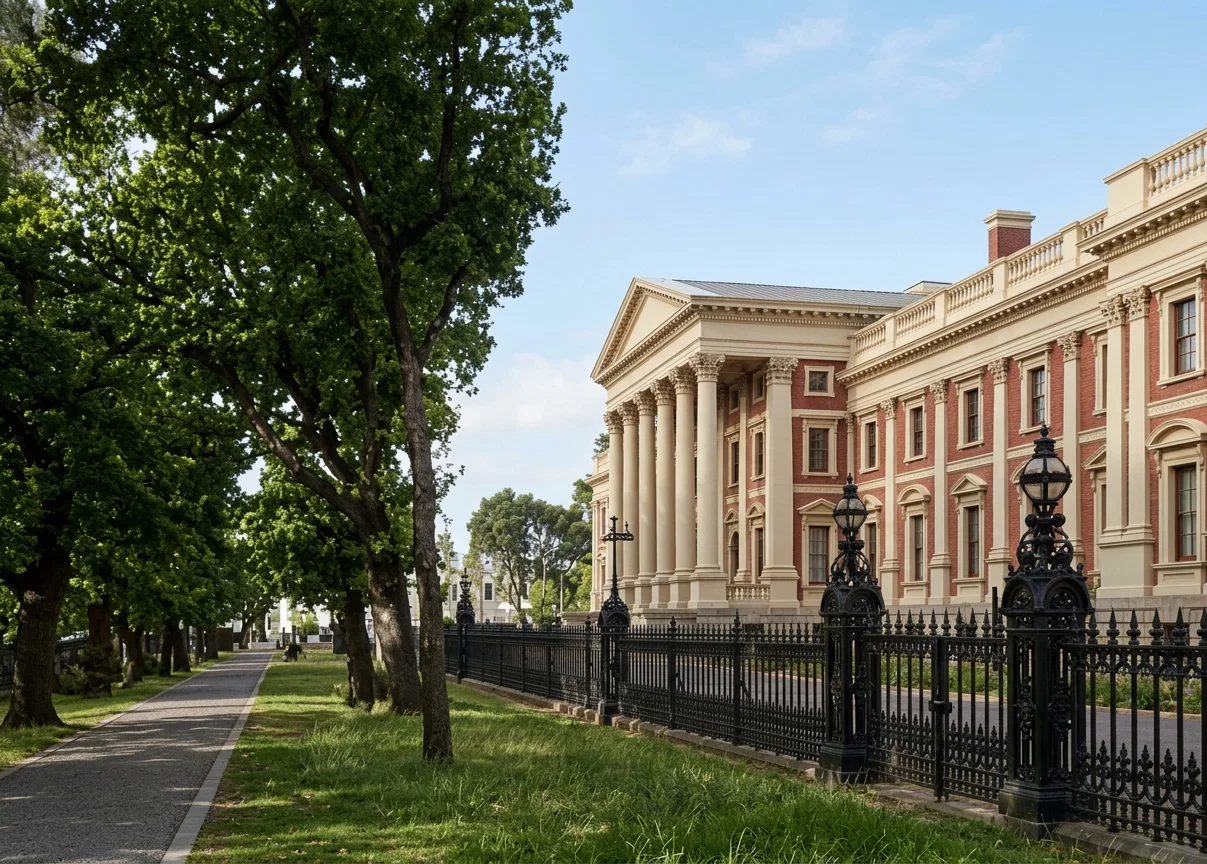
HOUSES OF PARLIAMENT, CAPE TOWN
Seven years ago the fifteenth of this month, I landed with my family in South Africa. When the Mission Board asked us to go to Africa, they told me that I was wanted for a hard field. This did not frighten me in the least, for I was willing to work hard; but I confess that I knew very little of the trials and perplexities that were before me. But Father knew all about them, and I am thankful to say that his grace is sufficient for all our needs. Without, our work has been hindered by the bubonic plague; by the war between the Briton and the Boer, during which the country was under military law, the people not even being allowed to visit adjoining farms; and later a commercial and business depression that still causes hard times all over South Africa. Within, we wrestled with various problems, one of which, and not the least, was our debts. We tried to labor with courage and hope, although all about us were strong men who, at times, were fainting in their minds, and some were sounding the signal of retreat.
Two years ago last January the South African Union Conference was organized. It embraced the Cape Colony Conference, the Natal-Transvaal Conference, the mission fields south of the Zambesi, and also a vast field of unentered territory. Since the conference meeting in January, 1903, the General Conference asked us to take the supervision of the Plainfield Mission, in Nyassaland. So at our conference meeting this year we added British Central Africa to our field of labor. This makes a vast field of more than one million square miles, containing between nine and ten million inhabitants, of whom only six hundred and seven are known to be Sabbath-keepers. Scattered over this large territory are to be found only 1,150,000 Europeans; this makes it a very hard field in which to reach the white population.

The Cape Colony Conference

including the Orange River Colony as a mission field, has 327,101 square miles of territory, and a population of 2,790,397. The tithe for the past two years has been $17,000, or a yearly amount of $23.42 per capita. They have nine churches, numbering 371 members. Elder Hankins, with his corps of laborers, is scattering the truth to every part of this field. Quite a number of Dutch farmers have accepted the truth during the past year.

The Natal-Transvaal Conference

is small in membership, but large in extent of territory, and much of it is very difficult to work. Its area is 156,642 square miles, with a population of 2,266,429. There are but three churches in this conference, with a membership of 106. With this little flock Elder H. J. Edmed is attempting to give the third angel's message to these two colonies. They have paid into the treasury $7,276.25 tithe during the past two years, which amounts to $34.32 per capita per annum. This we consider very good.

Tithes and Offerings

It may be interesting to note that the total amount of tithe paid in this field during the past two years amounts to $25,737.45, which is $21.22 per capita for each year, and we must not forget that fully one fourth of our membership are natives and colored people, who have very little, if anything, on which to pay tithe. The various offerings made by our people to the work of the union conference amount to $3,845.82, and the tithes, including the tithe of the tithes from the two conferences, to $3,907.82, making a total of $7,747.64. We are thankful to say that our few Sabbath-keepers in South Africa have not only supported the work in the two conferences, but have furnished nearly half the funds necessary to maintain our native missions.

Union College;

Our college has been a great help to the work in our field. It has ever been loyal to the cause of truth, and our teachers have done what they could to prepare young people for the work. The number in attendance averages about ninety-five. A few of our young people have completed the normal course, and have entered this field of labor, while others are engaged in other departments of the work. The demand for teachers is greater than the supply.

The Sentinel Printing Plant

This is a small but well-equipped printing plant, and is located at Kenilworth, on the college grounds. We have received donations enough to pay half the initial cost of the plant, and also to put it in a good condition for our work. The South African Sentinel, with a circulation of four thousand, is printed there, and also the South African Missionary. We are printing a good supply of literature in the Zulu, Kaffir, and Sesuto languages, and we hope soon to begin to print in other languages also. Brother R. F. McPherson, the manager, takes a deep interest in this work, and is doing all he can to make it succeed.

The Sanitarium

The building at Plumstead formerly used as an orphanage has been converted into a sanitarium. The building is small, and contains but sixteen rooms, still it has served us well thus far. Two years ago we opened work at this place, but did not accomplish very much until Dr. Thomason arrived last June. Since that time the work has progressed very favorably. The doctor has a large outside practice. Reports from the sanitarium show that the receipts are several hundred dollars in excess of the expenditures. The prospects are that we shall have to build cottages, or provide some other means for accommodating the patronage, but we lack funds with which to build up this work.

The Mission Work

If there is one department of our work above another where the blessing of God has been manifested, it is in our work for the African native. I have taken a place in the schoolroom and in the field, and have there labored with and for the native boys, that I might become acquainted with their ways and needs, and know how to help them. Let me assure you that this is a school from which one can not be graduated in a few months. Those who have spent many years among this people say that the native is still a puzzle to them. But the work is extremely interesting, although very perplexing at times, and I think I can safely say that our missionaries never get lonesome. During the past year it has been my privilege to visit each of our missions, and I have been very thankful for the opportunity.

The Mission Farm

This station is located in Rhodesia, about thirty-two miles from Buluwayo. Elder M. C. Sturdevant is the superintendent, and Brother Claude Tarr and his wife are his assistants in the work. The work at this, our oldest mission has been greatly blessed of the Lord. They now have a church of sixty-three members. There are twelve young men who have been so far trained that they are teaching either at the mission or at one of the village schools which they are conducting. In the mission school they have an average of eighty-five pupils. About fifty of these live at the mission, while the remaining thirty-five attend from the surrounding villages. The income from the farm and the store has sustained the school and native teachers,and also assisted in paying the missionaries. One result of the work of the mission is that an interest is springing up all about that section, and the natives are beginning to seek after the Lord, and some are beginning to obey.
ON THE PLAINFIELD STATION

Somabula Mission

This mission station was started by Elder F. B. Armitage about three and a half years ago, and is located nearly one hundred and fifty miles northeast of the mission farm. Through the blessing of God those in charge have been able to support the school of sixty-five boys and girls. Between thirty and forty of these live at the mission. When we consider that it costs twenty-five dollars a year to support a boy, we see that it costs no small sum to support these schools. A good interest has been shown by the natives, and the workers are of good courage, although Brother Armitage has recently had a very severe illness. They have been conducting two out-schools near this station, and the boys who are teaching send us good reports of their work.

Mkupavula Mission

This mission is located twenty-one miles from the mission farm, and is conducted by Brother C. R. Sparrow, who works on a self-supporting basis. We furnish him two native teachers who conduct a day-school. There has been a good interest at this place for some time. At present they have an enrolment of seventy-five pupils, and the work is very encouraging.

Plainfield Mission

This mission is located in Nyassaland, British Central Africa, and Elder T. H. Branch is the superintendent. His daughter, Mabel, and three native boys constitute the teaching force. I spent a month at this station last year, and found the work prospering. They have a school numbering seventy-three, and twenty-eight of these are living at the mission, and assist Brother Branch with the farm work. They have started two out-schools, which are prospering. Sabbath afternoons the older boys visit the native villages, and hold meetings with the people. In this way many hear the gospel. This same work is carried on at each of the missions already mentioned.

Kolo Mission

The Kolo Mission is located in Basutoland, with Brother J. A. Chaney in charge. He has one native teacher to assist him. The work at Kolo has gone very slowly, but we are looking forward to the time when this people who have heard the gospel so long will be awakened by the third angel's message. There are a few middle-aged and elderly natives who have accepted the truth. We have a small day-school at Kolo, and we hope soon to open a boarding-school. Our only hope in accomplishing much in this work is to gather a number of the young men about us and keep them with us till they are educated and trained to go out and work for their people.

Kaffir, or Amaxosa, Mission

This work is in the Cape Colony, and is being conducted by Elder G. W. Shone, who is assisted by a native laborer, Brother R. Moko. For several years the Cape Conference has had Brother Moko at work for this people, but not until the past year has a white laborer been set apart for this work. Several educated natives have accepted the truth, and the message is spreading rapidly among that people. We hope soon to have a mission site, and buildings erected, so we may begin to train these men whom the Lord has given us. Khama, the chief, is very anxious for us to begin work among his people. Calls are coming, asking us to open work in other sections. The Spirit is certainly at work among this people, and now is our time to press the work on with vigor. The Cape Conference is supporting the laborers in this field until such time as the South African Union has funds for this work.

Summary

From the foregoing you will see that we have six missions and ten village schools, in which four hundred and fifty boys and girls are being taught the message. Four of these missions are being supported by the union conference, one by the Cape Conference, and one is self-supporting. There are one hundred and thirty Sabbath-keepers at these stations, and several others will be baptized soon. We have sixteen European and nineteen native teachers who are pushing forward this work. You will see that we have scattered our laborers when you consider that at one time there were twelve European workers at the mission farm, while now we have but sixteen European workers for the six missions scattered in this great field.

Our Needs

In closing this report, I would not be true to my trust if I did not present the needs of the Dark Continent to this conference. The message has reached us that “Ethiopia is stretching out her hands unto God.” Brethren, what does she want?—It is the bread of life—the message that is to meet the needs of every nation, kindred, tongue, and people. I appeal to you: Shall she have it? or shall we treat her as many do the ordinary beggar asking for bread? While we long to see the work opened among the great Zulu people, and also among the Bechuanas in Khama's country, our heart goes out to the unentered regions of Central Africa. Every year the way is becoming more difficult, as other societies are seeking out every available spot in which to locate missions. Progress is being made wherever the truth has entered, and we believe it is time to bestir ourselves and establish centers from which the light may shine out to the millions who stand pleading with outstretched hands.
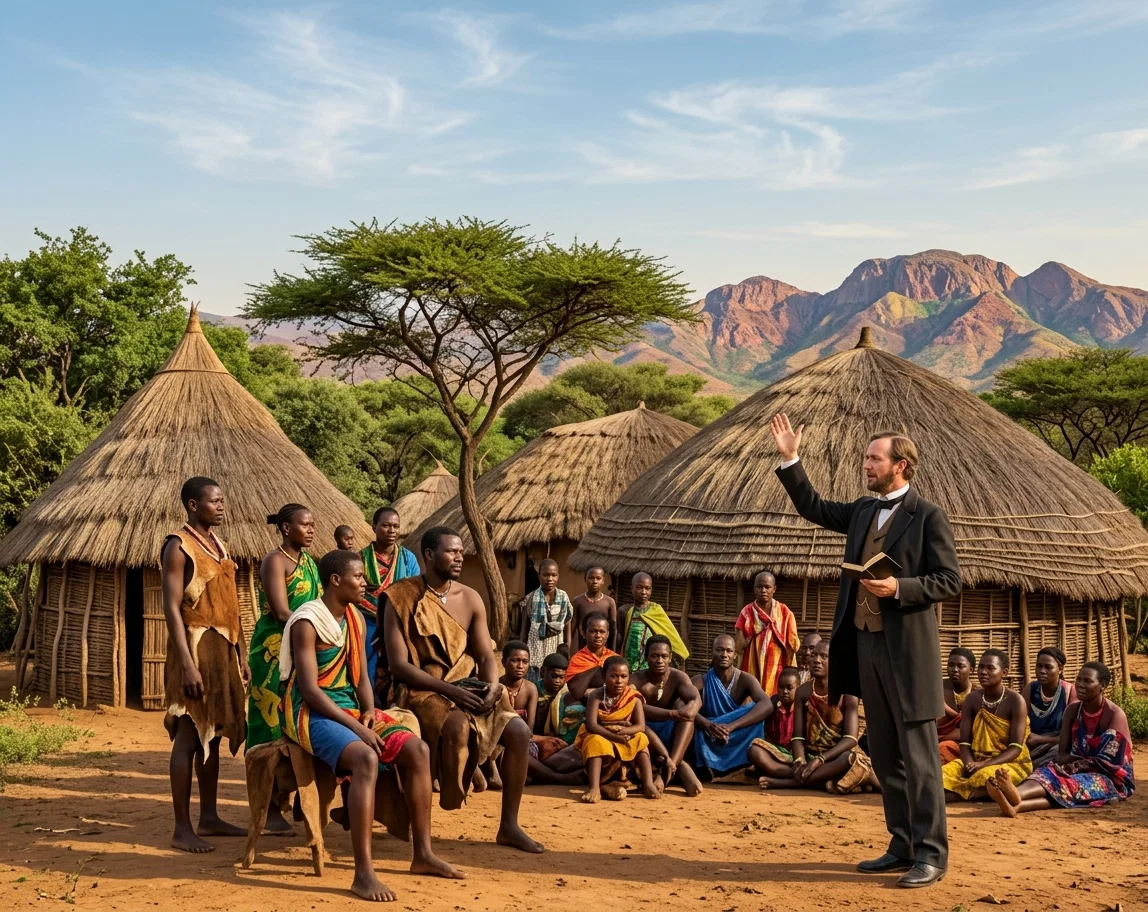
PREACHING THE GOSPEL TO THE NATIVES
Let me give you a few facts just to show you how the African is awakening. For many years the missionaries in South Africa labored on, and saw but few signs of real life among this people. But a few years ago a change came. The natives began to organize independent churches, and to reach out for light. Some saw light on baptism and accepted it, and this brought in another division. Again the light from the sanctuary shone upon this people, and they saw the truth in the ordinance of humility, and these were called the Cushites. Recently an old native was found by our brethren who has kept the Sabbath for many years. I am sure you will say that the Spirit of God has been leading these native minds. Very recently a native who worked in the post-office at East London accepted the truth. He at once wanted to return to Kaffirland to tell his people, but the brethren feared he did not understand the truth well enough to go. But he would go, and God went with him. We soon had the report that several were keeping the Sabbath. His father, an old native evangelist who had labored for years with Sister Lang and her husband, accepted the light, and rejoiced that God had spared him to see the truth. Another who had not met with this nativebrother, hearing of these things, became convicted, and began to keep the Sabbath. A Zulu in Natal heard the Sabbath truth, accepted it, and then went up through Zululand preaching it everywhere. One of Lobengula's aged queens came to the Somabula Mission to attend services. When asked why she came so far, she said she was tired and soon must die, but she must know this Jesus first. These, and many other things, prove, without doubt, that Ethiopia is stretching out her hands unto God.
It will not be necessary to establish missions in every part of the country, but at great centers where we can reach many tribes, and there gather in young men and teach them the truths of the last message. As these learn the truth, the Spirit fills them with an intense desire to go to their people and spread the glad tidings abroad. At some of our missions we have boys representing six or eight different tribes and tongues. These are longing for the time to come when they can return to their homes and take up this work. Brethren, we know of no other way for the truth to go to the many tribes of Africa. Shall we answer the calls that come to us from Ethiopia? We should open a training-school in Rhodesia at once. We have strong young men who need a better training than it is possible for a mission school to give them. If this work is done, we shall soon have young men ready to translate from the English into the Zulu, and native teachers who will be able to take the place of some of our white teachers in our schools. Our constant prayer has been that God would lay the burden of Africa heavily on the hearts of his people, so that we should have both teachers and funds for the work, and we are sure he will not disappoint us. W. S. Hyatt, Superintendent.

Fifth Meeting

THE fifth meeting of the General Conference was called to order at 9:30 A. M., May 14, O. A. Olsen in the chair.
After singing hymn No. 19, Elder S. N. Haskell led in prayer.
The minutes were read and approved. New delegates were called for, and the following brethren responded:—
C. Santee (in the place of W. T. Knox), A. S. Kellogg, E. J. Dryer, P. A. Hansen, S. D. Hartwell, Dr. S. P. S. Edwards, W. H. Edwards, A. F. Ballenger, G. M. Brown, Dr. W. A. George, C. L. Taylor (in the place of L. M. Bowen), Dr. W. H. White, J. O. Miller (in the place of D. E. Lindsey), Jacob Hofstra (in the place of S. M. Butler).
The executive committee presented a further partial report on standing committees:—
On Distribution of Labor: H. W. Cottrell, E. E. Andross, C. P. Bollman, G. A. Irwin, E. T. Russell, R. A. Underwood, Wm. Covert.
Credentials and Licenses: E. H. Gates, J. W. Westphal, O. A. Olsen, A. J. Breed, W. A. Spicer.
The report was adopted.
The Chairman then called for the report of the Australasian Union Conference, which was presented by G. A. Irwin, president of the Union, which appears in this issue.
The Chairman then called for the report of the Atlantic Union Conference, which was presented by its president, H. W. Cottrell, a brief abstract of which follows:—

The Atlantic Union Conference

The Atlantic Union has the vast population of 26,300,000. The membership of the Union is 8,516, a gain of 151, notwithstanding the revision of church lists. Actual additions have been several hundreds. The general financial condition is good, and the policy safe, for it is cash. The people gladly share the financial burdens according to their ability. During the term, over $196,000 had been received in tithes and offerings. Nearly $12,000 of the tithes have been appropriated outside of the conference, while offerings for missions have amounted to $28,601. Retail value of books sold, $73,841. The Union has seventy-two ordained ministers. Vermont supports W. A. Westworth, in Scotland, and New York, B. E. Connerly, in Porto Rico. The educational work has prospered—one academy, twenty church-schools, with 466 students. A boys' dormitory has been added to the academy during the term, the cost, ten thousand dollars, being raised by contributions. The academy corporation is planning to change its form of organization from a stock company into a strictly denominational corporation. During the term, “Object Lessons” were sold to the value of $6,723. The total received from this source has been $32,537, leaving still $22,785 on the old liability.
The Melrose Sanitarium met with serious loss by fire recently, though the consumed portion was but a shell. Efforts are being made to raise funds for rebuilding. This sanitarium corporation is also planning to reincorporate in order to connect the institution directly with the conference. The Philadelphia Sanitarium Board has secured a larger building, where they will be able to care for more patients, and those of a better-paying class. The Buffalo Sanitarium is reported self-supporting. The Atlantic Union report declared for an evangelistic policy of pressing into its unentered fields, preaching the plain old third angel's message throughout these populous Atlantic States.
Meeting adjourned.
O. A. OLSEN, Chairman, W. A. SPICER, Secretary.
Continue reading: Australasian Union Conference