WHAT can be the meaning of such a commotion in the rear of the church? Our gaze turns in that direction, and we see a man entering the door.
He must be a stranger, and unaccustomed to letters, as he has not noticed the words on the door, "Puen Moon"—ladies' door. On second glance, however, we see that he is a ricksha man carrying a little child for the mother, who is just ahead of him.
She too must be unaccustomed to the place; for while removing her shoes and placing them on a shelf just inside the door, she talks quite loudly to the coolie, telling him to wait outside for her.
She is the wife of one of the private physicians to the deposed emperor of Korea. The heavy brass hand bell on the floor near the speaker is one that she had used for over twenty years to call the attention of the spirits when she wished to worship. This bell was kept at the home of the sorceress, but was for the exclusive use of this woman. On it are engraved the date of her birth, her name, and the words meaning long life, many blessings, health and wealth, and everything one may desire. For many years, this woman has suffered of severe headaches, and she has spent much time and money importuning the spirits to cure her.
The week following, she was present at the Sabbath services again. She had two little girls with her; but inasmuch as the one with her the week previous had become somewhat restless, this time she brought a servant to care for them. We noticed she had a New Testament; and although there was no little disturbance and talking, caused by those near assisting her in finding the texts, no reprimand was given, for after a few weeks this will not be necessary. May she indeed learn of the great Physician, "who forgiveth all thine iniquities; who healeth all thy diseases."
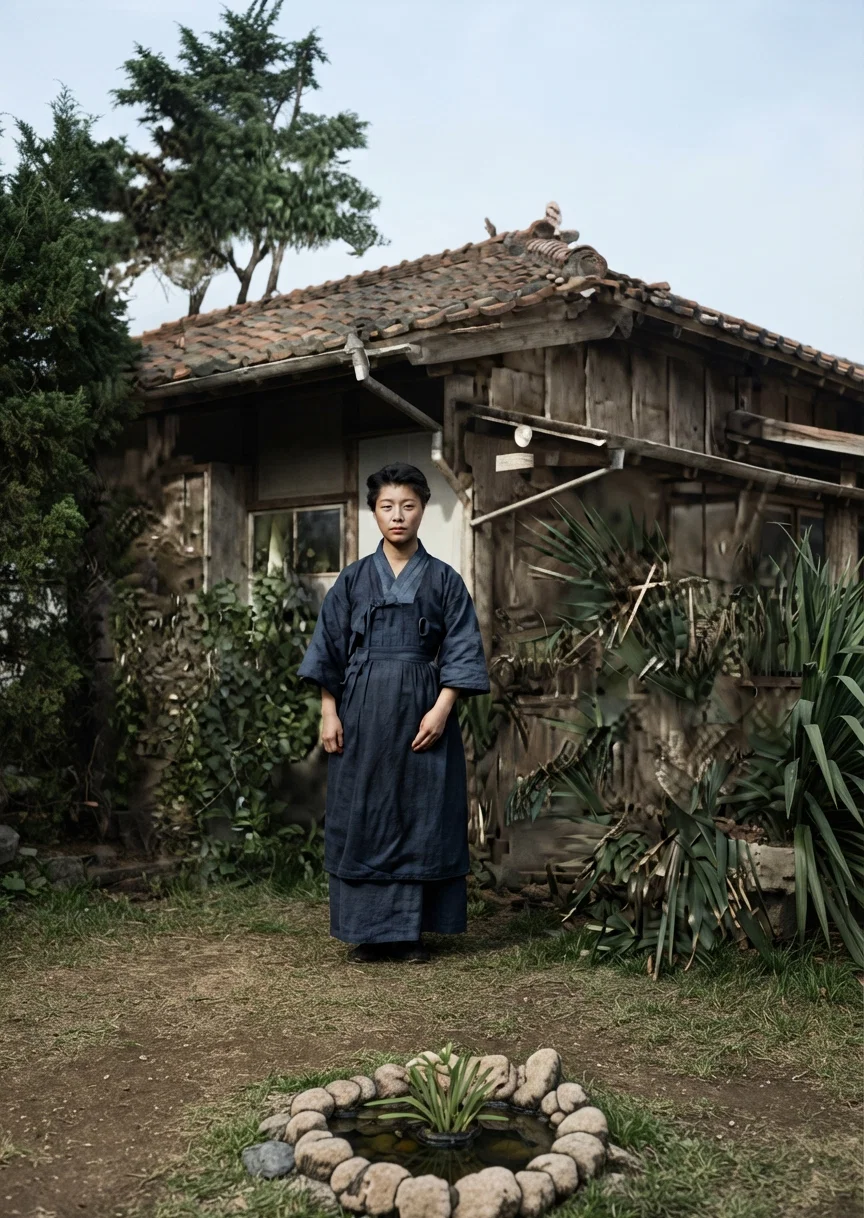
STUDENTS AT WORK ON THE SCHOOL FARM, SOONAN, KOREA; ONE OF JAPAN'S BEAUTIFUL NOOKS
Seoul, Korea.
Found Joy and Satisfaction
By H. Kuniya
H. KUNIYA
ONE day last winter, I ventured into a temple compound. As I was hesitating what to do, a woman, poor, emaciated, and clothed in rags, came out of a little, dark room of a house near. I spoke to her, and handed her a tract, and she passed on. But I could not get her out of my mind; and a few days later, I called upon her.
I found that she was a widow, and that her only means of support was sewing. I called frequently, and tried to interest her in Bible study; but she would not lay aside her work long enough to give attention to what I was saying. All that she could earn, except the very poorest living, went to the Buddhist priests at the temple, for prayers and offerings.
One day when I went to call upon her, she was not to be found. I inquired, but no one would tell me where she had gone. Mrs. Kuniya and I had become very much interested in this devout heathen woman, and we made her case the subject of special prayer, asking the Lord to send her to us if we could do her good, as we could not find her.
At last, one day she came to our house, and then she began to attend the Bible readings in the kigisho (preaching place), and she did not miss a meeting until she fully accepted Christianity. The Lord had impressed her that here was something which would satisfy her heart as it had never been satisfied through her offerings to the priests. I called upon her a short time ago, and found the god shelf and all the idols gone from her house. Her rags have given place to decent dress, and she is both clothed and in her right mind and happy in the Lord. She no longer gives her money to the idle, dissolute priests, but has already begun to pay tithes to the Lord, and is earning enough to be comfortable, and is happy to have a part in the grand work of the gospel.
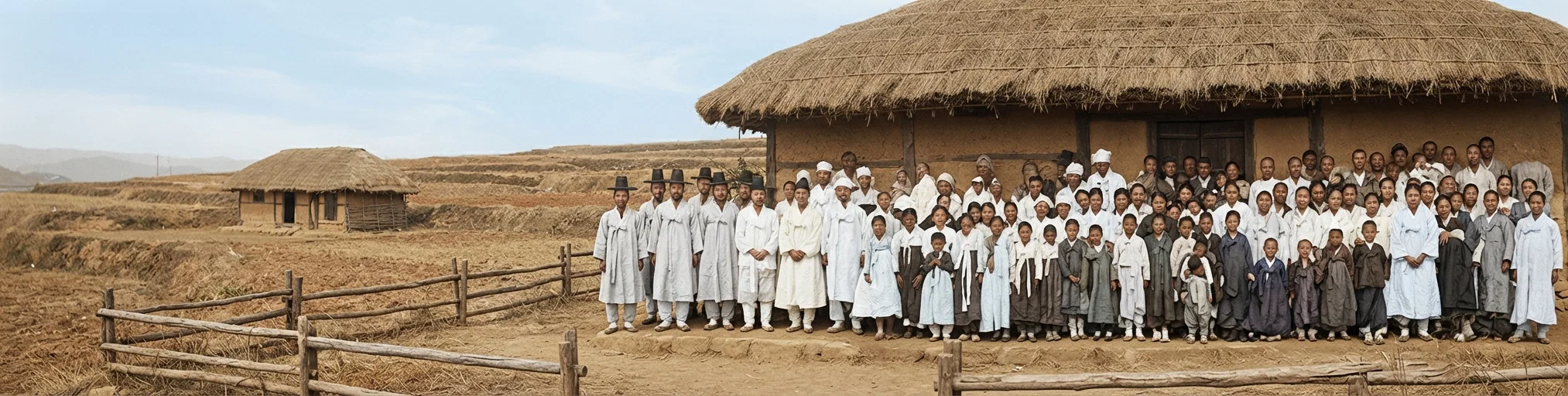
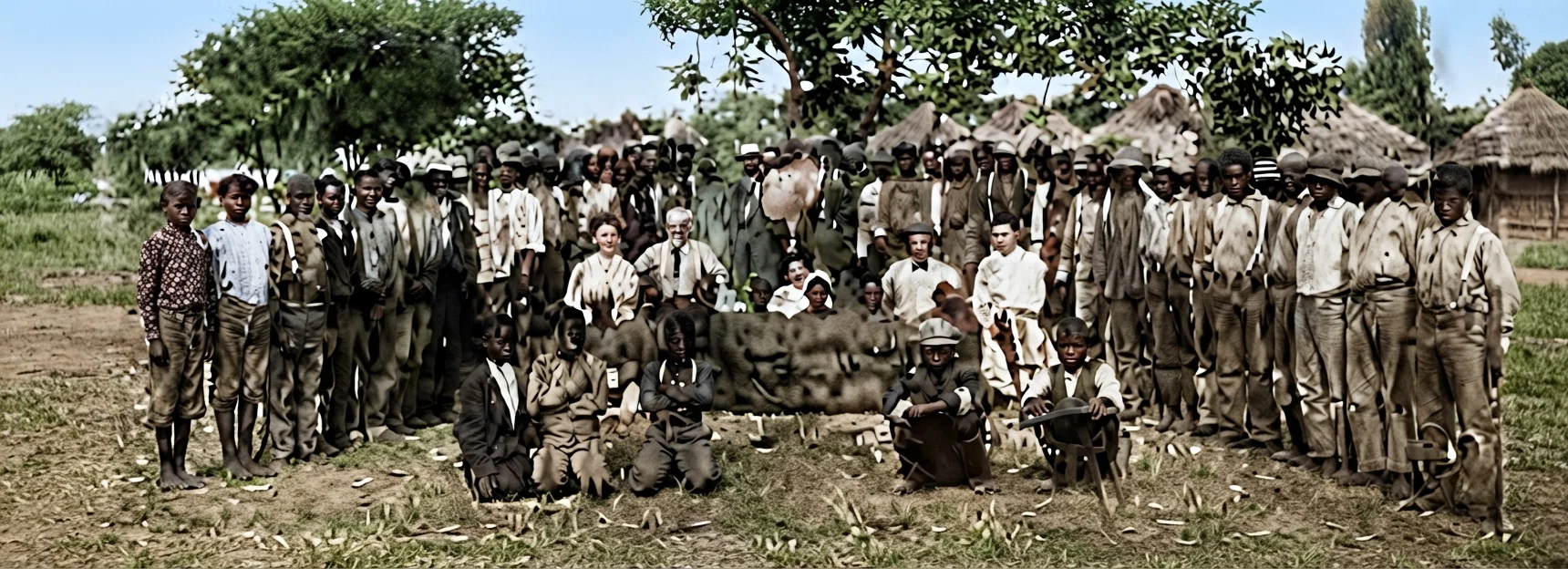
A CONGREGATION OF KOREAN BELIEVERS AT TAE MAE DONG
Desired the Same Peace
By B. P. Hoffman
SOME years ago, a young lady who had found salvation in Christ, joined our work at the sanitarium in Kobe. Later she returned to her home province, and engaged in the work of nursing the sick. Although the only believer in her locality, she remained steadfast in her faith, and by loving service to others, witnessed for Jesus.
As a result of her strenuous labors, her health failed; and early this year, she passed away. I will translate a portion of a letter received from her father, who had always opposed her in her Christian belief. This letter was written in reply to our letter of condolence.
"Many, many thanks for your kind letter regarding our daughter's illness and death. Through the help of you all, while she lived, she had peace of heart through faith in God, and faced death without fear, and fell asleep, saved for the heavenly kingdom. We, her aged father and mother, mourn deeply her early and untimely death; but as we remember her faithfulness to us in life, and her service, which was more than that usually allotted to one woman, we can find no cause for complaint. We rejoice in her achievements, and at the same time, feel a desire to pass our remaining days in the same peace and joy that were hers. It was through the teachings of God that she attained to that good experience, for which we are very, very grateful."
While we also mourn the loss of such a consecrated follower of Jesus, we are thankful that she remained faithful to the last, and for this testimony from those who saw her peaceful death.
Kobe, Japan.
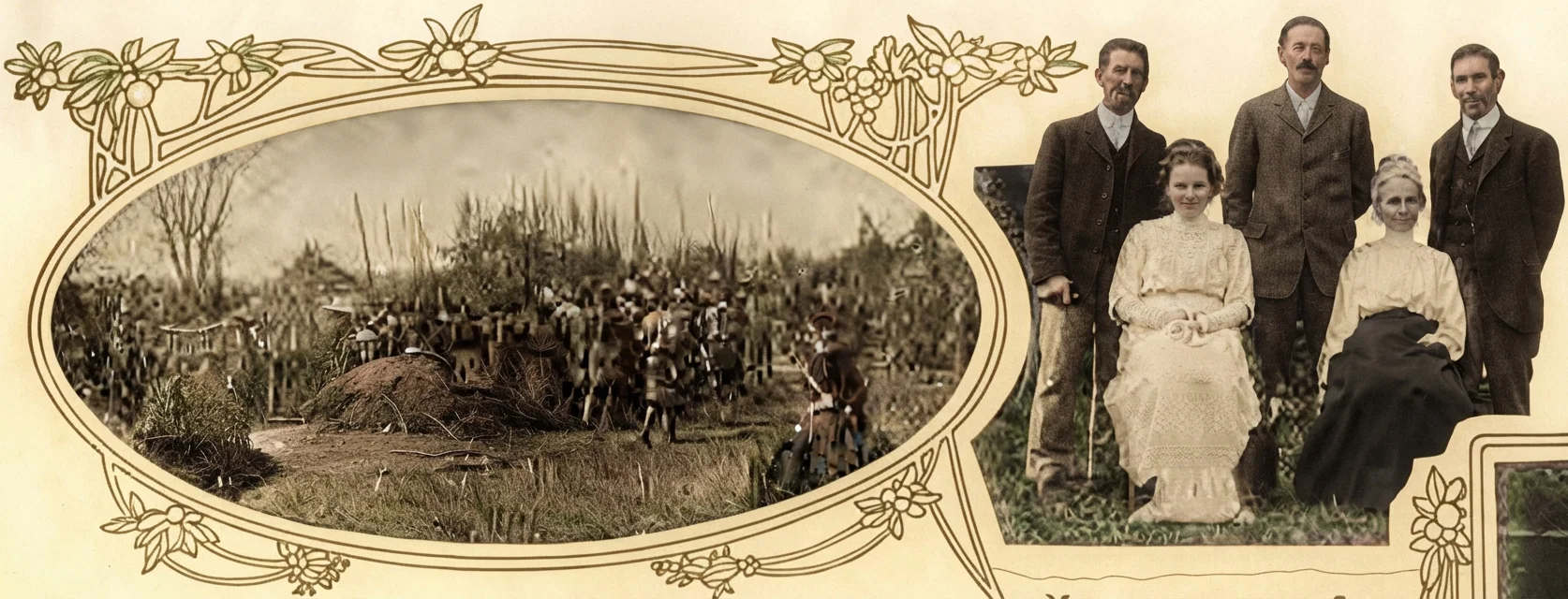
WARRIORS MARCHING AROUND A CHIEF'S GRAVE, AS DESCRIBED BY MRS. ANDERSON
Good Progress in Dark Africa
By W. B. White
W. B. WHITE
President South African Union Conference
THE past year has been one of blessing and progress with us here in Africa. As a result of our labors among the native tribes, about three hundred have turned from darkness to light, and received baptism. Wonderful transformations are wrought in their lives by the power of God.
Only a few months ago, a young married man who was a Red Kafir came to our Maranatha Mission and desired admittance to the school. This was granted, and he began his work.
One day, some of our converted boys saw him smoking on the mission grounds, and at once told him that smoking was not allowed there. He inquired if smoking was against the rules of school; and being informed that it was, he immediately took his pipe from his mouth, and placing it on a stone, he crushed it with another, and no tobacco has been near him since. His victory seems to be complete, and he is now yielding his heart to God. He gives promise of becoming a worker among his people. And this boy's experience is but one among many equally interesting.
Many Native Students
We now have about three thousand students in our mission schools, many of whom are very promising young men and women, who we trust will make workers. As far as our means will permit, we are taking advanced steps into the great untouched mission fields.
New Stations and Publishing Houses
We are now planting three or four new stations in Kafirland, and another in northwest Rhodesia, far up near the Kongo border. Steady progress is also made in other parts of Rhodesia, in Nyasaland, and among the Zulus and the Basutos. We have recently printed an edition of two thousand Bible readings in the Chitonga, one of the languages of Northwest Rhodesia; and a hymn book of two hundred hymns is now being printed in the same language. Our presses are also at work on "Steps to Christ" in the Sechuana, the language of the Bechuanas; and we hope that erelong a few tracts may be issued in the several languages of the country.
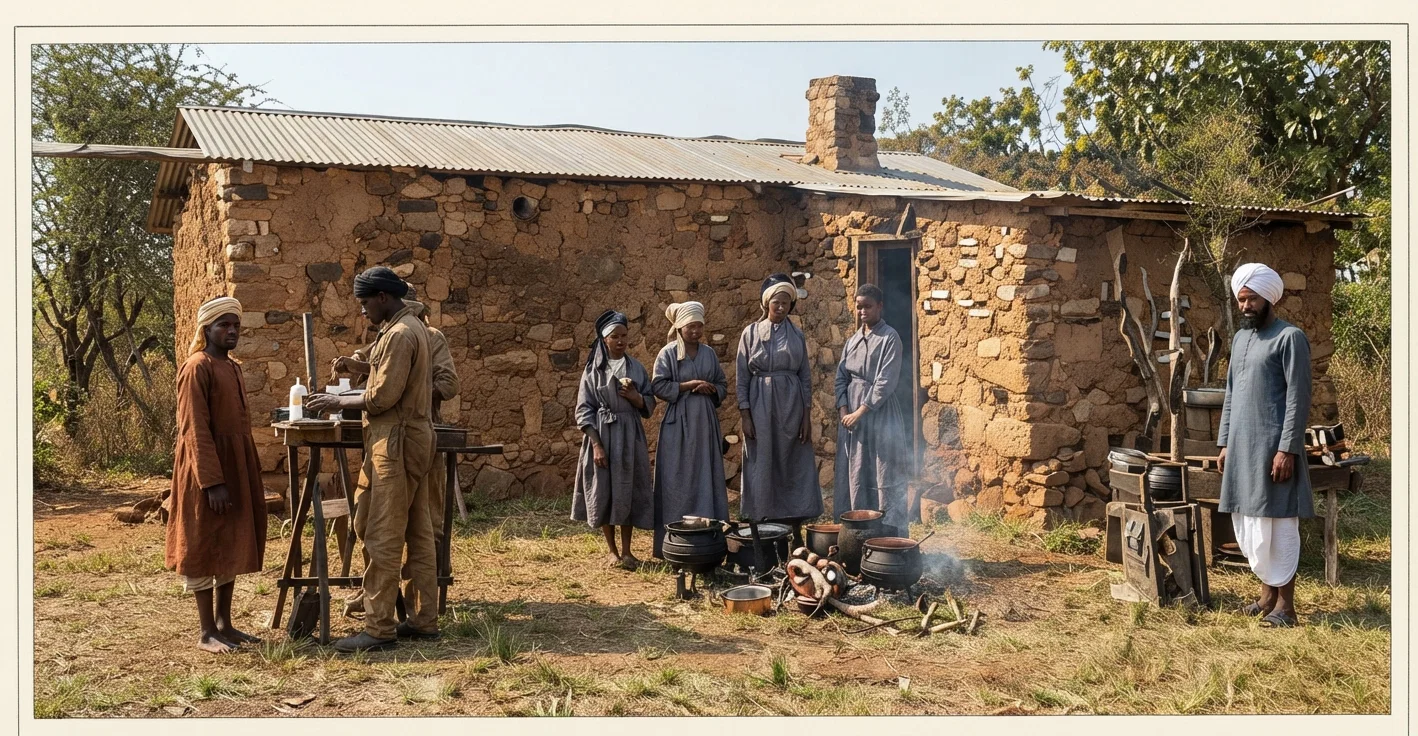
PREPARING DINNER AT SOLUSI MISSION
As we see the work rising among both the whites and the natives, it cheers our hearts, and we desire to be faithful till the work is finished, and Africa has heard the gospel message. Much yet remains to be done. There are many tribes who have never heard the name of Jesus; but the Spirit of God is working on the hearts of these heathen people, and thousands are longing for a better life. We feel that now is the time to give the gospel trumpet a certain sound, so we press on.
Chief Knew Livingstone
By W. H. Hurlow
On the Land the Great Explorer Trod
W. H. HURLOW
IN the days of the late Dr. David Livingstone, the place which is now our Malamulo Mission was part of a large tract of land owned and ruled by Maguira, a native chief who lived on the banks of the river Shire, in British Central Africa. This chief is now dead; but one of his under chiefs, named Kasonga, still lives in his village on the mission estate. He is one of the very few old men who have responded to the call of Christianity and been baptized into the church.
On the Ground of Livingstone
Standing with him in front of our church building, on the spot where the late Dr. Livingstone, on his first trip into the country, camped and held a council with the chiefs of the district, I listened with interest as he told of the advent of the first white man into the country.
The coming of Dr. Livingstone, bringing with him the mtengo wabwino (good message), and demonstrating in his life the love of God, gave to the natives a view of a character new to them, making it necessary for them to adopt a new word to describe this wonderful white man.
So like a god did he seem that they gave to him the name of Msungu, similar to their name for God, Mulungu. Although the doctor has been followed by men whose characters have fallen far short of his, yet the same name still holds good for every white man who enters the country.
Livingstone passed down the hill from his camp, and crossing a small river, continued his journey to the place now called Blantyre. His heart would have rejoiced could he have seen the future of that little stream; for because of the many baptisms that have taken place in its waters, it has been named by the Christian natives "the Jordan."
The Malamulo estate, well up in the Shire highlands, is plentifully watered and wooded. It was bought from the native chief by a German planter, for a few yards of red cloth. This planter built the strong fire-burned brick house now occupied by the mission superintendent. He also built a large coffee store, which Brother Ellingworth has converted into a fine dwelling house.
Later we purchased this estate, and it is now the center of a thriving mission. Not only is a training school maintained here, but many out schools are carried on in surrounding native villages. Thousands of natives are thus being reached.
One hundred miles to the north, a large out school forms the center of another circle of out schools, so that many thousand natives in this region where Livingstone pioneered, now enjoy the light of the glorious gospel, which is dispelling the heathen darkness of central Africa.
Blantyre.
"Now I Am Content"
By W. H. Lewis
W. H. LEWIS
IN our leading school, two hundred miles interior from the Gold Coast, we have about fifty boys, with fifty more in two out schools. One young man who came to us when we first opened school, had received an education up to the sixth standard at Kumassi. He has now passed the seventh, and is teaching. I asked him one day why he had come to us.
"Master," he said, "I think surely the Lord was holding me for gospel work. I have been in the government service as police constable, and have tried several other things since, but have never felt satisfied. Now I am content, so I believe the Lord brought me here."
We hope he may be a power in bringing the gospel to many of his people. But he is only one. We need many teachers to fill the urgent calls that are coming.
Agona, Gold Coast.
MISSION HOME IN NYASALAND
Thanking the Spirit of the Dead Chief
By Mrs. W. H. Anderson
A Wild Orgy Around His Grave
MRS. W. H. ANDERSON
EARLY one morning, we heard drums, horns, and other crude instruments of music. Upon investigation, we found that a great company were on their way to thank the spirit of the deceased rain doctor for the rain he had sent them. We were anxious to see what they did and how they did it, so we went over to the grave.
We found about two thousand natives going through almost every maneuver imaginable. They had enormously big drums, rams' horns, calabashes with pebbles in them, little tins strung on a string so as to jingle, knobkerries, assagais, and guns. They wore garments of every description and make, big headgears of feathers, bunches of colored feathers, brass tacks, beads, collarets of lion and jackal skins.
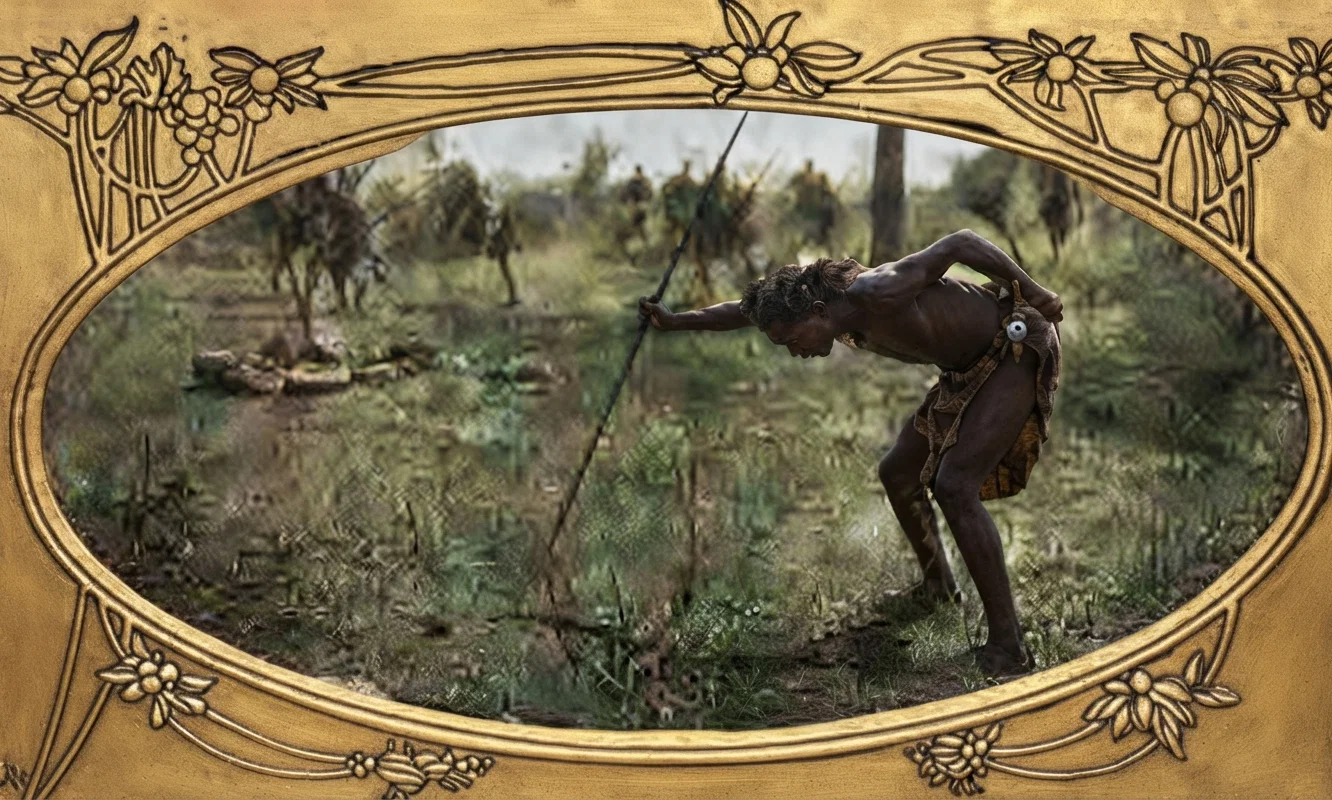
The men danced and marched together. Every little while, two or three ran out, spearing and stabbing the spirits, and going through various antics, jumping and pawing the air, while their eyes bulged out as from fright. All the time, the crowd was swaying, leaping, shouting, drumming, and tooting. Each new arrival would paw the air and stab the spirits for a while, then fall into the procession.
The women followed on behind, singing and dancing. The dancing I imagined was like the "turkey trot" and the "tango" that we read about in civilized countries.
After two or three hours of this, they were tired; and then beer was brought, and all sat down in front of the grave, and "thanked" by clapping their hands for a few moments as each supply was brought. Later they danced again.
This is thanking for rain. When they cry for rain, they have a different ceremony; and when they mourn for the dead, a different one still.
Heathenism! Is its real meaning known?—Never, until it is actually seen. It makes the heart sick. This pen picture is so feeble! But how sad that heathenism is real, and that millions are dying in its grasp, with no hope, and without God!
O friends, why is money spent for luxuries when these heathen need the gospel? Where are the strong young men and women to give the blessed tidings of salvation to these poor benighted souls? Oh, if you could only understand!
Is Giving His All
By S. M. Konigmacher
S. M. KONIGMACHER
ONE day, while touring among the villages, teaching the gospel, I approached one village as a shower came on. I took refuge in the boys' hut.
When I entered, a little boy was playing a tune by beating a stick with other sticks. Soon other children entered, and one boy recognized me, and began to sing a little song I had sung when I was there before. I sang with him, and you ought to have seen him smile.
When I told him that if he would call the other children, I would show them some pictures of Jesus, he called, and they came. All this time, the rain came pitter-patter down on the outside.
At first, it was hard to get the girls to come into the hut; but soon their desire to see overcame their fear, and they all came in, and we had a little meeting there in that dirty hut. When the rain ceased, they ran after my bicycle for a long way.
The next village was large, and all the men were busy building a calf pen. When I told them I had come to have worship, they stopped their work, and came and joined in the song and the service.
From here we went on to another large village. The people were busy making a roof for a new hut. That night, I held a lantern service, and many came, though the sky was threatening. A strange thing happened. One of the boys dropped a box of slides. When I heard them fall, I said, "There will be nothing left but pieces"; but not one was broken.
H. M. SPARROW AFRICAN NATIVES STABBING THE SPIRITS, AS DESCRIBED BY MRS. ANDERSON
The following day, we went on to Marenga. The boys were glad to see me. They were plowing, for they had had a little rain. The teacher told me that the people in the villages had asked him when I was coming again. It was a great comfort to me to think that the people were wanting to see me; and when I went to the schools, they showed that they were interested, by the numbers that came.
At one school, the hippo flies were so bad, and bit so fiercely, that we could scarcely hold a service.
I held four services in villages I had never entered before. At one, over fifty attended; and at another, over one hundred. One of the boys brought me a stool to sit on — a great change from the first visit.
I went in to see the old chief, and found him in a little hut not far away. His eyes are dim, and he has not long for this world. But he could make out a few pictures of Jesus, and we had prayer together in the hut.
You all remember the words, that this field of black people is "white for the harvest." There is no need for me to finish the quotation. I am giving my all. How about you?
Northwest Rhodesia.
Wanted God to Take Her
By Hubert M. Sparrow
AS I was on my way to the Shangani Mission, we passed a large kraal of the darkest heathen. Quite a number of women came out to greet us. One woman, with just a small skin around her body, after we had had a short talk with her about the coming Saviour, exclaimed, with eyes filled with tears: "O teacher, what are we without God? I would that God take me to His town." It touched our hearts when we heard these words from a heathen's lips. They became the keynote of our talks the remainder of our trip.
Southern Rhodesia.
The Old Man Was Silenced
"A NATIVE met our wagon driver one day," writes W. H. Anderson, superintendent of our Barotseland Mission, "and after the usual salutations, inquired where he came from.
"'From the mission,' the driver replied.
"'What do they do over there?' was the next question. Our boy replied by telling what they did not do. He said, 'They do not use tobacco, nor drink beer.'
"'But beer makes you strong,' said the native. 'Then why is it,' asked the boy, 'if it gives strength to a man, he can't stand up when he is full of it?'
"The old man was astonished and silenced."
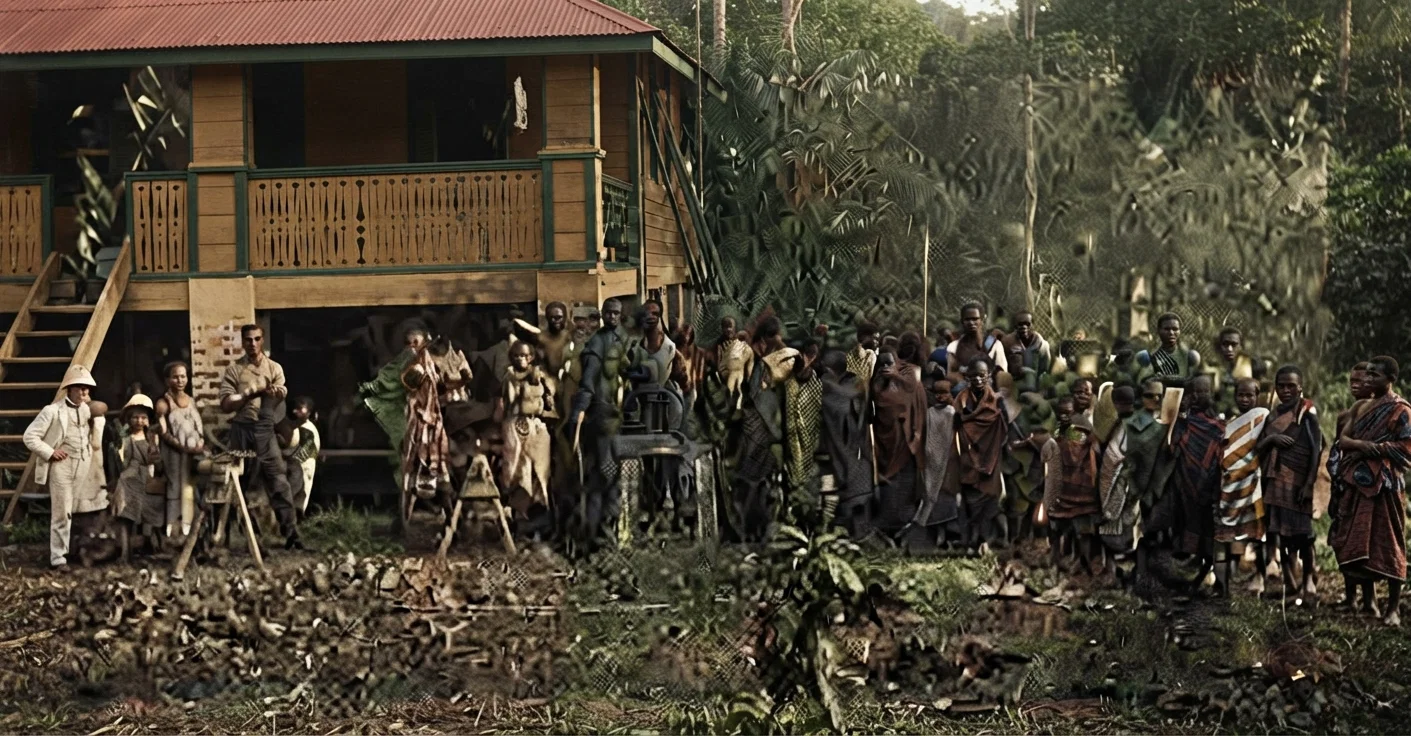
NEW INDUSTRIAL MISSION, AGONA, GOLD COAST
Protected from Harm
By Hubert M. Sparrow
HUBERT M. SPARROW
I HAD been away from the home station, establishing out schools, and was returning home with my donkey team and native assistants. One night, we came to a beautiful valley carpeted with green grass, where we determined to camp for the night. As our donkeys were tired with the long day's journey, we let them loose, so they could feed better; and knowing they would not stray far from the camp, we allowed them to remain loose all night.
In the morning, a native came to our camp, and asked where we had slept that night.
"Right here," we answered.
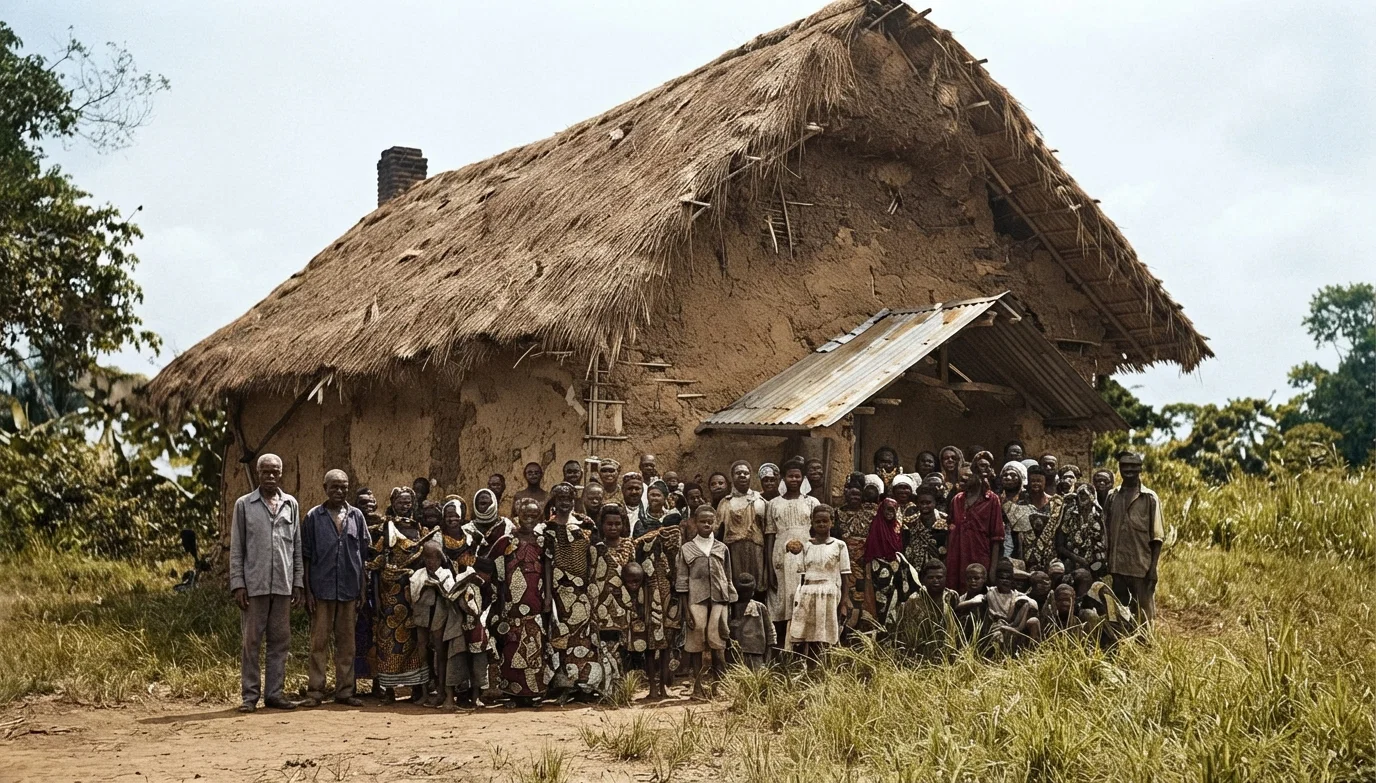
NATIVE BELIEVERS IN WEST AFRICA, IN FRONT OF THEIR MEETINGHOUSE
"And what did you do with your donkeys?" he asked.
We told him we let them run loose all night.
Then he said, "Do you know that at sundown last evening, a lion killed three cattle right out there?" pointing to a place not far from where we had our camp.
We told him we did not know about it, but believed that our Father had had a care for us, and that we could trust Him in every time of danger. How sweet is this assurance!
Gwelo, Rhodesia.
Attentive Batemas
By J. Victor Wilson
Seeking Men Among the Lions
J. VICTOR WILSON
AS we go from village to village, we are able to preach the gospel to large numbers of attentive Batemas. Usually, after the service, we sit and visit about the camp fire. One evening, after we had retired, leaving the natives still sitting around the fire, we heard one of them say: "See this white man. He comes from a place where everything is clean and white, and here he finds everything dirty and black. He does not come here for what he can get from us, but to show us the way of God."
Game and wild animals are very plentiful. Almost every evening and early morning, one can hear the lions roaring. Early one morning, we started for a kraal twelve miles away. Soon we discovered that we had missed the path. While I was searching for it apart from the others, a big leopard jumped up just in front of me, and walked off. I stood unarmed and alone, and watched it. One of the boys came running, crying, "Leopard! Leopard!" But being on the Lord's business, I knew He would protect me.
Pemba.
Dash Up with Swords
By D. C. Babcock
D. C. BABCOCK
WE are in the interior of Nigeria, in the midst of Mohammedans, and not far from their headquarters. The government officials are very friendly. The doctor in charge of this section, before leaving for England, spent a day at the mission with us. It is quite lonely here for my family, so far from white people.
A TYPICAL ZULU
We are often visited by a large company of Mohammedans, armed with lances and swords, messengers of the king, traveling from place to place. They come dashing up to the house on their fine horses, and dismount and prostrate themselves before us. This the government requires of them.
Officials are very strict with the native people. It is not uncommon for a native official to be put in prison for failure to give proper recognition to an official sent out by the home government.
We seek to be wise as serpents and harmless as doves. I am leaving, this week, to visit one of our companies nearly one hundred miles away.
Lalupou, Nigeria, West Africa.
Modern African Proverbs
A SURE investment: African diamonds — native souls.
A light shining in a dark place — a village school.
Every cloud has a silver lining; every native has a heart.
We can't take cattle or mealies to heaven. How about the native?
Don't wait till the war is over. Do it now.
Is Jesus coming? Let us prove it.
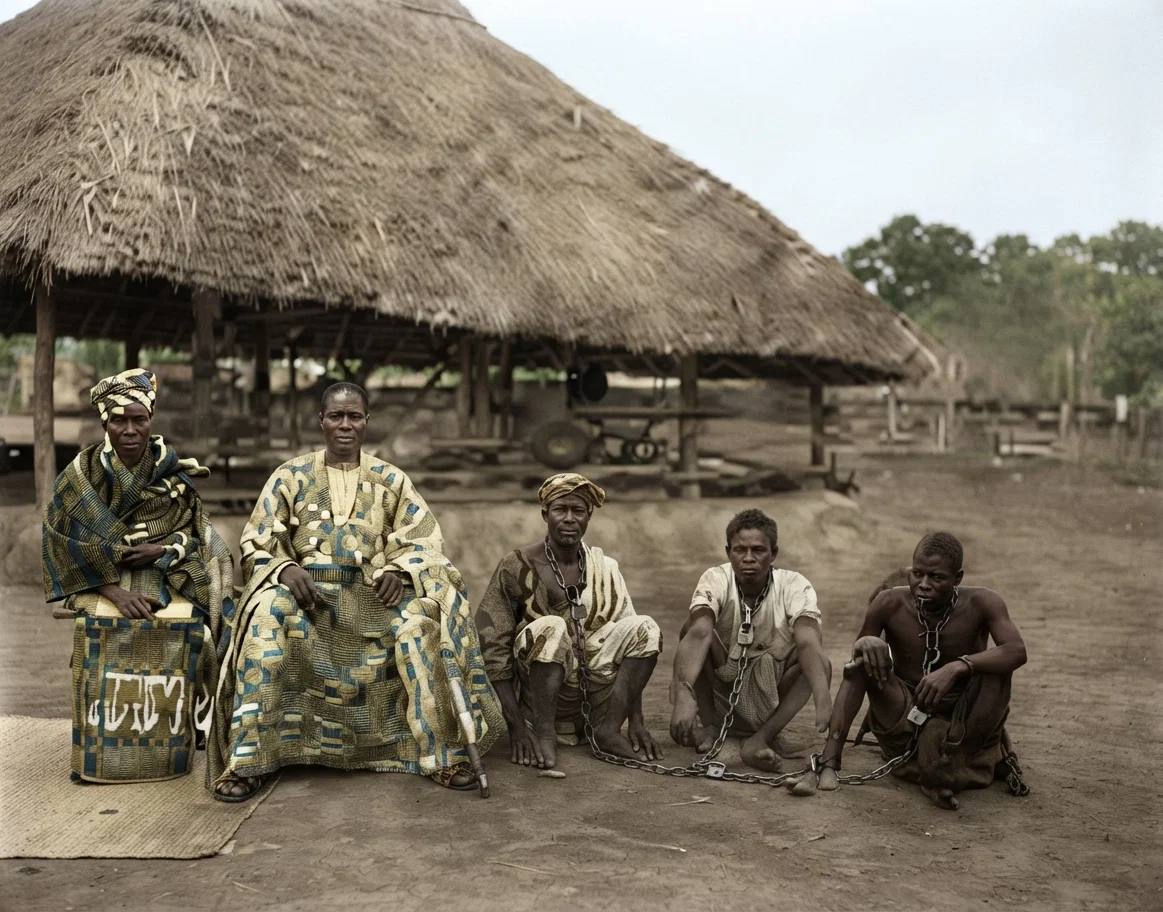
A SIERRA LEONE CHIEF, HIS WIFE, AND THREE PRISONERS WITH CHAINS AROUND THEIR NECKS, FASTENED WITH PADLOCKS
His Victory over Tobacco
By Miss V. Sutherland
MISS V. SUTHERLAND
NOT long ago, there came to our Kafir mission school at Maranatha a young man who had been a great smoker. He frequently asked to be excused from the schoolroom, and I soon learned that he went into a little grove near for a smoke. I finally told him I knew why he so often left the schoolroom — that it was for the purpose of smoking. Fixing his piercing eyes on me, he said, "How do you know?"
One day, I asked him to remain after school. I had a good Christian talk with him about the way he was doing. He said tobacco had gained a strong hold upon him, and he wished that he could overcome it. I pointed him to the power that would give him the victory. I told him he would either have to give up tobacco or give up school and leave the mission, and I would give him time to decide which it should be.
After a while, he went to his room, and soon returned with a handmade bag containing about two pounds of tobacco. He was trembling when he gave it to me; and with a deep, troubled sigh, he said: "O teacher, you must please pray for me; for it is so hard for me to give up my tobacco! I have been a smoker since I was a little boy of seven, and I am a perfect slave to this weed." Then we had prayer together, and he poured out his soul to the Lord. "O Lord," he said, "as much as I love this tobacco, help me to hate it!"
He has never touched the filthy weed since, not even after returning to his home. God gave him strength to overcome, and he is enjoying a sweet Christian experience.