Your ShelfYour Projects

Signs of the Times, Vol. 28, No. 41.

IN WHOM OUR TRUST ABIDES

Signs of the Times

Oct 8, 1902

Pacific Press Publishing Company · Oakland, California · Oct 8, 1902

IN WHOM OUR TRUST ABIDES.
Mankind is bound to trust in something. The child may learn to leap in the dark into its father’s arms, because it has learned to trust the voice that bids it loose its hold and spring out where it can not see. The farmer plants his seed, and then trusts in the rain and the sunshine to bring him his increase. The speculator invests his money, and trusts in his own sagacity to bring him back his own with much that is not his. The wilful boy trusts in his own wisdom, and makes shipwreck of his soul.
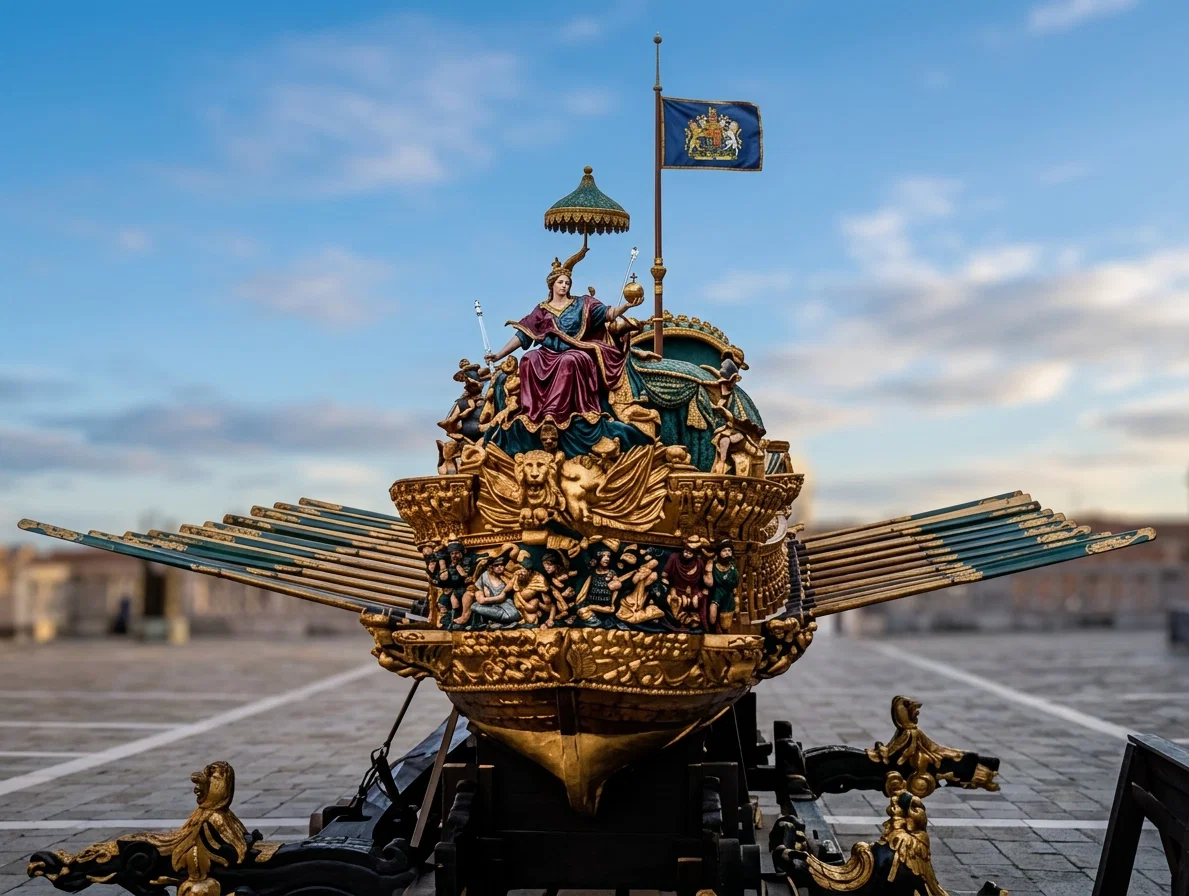
An Ancient Royal Galley.
There are two classes in this world, those who trust in that which is temporal and uncertain, and those who trust in that which is eternal and sure. On every hand are illustrations of the results of the two courses—disappointed hopes, misplaced confidence, sorrows where joys were expected, heartaches where lasting pleasures were thought to be, poverty where opulence was sought, disgrace where admiration was hoped for, defeat instead of victory and success. These have come to them who trusted in the false and uncertain, seeking the pleasures of sense, and trying to satisfy the cravings of the carnal heart.
On the other hand are they who have trusted in that which can not fail, in that which God has pledged Himself to make succeed. In them there is no disappointment, no hopes crushed, no confidence misplaced. There are trials; but they are victors over them. There may be sorrows; but they end in the peace of God. There is lasting pleasure; but it is not in the things of earth. There may be times when there is little to spare; but the blessing of God rests upon that little and multiplies it a hundred fold. They do not look for opulence here; but they know that God has given to them an inheritance in His everlasting kingdom where want can never come. They have not looked for human admiration or adulation; but God has laid up for them a crown of glory which will never fade, and over all that could oppose them in the earth He has made their victory sure. In the place of the ruin which is bound to come to them who trust in self and uncertainty, He has given them the success that can come to those alone who will put their trust in the everlasting God.
The nations of the world to-day are taxing their inhabitants to their utmost ability to pay, in order to form bulwarks of national defense against possible enemies. They are building cannon of the greatest possible range and rapidity of operation. They are building forts to withstand the highest power guns. They are training their millions of armed men to the greatest possible efficiency in the use of their weapons and the mobilization of their companies. They are inventing new kinds of projectiles, and new kinds of powder to drive them on their mission of death—or of protection as they view it. They are filling their ports with the most ingenious ships of war, floating fortresses, powerful enough to skim the seas with the speed of the wind against wind and wave, carrying in their massive magazines tons upon tons of the most concentrated agencies of destruction, their hulls massive shields of the hardest metal man can make, and their decks and sides bristling with the most terrible weapons the world has ever known.
Nations and men are trusting in these agencies of death for the maintenance of their liberty and their rights and their national existence. They are multiplying them as fast as the resources of the people will permit, each seeking to equal or outdo the other, and the achievements of each in these lines inspiring the others to greater exertions. To state that the world has never seen anything like it before is to state that which no one will question for a moment. That is the kind of fruit which trust in such things was bound to bear. Whether that trust was in the slave-driven galleys of Cleopatra, Xerxes, Alexander, and Nero, with their javelins and arrows, or whether it be in the modern steam-driven, cannon-bristling, torpedo-shooting cruisers and battle-ships which the nations are trusting in to-day, the fruit of that trust is distrust, taxation, oppression, defiance, variance, and a fearful looking for of the consequences of such terrible combat as such engines of destruction have made possible.
Spain trusted in her Armada, and the waves of the Channel have long since ground their sunken hulks out of all semblance of ships of war. She put her trust in ships of war again, and to-day the tongue of the salt sea waves is licking up the rusting iron of their sides and the guns that went down with her trust in the crash of war.
That day is fast approaching that will try the trust of the people that have not made God their trust, the people that have put the arm of flesh and the sword of steel in the place of the arm of the Most High and the sword of the Spirit. Millions of men to-day are turned from the pursuits of peace to man the ships of war and drive the plow of ruin through the world. In them the nations are trusting, but their trust is vain. Such trust is folly; such hopes are built on sand. They can not bring peace nor assurance; they can not bring happiness to a single heart. All the navies of the world can not build up one single character that will stand the test of God’s searching judgment.
Solomon had two navies of ships. They brought him the wealth of Tarshish and Ophir; but they did not fortify him against the influences that were working for his ruin. He trusted in his wealth, his wisdom, and his strange wives, and God took from his posterity the kingdom that would have been theirs. Xerxes trusted in his galleys of war, and hishosts of fighting men, and his heart and hopes went down in the swift destruction that fell upon them at Salamis and Plataea. Just so will it be with those who are trusting to-day in the weapons that give death instead of life, and in the arm whose only service is to smite and bruise and kill.
There is a better trust; there is a more enduring hope; there is a higher aim; there is a truer life. The admonition of the Almighty to every intelligent creature on the earth is this: “Put not your trust in princes, nor in the son of man, in whom there is no help.” Ps. 146:3. “It is better to trust in the Lord than to put confidence in princes.” Ps. 118:9. The Lord will punish the wicked prince as He does the wicked peasant. He tells us that in the day of His sacrifice He “will punish the princes and the king’s children.” Zeph. 1:8.
The man who puts his trust in man has passed judgment on himself already, and the man who trusts in treasure has likewise built his hope upon the moving quicksands. “Because thou hast trusted in thy works and in thy treasures, thou shalt also be taken.” The Lord declares that upon those who put their trust in treasure He will bring a fear (Jer. 49:4, 5); but “they that trust in the Lord shall be as Mount Zion, which can not be removed, but abideth forever. As the mountains are round about Jerusalem, so the Lord is round about His people from henceforth even forever.” Ps. 125:1, 2. In place of the fear that comes with a trust in things of earth the Lord gives peace to them that trust in Him, not such as the world gives; but “Thou wilt keep him in perfect peace, whose mind is stayed on Thee; because he trusteth in Thee.” Therefore, “trust ye in the Lord forever; for in the Lord Jehovah is everlasting strength.” Isa. 26:3, 4. “Thus saith the Lord, Cursed be the man that trusteth in man, and maketh flesh his arm.” On the other hand, “Blessed is the man that trusteth in the Lord, and whose hope the Lord is.” Jer. 17:5, 7. Putting our trust in weapons of war and ships of war is putting our trust in man, for those are man’s provisions for the safety of them that trust in him. Upon such a course there is no safety, no salvation, no blessing pronounced.
It is better to say with the psalmist, “My times are in Thy hand;” to leave it all with God, and then have the blessed peace that comes with such confiding, the everlasting protection that no dart can pierce, no fire consume, no flood o’erwhelm. That trust was never yet betrayed; that shelter is a shelter to all eternity. Ships may go down, armies may crumble into dust; but the ark of God’s abiding protection will anchor inside the eternal harbor with all who have made it their refuge from the storms of life. C. M. Snow.

Ours Is the Religion of Kindness.

The little girl who thought religion was “something to make papa kinder to mama,” was certainly right in her estimate of its value and place among people. That is just what it is here for—to reach men and make them kinder to each other. So it reached that little girl’s father when he was a harsh, drinking man, and it raised him above the drink, and above his temper, and above his selfishness, and made him kind.
We all show our religion in our kindness, more or less. It ought to be more, because people have learned to judge our religion so—by the kindness it inspires in us. Not on the great things do they base their estimate, either, but on the trifles that fill in between. A gentler bearing, a kinder word, a readier hand-grasp, a look of encouragement, a smile—all these little things tell them that we have the religion that counts, the good, great Gospel of kindness. EDISON DRIVER.

WITNESSES FOR GOD.

BY MRS. E. G. WHITE.
God can not display the knowledge of His will, and the wonders of His grace, among the unbelieving world, unless He has witnesses scattered all over the earth. This is God’s plan: that men and women who are partakers of this great salvation through Jesus Christ, should be His missionaries, bodies of light throughout the world, to be as signs to the people—living epistles, known and read of all men; their faith and works testifying to the near approach of the coming Saviour, and that they have not received the grace of God in vain. The people must be warned to prepare for the coming Judgment. To those who have been listening only to fables, God will give an opportunity to hear the sure word of prophecy, whereunto they do well that they take heed, as unto a light that shineth in a dark place. God will present the sure word of truth to the understanding of all who will take heed, that they may contrast truth with the fables which have been presented to them by men who claim to understand the Word of God, and profess to be qualified to instruct those in darkness.
Many who have called themselves Adventists have been time-setters. Time after time has been set for Christ to come, but repeated failures have been the result. The definite time of our Lord’s coming is declared to be beyond the ken of mortals. Even the angels who minister unto those who shall be heirs of salvation, know not the day nor the hour. “But of that day and hour knoweth no man, no, not the angels of heaven, but my Father only.” Because the times repeatedly set have passed, the world is in a more decided state of unbelief than before in regard to the near advent of Christ. They look upon the failures of the time-setters with disgust; and because men have been so deceived, they turn from the truth substantiated by the Word of God that the end of all things is at hand.
Those who so presumptuously preach definite time, in so doing gratify the adversary of souls; for they are advancing infidelity rather than Christianity. They produce scripture, and by false interpretation show a chain of argument which apparently proves their position. But their failures show that they are false prophets, that they do not rightly interpret the language of Inspiration. The Word of God is truth and verity; but men have perverted its meaning. These errors have brought the truth of God for these last days into disrepute. Adventists are derided by ministers of all denominations. Yet God’s servants must not hold their peace. The signs foretold in prophecy are fast fulfilling around us. This should arouse every true follower of Christ to zealous action.
In Noah’s day, the inhabitants of the old world laughed to scorn what they termed the superstitious fears and forebodings of the preacher of righteousness. He was denounced as a visionary character, a fanatic, an alarmist. “As it was in the days of Noah, so shall it be also in the days of the Son of Man.” Men will reject the solemn message of warning in our day as they did in Noah’s time. They will refer to those false teachers who have predicted the event and set the definite time, and will say that they have no more faith in our warning than in theirs. This is the attitude of the world to-day. Unbelief is wide spread, and the preaching of Christ’s coming is mocked at and derided. This makes it all the more essential that those who believe present truth should show their faith by their works. They should be sanctified through the truth which they profess to believe; for they are savors of life unto life, or of death unto death.
Noah preached to the people of his time that God would give them one hundred and twenty years in which to repent of their sins, and find refuge in the ark; but they refused the gracious invitation. Abundant time was given them to turn from their sins, overcome their bad habits, and develop righteous characters. But inclination to sin, the weak at first with many, strengthened through repeated indulgence, and hurried them on to irretrievable ruin. The merciful warning of God was rejected with sneers, with mocking, and derision, and they were left in darkness, to follow the course their sinful hearts had chosen. But their unbelief did not hinder the predicted event. It came, and great was the wrath of God which was seen in the general ruin.
These words of Christ should sink into the hearts of all who believe in Christ’s soon coming. “And take heed to yourselves, lest at any time your hearts be overcharged with surfeiting, and drunkenness, and cares of this life, and so that day come upon you unawares.” Our danger is presented before us by Christ Himself. He knew the perils we should meet in these last days, and would have us prepare for them. “As it was in the days of Noah, so shall it be also in the days of the Son of Man.” They were eating and drinking, planting and building, marrying and giving in marriage, and knew not until the day that Noah entered into the ark, and the flood came and swept them all away. The day of God will find men absorbed in like manner in the business and pleasures of the world, in feasting and gluttony, and indulging perverted appetite in the defiling use of liquor, and the narcotic, tobacco. This is already the condition of our world, and these indulgences are found even among God’s professed people. Lawyers, mechanics, farmers, traders, and even ministers from the pulpit, arecrying “Peace and safety,” when destruction is fast coming upon them.
What a responsible position, to unite with the Redeemer of the world in the salvation of men! This work calls for self-denial, sacrifice, and benevolence; for perseverance, courage, and faith. Why there are so little results seen of those who minister in word and doctrine, is, they have not the fruit of the grace of God in their hearts and lives. They have not faith. Many who profess to be ministers of Jesus Christ, manifest a wonderful submission in seeing the unconverted all around them going to perdition. A minister of Christ has no right to be at ease, and sit down submissively to the fact that the truth is powerless, and souls are not stirred by its presentation. They should resort to prayer, and should work and pray without ceasing. Those who submit to remain destitute of spiritual blessings, without an earnest wrestling for those blessings, consent to have Satan triumph. Persistent, prevailing faith is necessary. God’s ministers must come into close companionship with Christ, and follow His example in all things—in purity of life, in self-denial, in benevolence, in diligence, in perseverance. They should remember that a record will one day appear in evidence against them for the least omission of duty.

THE ONE I LOVE.

[Rev. James Mudge, in Zion’s Herald.]
There’s none so good as Jesus, Truest, tenderest, best, All preciousness, all excellence, Fast folded to His breast He holds me still, safe kept from ill; No care can intervene; And so in Him I glory, On Him I lean.
I love the words of Jesus, Sublime, transcendent, pure; Their strength and sweetness suit my soul, For every ill a cure. What sure source of fullest life? They meet my deepest need; And so beside still water I calmly feed.
I love the cross of Jesus, On which He died for me; And gazing there with streaming eyes, His matchless grace I see. The cross rebukes my selfishness, It helps me hate my sin; And so I vow before it My crown to win.

The Prophecy of Zechariah

By Roderick S. Owen

THE EXPERIENCE OF THE HIGH PRIEST.

Chapter Three.

“And he showed me Joshua the high priest standing before the Angel of the Lord, and Satan standing at his right hand to resist him. And the Lord said unto Satan, The Lord rebuke thee, O Satan; even the Lord that hath chosen Jerusalem rebuke thee; is not this a brand plucked out of the fire? Now Joshua was clothed with filthy garments, and stood before the Angel. And He answered and spake unto those that stood before Him, saying, Take away the filthy garments from him. And unto him He said, Behold, I have caused thine iniquity to pass from thee, and I will clothe thee with change of raiment. And I said, Let them set a fair miter upon his head. So they set a fair miter upon his head, and clothed him with garments. And the Angel of the Lord stood by.” Verses 1–5.
FROM the time God chose the descendants of Jacob to represent Him in the earth, and to stand for His truth, Satan, the adversary, has sought to destroy them; and thus to gain complete control of this world. But the degree of power which he could exert over Israel was measured by their distance from God. As long as they were wholly loyal to Him, Satan could have no power over them; but when they sinned, thus yielding obedience to him, they thereby chose him for their master, and he could exercise authority and power over them, even to putting them to death; for “to whom ye yield yourselves servants to obey, his servants ye are to whom ye obey; whether of sin unto death, or of obedience unto righteousness.” Under this principle Satan would have utterly destroyed them, had not God, by a right reserved in Himself as Creator, held Satan’s power in check.
The captivity of Israel was permitted by the Lord, but when they turned to Him with penitence of heart, He overruled, and gave opportunity for their return to their land. But the accuser was ever on the alert, and when the remnant, who were rebuilding the temple and city, sinned, Satan was ever ready to claim them as his subjects. He moved upon the heathen nations round about to hinder their work, and if possible to destroy them. But God, in mercy and love, was looking on His afflicted but wayward people, and shielding them from Satan’s malicious designs.
In the scripture above quoted, Joshua the high priest, clothed with filthy garments, represents the people laden with their sins and shortcomings. As they stand in the presence of a holy God, surrounded by holy angels, they are made painfully conscious of the truthfulness of the accusations of the adversary. But God has laid help upon One who is mighty and able to save to the uttermost all who come unto God by Him. The Deliverer speaks, saying, “The Lord rebuke thee, O Satan; even the Lord that hath chosen Jerusalem rebuke thee; is not this a brand plucked out of the fire?” A command is then given to the angels which stand by to take away the filthy garments and clothe him with a change of raiment. And to Joshua the comforting words are spoken: “I have caused thine iniquity to pass from thee, and I will clothe thee with change of raiment.” God would clothe the whole house of Israel with the robes of righteousness. He would set a fair miter upon their foreheads; thus inscribing upon their minds the miter inscription, “Holiness to the Lord.”
“With ‘Holiness to the Lord’ written upon their minds, they would reflect in their lives the character of God; and thus they would reveal God to the world. Then follows the charge and promise:—
“And the Angel of the Lord protested unto Joshua, saying, Thus saith the Lord of hosts: If thou wilt walk in My ways, and if thou wilt keep My charge, then thou shalt also judge My house, and shalt also keep My courts, and I will give thee places to walk among these that stand by. Hear now, O Joshua the high priest, thou, and thy fellows that sit before thee; for they are men wondered at; for, behold, I will bring forth My Servant the BRANCH. For behold the stone that I have laid before Joshua; upon one stone shall be seven eyes; behold, I will engrave the graving thereof, saith the Lord of hosts, and I will remove the iniquity of that land in one day. In that day, saith the Lord of hosts, shall ye call every man his neighbor under the vine and under the fig tree.”
“If thou wilt walk in My ways, and if thou wilt keep My charge, then thou shalt also judge My house, and shalt also keep My courts, and I will give thee places to walk among these that stand by,” that is, among the angels. What a wonderful charge, setting before them an exalted privilege, and backed up by a glorious promise! Does it not seem that this would have inspired them with zeal and courage to go forward? God would clothe Israel with His own righteousness, write “Holiness to the Lord” upon their minds, so that they would constantly be a revelation of His character. Then, indeed, would they be “men wondered at,” and among them, and by them, and through them, God would bring forth His Servant, the Branch, or Jesus would be manifested to the world.
Altho that people were unfaithful, yet God did bring forth among them the Branch; and, behold, that Branch was the Stone laid before the people, and upon that Stone was seen the seven eyes and Jesus anointed with the oil of gladness (Holy Spirit) above His fellows, and went among them with the “seven eyes, which are the seven spirits of God” (Rev. 5:6), or all the fulness of the Spirit in its searching power, which searched out and revealed to them their sins. Some of them fell upon that Stone, and were broken, but to many He became a stone of stumbling and a rock of offence. And, behold, upon this Branch was the fair miter, Holiness to the Lord, so that we “beheld His glory, the glory as of the only-begotten of the Father, full of grace and truth.” And He was “the brightness of His glory, and the express image of His person.”
The engraving upon the stone was the will of His Father enshrined in His mind, so that He could say, “Lo, I come; in the volume of the Book it is written of Me, I delight to do Thy will, O My God; yea, Thy law is within My heart.” And in His life the law appears, drawn out in living characters. As He trod the hills and vales of Judea, as He went from city to city, and from village to village, He was a manwondered at. He was the One by whom God would cleanse the iniquity of the land in one day. But Israel was too proud to accept as their Deliverer a man who had not where to lay His head, and so “He came unto His own, and His own received Him not.” But as many as did receive Him, to them who humbly fell upon the Stone and were broken, to them gave He power to be sons of God, even to them that believed in His name. Upon these He placed the robes of righteousness, and decked their brows with the fair miter. He wrote His law upon their hearts. He anointed them with the seven eyes, and sent them out to be men wondered at; for it is written, “Behold, I and the children whom the Lord hath given Me are for signs and for wonders in Israel from the Lord of hosts, which dwelleth in Mount Zion,” and this remnant took up the work which all Israel might have engaged in.
While we see that this prophecy had an application to the natural descendants of Jacob as the chosen people of God, yet it has more specific reference to each child of God, and to the remnant of God’s people living in the great antitypical day of atonement, when Jesus blots out all sin. Every sinner who is fitted for the kingdom of God must and will pass through the experience of Joshua. Clothed with his filthy rags of self-righteousness, he will stand in the presence of a holy God; and like the prophet Isaiah will exclaim, “Woe is me! for I am undone; because I am a man of unclean lips, and I dwell in the midst of a people of unclean lips; for mine eyes have seen the King, the Lord of Hosts.” Even tho like Job he may have been a good man, yet will he say, “I have heard of Thee by the hearing of the ear; but now mine eye seeth Thee. Wherefore I abhor myself, and repent in dust and ashes.” Every one must come to know that in himself, that is in his flesh, dwells no good thing, that he of himself can do nothing. He must realize that the words of the accuser are too true, and he will see himself absolutely helpless. Then how precious will it be to know that he is a brand plucked from the burning! How comforting to hear by the ear of faith the words, “I have caused thine iniquity to pass from thee, and I will clothe thee with a change of raiment.” How gladly will he receive by faith the fair miter which the angels are to place upon his brow! How circumspectly will he walk in the presence of his God, with holy angels as his companions! As he grasps this deliverance from the bondage of sin, and steps out into the glorious liberty of the sons of God, and sees the accuser put to shame and silence, as his malignant spirit is placed in contrast with the loving and forgiving spirit of Jesus, he will sing in loudest strains, “All to Christ I owe.”
But this scripture applies with peculiar force to the remnant in the closing hours of the great day of atonement. The people of God will realize that mercy’s door is about to be closed; that the Judge is about to decide every case for weal or woe; that Jesus will soon cease to plead for the guilty. As this thought is forced upon their minds Satan seeks utterly to discourage them by his accusations. Standing thus face to face with their sins, face to face with the Judge, face to face with eternity and its consequences, how absolutely hopeless will appear their cases!
Satan has deceived the world, and all have been led to worship the beast or his image, and to receive his mark, excepting those whose names are written in the Lamb’s book of life (Rev. 13:8); and now he goes to make war against the remnant of the seed of the woman, which keep the commandments of God, and have the testimony of Jesus Christ (Rev. 12: 13). This little company have resisted Satan’s power, and have not acknowledged his supremacy, and now they know the dragon’s wrath. He is determined to overcome them or to blot them from the earth. Every possible deception is brought to bear upon them. They have heard no audible voice from heaven declaring them to be brands snatched from the burning, and assuring them that their iniquity has been cleansed, and their raiment changed. All the assurance they have is based upon God’s written Word, and is grasped by faith. They do not know that they are shut in with God. They can not see the band of holy angels, who with earnest, radiant faces and arms moved by infinite power, are guarding them. They can not see the smiling face of God as He views them clothed in the righteousness of His own dear Son.
Now Satan moves upon the nations to destroy them, and a decree of death is passed upon them. “And he had power to give life unto the image of the beast, that the image of the beast should both speak, and cause that as many as would not worship the image of the beast should be killed.” Rev. 13:15.
Burdened with a sense of their own unworthiness, the sentence of death hanging over them, and eternity upon them; they are plunged into the time of Jacob’s trouble. But they shall be delivered out of it. Day and night they cry to God for deliverance. During this time the angels have been placing the seal of the living God upon the brow of each faithful one, and the number is made up. The hour of their deliverance has come. Before the decree of death is executed, suddenly the sons of God are manifest as the saints are clothed with the glory of God, and their crying gives place to a shout of victory. At this change the wicked are filled with consternation, and now they return, and “discern between the righteous and the wicked, between him that serveth God and him that serveth Him not.” Mal. 3:18. In the presence of this manifestation of power they come and fall at the feet of the remnant, and acknowledge that God has loved them. Rev. 3:9.
At this time the remnant truly become men wondered at, and in the presence of this glad, triumphant company, and to their eternal joy, shall God bring forth His Servant, the Branch, for Jesus shall appear in the clouds of heaven, accompanied by all the holy angels, and the remnant shall hail Him as their Deliverer and Redeemer. The prophet closes with the promise of the one earth, where every man shall sit under his own vine and fig tree, where all shall be neighbors in very deed. Then “shall the Branch of the Lord be beautiful and glorious, and the fruit of the earth excellent and comely for them that are escaped of Israel.” Together with Christ they inherit all things.
[The next article is “Olive Trees, Oil, and Candlesticks” (chapter four.)]

BE STEADFAST.

AN even, persevering type of the Christian life is essential to religious happiness and usefulness. To be out of the way much of the time and to be vacillating between right and wrong is a very unsatisfactory state of heart and mind. Some people are in such a tangle as to their relation to the church and to the world that they are in real misery. They find little comfort in their religion because there is so little of it; and they cannot enjoy the world because of the restraints of their profession and church relation.
Be steadfast in faith. Faith as a principle can be so strengthened and made a fixity in one's character as to become immovable. Men become Christians by believing; they become doubters by doubting. Our perception of truth is governed largely by our attitude toward it when presented to us. To doubt when it requires an effort and costs a struggle not to believe, blunts the keener sense of perception concerning truth, and cultivates a habit of doubting. Steadfastness in faith tends to intensify our power of perception of truth, and hence makes apprehension of truth easier and removes the individual farther and farther from doubt.
Be steadfast in service. The responsibility of a definite assignment of work is a thing of vital importance to any Christian. To be continuously free from such responsibility can not but prove seriously detrimental to faith and grace in the heart. They who are pressed most by practical church work make the greatest strides toward stalwart manhood in Christ Jesus. Close observers well know that it is a hazardous thing for any man to throw off service and fall back to the inactive ranks. Many who have arbitrarily done so have soon grown cold and have lost almost all trace of interest in the welfare of the church and in their own salvation.
Inactivity in the church is not a friend to grace. Idleness brings poverty of soul as well as poverty of purse. Work! work! is the cry of the faithful. We are not saved by works, but it is doubtful whether we can be saved without service.—Evangelical Messenger.

The Living God

“He is the living God, and stedfast forever.”
Continue reading: FRUITS OF SPIRITUALISM