Your ShelfYour Projects

Signs of the Times, Vol. 22, No. 41.

Assurance in Trial

Signs of the Times

Oct 15, 1896

Pacific Press Publishing Company · Oakland, California · Oct 15, 1896

Assurance in Trial.

The apostle Peter gives us this exhortation: "Beloved, think it not strange concerning the fiery trial which is to try you, as tho some strange thing happened unto you; but rejoice, inasmuch as ye are partakers of Christ's sufferings." (1 Peter 4:12, 13.)
It is the thought that when we are tempted we are partakers of Christ's sufferings, that enables us to "count it all joy" when we fall into divers temptations. (James 1:2.) "For in that he himself hath suffered being tempted, he is able to succor them that are tempted." (Heb. 2:18.)
We are to overcome even as Christ himself overcame. "Forasmuch then as Christ hath suffered for us in the flesh, arm yourselves likewise with the same mind; for he that hath suffered in the flesh hath ceased from sin." (1 Peter 4:1.) It becomes us, therefore, to study carefully the account of the great temptation of Jesus in the wilderness.
In the first place, remember that the great temptation immediately followed the anointing by the Holy Spirit. Let no one therefore think that a wonderful blessing is a pledge of freedom from trial. Rather conclude that God, foreseeing fierce temptations about to assail you, is preparing you to meet them successfully. Satan plies his temptations the most vigorously after one has been greatly helped, because he knows that he may find the soul off its guard. Uzziah "was marvelously helped, till he was strong. But when he was strong, his heart was lifted up to his destruction." "Let him that thinketh he standeth take heed lest he fall."
The first recorded words of Satan to Jesus were, "If thou be the Son of God." He would have Jesus doubt his Sonship. There is no way in which Satan causes more people to fall than by leading them to doubt their acceptance with God. And these temptations are the most likely to come, too, just after a great spiritual uplifting. Satan will seek to lead us to doubt our experience, or to think that God has forsaken us.
At such times it is a most blessed thing to know that we have the same assurance that Christ himself had. What was the evidence to him that he was the Son of God?—It was the word of God that came to him after his baptism, saying, "This is my beloved Son, in whom I am well pleased." That same word comes to us, "now are we the sons of God," and calling us "beloved." (1 John 3:2.) "Herein is our love made perfect, that we may have boldness in the day of judgment, because as he is, so are we in this world."
E. J. W.

The Dragon

THE CONTROVERSY OF THE AGES. NO. 2.

The Dragon.
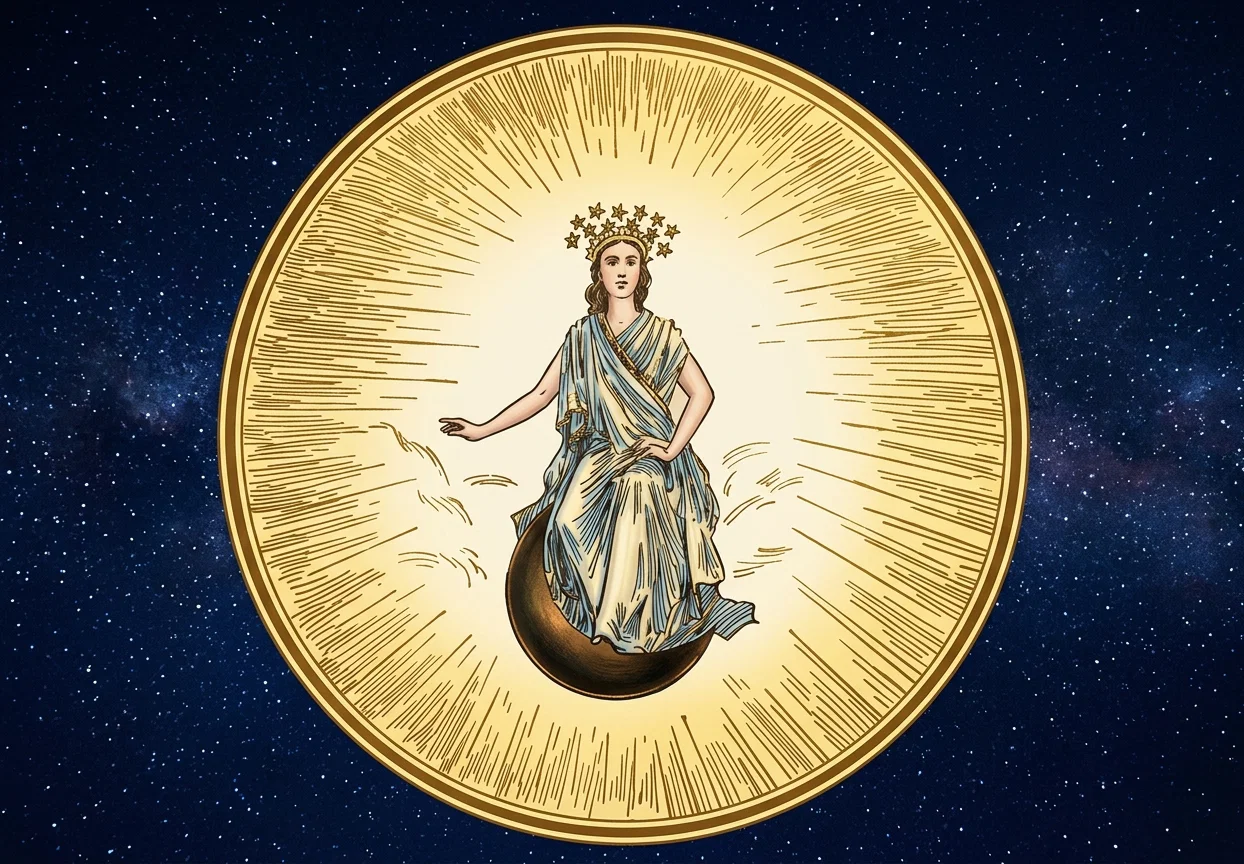
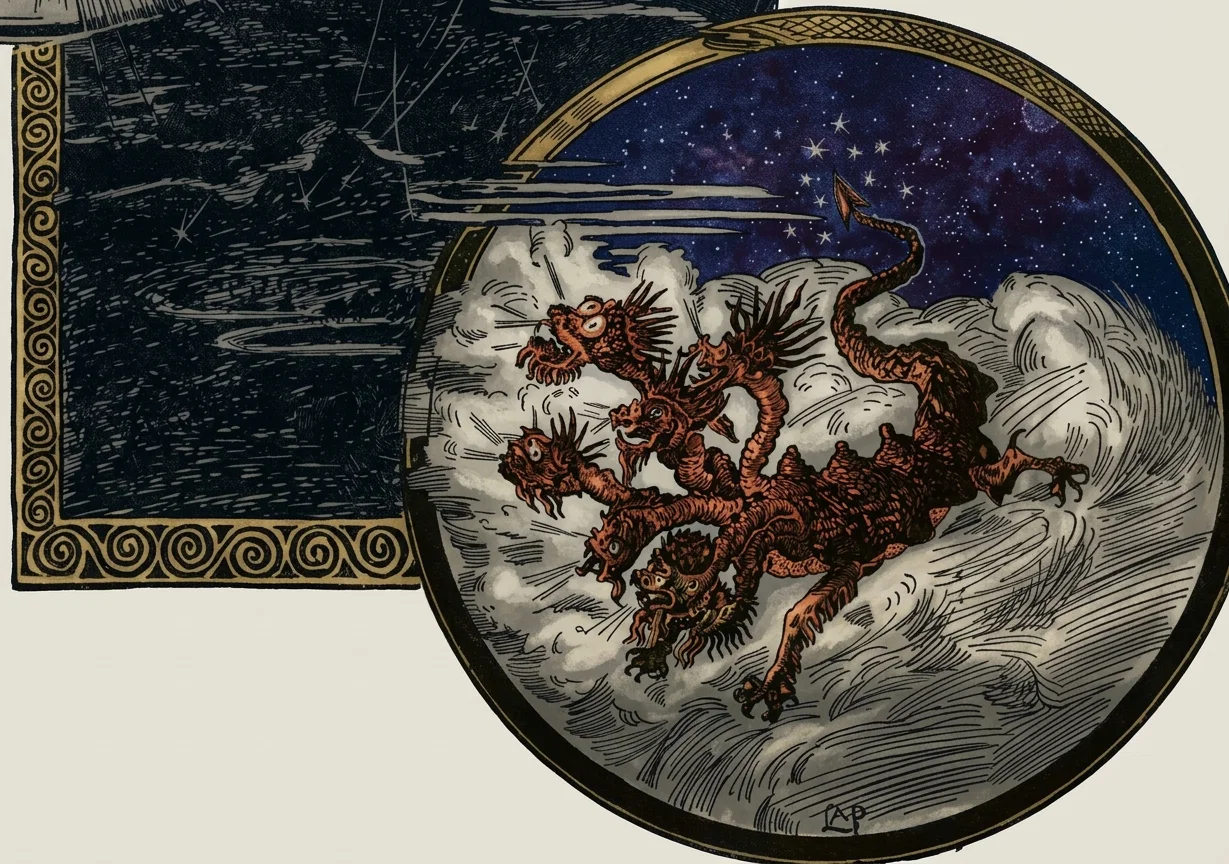
IN our last we considered the first two verses of Revelation 12, in which is given the symbol of the woman representing the church at the time of, and previous to, the first advent of Christ. In this paper we will consider the second symbol of the chapter, the dragon, in his relation to the woman. Of that symbol the prophet says:—
"And there was seen another sign in heaven; and behold, a great red dragon, having seven heads and ten horns, and upon his heads seven diadems. And his tail draweth the third part of the stars of heaven, and did cast them to the earth." Verses 3, 4, R. V.
Of the meaning of this symbol of the dragon we are not left in doubt; for the ninth verse expressly calls him "the old serpent, he that is called the Devil and Satan." It is the great adversary of God, hence of the church; the one who seduced our first parents in the Garden of Eden, the accuser of the angels and God's people, the destroyer and corrupter of all good. "Satan" means "adversary," and "Devil" means "accuser," "slanderer;" and the term "old serpent" carries us immediately back to the deceiver of mankind in the garden of God. The record goes back farther than this to his rebellion in the beginning, when he "drew after him the third part of heaven's sons."
Satan was not always the adversary and the accuser of God and his people. He was once an angel of light in heaven, bearing a name indicative of his nature. The prophet Isaiah, introducing him first as king of Babylon (Isa. 14:4), thus speaks of his fall:—
"How art thou fallen from heaven, O Lucifer ["Day-star," or "Light-bringer"], son of the morning! how art thou cut down to the ground, which didst weaken the nations!
For thou hast said in thine heart, I will ascend into heaven, I will exalt my throne above the stars of God; I will sit also upon the mount of the congregation, in the sides of the north; I will ascend above the heights of the clouds; I will be like the most High." Verses 12-14.
The king of Tyre is the figure by which another prophet introduces him, the earthly king being called the prince of Tyre (Eze. 28:2). Thus is his past glory, his sin, and his future doom described:—
"Thus saith the Lord God: Thou sealest up thesum ["measure," margin], full of wisdom, and perfect in beauty. Thou wast in Eden the garden of God; every precious stone was thy covering, the sardius, the topaz, and the diamond, the beryl, the onyx, and the jasper, the sapphire, the emerald, and the carbuncle, and gold; the workmanship of thy tabrets and of thy pipes was in thee; in the day that thou wast created they were prepared. Thou wast the anointed cherub that covereth; and I set thee, so that thou wast upon the holy mountain of God; thou hast walked up and down in the midst of the stones of fire. Thou wast perfect in thy ways from the day that thou wast created, till unrighteousness was found in thee. By the multitude of thy traffic they have filled the midst of thee with violence, and thou hast sinned; therefore have I cast thee as profane out of the mountain of God. . . . Thine heart was lifted up because of thy beauty, thou hast corrupted thy wisdom by reason of thy brightness. . . . Therefore have I brought forth a fire from the midst of thee, it hath devoured thee, and I have turned thee to ashes upon the earth in the sight of all them that behold thee. All they that know thee among the people shall be astonished at thee; thou art become a destruction, and thou shalt never be any more." Verses 12-19, R. V., margin.
These scriptures, with others which might be given, show the exalted position and nature of Lucifer before his fall. He was "full of wisdom and perfect in beauty," filling up the measure of created perfection, the highest of all created beings, even next to the Son of God, the One who created. But looking upon the beauty and wisdom and perfection which God had bestowed upon him, he ascribed it all to himself. His heart became lifted up. The free will and choice which God gave him—which Infinite Wisdom must give to every intelligent being in whom character is perfected—he turned to selfish ends instead of using to God's glory. He exalted himself above the other angels. "I," said he, "will ascend above the heights of the clouds," the hosts of angels that surround God's throne; "I will exalt my throne above the stars [the angels] of God;" "I will be like the Most High."

What His Exaltation Meant.

But all this meant the destruction of the Almighty and the ruin of the universe, which can only be maintained by the character of love. "God is love;" and his law is the law of love. He demands obedience, but it must be willing obedience, the obedience of love. The loyalty of love, of tested, willing obedience, will ever endure. Satan chose selfishness instead of unselfishness, hatred instead of love, sin instead of holiness, iniquity instead of righteousness. He thought it would exalt him, but it wrought his ruin, and the ruin of one-third the angelic host—"the stars of God"—whom Satan drew after him, or, as the Revised Version has it, "draweth the third part of the stars of heaven." It is a gradual fall; it did not take place all at once; the casting to the earth did not come in the beginning of his rebellion. "God is love," unchangeable love; and as this love has moved God to do all in his power to save man, we know that he did all he could to save Lucifer, the day-star, and all the others affected by him. But this Lucifer in his pride rejected, and in consequence fell, drawing a third of the angels with him.

Satan's Attitude toward God's People.

The dragon had seven heads and ten horns. This is not as Satan exists, but it represents him in his attitude toward the woman and his work respecting her. So Christ is represented by "a lamb having seven horns and seven eyes," having in himself the perfection of power and wisdom indicated by the number "seven." (Rev. 5:6.) The dragon is a persecutor of the woman. (Rev. 12:9.) But he is not permitted to do this as a spiritual being, a fallen angel; God does not suffer it. He must persecute the church, if at all, through other agencies, and those other agencies are represented by the heads through which Satan promulgated persecuting decrees. They must therefore refer to those governments which Satan has at different times perverted and ruled, in order that he might defeat God's plan. They are the great world empires which have persecuted and endeavored to blot out the church of God during past ages, from the beginning of the captivity of the daughter of Zion, and which will persecute and endeavor to destroy God's people till the coming of Christ the Deliverer. These heads are successive, not contemporaneous, as will appear in our study later. The horns are contemporaneous, that is, they represent earthly kingdoms existing at the same time.

The Dragon and the Woman.

"And the dragon stood before the woman which was about to be delivered, that when she was delivered, he might devour her child." Rev. 12:4.
The dragon, we have seen, represents Satan and his control over earthly powers. The woman represents the church of God. The child to be born is the Deliverer, Jesus Christ; for he was to rule all nations with a rod of iron, referring directly to the Father's promise to the Son predicted in Ps. 2:8, 9: "Ask of me and I shall give thee the heathen ["nations," R. V.] for thine inheritance, and the uttermost parts of the earth for thy possession. Thou shalt break them with a rod of iron; thou shalt dash them in pieces like a potter's vessel." This refers to the executive judgment against the wicked, when the priestly reign of Christ upon his Father's throne is finished, and the people of earth have forever rejected the salvation offered them in Christ. (Compare the following scriptures: Ps. 110:1; Heb. 8:1; Zech. 6:12, 13; 1 Cor. 15:24-28; Rev. 3:21.) Christ is now reigning on his Father's throne, and gathering out of all nations a people for his name, materials for his temple, subjects of his everlasting kingdom; when he comes again, after he has accomplished his priestly work, he will execute judgment upon the wicked, purify the earth cursed by sin, and begin his eternal reign with all his saints, upon his own throne and in his own dominion. Those who now let his grace reign in their hearts will then reign with him in glory.

Satan Waiting the Child.

When man first fell, he yielded himself to Satan. As Adam was given dominion over all the earth (Gen. 1:26, 27), under God, of course, when he yielded, he yielded all under him. Satan became ruler of the world by becoming ruler of man. Satan was lord and man was slave. God's design was and is that righteousness shall dwell in human flesh—righteousness incarnate. So it would have been had our first parents continued faithful. When man yielded to Satan, sin and Satan became manifest in the flesh, sin became incarnate, ruling the flesh. The kingdom could be won back only by man (to the number designed of God in the beginning) yielding to God and letting righteousness reign. This would be the driving out of Satan in the very citadel of his earthly kingdom. This work was undertaken by the Eternal Son of God,

Who Gave Himself,

an infinite sacrifice, to save the fallen. He laid aside his glorious and divine beauty, and took upon himself the flesh of fallen man. He did this in purpose in the beginning; he did it in fact when he was conceived and born of woman. And so God promised to sinful, sorrowful, repentant man a Saviour, a Deliverer, a Conqueror of Satan, speaking it even unto the old serpent, when it would seem that man's case was hopeless and Satan and sin forever triumphant: "I will put enmity between thee and the woman, and between thy seed and her seed, it shall bruise thy head, and thou shalt bruise his heel." (Gen. 3:15.) Satan might bruise and wound the people of God, and thus seem to triumph; but the Seed would bruise the head, would eternally destroy the serpent and the sin. (See Rom. 16:20.)

The Purpose of the Evil One.

Knowing that the Saviour of men, the Son of God, whom he had known and hated in heaven, would come in the likeness and weakness of sinful flesh, the devil, the old dragon, resolved to destroy the race, ay! the universe by destroying the One who had undertaken the vindication of God's character of love, and the salvation of sinners, those who could not save themselves, but were willing to be saved by love. As the human race were doomed to death by the first Adam, Satan determined that they would be finally destroyed by the destruction of their second Head, the Second Adam. Henceforth he would work to that end. He would deceive the world as to the character of God. He would frustrate and pervert every plan of God, and accuse God of its imperfections. He would bring calamity and death, and induce men to lay these to God's charge. He would induce all he could to sin, and thus so weaken them and blind them to righteousness that they would not accept the Christ when he should come. He would devise false gods and false religions of passion and lust as substitutes for the living and true God, and his religion of purity and life. But more than all would he wait before the woman that he might destroy the Holy Child.

Hopes and Promises.

Eve thought when Cain was born that she had gotten "the Man from the Lord," "the Man-Jehovah" (Gen. 4:1, Spurrell); but Satan overcame him, and the hope of the mother became the true child of the first murderer. It seemed that her hope revived when Seth was born (verse 25), but she was doomed to wait. Lamech seemed to have the same hope concerning Noah (Gen. 5:29), but disappointment, in a measure, came, and the curse rested still more heavily upon the earth.
After the flood, the first promise recorded, concerning the Seed's coming through any special family or line, was that given to Abraham. He should be the father to the promised Seed. Abraham had two sons—Ishmael and Isaac—Isaac was chosen. Isaac had two sons—Esau and Jacob—Jacob was chosen. Jacob had twelve sons; Judah was chosen. None of the others were rejected of God for salvation; nor was the salvation of those chosen assured; they were chosen as the earthly progenitors of the Messiah. Later on, of the families that sprang from Judah, Jesse was chosen. Of Jesse's sons, David was chosen, and of David's sons, Solomon.
We can imagine with what interest the arch-enemy read and heard these promises. How he plotted against those families and tribes. How he endeavored to deceive and lead them astray, and how finally by transgression greater than the heathen, the tribe of Judah was carried captive to Babylon. As long as the daughter of Jerusalem retained her kingdom and power she did not mourn. But when her walls were broken down, her beautiful temple burned, her cities deserted, and she herself carried captive, she hung her harp on the willow by the waters of Babylon and wept over the past, and travailed in birth for the Man child, the Saviour. Here the birth pangs began, as we saw last week, and as indicated by the prophet: "Now why dost thou cry out aloud? . . . for pangs have taken thee as a woman in travail. Be in pain, and labor to bring forth, O daughter of Zion, like a woman in travail; for now shalt thou go forth out of the city, and thou shalt dwell in the field, and thou shalt go even to Babylon." Micah 4:9, 10. See also chapter 5:2, 3; and the whole of Lamentations.
From this time forth the daughter of Zion—the church of God—was in travail. True she was delivered from Babylon, but she was still subject to the powers of earth. While many rejoiced at the building of the second temple, many also wept (Ezra 3:11-13; Hag. 2:3); for the glory had measurably departed till the temple should be glorified by the presence of the Desire of all Nations (Hag. 2:7), who should lead the elect of Israel to larger liberty and greater glory. Under the domination of the Babylonian, Medo-Persian, and Grecian empires the woman longed for her Child. A century and a half of the Pagan Roman passed away. Still the church travailed in pain and expectancy and the adversary waited. With what intense interest he must have noted the promises concerning John and Jesus. We can see his purpose of destruction in the full inn at Bethlehem, and the turning out of Mary, that if possible her child might be destroyed through exposure of the mother to the inclemency of night weather. Failing in this, he stirs up the minions of Rome through jealousy and envy. To Herod came the message from the wise men: "Where is he that is born King of the Jews? . . . we . . . are come to worship him." (Matt. 2:2.) "But," suggested Satan to Herod, "are not you the king of the Jews? Does not the kingdom belong to you and your successors?" Thus through pride, envy, and jealousy, the spirit which controlled him in heaven, Satan, the dragon, stirred up the minion of Rome against Christ, and the result was that Herod "sent forth, and slew all the children that were in Bethlehem, and in all the coasts thereof, from two years old and under" (verse 16), in order that he might destroy the Man child. But the angels of God frustrated his purpose, and his plans were defeated. The Child was preserved for his appointed work, grew to manhood, manifesting in his perfect life the perfect law of God (Luke 2:52), righteousness incarnate.
(To be continued.)

Strength for the Way

"It is God that girdeth me with strength, and maketh my way perfect. He maketh my feet like hinds' feet, and setteth me upon my high places."

"THE DECADENCE OF THE DECALOGUE."

THE above is the heading of an editorial article in the New York Observer of September 10, which opens thus:—
The Ten Commandments have never been popular. If the Decalogue had ever at any period in history been submitted to public suffrage it would have been rejected by a decided majority. All the people would not have said, "Amen!" to it. The Decalogue is too inclusive, insistent, imperative for the average man. There has always existed in the human heart a repugnance to legalistic searchings. The impulse is to run from the glare of Sinaitic burnings, and to take refuge in the dark depths of a cavernous oblivion. . . . There are not wanting many evidences of a decadence of the Decalogue. Whatever limitations and failures may have characterized the religious teachings of half a hundred years ago, it certainly can not be asserted that "the old theology" failed in faithfulness to the cardinal doctrines of morality. Youth was grounded in the fear of God, and ingrained with the words and temper of the moral law. But that contemporaneously with the coming of more "genial" and congenial styles of teaching (in and out of the pulpit), there has lapsed in many quarters the habit of insistence upon the fundamental moralities of life as these are tersely expressed in the Ten Commandments, can not, we fear, be successfully disproved. . . . And the point may well be raised whether in America at the present day there is not a lamentable lack in many homes and institutions of definite and insistent teaching as to the rudimental requirements of the essential moral law of God which changes not from age to age, tho the prophet's voice has long since ceased to speak from rugged Sinai. (Italics ours.)
So much concerning the condition of things as regards the people's respect for the Decalogue and its influence upon them now. The Observer, however, we are glad to know, does not believe in this setting aside of the Decalogue. It continues:—
We do not mean by this, of course, to imply that the Ten Commandments can be extinguished, however neglected. The decadence of the Decalogue is not its discontinuance. The guarantees of morality in the character of God himself, are impossible of destruction at the hands of men.
The Observer then speaks of the "many millions . . . who are doing all they can to postpone the millennium, if not to make it altogether impossible." It refers to the souls unsaved, and the sad facts presented in the increase of criminals, and thus concludes:—
The Ten Commandments appear to have little meaning for large numbers of our people. Defalcations, trickeries in trade, repudiation of debts, public and private, to say nothing of the long list of crimes due to intemperance as a primary cause, and the depravities of vice, all attest the deplorable consequences of failing to generally enforce the principles of those Ten great Words which God spake solemnly on Sinai, and which he has never yet recalled.
All this is true in a general way. Let us kindly call the attention of our Christian brethren of every denomination to a specific cause of "the decadence of the Decalogue." We do not do this in the way of censure or condemnation, but by way of appeal. The Decalogue, "which God spake solemnly on Sinai, and which he has never recalled," expressly enjoins: "Remember the Sabbath day, to keep it holy." That we may know to what day this applies, it clearly declares: "The seventh day is the Sabbath of the Lord thy God." See Ex. 20:8-10. That this means the seventh day of the week is evident from Matt. 28:1; Mark 16:1, 2; Luke 23:56; 24:1. Granting this, as it seems to us every honest person must, what must be the effect upon the people generally concerning the other precepts of the Decalogue, when professed ministers of Christ, teachers of truth, and preachers of the Gospel, openly teach and contend that God did not mean what he said when he enjoined, "Remember the Sabbath day, to keep it holy," and declared, "The seventh day is the Sabbath of the Lord thy God"? If the Lord does not mean what he says, when he declares that "the seventh day is the Sabbath," does he mean what he says when he declares in the same document, "Thou shalt not steal," "Thou shalt not kill," "Thou shalt not commit adultery"? Is not the Fourth Commandment as much the word of God as the Sixth, or Seventh, or Eighth? When the recognized teachers of religion and morality show by teaching and practice that the Fourth Commandment has little meaning, why should his trusted hearers think otherwise with respect to the Seventh or Eighth? These are solemn facts and questions. Is it not to this very thing that Inspiration refers in connection with the prediction of the great and dread second coming of "our God" (Ps. 50:1-3), when it says:—
"What hast thou to do to declare my statutes, or that thou shouldest take my covenant in thy mouth? Seeing thou hatest instruction, and castest my words behind thee. When thou sawest a thief, then thou consentedest with him, and hast been partaker with adulterers. Thou givest thy mouth to evil, and thy tongue frameth deceit." Verses 16-19.
If one teaches that it is right to kill, that is, to transgress the Sixth Commandment, is he not a partaker with adulterers, those who transgress the Seventh Word? Does not the same principle hold true of the Sabbath commandment as well? Did not the same God that spoke one speak all? Truly he did. And he declares to all who transgress his eternal law:—
"These things hast thou done, and I kept silence; thou thoughtest that I was altogether such an one as thyself, but I will reprove thee, and set them in order before thine eyes. Now consider this, ye that forget God, lest I tear you in pieces, and there be none to deliver." Verses 21, 22.
Would to God there was loyalty to him in every respect on the part of all his professed followers, then would they be a power for morality in the world. "Ye are my friends," says Jesus Christ, "if ye do whatsoever I command you." "Why call ye me Lord, Lord, and do not the things that I say?"

The Catholic Denial of Faith

CATHOLICISM vs. CHRISTIANITY. NO. 3.

BY ALONZO T. JONES.
LAST week we considered the free salvation of God by the faith that is the free gift of God, the faith that works by love.

The Catholic Denial of Faith.

Now of this faith it is the boast of the Catholic Church that she knows nothing. This is the very doctrine of faith, and of justification by faith, which produced the Reformation and made original, genuine Protestantism. And of this faith, and of the Reformation which was produced by it, the Catholic Church speaks thus:—
As in revolutions the leaders try to gain the people over by the bait of promised independence, so at the time of the so-called Reformation—which was a revolution against church authority and order in religion—it seems that it was the aim of the Reformers to decry the people under the pretext of making them independent of the priests, in whose hands our Saviour has placed the administering the seven sacraments of pardon and of grace.
They began, therefore, by discarding five of these sacraments. . . . They then reduced, as it appears, to a matter of form, the two sacraments they professed to retain, namely, Holy Baptism and the Holy Eucharist. To make up for this rejection, and enable each individual to prescribe for himself, and procure by himself the pardon of sins and Divine grace, independently of the priests and of the sacraments, they invented an exclusive means, never known in the church of God, and still rejected by all the eastern churches and by the Roman Catholics throughout the world. . . . They have framed a new dogma, not to be found in any of the creeds, or in the canons of any general council; I mean, the new dogma of Justification by Faith Alone, or by Faith only.
Luther invented, as we have said, this doctrine, and was the first to affix such a meaning to the word faith. . . . And from that period only there existed men who saw in the word "faith," occurring so frequently in Holy Scripture, that which has never been seen by the fathers, doctors, saints, and by the whole Church of God.—Catholic Belief, pp. 365, 366, 374.

The Faith of the Creed.

THESE extracts are enough to show, and they declare plainly enough, that the Catholic Church does indeed know nothing of the faith which is of God, and which, because it is of God, bears in itself sufficient power and merit to justify and save the sinner who will allow it to work in him the righteousness of God. What meaning then does she affix to the word "faith"? Here it is:—
These texts, all of which refer to saving faith, prove beyond a doubt that not trust in Christ for personal salvation, but the faith of the Creed, . . . is the faith availing for justification.—Ib., p. 370.
But who made the creed?—Men, and men only. Constantine was the chief agent in the making of the original Catholic creed, the Nicene Creed. Men being the sole authors of the creed, and "faith" being "the faith of the creed," it follows at once that that faith is solely of themselves, of their own manufacture, and not the gift of God at all, and is therefore not true faith at all. For the true faith, the faith that really saves, is "not of yourselves, it is the gift of God." And as men only made the Catholic creed, and as Catholic faith is only "the faith of the creed," it is as certain as anything can be that the Catholic faith is a base counterfeit that she would pass off upon all the world, and by force too, to supplant the true faith.
It is not enough, however, to say that it is a mere human invention; it comes from lower down than that. And she herself has given us the means of tracing it to its original. Here it is:—
By faith is not meant a trust in Christ for personal salvation, but evidently a firm belief that Jesus is the Messias, the Christ, the Son of God, that what is related of him in the Gospel is true, and that what he taught is true.—Ib., p. 369.

Examples of This Faith.

Now there are recorded in the Scriptures several examples of this same identical "faith" here defined. And now, as we read these examples, and have the plain word of God as to what they were who held this "faith," we can have no difficulty in knowing the real nature and origin of the Catholic faith, "the faith of the creed."
Here is one: "And in the synagogue there was a man, which had a spirit of an unclean devil, and cried out with a loud voice, saying, Let us alone; what have we to do with thee, thou Jesus of Nazareth? Art thou come to destroy us? I know thee who thou art; the Holy One of God. And Jesus rebuked him, saying, Hold thy peace, and come out of him. And when the devil had thrown him in the midst, he came out of him." Luke 4: 33-35.
Here is another: "And unclean spirits, when they saw him, fell down before him, and cried, saying, Thou art the Son of God. And he straitly charged them that they should not make him known." Mark 3: 11, 12.
And here is another: "And when he was come to the other side into the country of the Gergesenes, there met him two possessed with devils, coming out of the tombs, exceeding fierce, so that no man might pass by that way. And, behold, they cried out, saying, What have we to do with thee, Jesus, thou Son of God? Art thou come hither to torment us before the time?" Matt. 8: 28, 29.
And yet another: "Then certain of the vagabond Jews, exorcists, took upon them to call over them which had evil spirits the name of the Lord Jesus, saying, We adjure you by Jesus whom Paul preacheth. And there were seven sons of one Sceva, a Jew, and chief of the priests, which did so. And the evil spirit answered and said, Jesus I know, and Paul I know; but who are ye?" Acts 19: 13-15.
In these examples there is every element of the "faith" above defined and set forth as the "saving faith" of the Catholic Church. Every one of these devils showed "evidently a firm belief," and actually proclaimed it, "that Jesus is the Messias, the Christ, the Son of God"! And that legion of them that found a home with the swine and set the whole two thousand of them crazy, showed also "evidently a firm belief that what is related of him in the Gospel is true." For from the beginning of the Gospel in this world it had been related of him that he should bruise the devil's head; and it was indeed related of him that he should destroy the devil. And that this legion of devils had "evidently a firm belief" that this is true is clearly shown by their terrified inquiry, "Art thou come hither to torment us before the time?" They thoroughly believed that this time of torment was coming, as it had been related; and what they feared now was that it was to befall them "before the time."
Not only do these examples supply every element of that which is authoritatively defined and set forth as Catholic "saving faith," showing it to be but the faith of the devils; but the Scripture plainly states that that is just the kind of faith that it is. Here are the words: "Thou believest that there is one God; thou doest well; the devils also believe, and tremble." James 2: 19. There is the plain word of the Lord, that this "faith" that is proudly set forth as the Catholic faith is simply the faith that the devils have. And it does not save them. It has no power to change their lives. They are devils still. And, moreover, Jesus forbade them to preach this "faith."

Trusting a Dead Faith.

THIS is precisely "the faith of the creed." It is of themselves and not of God. And being only of themselves, it is impotent to bring to them any virtue to change the life; it is powerless to work in them any good. Being incapable of working, it is a faith that is dead. And those who hold it, realizing that it is lifeless and so unable to do anything for them, are obliged to give it the appearance of life by doing great things for it in the multiplication of dead works. For, works that are not of faith, that are not wrought by the faith itself, are dead works. They are worse than valueless, for "whatsoever is not of faith is sin." Any faith that is not able of itself to produce, to work, the works of God in him who professes it, is a dead faith. It is "the faith of the creed." It is the "faith" of the devils. It is the "faith" of the Papacy. And when such "faith" is passed off for Christianity, it is the mystery of iniquity, wherever it is found. And therefore it is that the Scripture, immediately after describing this "faith" of the devils, exclaims: "But wilt thou know, O vain man, that faith without works is dead?" And then cites Abraham and calls to all, "Seest thou how faith wrought with his works, and by works was faith made perfect?" James 2: 20, 22. Thus the works by which faith was made perfect, were wrought by the faith itself. When the faith is living, the works of faith appear just as certainly aswhen the tree is living the fruit appears in its season.
The only thing that will be accepted in the judgment is works. The only works that will be accepted in the judgment are works of righteousness. And the only righteousness that will be accepted or countenanced in any way whatever in the judgment is the righteousness of God. And this righteousness is a free gift to man, and is wrought in man by faith alone—"even the righteousness of God which is by faith of Jesus Christ unto all and upon all them that believe; for there is no difference."
It is true that "the Church" says that "this faith," "the faith of the creed," this faith of the devils, "leads to trusting in Christ, and to all other virtues." But it is a notable fact that it has not done this for the devils. And it is just as notable and just as apparent that "this faith" has not, in all these hundreds of years, led the Catholic Church to trusting in Christ nor to any other virtues.

Jesus Saves from Sin

"Thou shalt call his name JESUS; for he shall save his people from their sins."

GIVE US REPENTANCE.

BY JULIA H. DUFFIE.
"Him hath God exalted with his right hand to be a Prince and a Saviour, for to give repentance to Israel, and forgiveness of sins."
HEAVENLY Prince, exalted One, O, hear us sinners, lost, undone, With hearts as hard as flinty stone; O, give to us repentance!
Our souls to sin so long inured, Our minds in worldly thoughts immured, Our hearts by selfish plans allured, We scarce can feel repentance.
O, pity our poor helpless state, A heart of flesh within create, Thy gracious image there instate; O, grant us, Lord, repentance!
Battle Creek, Mich.
Continue reading: A LESSON FROM GOD'S CHOSEN PEOPLE