Your ShelfYour Projects

Signs of the Times, Vol. 36, No. 17.

PSALM CXI
Earlier text: The Great Threefold Message

Changing Spiritualism

[This article is written from the fullest newspaper clippings on the recent Spiritualists' Convention, and from full notes furnished by our occasional correspondent, Mr. John S. Wightman, and from many years' observation of the movement.—Editor.]
It is noteworthy in how many variations one tune can be rendered by the musician; nevertheless one can readily recognize throughout all these the one unchangeable theme. And, too, it is remarkable how many changes the evil one can ring in on his first great lie to man; yet one can readily perceive through all these the one unvarying falsehood.
Satan is the originator of error. "He is a liar, and the father of it." John 8:44. But of all the lies he has ever told, of all the error he has ever fathered, none has been more uniformly successful in misleading mankind than his first old lie in Eden. His assertion that divinity is man's natural heritage, and immortality his destiny, has ever been the most pleasing fable he could invent for man. It is preeminently Satan's great falsehood, for all error is but a variation of the one old untruth. Through all the ages from that day to this it has been taught in some form or another. It is Satan's masterpiece of falsehood: "Ye shall not surely die. . . . Ye shall be as God."
For the past sixty-five years, especially, modern Spiritualism has sought to actually demonstrate by a series of vague facts that man has enough of divinity in his make-up to survive the grave, and equal God. At the recent Spiritualists' Convention, held at Kansas City, Mo., February 24 to 26, one of their prominent speakers said:
"We are not Spiritualists because of something we have been taught to believe. It is a matter of personal experience. Death is not the end, but the beginning of life. Those phenomena of communicating with those who have passed into the other world are true phenomena. . . . I know it, I know it."
Altho the basic idea of Spiritualism, that death does not end life, is believed by a vast majority of mankind to-day, yet because of its grossness, modern Spiritualism has never been a popular movement. The old idea now, however, is being clothed in new and more attractive garments. Our special correspondent has a word to say on this point that is significant:
"By careful observation, and from some investigation of conditions we are satisfied of one thing,—Spiritualism, as an organization, as an organized force having influence and growing in numbers, is slowly but surely dying. As a psychic force, as a belief, Spiritualism is rapidly gaining ground, winning its converts under some other more plausible and attractive hypotheses, sailing under more attractive banners."
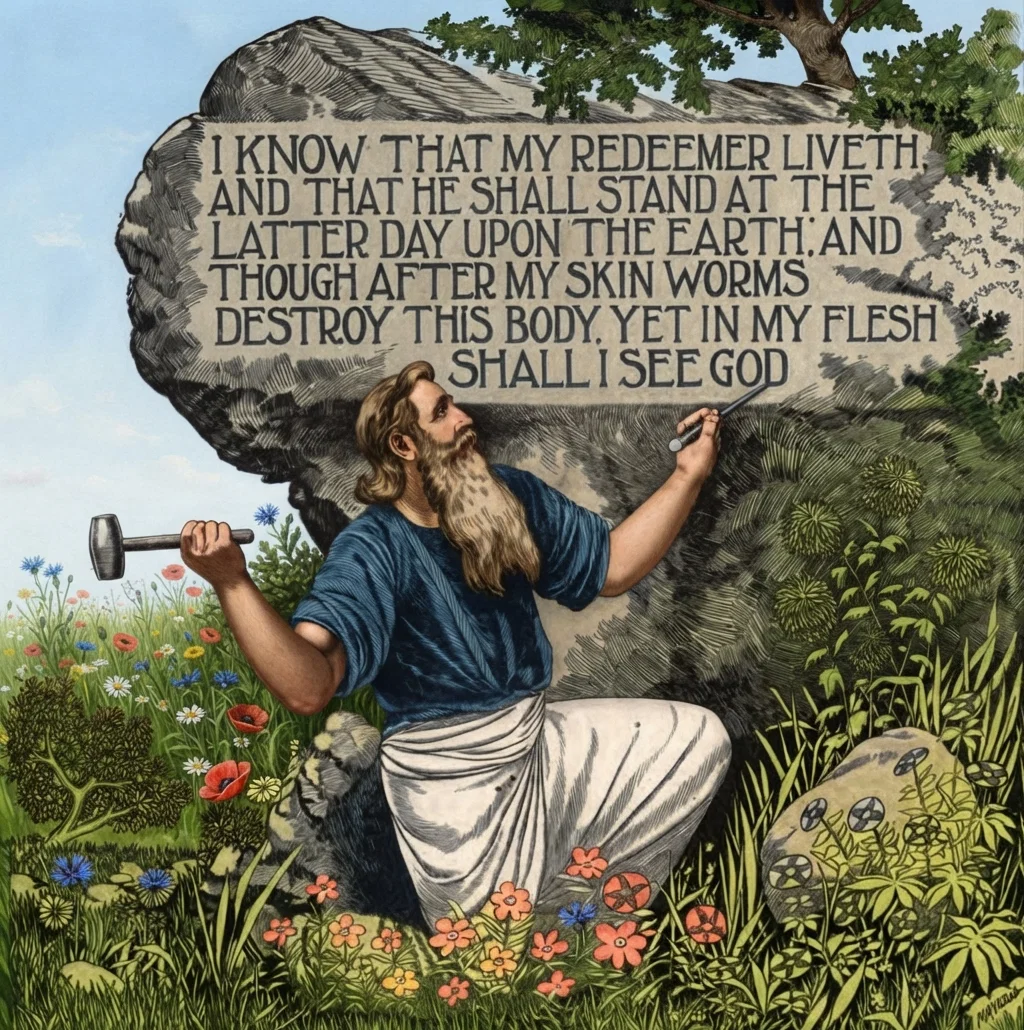
The above words are a part of the expression of the hope of the old Idumean patriarch Job, who wished that they might be "printed in a book" and "graven with an iron pen and lead in the rock forever." See Job 19:23-27. His prayer has been answered and his hope echoed and re-echoed by the faithful in after ages. That hope centers in the resurrection of the dead at the second coming of Christ. It is the only hope of future continued life. 1 Cor. 15:12-23; 1 Thess. 4:13-17.
Modern Spiritualism sees in the work of the Society of Psychical Research both an enemy and an ally: an enemy, because it refuses to credit modern Spiritualism as an organization and is furthermore antagonistic to it; an ally, because it is doing exactly the work as Spiritualism, dealing with the same phenomena precisely, only in far more attractive and seductive guise.
At the convention mentioned above, Dr. George B. Warne, president of the National Spiritualists' Association, said:
"Professor Hyslop and his confrères are not so very far away from us. Our ways are nearly parallel to-day, but like the lengthening reach of rails, they meet and continue on together in the distance. I plead with you to be just a little patient; wait, for Professor Hyslop is nearer, very much nearer, our side of the line than many of you think."
"The Psychical Research Society," said another speaker, "is doing much to disarm the suspicion of the public by their study of the phenomena that attend the spiritualistic seance in the same way that they pursue their studies of physical phenomena."
In one of his lectures during the convention, Dr. Warne admitted that "the propagation of Spiritualism may be taken out of our hands by others receiving communications from the spirit world."
Christian Science, New Thought, Psychical Research, Pantheism, and the like, are teaching the old claim of man's divinity and deathlessness in a form far more attractive to the mass of mankind than modern Spiritualism can do it. They are winning thousands where the other captured dozens.
But the basic belief of these more popular organizations is identical with that of Spiritualism. And in this connection it is intensely interesting to read a statement made in a book issued by the Pacific Press, the publishers of this periodical, more than twenty years ago:
"Spiritualism is now changing its form, and, veiling some of its more objectionable features, is assuming a Christian guise. But its utterances from the platform and the press have been before the public for nearly forty years, and in these its real character stands revealed. These teachings can not be denied or hidden."
From another page of the same book (page 588) we quote:
"As Spiritualism more closely imitates the nominal Christianity of the day, it has greater power to deceive and ensnare. Satan himself is converted, after the modern order of things. He will appear in the character of an angel of light. Through the agency of Spiritualism, miracles will be wrought, the sick will be healed, and many undeniable wonders will be performed. And as the spirits will profess faith in the Bible, and manifest respect for the institutions of the church, their works will be accepted as a manifestation of divine power."
Thus the great delusion is becoming more effective in misleading souls as its forms more nearly approach a likeness to Christianity. But the new order of things is only a new and more seductive way of telling the old false story, the story that was first uttered by the evil one in Eden. They are all in one form or another an assertion of man's inherent divinity. Each and all claim anatural immortality for man, and that every man has enough of the divine in him, if developed, to gain for him salvation. They all accept as much of the Bible as suits their purpose, and reject the rest. Claiming man to be divine, Jesus Christ as the Redeemer is set aside, and God Himself brought down on a level with humanity.
"Only under Spiritualism," said Dr. Grimshaw, "can man reach his highest moral development. For Spiritualism teaches us that we must all pay our own debts." But this is also the basic teaching of Christian Science, Modern Thought, Theosophy, and similar teachings. All of these declare that for us to push off our misdeeds on another is unfair. Ignoring the fact that the bankrupt can not pay, these declare that each of us must pay our own moral debts.
Therefore, all of these forms of spiritualistic thought have no need of a divine Redeemer or of a supreme God. We read in the published reports of the Spiritualists' Convention that "Spiritualists have a hymn-book in which reference is made to angels instead of Jehovah and Christ. They have changed the future world from an absolute monarchy to a democracy where all spirits are equal." One of their speakers (Dr. Grimshaw) said: "We have only taken from the head of Jesus Christ the false crown of godship and in its place have set the crown of noble manhood and goodness."
The idea of an inherent divinity in man, a divinity that makes a man immortal, that enables him to be his own saviour, that fits him for the society of the angels, that stands him on an equality with Jesus Christ, and that constitutes him a part of God, is the confessed teaching of Spiritualism, but not necessarily of Spiritualism in its grosser form as it has stood recognized throughout the past. These same are also the fundamental tenets of a Spiritualism, or spiritism, which as an angel of light is now deluding thousands who have only fear or contempt for the grosser form.
We can not any of us afford to be misled by these delusions, by these various and specious phrasings of the old falsehood of the tempter. We trust that all our readers will give close attention to the articles on Spiritualism from the pen of Professor Rine, now appearing in these columns. And above all things let us study our Bible, for here only can we find definite truth regarding man and his destiny. Thus and thus only shall we be put on guard against those "spirits of devils, working miracles, which go forth unto the kings of the earth and of the whole world, to gather them to the battle of that great day of God Almighty." Rev. 16:14. R.

Revolution in Turkey

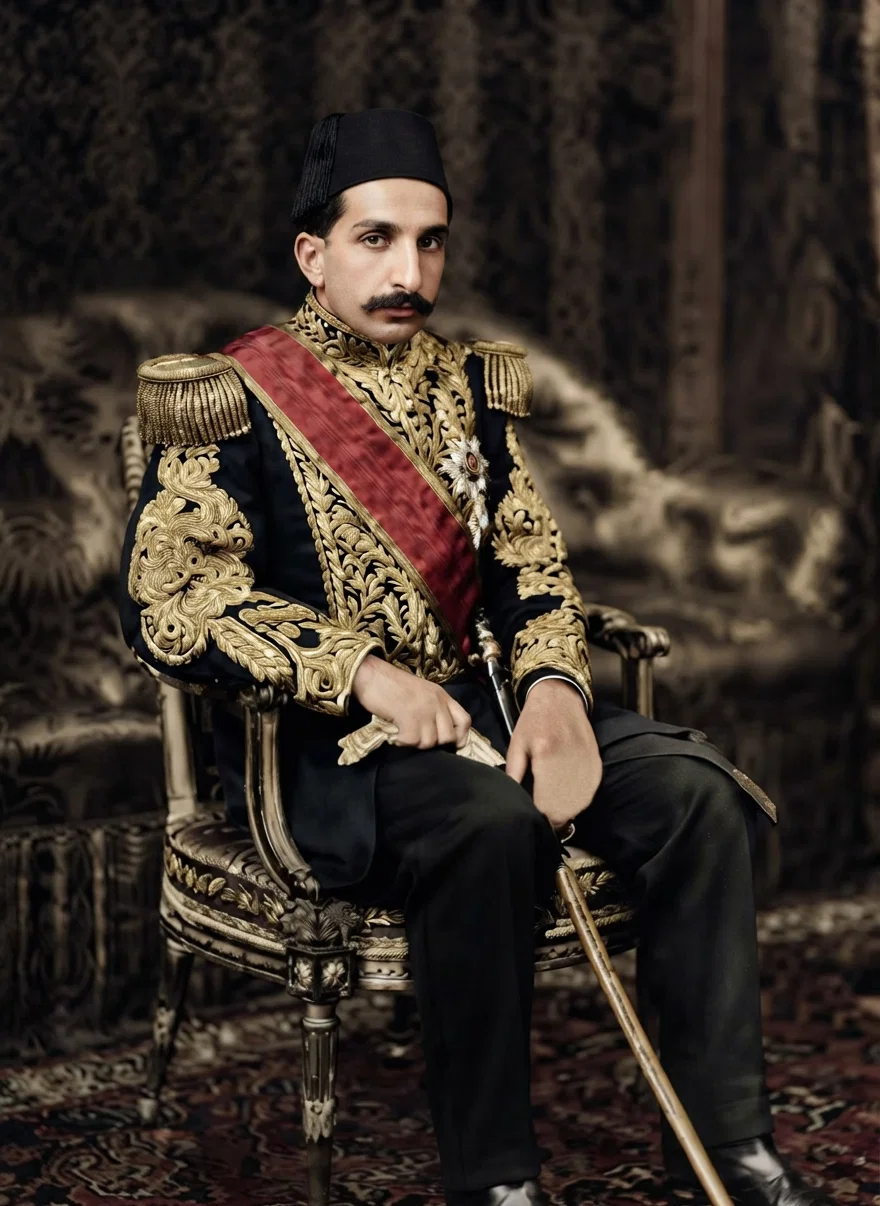
SINCE July, 1908, Turkey has been under the control of what is termed the Young Turks party, or Committee of Union and Progress, which at that time, supported by the Third Army Corps, compelled the Sultan to promise a constitution and a parliament. In February the Young Turks compelled the Grand Vizier, Kaimil Pasha, and his cabinet to resign, and placed Hilmi Pasha in the position. But it is evident that those statesmen who have all along questioned the possibility of success in the fight for a constitutional government for Turkey are right in their fears. There has been a growing dissatisfaction with the Young Turks regime, which on April 13 reached a climax in the mutiny of a large part of the troops against the minister of war. The members of the cabinet were compelled to resign; the Sultan accepted their resignations, and a new cabinet has been formed. Seventeen were killed and about thirty wounded in the riot which occurred about the government buildings. The Young Turks party is contending for civil and religious liberty, but with the mixture of races in Turkey, with the differences in religion and customs, there is little promise of a speedy establishment of a constitutional government.
The Sultan of Turkey

Debate Between Dickie and Rose on Prohibition

A SERIES of five debates on Prohibition was recently arranged for between Hon. David S. Rose, mayor of Milwaukee, and Prof. Samuel Dickie, president of Albion College, on the challenge of the former. The first of these was held in Milwaukee, March 26, before an audience of 4,000. Admission was by ticket, free, but "some men paid $5.00 or more for seats. Judge Tarrant presided."
Professor Dickie's power as a platform orator is well known. Mr. Rose read his speech from manuscript, and endeavored to base his argument in part on Bible authority. He claimed that when Prohibition prevailed, mortality, insanity, drunkenness, divorce, pauperism increased. From meager reports, we should gather that Professor Dickie based his argument on an economic basis, and argued against liquor selling as a producer of crime, an enemy of law and order.
The Associated Press reports are quite colorless, and the opposing sides seem to be quite evenly balanced. But from an editorial in the "Milwaukee Free Press," of March 28, Mayor Rose had much the worst of it. We quote:
"It became very evident to the unbiased and thoughtful listener at the Rose-Dickie debate Friday night that the antagonists of the Prohibition movement will have to adopt a vastly different line of argument than that employed by Mayor Rose if they wish to make headway against the facts and figures of its 'dry' advocates.
"The latter have the economic argument so potent and convincing, as applied both to the manufacturers and consumers of intoxicating beverages, as well as the non-participants, that the champions of regulation will have to elaborate some line of attack in an equal degree and effectiveness if they would not continue to come out of the small end of the horn in every verbal battle.
"The stock arguments of anti-Prohibition from time immemorial, such as the hypocritical reference to the Bible, the pathetic appeal in behalf of personal liberty, the stress laid on the value of the liquor traffic as an economic and industrial factor; all these will no longer prevail against the modern bulwark of Prohibition, which declares the liquor business to be not a wealth producer but a wealth consumer, which creates nothing valuable; affords a low average of employment, and taxes the citizen not only directly through his pocketbook, but indirectly through the crimes and diseases for which it is responsible.
"It was observed at the debate in question that the enemies of the saloon no longer bolster up their argument with sentimental imagery and emotional word play. The Prohibitionists deal with facts—facts either drawn from common human knowledge or the figures and statements of authorities.
"It will not do to attempt their refutation with buncombe, with generalizations and deductions drawn from inconsequential and inapplicable census figures. To argue that because a 'dry' state has more insane than a 'wet' state, Prohibition breeds insanity, is to talk the veriest rot. A clever speaker like Mayor Rose delivered this sort of thing effectively, but it does not last in sober second thought.
"Public sentiment just now is strong against the liquor traffic, and the average citizen will want grounds more relative and convincing than moonshine like this to woo him from the glamor of Prohibition."

A Century of World Changes

The wonderful history-making epoch in which we are living is better appreciated if we illustrate it by some concrete example. The Rev. Thomas Lord, for instance, the oldest minister in the Congregational Church of England, died a short time ago at the age of about 101 years. He lived under five reigning monarchs; he could well remember the celebrations after the battle of Waterloo. During his ministry he preached over ten thousand sermons, drank no spiritous liquors, never used tobacco, and took a large amount of exercise in walking. He certainly saw wonderful changes in the development of the world.

India’s Hoarded Wealth

The hoarded wealth of India is estimated at 300,000,000 pound sterling, or $1,500,000,000, largely of gold alone. It has been stated on good authority that none of the smooth gold bars sent from London to India ever came back. They are hoarded. If they could be induced to invest their money in good securities or in irrigation for the country, it would be very helpful, but that is not the habit of the people. It means congestion and want and trouble. All these are emphasized in times of famine.

Church Tribunals and Civil Courts

A recent decision of the Supreme Court of Nebraska declares that "wherein the civil rights of a priest are not involved, he must abide by the decision of the church's tribunals." In other words, an ecclesiastical court has jurisdiction of ecclesiastical cases, and the civil courts of civil cases; and that is the way that it ought to be. The state has no business to interfere with the actions of a religious body so long as those religious bodies do not injure the civil rights of citizens.

Drunkenness Convictions in Canada

Convictions for drunkenness in Canada have, according to a parliamentary blue book issued March 31, increased in the last ten years 64 per cent. In the year ending September, 1907, there is an increase of 12½ per cent. In the Yukon, where there are saloons, there were fifty-six convictions for every ten thousand of the population. While in Prince Edward Island, a prohibition province, there was only one conviction, yet we are told that prohibition increases crime.

Words Spent on the Tariff

If an internal revenue were laid upon the number of words which Congressmen used over the tariff question there probably would be less of a deficit in the national exchequer. On the tariff debate alone, in one week, more than 600,000 words were printed in the Congressional Record. This is a hundred thousand more than has ever been printed so far as is known, in one week on one subject.

Cuba’s Population Census

A recently completed census of Cuba shows a large gain in the population. In 1907 the population was 2,048,980, an increase from 1899 of 30.3 per cent. Over half of the population live in the rural districts. The area of Cuba is 44,164 square miles, the density of population being in 1907, the official date of the census, 46.4 to the square mile. Two thirds of the population are white; the colored population consists of negroes and Chinese, of whom there were 11,837. Of the voting population, a little less than half are illiterate.

First Impressions of Java

AFTER a very pleasant, interesting and not at all monotonous sea voyage of eighteen days on the S. S. "Airlie," we reached Soerabaya, Java. Four stops of several hours each were made at Brisbane, Cairns, Thursday Island, and Port Darwin. This enabled us to go ashore at different times and do some sight-seeing. With the exception of the first afternoon and night, the weather during the entire voyage was all that could be desired. The captain, crew, and passengers were very kind and affable; we were supplied with an abundance of health foods, and, but for the omnipresent smoker, life on board ship would have been very enjoyable. While the passengers' time was spent in eating, drinking, smoking, reading novels, or doing nothing, we found real pleasure in reading, writing, studying Malay, and translating "Early Writings" into Fijian.
Sunday evening, October 18, we cast anchor in the harbor, a short distance from Soerabaya. Soon punt-like boats, called sampans, were coming out to us from every direction filled with natives. They swarmed around the ship like ants, shouting, jabbering, yelling. They came on board and begged to carry our luggage ashore, but met with disappointment as few wished to go that night. Soon some coal barges came along side, and then there was a great scattering in all directions, some going back to land, while others fastened their boats by ropes to the stern of our ship and waited in them until morning, with the hope of catching the first customers. As it was very hot, we remained on deck, and slept as well as we could under the noise of machinery and the unloading of coal. A large number of ships, steamers, and smaller vessels lay at anchor close at hand, while beyond was the city with its thousands of glimmering gaslights. We could hardly realize that we had at last reached the "land of the people of the East."
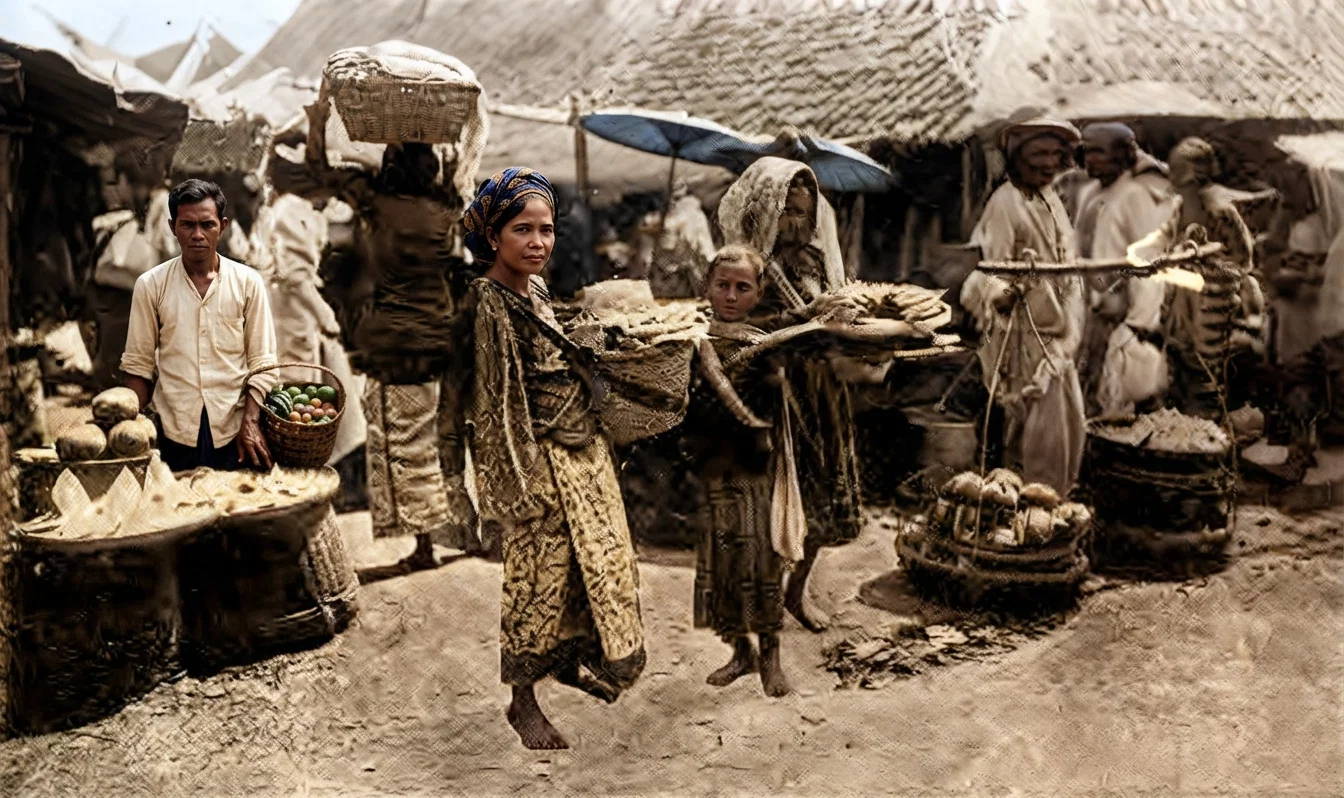
A Market Day in Soerabaya
Early next morning we were pleased to see Brother and Sister Fox, their two sons, Miss Tunheim, Sister Geen Sims, and a lady friend who came on board. Sister Tunheim appeared quite thin and worn as she had just recovered from a fortnight's severe attack of malarial fever.
A River Scene in Soerabaya
Soon ourselves and luggage were transferred to a sampan and we started for the shore. These Malay boatmen take one stroke with the oar while sitting, the next standing, and so on. So they are continually jumping up and sitting down. Soerabaya being on a level with the sea, but little can be seen from the water. Leaving the harbor we ascended a canal or river for a short distance, and landed on the stone steps of a custom house. This river flows through the city and receives some of the drainage of the city, but not all, as most of the drains stay where they are, or go where they will. The water is thick and dirty with filth of every kind. This is no drawback to the natives, however, as we saw many of them enjoying a morning bath. In fact, hundreds of them live on the river in floating bamboo rafts and boats, upon which are rude shelters or huts. Here they cook, eat, sleep, bathe, and wash clothes.
After we were passed through the customs, which was a very easy ordeal, and entered the city, we could have almost declared that we had suddenly fallen off the earth and had landed on a new planet. We hardly knew which way to turn our heads, for everything seemed so startling and strange. But as Brother and Sister Fox had invited us to go with them to their home, and as it is contrary to the custom of this country to walk, our attention was called to the numerous vehicles for hire about the customs building. Here are little two-wheeled, covered docarts, drawn by tiny Arabian ponies, and driven by the brown-skinned Javanese, who sit cross-legged in the front seat, while the passengers sit behind with their backs to the driver. They are not large enough to accommodate our party, so we take a kosong, a four-wheeled carriage with two seats facing each other behind the driver.
It is only seven thirty in the morning, but the streets are thronged with people, shops are open, and business is in full swing. What a motley crowd! Here are rich Chinese merchants, dressed in white European suits with coat buttons made of gold coins, and with long queues, into which is braided either white, blue, red, or black silken thread; common Chinese pedlers with large cone-shaped straw hats, black, baggy pantaloons and coat, trotting along with huge baskets of wares, suspended from bamboo poles carried across the shoulders; small shop-keepers, rolling in fat, and trying to keep cool by dispensing with shirt and coat; Chinese boys, in white coats and military caps, on their way to school. Here come a few Dutchmen on bicycles. The heat does not seem to reduce them in flesh. What crowds of Javanese men and women, and how small they are! But look at the immense loads that the women carry on their heads, and how the men struggle along under huge baskets, boxes, and bales! The men are not much over five feet in height and the women areshorter. The men have long hair coiled in a knob at the back of the neck, and tie up their heads with a colored handkerchief, leaving the corners flaring out like wings behind their ears. The women wear their straight, shiny, black hair combed smoothly back and pinned up in a coil at the back of the head. The men's clothing consists of short coat and a sarong (a piece of cloth fastened around the waist and reaching to the feet), or a pair of cotton knee-pants. The women also wear a sarong, and a bright-colored jacket called a kabaiya, and go bare-headed and barefooted. There are also many tall Arabians, who are Mohammedans we know, by their stiff, handsome turbans, gay sarongs, silk coats, and pointed slippers, turned up at the toes.
There is a tram-line on one side of the street, and here come the tram-cars, three in number, first, second, and third class. They are drawn by a dummy locomotive, and the drivers are Javanese, while the guards are either Eurasians or Javanese. One man on the locomotive spends all his time ringing the bell to warn people of the approach of the tram. We pass a very large, awkward-looking, two-wheeled cart, drawn by two bullocks. It is filled with big, fat pigs, each animal incased within a cylinder-shaped basket, and laid on top of another like a load of wood. We can not but pity the poor things in the bottom of the cart.
After passing a few large buildings and some white Dutch houses, we turn into a narrow street. There are no footpaths either here or in the broader streets. The street is full of vehicles, traveling restaurants, pedlers, etc. Native shops are lined along the edge where the footpaths ought to be. They are only sheds or verandas filled with natives' costumes, tinware, prints, sandals, wooden shoes, and toilet articles. It is very hot, but that is nothing compared with the dreadful and varied smells that greet one at every turn. To the new arrival they are almost unbearable. But one must become accustomed to that if he is to labor in Soerabaya. At first it may put him to the inconvenience of unswallowing the germs he has taken in, but he may finally overcome this difficulty, as the writer has learned by experience.
From this, our first ride, and from all subsequent trips through Java, we conclude that the chief business and pleasure in life of this people is that of eating. No one need go hungry in this country, for in all the alleys, by-ways, and narrow lanes, as well as every few feet along the business streets, are seen numerous eating places, traveling restaurants, fruit and vegetable markets, and drink stands. This peripatetic restaurant affords much amusement to the curious traveler. This consists of a small clay stove, filled with coals, upon which rests a clay cooking vessel, and is suspended from one end of a bamboo pole. From the other end of the pole hangs a small, square cupboard, containing food and dishes. The proprietor rests the pole on his shoulder and trots along the street until he meets some hungry customer, when down goes the restaurant, the coals are fanned into a flame, and in a few minutes a meal is served right in the street. The bill of fare may include chicken or beef soup, dried fish, steamed rice served with all sorts of hot, peppery mixtures, black coffee, and many queer native dishes, nearly all of which are fried in a vessel of boiling oil.
Farther on we see a Chinese merchant sitting by the street-side having his head shaved, while others are extracting with tweezers the few straggling hairs adorning their chins. It seems an unwritten law that a large portion of men must shave, and where nature has failed to supply a growth on the face, they take it from the top of the head. Many new, strange, and startling sights greeted our eyes, but the half can not be told.
At last we alighted from the kosong onto the stone steps of Brother Fox's house. Brother Fox conducts a night-school for Chinese young men, to whom he is teaching English. Later we had the privilege of meeting with these pupils, and Mr. Fulton gave them a Bible-reading on "True Religion Compared with Idolatry," which Brother Fox interpreted into Malay, the language spoken by the many thousands of Chinese of the cities of Java. They are bright-faced, intelligent-looking lads. One who has been employed in a bank is planning to give up his position at an early date to enter the school at Singapore.
While there are many things to interest us in this great city, the matter of greatest interest is how we can carry the third angel's message to these 200,000 people, many of whom are dying of fever and other diseases. Let us pray that God will send forth laborers into this part of the harvest-field. A Dutch worker is much needed for the cities. The workers here need the prayers of God's people. They have great difficulties that these in the homeland know nothing about.

For Children and Young People

GOSPEL PRIMER

This book begins with an attractive alphabet, each letter of which is connected with some Bible scene. Following that the word method of reading is introduced, together with illustrated Bible stories. It contains 128 pages. Price in board binding, 35 cents; cloth, 60 cents. Published in German, Danish, Swedish, and Spanish at the same prices.

MAKING HOME HAPPY

A bright, cheery story in which good, wholesome lessons are taught. Contains 200 pages. Price, in cloth binding, 75 cents.

MAKING HOME PEACEFUL

A companion volume to "Making Home Happy," by the same author. It tells more about Deacon Beardsley's family and how an unhappy home was made peaceful. Cloth binding, 75 cents.

THOSE BIBLE READINGS

By the author of "Making Home Peaceful." A series of practical, helpful, family talks on Bible subjects. The "Readings" in this volume are given in narrative form, and while especially interesting to the younger members of the family, they will hold the attention of every one. Beautifully bound in cloth, 75 cents.

CHRIST OUR SAVIOUR

A graphic account of the birth, death, resurrection, and ascension of Christ, interwoven with many interesting incidents in His life. Contains 182 pages. Price, board binding, 50 cents; cloth, 75 cents. Published in German, Danish, Swedish, and Spanish at the same prices.

UNCLE BEN'S COBBLESTONES

Familiar talks with boys and girls about such common things as air, water, sunshine, fire, smoke, glass, coal, salt, paper, matches, etc. Uncle Ben has a very pleasing way of telling about the origin and use of these things. Profusely illustrated. Contains 221 pages. Price, $1.00.

STEPS TO CHRIST

One of the most helpful books for young Christians ever written. It presents in a simple and practical manner the steps by which the sinner may find Christ and be made complete in Him. Contains 163 pages. Price in cloth, 60 cents. Published in German, Danish, Swedish, French, Dutch, Spanish, Finnish, Portuguese, Italian, Polish, and Bohemian at the same price.

HOUSE WE LIVE IN

Sets forth in an interesting and instructive manner all the wonders, uses, functions, etc., of the human body in all its various parts. The plan of the book is conversational—a mother talking with her children. It is a book for home reading and will be of great assistance to mothers in teaching their children how to care for themselves physically, and to avoid the evil effects of narcotics and stimulants. Contains 218 pages, nearly 150 illustrations. Cloth, $1.00.

BIBLES

The publishers of this paper carry a line of Oxford Bibles, a description of which will be gladly sent on request.

PACIFIC PRESS PUBLISHING ASSN.

Mountain View, California. 61 Park St., N., 1109 E. 12th St., Portland, Ore. Kansas City, Mo. Box 666, Regina, Sask., Canada.
Bibles.—Remember that we are headquarters for anything in the Bible line. We shall be pleased to send you our catalog of Bible selections on application. Pacific Press, Mountain View, Cal.

Colds

Colds.—By G. H. Heald, M.D. A treatise on the causes, prevention, and cure of colds. White leatherette binding. 58 pages, 25c.
Address this office.

PLAN YOUR VACATION NOW AT OUR EXPENSE

A Choice of Four Free Trips Is Offered You

Seattle, during Alaska-Yukon Exposition Yellowstone National Park Yosemite Valley Lake Tahoe
All Your Expenses Paid
If you have friends in the East who want to visit the Pacific Coast, we can arrange it
THIS IS YOUR OPPORTUNITY
For complete information address SUNSET TRAVEL CLUB ROOM 16, FLOOD BLDG., San Francisco

A Sabbath Well Spent

A SABBATH well spent Brings a week of content And health for the toils of the morrow; But a Sabbath profaned, Whatsoe'er may be gained, Is a certain forerunner of sorrow.

Sickness and Its Relief

By Maria L. Edwards, M.D.
(Concluded from last issue.)
As surely as diseases have been afflicting the human race all these years, just so surely have men tried one thing after another to rid themselves of these conditions, and as age after age has come and gone, men have searched out some new scheme and beckoned all sufferers to come and secure help, for now surely the elixir of life is found, and disease and sickness can be banished from our fair world. But with the great discovery has always come the great disappointment, and it is again left with the coming generation to seek out something new.
Go back to the days of the mysterious alchemist of Egypt, and we find the people believing that he was especially endowed with a supernatural power to discern conditions and discover and concoct remedies suited to each separate ailment.

Seeking a Remedy

In later years the confidence rested more in the remedy and less in the supernatural power of the one who administered it; and in still more modern times the preparation and administration of drugs have been reduced to a science, and with the perfecting of the science came the expectant longing on the part of the victims of disease to find somewhere the something that would be suited to their special case, often never even thinking that their manner of life had anything at all to do with the unfortunate plight in which they found themselves.
The patent medicine venders have taken advantage of this longing on the part of the general public and supplied hundreds of kinds of guaranteed cures. So numerous are the preparations — registered and sealed by our good government — that one may give each remedy a week’s trial and doubtless have sufficient number to last his natural lifetime.
With certain individuals their eagerness to overcome all disease and be freed from its burdens, has become so great that they have declared that there is no such thing as sickness and that pain does not exist. So tenacious are they in this belief, that they even go down to death declaring that they suffer no pain, while at the same time the facial expression tells a different story.

Prevention Better Than Cure

Since disease does not come without a cause, and after all the effort of the ages to check its terrible ravages, men still fall sick and die of preventable diseases, — since this state of things has continued and does continue and doubtless will continue, does it not seem that prevention is the safest policy?
An old adage tells us that “an ounce of prevention is worth a pound of cure,” and when we take into consideration the wasted time, the expense and inconvenience, and worst of all, the real suffering produced by sickness, experience certainly teaches that the truth is not more than half expressed in the saying.
Prevention of disease calls for an intelligent and practical understanding of the human body and the physical laws which have wisely been established to govern it. We have reached a day of scientific enlightenment when it is not necessary to remain in ignorance of these things, when every one can know for himself the manner of life best suited to his health, and if sickness does come have the cause pointed out, if possible, and then intelligently, not complainingly, cooperate with the physician in again placing the body in a state of health and comfort.
When Carlyle said, “Cursed be the day on which I discovered that I had a stomach,” he did not mean to condemn the physiological information concerning one’s stomach, its needs, and its workings, but he did declare that he exceedingly regretted the day when the despair of indigestion was revealed to him by experience. Just so does every one regret when because of disordered function the danger signal of pain is sent out from any member of the body. “Fearfully and wonderfully has the Creator wrought in the human frame, and He bids us make it our study, understand its needs, and act our part in preserving it from harm and defilement.”
Continue reading: The Government Coast Guard