Signs of the Times, Vol. 40, No. 24.

FOR HIS TEMPLE
Earlier text: Seventh-Day Adventist General Conference

Out of Doors

“Get out-of-doors” is the message of this little work.
It breathes forth a spirit of health and inspiration which makes outdoor life and contact with nature intensely interesting. It will help you get the most possible pleasure and physical profit during these “out-of-doors” months of the year.

SOME OF ITS CHAPTERS

Beauty Culture Out-of-Doors; More Fresh Air and Less Furniture; The Higher Ministry of Field and Wood; Around the Camp-Fire; Back to Nature and the Soil.
97 pages, bound in attractive cloth, with photograph of camp scene on cover.
Price 60 cents. 10% higher in Canada.
PACIFIC PRESS PUBLISHING ASSOCIATION
MOUNTAIN VIEW, CALIFORNIA

Church Federation and Political Influence
A minority report in the Presbyterian Assembly, which recently met in Atlanta, Georgia, made a severe attack upon the Federal Council of Churches. It stated that the organization is trying to influence national politics, and that it is adopting a social régime contrary to the belief of the Presbyterian Church. It seems that there are others besides the people represented by the SIGNS OF THE TIMES who see danger lurking in the Federation of Churches. It is forming a political organization in the name of religion, and it may be very easy for one to be carried away with the enthusiasm of the dreams of what may be done, if these dreams are indulged in. Yet it should be seen, if we will give careful thought to the matter, that a religious organization which has as one of its great objects the influencing of politics must result in disaster for both the church and the state.
Elder George A. Irwin

A Sad Announcement

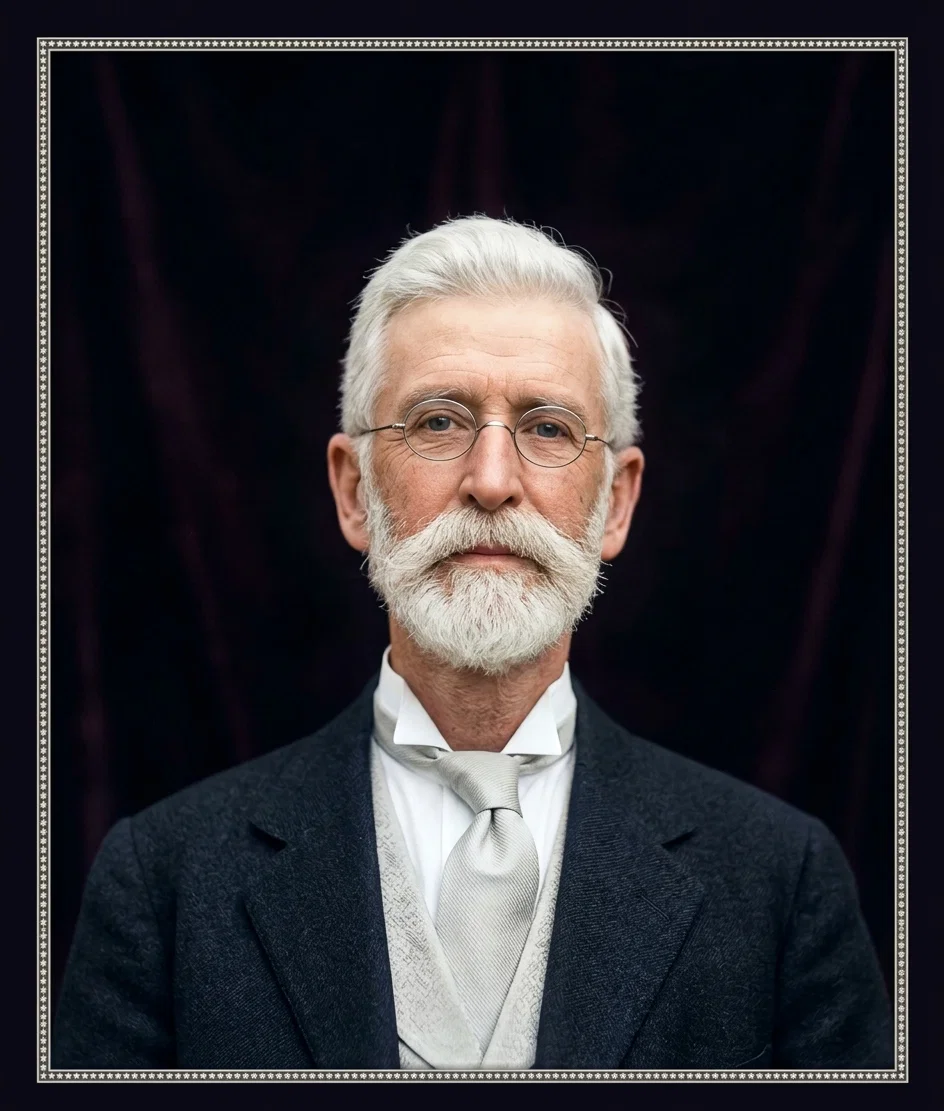
A PREEMINENTLY sad thing has spread a cloud over our General Conference that has just closed its session in Washington, D. C. One of our most honored and veteran workers, Elder George A. Irwin, died quite unexpectedly of heart trouble. Elder Irwin has been prominently known among our people for many years. He became connected with our work in Ohio, serving as president of the Ohio Conference for some time. He also served on the General Conference Committee while holding the position of president of the Ohio Conference. In 1897 he was elected president of the General Conference, and in 1899 he was reelected to that position.
He has labored extensively in many parts of the United States. He spent considerable time also in Australia and among the islands of the Pacific. He traveled in Europe, as well as Asia and Africa, in the interests of the foreign mission work. And in addition to these arduous labors that he gave to this great message, he presented four years of the best of his life to his country, having been a soldier on the side of the North in the great rebellion that broke out in 1861. He was for a number of months a prisoner in both Libby and Andersonville; but notwithstanding the hardships of the war and the trying labors of his after-life, he seemed to be in the best of health. There were very few of us, if any, who would have thought, from his general appearance, that he was a man as far along in life as he was, being in his sixty-ninth year when he died. He manifested the vigor of a man much younger. His death came as a very sad blow upon the conference. He had been ailing for only a short time, and took part in some of the first meetings, and was thought to be improving, when suddenly the end came.
The funeral services were held in the large tent, and he was laid to rest in a cemetery near. The majority of those attending the conference had met Elder Irwin as he had labored in different parts of the world. Their sincere sympathy and respect for their fellow laborer in this great work served to soothe the bitterness of anguish that was felt by the wife and son, who were also present at the conference, and who were so unexpectedly called to this deep mourning.
As our much esteemed companions in labor are laid away to rest, it gives an added joy to the thought that the great resurrection day at the second coming of Christ is very near at hand, when it will be our indescribable privilege to greet them again. And then, in the possession of immortality, all sadness and all partings will be forever at an end.

An Equivocal Ending

Referring to the exchange of civilities and courtesies which for some time were passing between our Methodist neighbor, the California Christian Advocate, and our Roman Catholic neighbor, the Monitor, in our issue of May 13, page 16, middle column, we quoted the Advocate as saying: “We hope on this showing [conditions in Catholic countries] the Monitor will take us out of the Ananias club, but we expect it won’t.” And then by some slip of the pen the SIGNS remarked: “The Advocate has acted about the same with reference to the SIGNS OF THE TIMES and the Sunday law it so much desires.” Now that sentence was meant to mean just this: (1) That the Advocate has taken about the same attitude toward the SIGNS OF THE TIMES as the Monitor has toward the Advocate; (2) That the Advocate has done this in connection with the Sunday law which it [not the SIGNS] so much desires. The Advocate has persistently misrepresented the position and motive of the SIGNS OF THE TIMES in its opposition to the Sunday law; and we have thought that in face of proper evidence the Advocate ought to correct its misstatements, “but we expect it won’t.”

Armaments and the Hope of Peace

Every time there is a little difference of opinion between this country and some other nation, we are flooded with the sentiments of those who believe that we ought to be greatly increasing our army and navy. They say that this is the only way for us to insure peace. But are we approaching the general peace of the world so long as conditions are such that we demand these large armaments in order to protect ourselves? Men do not consider it necessary to keep themselves armed in communities where there is no danger from thieves and assassins. If the world has become too civilized to fight, why this great demand for arming?

Senator Tillman Opposes Senate Smoking

Senator Tillman, of South Carolina, has introduced a resolution in the United States Senate to abolish smoking in the senate-chamber and cloak-room. The aged and venerable senator says, “I must have more oxygen.” Referring to the fact that he feared his speech in favor of this resolution would be the last he would ever make, he said, “The reason I think that this is going to be my last speech is that I probably will die if I have to sit in the smoke-laden atmosphere of the chamber in executive sessions.” Men who insist on smoking in public places where others have to sit are very inconsiderate of their fellows. Because one class of men insist on smoking, why should they be permitted to do it in places where they will poison the atmosphere that others as well as themselves have to breathe? We hope that the senator may be successful in getting his resolution passed.

Georgia Apple Pest Bulletin

“The Principal Insects and Diseases of the Apple in Georgia” is the title of Bulletin No. 38, just received from the Georgia State Board of Entomology. This is a very excellent bulletin, not only in the matter it contains, but also in its illustrations of the ravages of the insect pests that infect the apple. It also has a section dealing with formulas and apparatus for spraying the apple-trees and otherwise treating them so as to reduce or destroy the ravages of these insect pests. The people living in Georgia may have this bulletin upon application to Mr. E. L. Worsham, state entomologist, Atlanta, Georgia. Those living out of Georgia may write to the above address for information in regard to how they may obtain the bulletin as long as the supply lasts.

Our Advertising Standards

The home advertised on page 15 is a very desirable property; and we might take occasion, in this connection, to say that we are as particular about the advertisements that go into our paper as we are concerning any other class of its matter. We require to be convinced that the article to be advertised is all that is claimed for it before we will permit its description to appear in our columns. In fact we are not very solicitous in regard to securing advertisements, and our advertising space is all the more valuable because of the honesty that we require in the description of the matter that is offered for sale.

Mexico’s Controversial Payment to Ocon

In the Chamber of Deputies in Mexico a few evenings ago the measure was being considered of paying Cecil L. Ocon 30,000 pesos “for services rendered to the government.” One of the deputies, Mr. Mojeno, rose and vehemently affirmed that Ocon was the actual murderer of the late President Madero, and that this payment of 30,000 pesos for services rendered was in reality a compensation for the murder of the late president of that country. Thomas Braniff, another deputy, supported the statement of Mojeno.

San Francisco Police Indicted

The investigations in vice and crime in San Francisco have resulted in the indictment of eight policemen who are accused of protecting criminals and disorderly women.

You have reached the end of this edition.

Signs of the Times · Jun 17, 1913