Your ShelfYour Projects

Signs of the Times, Vol. 39, No. 22.

Persuading Men

Signs of the Times

Jun 4, 1912

Pacific Press Publishing Association · Mountain View, California · Jun 4, 1912

Persuading Men

“Knowing therefore the terror of the Lord, we PERSUADE men.” —Apostle Paul.

Religion and Human Government
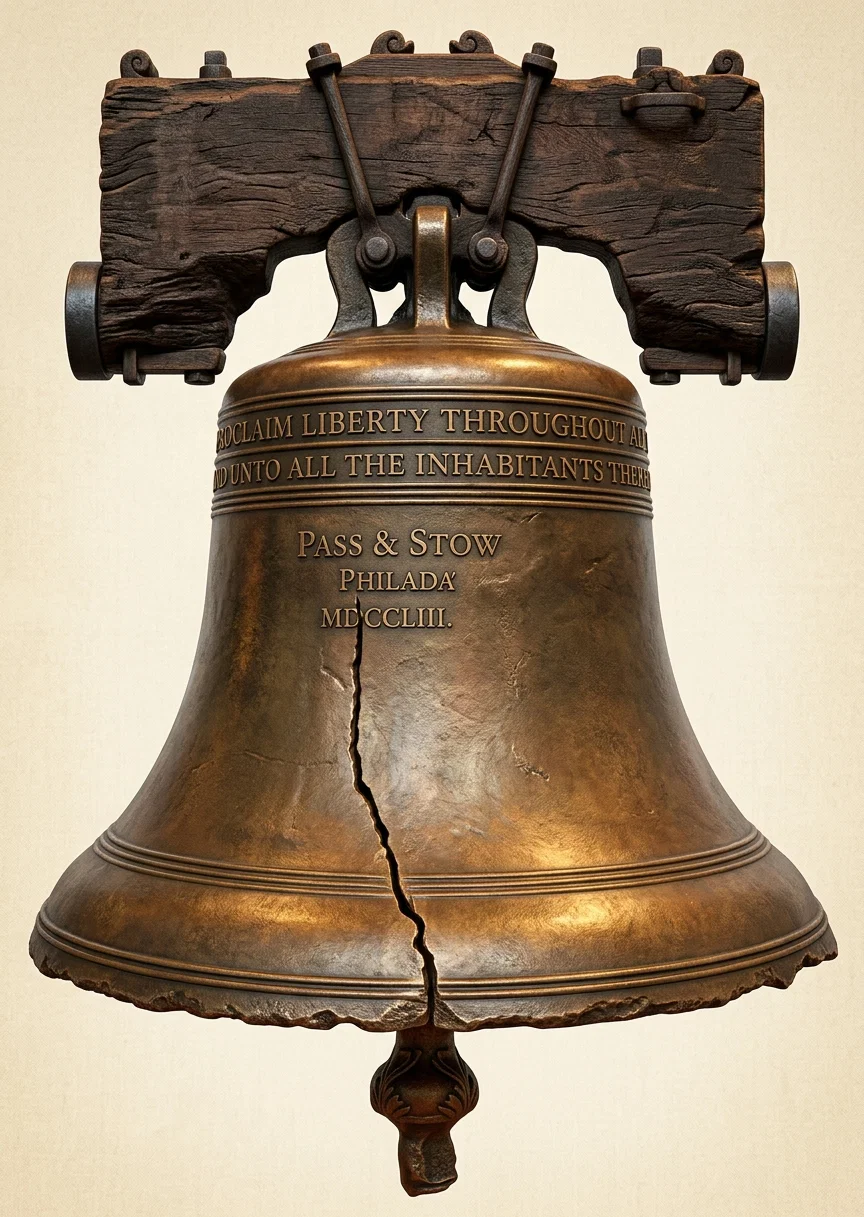
“Religion is not in the purview of human government.” —James Madison.

Good Advice to the Church

OUR Constitution recognizes no other power than that of persuasion, for enforcing religious observances. Let the professors of Christianity recommend their religion by deeds of benevolence, by Christian meekness, by lives of temperance and holiness. Let them combine their efforts to instruct the ignorant, to relieve the widow and the orphan, to promulgate to the world the Gospel of their Saviour, recommending its precepts by their habitual example. Government will find its legitimate object in protecting them. It can not oppose them, and they will not need its aid. Their moral influence will then do infinitely more to advance the true interests of religion, than any measure which they may call on Congress to enact.—United States Senate Report, 1829.

“IF YE WILL INQUIRE, INQUIRE YE.”

This Inquirer's Department is conducted for the purpose of helping those who are studying the Bible. The answers are oftentimes only suggestive. They are never to be considered infallible, only as they agree with the infallible Word. The writer who may answer them does not consider that his opinion is infallible. He will simply give the best that he has, and plead with the inquirer to search the Word. Such questions only will be answered as, to the editors, seem to minister to the good of the readers and to the mission of the paper. We can not answer repeatedly in the same volume questions upon the same scripture. The name and address must accompany question, not for publication, but as an evidence of good faith, and that answer may be made by letter if deemed advisable. No letters are answered which do not contain the name of the writer. It is well always to enclose stamp for reply.

3766 — How Do We Know?

How do we know that Saturday is the seventh day of the week? E. E. M.
Our correspondent, we would gather, has no question at all about the seventh day's being the Sabbath. His only question is, How do we know that Saturday is the seventh day? Certainly it was known at creation; certainly it was known when God marked it by a great threefold weekly miracle for forty years, at the time of the failing of the manna. See Exodus 16. Certainly it was known at the time of the resurrection of Christ, when our Lord slept in the tomb on that Sabbath day, and the next day—the first day of the week—He arose from the dead. Matt. 28:1; Mark 16:1, 2. Now there has been no question over the days of the week from that time to the present. All authorities agree with us that our present Saturday, beginning at sunset Friday night and closing at sunset Saturday night, is the Bible seventh day. Before us is a “chart of the week, showing the unchanged order of the days and the true position of the Sabbath as proved by the combined testimony of ancient and modern languages.” This chart gives 107 oriental languages and dialects—that is, Asiatic languages and dialects—and 53 European languages and dialects, or 160 in all. Of the 107 oriental languages and dialects, 71 call the seventh day of the week “Sabbath,” or a term equivalent to that; and of the 53 European languages and dialects, 37 call the seventh day the Sabbath, or a term equivalent to that. Some of these nations are of idolatrous origin, and consequently do not know the Sabbath of the Lord at all. But every one of the 160 languages gives the order of the days of the week the same. Some of these nations have had no connection with each other at all; they have simply held their week from times immemorial; but in all these nations the week is identical; and with so many of them that there can be no question about it, the seventh day is known as the Sabbath. Then, too, the Jews scattered throughout the entire world, among all nations, have held the tradition of the Sabbath. Some of them have not kept it, but they have known of it and known the numbering of the days, and there has been no questioning among them as to the seventh-day Sabbath. We are as much assured that the seventh day now is the Sabbath of the Lord as we are that the Bible is itself true.

3767.— Another Chance

Please give me some good proof from the Word as to the chance for the many thousands of poor mortals that have passed away and will pass away without ever having the Gospel. E. W.
But they have had the Gospel. Every soul on earth has had opportunity of knowing God's Gospel. It may not have been called Gospel in so many words. The book or sermon may not have been present. Nevertheless every soul has had the Gospel, for the psalmist declares that "the heavens declare the glory of God; and the firmament showeth His handiwork. Day unto day uttereth speech, and night unto night showeth knowledge. There is no speech nor language, where their voice is not heard. Their line is gone out through all the earth, and their words to the end of the world." Ps. 19: 1-4. And the apostle Paul quotes this very scripture in Romans 10, and declares that it is the Gospel, for he says, "How then shall they call on Him in whom they have not believed? and how shall they believe in Him of whom they have not heard? and how shall they hear without a preacher? and how shall they preach, except they be sent? Even as it is written, How beautiful are the feet of them that bring glad tidings of good things!" That is what our age-to-come people talk; but Paul continues: "But they did not all hearken to the glad tidings. . . . But, I say, Did they not hear? Yea, verily, their sound went out into all the earth, and their words unto the end of the world." And so he declares again in the first chapter of Romans that those who turn from God are without excuse. "For the invisible things of Him since the creation of the world are clearly seen, being perceived through the things that are made, even His everlasting power and divinity; that they may be without excuse." Verse 20.
One ray of light from the great throne of God is sufficient to save a soul, if followed. It matters not how small it may seem; if followed it leads to the great central sun. One may not know the name of Christ as we know it in English. He may not know the name of Jehovah as the Hebrews knew it. But he does know whether his whole heart is yielded to God, and whether he is trusting wholly in God for salvation; and that is all that is demanded in order to be saved. We may not take excuse from that, and say that if we follow that one ray of light and reject all others, we will be saved. The man who is saved by following the one ray of light, follows it with all his heart; and the man who seeks to follow one ray of light alone, among much light, rejects all in that he refuses to follow.

3768 — A Resurrection

Please explain these texts: Job 19: 25-28; 1 Cor. 15:36-46, 50-54.
F. A. I.
We do not know what there is about these passages which our inquirer wants explained. Very much could be said upon these scriptures. In fact almost a volume could be written upon them. And one might write a whole page in reply to the above question, and still miss the point that our correspondent had. The texts speak of the resurrection, and make that clear and emphatic. Job expected to see his Redeemer in the flesh. Out from his body of flesh he expected that his eyes would look upon his Redeemer in the last day. And Paul also declares this as strongly as words can,—that as Christ has risen, the dead will arise. And the righteous dead of which he especially speaks will come forth when Christ shall come the second time, clothed with immortality, there to enjoy Him forever. And when the righteous rise from the dead immortal, the living righteous will be changed, and together will they be caught up to meet their Lord in the air. If we have not met our inquirer's desire, he must be more definite.

3769 — The Resurrection

Suppose that a body is nearly consumed in a burning building, and just a small quantity of remains is left and gathered up and buried in a cemetery. Where will the body of that person be raised from the dead, in the cemetery or where the building stood? M. M. M.
We do not know where the body of such a person will rise from the dead. It does not make any difference. It may be neither at the burning building nor at the cemetery. What about all those who are cast into the sea and eaten by fishes? The sea will give up its dead. That is, those who lost their lives there will come again, and those who lost their lives by fire will live again. The resurrection is essentially a new creation. The words of the apostle in 1 Corinthians 15 are very definite: "Thou sowest not the body that shall be, but a bare grain, it may chance of wheat, or of some other kind; but God giveth it a body even as it pleased Him, and to each seed a body of its own." God will take the character of that individual in the resurrection day and clothe it with flesh and blood, and hold its personal identity by the character of the individual, so that the person that went down a mortal, dying, soulless body, if in Christ, will come up a "spiritual body." We need not worry over God's power. It was over these things that the Sadducees caviled, and the reply of Jesus to them was, "Ye do err, not knowing the Scriptures, nor the power of God." We have the Scripture promise, we have the power of God to restore.

3770 — How Long Noah Preached

How do we know how long Noah preached before the Flood?
E. E. M.
We do not know positively from the Scripture, but it seems clearly to indicate that it was 120 years, for we read in the sixth chapter of Genesis the words of the Lord: “And Jehovah said, My Spirit shall not strive with man forever, for that he also is flesh: yet shall his days be a hundred and twenty years;” and God gave the message to Noah to prepare an ark. It would seem that just as soon as this was said, the Lord had determined what to do. But He would not destroy men unarmed, and therefore He gave to Noah His message, and Noah must have begun to preach that message immediately. The clear inference is that it was a hundred and twenty years.

3771 — Seven Women Shall Take Hold of One Man

Please explain Isa. 4:1, “And in that day seven women shall take hold of one man, saying, We will eat our own bread, and wear our own apparel: only let us be called by thy name, to take away our reproach.” Is this a prophecy of woman suffrage of to-day? J. S.
To answer the last question first, we do not think it is. There are two general interpretations of the text. The first is that in the predicted wars of Isaiah 3 men will be so diminished in numbers that there will not be enough men for the women; so many women will be without husbands, that they will be willing to say to men that if their reproach can only be taken away, and they can be regarded as wives, they would be willing to unite seven with one; but in order to do this they would not be a burden upon the man. There are others who believe that it is a type of the last days; that the apostasy referred to in the previous chapters will then be dominant, the church is represented by a woman, and the seven women represent the entire church (that is, the apostate churches), and that these seven apostate churches will come to the one Man, Christ, simply ask for a nominal recognition in Christianity,—“Let us be called by Thy name; let us not be reproached among the people of the world.” Wearing their own garments would indicate that they are clothed in their own righteousness; eating their own bread, that they fed on their own false doctrines and conceptions of truth. It is reputation they are seeking, and not character. And then the prophecy tells us that there will be a remnant, a true church, a branch of the Lord, which will be beautiful and glorious.

3772 — May We Know that We Are Saved?

Can any mortal reach the limit in Christian life, so that he may know that he is saved? Does the Bible give any authority, that any may know that he is saved? M. M. M.
Certainly it does. We are not saved by the work that we do. We are not saved by reaching perfection in our own strength. We are not saved by the human in any way, but wholly by the free grace of God; and that man who heartily repents of all his sins, and comes to the Lord Jesus Christ, is saved from those sins. "Thou shalt call His name Jesus: for He shall save His people from their sins." Matt. 1: 21. "Who gave Himself for us, that He might redeem us from all iniquity, and purify unto Himself a peculiar people, zealous of good works." Titus 2:14. "If we confess our sins, He is faithful and just to forgive us our sins, and to cleanse us from all unrighteousness." It is not a matter of our perfection; it is a matter of God's promises, and God's promises can make the imperfect perfect, and wash away all the stains of sin. But to remain in that saved condition we must abide in the Master.

OUR BIBLE BAND

Schedule for Week Ending June 15

Sunday June 9 Isaiah 6, 7
Monday " 10 " 8; 9:1-7
Tuesday " 11 " 11, 12
Wednesday " 12 " 13
Thursday " 13 " 14
Friday " 14 " 15, 16
Sabbath " 15 Psalms 51, 52, 53
Our readings begin with Isaiah 6, the story of a vision by which the prophet is called to God's work in the year that King Uzziah died. Chapters 7, 8, and 9 deal with Ahaz and his stubbornness, and use that as a basis of a prophecy concerning the coming Deliverer, the Child which "shall be called Wonderful, Counselor, Mighty God, Everlasting Father, Prince of Peace." Chapter 10 is a prophecy against the Assyrian; 11 of better days for Israel to come, in which Christ should reign; 13 and 14 are prophecies of Babylon, rising from the earthly king of Babylon to him who has inspired Babylon in all her wickedness, Lucifer, the "day-star," the "son of the morning." The readings of the week close with the prophecy against Moab, one of the oppressors of Judah.
The psalms of this week are intensely practical. Many of the world's greatest Christians, seeing themselves in the light of the cross, have on their knees prayed Psalm 51 into their own experience.

Cooperation with God a Necessity

By Mrs. E. G. White
BEHOLD the Lamb of God, which taketh away the sin of the world!” I repeat the words of John, “Behold the Lamb of God!”
We are to contemplate the character of Christ. We are to meditate upon the cross of Calvary; for it is the unanswerable argument of Christianity. The message we are to bear to the impenitent, the warning we are to give to the backslider, is, “Behold the Lamb of God, which taketh away the sin of the world!” Those who bring the message to the soul may turn aside from the truth, but he who would be saved must keep his eye on Jesus. By beholding Christ, he will learn to hate sin, that has brought to his Redeemer suffering and death. By beholding, his faith is made strong, and he comes to know “the only true God, and Jesus Christ, whom Thou hast sent.” The sinner sees Jesus as He is, full of compassion and tender love; and by beholding the manifestation of His great love toward fallen man in His sufferings on Calvary, he is transformed in character.
While our salvation is wholly dependent upon Jesus, yet we have a work to do in order that we shall be saved. The apostle says: “Work out your own salvation with fear and trembling. For it is God which worketh in you both to will and to do of His good pleasure.” The work that we are to do is not independent of what God is to do, but a work of coöperation with God. The power and the grace of God is to be wrought into the heart by the divine Worker; but some go astray here, claiming that man has a work to do that is wholly independent of any work of God. Another class take the other extreme, and say that man is free from all obligation, because God does the whole work—both the willing and doing. But the true ground to take is that the human will must be in subjection to the divine will. The will of man is not to be forced into coöperation with divine agencies, but must be voluntarily submitted. Man has no power of himself to work out his own salvation. Salvation must be the result of coöperation with divine power, and God will not do that for man which he can do for himself. Man is wholly dependent on the grace of Christ. He has no power to move one step in the direction of Christ unless the Spirit of God draws him. The Holy Spirit is continually drawing the soul, and will continue to draw until by persistent refusal the sinner grieves away the tender messenger of God.
God has endowed men with reason and with intellectual faculties; but if these are untrained, left uncultivated, men will become like the savage heathen. The mind must be cultivated; and it is necessary that teachers present line upon line and precept upon precept, guiding and training the free-will moral agent so that he shall understand what it is to coöperate with God. God works in the human agent by the light of truth; and the mind, enlightened by truth, is capable of seeing truth in distinction from error. Open to the light of truth, free from prejudice, unbound by the opinions and traditions of men, the enlightened mind clearly sees the evidences of the truth, and believes it as from God. The man enlightened by truth will not call falsehood truth, and light darkness. The Spirit reveals to the mind the things of God, and to him who coöperates with God is the realization that a divine Presence is hovering near. When the heart is open to Jesus, and the mind responds to the truth, Jesus abidesin the soul. The Spirit’s energy works in the heart, and leads the inclinations toward Jesus. By living faith, the Christian places entire dependence on divine power, expecting that God will will and do that which is according to His good pleasure. As fast as the soul resolves and acts in accordance with the light that is revealed, the Spirit takes the things of God and gives more light to the soul.
If the sinner or the backslider settles himself in sin, the light of heaven may flash about him to no purpose, as it did about Saul when the bewitching power of the world’s deception was upon him. Unless the human agent inclines his will to do the will of God, as finally Saul did, the light will shine in vain, and a thousandfold more light and evidence would do no good. God knows when the sinner has sufficient evidence, and says of such, “They have Moses and the prophets; let them hear them.” “If they hear not Moses and the prophets, neither will they be persuaded, tho one rose from the dead.”
Paul had a terrible awakening when the light from heaven flashed upon him, and a voice said to him, “Saul, Saul, why persecutest thou Me?” Paul answered, “Who art Thou, Lord?” And Christ said, “I am Jesus whom thou persecutest: it is hard for thee to kick against the pricks.” And the Lord said, “Arise, and go into the city, and it shall be told thee what thou must do.” The Lord always gives the human agent his work to do. Paul was to work in compliance with the divine command. If Saul had said, “Lord, I am not in the least inclined to follow Your directions in working out my salvation,” then, should the Lord have showered upon him a light tenfold as bright, it would have been useless. It is man’s part to coöperate with the divine. Here is where the conflict is to be sternest, hardest, and most fierce—in yielding the will and way to God’s will and way, relying upon the gracious influences which God has exerted upon the human soul throughout all the life. The man must do the work of inclining. “For it is God which worketh in you both to will and to do.” The character of the actions will testify what has been the nature of the resolve. The doing was not in accordance with feeling and natural inclination, but in harmony with the will of the Father in heaven. Follow and obey the leadings of the Holy Spirit; obey not the voice of the deceiver, which is in harmony with the unsanctified will, but obey the impulse God has given. This is what the heavenly intelligences are constantly working to have us do, — the will of our Father which is in heaven.
Everything is at stake. Will the human agent coöperate with divine agencies to will and to do? If a man places his will on the side of God’s will, fully surrendering self to do His will, the rubbish will be cleared from the door of the heart, the defiance of the soul will be broken down, and Jesus will enter to abide as a welcome guest.

Religious Liberty in America

By Charles Miles Snow, Editor of "Liberty"

The Constitutional Guarantees

The clauses pertaining to liberty in the Constitution of the United States were not an experiment. They were the result of an experiment that had been going on for ages. From the day when Cain slew his brother Abel, men have sought to dictate to other men as to whom they shall worship and in what manner that worship shall be performed. Every heathen religion has had that as one of its actuating principles; and when heathenism secured a dominating influence in the Christian church in the early centuries of the Christian era, it brought that principle with it, and succeeded in fastening it upon the church organization with a grip so firm that it has never yet been fully broken. Paganism had persecuted Christianity; and when the Christian church organization had become inoculated with the deadly virus of intolerance, and had become possessed of civil power, the church organization, forgetting the Golden Rule, turned upon its enemies, and hounded the pagans as fiercely as the pagans had hounded the Christians.
In the pagan mind, religion was a function of life that could be legitimately exercised only under government supervision. The individual existed for the State and belonged to the State. Therefore all his functions must be under State control. That united religion and the State; and religion being the soul of the church, it necessarily united the State and the church.

A Disastrous Experiment

The church organization, in taking that step, began an experiment that has been attended by results more disastrous than any other experiment which the annals of the world record. The Inquisition was the logical result of such an experiment, and it was duly inaugurated. It is impossible for the human mind to conceive the sum of the distress and agony which the race endured while that terrible institution was grinding out its grist of human wo. The church and the State had become a wedded pair; politics and religion were one; the State had become a sword in the hand of an organized religion of form and ceremony; and all who were even suspected of opposition to that unscriptural union, suffered the vengeance of that unholy alliance. He whom the church professed to serve, had declared: “If any man hear My words, and believe not, I judge him not;” but this union of civil and religious affairs, heedless of the principle so plainly enunciated by the Master, adopted the policy of not only judging but of condemning also, and that even to the death, all who chose to worship God according to the dictates of their own consciences.
As a result of that policy, Europe was drenched in the blood of her most conscientious citizens. No one pretends to know how many millions of conscientious Christians went down under the cruel wheels of that terrible Juggernaut. We find the population of Bohemia alone reduced from 4,000,000 to 80,000.
“Against the reformed doctrine and its adherents the House of Austria directed, almost exclusively, the whole of its immense political power. In France the Reformation had kindled a civil war which, under four stormy reigns, shook the kingdom to its foundations, brought foreign armies into the heart of the country, and for half a century rendered it the scene of the most mournful disorders.”—“History of the Thirty Years’ War in Germany,” page 5.
“From the interior of Bohemia to the mouth of the Scheldt, and from the banks of the Po to the coasts of the Baltic,” that policy of church-and-state union “devastated whole countries, destroyed harvests, and reduced towns and villages to ashes.”—Ib., page 6. The country over which that despotism held sway has never been able to rally from the result of its rule.
With that cruel and costly experiment the founders of the American nation were familiar. They had seen the blood, they had heard the groans, they knew of the wasting and the blighting of that régime. It would seem that the power of inspiration had caused the founders of the new nation to take a panoramic view of that awful holocaust, and erect in the wilderness of America an effectual barrier against its work of ruin here. “The real source of the Constitution,” says one American writer, “is the experience of the American people.”—“Historians’ History of the World,” volume 23, page 394. But that experience was not due to what their eyes had witnessed in America alone. It was bound up also in what their fathers had fled from and what their fathers’ fathers had endured; and they read it in history as well as in personal experience.
Moreover, in America the Bible was unchained. Men were taught to reverence its sacred teachings, and were at liberty to dig deep into its exhaustless mine of treasure; and it could not be otherwise than that the liberty which it teaches in the things of God should find an echo in the vital national document which they produced. They had seen the character of Jesus Christ in Holy Writ, the world’s pattern in religious liberty; and they saw that He, with all the power of heaven at His command, had refused to use any force other than reason andspiritual persuasion to influence the hearts and minds of men.

Much Needed

Thus it came about that after having established a government which guaranteed civil liberty to its citizens, and after having incorporated in that government’s fundamental law the guarantee that “no religious test shall ever be required as a qualification to any office or public trust under the United States,” the nation’s founders were made to realize that there was still something lacking, and they went to work at once to supply that lack. That is why the very first amendment to the Constitution was a guarantee of freedom in religion. It reads:
“Congress shall make no law respecting an establishment of religion, or prohibiting the free exercise thereof; or abridging the freedom of speech, or of the press; or the right of the people peaceably to assemble, and to petition the Government for a redress of grievances.”
The national Government did not by this provision, of course, prohibit the various States’ passing such laws; but the weight of the nation’s example was thrown in that direction, and State after State, through the influence of those constitutional provisions, incorporated similar provisions in their constitutions. The result of that influence in making religious laws unpopular, and thus holding back persecution, it is impossible to estimate. Those two provisions of our national Constitution are in perfect accord with the “Bill of Rights” enacted by the Virginia Assembly, and do in themselves constitute the bill of rights of the American citizen. Through those provisions the conscience of the American citizen—temporally speaking—lives and moves and has its being; which is to say that without those provisions the conscience of the individual would be an outlaw and a vagabond in the eyes of whatever religious party had secured control of the Government and was enforcing the tenets of its faith upon the people.
All the woes that Europe and the American colonies suffered in the line of persecution for conscience’ sake, came as a result of domination over the civil power by a religious combination. Some religion secured control of the government, and used that power to the furtherance of its own ends. But religion never could do that without combination. The founders of the nation, realizing that, adopted the first amendment to the Constitution in order that it might be forever impossible for any church to attain to a position in this country where it could compel the Government to do its bidding and could make the practise of any other religion a penal offense. When Congress was estopped from establishing any religion, religion was estopped from dominating and domineering over the consciences of the people.

The Evil Seed Still Germinant

But not all the people were converted to the idea of granting freedom of conscience to all individuals of whatever belief. The roots of that ancient error, that the magistrate ought to regulate the religious practise of the people, were not wholly eradicated from American soil—and are not yet. It is like the old Canada thistle; it matters not how many times the soil is turned over with the plow, the thistle will spring up afresh if its roots are left in the earth. But little time elapsed from the adoption of the Constitution till the church-and-state element were seeking, through Congressional legislation, to have that pestilential principle adopted by the new nation. But the majority had evidently come to think with Benjamin Franklin that “when religion is good, it will take care of itself; when it is not able to take care of itself, and God does not see fit to take care of it, so that it has to appeal to the civil power for support, it is evidence to my mind that its cause is a bad one.”—Letter to Dr. Price.
Familiar to the people also was the declaration of Thomas Jefferson: “Almighty God hath created the mind free; all attempts to influence it by temporal punishments or burdens, or by civil incapacitations, tend only to beget habits of hypocrisy and mean-
ness, and are a departure from the plan of the holy Author of our religion, who being Lord both of body and mind, yet chose not to propagate it by coercion on either, as was in His almighty power to do.”—Virginia Act for Establishing Religious Freedom, 1785.

How Congress Spoke Then—

Nevertheless the demand for religious legislation in the form of a Sunday law continued to increase, until in the year 1829 Congress itself spoke through the Committee on Post-offices and Post-roads, in the report submitted to the Senate by Col. Richard M. Johnson, of Kentucky. Colonel Johnson, in presenting his report, stated that he believed the efforts put forth to secure a Sunday law from Congress “were but the entering wedge of a scheme to make this Government a religious instead of a social and political institution.” This report was one of the most striking and forceful documents ever presented in Congress. It was an admonition to the people as well as a report to Congress. Note these vital principles which it voiced:
“It is not the legitimate province of the legislature to determine what religion is true, or what false. Our Government is a civil and not a religious institution. Our Constitution recognizes in every person the right to choose his own religion, and to enjoy it freely without molestation. . . .”
“Among all the religious persecutions with which almost every page of human history is stained, no victim ever suffered but for the violation of what government denominated the law of God. To prevent a similar train of evils in this country, the Constitution has wisely withheld from our Government the power of defining the divine law. . . .”
“Extensive religious combinations to effect a political object are, in the opinion of the committee, always dangerous. . . . All religious despotism commences by combination and influence; and when that influence begins to operate upon the political institutions of a country, the civil power soon bends under it; and the catastrophe of other nations furnishes an awful warning of the consequence. . . .”
“What other nations call religious toleration, we call religious rights. They are not exercised in virtue of governmental indulgence, but as rights, of which government can not deprive any portion of its citizens, however small. Despotic power may invade those rights, but justice still confirms them.”
The following year Mr. Johnson, being in the House, and chairman of the House Committee on Post-offices and Post-roads, presented another report dealing with the same matter. That report was another unanswerable argument against the passage of a Sunday law by the national legislature. A few excerpts must suffice:
“If Congress shall, by the authority of law, sanction the measure recommended, it would constitute a legislative decision of a religious controversy, in which even Christians themselves are at issue. . . . The principles of our Government do not recognize in the majority any authority over the minority, except in matters which regard the conduct of man to his fellow man. . . . If the measure recommended should be adopted, it would be difficult for human sagacity to foresee how rapid would be the succession, or how numerous the train of measures which follow, involving the dearest rights of all—the rights of conscience.”
Those principles are as applicable to-day as they were in 1829 and 1830, and the dangers which threaten now are just as real and just as great as the dangers which threatened then. What would have meant a union of Church and State then would mean a union of Church and State now. To enact a Sunday law and carry it into effect, is to open a Pandora’s box of evils to afflict the people of State or nation through all the days to come. When the precedent is once established of legislating upon religious things, the door is opened for all sorts of interference with the religious concerns of men. But let the principles of the Constitution stand in all their vigor and all their meaning, and the freedom of the people, religious as well as civil, is guaranteed for all time.
C. M. SNOW.

THE GREATER DANGER

The whole history of the Christian religion shows that she is in far greater danger of being corrupted by the alliance of power than of being crushed by its opposition. — Lord Macaulay.

Conscience Under the Constitution

THE CONSTITUTION REGARDS THE CONSCIENCE OF THE JEW AS SACRED AS THAT OF THE CHRISTIAN, AND GIVES NO MORE AUTHORITY TO ADOPT A MEASURE AFFECTING THE CONSCIENCE OF A SOLITARY INDIVIDUAL THAN THAT OF A WHOLE COMMUNITY.—Report of House of Representatives on Sunday Mails, 1890.

CONTRARY TO CHRISTIANITY

Report of House of Representatives, 1831
That all legislative interference in matters of religion is contrary to the genius of Christianity; and that there are no doctrines or observances inculcated by the Christian religion which require the arm of civil power either to enforce or sustain them.

Character Revealed in Little Decisions

It is the way in which a man decides little things, no less than great ones, that indicates what he is made of.—President Hadley.

PROVOKE EVIL

Positive enactments against irreligion, like positive enactments against fanaticism, provoke the evil which they were designed to prevent.—George Bancroft, the historian.
Continue reading: POWER IN RELIGIOUS OBSERVANCES