Your ShelfYour Projects

Signs of the Times, Vol. 36, No. 25.

Liberty Bell Inscription

Signs of the Times

Jun 30, 1909

Pacific Press Publishing Association · Mountain View, California · Jun 30, 1909

Liberty Bell Inscription
Proclaim liberty throughout all the land unto all the inhabitants thereof.
Lev. 25:10. (Inscription on the Liberty Bell.)
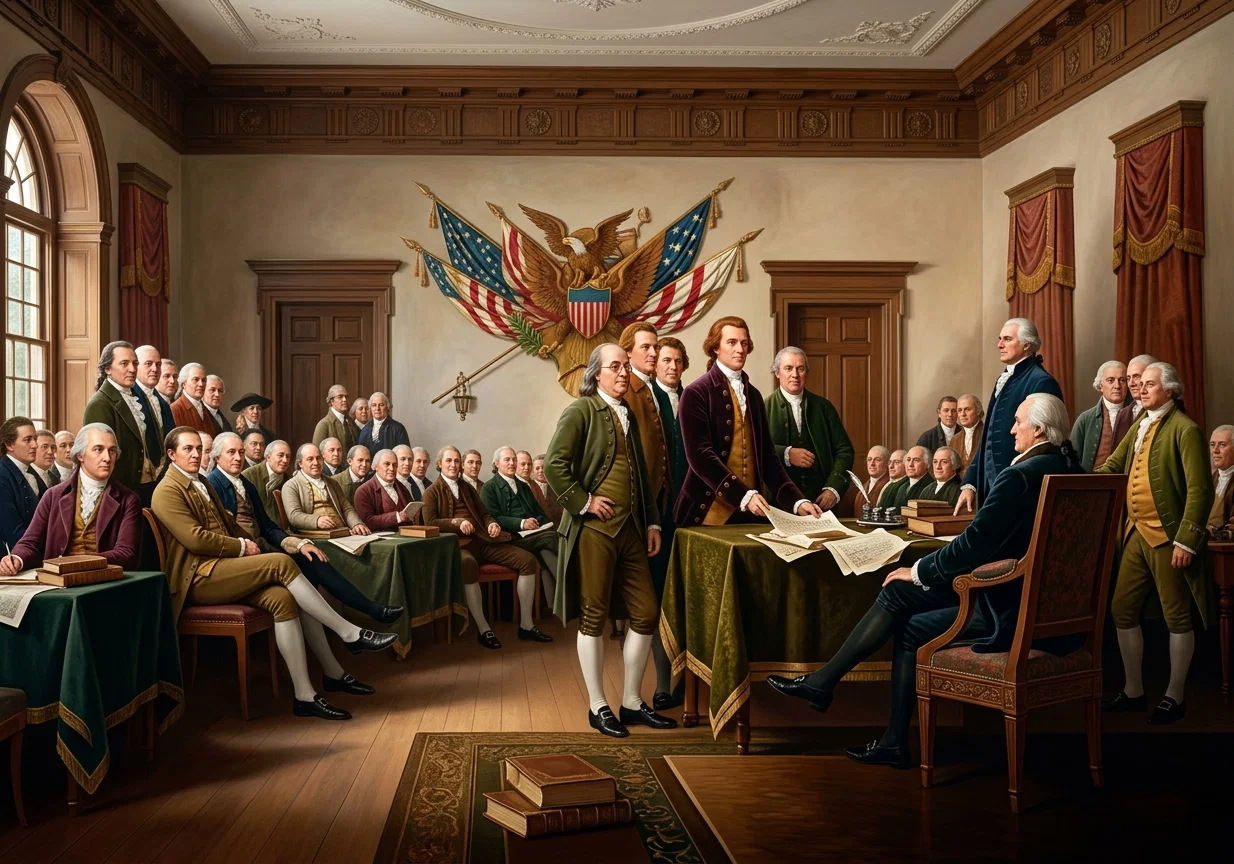
Signing of the Declaration of Independence, July 4, 1776

OUR BIBLE BAND

Schedule for Week Ending July 10, 1909.
Morning Evening
Su. July 4 Job 28, 29 Acts 13:1-25
Mo. " 5 " 30, 31 " 13:26-52
Tu. " 6 " 32, 33 " 14
We. " 7 " 34, 35 " 15:1-21
Th. " 8 " 36, 37 " 15:22-41
Fr. " 9 " 38, 39, 40 " 16:1-21
Sa. " 10 " 41, 42 " 16:22-40

Suggestive Notes

Our morning readings in the Old Testament complete the wonderful book of Job, chapters 28 to 42 inclusive. It is impossible to give anything like an analysis of these chapters. We can only touch upon some of the gems here and there. One of these is found in the twenty-eighth chapter, especially the last part which treats of wisdom; telling us where it can not be found, and yet the way in which the simple can find it. We find Job still defending himself. He knows that he has committed no open sins against God. He is earnest and anxious that God should manifest Himself to him. In these later chapters we have the argument of Elihu in which he tries to convince Job that he is not so very great himself, while God is everything. To this Job makes no answer, and no comment whatever is given upon Elihu's plea; but in the thirty-eighth chapter we have the Lord answering Job, pointing out the mighty works of God, showing the infinite power and wisdom of God in His creation, and by contrast, of course, showing how exceedingly small Job is. The lesson is that if these things are true in a material sense, which Job can only in a measure comprehend, how likely they are to be true in God's moral dealings with the children of men. How little Job can understand of the great purposes which God has where eternal life itself is at stake.
But the last chapter of the book closes with a happy ending indeed. Job has learned the wonderful lesson that God is infinitely wise and infinitely good, while he himself is utterly unworthy and of small account, and he truly repents and humbles himself in dust and ashes. Job's friends must also repent of their accusations against the old patriarch and are humiliated by the fact that they are accepted only as Job prays for them; while Job must turn from his hard feelings which they have stirred up in his heart; and he finds his captivity turned when he prays for his friends. And yet Job is not beneath the Lord's notice, for God in His goodness turns the captivity and makes his latter end far more prosperous than at the beginning. Connect with this the admonition of the apostle: “Ye have heard of the patience of Job, and have seen the end of the Lord, how that the Lord is full of pity, and merciful.” James 5:11.
For our evening devotions we have a continuation of Acts from the beginning of the thirteenth chapter to the close of the sixteenth; a varied record of the ministry of Paul and Barnabas; of the homesickness of Mark; Paul's ministry at Antioch to Jews and Gentiles; his ministry at Iconium, at Lystra, at Derbe, and their persecutions; the first apostolic council at Jerusalem; visiting again at Derbe, Lystra, Troas, Philippi; the call of Timothy; their persecutions, and the wonderful work God wrought through them. It is all of interest.

Question Corner

[To Our Inquirers.— (1) The name and address of all who ask questions must accompany questions, not necessarily for publication, in token of good faith, and that we may reply by letter if thought best. All communications will be considered confidential if so desired, and no name will be published unless requested. But we have no time to give to anonymous or unsigned epistles or articles. (2) Let the questions be to the point. Do not say, “Explain Josh. 7:1-8;” but state the thing upon which help is desired. (3) Questions can not be answered immediately in this department. Sometimes it will mean a month or more of waiting. We can not reply to the same question frequently. Read answers to other questions; you may find reply to yours. (4) Members of the Bible Band will kindly enclose stamp if answer is desired by letter. Others will please enclose ten cents. This does not begin to meet expenses oftentimes. (5) “Foolish . . . questions avoid.”

2871.—“The End of the World Is at Hand.”

Why did Paul and the other apostles in their day say that the end of the world is at hand, and that they were living in the last days? How long has it been since the end of the world has been said to be imminent? B. B. 1600.
1. Christ’s second coming is life to His people. Even tho they may sleep in death, that sleep is but for a moment, so far as consciousness is concerned. To him who falls asleep in Jesus the next moment of consciousness is seeing Jesus come. Therefore Christians in all ages ought to be prepared for that coming, ready to meet their Lord.
2. The apostles wrote for all time. The word was not their word, but God-breathed through them. They wrote therefore for the last days as well as their own day, and for all days in view of the last great day. But that they did not believe that the Lord was coming in their day is shown by the apostle Paul in his first and second letters to the Thessalonians. In the first epistle he again and again refers to the coming of the Lord as tho it were imminent. See chap. 1:10; 2:19, 20; 3:13; 4:13-18; 5:1-6. From these repeated references in the first epistle the Thessalonian brethren had come to believe that Christ’s coming was impending. This the apostle corrected in his second epistle as follows: “Now we beseech you, brethren, touching the coming of our Lord Jesus Christ, and our gathering together unto Him; to the end that ye be not quickly shaken from your mind, nor yet be troubled, either by spirit, or by word, or by epistle as from us, as that the day of the Lord is just at hand; let no man beguile you in any wise; for it will not be, except the falling away come first, and the man of sin be revealed, the son of perdition.” Chapter 2:1-3. It is very clear, therefore, that the apostle Paul did not look for the second coming of Christ or the end of the world in his day.
3. The last days would be times of special peril (See 2 Tim. 3:1-5; Luke 21:34, and many other scriptures); Satan would do all in his power to blind the minds of men to the importance of that great event, to its nature and its time. Therefore we have the solemn warnings handed down to the last generation of men. These things are confirmed by Matthew 24 and Luke 21, which chapters clearly show that God’s children may know when Christ’s coming is near. “When ye shall see all these things, know that He is near, even at the doors!”

2872.—“Shall Follow Them That Believe.”

Will you please explain Mark 16:15-20?
“And He said unto them, Go ye into all the world, and preach the Gospel to the whole creation. He that believeth and is baptized shall be saved; but he that disbelieveth shall be condemned. And these signs shall accompany them that believe: in My name shall they cast out demons; they shall speak with new tongues; they shall take up serpents, and if they drink any deadly thing, it shall in no wise hurt them; they shall lay hands on the sick, and they shall recover. So then the Lord Jesus, after He had spoken unto them, was received up into heaven, and sat down at the right hand of God. And they went forth, and preached everywhere, the Lord working with them, and confirming the word by the signs that followed. Amen.”
O. J. S.
God gave all His gifts for the Christian age, coextensive and coeval with the great commission. These signs, wonders, or miracles are not wrought to satisfy curiosity or ambition or desire for superiority. They are given always for God’s glory as He will. 1 Cor. 12:11. But these gifts are “set” “in the church” till the perfect day shall come. Compare 1 Cor. 12:28; 13:9; Eph. 4:13. They “follow them that believe,” not to confirm the faith of believers, not according to direction of believers, but to confirm the word preached and to be exercised as God will. When God’s people will count as the greatest of all miracles a regenerated heart and life, which delights in doing God’s will, then He can bestow upon them lesser things. When they will use His daily bestowed gifts to His glory, He will trust them with greater gifts and they will have faith to recognize and receive them when they come. Think of Isa. 57:15.

2873.—Seeing God.

Please harmonize John 1:18 and Isa. 6:1 and Dan. 7:9. J. M. J.
John 1:18 refers to the person of the ineffable God, the great Jehovah, the Father. The other texts are visions of God’s workings and of the future judgment, both of which may have been given in a dream. Wherever the Scriptures declare that men have looked upon God, it is clearly evident that it referred to the Son, who revealed only so much of the unapproachable glory as mortal man could endure. “The only begotten Son . . . He hath declared Him,” the Father. See John 1:18; 14:9. But thank God, there is coming a time when “the pure in heart shall see God,” and “they shall see His face, and His name shall be in their forehead.”

2874.—Gen. 4:10 and Rev. 6:9.

I would like to ask you to explain Gen. 4:10 regarding Abel’s blood crying to the Lord after Abel was dead; and Rev. 6:9, where John saw the souls of them that were slain in heaven. C. M. Z.
There are various figures of speech recognized by all students of language. One of these is personification, by which a thing having no life is made to speak and talk as tho it did have life. This figure is often used in the Bible. For instance, in the second chapter of Habakkuk, the stones in the house are represented as crying out, and the beam that is in the house, answering the stones. That is, the house was built in iniquity. It is so evident before God, that He speaks as tho the very stones were crying out against it. So regarding Abel. Cain had shed his blood. The hitherto innocent earth that had never known bloodshed was made to drink of the evidence of his crime. Cain thought to hide that crime from God, but the Lord wished to show the guilty man that his sin was just as evident as tho the very blood were crying it audibly from the ground.
Of course, no one thinks for a moment that the blood was alive or speaking, but God remembered it just as truly as tho that were the case. This same figure of speech is used in Rev. 6:9 under the period of the pale horse Death. During the time of the persecution of the Dark Ages, thousands of God’s children were slain. John is represented as seeing these underneath the altar. This altar was not in heaven. Only the altar of incense is represented as being there. Rev. 8:3. The altar of sacrifice was on the earth; and they are represented as being underneath the altar of sacrifice, consequently were not souls that were in heaven.
The awful sin of putting these souls to death was so great in the sight of God that the inanimate beings who had suffered are represented as crying to God. And God cares for them and hears in their behalf just as truly as tho they were speaking audibly. That is all that is meant by it; for we certainly could not conceive for a moment that if those souls were in heaven, they would be crying out for vengeance against their persecutors. We could not conceive heaven to be a place of happiness if that were the case. Those souls would know that in a little while the wicked would be doomed anyway, and it would be utter folly, yea, more than that, hard-heartedness and contrary to the Spirit of Christ, for them to be crying out against their enemies. It is an illustration of how God feels and cares for His oppressed and persecuted children. He may seem to forget them, and centuries may pass since the crimes have been committed against them, but just as truly God remembers them as tho they were audibly crying to Him from the places where they were sacrificed for His sake.

Founded on the Rock

By Mrs. E. G. White
On the Rock and on the Sand
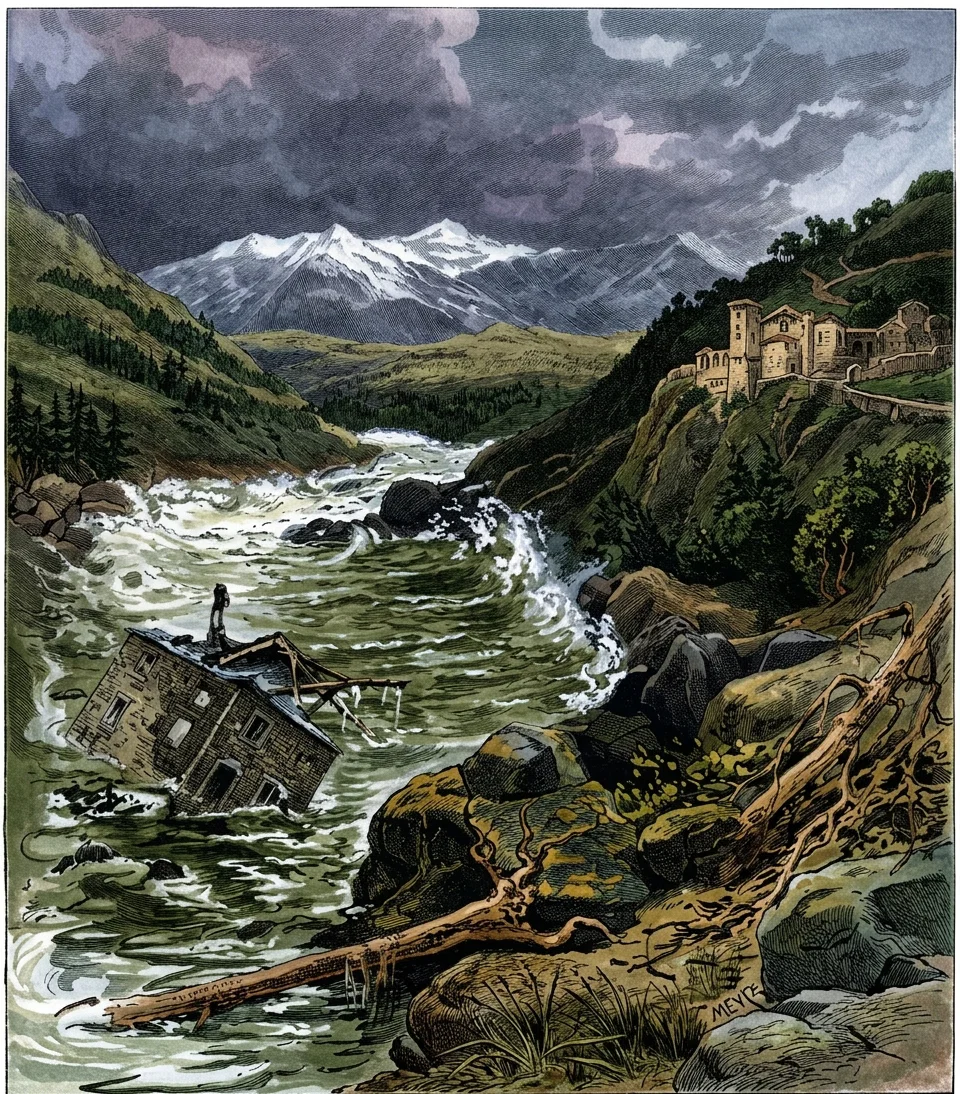
Jesus ended His teaching on the mount with an illustration that presented with startling vividness the importance of putting into practise the words He had spoken. Among the crowds that thronged about the Saviour, there were many who had spent their lives about the Sea of Galilee. As they sat upon the hillside, listening to the words of Christ, they could see valleys and ravines through which the mountain streams found their way to the sea. In summer these streams often wholly disappeared, leaving only a dry and dusty channel. But when the wintry storms burst upon the hills, the rivers became fierce, raging torrents, at times overspreading the valleys, and bearing everything away on their restless flood. Often, then, the hovels reared by the peasants on the grassy plain, apparently beyond the reach of danger, were swept away. But high upon the hills were houses built upon the rock. In some parts of the land were dwellings built wholly of rock, and many of them had withstood the tempests of a thousand years. These houses were reared with toil and difficulty. They were not easy of access, and their location appeared less inviting than the grassy plain. But they were founded upon the rock; and wind and flood and tempest beat upon them in vain.
Like the builders of these houses on the rock, said Jesus, is he who shall receive the words that I have spoken to you, and make them the foundation of his character and life. Centuries before, the prophet Isaiah had written, “The word of our God shall stand forever;” and Peter, long after the sermon on the mount was given, quoting these words of Isaiah, added, “This is the word which by the Gospel is preached unto you.” The word of God is the only steadfast thing our world knows. It is the sure foundation. “Heaven and earth shall pass away,” said Jesus, “but My words shall not pass away.”
The great principles of the law, of the very nature of God, are embodied in the words of Christ on the mount. Whoever builds upon them is building upon Christ, the Rock of Ages. In receiving the word, we receive Christ. And only those who thus receive His words are building upon Him. “Other foundation can no man lay than that is laid, which is Jesus Christ.” “There is none other name under heaven given among men, whereby we must be saved.” Christ, the Word, the revelation of God,—the manifestation of His character, His law, His love, His life,—is the only foundation upon which we can build a character that will endure.
We build on Christ by obeying His word. It is not he who merely enjoys righteousness, that is righteous, but he who does righteousness. Holiness is not rapture; it is the result of surrendering all to God, it is doing the will of our heavenly Father. When the children of Israel were encamped on the borders of the promised land, it was not enough for them to have a knowledge of Canaan, or to sing the songs of Canaan. This alone would not bring them into possession of the vineyards and olive groves of the goodly land. They could make it theirs in truth only by occupation, by complying with the conditions, by exercising living faith in God, by appropriating His promises to themselves, while they obeyed His instruction.
Religion consists in doing the words of Christ; not doing to earn God’s favor, but because, all undeserving, we have received the gift of His love. Christ places the salvation of man, not upon profession merely, but upon faith that is made manifest in works of righteousness. Doing, not saying merely, is expected of the followers of Christ. It is through action that character is built. “As many as are led by the Spirit of God, they are the sons of God.” Not those whose hearts are touched by the Spirit, not those who now and then yield to its power, but they that are led by the Spirit, are the sons of God.
Do you desire to become a follower of Christ, yet know not how to begin? Are you in darkness, and know not how to find the light? Set your heart to obey what you do know of the word of God. His power, His very life, dwells in His word. As you receive the word in faith, it will give you power to obey. As you give heed to the light you have, greater light will come. You are building on God’s word, and your character will be builded after the similitude of the character of Christ.
Christ, the true foundation, is a living stone; His life is imparted to all that are built upon Him. “Ye also, as living stones, are built up a spiritual house.” “Each several building, fitly framed together, groweth into a holy temple in the Lord.” The stones become one with the foundation; for a common life dwells in all. That building no tempest can overthrow; for— “That which shares the life of God,\nWith Him surviveth all.”
But every building erected on other foundation than God’s word, will fall. He who, like the Jews in Christ’s day, builds on the foundation of human ideas and opinions, of forms and ceremonies of man’s invention, or on any works that he can do independently of the grace of Christ, is erecting his structure of character upon the shifting sand.
The fierce tempests of temptation will sweep away the sandy foundation, and leave his house a wreck on the shores of time.
“Therefore thus saith the Lord God: . . . Judgment also will I lay to the line, and righteousness to the plummet; and the hail shall sweep away the refuge of lies, and the waters shall overflow the hiding-place.”
But to-day mercy pleads with the sinner. “As I live, saith the Lord God, I have no pleasure in the death of the wicked; but that the wicked turn from his way and live; turn ye, turn ye from your evil ways; for why will ye die?” The voice that speaks to the impenitent to-day is the voice of Him who in heart-anguish exclaimed as He beheld the city of His love: “O Jerusalem, Jerusalem, which killeth the prophets, and stoneth them that are sent unto her! how often would I have gathered thy children together, evenas a hen gathereth her own brood under her wings, and ye would not! Behold, your house is left unto you desolate.”
In Jerusalem, Jesus beheld a symbol of the world that had rejected and despised His grace. He was weeping, O stubborn heart, for you! Even when Jesus’ tears were shed upon the mount, Jerusalem might yet have repented, and escaped her doom. For a little space the Gift of heaven still waited her acceptance. So, O heart, to you Christ is still speaking in accents of love: “Behold, I stand at the door, and knock; if any man hear My voice, and open the door, I will come in to him, and will sup with him, and he with Me.” “Now is the accepted time; behold, now is the day of salvation!”
You who are resting your hope on self are building on the sand. But it is not yet too late to escape the impending ruin. Before the tempest breaks, flee to the sure foundation. “Thus saith the Lord God, Behold, I lay in Zion for a foundation a stone, a tried stone, a precious corner-stone of sure foundation; he that believeth shall not make haste.” “Look unto Me, and be ye saved, all the ends of the earth; for I am God, and there is none else.” “Fear thou not; for I am with thee: be not dismayed; for I am thy God: I will strengthen thee; yea, I will help thee; yea, I will uphold thee with the right hand of My righteousness.” “Ye shall not be ashamed nor confounded world without end.”

The Coming of the Redeemer

By Geo. A. Snyder
“The heralds of His advent in glory.”

VII. When Shall He Come?

The second advent of the Saviour is an event freighted with eternal interests of weal or woe to every soul. The long-promised day-dawn will brighten time’s dark horizon sometime. Somebody will be living when the Archangel’s reveille shall waken the slumbering soldiers of the Cross from their dusty beds. And just as the first advent of Christ was heralded by the voice of the forerunner, so the second advent will not break upon the world without due warning. Some of God’s people saw in the work of John the Baptist the fulfilment of what the prophecies had predicted, and were led to that preparation which enabled them to welcome the Messiah. Even so some of God’s children will see in the unfolding of events foretold in prophecy the heraldings of His advent in glory, and be led to a preparation to meet the coming King.
In the last chapter of Daniel, the prophet was instructed to “shut up the words, and seal the book, even to the time of the end.” And then the angel added: “Many shall run to and fro, and knowledge shall be increased.” This language clearly indicates that the book of prophecy would lie comparatively dormant until near the end of time, and then be unfolded to the understanding of those seeking for light. We may know from this scripture that when the great prophecies of the Bible, especially those of the book of Daniel, begin to come to light, we have reached the time of the end.
True to the instruction of the angel, we find the prophecies of Daniel, and nearly all the prophetic portions of the Bible, lying under the accumulating dust of ages until almost within the last century. During the last hundred years the dust has been brushed from the prophetic page, and men have run to and fro in search of light until to-day we see many converging lines of prophecy centering their shafts of light upon the scenes in which the present generation is acting its part. We have certainly reached “the time of the end,” for this wonderful increase of knowledge in the hitherto unexplored fields of prophecy has been going on during all the lifetime of the present generation.
This wonderful increase of knowledge has not been confined to the field of prophecy alone, but during the last century there has been a corresponding increase in all departments of knowledge. If our ancestors of one hundred years ago could see and hear some of the sights and sounds so common to us to-day, they would no doubt think they were visiting some other planet. If Noah of old could have been permitted, after a lapse of over three thousand years, to see the “Mayflower” in which the pilgrim fathers crossed the Atlantic, he would not have seen anything very far ahead of the vessel in which he and his family were borne upon the waters of the Deluge; but if the pilgrim fathers, after a lapse of less than three hundred years, could see just one of the battle-ships of the American fleet after its tour around the world, they would be amazed beyond the power of the imagination to picture. If Daniel the prophet could have stepped forward into the home of Benjamin Franklin, he would have found it little better lighted by night than his own humble dwelling of over two thousand years before; but if Franklin could step forward just a little over one hundred years into the Edison laboratories of to-day, his bewilderment would be beyond comprehension.
In all those departments of knowledge which enables men to accomplish the greatest possible results in the shortest possible time, there has been greater progress during the lifetime of a man seventy years old to-day, than in all the previous history of the world. It can not be because men are naturally wiser to-day than ever before, for in literature and art the ancient Grecians were far ahead of their modern copyists. The great tendency of modern progress seems to be toward the annihilation of time and space. This tendency is in direct line with the predictions of prophecy. In the last days, just before the coming of Christ, there must be a great world-warning work done in a very short time, and the facilities for doing that work have increased to such an extent that the work will be done before we realize it unless we hasten our steps to join the ranks of the heralds of the coming King. In Matt. 24:14 the Saviour gives us a sure token of the nearness of His return to the earth: “This Gospel of the kingdom shall be preached in all the world for a witness unto all nations, and then shall the end come.” Even the idolatrous nations of the far East are emulating our efforts to secure the means of rapid transit and communication. The recent wars in the far East have been the means of opening new doors for the entrance of the King’s heralds, and it only requires a few more pioneers in the darkest places of the earth before the work is finished.
When a few hundred arc lights are properly distributed, it requires only the turning on of the electric current from the lighting plant to flood a large city with light; and just as soon as God’s light centers are properly placed and prepared, He will turn on the current from the great white throne, and the world will be flooded with that light which will be the last witness to the world before the appearing of the Son of Man on the white cloud to gather the harvest of the seed sown in the preaching of “this Gospel of the kingdom.” The mountain peaks of time are fast kindling with light from the sunrise of eternity.
Even now o’er dark horizon Shine some beams of glory bright, “Rosy fingers of the morning” Pointing to the land of light.
Continue reading: Liberty and Christianity