Your ShelfYour Projects

Signs of the Times, Vol. 36, No. 5.

United States Senate Report

Signs of the Times

Feb 3, 1909

Pacific Press Publishing Association · Mountain View, California · Feb 3, 1909

United States Senate Report

"Render unto Caesar the things that are Caesar's, and unto God the things that are God's." Mark 12:17

United States Senate Report

1829

On the Question of Sunday Mails

EXTENSIVE religious combinations to effect a political object are . . . always dangerous. This first effort of the kind calls for the establishment of a principle which . . . would lay the foundation for dangerous innovations upon the spirit of the Constitution and upon the religious rights of the citizens. If admitted, it may be justly apprehended that the future measures of the government will be strongly marked, if not eventually controlled, by the same influence. All religious despotism commences by combination and influence; and when that influence begins to operate upon the political institutions of a country, the civil power soon bends under it, and the catastrophe of other nations furnishes an awful warning of the consequence."
"If any man hear My sayings, and keep them not, I judge him not." John 12:47

2719.—No Man Hath Ascended into Heaven.

If Enoch and Elijah were translated, and Moses raised from the dead and taken to heaven, please explain John 3:13. L. J. S.
John 3:13 is not so difficult of understanding if we will remember the context. Jesus is telling not of things earthly, but of things heavenly. He says in the 12th verse, "If I told you earthly things and ye believed not, how shall ye believe if I tell you heavenly things?" and then verse 13: "No one has ascended into heaven," that is for the purpose of ascertaining heavenly things, and brought them back again to earth, but "the Son of Man which is in heaven." That does not mean that no one has ascended into heaven and stayed there, but no one has gone into heaven and brought those things back to men. Christ Jesus is God's revealer of His Gospel, and He descended
out of heaven and brought it to a dying world. To put the thought in the simplest language, no one has ascended into heaven to obtain God's message and bring it back to mankind. The only one who gives us that message is He who descended out of heaven. The message is from heaven just as the birth must be. Men must be born from above; the message comes from above; the life is received from above.

Isaiah 65:20 Explained

2720.—Isaiah 65:20.

Will you please explain Isa. 65:20? C. A. R., W. O., R. E. C., and others.
This is one of the difficult texts for many. It is not a particularly profitable scripture, and we wonder many times why so many people are anxious to have it explained. There are other texts which seem to us vastly more important which are hard to be understood and worthy of great study; but to the text. Please notice first the context. Verse 17 predicts the new heavens and the new earth in which there shall be no such conditions as we see now. Verse 18 points forward to that New Jerusalem that shall be created a rejoicing and her people a joy. Verse 19 declares there shall be no more thence the voice of weeping and the voice of crying; consequently there shall be no more death. Verse 20, there shall be no more in that great realm of God an infant of days, or an old man that hath not filled his days. There is no one to die; no one shall be born in sorrow and trouble, as in this world. Then the last part of the verse tells us the reason of that; the time is past when the infant dies and the sinner is passed away. "The child shall die a hundred years old, and the sinner being a hundred years old shall be accursed."
Now that expression can not refer to the new earth, and the New Jerusalem, because there shall be only there the voice of gladness and joy and rejoicing. To what time does it refer? There are those who believe that there is a real connection between that and Rev. 20:3 in which it is declared that Satan shall be shut up, and shall deceive the nations no more till after the thousand years, and then he must be "loosed for a little season." During the thousand years, according to verse 5, the wicked dead are in their graves. When the thousand years are finished, verse 7, Satan shall be loosed out of his prison, and shall go out to deceive the nations which are in the four corners of the earth. This will take some time. All the earth must be deceived and gathered together. They must be armed and equipped and drilled. How long this period is we do not know from the passage in Revelation. The text in Isaiah, if it applies to that time, would indicate that it was a hundred years; that during that time when the wicked dead were raised, children who had reached the age of accountability were brought again to life. The Lord would permit them to live during that period of time; a little season as compared with all the other time with which it stands connected.
During all this six thousand years of earth's history Satan has endeavored to make man believe that his salvation was in himself. In the beginning it was told to man: "Ye shall not surely die; ye shall be as God," and every false religion of earth has endeavored to exalt man to that position. One of the great errors of the present day is that man has God within himself; that faith is but the recognition of that fact, and that all man needs to do is to exert the God within himself and live; yet on the other hand Christ has told us that no man shall come to Him except the Father draw him; that if He is lifted up He will draw men to Himself; that by nature men are alienated from the life of God, without hope, and without God in the world; that the only hope in the world is by living faith to grasp God's promises, God's life, and God's regeneration. Those who do this will be saved. Those who do not do this shall remain condemned and God will in the period which follows the thousand years demonstrate the truth of His word to all the universe in the negative as well as in the positive. In the negative He will show that the great mass of the wicked will in and of themselves have no desire whatever to worship Him or do His truth. On the contrary, they will be deceived by Satan into believing that the city of God can be taken, that God Himself can be dethroned, and they rule in His kingdom. Yet at the end of that time the great white throne will be seen, the great majesty of God will appear, and in the glory of that presence they will perish. He will demonstrate His truth in a positive way in the fulfilment of all the blessed promises that He has given to the redeemed. This, it seems to us, is in brief the meaning of Isa. 65:20.

2717.—The Law and the Prophets.

Would you please explain through your good paper Luke 16:16? The law and the prophets were until John. From that time the Gospel of the kingdom of God is preached and every man entereth violently into it. A READER.
There is an ellipsis in our Lord's statement, which, if not taken into account, may mislead us, but which, if we had no wrong conception, would not in any wise be misleading. The law and the prophets were preached until John. From that time the Gospel of the kingdom of God is preached; and then we have the parallel between the two parts of the sentence. That is, until the time that John came, God's prophets and teachers and priests preached the law and the prophets. That was the burden of their message,—the instructions that were given through the law and the prophets; but when John came, a new feature was added to the great Gospel message. The law and the prophets were still binding, as our Lord Himself again and again teaches, but the great burden of the message then was, "the kingdom of God is at hand." And it demanded very earnest, persistent faith in order to grasp the message then, and avail themselves of its blessings.
The thought of games or sports may have found place in the figure which the Lord uses. "Every man entereth violently into it." That is, he gives himself to the obtaining of that kingdom with eagerness, intensity, agony, just as Jesus says in another place: "Strive to enter in at the straight gate;" literally, "agonize to enter in." The next verse shows that the law is not to be done away because the Gospel of the kingdom of God is preached; for the Gospel confirms the law. "It is easier for heaven and earth to pass away than for one tittle of the law to fail." The Gospel brings us to that place where we can keep God's law and rightly serve Him. Those who teach that the law and the prophets there came to an end, many times teach us that they continue to the Crucifixion when they were nailed to the cross. If they continued to the Crucifixion they certainly did not cease three and one-half years before when John began his preaching. The thought of the text is not that the law of God then came to an end. The thought conveyed is the change which took place in the burden of the message when John came.

2718.—The Preaching of the Gospel.

Has the Gospel been preached to every nation?
To some degree it probably has. According to Ps. 19:1-6 and Rom. 10:18, the Lord preaches His Gospel by His own created works: "For the heavens declare the glory of God, and the firmament showeth His handiwork." But His own blessed Gospel as given in His book has been published at least in most nations, and now, so far as we know, the door of every kingdom and government is open to the Gospel of our Lord Jesus Christ, so it will soon be preached more fully according to the prophecy of our Lord in Matt. 24:14, and then will the end come.

2721.—Superfluous Words.

Please explain Matt. 5:37.
"But let your speech be Yea, yea; Nay, nay: and whatsoever is more than these is of the evil one." We have quoted from the American Revised Version. Please notice the context. The admonition is against unnecessary oaths. There are those who are so anxious to make their words emphatic that they use all kinds of adjurations. How frequently one finds this in ordinary conversation as well as in books. The Lord forbids all this. We should swear neither by the heaven, nor by the earth, nor by Jerusalem, nor by our head—by absolutely nothing. If we are asked concerning anything, let our words be simple, truthful words. After a while people will learn that they are. All effort to do more than this does not come from God, but are suggestions of the evil one.

2722.—Came to Fulfil.

In Matt. 5:17, we are told that Christ came to fulfil the law and the prophets, and in Matt. 7:12 we are told that the Golden Rule is the law and the prophets. How did Jesus fulfil this? C. K.
Jesus fulfilled the law by living it. He was the Law of God personified, the law in living character. He was the Golden Rule in just the same way. What is meant, however, by the expression in Matt. 7:12 is this, that all that is taught in the law and in the prophets concerning man's duty to man is summed up in the Golden Rule. Jesus fulfilled the prophecies that went before on Him in meeting in His own life and mission just what was predicted.

2723.— Tithing.

I am mixed on the tithes. Shall I pay tithe on my feed and what we eat? For example, I have one hundred bushels of corn and ten tons of hay. I feed that to my stock, and then pay a tithe of the income from the stock. I work my team and pay a tithe from what I make. Is it right to take tithes on what you eat, or just on what is sold?
If your corn and hay were fed to your stock you would pay tithe on the income which you received from the stock. If you work your team and receive an income from the team, you would tithe the products of that. If you bought enough for your team, however, and did not tithe the feed, you would deduct from your income the cost of the feed. As to the food which one eats, it seems clear that this should be tithed. One can get a better idea of this, perhaps, if he would consider how it is with many of his brethren and fellow workers. Here is one man who has a farm, and raises nearly all of his provisions. Many times he does not tithe what he himself eats, only just what he sells, but here is a brother who is living beside him, who works for wages and buys all that he eats; but he tithes his wages when he receives them and purchases for himself and family with what is left after the wages are tithed; that is, with nine tenths of his wages.
The better way always to decide these things is to put ourselves in just such a place as that. That will help us in other positions to decide more readily.

The Law Magnified

By J. O. Corliss
THERE can be no question as to the personage introduced by the prophet Isaiah in the forty-second chapter of his book. He who is there set forth, and upheld as Jehovah's "elect" servant; He who was then spoken of as commissioned to "set judgment in the earth," and given as God's "covenant" "for a light to the Gentiles," can be none other than the Lord Jesus Himself. Matthew recognized in Christ this foreordained One. Matt. 12:17-21; 3:17. Paul acknowledged Him to be the servant from heaven foreshadowed by prophecy. Phil. 2:5-9. Indeed, His entire course among men proclaimed loudly that Christ was indeed God's earthly representative, sent to fulfil Heaven's eternal purpose in redeeming the lost.
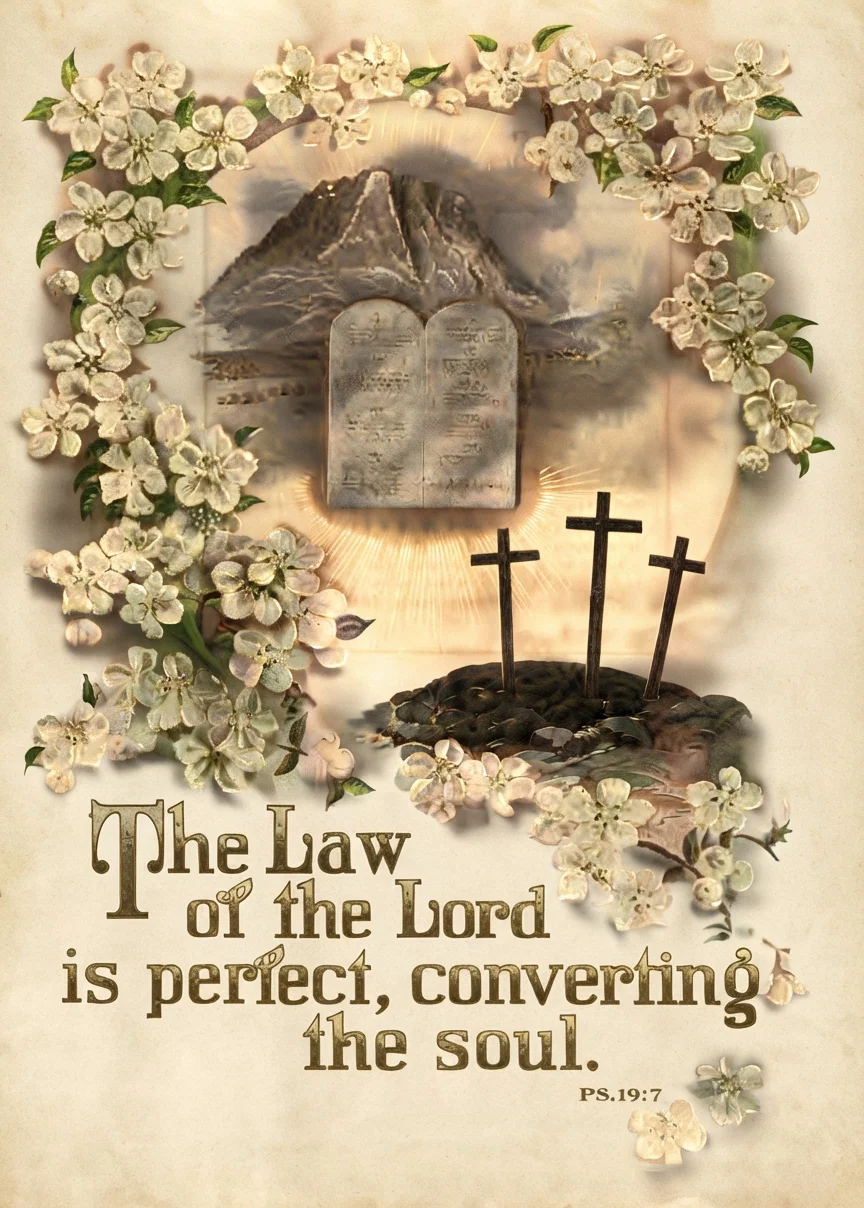
There is, however, one predicted work of this heavenly Messenger which has a bearing upon His claim of loyalty to the service assigned Him. In verse twenty-one it is said that He would "magnify the law and make it honorable." That the law here cited is that of the Ten Commandments, there is no ground for dispute. It is clear that the law of ceremonies ended by limitation, because of being merely a "shadow of good things to come," the substance of which was Christ Himself. All well understand that when a shadow is traced to the body that reflects it, the shadow ends in the substance itself. So Christ being the body which was typified in the law sacrifices, when He died a sacrifice for all, the sacrificial ceremonies ended.
Not so with the moral requirements. The Saviour said of these: "Think not that I am come to destroy [literally, to "loosen down"] the law, or the prophets: I am not come to destroy, but to fulfil. For verily I say unto you, Till heaven and earth pass, one jot or one tittle shall in no wise pass from the law, till all be fulfilled." Matt. 5:17, 18. This, then, is the law which the Saviour was to magnify, or enlarge,—the one which stands above every other law, and which was orally proclaimed from Sinai's top amid storm and tempest, and lightning glare.

How Did He Magnify the Law?

But in what way did Christ enlarge this law, which had been so long held by the Jews, and is now regarded by many Christians as restricting merely outward acts of the physical man? Listen to the Son of God in this, and the answer is soon received: "Ye have heard that it was said to them of old time, Thou shalt not kill; and whosoever shall kill shall be in danger of the judgment. But I say unto you, that whosoever is angry with his brother without a cause shall be in danger of the judgment." Matt. 5:21, 22. It seems from this that the Jews, after the true Oriental custom, thought that no moral responsibility attached to personal indulgence of anger, even tho threatening demonstrations accompanied it, if only murder were not actually committed. But by these words the sixth commandment is so magnified, or enlarged, by the Saviour as to cover those passions of mind which under severe strain lead one to commit the crowning sin of murder.
One or at most two other statements from the Saviour must suffice to illustrate the point under consideration. Said He: "Ye have heard that it was said to them of old time, Thou shalt not commit adultery. But I say unto you, that whosoever looketh on a woman to lust after her hath committed adultery with her already in his heart." Verses 27, 28. These words introduced a feature of the seventh commandment which had not usually entered into the consideration of the Jews in regulating their sexual conduct, because they did not see in the law that which was intended to appeal to spiritual discrimination. The Saviour, however, so magnified that part of the law, that its spiritual features appear, to control and regulate the thoughts in a holy trend. This of course enlarges the scope of the law, and makes the commandment "exceeding broad" to those who are really desirous of proving loyal to Heaven's government.
This expansion of the law to meet the needs of darkened minds made it possible, and even expedient, for the Saviour to answer as He did the young Jewish ruler who came to Him to learn the way of salvation. The direct question asked by this dignitary was: "What good thing shall I do, that I may have eternal life?" The answer was givenin few words: "If thou wilt enter into life, keep the commandments." The questioner evidently was astonished, because obviously he supposed that he had lived up to all moral requirements, and so he asked to which commandments Christ referred. Upon a portion of the Ten Commandments being quoted, he justified his past course by saying that he had ever kept all those requirements. "What lack I yet?" he asked. Matt. 19:16-20.
The Saviour's answer to this was an enlargement of the law never before revealed to the young man. By it he saw that his heart had been closed to the needs of others, and consequently he had hoarded for himself this world's goods, while others were in want. Looking steadfastly in love at the apparently earnest inquirer, the Lord said: "Go and sell that thou hast, and give to the poor, and thou shalt have treasure in heaven; and come, follow Me." At this requirement, the young man went away sorrowful, not willing to let the golden rule in the law control his heart. Here the law again was magnified by the Saviour, in an effort to reach the consciences of men. Alas, how few to-day are willing to yield their all to the law's demands. Many indeed, like the young man, have some feature of the law newly revealed to them, requiring a sacrifice on their part, from which they but turn sorrowfully away.

The Law a Heart-Searcher.

Little do such realize that the heart has ever been the object of search by the law of God. The lack of this knowledge was why the Jews never derived comfort in the outward observance of the law's precepts. Paul had reference to this when he said they did not submit themselves to the righteousness of God, as the reason why they did not attain to the law of righteousness. Rom. 9:31; 10:3. He did not deny their zeal; but he said that it was exercised without knowledge, which ought to have revealed God's righteousness in the precepts He had given them. He then sums up the whole matter by saying that "Christ is the end [design, object] of the law for righteousness to every one that believeth." Verse 4. In other words, whatever Christ is to the believer the law was designed to be.
As the Saviour said to the young ruler, so Paul reiterates thus: "The man which doeth those things [required by the law] shall live by them." Verse 5. But because men do not see the Spirit of Christ in the law, and receive its benefits by faith, they "loosen down" (Greek of Matt. 5:17) the law, and so practically lead barren lives in God's service. The fact is, "the law was ordained to life" (Rom. 7:10), and is therefore "holy, and just, and good" (Rom. 7:12).
When a certain lawyer questioned Christ about salvation, in order to test Him, the Saviour's reply was: "What is written in the law? How readest thou?" Luke 10:26. In his answer to these questions the lawyer revealed that he knew the inner meaning of the law, which feels for the heart pulsations. When he had answered correctly what the moral rule of God's government would lead men to do, the Saviour closed the interview by saying, "Go, and do thou likewise." Verse 37. So now, the question most pertinent to be raised concerning God's law is, How do you read what is written therein?
Is it in the light of your own desires, or with the earnest desire to see Christ and His ways revealed in it? Again it may be asked: "How readest thou?"

The Test of Faith and Sincerity

By Mrs. E. G. White
RIGHTEOUSNESS is right doing, and it is by their deeds that all will be judged. Our characters are revealed by what we do. The works show whether the faith is genuine.
It is not enough for us to believe that Jesus is not an impostor, and that the religion of the Bible is no cunningly devised fable. We may believe that the name of Jesus is the only name under heaven whereby man may be saved, and yet we may not through faith make Him our personal Saviour. It is not enough to believe the theory of truth. It is not enough to make a profession of faith in Christ and have our names registered on the church roll. “He that keepeth His commandments dwelleth in Him, and He in him. And hereby we know that He abideth in us, by the Spirit which He hath given us.” “Hereby we do know that we know Him, if we keep His commandments.” This is the genuine evidence of conversion. Whatever our profession, it amounts to nothing unless Christ is revealed in works of righteousness.
In the Sermon on the Mount Christ said, “Not every one that saith unto Me, Lord, Lord, shall enter into the kingdom of heaven; but he that doeth the will of My Father which is in heaven!” The test of sincerity is not in words, but in deeds. Christ does not say to any man, “What say ye more than others?” but, “What do ye more than others?” Full of meaning are His words, “If ye know these things, happy are ye if ye do them.” Words are of no value unless they are accompanied by appropriate deeds.

Saying and Doing.

This is the lesson taught in the parable of the two sons. In the parable the son who said, “I go, sir” represented himself as faithful and obedient, but time proved that his profession was not real. He had no true love for his father. So the Pharisees prided themselves on their holiness, but when tested, it was found wanting. Of them Christ declared, “Do not ye after their works; for they say, and do not.”
Self-righteousness is not true righteousness, and those who cling to it will be left to take the consequences of holding a fatal deception. Many to-day claim to obey the commandments of God, but they have not the love of God in their hearts to flow forth to others. Christ calls them to unite with Him in His work for the saving of the world, but they content themselves with saying, “I go, sir.” They do not cooperate with those who are doing God’s service. They are idlers. Like the unfaithful son, they make false promises to God. In taking upon themselves the solemn covenant of the church they have pledged to receive and obey the word of God, to give themselves to God’s service; but they do not do this. In profession they claim to be sons of God, but in life and character they deny the relationship. They do not surrender the will to God. They are living a lie.
In the command, “Go work to-day in My vineyard,” the test of sincerity is brought to every soul. Will there be deeds as well as words? Will the one called put to use all the knowledge he has, working faithfully, disinterestedly, for the Owner of the vineyard?

The Heavenly Ladder.

The apostle Peter instructs as to the plan on which we must work. “Grace and peace be multiplied unto you,” he says, “through the knowledge of God, and of Jesus our Lord, according as His divine power hath given unto us all things that pertain unto life and godliness, through the knowledge of Him that hath called us to glory and virtue: whereby are given unto us exceeding great and precious promises; that by these ye might be partakers of the divine nature, having escaped the corruption that is in the world through lust.
“And beside this, giving all diligence, add to your faith virtue; and to virtue knowledge; and to knowledge temperance; and to temperance patience; and to patience godliness; and to godliness brotherly kindness; and to brotherly kindness charity.”
If you cultivate faithfully the vineyard of your soul, God will make you a laborer together with Himself. And you will have a work to do not only for yourself, but for others. In representing the church as the vineyard, Christ does not teach that we are to restrict our sympathies and labors to our own numbers. The Lord’s vineyard is to be enlarged. In all parts of the earth He desires it to be extended. As we receive the instruction and grace of God, we should impart to others a knowledge of how to care for the precious plants. Thus we may extend the vineyard of the Lord. God iswatching for evidence of our faith, love, and patience. He is looking to see if we are using every spiritual advantage to become skilful workers in His vineyard on earth, that we may enter the Paradise of God, that Eden home from which Adam and Eve were excluded by transgression.

Service to Our Father.

God stands toward His people in the relation of a father, and He has a father's claim to our faithful service. Consider the life of Christ. Standing at the head of humanity, serving His Father, He is an example of what every son should and may be. The obedience that Christ rendered, God requires from human beings to-day. He served His Father in love, with willingness and freedom. "I delight to do Thy will, O My God," He declared; "yea, Thy law is within My heart." Christ counted no sacrifice too great, no toil too hard, in order to accomplish the work which He came to do. At the age of twelve He said, "Wist ye not that I must be about My Father's business?" He had heard the call, and had taken up the work. "My meat," He said, "is to do the will of Him that sent Me, and to finish His work."
Thus we are to serve God. He only serves who acts up to the highest standard of obedience. All who would be sons and daughters of God must prove themselves coworkers with Christ and God and the heavenly angels. This is the test for every soul. Of those who faithfully serve Him, the Lord says, "They shall be Mine, . . . in that day when I make up My jewels, and I will spare them, as a man spareth His own son that serveth him."

Opportunity to Develop Character.

God's great object in the working out of His providences is to try men, to give them opportunity to develop character. Thus He proves whether they are obedient or disobedient to His commands. Good works do not purchase the love of God, but they reveal that we possess that love. If we surrender the will to God, we shall not work in order to earn God's love. His love as a free gift will be received into the soul, and from love to Him we shall delight to obey His commandments.
There are only two classes in the world to-day, and only two classes will be recognized in the Judgment,—those who violate God's law, and those who obey it. Christ gives the test by which we prove our loyalty or disloyalty. "If ye love Me," He says, "keep My commandments. . . . He that hath My commandments, and keepeth them, he it is that loveth Me. And he that loveth Me shall be loved of My Father, and I will love him, and will manifest Myself to him. . . . He that loveth Me not keepeth not My sayings; and the word which ye hear is not Mine, but the Father's which sent Me." "If ye keep My commandments, ye shall abide in My love; even as I have kept My Father's commandments, and abide in His love."

My Guide.

I KNOW not the way I am going, But well do I know my Guide! With a childlike trust do I give my hand To the mighty Friend by my side; And the only thing that I say to Him, As He takes it, is, "Hold it fast! Suffer me not to lose the way, And lead me home at last."
As when some helpless wanderer Alone in some unknown land, Tells the guide his destined place of rest, And leaves all else in his hand; 'Tis home — 'tis home that I wish to reach, He who guides me may choose the way; And little I care what path I take When nearer home each day. — Anon.

Some Fundamental Principles of Scripture Interpretation.

[THE following is from a little tract which came to us signed W. E. S., published in Philadelphia at Faith Tabernacle. It presents some good principles.]
1. We should approach the Bible with common sense. "Come now, let us reason together, saith Jehovah." Isa. 1:18. To reason means to consider intelligently and sensibly. We should expect to find in the Bible a plain statement of truths which are capable of being understood by common people. To create an air of mystery about it, or to seek some other meaning than that which is obviously conveyed by the plain statement of facts, is neither sensible nor just.
2. We must have the teaching and enlightenment of the Holy Spirit. "Howbeit when He, the Spirit of truth, is come, He shall guide you into all the truth: for He shall not speak from Himself; but what things soever He shall hear, these shall He speak: and He shall declare unto you the things that are to come." John 16:13. He who inspired its sacred utterances is surely the best interpreter; and only as we depend upon Him will we rightly comprehend God's word. 1 Cor. 2:10-12; 1 John 2:27.
3. We should lay aside our preconceived ideas, and accept the word as it is written. "As new-born babes, long for the spiritual milk which is without guile, that ye may grow thereby unto salvation." 1 Peter 2:2. We should believe and obey literally where it speaks plainly upon any subject. This will cause us to discard many denominational traditions that conflict with its sacred truths.
4. Never spiritualize unless plainly indicated in the passage, or clearly shown by connecting passages of Scripture that it is not intended to be interpreted literally. This practise of spiritualizing literal truths has been the cause of much erroneous teaching, and of explaining away the real truth of the Bible.
5. Try to ascertain the meaning intended by the author: (a) By using various translations. Especially helpful is the American Revised Version. It enables the reader to grasp many truths that are not so plainly brought out in the old style English which prevailed 300 years ago when the Authorized Version was translated.
(b) By accepting the most obvious sense. Many seemingly prefer to accept a strained or far-fetched meaning rather than that which is plainly indicated by the Scripture. The words of a little child are very appropriate in this connection: "If Jesus didn't mean what He said, why didn't He say what He meant?"
(c) By interpreting in the light of the context. Many passages can not be properly understood unless taken in connection with surrounding scriptures.
(d) Comparing scripture with scripture. Scripture is its own best commentary; and by looking up parallel passages with the aid of the marginal references and a concordance, we are better able to ascertain God's full meaning.
6. Distinguish between inference and fact. Great loss has resulted to the professed people of God through laying aside plain statements and fundamental teachings, for mere inferences. One plain Scriptural statement outweighs a score of inferences. . . . Theology is the science of inferences, while the Bible is a statement of facts.
7. Give due weight to each truth or doctrine presented. "Rightly dividing the word of truth." 2 Tim. 2:15. Satan will seek to get us to exalt a non-essential, and neglect a vital truth if he can. For instance, repentance, pardon, and cleansing from sin, divine healing, consecration, sanctification, temporal trust, divine guidance, the baptism of the Holy Spirit, the second coming of Christ, etc., are taught in the word with considerable emphasis; and yet the adversary has blinded the great majority of Christians to one or more of these essential truths.
8. Regard the Bible as a harmonious whole, expecting each passage or doctrine to fit into its proper place in the beautiful temple of truth, without conflicting with, or supplanting, any other passage or doctrine. We have found this to be the case when the blessed word is properly interpreted and understood.

Being Right or Doing Right.

No man can determine what he is except through what he does. He can not set up for his ideal a certain kind of man, then persistently do things that are utterly out of accord with that ideal, and expect to become the kind of man that his ideal represents. For it is his doing that determines his being. Hence it is that the Bible says little or nothing about what we ought to be, except in terms that we can translate into action. It would be a discouraging book if it told us chiefly what we ought to be, and left us to decide for ourselves what we ought to do.
Yet a prominent English preacher actually makes the following statement—or misstatement: "In the manifesto of the King not a single blessing is pronounced upon . . . doing. All the blessings are upon being." From Matthew to Revelation, the New Testament controverts this error, and is crowded with promises of blessing upon those who do what they ought to do.Jesus acknowledges as His brother and His sister those who "do the will of My Father;" He says, "Blessed is that servant whom his lord when he cometh shall find so doing;" He pronounces wise "every one therefore that heareth these words of Mine, and doeth them;" and in the last chapter of the Apocalypse, John is told, "Blessed is he that keepeth the words of the prophecy of this book."
Trying to be is a discouraging, self-centered, hopeless task. Our only hope lies in turning from all thoughts of what we are, or even of what we may become, and in doing, with all our might, the will of the Master. He will see to it, then, that we are what we ought to be.—Sunday School Times.

The Way, the Truth, and the Life.

O Thou great Friend to all the sons of men, Who once appeared in humblest guise below, Sin to rebuke, to break the captive's chain, And call thy brethren forth from want and wo,—
We look to Thee! Thy truth is still the Light Which guides the nations, groping on their way, Stumbling and falling in disastrous night, Yet hoping ever for the perfect day.
Yes; Thou art still the Life, Thou art the Way The holiest know; Light, Life, the Way of Heaven! And they who dearest hope and deepest pray, Toil by the Light, Life, Way, which Thou hast given.
— Theodore Parker.

Praising God and Preying on Neighbors

"No man can praise God who preys upon his neighbor."
Continue reading: Strong Delusions